



Rococo Art Value: Appraisal and Auction

Key takeaways
- Rococo pieces bearing the marks of renowned cabinetmakers are valued at 20,000 to 300,000 euros, far exceeding the value of unmarked furniture (3,000 to 30,000 euros).
- 18th-century sculpted terracotta pieces attributed to identified sculptors sell for between 10,000 and 200,000 euros, with some exceptional pieces exceeding one million euros.
- The JME hallmark, mandatory since 1743, is the most decisive factor in authenticating and assessing the value of a Rococo piece on the secondary market.
Grace, ornamentation, and courtly festivities: the value of Rococo style varies greatly depending on attribution, quality of craftsmanship, and provenance.
Below you’ll find all our valuation guides dedicated to Rococo—18th-century paintings, furniture, gilded bronzes, and objets d’art. Each guide details the price ranges observed at auction and the factors that determine a work’s value before it is entrusted to our state-certified auctioneers.
Guides on this art movement
See all guides >
Rating and value of drawings and paintings by Nicolas de Lar...
Nicolas de Largillierre is a classical and Baroque painter who produced numerous portraits that command high prices at auction.
Learn more >

Rating and value of drawings, engravings and paintings by Si...
Sigmund Freudenberger was an 18th-century Swiss artist who primarily produced drawings and engravings that are highly prized and valuable.
Learn more >

Rating and value of sculptures, marbles and bronzes by Josep...
Joseph Antoine Bernard is a sculptor somewhere between Art Deco and Symbolism, who produced numerous works of great value.
Learn more >

Rating and value of paintings by Rachel Ruysch
Rachel Ruysch is a Dutch artist of the Golden Age who produced still lifes that are highly valued at auction.
Learn more >

Rating and value of paintings by Antoine Coypel
Antoine Coypel is a French artist who produced famous works that are highly valued at auction. 24h estimate.
Learn more >

Rating and value of paintings by Louis Icart
Louis Icart is an Art Deco painter who produced works that are listed and valued on the auction market. Estimated in 24h.
Learn more >

Rating and value of works, paintings, sculptures by Georges...
Georges de Feure is an artist of the early 20th century who produced paintings and sculptures that are quoted on the auction market.
Learn more >

Rating and value of Charles Cressent's furniture, wardrobes...
Charles Cressent is a renowned cabinetmaker of the Regency and Rococo periods. His furniture is highly sought-after and highly valued.
Learn more >

Rating and value of works, paintings by Jean Antoine Watteau
Jean-Antoine Watteau was a founding painter of the Rococo movement, who produced many oil on canvas paintings, which are highly prized at auction. Est...
Learn more >

The value of Jacob Petit porcelain
Jacob Petit, a 19th-century porcelain artist, left a considerable and varied output that is highly valued. Estimate in less than 24h.
Learn more >
Understanding the Value of Rococo Art
What Is the Market Value of a Rococo Piece?
The value of a Rococo piece refers to the benchmark value assigned to it by the secondary market at a given time, based on the nature of the object—whether it is furniture, sculpture, or decorative object; its artist or workshop, when identified; the quality of its craftsmanship; its condition; and the strength of the supporting documentation.
Originating in France during the final years of Louis XIV’s reign and reaching its full flowering during the Regency and the reign of Louis XV, the Rococo style, or Rocaille style, represents the most exuberant and virtuosic expression of 18th-century French decorative arts, before Neoclassicism succeeded it in the 1760s.
This style is characterized by abundant ornamentation inspired by natural forms, shells, plant scrollwork, and asymmetrical volutes, which deliberately breaks with the rigorous symmetry of the Classicism of the Grand Siècle to emphasize a dynamic grace and a deliberate decorative lightness.
This aesthetic, which spread from France to courts throughout Europe, produced a body of work of exceptional technical quality, for which demand remains very strong today among collectors specializing in antique furniture and decorative arts.
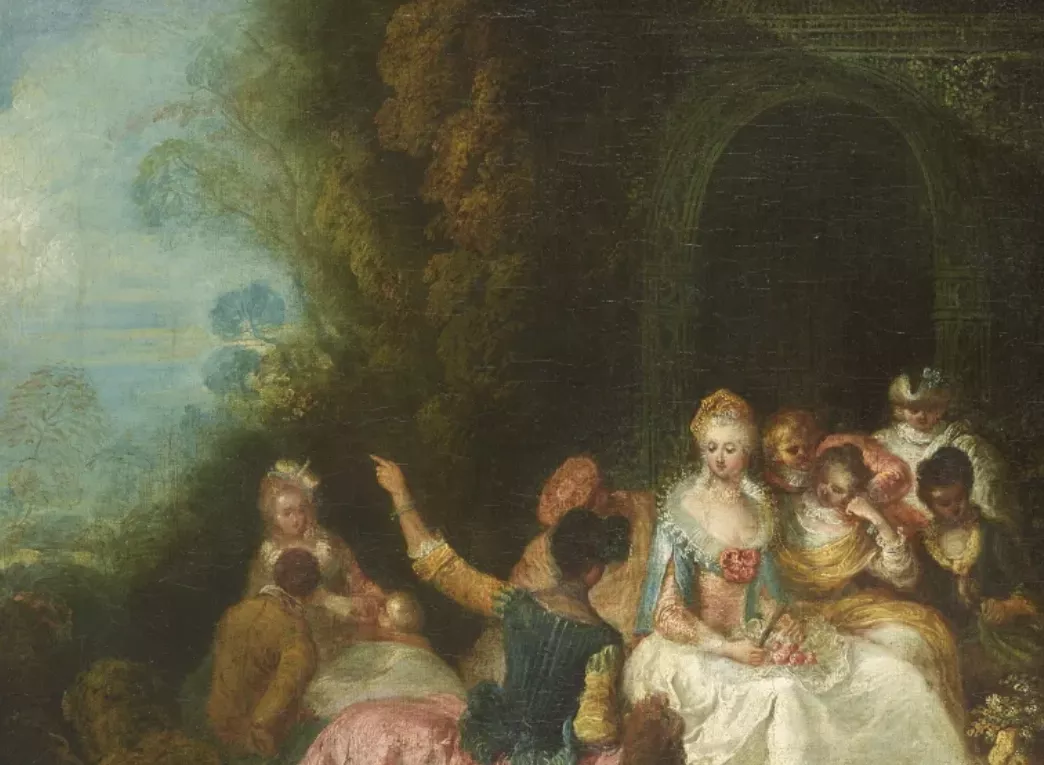
Rococo, Rocaille, and Neoclassical: Recognizing the Styles
Rococo, a term derived specifically from the word “rocaille”—which refers to the rock- and shell-shaped ornaments characteristic of this aesthetic—is distinguished by its curved and counter-curved lines, its shapely legs, and its carved woodwork in perpetual motion that seems to defy any rigid geometric structure.
This ornamental exuberance, which reached its peak during the reign of Louis XV between approximately 1720 and 1760, stands in stark contrast to the return to classical rigor promoted by the Louis XVI style beginning in the 1760s, under the influence of archaeological discoveries at Pompeii and Herculaneum that revived interest in Greco-Roman antiquity.
This transition between the two styles was not abrupt but gradual; certain pieces from the pivotal period of the 1760s and 1770s still combined Rocaille elements with a more restrained ornamental style that foreshadowed Neoclassicism.
The ability to precisely situate a piece within this stylistic evolution—and to distinguish an authentic Rococo piece from a Neoclassical work with Rocaille-inspired elements—is one of the most delicate tasks of expertise in this segment of the antique art market.
Style | Period | Characteristics | Ornamentation |
Regency Style (transitional) | 1715–1723 | First signs of a shift away from Louis XIV Classicism | Emerging shell motifs, still restrained foliage |
Classical Rococo (Louis XV) | 1723–1760 | The height of decorative exuberance | Rocaille, asymmetrical volutes, natural motifs |
German and Central European Rococo | 1730–1770 | International spread, at times even more exuberant | Stucco, gilding, amplified rocaille motifs |
Transition from Louis XV to Louis XVI | 1760–1774 | Gradual shift toward classical austerity | A blend of Rocaille and emerging classical motifs |
Neoclassicism (Louis XVI, for comparison) | 1774–1792 | Return to Antiquity, straight lines, and symmetry | Fluting, ancient friezes, a return to proportion |
Estimate in less than 24h
The criteria that determine the value of a Rococo piece
The market value of a Rococo piece is determined by a hierarchy of criteria that the auctioneer weighs according to the category of the object in question. For furniture, the cabinetmaker’s mark (when present), the quality of the curves and the gilded bronze ornamentation, and the integrity of the original veneer and gilding are decisive factors.
For sculpture—particularly terracotta works, which saw considerable development during this period—the quality of the molding and attribution to a recognized sculptor strongly influence the valuation.
The price ranges observed on the secondary market illustrate this wide range. A Rococo console table or chest of drawers of average quality, without an identifiable maker’s mark, can range from 3,000 to 30,000 euros. A chair or a pair of armchairs stamped by a renowned cabinetmaker ranges from 8,000 to 100,000 euros, depending on the quality of the craftsmanship and the condition of the original gilding.
An 18th-century sculpted terracotta piece, attributed to an identified sculptor, sells for between 10,000 and 200,000 euros. Exceptional pieces of furniture, marked by the greatest cabinetmakers of the reign of Louis XV and accompanied by a prestigious provenance, can exceed several hundred thousand euros, with some having reached one million euros at public auction.
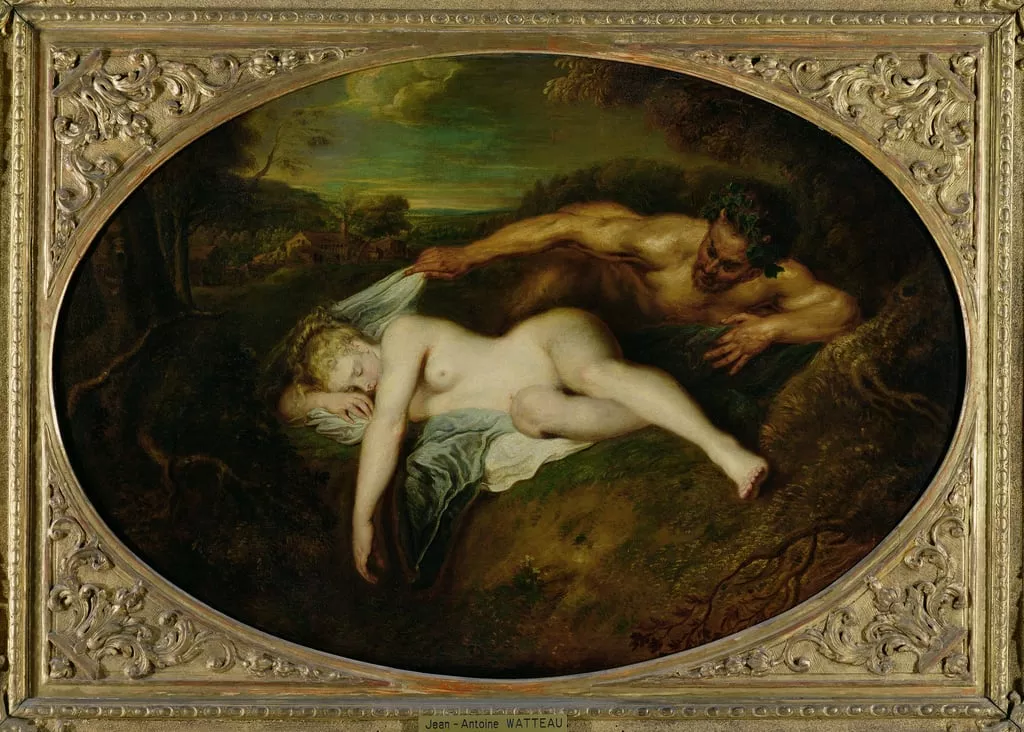
Furniture, Sculpture, and Decor: A Comprehensive Guide to Rococo
Rococo furniture: chests of drawers, console tables, and chairs
Rococo furniture constitutes the most active and best-documented segment of the market for this style. Chests of drawers, whose pronounced curves and chiseled, gilded bronze fittings are the most decisive factors in appraisal, are among the most sought-after pieces, particularly when they bear the mark of a renowned cabinetmaker from the Parisian guild, whose records have been partially preserved and now make it possible to identify many workshops active during this period.
Console tables, often intended to be placed against a wall and topped with a marble slab, share this same demand for expertise in their curved forms and gilding.
Seating, Rococo armchairs and sofas—whose arched legs and scalloped backs perfectly embody the dynamic grace of this style—constitute a particularly fluid category in the market, as their practical function continues to appeal to collectors eager to integrate these pieces into contemporary interiors.
For a rigorous appraisal, the condition of the fabric upholstery—which has often been replaced over the centuries—must be distinguished from the condition of the wooden frame itself.
Category | Characteristics | Indicative Price Range | Market Demand |
Chest of drawers with a maker’s mark (renowned cabinetmaker) | Pronounced curves, gilded chiseled bronze fittings, high-quality veneer | €20,000 — €300,000 | Very strong demand, specialized collectors |
Rococo chest of drawers without an identified maker’s mark | Variable quality of craftsmanship, consistent style | €3,000 — €30,000 | Active market, broad buyer base |
Console table and pair of wall-mounted console tables | Gilded carved wood, marble tops | €8,000 — €150,000 | Strong demand, interior designers and collectors |
Stamped armchair or pair of armchairs | Curved legs, scalloped backrest, quality of the carving | €8,000 — €100,000 | Very active, liquid segment |
Sculpted terracotta (sculptor identified) | Fine modeling, allegorical subject or portrait | €10,000 — €200,000 | Strong market, sculpture collectors |
Rococo decorative object (frame, mirror, wall sconce) | Natural motifs, gilding, varying quality | €1,500 — 30,000 | Active, accessible |
Rococo and terracotta sculpture: the most sought-after pieces
Rococo sculpture—particularly terracotta, which during this period experienced considerable growth and popularity among a broader clientele than the strictly aristocratic circle that typically favored marble and bronze—constitutes a particularly active segment of the market.
Sculptors who worked this material with remarkable technical virtuosity—capable of rendering in fired clay a liveliness of expression and a drapery that rival works in more noble materials—produced busts, allegorical groups, and mythological figures that are now highly sought after by specialized collectors.
Rococo bronzes and marbles, which were rarer and more expensive to produce at the time, constitute a segment of higher prestige; their relative scarcity on the current market is explained by the fact that these most precious pieces were preferentially preserved in institutional collections or major historic private collections that have held them since their creation.
Rocaille ornamentation: volutes, mascarons, and sculpted motifs
Rocaille ornamentation, which spread far beyond furniture alone to permeate the entire interior architectural decor of 18th-century mansions—including wood paneling, fireplaces, and mirror frames, constitutes a cultural heritage, fragments of which are now circulating on the market as original decorative elements have been dismantled over the course of renovations and changes in ownership.
Mascaron—these carved ornaments depicting a stylized face, often placed as a keystone or to adorn a console—and the decorative volutes that structure this entire ornamental language attest to a highly sophisticated mastery of wood and stone carving.
Estimate in less than 24h
Get a Free Appraisal of Your Rococo Piece
A certified appraisal by a licensed auctioneer in less than 24 hours
Appraising a Rococo piece requires in-depth knowledge of 18th-century cabinetmakers’ and sculptors’ guilds, as well as the ability to distinguish an authentic period piece from a stylistic reproduction produced in the 19th century or later, as this style has undergone several waves of decorative reinterpretation that can complicate the appraisal of an undocumented piece.
Our certified auctioneer has the necessary training to conduct this appraisal with the rigor it requires.
Auctie’s offers this appraisal free of charge, with a certified response within 24 hours.
Whether you have inherited Rococo furniture, wish to have a sculpture or decorative object from this period appraised, or are considering compiling an inventory of your family’s heritage, the process is the same: submit your piece to a trained eye capable of accurately assessing its value.
What You Need to Provide for an Online Appraisal
For a piece of furniture, please provide clear photographs of the entire piece and significant details—such as legs, bronze fittings, and joints—as well as a close-up of any hallmarks, which are typically located under the tabletop or inside a drawer.
The precise dimensions and the exact nature of the materials—wood, veneer, gilded bronze—must be specified. For a sculpture, photographs of the entire piece and any details that aid in attribution—such as a signature or base—are required.
Any information regarding provenance—such as an old purchase invoice, a mention in an auction catalog, or a reference in a specialized publication—must be provided. In case of doubt regarding the authenticity or age of a piece, a physical examination will be offered before any steps are taken to put it up for sale, as this market is affected by the circulation of stylistic reproductions produced at various times.
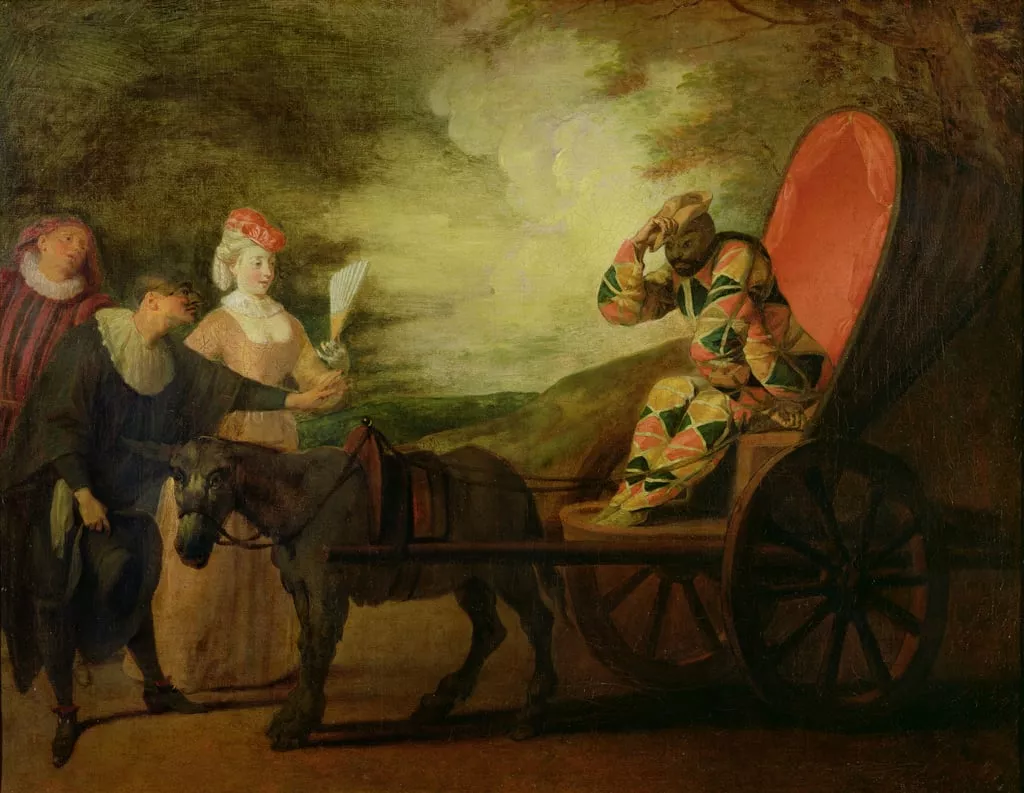
Markings, Signatures, and Provenance: The Cornerstones of Valuation
Cabinetmaker’s Mark and Attribution: Their Impact on Value
The authentication of a Rococo piece relies on a careful examination of the cabinetmaker’s mark, which has been mandatory for high-quality pieces since the 1743 regulations of the Parisian Carpenters’ and Cabinetmakers’ Guild, which required its affixing under penalty of confiscation.
This mark, generally consisting of the cabinetmaker’s name followed by the letters JME (for the Carpenters’ and Cabinetmakers’ Guild), is the most decisive factor in authenticating furniture from this period, provided it is cross-referenced with the catalogs compiled by historians of French furniture to verify its consistency with the documented output of the workshop in question.
Caution is warranted regarding the circulation of pieces bearing apocryphal stamps affixed fraudulently, a practice that emerged as early as the 19th century to enhance the value of period-style furniture produced at that time.
For sculptures, stylistic analysis and comparison with documented works by an identified sculptor, as well as consultation of historical inventories and collection archives, constitute the standard tools of expertise that the auctioneer systematically employs.
Level of Documentation | Impact on the appraisal value |
Authenticated cabinetmaker’s mark consistent with the identified workshop | Maximum assurance; very significant premium on value |
Piece listed in a reference catalog or monograph | Strong scientific backing; substantial increase in value |
Piece accompanied by a written appraisal from a recognized antique furniture specialist | Good guarantee; provides reassurance to the buyer and facilitates the sale |
Piece with documented provenance from a collection or a historic mansion | High value; rare and sought-after traceability |
Piece of consistent style without a maker’s mark or additional documentation | Conservative estimate; value based solely on the quality of craftsmanship |
Piece with a mark suspected of being apocryphal or of later manufacture (19th century) | Significant depreciation; thorough verification essential prior to any sale |
Provenance and condition: their impact on the estimate
The provenance of a Rococo piece is a decisive factor in building trust in this market. A piece whose original acquisition can be traced, particularly when it was commissioned for a private mansion whose 18th-century post-mortem inventory has been preserved, or featured in a major, well-documented historical auction, enjoys a legitimacy and narrative appeal that collectors value very highly. For sculptures, having passed through a recognized specialized collection is also a highly valued provenance factor.
The condition of the piece requires specific attention depending on the category.
For furniture, the integrity of the original gilding—whether in gold leaf or mercury, depending on the techniques of the period—and of the veneer is essential: a botched restoration or excessive re-gilding can significantly devalue a piece, particularly when it has altered the characteristic patina of precious woods and period bronzes.
For terracotta, cracks and restorations must be examined carefully, as this material is by nature more fragile than marble or bronze.
Sell a Rococo piece at auction with Auctie's
From the reserve price to the final bid: how the price is determined
Auctions are the most advantageous method of sale for high-quality Rococo pieces, in a market where international demand—particularly strong for furniture bearing the hallmarks of the great 18th-century Parisian cabinetmakers—can generate intense competition among several collectors interested in the same piece.
The reserve price, set in consultation with the seller, must be determined with particular attention to the specific category of the object and the strength of its attribution.
For major pieces signed by the greatest names in cabinetmaking from the reign of Louis XV, the dynamics of the auction can lead to final prices far exceeding initial estimates, as several collectors and institutions are likely to engage in intense competition to acquire an exceptional piece.
The auctioneer plays a vital role in facilitating this process by engaging networks of specialized collectors and interior designers active in this highly sought-after segment.
Hôtel Drouot and online auctions: reaching the right bidders
Auctie’s holds its auctions at Hôtel Drouot, the leading auction venue in continental Europe, founded in 1852 and frequented by a dense network of dealers, interior designers, and collectors specializing in 18th-century furniture and decorative arts.
For a Rococo piece, Drouot offers optimal visibility among French and European enthusiasts of this iconic style, complemented by an online presence that significantly broadens the reach of each auction on an international scale.
An American collector passionate about French furniture from the Age of Enlightenment, an Asian interior designer seeking a signed piece for a prestigious interior design project, or a European connoisseur drawn to the refinement of 18th-century terracotta sculpture can bid in real time from their home countries.
For Rococo, whose timeless elegance appeals to a decidedly international audience, this global reach is almost always decisive in securing the highest hammer price.
Estate Planning, Inheritance: Valuing an Inherited Rococo Decorative Item
Inventory and Distribution of an Estate
Rococo pieces are frequently found in the estates of families whose furniture collections have been built up over several generations, with some pieces possibly acquired as early as the 18th century and passed down within the same family ever since.
These pieces, sometimes kept for decades without their current owners knowing their exact value or even the identity of the cabinetmaker, can represent a considerable asset in an estate, particularly when they are pieces stamped with the names of the greatest cabinetmakers of that period.
Auctie’s regularly works alongside notaries to compile comprehensive estate inventories that include Rococo furniture and objects.
Each piece is appraised individually: identification of the cabinetmaker or workshop, description of the materials and condition, and estimation of the market value as of the reference date. The resulting report is an official document that is legally enforceable and may be included in the estate file without reservation.
Confidentiality of the process and preservation of anonymity
The circumstances that lead to having an inherited Rococo piece appraised are often personal: an estate settlement, a move, estate reorganization, or a decision to sell after a long period of ownership.
Auctie’s handles each case with absolute discretion. The owner’s identity is never disclosed to third parties without their explicit consent, and the items may be offered for sale under complete anonymity if the owner so desires.
This confidentiality is a fundamental commitment of Auctie’s, applicable at every stage of the relationship, from the initial contact through to the receipt of the proceeds from the sale.
Estimate in less than 24h
From Rococo to Neoclassicism: Placing Your Piece in the 18th Century
Louis XV, Transition, and Louis XVI Styles
Precisely situating a piece within the stylistic evolution of 18th-century France is a crucial step in any serious Rococo appraisal. The Louis XV style, at its peak between 1730 and 1760, consistently emphasizes curved lines and ornamental asymmetry.
The transitional period that began in the 1760s—influenced by the early archaeological discoveries at Herculaneum and Pompeii, which reignited enthusiasm for antiquity—gradually saw lines become straighter and ornamentation more restrained, with some pieces of furniture from this pivotal decade still combining curved legs with motifs that were already more classical.
The Louis XVI style, which fully established itself beginning in 1774, marked a complete return to symmetry and straight lines, with fluting and classical motifs definitively replacing the rocaille style.
This detailed knowledge of stylistic chronology allows the expert to date a piece with precision, even in the absence of a mark, and to avoid any confusion between an authentic Rococo piece of furniture and a transitional piece or one that is already fully Neoclassical.
18th-Century Mansion Interiors and Cultural Heritage
The interiors of 18th-century private mansions—certain elements of which, such as woodwork, fireplaces, and ironwork, may have been dismantled and dispersed over the course of successive renovations, constitute an architectural and decorative heritage whose precise documentation—when possible—considerably enhances the value of these fragments now presented in isolation on the market.
Research in notarial archives and estate inventories from the period can, in some cases, help link a decorative element to its original context—an approach that significantly enhances the value of the piece in question.
Have your Rococo piece appraised by Auctie’s
A Rococo piece deserves an appraisal that matches the refinement of this style and the diversity of the cabinetmakers and sculptors who brought it to life.
The distinction between the various stylistic phases of 18th-century France, the crucial importance of maker’s marks and their authentication, and the strength of a demand that is now truly international: these are all factors that only a licensed auctioneer, well-versed in the specific characteristics of Rococo, can assess with the rigor they require.
Auctie’s guides you from the initial appraisal through to the final auction, with the expertise of a state-certified appraiser and the discretion your financial decisions deserve. The appraisal is free, confidential, and non-binding, and you’ll receive a response within 24 hours.
Discover in the same theme
Rating and value of drawings and paintings by Nicolas de Lar...
Nicolas de Largillierre is a classical and Baroque painter who produced numerous portraits that command high prices at auction.
Learn more >
Rating and value of drawings, engravings and paintings by Si...
Sigmund Freudenberger was an 18th-century Swiss artist who primarily produced drawings and engravings that are highly prized and valuable.
Learn more >
Rating and value of works, paintings by Jean Antoine Watteau
Jean-Antoine Watteau was a founding painter of the Rococo movement, who produced many oil on canvas paintings, which are highly prized at auction. Est...
Learn more >
Estimate in less than 24h
Frequently asked questions
-
What is the price range for a piece of Rococo furniture?The value varies greatly depending on the type and quality. An unmarked Rococo chest of drawers ranges in price from 3,000 to 30,000 euros, while one marked by a renowned cabinetmaker ranges from 20,000 to 300,000 euros. Exceptional pieces by master cabinetmakers with prestigious provenance can exceed several hundred thousand euros.
-
How do you authenticate a Rococo piece?The authentication of a Rococo piece is based on an examination of the cabinetmaker’s mark, the quality of craftsmanship, the condition of the piece, and its documented provenance. Auctie's offers a free, no-obligation appraisal conducted by a certified auctioneer who has the necessary training to distinguish an original period piece from a period-style reproduction. You will receive a certified response within 24 hours.
-
What criteria determine the value of a Rococo piece?The value of a Rococo piece depends on the maker’s mark or attribution to a recognized master, the quality of craftsmanship (curves, moldings), the condition (gilding, veneer, original trim), documented provenance, and the material. For furniture, the quality of the chiseled gilded bronze and the integrity of the original gilding are decisive factors; for sculpture, the quality of the modeling takes precedence.
-
How does the appraisal of a Rococo piece work at Auctie's?The appraisal is free and non-binding. Simply submit clear photographs of your piece showing significant details (feet, bronze elements, hallmark), its exact dimensions and materials, as well as any documentation of provenance. A licensed auctioneer will review your submission and provide you with a certified appraisal within 24 hours.
-
Is this the right time to sell a Rococo piece?Yes, Rococo remains highly sought after by collectors specializing in antique decorative arts and 18th-century furniture. Market demand for stamped furniture remains particularly strong, and Rococo chairs, console tables, and terracotta pieces are very active segments with excellent liquidity.
