



Rating and value of drawings, engravings and paintings by Sigmund Freudenberg

Key takeaways
- Sigmund Freudenberg's works sell for up to €10,200 at auction, with drawings fetching higher prices than paintings and prints.
- An 18th-century Swiss artist (1745–1801) who specialized in pastoral and genre scenes, influenced by late Rococo and pre-Romantic sensibilities.
- Drawings are valued between €130 and €10,200, while paintings range from €200 to €2,500, and prints from €20 to €8,600.
Sigmund Freudenberg’s paintings and drawings sell for up to €10,200 at auction. An appraisal allows us to accurately determine the current market value of your Sigmund Freudenberg artwork and, if applicable, optimize the sale of the piece.
If you own a work by Sigmund Freudenberg and would like to know its value, our state-certified auctioneers will provide a free appraisal based on authenticity, market rating, and recent market results.
Artist’s Market Value and Reputation
Popular during his lifetime and particularly renowned for his drawings, Sigmund Freudenberg established himself in the art market as early as the 18th century. Today, the artist’s market value remains relatively stable, despite his limited presence on the market.
Highly prized by collectors of old master paintings and drawings, some of his works can fetch several thousand euros at auction.
His drawing *The Curious Couple / The Fulfilled Horoscope* sold for €10,200, while it had been estimated at between €3,000 and €5,000.
Ranking by value, from the most basic to the most prestigious
Technique used | Result |
|---|---|
Painting | From €200 to €2,500 |
Print - multiple | From €20 to €8,600 |
Drawing | From €130 to €10,200 |
Estimate in less than 24h
Placing the Artist in Context
Period
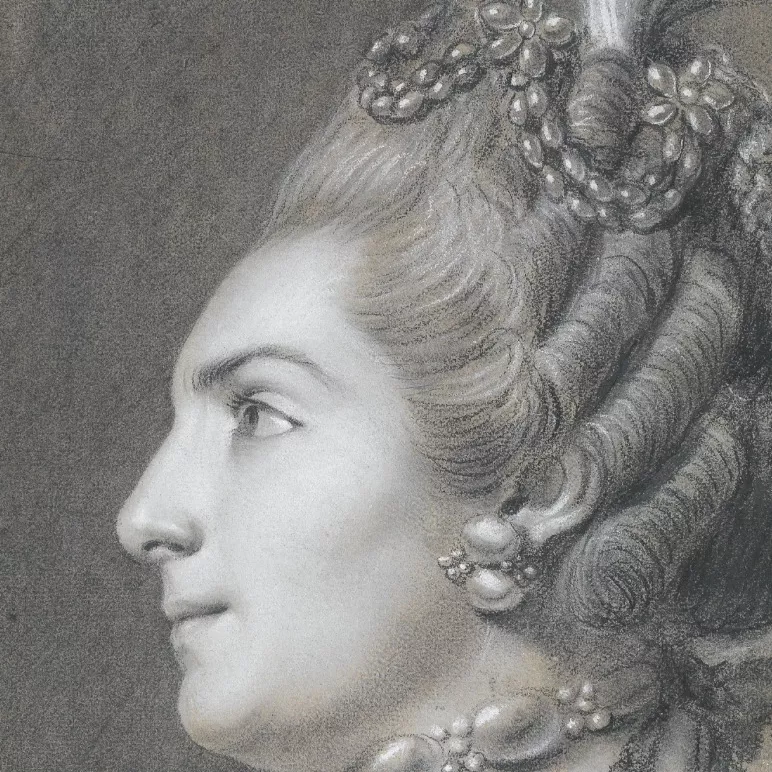
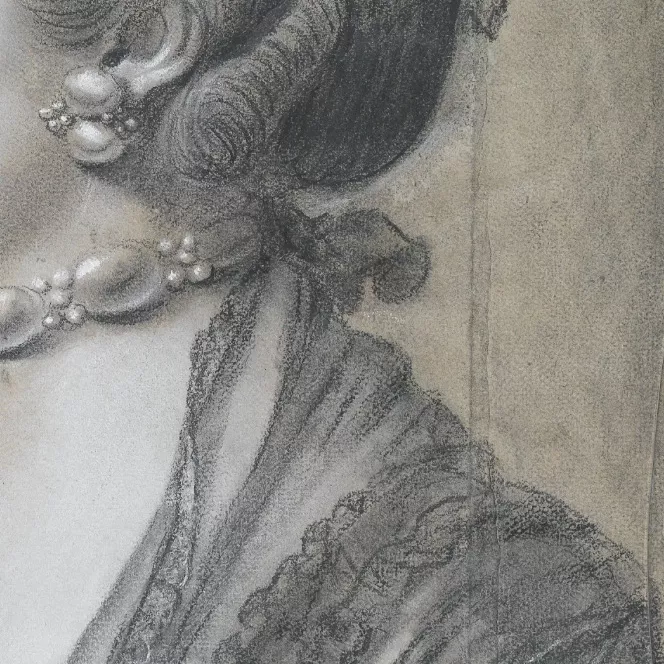
Sigmund Freudenberg or Sigismond Freudenberger (1745–1801) was an artist active in the 18th century, within the European artistic context of the late Enlightenment. His career flourished primarily during the final decades of the century, a transitional period between the late Rococo style and the emergence of Neoclassicism.
He was part of the German and Swiss artistic culture of the second half of the 18th century, marked by the influence of French and Italian models.
Artistic Movements
His body of work falls within the late Rococo style, characterized by a decorative sensibility, light compositions, and an interest in pastoral or gallant scenes inherited from the Rocaille tradition.
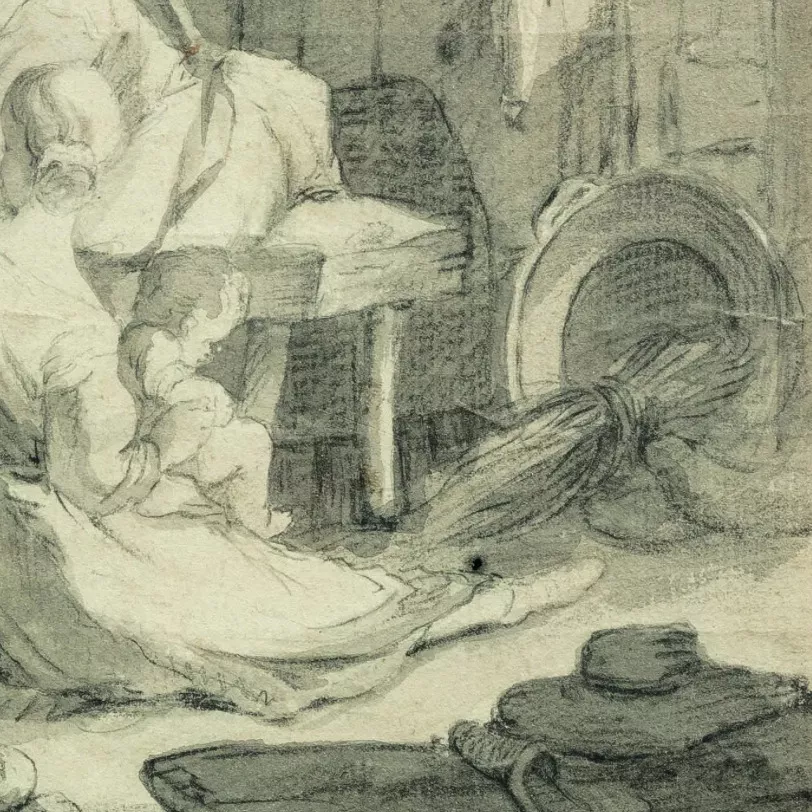
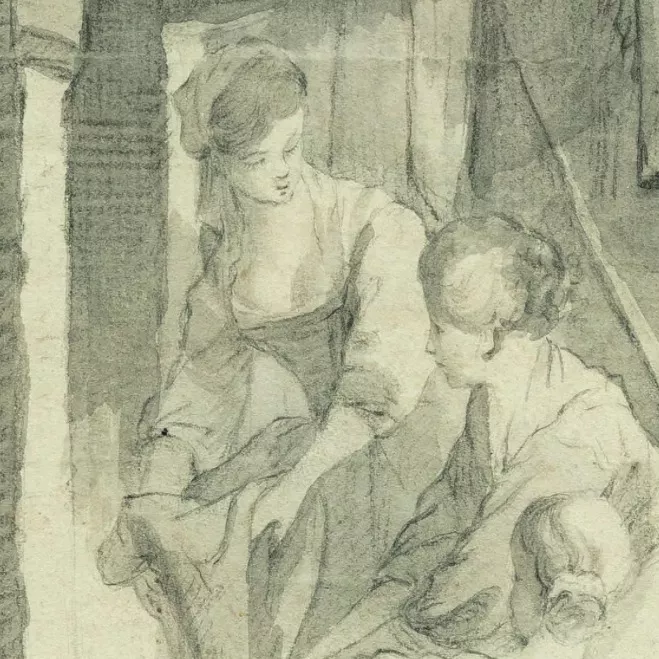
He excelled particularly in genre painting, depicting scenes of daily life and popular subjects, often set in rural or pastoral settings.
A pre-Romantic sensibility is evident, with attention paid to the atmosphere and the sentimental dimension of the subjects, foreshadowing certain aesthetic trends at the turn of the 19th century.
He was part of the 18th-century European tradition, engaging with French pictorial models of Rococo and genre painting, particularly those associated with artists such as Jean-Baptiste Greuze, Marguerite Gérard, Martin Drölling, and Jean-Honoré Fragonard.
The Life of Sigmund Freudenberg
Cultural Context
Sigmund Freudenberg was born in 1745 in Bern and developed his artistic career within the cultural context of the late 18th century, a period marked by a growing popularity for genre scenes and pastoral depictions.
He was trained in Switzerland and later abroad, notably in Paris, and was part of an artistic milieu influenced by late Rococo aesthetics and pre-Romantic sensibilities. His work is characterized by a predilection for scenes of rural life, as well as landscapes and idealized depictions of the pastoral world.
He contributed to the dissemination of a bucolic and sentimental imagination, in which nature and peasant figures are depicted in a harmonious and idealized atmosphere. His painting reflects a synthesis between the decorative Rococo tradition and the emergence of a sensibility unique to the end of the century.
Artistic and Intellectual Circle
The time he spent in Paris placed him in an artistic milieu marked by the influence of François Boucher, whose pastoral and decorative aesthetic profoundly shaped 18th-century European painting.
He operated within a cultural context that was also influenced by Greuze’s explorations, particularly in the moral and sentimental treatment of genre scenes.
His work was also part of the Swiss and European cultural networks of the late 18th century, contributing to the spread of these aesthetic sensibilities throughout the German-speaking world and Switzerland.

The Artist's Techniques
The Style of Sigmund Freudenberger
Sigmund Freudenberger was a Swiss painter active in the late 18th century, associated with the transition from late Rococo to early Neoclassicism. He focused on pastoral and sentimental genre scenes, often inspired by literature and the aesthetics of the “country taste.”
His body of work bears the influence of 18th-century French painting, particularly in the elegance of his figures and the lightness of his compositions. His draftsmanship is delicate and graceful, favoring supple silhouettes and natural poses.
His palette is light and luminous, dominated by pastel tones that contribute to the bucolic atmosphere of the scenes depicted. He displays an interest in idealized rural themes, revealing a harmonious and poetic vision of country life. His compositions are balanced and accessible, favoring gentle storytelling over dramatic effect.
Spotlight on a Key Work
The Pastoral Meal (late 18th century)
This composition is organized around a group of figures set within an idealized rural landscape. The poses are natural and the gestures simple, contributing to a scene imbued with conviviality and tranquility.
He achieves a harmonious integration of figures and landscapes, with the setting playing a full part in the visual narrative. His soft, nuanced palette reinforces the peaceful atmosphere of the pastoral scene. The perspective is moderate, prioritizing overall coherence rather than spectacular depth.
This work is representative of Freudenberger’s pastoral sensibility, in which rural life is transfigured by an elegant and sentimental vision.
FAQ – How do you appraise a work by Sigmund Freudenberger?
1) What stylistic criteria specific to Sigmund Freudenberger are key?
For Freudenberger, the valuation process begins with the precise identification of the work’s medium (painting, drawing, gouache, or print), along with an examination of the support, technique, dimensions, any signature, and date—elements necessary to situate the work within the artist’s body of work.
2) How important is the artistic context of the 18th century?
The body of work must be placed within the context of European artistic culture of the second half of the 18th century, taking into account the influences of Rococo and Neoclassical tastes, as well as the connections to the tradition of galant and pastoral scenes.
3) How does the art market influence the estimate?
The estimate is based on a comparative analysis of auction results for comparable 18th-century paintings and drawings, taking into account the quality of execution, the condition, and the relative rarity of works available on the market; the value remains indicative.
Market Segmentation
Prices of Artworks
Sigmund Freudenberg was active in the second half of the 18th century and occupied an intermediate segment of the Old Masters market, characterized by stable historiographical recognition but more limited commercial visibility than that of the great European Rococo painters.
There is a clear hierarchy between paintings, drawings, and engravings. Genre paintings and pastoral scenes generally sell for between €500 and €3,000. Pen-and-ink, wash, or red chalk drawings command higher prices, ranging from €1,000 to €10,000. Engravings and prints represent a more accessible market, with prices ranging from around 200 to 3,000 euros, depending on the rarity and condition of the print.
Factors Affecting Value
Pastoral scenes, depictions of rural life, and compositions inspired by the pre-Romantic sensibility form the core of demand. These subjects may command a premium of 30 to 50% compared to more anecdotal compositions.
Price differences between autograph works, studio prints, and circle prints can range from three to five times, with the condition of the painted surface playing a decisive role. The market is relatively narrow, dominated by specialized auctions of Old Masters in Europe.
The key factors influencing value are historical provenance, the quality of the drawing, the state of preservation, and references in scholarly literature, which are the primary determinants of the market value.
His Signature
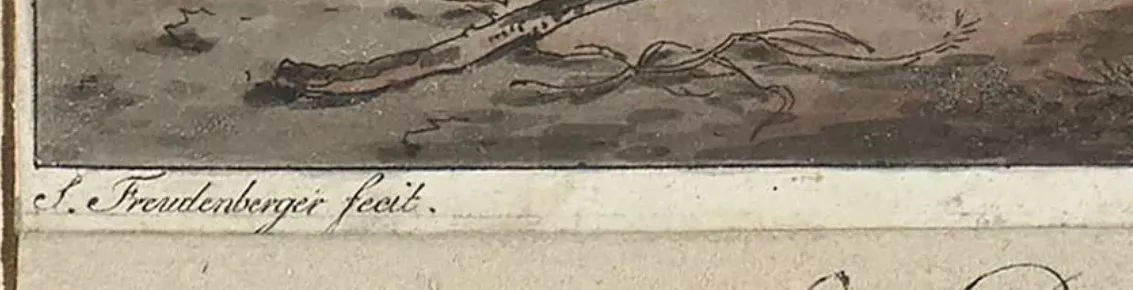
Not all of Sigmund Freudenberg’s works are signed. Furthermore, copies may exist, which is why expert appraisal remains important.
Get Your Sigmund Freudenberg Artwork Appraised
If you own a work by Sigmund Freudenberg, an appraisal will help you determine its current market value.
Using our online form, our experts and certified auctioneers will conduct a free appraisal and provide you with a reliable estimate of your artwork’s market value.
If you’re considering selling it, we’ll guide you through the process to ensure you get the best possible price.
Estimate in less than 24h
Discover in the same theme

Rating and value of works in Sèvres porcelain: vases, servic...
Sèvres porcelain, famous and appreciated throughout the world, has value on the auction market. Estimate in less than 24h.
Learn more >

Rating and value of works, paintings, drawings by Hyacinthe...
Hyacinthe Rigaud is a painter of the 17th and 18th centuries whose works have been remarkably well preserved, with a high rating and value.
Learn more >

Rating and value of works, drawings, paintings by Anne Valla...
Anne Volleyer-Coster was an 18th-century painter, famous for her still-life paintings of flowers, which were very popular at auction.
Learn more >
Nos records d'enchères à l'hôtel Drouot

Estimated 10.000 - 15.000 €
Ebridge Ayer BURBANK(1858-1949), Young African-American boy, Oil on panel.

Estimated 20.000 - 30.000
EXCEPTIONAL LARGE OVAL DISH IN VINCENNES SOFT PASTE PORCELAIN FROM THE "BLEU CÉLESTE" SERVICE OF KING LOUIS XV AT THE CHÂTEAU DE VERSAILLES

Estimated 20.000 - 30.000
MANUFACTURE ROYALE DE SÈVRES, 18th century "L'Empereur de la Chine" - Portrait of the Emperor Qianlong, Hard porcelain bisque, 1775

Estimated 1.500 - 3.000
HERMÈS, "Kelly" 32 saddle bag in black box calf

Estimated Between €5,000 and €8,000
KRACHKOWSKY (1854-1914), Before the storm, oil on canvas

Estimated 40.000 - 80.000
Alexandre ROUBTZOFF (1884-1949), Portrait of Arbia, oil on canvas

Secure site, anonymity preserved

Auctioneer approved by the State

Free and certified estimates
Frequently asked questions
-
Who is Sigmund Freudenberg, and what is his artistic background?Sigmund Freudenberger (1745–1801) was a Swiss painter active in the late 18th century, known for his drawings and pastoral scenes. He was part of the transition from late Rococo to Neoclassicism, influenced by the French tradition and marked by a pre-Romantic sensibility. His works depict genre scenes, idealized rural landscapes, and light-hearted compositions inherited from the Rocaille aesthetic.
-
What is the current market value of Sigmund Freudenberg's works?Freudenberg's paintings and drawings sell for up to 10,200€ at auction. Paintings generally range from €200 to €2,500, drawings from €130 to €10,200, and prints from €20 to €8,600. The artist’s market value is relatively stable, although his presence on the market remains limited.
-
How can you authenticate a work by Sigmund Freudenberg?Authentication begins with a request for a free appraisal from Auctie's, which enlists the services of its state-certified auctioneers and experts. They examine the medium, technique, dimensions, signature, date, and condition of the item. This appraisal is non-binding and will be sent to you within 48 hours.
-
Is this the right time to sell a work by Sigmund Freudenberg?Yes, the timing is right. The market for 18th-century Old Masters remains active, and Freudenberg’s pastoral scenes—which drive demand for his work—continue to attract steady interest from collectors. With a stable and well-established market value, selling through a specialized auction house ensures you get the best possible price for your artwork.
-
How does the appraisal process work at Auctie's?The appraisal is free and non-binding. You fill out an online form with photos and information about your artwork, and then a certified auctioneer will assess its authenticity, condition, and current market value. You’ll receive a reliable estimate within 48 hours, and if you’re considering selling, we’ll guide you through the process from the estimate to the auction.
