



Rating and value of paintings by Martin Drölling (father)

Key takeaways
- Paintings by Martin Drölling (1752–1817) are selling for between €100 and €235,000, with his painting “Young Girl Listening at the Door” selling for €235,000, exceeding its estimate.
- A Neoclassical painter specializing in portraits and interior scenes, Drölling masterfully employed chiaroscuro with a palette of browns and ochres inspired by the Flemish masters.
- His drawings and watercolors range from €100 to €12,500, while his paintings fetch prices comparable to those of great masters such as Gérôme or Baron Gros.
If you own a work by or after the artist Martin Drölling, and would like to know its value, our state-approved experts and auctioneers will offer you their appraisal services.
Our specialists will carry out a free appraisal of your work, and provide you with an accurate estimate of its value on the current market.
Then, should you wish to sell your work, we will direct you to the best possible arrangement to obtain the optimum price.
Rating and value of the artist Martin Drölling
A French academic painter par excellence, Martin Drölling devoted himself mainly to portraits. The bulk of his work is based on a wide range of paintings, but there are also drawings, on the other hand very few prints.
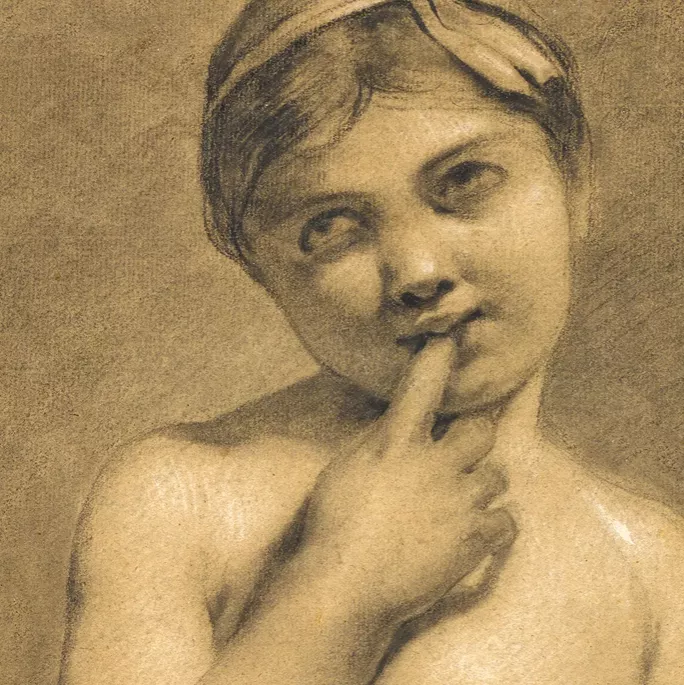
The prices at which his works are auctioned range from €100 to €235,000, a consequent delta but one that speaks volumes about the value that can be attributed to the artist's works.
In this case, his oil on canvas Jeune fille écoutant à la porte, measuring 53.5 cm x 45.5 cm, sold for €235,000, whereas it was estimated at between €80,000 and €100,000.
Order of value from a simple work to the most prestigious
Technique used | Result |
|---|---|
Drawing - watercolor | From €100 to €12,500 |
Painting | From €370 to €235,000 |
Estimate in less than 24h
Style and technique of Martin Drölling
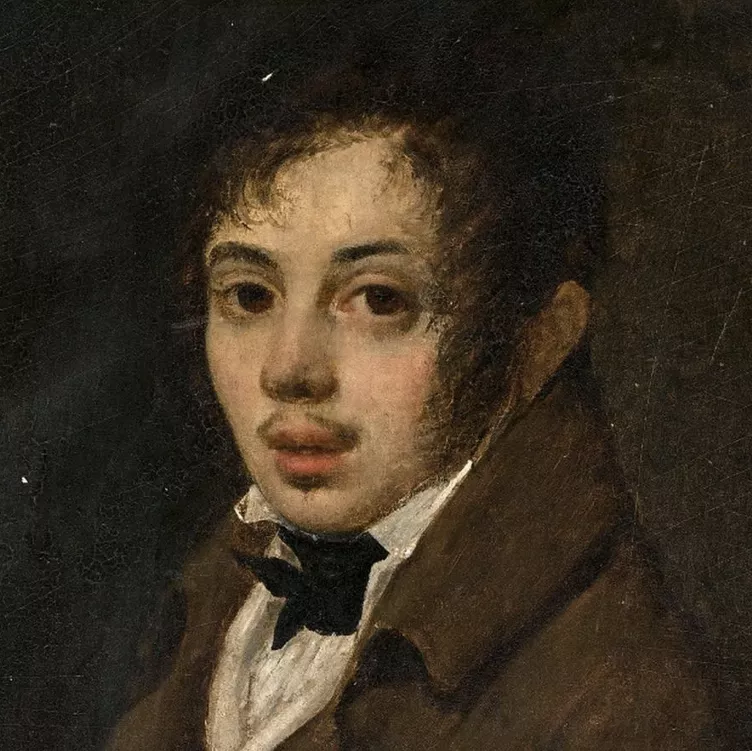
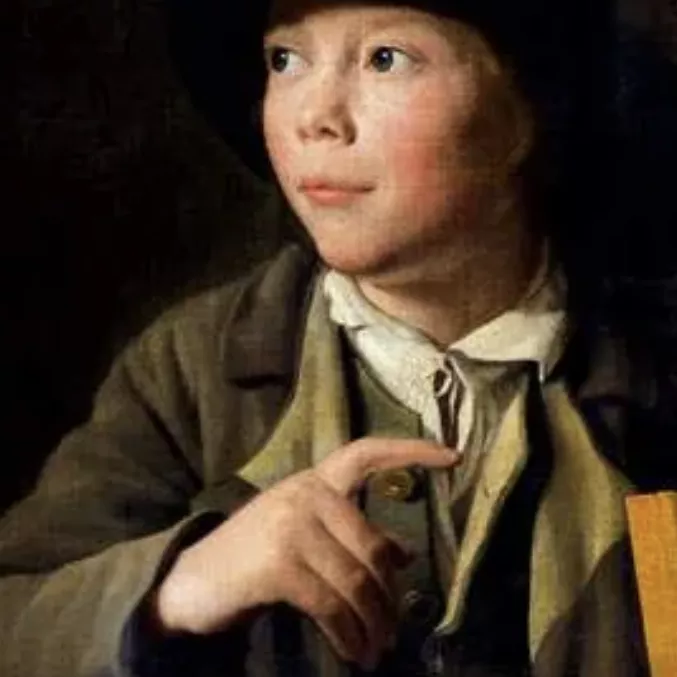
Martin Drolling's style, rooted in a neo-classical tradition tinged with realism, is distinguished by an almost microscopic attention to detail.
His interior scenes, often bathed in warm, diffused light, testify to a fascination with hushed ambiences and intimate compositions.
Using a restricted palette dominated by brown and ochre tones, Drolling excels in the art of chiaroscuro, shaping volumes with a subtlety that evokes the legacy of the Flemish masters.
As for his technique, it's based on the rigorous application of glazes, enabling translucent layers to be superimposed to achieve unequalled chromatic depth.
The care taken with textures, whether the wood grain of furniture or the weave of fabric, reveals meticulous observation and a keen sense of tactile rendering. In his paintings, each object becomes a narrative element in its own right, participating in the overall harmony.
In this, Drolling joins the tradition of genre painters while imprinting his work with a singular signature, blending artisanal precision and poetic sensibility.
Today, the results of these paintings at auction reach the results of some Jean-Léon Gérôme or the Baron Gros.
The life of Martin Drölling
Martin Drölling (father - his son, Michel Martin Drölling, would also become a painter), was born in 1752 in Oberhergheim in the Haut-Rhin region, and died in Paris in 1817.
He was part of the neoclassical movement, producing mainly portraits and genre scenes. A stranger to the art world, he decided to become a painter by a rather mysterious combination of circumstances, and soon revealed his talent.
He signed an apprenticeship contract with a local painter, but they didn't get on. Drölling soon decided to continue his apprenticeship in Strasbourg, with a painter who is not known today.
In 1779, the painter finally settled in Paris, where he was admitted to the Ecole des Beaux-Arts. He quickly gained recognition for his talent and negotiated a contract with a dealer, enabling him to make a living from his art.
He then married the daughter of a color merchant, with whom he had three children. This union produced Michel-Martin Drölling, born in 1789. His sister, Louise-Adéone Drölling, also became an artist.
Martin Drölling met d'Élizabeth Vigée le Brun, a great portraitist of the nobility who was already well known and recognized in France. She employed the painter as an assistant, and he continued his apprenticeship with her.
Through her, he met Jean-Baptiste Greuze, who passed on some of his elegance and mastery of interior scenes and portraits.
Drölling didn't stop at painting - he also experimented with ceramics at Dihl et Guérhard, where he met Alexandre Brogniart, then director of the Sèvres factory, which led to a position as decorative painter from 1802 to 1813.
Despite his many contacts and prestigious teaching, Drölling remained a rather poor painter - facing many hardships, including the death of his wife and one of his children. He was forced to raise Michel-Martin and Louise-Adéone alone.
Unfortunately, Drölling was not to see the full extent of his glory, as he died in 1816, just a few days before the opening of the Salon, which saw a burgeoning and very enthusiastic interest in the last works of his career.
Autopsy of royal hearts
When the hearts of the Kings of France become paint
In the early 19th century, several painters, according to legend, purchased royal hearts in order to create an exceptional brown pigment on their canvases - called mummie powder.
The pigment was intended to approach the styles of Caravaggio and Rembrandt - sacred masters of dark shades.
The technique was not innovative, as artists in the 17th and 18th centuries had already attempted an imitation using asphalt and Judean bitumen.
It had become apparent that powder derived from Egyptian mummy remains was ultimately the cheapest and highest-quality product in order to achieve the desired result.
The disastrous sack of Saint-Denis, transcribed by Jean Raspail in Sire, led to the desecration of royal tombs, and many sovereign hearts were subsequently displayed in churches such as Saint-Paul du Marais.
The relics preserved at the time in the Val de Grâce were the subject of unprecedented trafficking, giving two painters : Martin Drölling and Alexandre Pau de Saint-Martin, the opportunity to procure the sovereign relics.
Two paintings containing the hearts of the Kings of France are known to this day : Interior of a Kitchen(Drölling, preserved in the Louvre) and Vue de Caen (Saint-Martin, preserved in Toulouse).
Forensic pathologist Philippe Charlier confirmed that these were the sovereign hearts, for the Saint-Martin painting, and more specifically of King Louis XIV.
The sovereign's heart proteins having confirmed the correlation link with the cause of his death, the next step is to carry out the analysis for the Drölling painting in the Louvre, which appears to contain pieces of Louis XIII's heart.
Art historians remain cautious about the causes that led the painters to carry out these manipulations : desecration, homage or sacralization? -
It is, however, a proven fact that the two artists returned the remains of the royal hearts to King Louis XVIII, who was able to restore their honor by placing them back in the necropolis of Saint-Denis, where cardiotaphs created for the occasion ensure their eternal repose.
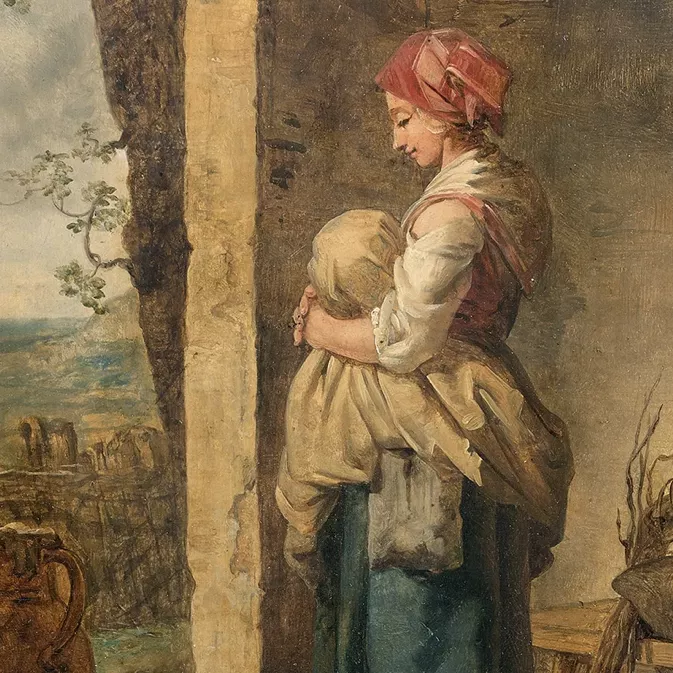
Focus on Interior of a Kitchen, Martin Drölling, 1810
In Interior of a Kitchen, Martin Drölling illustrates with methodical precision his ability to capture the materiality of objects and the quietude of a domestic space.
The work, constructed with scientific rigor, follows in the tradition of the Flemish masters, where the depiction of material details becomes an exercise in virtuosity.
The surfaces, whether the patina of worn wood or the metallic sheen of a copper vessel, testify to remarkable meticulousness.
Every element, from the enameled pottery - a souvenir of his time at Sèvres - arranged on a shelf to the metal utensils hanging on the wall, is reproduced with meticulous care that lends an almost tactile dimension to the scene.
The chromatic palette, dominated by warm browns, ochres and earth tones, reinforces the visual unity and inscribes the work in a sober realist register, avoiding any superfluous sparkle.
This colorimetric choice, combined with subtle chiaroscuro, not only structures the space; it sculpts the volumes and highlights the texture of the objects, suggesting a tangible materiality.
The skilfully measured play of light organizes the composition by drawing attention to precise points, creating a visual balance between the whole and the details.
The atmosphere of the scene, hushed and introspective, nevertheless goes beyond mere documentary rendering. Drölling offers a thoughtful reading of domesticity, where each object becomes a bearer of history and use.
This painting then asserts itself as a synthesis between scientific observation and a measured aesthetic sensibility, rooted in everyday life but sublimated by art.
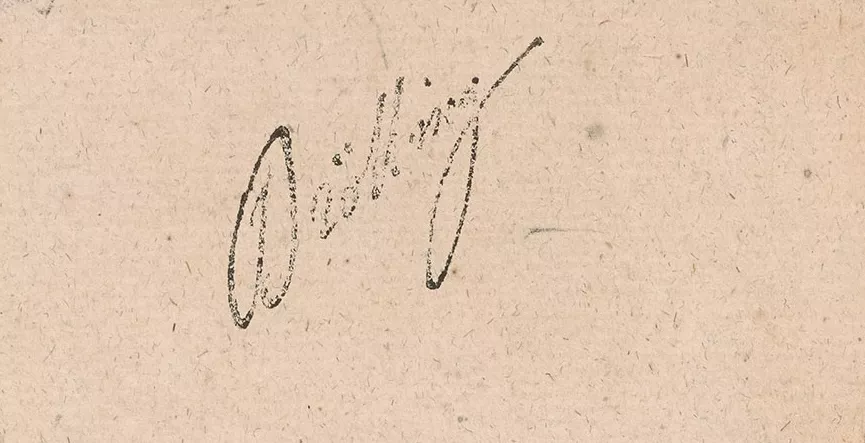
Recognizing Martin Drölling's signature
The painter did not sign all his works, which does not facilitate the work of expertise. When his works are signed, the signature appears in flowing script.
Know the value of a work
If you happen to own a work by Martin Drölling, request a free appraisal without further delay via our form on our website.
A member of our team of experts and licensed auctioneers will contact you promptly to provide you with an estimate of the value of your work, as well as any relevant information about it.
If you are considering selling your work, you will also be accompanied by our specialists in order to benefit from alternatives for selling it at the best possible price.
.Estimate in less than 24h
Discover in the same theme

Rating and value of works, paintings and engravings by Henri...
Henri Motte is a 19th-century neoclassical painter and engraver. His works are quoted and have value at auction. Estimate in 24h.
Learn more >

Rating and value of sculptures and bronzes by Antonin Mercié
Antonin Mercié is a 19th-century neoclassical sculptor whose works are highly prized at auction.
Learn more >

Rating and value of paintings and drawings by Charles Théodo...
Charles Théodore Frère is an Orientalist painter whose paintings are highly regarded and valued on the auction market.
Learn more >
Other works from the same period sold at auction

Estimated 1.000 - 1.500
Victor MARAIS-MILTON (1872-1948) La sieste du prélat, oil on panel

Estimated 6.000 - 8.000
Michel Martin DRÖLLING (1786-1851), Portrait of Dominique Alexandre "Charles" Legrand (1790-1808), oil on canvas

Estimated 20.000 - 30.000
Auguste RENOIR (1841-1919) Entrance to houses, circa 1895-1896, Oil on canvas.

Estimated 4.000 - 6.000
Ary Scheffer (Dordrecht 1795-1858 Argenteuil) One of the three holy women (meditating on Christ's resurrection after the vision in the tomb?) Oil on canvas

Estimated 1.500 - 3.000
Olivier Charles DE PENNE (1831-1897) The Pack, Oil on panel

Estimated 1.500 - 3.000
Macario VITALIS (1898-1989) Portrait of Marie Thérèse, Oil on canvas

Secure site, anonymity preserved

Auctioneer approved by the State

Free and certified estimates
Frequently asked questions
-
Who was Martin Drölling, and what was his artistic background?Martin Drölling (1752–1817) was a French Neoclassical painter born in Alsace who settled in Paris in 1779. Specializing in portraits and genre scenes, he trained under prestigious masters such as Élisabeth Vigée Le Brun and Jean-Baptiste Greuze. His style is characterized by an almost microscopic attention to detail and a fascination with interiors bathed in warm light, particularly kitchen scenes.
-
What are the price ranges for Martin Drölling's paintings?Martin Drölling’s works sell for between €100 and €235,000. Watercolor drawings range from €100 to €12,500, while oil paintings fetch between €370 and €235,000. This significant variation depends on the quality, subject matter, size, and condition of the work.
-
How can you authenticate a painting by Martin Drölling?To authenticate a work by Martin Drölling, we recommend that you request a free appraisal from Auctie's. A certified expert or auctioneer will examine the artwork, verify the signature (the artist did not always sign his works), and provide you with a reliable estimate within 48 hours, with no obligation on your part.
-
Is this a good time to sell a painting by Martin Drölling?Yes, the market for Martin Drölling’s paintings remains active, and his auction results are comparable to those of great masters such as Jean-Léon Gérôme. Critical interest in his work grew toward the end of his life, and his works—particularly his meticulous interior scenes—continue to be in high demand. Auctie's will help you determine the best time and sales strategy to maximize the value of your property.
-
How does the appraisal and sale process work at Auctie's?The appraisal is free and non-binding: simply contact Auctie's via our form, and an expert will call you back promptly, examine your artwork, and provide you with an appraisal within 48 hours. If you decide to sell, our licensed auctioneers will guide you through the process from appraisal to auction, exploring the best options to maximize the sale price.
