



Rating and value of paintings and drawings by Guillaume Guillon Lethière

Key takeaways
- A French Neoclassical painter (1760–1832), Guillaume Guillon Lethière is known for his historical compositions that combine formal rigor and dramatic intensity.
- His works sell for between €80 and €686,000 depending on the medium: prints from €200 to €420, drawings from €80 to €20,500, and paintings up to €686,000.
- In 2018, his painting “Brutus Condemning His Son to Death” sold for €557,000, far exceeding its estimate of €160,000 to €200,000.
- The artist rarely signed his works, making expert appraisal essential for authenticating and valuing his compositions.
If you own a work by artist Guillaume Guillon Léthière or after, and would like to know its value, our state-approved experts and auctioneers will offer you their appraisal services.
Our specialists will carry out a free appraisal of your work, and provide you with a precise estimate of its value on the current market.
Then, if you wish to sell your work, we will direct you to the best possible arrangement to obtain the optimum price.
Rating and value of the artist Guillaume Guillon Léthière
Guillaume Guillon Léthière was a painter active in the late 18th and early 19th centuries, and is recognized as a painter of History.
His paintings, watercolor drawings and prints sell on the art market for between €80 and €686,000, a substantial delta but one that speaks volumes about the value that can be attributed to the artist's works.
In 2018, a painting measuring 60 x 100 centimeters and entitled Brutus condemning his son to death sold for €557 000, while it was estimated at between €160,000 and €200,000.
Order of value from a simple work to the most prestigious
Technique used | Result |
|---|---|
Estamp | From €200 to €420 |
From €80 to €20,500 | |
From €1,000 to €686,000 |
Estimate in less than 24h
The artist's style and technique
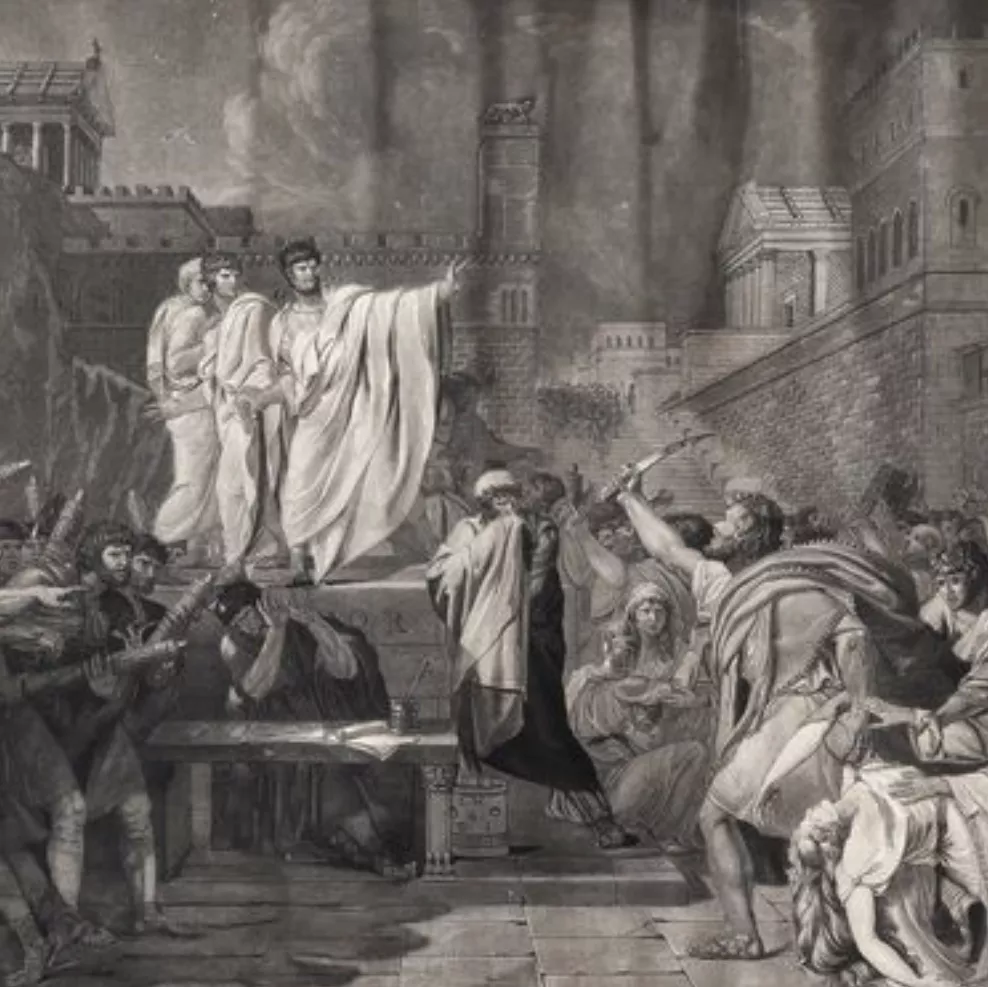
Guillaume Guillon Lethière follows in the neoclassical tradition while developing an approach in which rigorous composition is combined with restrained expressivity.
Heir to David's pictorial principles, he adopts their formal clarity and the ordering of figures according to a rigorous geometric construction, favoring pure lines and uncluttered staging.
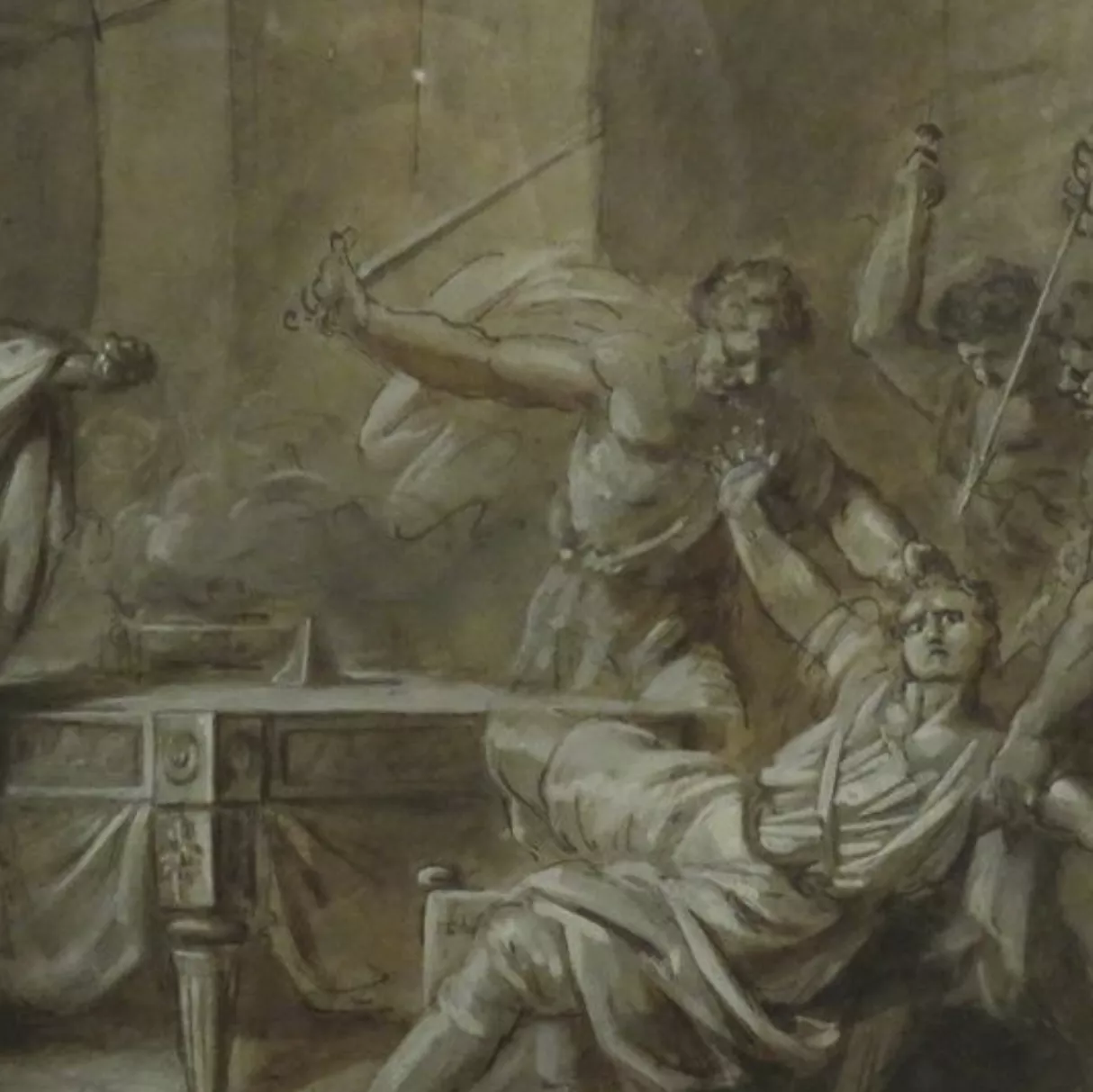
His drawing, of academic precision, is distinguished by the firmness of the line and the subtle modeling of volumes, achieved through a masterful play of chiaroscuro.
Unlike some of his contemporaries, Lethière does not seek theatrical emphasis, but a restrained nobility, where emotion is manifested in the sobriety of gestures and the solemnity of looks.
The color, though measured, is never austere: it participates in the balance of the scene by harmonizing with a diffused light, which sculpts the forms without breaking the chromatic unity of the whole.
In his great historical compositions, he favors a smooth, almost enameled facture, which reinforces the effect of monumentality and gives his figures a sculptural presence.
However, far from a rigid application of neoclassical codes, Lethière introduces a sensitivity of his own in the treatment of expressions and in the choice of his subjects, where a reflection on the political and social tensions of his time shines through.
This ability to combine strict spatial construction with restrained interiority lends his work a singularity that, without breaking with the Davidian tradition, offers a more interiorized reading, where the gravity of the subject is translated by plastic restraint and a perfectly mastered economy of means.
The life of Guillaume Guillon Lethière
Guillaume Guillon Lethière was born in Guadeloupe in 1760, to a non-legitimated union between a high-ranking colonial official and a woman of color.
As soon as he arrived in metropolitan France, he made a name for himself with his precocious aptitude for drawing and entered the Académie royale de peinture et de sculpture, where he trained under Gabriel-François Doyen.
His talent opened the door to the Prix de Rome in 1784, but he had to settle for second prize, a distinction that did not prevent him from embarking on a distinguished career.
Close to republican circles during the Revolution, he distinguished himself through historical painting in which balanced composition and rigorous line-making were combined with underlying political reflection.
A favorite of Lucien Bonaparte, he became director of the French Academy in Rome under the Consulate, consolidating his artistic influence.
Returning to Paris under the Restoration, he found himself sidelined from official circles before being reinstated at the Institute and appointed professor at the École des Beaux-Arts.
Adhering to the neoclassical ideal, he passed on his knowledge to a generation of artists marked by his vision of painting that was both rigorous and expressive.
His work, often overshadowed by that of David, nonetheless testifies to a singular approach, in which antique grandeur doubles as a dramatic tension specific to his era.
He died in 1832, leaving behind a body of work that combines academic precision with an interiorized sensitivity, and in which the imprint of a career marked by his dual cultural background shines through.
Focus on La mort de Virginie, Guillaume Guillon Lethière
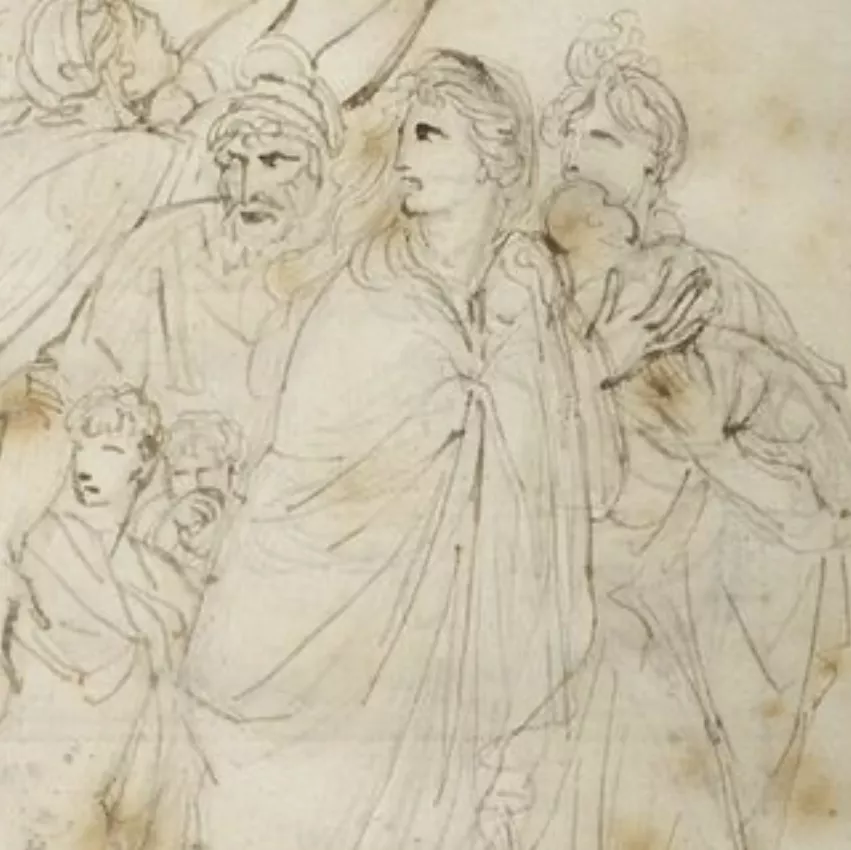
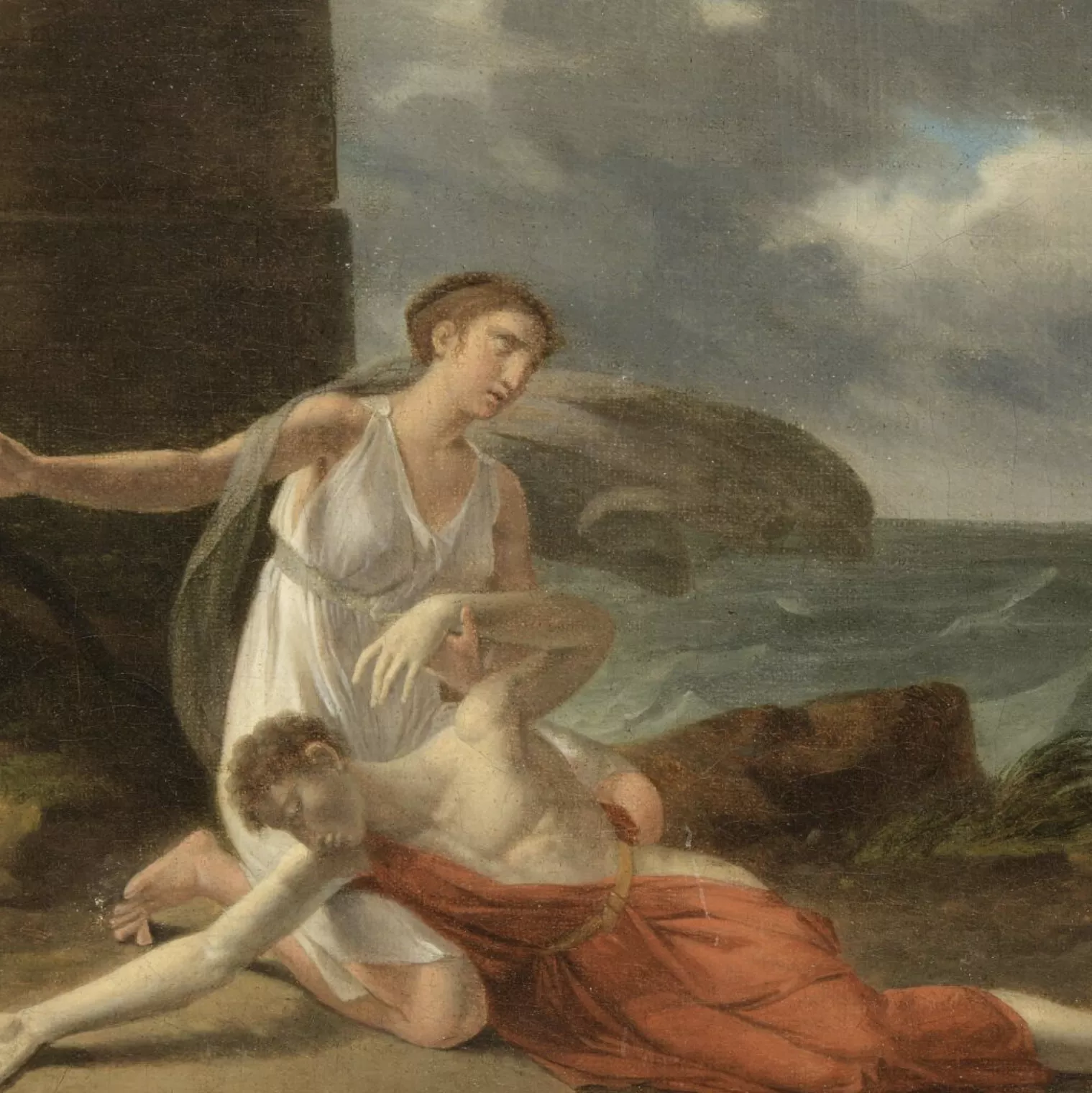
La mort de Virginie (Musée du Louvre, Paris) stands out as one of Guillaume Guillon Lethière's most accomplished compositions, in which his adherence to the principles of neoclassicism is acutely evident, while infusing it with a dramatic tension specific to his pictorial language.
The episode, drawn from Roman tradition, dramatizes the moment when Virginie, victim of the lusts of the decemvir Appius Claudius, is stabbed to death by her own father to escape dishonor.
The architectural rigor of the staging recalls David's lesson: orthogonal lines, a clearly layered frieze of characters, economy of space in the service of flawless legibility.
But Lethière moves away from the cold hieraticism of his illustrious predecessor by amplifying the emotional charge.
The father's gesture, arm outstretched in a rocking motion, gives the scene an internal dynamic that breaks with classical frontality, while the expressions of the witnesses, shaped by incisive chiaroscuro, accentuate the intensity of the drama.
The palette, dominated by sober hues, exalts the whiteness of Virginie's garment, the ultimate symbol of sacrificed purity.
Lethière thus succeeds in combining the heritage of the Grand Style with a controlled theatricality, where affect never yields to excessive pathos.
The work, acclaimed in its day, embodies a vision of neoclassicism in which formal rigor bends to the demands of narrative, affirming the moral role of painting in the construction of a heroic ideal.
Guillaume Lethière's imprint on his time
Guillaume Guillon Lethière stands out as a singular figure of French neoclassicism, whose imprint goes beyond the strict academic framework to embrace the political and cultural tensions of his time.
Trained in Doyen's studio and influenced by David, he embraced the latter's principles, while distinguishing himself through a sharper sense of drama and restrained expressivity, where the rigor of the drawing never sacrifices the vigor of the narrative.
His institutional role, notably as director of the Académie de France in Rome (1807-1816), enabled him to disseminate a conception of painting in which the balance between architectural construction and intensity of feeling prevailed over austere dogmatism.
He thus formed a generation of artists concerned with a synthesis between idealization and psychological truth, having a lasting influence on the French pictorial scene.
But his legacy extends beyond the aesthetic field: born in Guadeloupe, the son of a landowner and a freedwoman, he embodies an exceptional figure in an artistic milieu still marked by racial prejudice.
His accession to the highest academic spheres attests to official recognition, albeit tempered by a historiography that, until the twentieth century, consistently downplayed his contribution.
Through his works, in which History is set up as a moral model, and through his career, which challenges established hierarchies, Lethière leaves the imprint of an artist at the crossroads of aesthetic and social revolutions, whose recent rehabilitation testifies to a renewed interest in figures marginalized from the great national artistic narrative.
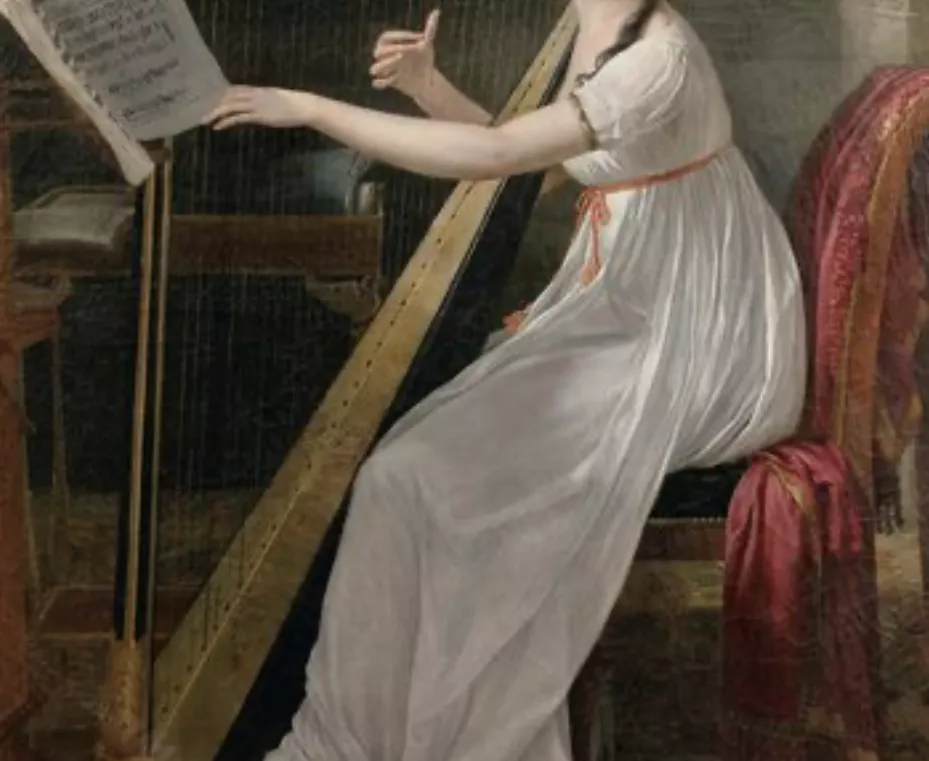
The stylistic influences of Guillaume Guillon Lethière
Guillaume Guillon Lethière is in the tradition of neoclassicism, but his pictorial language cannot be reduced to Davidian influence alone.
Trained at the Académie royale de peinture et de sculpture, he assimilated the legacy of Poussin and Le Sueur early on, from whom he retained architectural rigor and clarity of composition.
For him, the idealization of forms is accompanied by a dramatic tension closer to the Italian Baroque, borrowing from Le Brun the theatricality of gestures and from Raphael the harmony of arrangements.
The impact of ancient sculpture, omnipresent in his production, shines through in his incisive drawing and the hieratic nobility of his figures, where we also perceive an echo of Roman mannerism.
But it was with his great rival Jacques-Louis David that the essence of his aesthetic positioning lay: while adopting the severity of line and monumentality of composition, Lethière rejected the dogmatic austerity and formal asceticism of the Davidian school, preferring a more animated solemnity, where classical rigor bends to a more vibrant narrative.
His stay in Rome, where he directed the Académie de France, completed his visual culture, between the monumentality of ancient bas-reliefs and the expressiveness of late Caravaggism.
This synthesis, which combines idealization and psychological intensity, gives his work a singularity that distinguishes it within the great neoclassical movement, while announcing in places the emerging Romantic sensibility.
Recognizing the artist's signature
Guillaume Guillon Lethière very rarely signed his works. That's why, if you think you own one, appraisal is vital.
Knowing the value of a work
If you happen to own a Guillaume Guillon Lethière work, request a free appraisal without further delay via our form on our website.
A member of our team of experts and licensed auctioneers will contact you promptly to provide you with an estimate of the value of your work, as well as any relevant information about it.
If you are considering selling your work, you will also be accompanied by our specialists in order to benefit from alternatives for selling it at the best possible price.
.Estimate in less than 24h
Discover in the same theme

Rating and value of works, sculptures, bronzes by Charles Va...
Charles Valton was a 19th-century animal sculptor who worked with Barye, producing works that are quite highly rated at auction.
Learn more >

Rating and value of marine paintings by Richard Parkes Bonin...
Richard Parkes Bonington's paintings are among the most sought-after. They are highly valued at auction.
Learn more >

Rating and value of paintings by Cornelius Krieghoff
Cornelius Krieghoff is a Dutch-Canadian realist painter who has produced works that are highly rated and valued at auction.
Learn more >
Works from the same period sold at auction

Estimated 3.000 - 5.000
Henri Adrien TANOUX (1865-1923) The Slave Trader, oil on canvas

Estimated 1.000 - 1.500
Victor MARAIS-MILTON (1872-1948) La sieste du prélat, oil on panel

Estimated 1.200 - 2.000
Émile FRIANT (Dieuze 1863-1932 Paris) Bust portrait of a smiling smoker, oil on canvas

Estimated 6.000 - 8.000
Michel Martin DRÖLLING (1786-1851), Portrait of Dominique Alexandre "Charles" Legrand (1790-1808), oil on canvas

Estimated 4.000 - 6.000
Ary Scheffer (Dordrecht 1795-1858 Argenteuil) One of the three holy women (meditating on Christ's resurrection after the vision in the tomb?) Oil on canvas

Estimated 1.500 - 3.000
Olivier Charles DE PENNE (1831-1897) The Pack, Oil on panel

Secure site, anonymity preserved

Auctioneer approved by the State

Free and certified estimates
Frequently asked questions
-
Who was Guillaume Guillon Lethière, and what was the historical context of his life?Guillaume Guillon Lethière (1760–1832) was a French history painter active in the late 18th and early 19th centuries. Born in Guadeloupe, he studied at the Royal Academy of Painting and Sculpture and won the Second Prize of Rome in 1784. He established himself as a distinctive figure in Neoclassicism, closely associated with Jacques-Louis David but developing his own approach that combined formal rigor with dramatic intensity. He also served as director of the French Academy in Rome and as a professor at the École des Beaux-Arts.
-
What are the prices and valuations of Guillaume Guillon Lethière's paintings and drawings?Guillon Lethière's works sell for between €80 and €686,000, depending on the medium and rarity. Prints range from €200 to €420, drawings from €80 to €20,500, and paintings from €1,000 to €686,000. A notable example: “Brutus Condemning His Son to Death” sold for €557,000 in 2018, far exceeding its initial estimate of €160,000 to €200,000.
-
How can a work attributed to Guillaume Guillon Lethière be authenticated?Authenticating a work by Guillon Lethière is essential, as the artist very rarely signed his works. Auctie's offers a free, no-obligation appraisal by its certified auctioneers and experts. Simply submit your appraisal request using the form on the website: a specialist will contact you and provide a detailed opinion on the attribution and value of your artwork within 48 hours.
-
When is the best time to sell a work by Guillon Lethière?Yes, now is a good time to sell a work by Guillon Lethière. The market for this artist is currently enjoying renewed interest from collectors and institutions, following a historiographical reassessment that highlights the originality and significance of his work within the context of French neoclassical history painting. Recent auction results confirm sustained demand.
-
How does the appraisal and sales process work at Auctie's?Auctie's offers a three-step process: (1) You request a free, no-obligation estimate using the form on the website; (2) A certified expert or auctioneer will contact you and provide you with their appraisal within 48 hours; (3) if you decide to sell, our specialists will guide you every step of the way—from the appraisal to the auction—offering you the best options to ensure you get the best possible price for your artwork.
