



Rating and value of paintings by Antoine Coypel

Key takeaways
- Antoine Coypel (1661–1722) was a painter who bridged the gap between the Classicism of the Grand Siècle and the Rococo, influenced by Italy and renowned for his expressive, theatrical compositions.
- Appointed First Painter to the King in 1716 and director of the Royal Academy beginning in 1714, he played a central role in Parisian artistic life in the early 18th century.
- His works are characterized by a warm color palette (golden, pinkish, and red tones), complex drapery, and emotional expressiveness, particularly evident in his historical and mythological paintings.
- Expert authentication is essential because Coypel did not consistently sign his canvases, reducing the risk of confusion with his followers.
The artist's style and technique
Antoine Coypel (1661 - 1722) was a painter of the late Grand Siècle, at the crossroads of Le Brun's classicism and the beginnings of rococo.
His work reflects a blend of grandeur and sensuality, uniting the rigor of classical composition with freer expressivity and warmer coloring. He was undeniably influenced by Italian painting, influenced by Caravaggio, Raphael and the Venetian painters. This stay in Rome took place in his youth, and was to have a lasting influence on his career.
He favors theatrical compositions, organizing scenes with a sense of movement and drama no doubt inherited from Rubens, and often in spectacular settings.
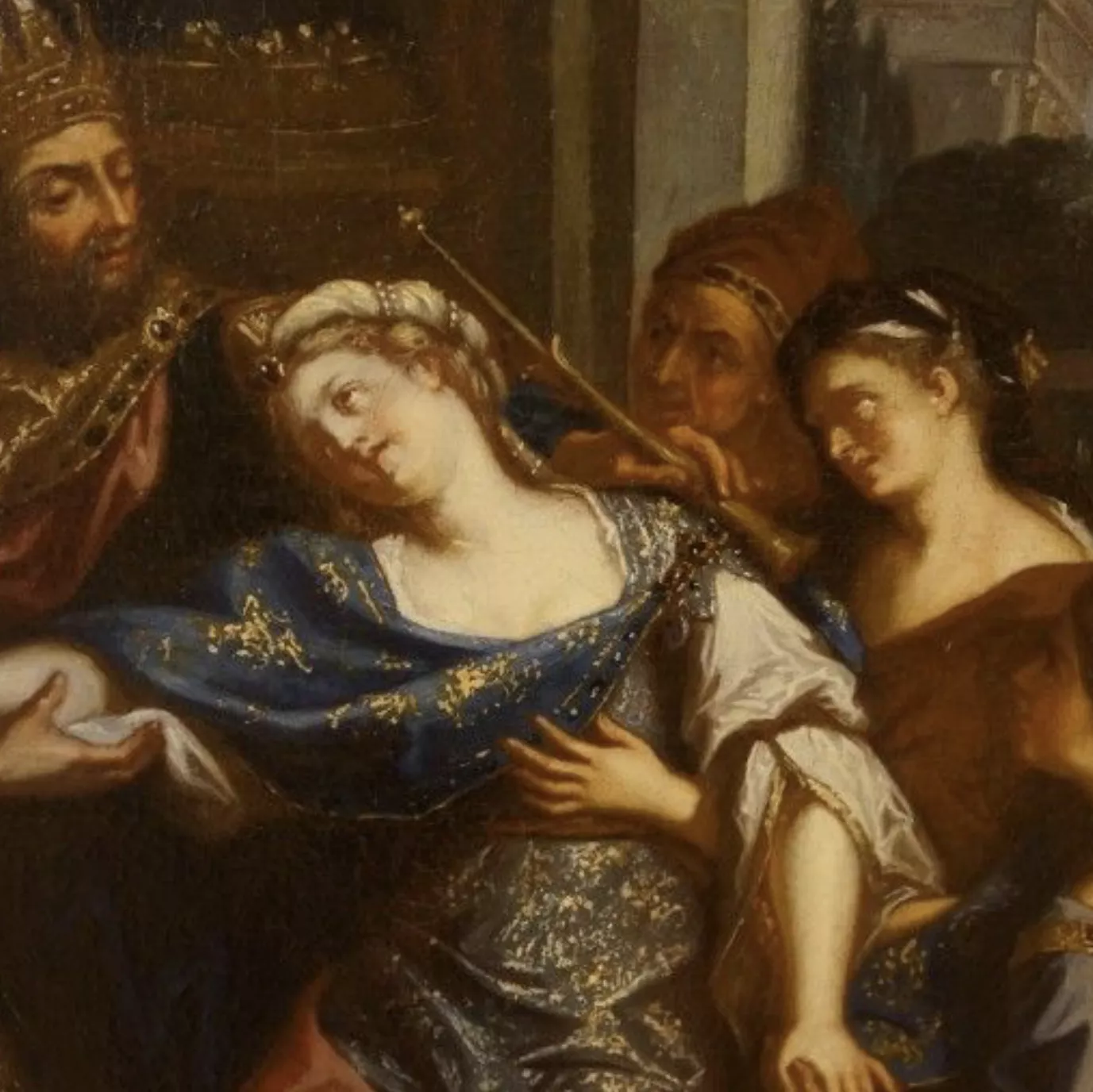
The lines he uses are supple and dynamic. In contrast to the rigidity of pure classicism, his contours are more fluid, serving the narrative. The palette he uses is warm and luminous, employing golden, pinkish, red and ochre tones that lend his paintings a vibrant atmosphere.
The figures are mostly idealized, with supple flesh, elegant gestures and a certain sensuality, especially where his mythological subjects are concerned.
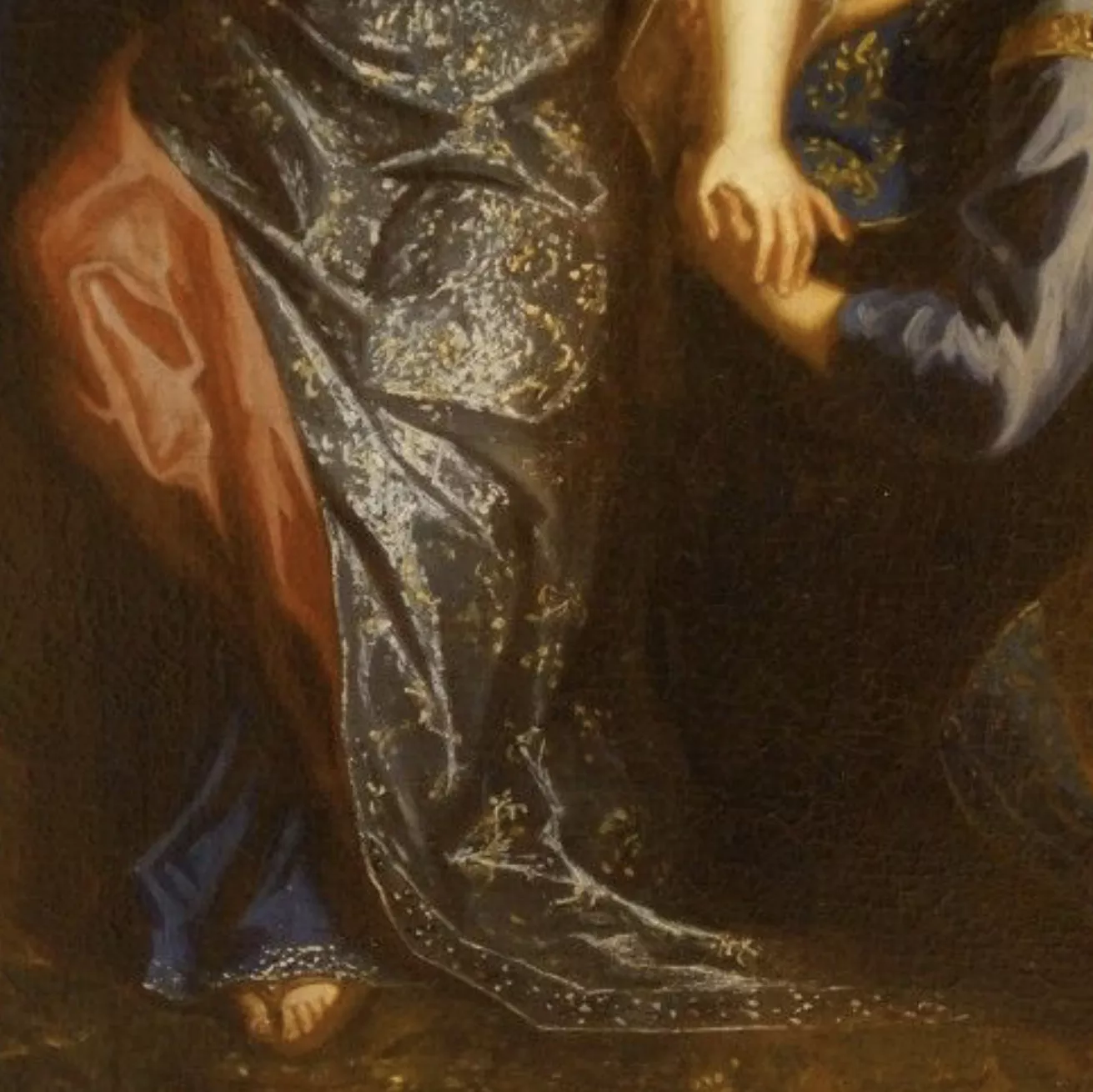
He renders drapery and textures with great care, paying particular attention to the rendering of fabrics, which are often animated by complex folds and subtle reflections.
He practiced the noblest subjects and genres, history painting, which he treated with erudition and brilliance, religious and mythological painting, in which he infused a sensitive, sometimes emotional humanity that set him apart from the great decorators of the previous generation.
Painted for the King in 1776, he took part in major decorations (Galerie d'Hercule at the Palais-Royal and the ceiling of the chapel at the Château de Versailles, among others). His work also stands out as a forerunner of the rococo style: through his palette and expressiveness, he heralds the stylistic evolutions of the early 18th century.
He thus establishes himself as one of the great artists of his time, like Claude Joseph Vernet, Anne-Vallayer Coster or Guillaume Guillon Lethière.
The life of Antoine Coypel
Antoine Coypel was born in Paris in 1661, into a family of artists.
The son of Noël Coypel, also a renowned history painter, he acquired a rigorous classical training at an early age.
At the age of 11, he traveled to Rome with his father, who held the post of director of the Académie de France. There, he studied the Italian masters (Raphael, Titian, Caravaggio, Carracci), a decisive experience for his pictorial sensibility.
Returning to Paris in 1676, he was admitted to the Académie royale de peinture et de sculpture in 1681, when he was just 20 years old.
In 1684, he was admitted to the Académie thanks to the painting Louis XIV couronné par la Victoire (now lost). He was protected by Philippe d'Orléans, the future regent, who commissioned several decorations from him, including those for the Palais-Royal.
In 1690, he was appointed professor at the Académie, and rector in 1707. Becoming First Painter to the King in 1716, under Louis XV, he established himself as a prestigious figure at the height of his career.
Finally from 1714, he was appointed Director of the Royal Academy, a role that made him a central figure in Parisian artistic life in the early 18th century.
Not just a painter, he also pursued literary activities, as he wrote several speeches and lectures on painting, testifying to an artistic thinking nourished by artistic and modern references.
He was an advocate of an art where emotion, color and movement could dialogue with classical tradition.
He died in Paris in 1722, aged 61. His son, Charles-Antoine Coypel, in turn became a painter and continued the dynasty. Today, he is recognized as a transitional figure between the rigorous classicism of the Grand Siècle and the decorative sensuality of the 18th century.
Focus on Democritus, Antoine Coypel, circa 1692
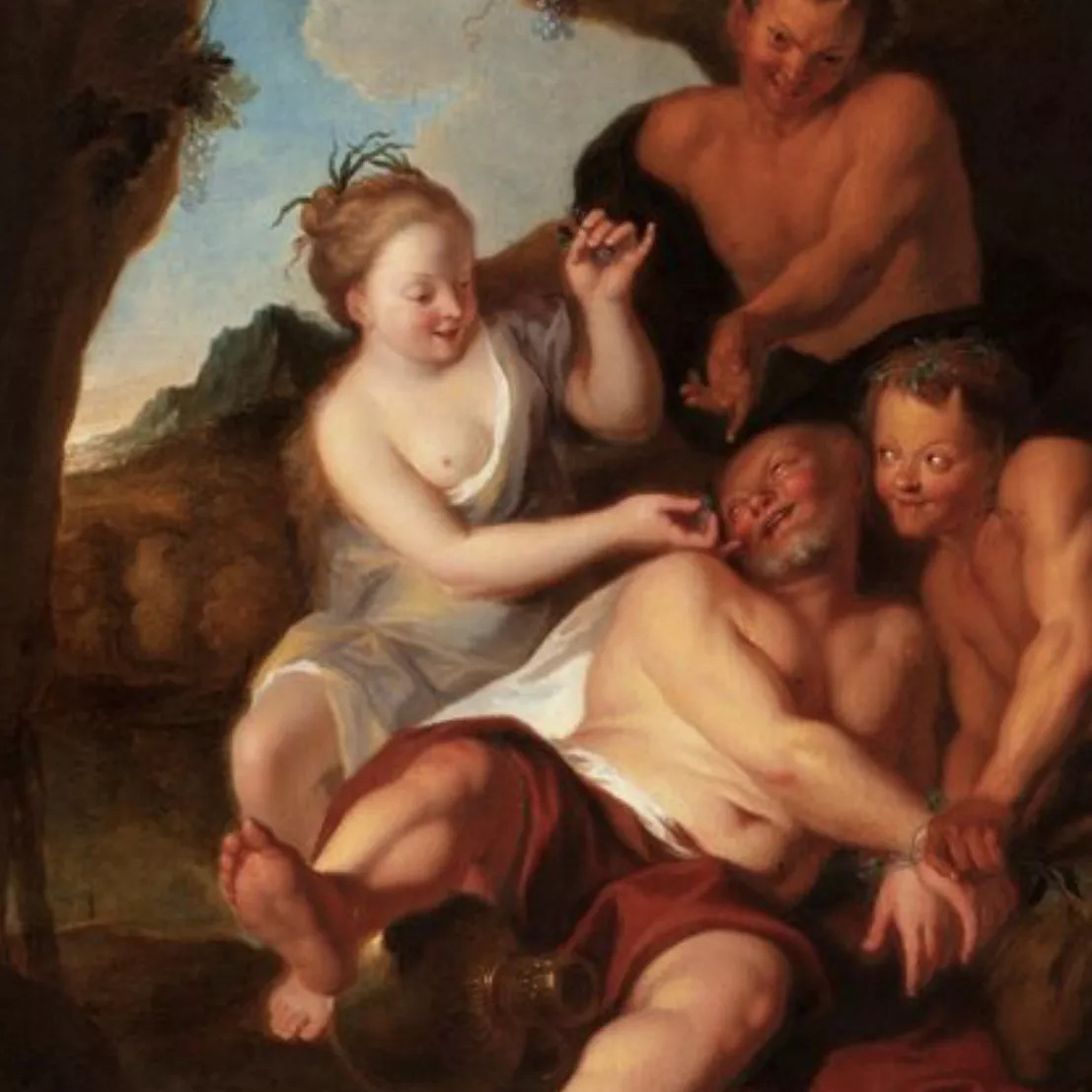
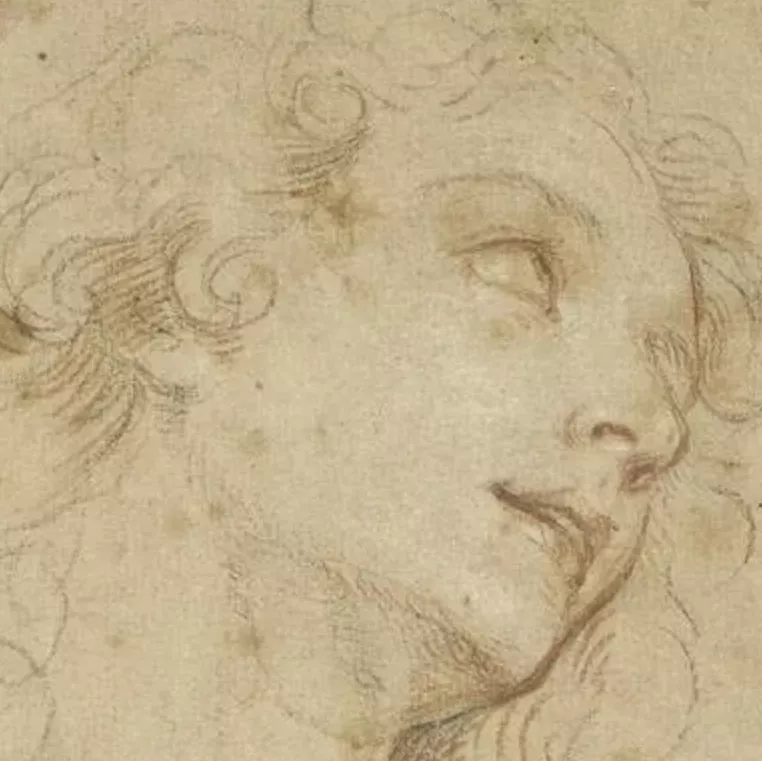
Coypel's painting Democritus, housed in the Musée du Louvre, is a work emblematic of his style and intellectual ambitions.
The subject he chose is quite rare : Democritus, a Greek philosopher known for his atomist theory and his laughter at the folly of mankind, is depicted alone, in a meditative and ironic attitude.
The chosen format is tight, Coypel opting for a half-figure composition, refocused on the thinker's face and hands, creating an effect of proximity with the viewer.
The philosopher's smile is ambiguous; he doesn't laugh outright but sketches a thin, almost mocking smile, certainly in order to convey a rather complex inner reflection, between wisdom and critical distance.
The artist's gaze is quite piercing: his eyes are directed at the viewer or lost in the void, reinforcing the intellectual confusion and depth of the character. His gestures are expressive, his hands open, slightly raised, suggesting a gesture of comment or disillusionment with the world he considers absurd.
Coypel makes extensive use of chiaroscuro, employing theatrical lighting from the left, which makes the face vibrate and sculpts the forms in a hushed atmosphere.
The artist's palette is warm and refined, with brown tones, muted reds and luminous beiges forming a rich, enveloping cameo in the softened Caravaggesque tradition. Textures (skin, beard, fabric) are modulated and each material is rendered with care, but without excessive detail, in a fluid, painterly style.
Through this work, Coypel refers to Italian models, the treatment of the face recalling Titian and Correggio, with an expressive softness that he blends with a nobility of posture.
Coypel demonstrates a moral ambition through this work, to make the philosopher's portrait an exercise in condensed history painting, combining ancient thought, human emotion and pictorial mastery.
Recognizing the artist's signature
Antoine Coypel doesn't always sign his paintings, and many on the market are attributed to his followers (this is not to say that the paintings have no value). Whatever the case, for this artist, the intervention of a dedicated expert is mandatory.
Knowing the value of a work
If you happen to own a work by Antoine Coypel, request a free appraisal without further delay via our form on our website.
A member of our team of experts and auctioneers will contact you promptly to provide you with an estimate of the value of your work, as well as ad hoc information about it.
If you are considering selling your work, you will also be accompanied by our specialists in order to benefit from alternatives for selling it at the best possible price.
.Estimate in less than 24h
Discover in the same theme

Rating and value of paintings by Jean Raoux
Jean Raoux, a painter of religious subjects and history paintings, produced many oil-on-canvas works appreciated at auction. Estimated in 24h.
Learn more >

Rating and value of works, drawings, paintings by Frans II F...
Frans II Francken was a Dutch painter of the Northern School, who produced drawings and oils on canvas that were appreciated and sought-after at aucti...
Learn more >

Rating and value of paintings by Balthasar van der Ast
Balthasar van der Ast was a painter of the Golden Age who produced many still lifes, which are highly valued at auction.
Learn more >
Works from the same period sold at auction

Estimated 800 - 1.200
Carolus DURAN (1837-1917) Portrait of a bearded man with a hat, Charles Drouet, Oil on canvas

Estimated 300 - 500
COYPEL (1661 - 1722), Assemblage of cut engravings and fabric fragments on a mirror background

Estimated 6.000 - 8.000
Michel Martin DRÖLLING (1786-1851), Portrait of Dominique Alexandre "Charles" Legrand (1790-1808), oil on canvas

Estimated 4.000 - 6.000
Attributed to Charles François Lacroix de Marseille (Marseille 1700 - 1782 Berlin), oil on canvas

Estimated 400 - 600
Early 19th century French school Portrait of Monseigneur Martial Louis de Beaupoil de Saint-Aulaire (1719-1798), then Bishop of Poitiers (1759-1791) Oil on canvas

Estimated 500 - 800
French school of the second half of the 18th century, follower of Hyacinthe Rigaud (Perpignan 1659-1743 Paris) Portrait in cuirass of a Marshal of France

Secure site, anonymity preserved

Auctioneer approved by the State

Free and certified estimates
Frequently asked questions
-
Who was Antoine Coypel, and what is his role in art history?Antoine Coypel (1661–1722) was a leading painter of the late Grand Siècle, a transitional figure between rigorous Classicism and the emerging Rococo style. The son of the painter Noël Coypel, he trained in Rome under Italian masters and became the King’s chief painter in 1716 and director of the Royal Academy. His style combined classical rigor with free expression, a warm color palette, and theatrical compositions that would influence the 18th century.
-
How can you authenticate a painting or drawing by Antoine Coypel?Authenticating a work by Coypel requires the expertise of a specialist, as the artist did not consistently sign his paintings and many works are attributed to his followers. Auctie's offers a free, no-obligation appraisal via its online form: an auctioneer or expert will contact you to examine the work and provide their opinion within 48 hours.
-
What are the stylistic characteristics of Antoine Coypel's works?Coypel’s paintings are characterized by theatrical compositions with a strong sense of movement and drama, a warm and luminous color palette (shades of gold, pink, red, and ochre), fluid and dynamic contours, and a refined treatment of textures and drapery. He favored noble subjects (history painting, religious and mythological themes) rendered with a sensitive and emotive humanity, influenced by Italian masters such as Raphael and Titian.
-
Is this the right time to sell a work by Antoine Coypel?Yes, Coypel’s works remain highly sought after by collectors and institutions, due to his status as a major transitional figure between two centuries and his growing recognition. His role as director of the Academy, his decorative works for the royal palaces, and the quality of his technical execution ensure a steady demand for his paintings and drawings.
-
How does the appraisal process work at Auctie's?The appraisal is free and non-binding. You submit your request using the form on the Auctie's website, and a specialized expert or auctioneer will contact you within 48 hours to examine the artwork and provide you with an appraisal. If you’re considering selling, the Auctie’s team will guide you through the process—from the appraisal to the auction—to help you achieve the best possible price.
