



Futurism: Appraisal and Auction

Key takeaways
- Futurist works from the classical period (1910–1916) fetch prices ranging from 200,000 to 3 million euros for Severini and Carrà, and up to tens of millions for Boccioni.
- Umberto Boccioni and Giacomo Balla dominate the market hierarchy, their value sustained by the rarity of their output and their theoretical significance within the movement founded in 1909.
- Boccioni’s Futurist sculptures, which are extremely rare, constitute an exceptional category, with outstanding pieces fetching several million euros when they appear at auction.
Speed, dynamism, and modernity: the value of Futurist art varies greatly depending on the artist, the period, and the rarity of the work.
Below you’ll find all our valuation guides dedicated to Futurism—Futurist paintings, drawings, sculptures, and prints. Each guide details the price ranges observed at auction and the factors that determine a work’s value before it is entrusted to our state-certified auctioneers.
Guides on this art movement
See all guides >
Here's why female artists are going through the roof
Impeccable provenance, historical reintegration, institutional attention: women artists have never been so present on the market.
Learn more >

Rating and value of paintings by Georges Papazoff
Georges Papazoff is a 20th-century Bulgarian painter who describes himself as unclassifiable. His works are highly valued.
Learn more >

Rating and value of Raymond Duchamp-Villon's works and sculp...
Raymond Duchamp-Villon is a twentieth-century Cubist sculptor whose works are highly regarded and valued at auction.
Learn more >

Market Value and Price of Alexandra Exter's Paintings, Drawi...
Alexandra Exter is a Franco-Ukrainian artist of modern art who has produced works that are highly rated and valued at auction.
Learn more >

Rating and value of paintings by Michel Moreno
Michel Moreno is a French contemporary artist who has produced works of considerable value at auction.
Learn more >

Rating and value of paintings by Nathalie Goncharova
Nathalie Goncharova is a Russian Futurist and Radiant artist who has produced works that are highly valued at auction.
Learn more >

Rating and value of paintings by Lucio Fontana
Lucio Fontana is a twentieth-century spatialist artist whose works are highly prized at auction.
Learn more >

Gustave Miklos's paintings, drawings and sculptures rated an...
Gustave Miklos is a twentieth-century Art Deco artist whose works are highly valued at auction.
Learn more >

Rating and value of paintings by Michel Larionov
Michel Larionov is a Russian painter of the Rayon period who has produced works that are quoted and valued at auction. Estimated in 24h.
Learn more >

Rating and value of paintings, drawings and engravings by Gi...
Giorgio Morandi is an Italian Futurist painter who has produced works that are listed and valued on the auction market.
Learn more >

Rating and value of paintings by Olga Rozanova
Olga Rozanova is a twentieth-century Russian avant-garde artist who has produced works that are listed and valued at auction.
Learn more >

Rating and value of paintings by Boris Grigoriev
Boris Grigoriev is a twentieth-century Russian painter who produced works of the Russian avant-garde that are listed and valued at auction.
Learn more >
Understanding the Value of a Futurist Work
What Is Market Value in the Modern Art Market?
The market value of a Futurist work refers to the benchmark value assigned to it by the secondary market at a given moment, based on the artist’s identity, the subject matter, the period of creation, the condition of the work, the strength of the documentation, and the current state of international demand.
Futurism, which emerged in Italy in 1909 with Filippo Tommaso Marinetti’s publication of the Futurist Manifesto in the newspaper *Le Figaro*, was one of the most passionate avant-garde movements of the 20th century, whose ambition was to unreservedly celebrate the burgeoning technical and industrial modernity— speed, machinery, and energy, in opposition to the entire cultural and academic legacy of the past.
This movement, whose pictorial and theoretical influence extended far beyond Italy to inspire several European avant-garde movements—notably in Russia—is distinguished by its desire to represent movement and perceptual simultaneity rather than the traditional frozen moment of classical painting.
Umberto Boccioni, whose pictorial and sculptural explorations represent the theoretical and artistic pinnacle of the movement, and Giacomo Balla, whose studies of the decomposition of movement produced some of the most iconic images of this avant-garde, are among the figures whose standing today enjoys fully established international institutional recognition.

Speed, movement, and dynamism: the essence of Futurism
The value of a Futurist work rests on a combination of several factors specific to this movement: the radical nature of the decomposition of the depicted movement, inherited from both Neo-Impressionist Divisionism and the early experiments in chronophotography, the use of dynamic lines that graphically convey the momentum and speed of the depicted object or figure, and the placement of the subject within the technological and urban imagination of industrial modernity—cars, trains, factories, and expanding metropolises.
This ambition to simultaneously capture multiple moments of a movement within a single composition constitutes the movement’s most immediately recognizable visual signature.
Umberto Boccioni, whose sculpture *Unique Forms of Continuity in Space* remains one of the most iconic works in the entire history of 20th-century art, occupies the very pinnacle of this market’s hierarchy, his early death in 1916 having left behind a relatively limited body of work, the rarity of which continues to sustain its exceptional market value.
Giacomo Balla, Gino Severini, and Carlo Carrà—whose pictorial approaches to movement and simultaneity are expressed through their own distinct sensibilities—complete this founding pantheon.
Period | Characteristics | Artists and Works | Market Demand Level |
Early Futurism (manifesto, 1909–1910) | Exaltation of speed and the machine, a break with the past | Filippo Tommaso Marinetti (theory), early collective works | Strong, significant historical value |
Classical Pictorial Futurism | 1910–1916 | Umberto Boccioni, Giacomo Balla, Gino Severini, Carlo Carrà | Exceptional, very high auction prices |
Futurist sculpture | 1912–1916 | Umberto Boccioni | Institutional, extremely rare works |
Second Futurism (aeropainting) | 1920–1944 | Giacomo Balla (continued), Gerardo Dottori, Tullio Crali | Active, specialized Italian market |
International influence and dissemination | 1910–1920 | Influence on Russian Cubo-Futurism | Active, related market |
Estimate in less than 24h
The criteria that determine the value of a Futurist work
The market value of a Futurist work is determined first and foremost by the artist’s identity, which has a significant impact: Boccioni occupies the top of this hierarchy, followed by Balla, Severini, and Carrà, whose respective market values reflect both their historical significance within the movement and the relative rarity of their works from the classical period, between 1910 and 1916, as World War I brought the movement to an abrupt halt, with several of its leading figures—Boccioni foremost among them—dying in combat or shortly thereafter.
The subject matter and the period of creation also play a decisive role; works that directly document the movement’s founding themes—automotive speed, urban dynamism, and industrial energy—are generally more sought after than more traditional subjects.
The price ranges observed on the secondary market illustrate this breadth. A study or drawing by a second-tier Futurist artist can range from 5,000 to 50,000 euros. A medium-sized painting by Carrà or Severini from the Futurist period ranges from 200,000 to 3 million euros, depending on the quality and rarity of the subject.
Large-scale compositions by Boccioni and Balla, as well as Boccioni’s rare sculptures—which appear on the market only exceptionally—frequently exceed several million euros and can reach considerable heights for the most exceptional and best-documented pieces.

Paintings, drawings, sculptures: all Futurist works appraised
The hierarchy of Futurist works and its impact on market value
Within Futurist art, the large-scale paintings from the classical period—between 1910 and 1916—occupy the top of the value hierarchy, particularly those that most directly illustrate the founding themes of the manifesto: speed, urban dynamism, and the energy of a moving crowd.
Futurist sculpture, which is extremely rare within the movement’s overall output and dominated almost exclusively by Boccioni’s work, constitutes a category unto itself; its absolute rarity explains the exceptional price levels achieved when a piece appears on the market—an event that remains exceedingly rare, as most known sculptures are held in institutional collections.
Drawings and preparatory studies—which are more numerous and document the formal research underlying the finished compositions—offer a more accessible entry point into the movement’s body of work.
Second Futurism, particularly the “aeropainting” of the 1920s and 1930s—which applied the movement’s principles to the depiction of the then-booming aviation industry—constitutes a distinct segment, whose market value, though solid, generally remains lower than that of the movement’s formative period.
Category | Characteristics | Indicative Price Range | Market Demand |
Large-scale pictorial composition (Boccioni, Balla, classical period) | Iconic subject, ambitious format, comprehensive documentation | €1 million — tens of millions | Institutional, exceptional |
Futurist sculpture (Boccioni) | Extremely rare, a major work in the history of sculpture | Priceless to tens of millions | Institutional, market event |
Medium-sized painting (Severini, Carrà, classical period) | Top-tier quality, characteristic subject matter | €200,000 — €3 million | Very strong, international |
Aeropainting (Second Futurism, 1920–1940) | Depictions of aviation, characteristic color palette | €30,000 — €500,000 | Active, specialized Italian market |
Drawing or preparatory study | Insight into the process of breaking down movement | €5,000 — €100,000 | Growing, collection entry |
Document, manifesto, or vintage Futurist publication | Historical and documentary value | €1,000 — €30,000 | Specialized, book collectors |
Boccioni, Balla, Severini, Carrà: the leading figures
Umberto Boccioni, a theorist as influential as he was a painter and sculptor, authored some of the movement’s seminal texts before developing a body of visual work of remarkable intensity; his accidental death in 1916 at the age of thirty-three having prematurely cut short an exceptional artistic career, the rarity of whose output today supports a considerable market value.
Giacomo Balla, whose longevity allowed for a more extensive stylistic evolution— from the movement’s most famous studies of the decomposition of motion to the “aeropainting” of his late period, occupies a comparable position in the market hierarchy, with his more abundant output also offering a greater diversity of price ranges.
Gino Severini, whose time in Paris and close ties to Cubism fostered a personal synthesis between Italian Futurist experiments and contemporary French avant-garde movements, enjoys particularly strong international recognition.
Carlo Carrà, whose subsequent evolution toward metaphysical painting and then toward a return to a certain classicism illustrates the diversity of individual trajectories within the movement itself, completes this pantheon of figures whose market value reflects both their specific contribution to Futurism and their broader place in the history of 20th-century Italian art.
Estimate in less than 24h
Get a Free Appraisal of a Futurist Artwork
A certified appraisal by a licensed auctioneer in less than 24 hours
Appraising a Futurist artwork requires a precise understanding of the movement’s chronology and the stylistic evolution specific to each artist, as well as particular vigilance regarding the rarity of authentic works from the classical period, which has led, over the decades, to the circulation of several disputed attributions.
A certified auctioneer has the necessary training to conduct this appraisal with the rigor it requires.
Auctie’s offers this appraisal free of charge, with a certified response in less than 24 hours. Whether you have inherited a painting attributed to a Futurist artist, wish to have a drawing or study from this period appraised, or are considering compiling an estate inventory, the process is the same: submit your piece to a trained expert capable of accurately assessing its value.
What you need to provide for an online appraisal
For a painting, clear photographs of the front and back of the work are essential, along with a close-up of the signature and any inscriptions on the back of the support, the precise dimensions of the composition, and any known provenance information: a gallery label, purchase invoice, previous certificate of authenticity, or reference in an exhibition catalog or specialized publication.
Any information regarding the date and place of creation, when known, must be specified, as it helps situate the work within the precise chronology of the movement.
For drawings and preparatory studies, the condition of the paper must be documented: pinholes, foxing, creases, and tears.
In cases of serious doubt regarding attribution—which is particularly important in this segment, where the scarcity of authentic works may have encouraged certain erroneous attributions—a thorough physical examination will be recommended before any steps are taken to put the work up for sale.
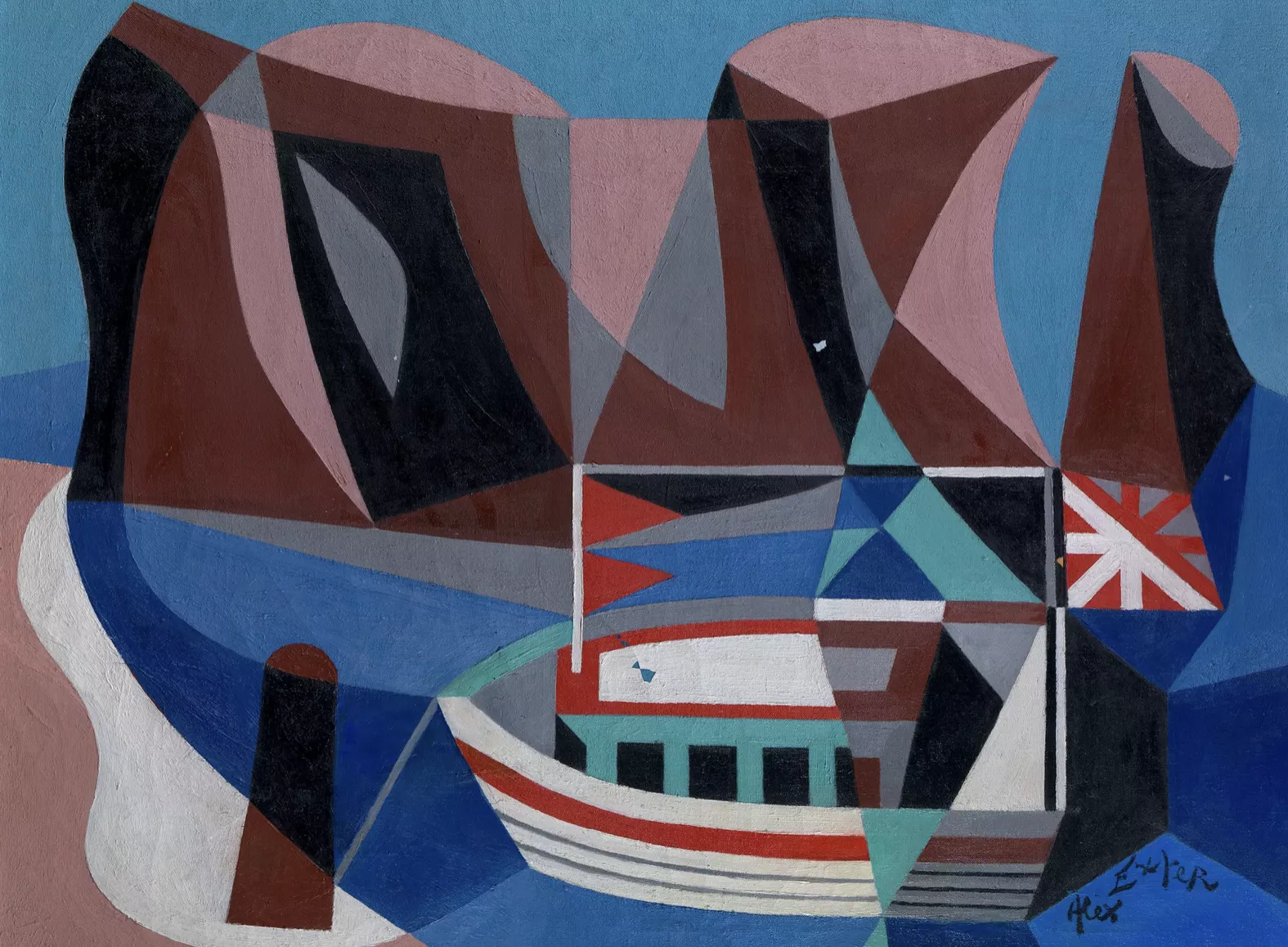
Signature, provenance, and authenticity: the pillars of valuation
Signatures and Attributions: Their Impact on Value
The authentication of a Futurist work relies on a set of converging clues. The signature is a primary element, but it is never sufficient on its own to establish a precise date within the often brief careers of artists from the classical movement.
Comparison with documented works from the same period, detailed stylistic analysis, and consultation of available archives are essential steps in any serious appraisal, particularly for Boccioni, whose limited output may have, over time, led to the circulation of attributions contested by the most rigorous specialists.
For the movement’s major artists, catalogs raisonné serve as the authoritative reference on the market. The works devoted to Boccioni by several renowned Italian specialists, as well as those focusing on Balla and Severini, constitute the attribution tools that the auctioneer systematically employs.
A work listed in one of these catalogs enjoys the highest level of scholarly credibility, which is directly reflected in its valuation.
Level of Documentation | Impact on the valuation |
Work listed in the artist’s catalog raisonné | Maximum assurance; very significant premium on value |
Work precisely dated and located within the movement’s classical period | Strong impact; maximum valuation within the artist’s body of work |
Work published in specialized literature or exhibited in a retrospective | Strong scholarly endorsement; significant appreciation in value |
Work accompanied by a written appraisal from a recognized expert on the artist’s body of work | Good guarantee; facilitates the sale and provides security for the buyer |
Work with a legible signature and documented provenance | Solid foundation; reliable estimate and a narrow price range possible |
Work without documentation or precise dating | Greater uncertainty; estimate based solely on stylistic analysis |
Provenance and Condition: Their Impact on the Estimate
The provenance of a Futurist work is a decisive factor in building trust in the market. A piece whose history can be traced through early 20th-century Italian dealers or historical collections, or through a documented historical private collection, enjoys a legitimacy that buyers directly reflect in their bids.
This traceability reduces the risk of misattribution and considerably facilitates the sale, particularly for this movement, where the rarity of authentic works calls for heightened caution.
Condition is the other key factor. Futurist paintings, created during a period of intense technical exploration in which artists sometimes experimented with new materials and techniques, may exhibit cracks or specific forms of deterioration related to these experiments.
Examination under oblique and ultraviolet light reveals these interventions and allows for a precise assessment of their impact on the value, the precision of the leading lines, and the decomposition effects of movement—elements that constitute the essence of these works’ aesthetic and commercial appeal.
Sell a Futurist Artwork at Auction with Auctie's
From the reserve price to the final bid: how the price is determined
Auctions are the most advantageous method of sale for high-quality Futurist works, in a market where the structural scarcity of authentic works from the classical period can generate fierce competition among multiple collectors and institutions interested in the same piece.
The reserve price, set in consultation with the seller, must be carefully calibrated, taking into account the work’s precise place in the chronology of the artist and the movement, on which a considerable portion of its value depends.
For major, well-documented works, the dynamics of the auction can lead to final prices far exceeding initial estimates, as several institutions and collectors are prepared to engage in intense competition to acquire iconic pieces from this seminal moment in Italian modern art.
The auctioneer plays a decisive role here by curating a sale that creates the conditions for this competition.
Hôtel Drouot and online auctions: reaching the right bidders
Auctie’s holds its auctions at the Hôtel Drouot, the premier auction venue in continental Europe, founded in 1852 and frequented by a dense network of dealers, collectors, and specialists in modern art.
For a Futurist work, Drouot offers optimal visibility among European enthusiasts of this seminal movement, complemented by an online presence that significantly broadens the international reach of each auction.
An Italian collector committed to preserving the heritage of this national avant-garde, an American museum seeking an iconic work by Boccioni or Balla, or an Asian art lover drawn to the technical modernity celebrated by this movement can bid in real time from their home countries.
For Futurism, whose historical renown is now global, this international dimension is often decisive in securing the highest hammer price.
Estimate in less than 24h
Estate Planning, Inheritance: Valuing an Inherited Futurist Artwork
Inventory and Distribution of an Estate
Futurist works are sometimes found in the estates of families whose collections were assembled in the early decades of the 20th century, a time when these artists—already recognized in Italian avant-garde circles—remained accessible to discerning collectors with substantial but not exceptional means.
A work acquired in the 1910s or 1920s may today be worth considerably more than the heirs realize, making a preliminary appraisal all the more essential before any distribution of the estate.
Auctie’s regularly collaborates with notaries to compile comprehensive estate inventories that include works from the Futurist movement.
Each piece is appraised individually, with particular attention paid to precise dating within the artist’s career—a key factor determining value in this segment. The resulting report is an official, legally binding document that can be included in the estate file without reservation.
Confidentiality of the Process and Preserved Anonymity
The circumstances leading to the appraisal of an inherited Futurist work are often personal and sensitive: discovery within an estate, reorganization of a family collection, or a decision to sell after a long period of ownership. Auctie’s handles each case with absolute discretion.
The owner’s identity is never disclosed to third parties without their explicit consent, and the works may be offered for sale under complete anonymity if the owner so desires.
This confidentiality is a fundamental commitment of Auctie’s, valid at every stage of the relationship, from the initial contact through to the receipt of the proceeds from the sale.
Entrust the appraisal of your Futurist artwork to Auctie’s
A Futurist work deserves an appraisal commensurate with the intensity and rarity of this movement, which laid the foundation for Italian modern art. The chronological precision required to situate a work within the often-brief career of its artist, the inherent rarity of authentic works from the classical period, and the strength of consistently robust international demand: these are all factors that only a licensed auctioneer, well-versed in the specifics of this segment, can assess with the rigor they require.
Auctie’s guides you from the initial appraisal through to the final auction, with the expertise of a state-certified appraiser and the discretion your financial decisions deserve. The appraisal is free, confidential, and non-binding, and you’ll receive a response within 24 hours.
Discover in the same theme
Rating and value of Raymond Duchamp-Villon's works and sculp...
Raymond Duchamp-Villon is a twentieth-century Cubist sculptor whose works are highly regarded and valued at auction.
Learn more >
Market Value and Price of Alexandra Exter's Paintings, Drawi...
Alexandra Exter is a Franco-Ukrainian artist of modern art who has produced works that are highly rated and valued at auction.
Learn more >
Rating and value of paintings by Lucio Fontana
Lucio Fontana is a twentieth-century spatialist artist whose works are highly prized at auction.
Learn more >
Estimate in less than 24h
Frequently asked questions
-
What are the price ranges for a futuristic artwork?Prices vary considerably depending on the artist and the type of work. A drawing or study by a Futurist artist ranges from 5,000 to 100,000 euros, while a medium-sized painting by Severini or Carrà ranges from 200,000 to 3 million euros. Large-scale compositions by Boccioni and Balla, as well as Boccioni’s rare sculptures, frequently exceed several million euros. Aeropaintings from the Second Futurist movement range from 30,000 to 500,000 euros.
-
How do you have a Futurist artwork authenticated?Authenticating a Futurist work requires specialized expertise provided by a licensed auctioneer. Auctie's offers a free, no-obligation appraisal: please submit clear photographs of the front and back of the work, the signature, the exact dimensions, and any known provenance information (invoice, certificate, publication reference). Our expert will respond within 48 hours with a certified appraisal.
-
Is this the right time to sell a Futurist artwork?Yes. The market for Futurism from the classical period (1910–1916) benefits from strong, well-established institutional and international demand. Major works by Boccioni and Balla are highly sought after, while the “aeropainting” of the Second Futurism movement is in active demand among specialized collectors. The scarcity of authentic works provides sustained support for prices.
-
How does the appraisal process work at Auctie's?The appraisal is free and non-binding. Submit your artwork along with high-quality photographs, its dimensions, signature, and any available provenance information. An auctioneer specializing in Futurism will examine your piece and provide you with a certified response within 48 hours, detailing the attribution, the estimated price range, and the key factors involved.
-
How do you sell a Futurist artwork at auction?Contact Auctie's for a free appraisal of your artwork. If you decide to sell, we’ll guide you every step of the way: certified appraisal, compilation of supporting documentation, inclusion in an expert catalog, presentation at auction, and follow-up until the lot is sold. Our specialized auction house maximizes the visibility of your piece among international collectors.
