



Rating and value of paintings by Georges Papazoff

Key takeaways
- Georges Papazoff’s market value has been steadily rising since the 2000s, with his works ranging in price from €50 to €52,000 depending on the medium and the piece’s quality.
- His surrealist sketches in gouache and pastel are the most sought-after; a 1957 oil painting sold for €52,000 in 2014, exceeding the estimate of €15,000–20,000.
- An artist who blends abstraction and figuration with Cubist, Surrealist, and Mediterranean influences, establishing himself as a safe bet on the global art market.
If you own a work of art by or based on the work of artist Georges Papazoff and would like to know its value, our state-approved experts and auctioneers will guide you.
Our specialists will carry out a free appraisal of your work, and provide you with a precise estimate of its value on the current market.
Then, should you wish to sell your work, we will direct you to the best possible arrangement to obtain the optimum price.
Artist's rating and value
Famous and highly-rated during his lifetime, Georges Papazoff quickly enjoyed great success on both the European and American markets. Since the 2000s, his value has been rising steadily.
The artist has thus established himself as a sure thing on the world art market.
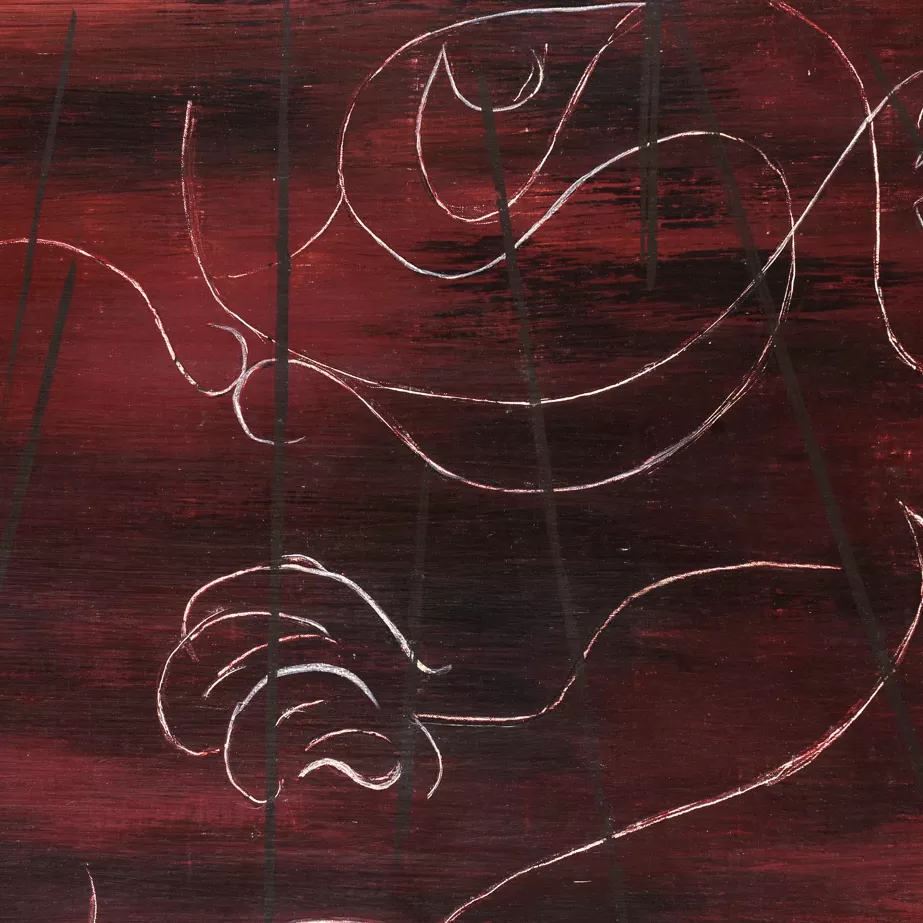
His most prized works are his close-up sketches of Surrealism done in gouache or pastel, as well as his so-called automatic sketches.
As such, a work signed Papazoff can sell for thousands of euros at auction, as evidenced by his oil on canvas Hommage au douanier Rousseau, le rêve de la bohémienne endormie, dating from 1957, sold for €52,000 in 2014, while it was estimated at between €15,000 and €20,000.
Order of value from the most basic to the most prestigious
Technique used | Result |
|---|---|
Estamp - multiple | From €50 to €1,400 |
Sculpture - volume | From €5,000 to €6,100 |
Drawing - watercolor | From €80 to €14,000 |
Painting | From €300 to €52,000 |
Estimate in less than 24h
The artist's style and technique
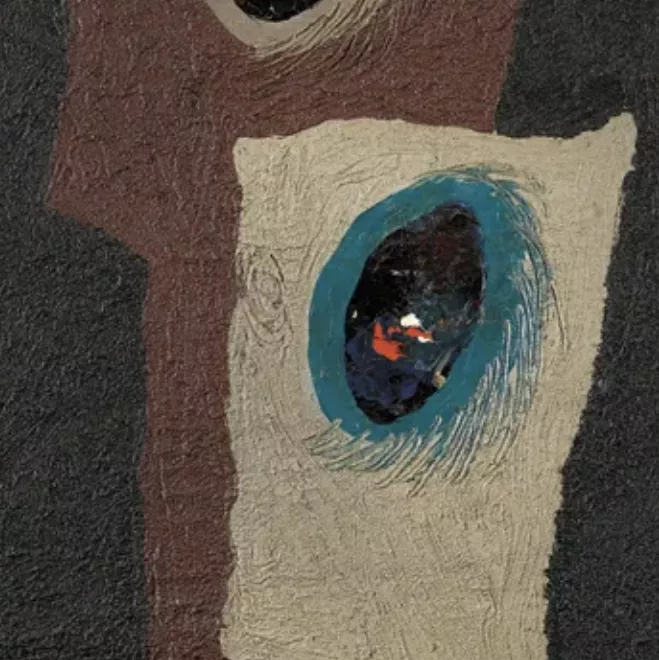
In the 1930s, Georges Papazoff chose a style that stood out for its subtle union of abstraction and figuration.
His technical approach, influenced by the Paris School, reflects a desire to synthesize geometric and organic forms, giving rise to works in which the precision of the line blends with the fluidity of color.
His compositions, marked by a subtle balance between line and color, oscillate between the rigor of geometric abstraction and the lyrical élan of informal abstraction.
His influences, stemming from Russian and Greek art, are reflected in forms that recall architectural structure while retaining a certain expressive freedom.
Papazoff's use of color, often vivid and contrasting, aims to underline the internal dynamics of his works.
He applies paint energetically, but each brushstroke seems measured, allowing a harmonious interplay between the emotion of the gesture and the mastery of the medium.
It is in this fusion that his art finds its singularity, an art where each work bears witness to a constant search between rigor and fluidity, between order and freedom.
The career of Georges Papazoff
Georges Papazoff, in his compositions of the 1920s-1930s, drew direct inspiration from the geometric forms he discovered in the Cubist and Futurist movements, while incorporating a graphic language directly linked to his Mediterranean roots.
As demonstrated by his work Le Pont (Musée d'Art Moderne de la Ville de Paris), the artist does not hesitate to transpose these modern influences into a painting that, while relying on geometric structures, remains imbued with the characteristic light of the South.
His palette, composed of vibrant colors, is marked by the intensity and luminosity of the Mediterranean landscape.
This choice of colors, often vivid and contrasting, does not seek to imitate reality but to emphasize its sensory dimensions, in response to the studies of light and space that dominate the artistic preoccupations of the time.
Papazoff, influenced by Cézanne's research into structure and depth, as well as the color dynamics of the Paris School, puts forward a less cerebral but more instinctive vision of Cubism.
This is part of an approach that aims to represent an inner reality rather than an exact reproduction of nature.
The rigorous composition of his works, however, never unfolds excessively or intrusively; balance and moderation are the watchwords of his work.
The search for space, light and color is always at the service of an abstraction that retains the imprint of Mediterranean nature, but with a keen sense of structure.
Focus on Le Pont, 1933, Georges Papazoff
In his 1933 painting Le Pont (Musée d'Art Moderne de la Ville de Paris), Georges Papazoff captures a scene where architecture and nature meet, fusing the geometric rigor of the structure with the fluidity of the surrounding landscape.
The bridge, forming a kind of direct line between sky and earth, rises with quiet majesty, while the bright colors - vivid yellows, deep blues and hints of orange - infuse the work with vibrant energy.
Through these frank nuances, Papazoff succeeds in evoking the luminous intensity of a Mediterranean landscape, far from any fixed naturalness.
In this composition, the artist breaks free from the traditional boundaries of landscape to give life to a reality that is more suggestive than objective, a reality that vibrates under the effect of light.
The structure of the bridge, far from remaining a mere support, seems to become one with the surrounding environment, contributing to a fluid unity between the concrete and the abstract.
Through this emphasis on light and relief, Papazoff not only depicts a place, he reveals its energy, its movement. The canvas thus becomes an invitation to an immersive experience, where every color, every plane, seems to unfold in an ever-changing space.
Georges Papazoff's imprint on his time
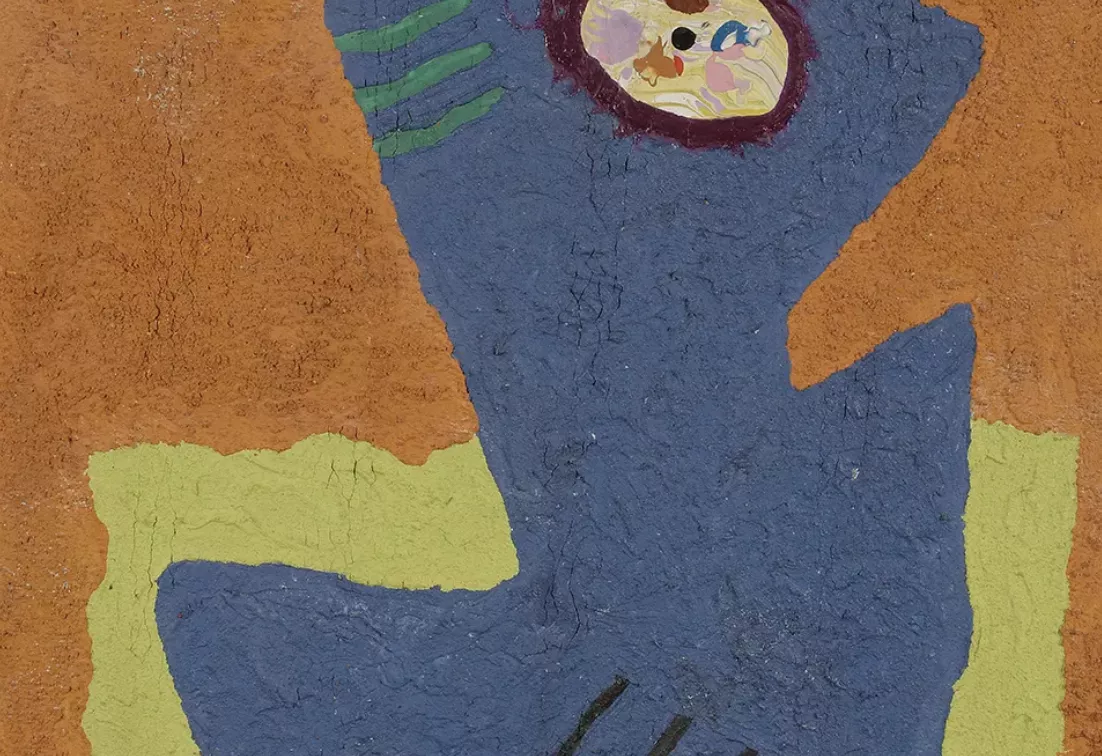
In the 1920s and 1930s, Georges Papazoff established himself as a singular figure within the European avant-gardes, developing a plastic language that eluded rigid classifications.
Proximate to Surrealism without submitting to it entirely, he introduced into his compositions a constant dialogue between abstraction and figuration, where floating forms and hallucinatory landscapes translate a vision of the world imbued with lyricism and strangeness.
His works, shot through with unreal light and vibrant matter, influenced a generation of painters in search of a more instinctive expression, less constrained by the pictorial dogmas of the day.
In an artistic landscape marked by the rise of Parisian Surrealism and the still-vibrant Cubist experiments, Papazoff blazed a trail where subjectivity and emotion took precedence over any theoretical constructs.
His work, though long on the bangs of the major movements, dialogues with the plastic research of his time, heralding in some respects the dreamlike exploration of painters such as Matta or Tanguy.
Through his metamorphosed landscapes and cosmic visions, he helped redefine the contours of a modernism freed from rigid frameworks, where painting becomes a territory of sensations, more than a mere exercise in style.
Georges Papazoff's stylistic influences
Trained at the Sofia Fine Arts School before moving to Munich and then Paris, Georges Papazoff immersed himself in the multiple currents shaping the European avant-garde of the early 20th century.
The discovery of German Expressionism, in particular by the artists of the Blaue Reiter, marked his first plastic explorations: he drew from it a chromatic intensity and dramatic tension that would haunt his work for a long time to come.
But it was in Paris, in contact with the nascent Surrealism, that his pictorial language found its true autonomy.
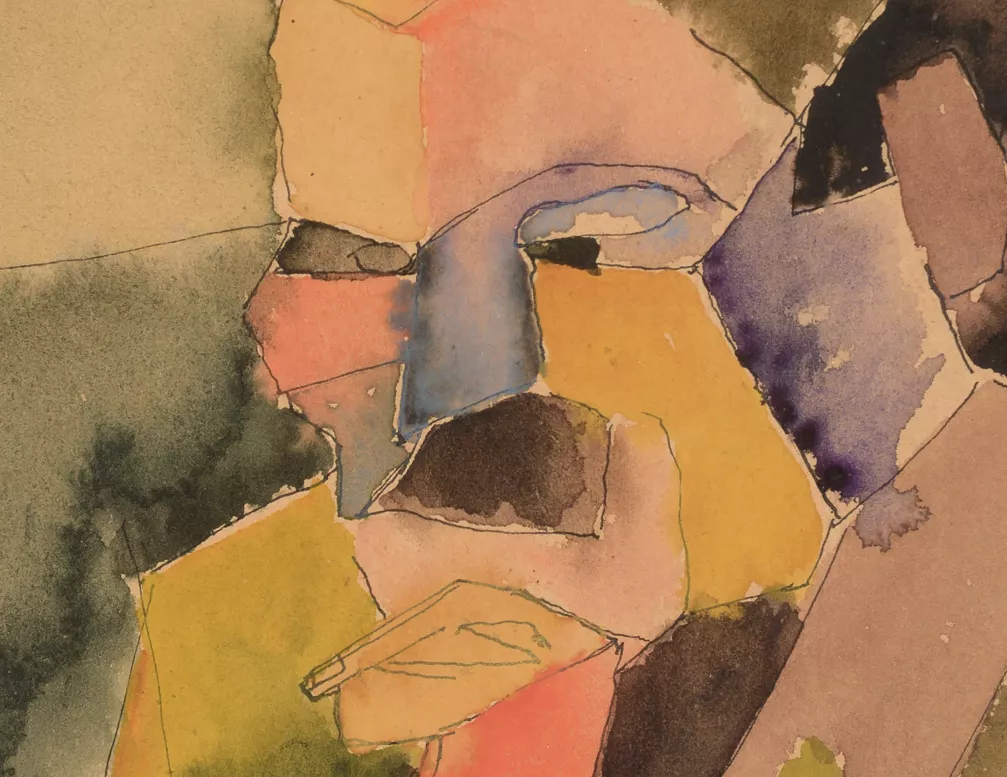
Although close to André Breton and Paul Éluard, he never locked himself into the orthodoxy of the movement, developing a style of painting in which the unconscious manifests itself in hallucinatory landscapes, criss-crossed by evanescent figures and organic structures in perpetual mutation.
The influence of Cubism can also be seen in his way of articulating space, broken up into interlocking planes that abolish the distinction between figure and background.
But Papazoff doesn't dwell on analytical deconstruction: he prefers a more fluid approach, where volumes seem to expand under the effect of an inner force, in the manner of Tanguy's cosmic visions.
In places, his taste for granular matter and impasto also evokes the tactile research of the Surrealists, notably in Masson and Miró.
However, where the latter tend towards symbolic abstraction, Papazoff always retains an anchoring in a transfigured reality, where landscape and human interpenetrate in a logic proper to onirism.
His palette, dominated by deep blues and fiery reds, bears witness to a sensibility not unlike the expressionist vein of a Nolde or a Kokoschka, while some of his compositions seem to herald the enigmatic atmospheres of a Matta.
At the crossroads of influences, he invents a universe where dream and matter merge in an unstable equilibrium, defying any strict belonging to a movement.
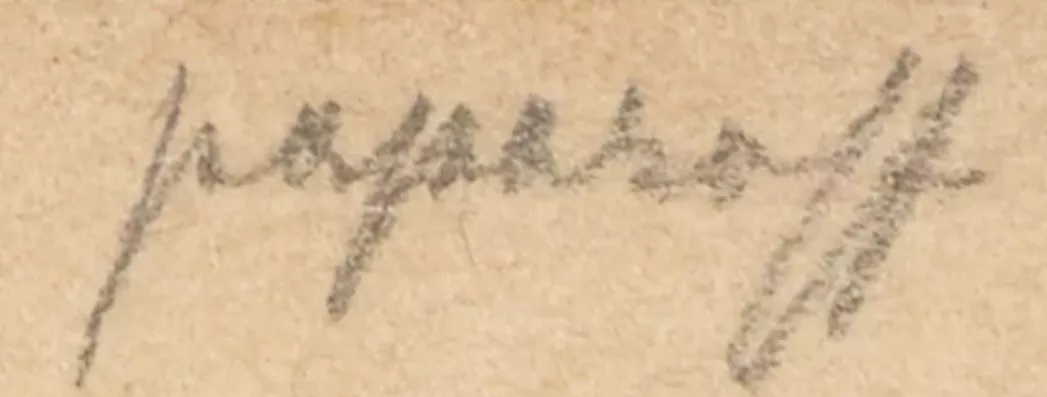
His signature
Not all of Georges Papazoff's works are signed.
Although there are variants, here's a first example of his signature:
Expertise your property
If you happen to own a work by Georges Papazoff or after the artist, don't hesitate to request a free appraisal by filling in our form on our website.
A member of our team of experts and licensed auctioneers will contact you promptly to provide you with an estimate of the value of your work, not forgetting to send you ad hoc information about it.
If you are planning to sell your work, our specialists will also help you to find alternatives for selling it at the best possible price, taking into account the inclinations of the market and its specificities.
.Estimate in less than 24h
Discover in the same theme

Market Value and Price of Sculptures and Bronzes by Henri Bo...
Henri Bouchard is a French naturalist sculptor who produced works that are highly valued at auction. Estimate in 24h.
Learn more >

Rating and value of sculptures and bronzes by Marie-Paule De...
Marie-Paule Deville-Chabrolle was born in 1952 and has produced a number of sculptures that are highly prized at auction.
Learn more >

Rating and value of paintings and laquers by Le Quoc Loc
Le Quoc Loc is a modern Vietnamese artist who has worked mainly in lacquer. His works are highly valued.
Learn more >
D'autres tableaux abstraits vendus aux enchères

Estimated 2.000 - 4.000
Serge POLIAKOFF (1900-1969), Composition en rouge et bleu. 1965, Lithograph

Estimated Between €5,000 and €8,000
Jean MIOTTE (1926-2016), acrylic on canvas

Estimated 3.000 - 5.000
Roberto MATTA (1911-2002), Composition, Gouache on canvas

Secure site, anonymity preserved

Auctioneer approved by the State

Free and certified estimates
Frequently asked questions
-
Who was Georges Papazoff, and what was his artistic background?Georges Papazoff (1894–1971) was a Bulgarian-French painter who emerged as a distinctive figure in the European avant-garde movements of the 1920s and 1930s. Trained at the Academy of Fine Arts in Sofia before moving to Munich and then Paris, he developed a unique artistic language that fused abstraction and figuration, influenced by Cubism, German Expressionism of the Blaue Reiter, and Parisian Surrealism, without confining himself to the orthodoxy of any single movement. His approach, shaped by the School of Paris and his Mediterranean roots, has established him as a sure bet on the global art market since the 2000s.
-
What is the price range for Georges Papazoff's works?Papazoff's works span a wide range of prices depending on the medium and the artist's reputation: prints range from €50 to €1,400, watercolors and drawings from €80 to €14,000, and paintings from €300 to €52,000. Sculptures range from €5,000 to €6,100. His most sought-after works are his surrealist-inspired sketches in gouache or pastel, as well as his automatic drawings, as evidenced by the 2014 auction sale of the oil painting “Hommage au douanier Rousseau” for €52,000.
-
How can you authenticate a work by Georges Papazoff?To authenticate a work attributed to Papazoff, we recommend that you request a free, no-obligation appraisal from Auctie's. Simply fill out our online form: a certified expert or auctioneer will contact you to evaluate the artwork and provide you with an accurate estimate of its value, as well as all relevant information regarding its authenticity and provenance.
-
Is this the right time to sell a work by Georges Papazoff?Yes, this is an excellent time to sell a work by Papazoff. Renowned and highly sought-after during his lifetime, the artist’s market value has been rising steadily since the 2000s in both the European and American markets. He has established himself as a safe bet on the global art market, which guarantees stable demand and favorable prices for sellers.
-
How does the sales process work at Auctie's?At Auctie's, the process is simple and transparent. We start with a free, no-obligation appraisal conducted by our experts and licensed auctioneers, with a response within 48 hours. If you decide to sell, we’ll guide you through the process from start to finish, offering you the best options for selling your artwork at the best price, taking into account market conditions and your preferences.
