



Rating and value of works, drawings, paintings by André Masson

Key takeaways
- André Masson’s works command exceptional prices, notably his oil on canvas *Gravita*, which sold for over 2 million euros in 2010.
- Estimates vary depending on the medium: prints range from €10 to €38,000, watercolor drawings from €100 to €255,000, and oil-on-canvas paintings from €150 to €2,050,000.
- His surrealist automatic drawings in gouache and pastel, along with his signature sand-painting technique, are the most sought-after works on the market.
If you own a work by the artist André Masson or based on his work and would like to know its value, our state-approved experts and auctioneers will guide you.
Our specialists will carry out a free appraisal of your work, and provide you with an accurate estimate of its value on the current market.
Then, should you wish to sell your work, we will direct you to the best possible arrangement to obtain the optimum price.
Artist's rating and value
Commercialized during his lifetime, André Masson quickly enjoyed great success on both the European and American markets. Since the 2000s, his market value has continued to rise.
His most prized works are his surrealist sketches in gouache or pastel, as well as his so-called automatic sketches.
A work by André Masson can fetch millions of euros at auction, as demonstrated by his oil on canvas Gravita, which fetched over 2 million euros in 2010.
Ranging in value from the most basic to the most prestigious
Technique used | Result |
|---|---|
Stamps | From €10 to €38,000 |
Sculpture - volume | From €500 to €83,390 |
Drawing - watercolor | From €100 to €255,000 |
Oil on canvas | From €150 to €2,050,000 |
Estimate in less than 24h
The artist's style and technique
André Masson develops a plastic language in which instinct and experimentation take precedence over any form of academic control. His nervous, sometimes convulsive brushstrokes reflect an urgency of gesture that is fully expressed in his automatic drawings.
Free from the constraints of the subject, he lets his hand guide the line, capturing the spontaneous impulse of the unconscious. This approach, which resonates with Surrealist theories, gives rise to abundant compositions in which human figures, organic elements and telluric forces seem to emerge from structured chaos.
From the 1930s onwards, he explored a singular technique: sand painting. He sprinkles the canvas with grains fixed with glue, giving the surface a rough, almost mineral relief, which amplifies the tactile, instinctive dimension of the work.
This granular material captures light in an unprecedented way, accentuating the dramatic tension of his scenes. Masson is also distinguished by the intensity of his palette, where chromatic contrasts exacerbate the emotional charge of his compositions.
His art, at the crossroads of lyricism and violence, heralds the beginnings of Abstract Expressionism and profoundly influences the generation of Jackson Pollock and Arshile Gorky.
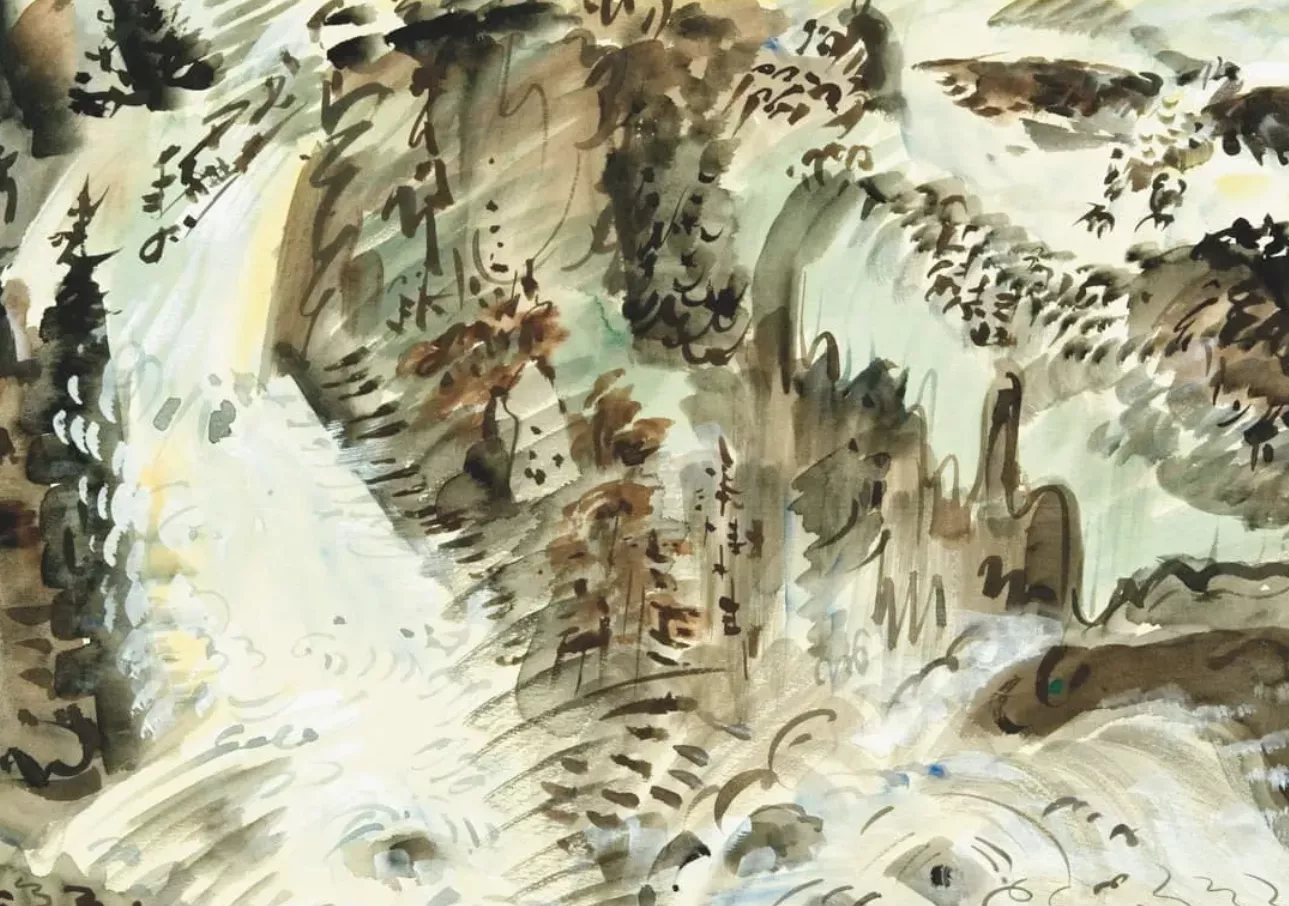
André Masson, his life, his work
André Masson (1896-1987) was born into a modest family and from an early age showed a pronounced taste for drawing and painting. His precocious talent led him to enter the Académie Royale des Beaux-Arts et Arts Décoratifs in Brussels, where he acquired a solid classical training.
In 1912, he moved to Paris, attracted by the capital's artistic effervescence.
At first, he moved closer to Cubism, inspired by the research of Braque and Picasso, exploring the fragmentation of forms and the arrangement of volumes.
His temperament, however, quickly pushed him towards a more instinctive expression. In the 1920s, he joined André Breton's Surrealist circle and became one of the movement's leading figures.
Surrealism, born in 1924 in the wake of Dada, advocates total liberation of the mind, rejecting rational constraints in favor of automatism. The aim is to transcribe raw thought, coming directly from the depths of the unconscious, escaping all intellectual censorship.
This vision breaks with academic conventions and opens up new perspectives for creation. Alongside Max Ernst, Joan Miró, Salvador Dalí and René Magritte, Masson contributed to the enrichment of this artistic adventure.
His work, marked by a nervous, spontaneous gesture, is distinguished by his automatic drawings and sand paintings, where the material seems to spring from an almost instinctive movement.
In 1941, forced to flee the Second World War, he left for the United States with André Breton and other Surrealist figures.
In New York, his work aroused the interest of young Abstract Expressionist artists, including Jackson Pollock, who found in his research a source of inspiration for his own approach to dripping. Far from being fixed in a single plastic language, Masson constantly renewed his art.
Returning to France after the war, he settled in Aix-en-Provence and reoriented his work towards new influences. Moving away from surrealism, he drew inspiration from Chinese painting and Impressionism, adopting a more fluid, contemplative approach.
This period testifies to his insatiable quest for freedom and experimentation, marking a new evolution in his career.
An essential figure of the 20th century, André Masson leaves an indelible mark on the history of art.
His commitment to Surrealism, his technical innovations and his influence on the American avant-garde make him one of the great masters of his time. His constantly evolving work reflects a relentless exploration of the profound forces of creation.
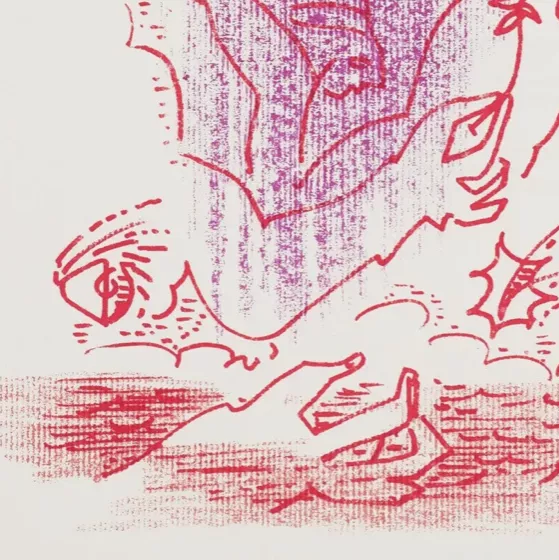
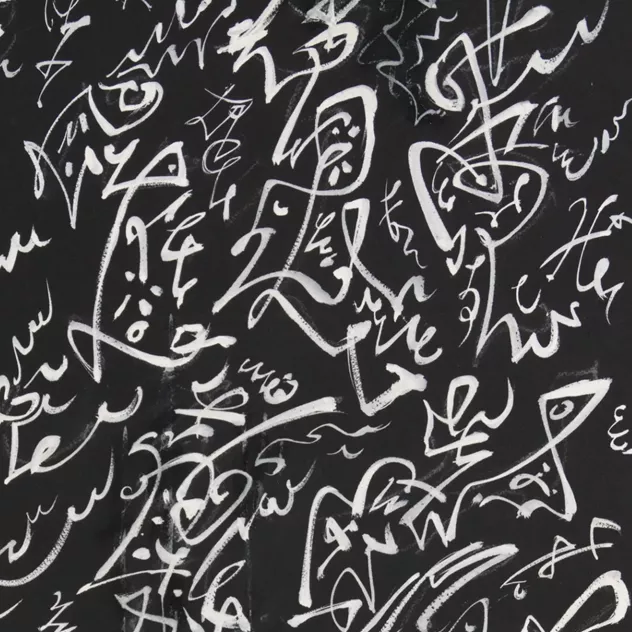
Focus on Massacre (1934): the violence of line and matter
In Massacre, André Masson delivers a hallucinatory, tormented vision of human chaos. The work immediately raises questions with its tangle of forms, where dislocated bodies seem crushed in an inexorable torment.
The line, incisive and nervous, lacerates the pictorial space, evoking a quasi-automatic gesture in which the artist unleashes raw energy. The barely recognizable figures merge into an organic mass of flayed limbs and grimacing faces.
Masson superimposes fluid strokes and jerky hatching, creating a network of tensions that amplifies the dynamics of the scene.
The treatment of color reinforces this dramatic intensity. The palette, dominated by sanguine and earthy hues, immerses the viewer in a suffocating atmosphere, where violence seems to emanate from the surface itself.
The use of sand, characteristic of his 1930s production, confers a roughness to the surface that accentuates the effect of flaying and tearing. This grainy relief captures the light brutally, giving the shadows an almost carnal density.
With Massacre, Masson doesn't just illustrate horror, he brings it out in all its rawness. The chaotic composition, the spontaneity of gesture and the experimentation with textures already herald the boldness of Abstract Expressionism.
The work, which stands out as a pictorial cry, places Masson in the lineage of Surrealist artists exploring the depths of the unconscious and primal drives.
André Masson's imprint on his period
André Masson marked his era with a pictorial approach in which instinct and the unconscious took precedence over reason, paving the way for a new artistic gesture.
His use of automatic drawing and his fascination with raw energy had a profound influence on Surrealism, endowing it with a more visceral and organic dimension.
But his imprint goes beyond this circle: by exploring the spontaneity of the line and the materiality of the surface, he anticipated the research of American abstract expressionism.
Pollock, in particular, was imbued with this liberation of gesture, while painters such as Arshile Gorky and Willem de Kooning found his graphic language a major source of inspiration.
Masson also introduced into modern art a conception of the painting as a field of forces, where form is born of disorder and accident, prefiguring action painting.
Through his quest for a form of painting freed from all intellectual fetters, he embodied an essential break in the history of abstraction, and established himself as one of the most daring bridges between surrealism and gestural modernity of the 20th century.
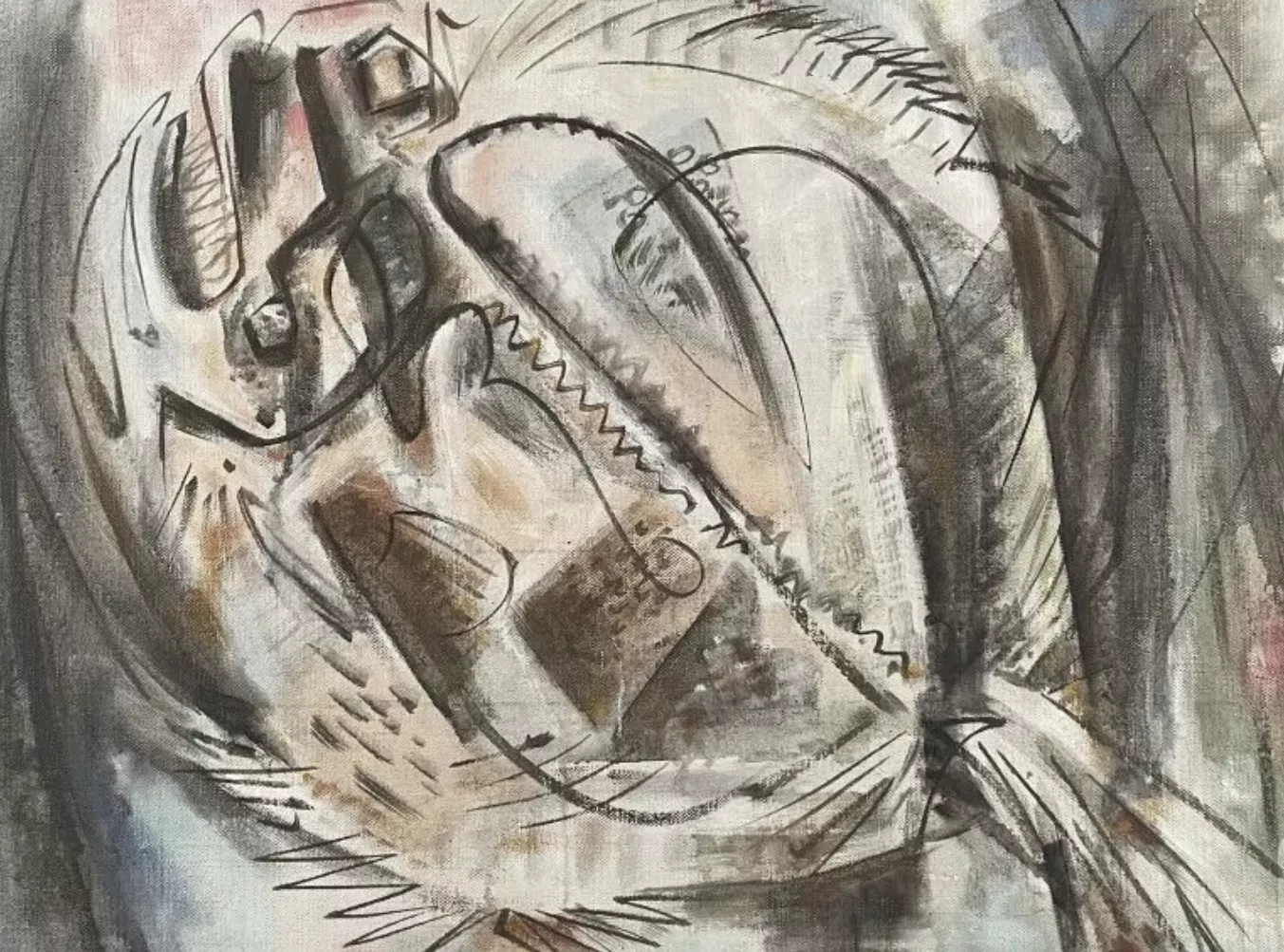
The stylistic influences of André Masson
André Masson assimilated the legacy of Cubism early on, from which he retained the fragmentation of form and the rigorous structuring of space. Fascinated by the freedom of automatic drawing, he soon moved away from analytical principles to explore a more instinctive gestural style, where line becomes the vector of inner energy.
His work draws on the surrealist aesthetic, represented by artists such as Max Ernst and René Magritte, but also older influences, notably Oriental calligraphy and Baroque art, which shine through in his tormented compositions.
Far from confining himself to a single language, he oscillated between figuration and abstraction, multiplying experiments with matter and texture.
His approach, which combines dynamic linework and spontaneous gesture, made him a precursor of abstract expressionism and had a profound effect on subsequent generations, notably post-war American painters.
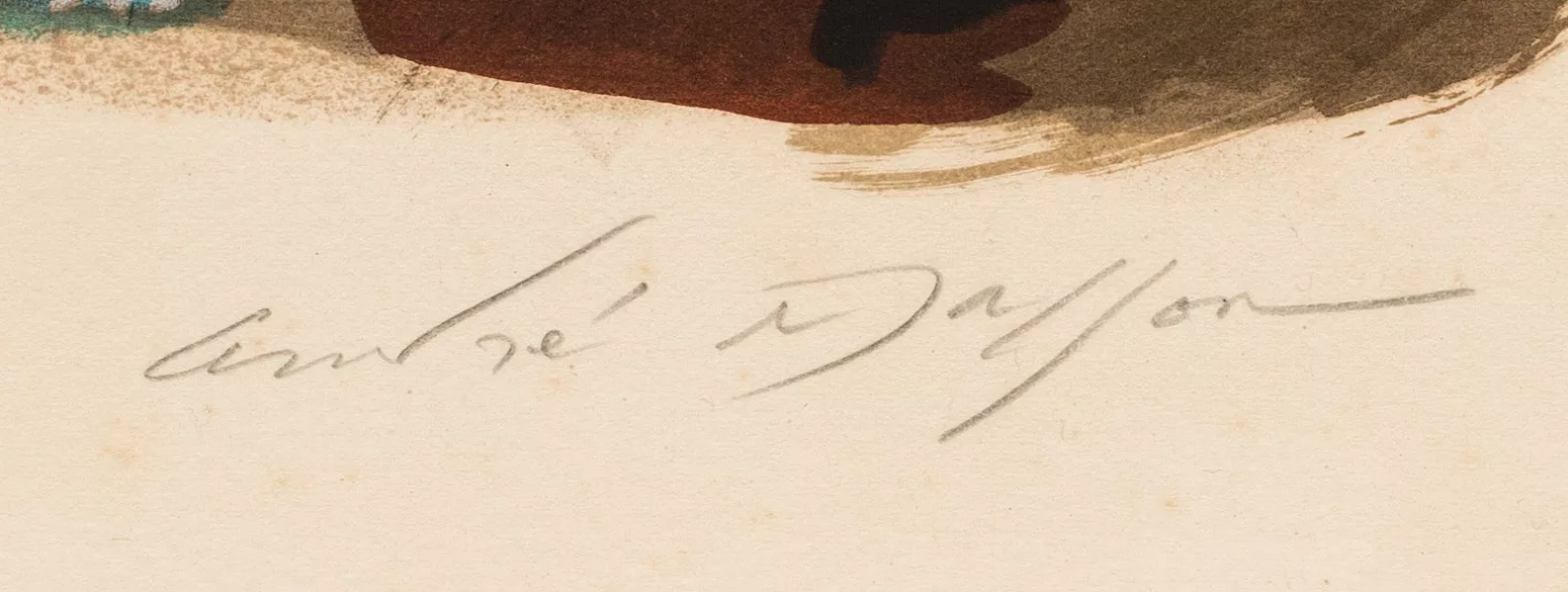
His signature
Not all of André Masson's works are signed.
Although there are variations, here's a first example of his signature:
Expertise your property
If you happen to own a work by André Masson or after the artist, don't hesitate to request a free valuation by filling in our form on our website.
A member of our team of experts and chartered auctioneers will contact you promptly to provide you with an estimate of the value of your work, not forgetting to pass on ad hoc information about it.
If you are planning to sell your work, you will also be accompanied by our specialists in order to benefit from alternatives for selling it at the best possible price, taking into account the inclinations of the market and its specificities.
Estimate in less than 24h
Discover in the same theme

Rating and value of works, paintings by Zoran Music
Zoran Music is a 20th-century painter who depicted the horror of the concentration camps. His works are valued and quoted at auction.
Learn more >

Rating and value of paintings by Martial Raysse
Martial Raysse is a twentieth-century New Realist painter whose drawings and oil paintings are highly regarded and valuable.
Learn more >

Rating and value of paintings by Ueli Berger
Ueli Berger is a twentieth-century designer who produced iconic pieces that are highly valued at auction. 24h estimate
Learn more >
Similar works sold at auction

Estimated 600 € - 800 €
Henri ZUBER (1844-1909), Bridge at Artemare. Oil on canvas.

Estimated 600 € - 800 €
Louis TOFFOLI (1907-1999), The maternity of flowers. Tapestry.

Estimated 15.000 - 20.000 €
Jacques MAJORELLE (1886-1962) - Fishermen embarking, Abidjan, Ivory Coast - Oil on canvas.

Estimated 4.000 - 6.000 €
GASTON CHAISSAC (1910-1964) Composition 1947, Gouache and Indian ink on paper.

Estimated 100-200€
Vassiliew Slavik, Oil on canvas

Estimated 1.000 - 2.000
Raymond GUERRIER (1920-2002), Composition I, Oil on canvas

Secure site, anonymity preserved

Auctioneer approved by the State

Free and certified estimates
Frequently asked questions
-
Who was André Masson, and what was his artistic context?André Masson (1896–1987) was a leading figure in Surrealism and a pioneer of Abstract Expressionism. After receiving a classical education, he joined the Surrealist movement in the 1920s alongside André Breton, Max Ernst, and Joan Miró. His artistic style, characterized by automatic drawing and experimentation with materials, profoundly influenced Jackson Pollock and the generation of American Abstract Expressionists.
-
What is the price range for André Masson's works based on the medium used?André Masson’s works vary widely in value depending on the medium: prints range from €10 to €38,000, drawings and watercolors from €100 to €255,000, sculptures between €500 and €83,390, and oil paintings on canvas between €150 and €2,050,000. His most sought-after works are his surrealist sketches in gouache and pastel, as well as his sand compositions from the 1930s.
-
How can you authenticate a work by André Masson?To authenticate a work by André Masson, we recommend that you request a free appraisal from Auctie's by filling out our online form. Our team of experts and certified auctioneers will examine your item and provide you with an accurate estimate of its value, along with detailed information about the work, within 48 hours.
-
Is this the right time to sell a work by André Masson?Yes, now is a good time to sell a work by André Masson. Since the 2000s, the artist’s market value has been steadily rising, and he has established himself as a safe bet on the global art market. His work, which sold successfully during his lifetime, continues to enjoy steady demand in both Europe and the United States.
-
How does the appraisal and sale of a work of art take place at Auctie's?The appraisal is free and non-binding: simply fill out our online form, and an expert will contact you to examine your artwork and provide you with an appraisal within 48 hours. If you decide to sell, our specialists will guide you through the process from appraisal to auction and advise you on the best options for achieving the highest possible price based on current market conditions.
