



Rating and value of works, mirrors by Line Vautrin

Key takeaways
- Line Vautrin’s mirrors—particularly the “sorcière,” “sequin,” and “soleil” models—command exceptional prices of up to €390,000 at auction.
- A major artist of the 20th century, she invented “talosel,” an innovative resin that enabled her to create pieces featuring geometric patterns and fascinating optical effects that became her signature.
- Her works span a wide price range: jewelry from €30 to €20,000, boxes from €300 to €50,000, and mirrors from €400 to €390,000.
If you own a work by or based on the artist Line Vautrin and would like to know its value, our state-approved experts and auctioneers will guide you.
Our specialists will carry out a free appraisal of your work, and provide you with a precise estimate of its value on the current market.
Then, if you wish to sell your work, we will direct you to the best possible arrangement to obtain the optimum price.
Artist's rating and value
A major artist of 20th-century decorative art, Line Vautrin stands out for her bold style, blending traditional craftsmanship with modern aesthetics. On the art market, Line Vautrin's creations are highly appreciated.
Her mirrors are her most prized works and the most common in auction rooms. Her "witch", "sequin" and "sun" models are the most sought-after and sell best.
In fact, their prices can reach hundreds of thousands of euros, with one of his mirrors going for €390,000 in 2022.
Order of value from the most basic to the most prestigious
Object type | Result |
|---|---|
Jewelry | From €30 to €20,000 |
Miscellaneous items | From €150 to €42,000 |
Sculptures - volume | From €30 to €40,000 |
Houses | From 300 to €50,000 |
Mirrors | From €400 to €390,000 |
Estimate in less than 24h
Style and technique of Line Vautrin's creations
Line Vautrin stands out as a designer with a deeply original style, blending audacity and refinement.
Her works, whether precious jewelry, enchanting mirrors or intriguing decorative objects, reflect a constant search for harmony between poetry and aesthetics.
Working with materials as varied as gilded bronze, lacquer and resin, she demonstrates impressive technical mastery.
Her major invention, "talosel", embodies her innovative spirit: this material, the result of meticulous work in superimposing and sculpting resin, enables creations with rich patterns, sublimated by vibrant light effects. This innovation quickly became the hallmark of his work and established his reputation.
Among his most iconic creations are his so-called "witch" mirrors, whose irregular contours and convex surfaces capture and distort light, lending each piece an almost magical aura.
These works illustrate her rejection of conventional forms in favor of organic lines, often inspired by nature or the imagination.
True to her taste for literature, she frequently incorporates words, maxims or fragments of poetry into her creations, lending them narrative depth.
In this way, each piece becomes not only an art object, but also a medium for reflection and emotion.
Line Vautrin refuses to conform to established trends, preferring instead to freely explore uncharted paths, where craftsmanship and experimentation mingle.
Her work bears witness to an ongoing quest for elegance and singularity, marked by an attention to detail and boundless creativity.
Innovative and deeply personal, her approach never ceases to push back the boundaries between art and craft, inscribing her creations in a temporality that is both contemporary and timeless.
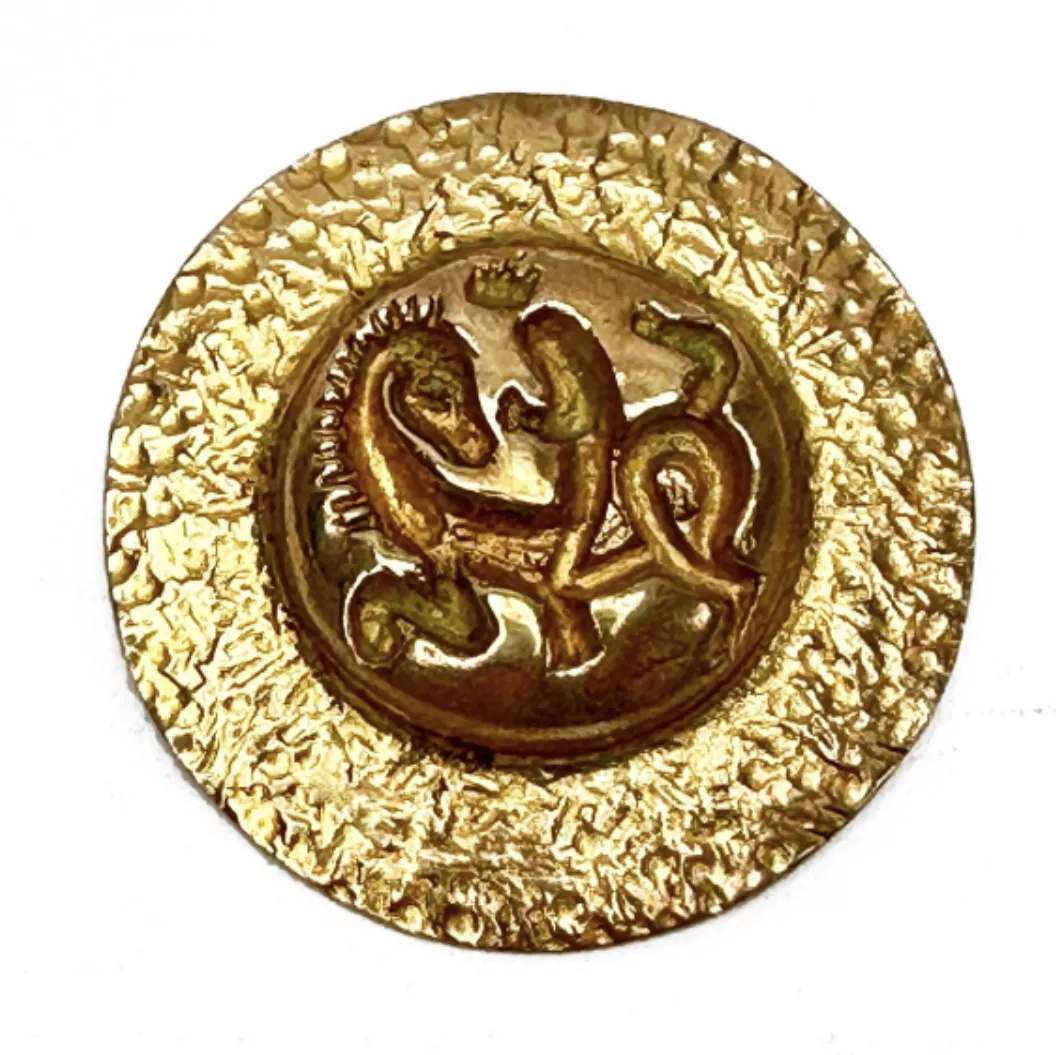
The life of Line Vautrin
Line Vautrin was born in 1913 into a family of metalworkers. Growing up, she developed a passion for working with materials, but it was without any artistic training that she began creating her first jewelry at the age of 21.
This young self-taught artist's instinctive creativity was soon noticed.
In 1937, she took part in the Exposition Universelle, where her jewels won acclaim for their originality and refinement. This recognition launched her career.
The following year, she opened a boutique on the Champs-Élysées, where her creations attracted a clientele in search of elegance and singularity.
Line Vautrin is an explorer of materials and techniques. She works in lacquer, gilded bronze and experiments with resin.
Her most striking invention, "talosel", a colored resin applied to a variety of supports, gives rise to works with geometric patterns and fascinating optical effects.
This innovation became her signature, notably in her highly successful "witch" mirrors.
In the 1940s and 1950s, she expanded her world by creating decorative objects such as boxes, frames and trays. These pieces, often adorned with words or maxims, reflect her taste for poetry and detail.
Line Vautrin manages to blend functionality and art with an elegance all her own. Her style, both timeless and daring, reflects her refusal of convention and her constant quest for innovation.
Retired from the art scene in the 1980s, she was rediscovered thanks to collector David Gill, who revived interest in her work. In 1992, she was awarded the Prix national des métiers d'art, crowning a rich and original career.
Line Vautrin died in 1997 at the age of 84, leaving behind her a remarkable artistic legacy.
A self-taught visionary, she forged a unique path, ignoring fashions and trends to create a deeply personal universe. Her jewelry and objets d'art continue to fascinate and captivate with their elegance and inventiveness.
Focus on Ombre et lumière, Line Vautrin
One of Line Vautrin's iconic creations, the convex mirror entitled Ombre et Lumière, perfectly illustrates her bold, inventive approach.
Made of talosel, the material she developed in the 1950s, the frame of the work is composed of sculpted, superimposed and engraved fragments, creating a subtle interplay of textures and reliefs.
These elements, hand-patinated, oscillate between warm, deep hues, reminiscent of moving shadows and luminous flashes.
The mirror itself, with its domed surface, distorts and magnifies the image it reflects. This technical choice lends the object an aura of mystery and invites the viewer into a unique visual experience, where the perception of space is altered.
Line Vautrin, true to her approach, goes beyond the simple decorative function to transform this mirror into a full-fledged work of art, imbued with poetry.
The organic, almost irregular shapes of the frame reflect her refusal of convention and her attachment to a free, personal aesthetic.
Often dubbed "witch mirrors" for their ability to bewitch the eye, these creations reveal the artist's meticulous attention to detail and fascination with the play of light.
The kaleidoscopic effect produced by the reflective surface sublimates the environments in which these mirrors are placed, while adding a touch of magic.
With Ombre et Lumière, Line Vautrin offers us a work where matter and form dialogue with the imaginary, demonstrating once again her ability to transform the ordinary into the extraordinary.
This mirror embodies the very essence of her art: a constant quest for innovation, mixed with a profound respect for beauty.
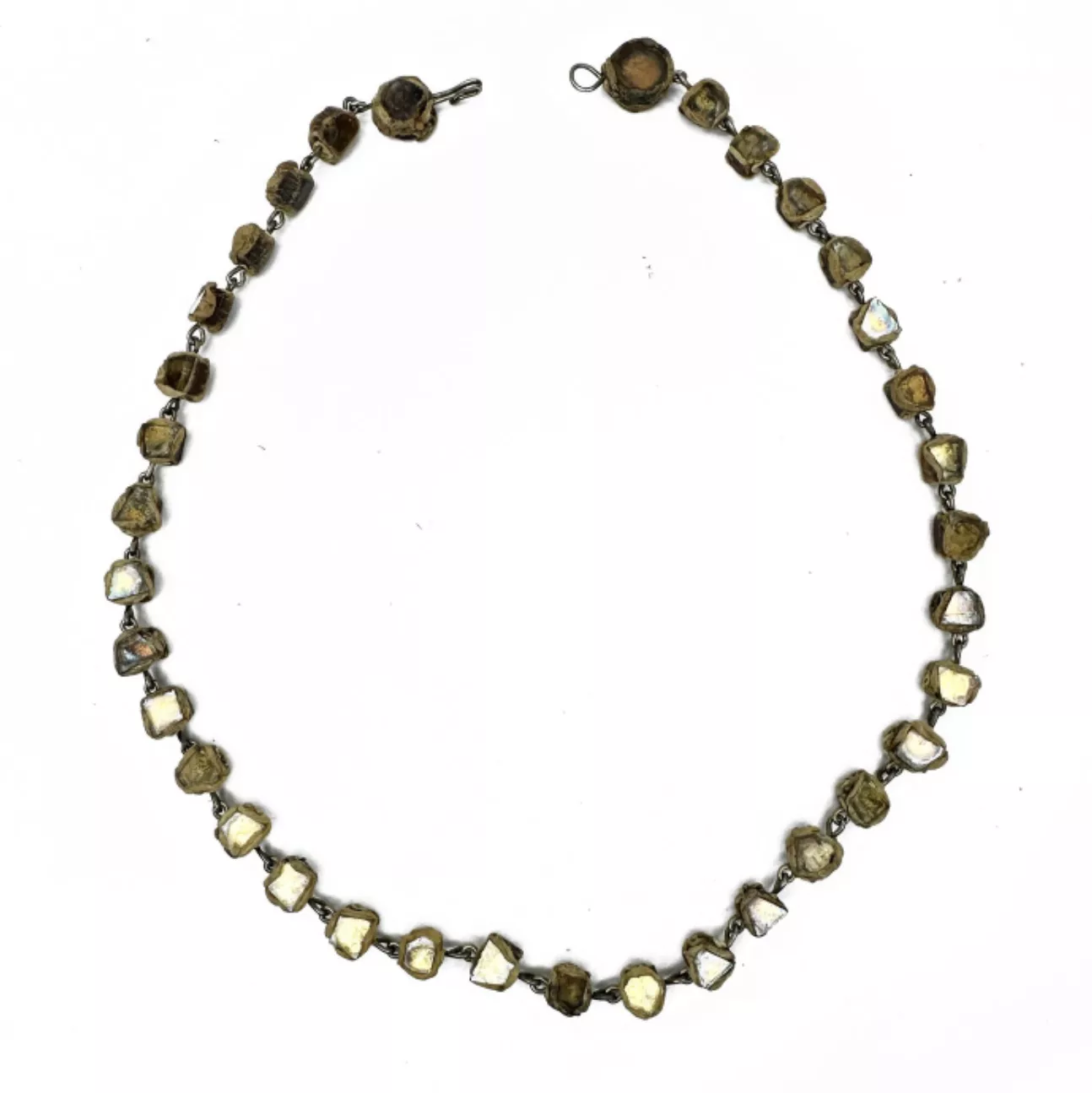
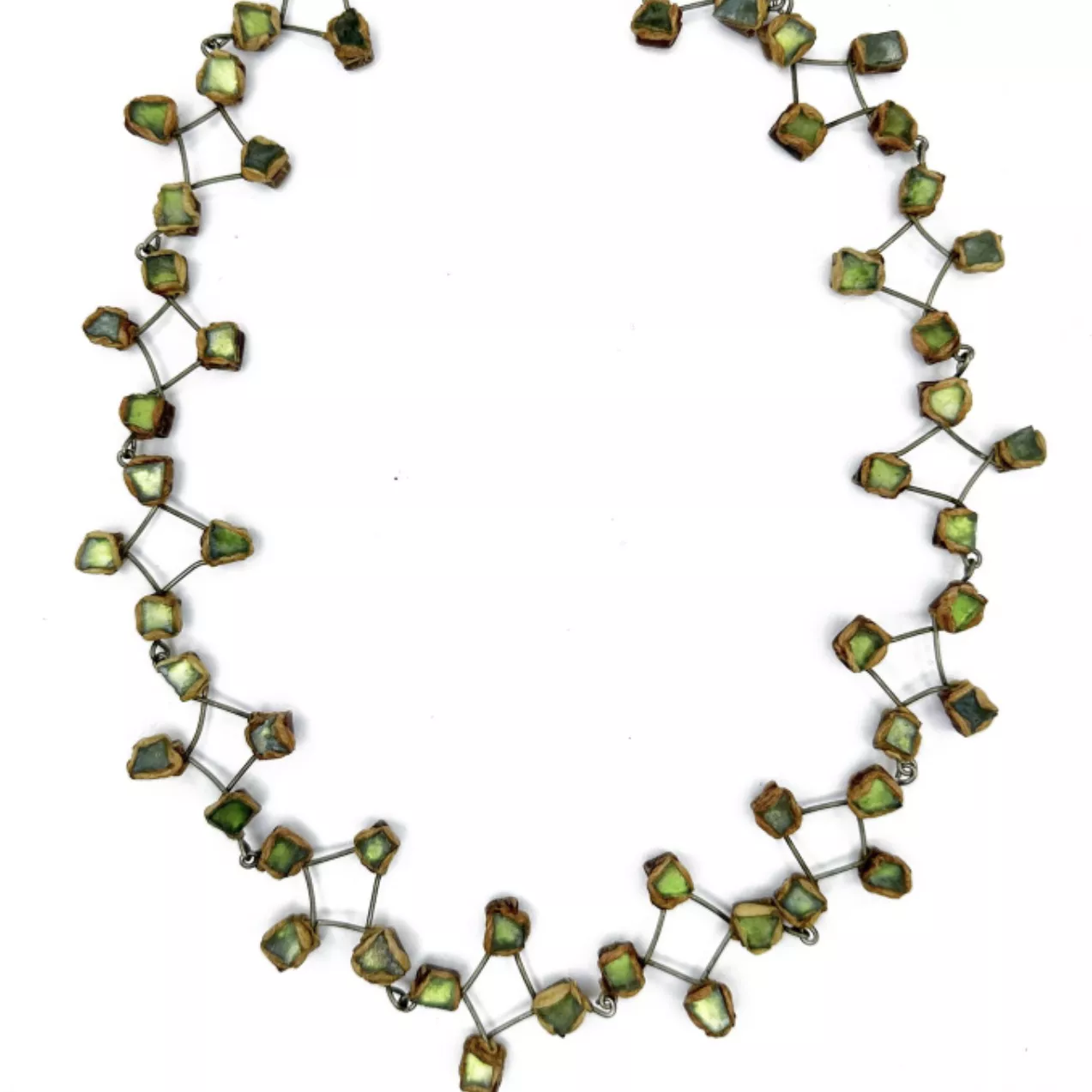
The success of Line Vautrin's works on the auction market
The success of Line Vautrin's works on the art market is the result of a recognition that gradually took hold, then intensified over the years.
As early as the late 1930s, she attracted the attention of collectors, particularly at the 1937 Exposition Universelle, where her jewelry was enthusiastically received. But it was not until the 1980s, after a period of retreat, that her work was truly rediscovered.
Collectors, particularly those in London, rediscovered her creations and placed her at the center of attention. Her "witch" mirrors and talosel jewelry became must-have pieces, coveted as much for their rarity as for their originality.
These works, both decorative and artistic, are distinguished by a thorough aesthetic research, attention to detail and innovative use of materials.
The technique she invents, talosel, becomes her signature and arouses admiration, as do her pieces with their organic shapes and poetic inscriptions.
Auctions bear witness to this, with prices for her works climbing, confirming the growing interest they arouse among art lovers. This success is also due to the timelessness of her creations.
Line Vautrin follows no passing trend, forging her own style, rooted in a quest for authenticity and poetry.
Her pieces fit into a world of their own, yet are rooted in a specific era. They endure the years without losing their force, and today, her works continue to attract collectors from all over the world, confirming the legacy of a designer with a unique genius.
Like other 20th-century artists who produced the same type of objects, for example Jean Cocteau, Mithé Espelt or Alice Colonieu, his works today have a very high auction value.
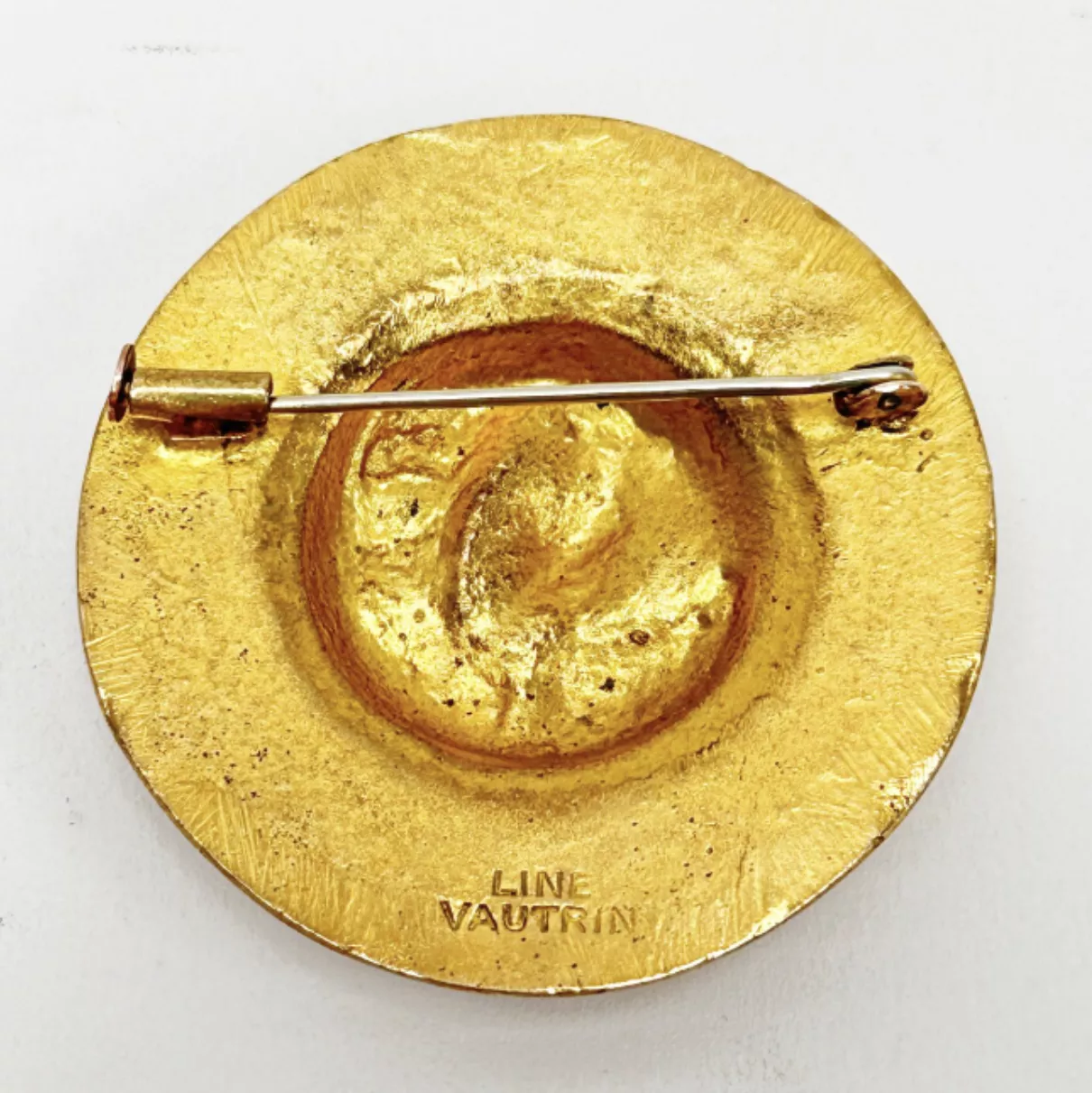
Her signature
Not all of Line Vautrin's works are signed.
Although there are variations, here is a first example of her signature:
Estimate in less than 24h
Works from the same period sold at auction

Estimated Between €1,500 and €3,000
César BALDACCINI dit CESAR (1921-1998), Poule Cartier, bronze print

Estimated 400 - 600
Line VAUTRIN (1913-1997), articulated necklace with small circular links

Estimated 800 - 1.500
Line VAUTRIN (1913-1997), gilded bronze "Wolf and Fox" compact

Estimated 3.000 - 5.000
Jean DUNAND (1877-1942) "Wheat ears", c. 1912. Bronze vase with ovoid body

Estimated 2.000 - 4.000
Salvador DALI (1904-1989) Golden patina bronze Menorah on veined marble base

Estimated 800 - 1.500
Bahman DADKHAH (b. 1941) Pair of candlesticks in bronze with green patina
Discover in the same theme

Rating and value of works, drawings, paintings by Leonor Fin...
Leonor Fini is a 20th-century Surrealist artist whose drawings, prints and paintings are sought-after and highly prized at auction.
Learn more >

Rating and value of paintings by Michel Moreno
Michel Moreno is a French contemporary artist who has produced works of considerable value at auction.
Learn more >

Rating and value of paintings by Amédée Ozenfant
Amédée Ozenfant is a cubist and purist artist of the 20th century, who produced works in a variety of media that are highly rated and valued.
Learn more >

Secure site, anonymity preserved

Auctioneer approved by the State

Free and certified estimates
Frequently asked questions
-
Who is Line Vautrin, and what is her major contribution to 20th-century art?Line Vautrin (1913–1997) was a leading figure in 20th-century decorative art, a self-taught artist who made her mark with a bold style that blended traditional craftsmanship with modern aesthetics. Her most significant innovation, the “talosel” (a layered and sculpted colored resin), became her signature, particularly in her famous “witch” mirrors with organic shapes that play with light and invite poetic reflection.
-
What are the prices and price ranges for Line Vautrin's works, broken down by type?Prices vary considerably depending on the type of item: jewelry ranges from €30 to €20,000, boxes from €300 to €50,000, and mirrors—his most sought-after creations—from €400 to €390,000 (one mirror sold for €390,000 in 2022). The “witch,” “sequin,” and “sun” models are the most sought-after and generally the most expensive.
-
How can you authenticate a work by Line Vautrin and determine its exact value?To authenticate a piece and determine its current value, we recommend that you submit a request for a free, no-obligation estimate with Auctie's. Our state-certified auctioneers and experts will evaluate your item and provide you with an accurate estimate within 48 hours, allowing you to then decide whether you wish to sell.
-
Is this the right time to sell a work by Line Vautrin?Yes, now is a good time to sell a work by Line Vautrin. Interest in her work has been growing among collectors worldwide since her rediscovery in the 1980s, and her pieces continue to attract a prestigious clientele. The timelessness of her style and the rarity of certain pieces are driving up auction prices.
-
How does the sales process work at Auctie's for a work by Line Vautrin?Auctie's guides you from the appraisal to the auction. After a free appraisal conducted by our experts, we work with you to determine the best sales strategy to maximize the price. We then handle the entire administrative and sales process leading up to the auction, ensuring transparency and professionalism.
