



Rating and value of ceramic mirrors by Mithé Espelt

Key takeaways
- Mithé Espelt’s mirrors fetch tens of thousands of euros at auction; his *Feu* mirror sold for €54,000 in 2023.
- Prices vary by type: handheld mirrors range from €80 to €20,900, circular mirrors from €220 to €27,900, and framed wall mirrors from €400 to €54,000.
- The artist is a master of glazed earthenware and uses felt on the reverse side as a distinctive signature, creating unique effects of light and texture.
If you own a mirror made by ceramicist Mithé Espelt or based on her work and would like to know its value, our state-approved experts and auctioneers will guide you.
Our specialists will carry out a free appraisal of your work, and send you a precise estimate of its value on the current market.
Then, should you wish to sell your work, we will direct you to the best possible arrangement to obtain the optimum price.
Artist's rating and value
Famous for his colorful, expressive and lively work, Mithé Espelt was determined to make his creations accessible to all. Very popular, Mithé Espelt's mirrors quickly became a hit.
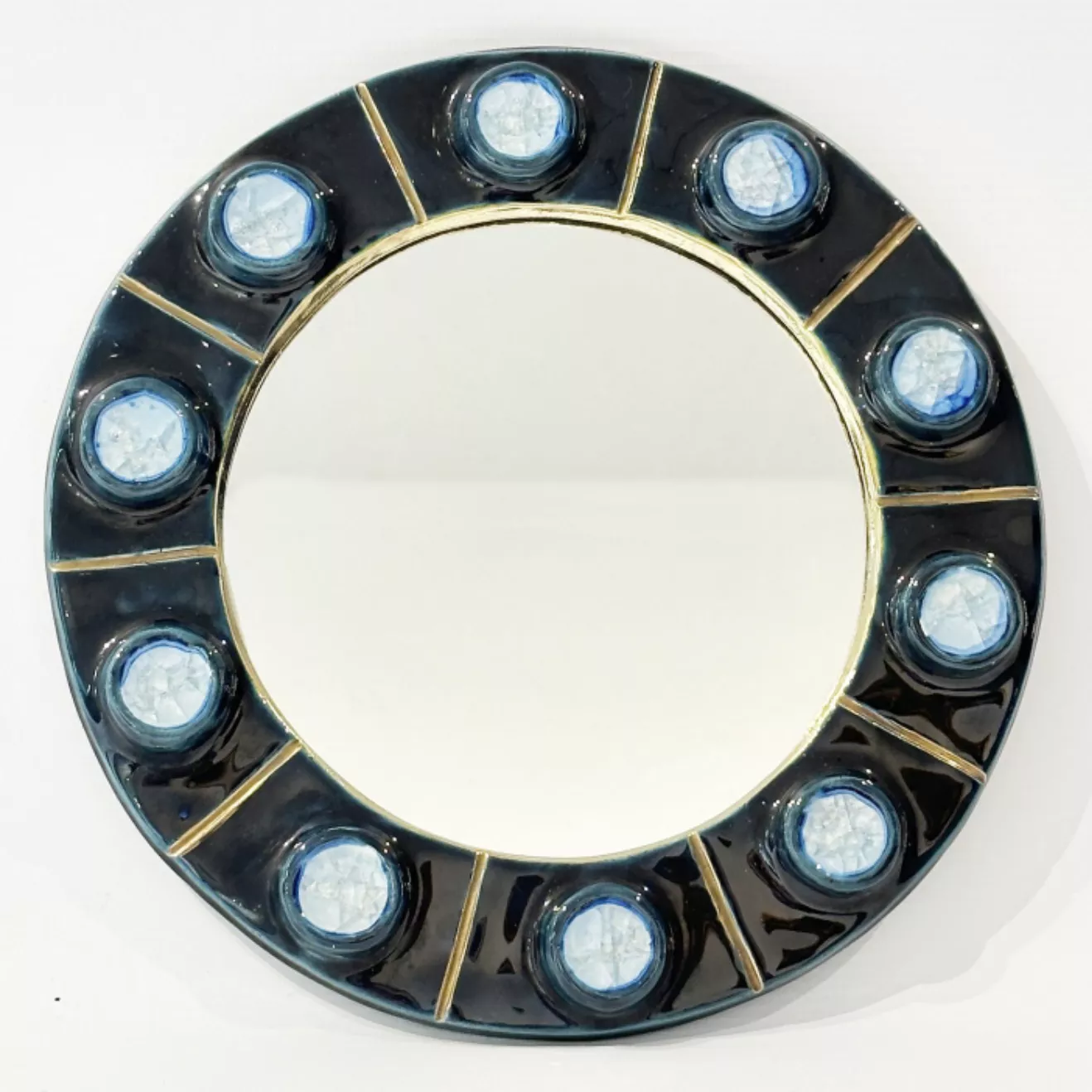
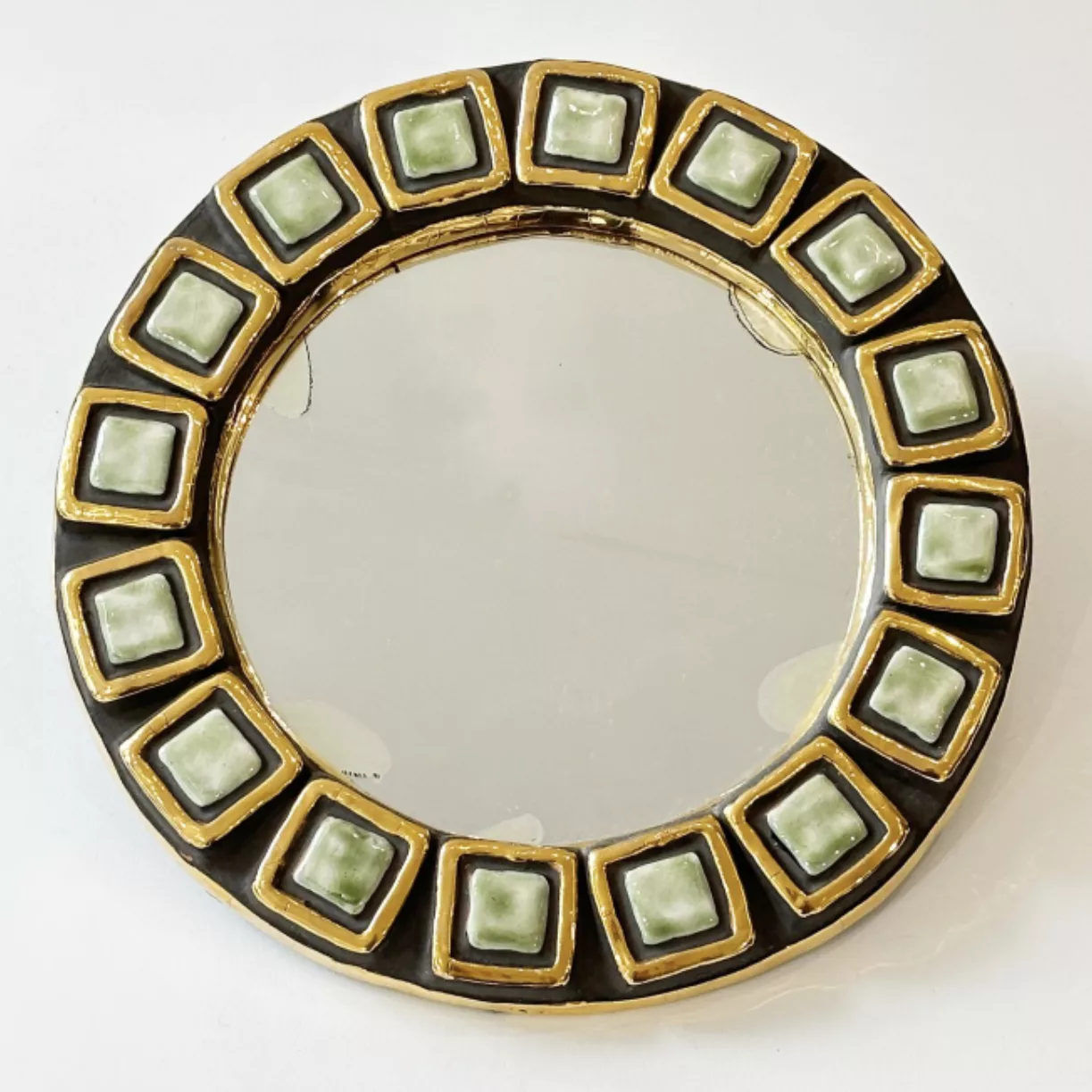
Today, the artist's standing on the auction market is only increasing. Highly prized by collectors, Mithé Espelt's mirrors soar at auction and can fetch tens of thousands of euros.
As evidenced by his mirror Feu, adjudged €54,000 in 2023.
Ranging in value from the most basic to the most prestigious
Mirror type | Result |
|---|---|
Hand mirror | From €80 to €20,900 |
Circular mirror | From €220 to €27,900 |
Wall mirror with frame | From €400 to €54,000 |
Estimate in less than 24h
Technical processes used by the artist
Mithé Espelt, while remaining deeply rooted in craftsmanship, has been able to incorporate cutting-edge scientific and technical processes into the creation of her works, giving each piece remarkable quality and precision.
The ceramic work she undertakes is based on a perfect mastery of materials, particularly glazed earthenware, and a methodical approach to firing.
Espelt experiments with glaze formulations, playing with temperatures and chemical compositions to achieve specific gloss or matte effects, enriching her pieces with a unique texture.
This technical research enables the artist to achieve finishes of great finesse, where light subtly diffuses through the glaze, creating plays of reflections of great depth.
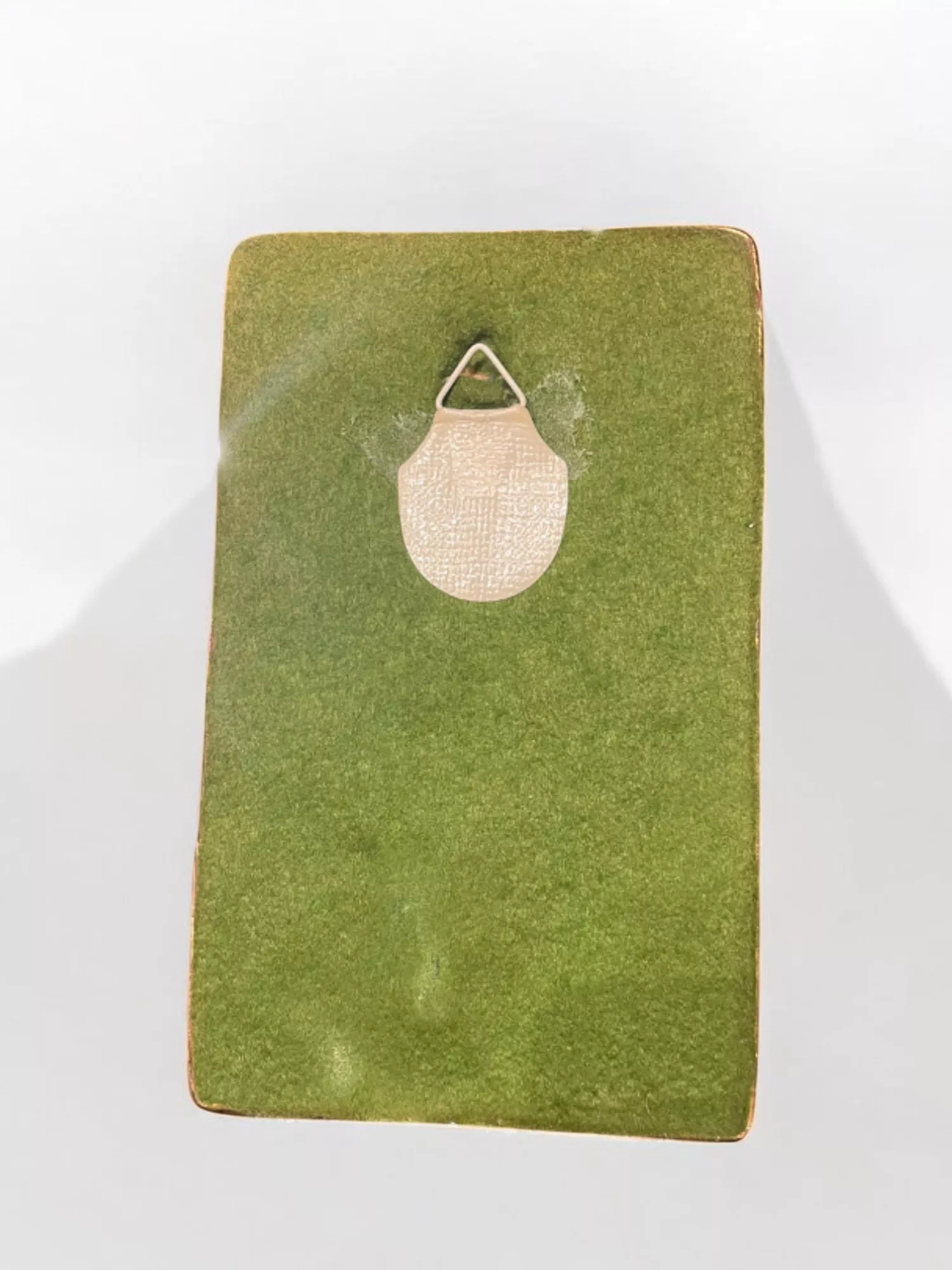
Another particularly interesting process lies in the use of felt, a material that Mithé Espelt carefully applies to the backgrounds of some of her creations, notably her mirrors.
This choice, both aesthetic and practical, not only protects the surface behind the work, but also adds a tactile dimension to the piece. The exquisitely soft felt becomes a discreet signature that lends the object a feeling of comfort and luxury.
The way it is integrated into his works testifies to a desire to blend the science of materials with the pursuit of a refined aesthetic, creating a perfect harmony between texture and form, the useful and the beautiful.
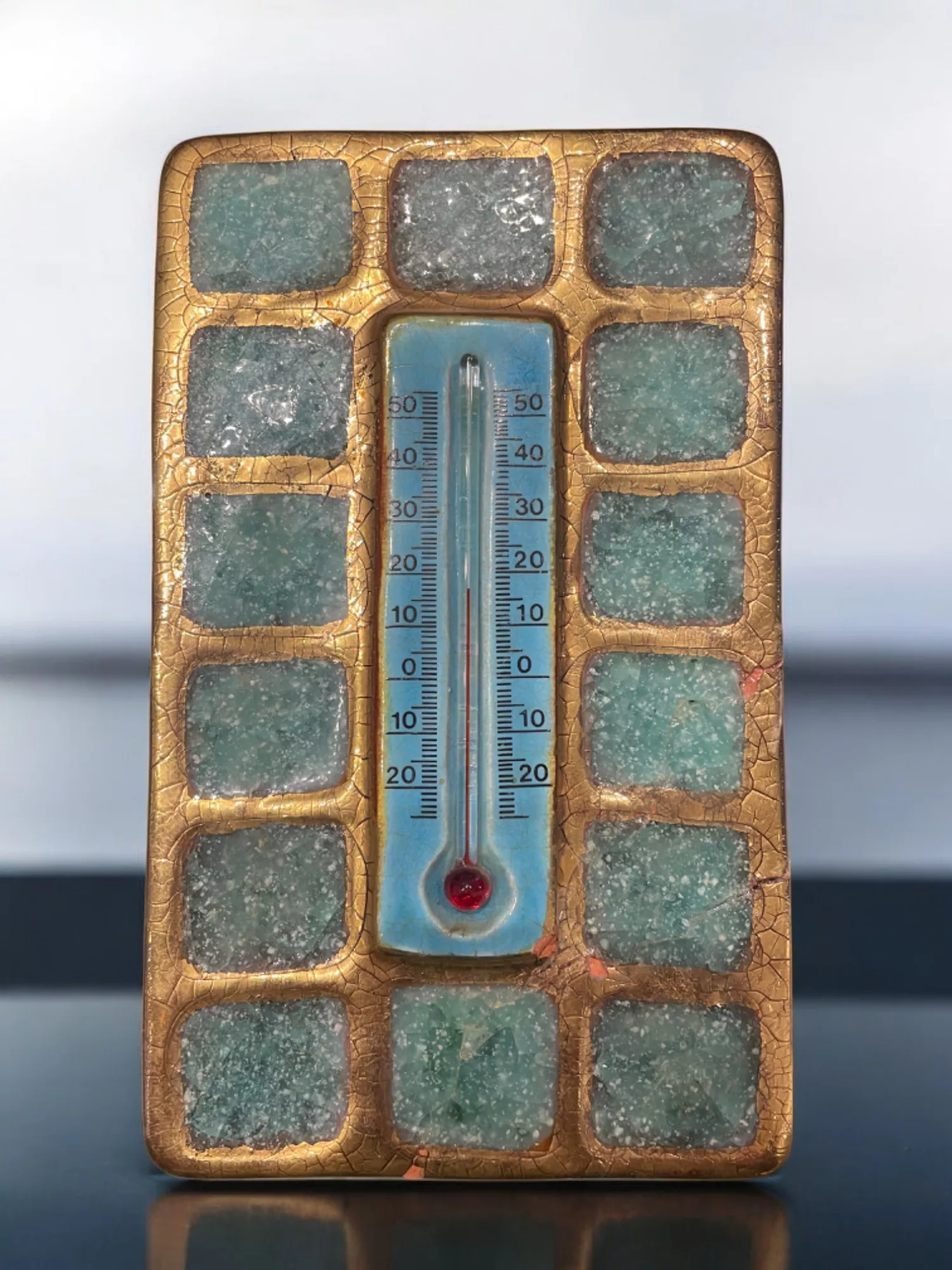
Mithé Espelt : breathing new life into ceramics
Mithé Espelt's career spans several decades, during which she has established her singularity in the field of ceramics and decorative art. From the outset, she distinguished herself through a constant quest for refinement, seeking to combine the poetry of form with impeccable technique.
Trained at the leading ceramics schools, she embarked on the creation of utilitarian and decorative objects that quickly became collector's items prized by connoisseurs.
Her career unfolds through collaborations with prestigious houses, where she takes part in the elaboration of unique collections, combining modernity and tradition.
Over the years, Espelt develops a personal aesthetic, recognizable among all, where each work seems an invitation to silent contemplation.
Throughout her career, she has made her mark with exacting standards and expertise, experimenting with glazes and textures to achieve luminous, subtle effects.
Her creations, whether mirrors, vases or boxes, bear witness to a perfect mastery of materials and a relentless quest for perfection in the harmony of form.
The artist never ceases to push the boundaries of ceramics, integrating cutting-edge techniques while retaining the essence of traditional craftsmanship.
Mithé Espelt thus ranks among the great figures of the 20th century in the decorative arts, helping to redefine the place of ceramics in contemporary art, where the object also becomes a work of art.
Mithé Espelt's work in twentieth-century ceramics
Mithé Espelt's work is part of the revival of twentieth-century ceramics, an era marked by the fusion of art, design and craft.
She shares this quest for elegance and modernity with artists such as Georges Jouve, Roger Capron and Line Vautrin, who, each in their own way, have redefined the codes of contemporary ceramics.
Like Georges Jouve, Espelt is interested in the relationship between form and material, creating pieces whose textures and colors seem to merge in a subtle balance between abstraction and functionality.
Like Roger Capron, she emphasizes the sculptural aspect of ceramics, where each object, while remaining utilitarian, becomes a work of art in its own right, of great visual modernity.
In her approach, Espelt also shares with Line Vautrin this ability to transform traditional materials into objects of new beauty, playing on the effects of light and texture, while infusing each creation with a discreet poetry.
The formal simplicity of her pieces, often inspired by nature and the plant world, is close to the approach of Vautrin, who, through her jewelry and decorative objects, explored a pared-down yet richly meaningful aesthetic.
Through these influences and her own research, Mithé Espelt asserts herself as a key figure in the evolution of twentieth-century ceramics, contributing to the broadening of ceramics beyond its utilitarian function, and bringing it closer to an aesthetic where art and everyday life come together harmoniously.
Focus on Le Vase à trois poissons, Mithé Espelt
The work Le Vase à trois poissons by Mithé Espelt, created in the 1960s, embodies a perfect fusion of ceramic work and sculptural expression.
This vase, of great apparent simplicity, reveals unexpected depth through the artist's mastery of the assemblage of forms and materials.
Its elongated, streamlined, slightly curved silhouette evokes both the fluidity of water and the elegance of natural forms.
Three fish, in relief, adorn the vase, positioned so as to appear to be in motion, as if caught in a game of back-and-forth, suspended in the space of the object.
Espelt uses earthenware as its main support, allowing the surface to retain a certain roughness that contrasts with the smooth forms of the fish.
The glaze applied to the flat parts of the vase, in soft shades of blue and white, imitates the reflections of water, while the fish, treated with more marked relief, are left in a more neutral, almost earthy hue, which emphasizes their materiality and presence.
This contrasting use of textures and colors, while remaining sober and elegant, shows the artist's attention to creating an interaction between form and matter, between decoration and structure.
The fish, of great simplicity in their representation, are modeled with great economy of means. Espelt draws her inspiration from nature, but not from its realistic representation.
These fish, with their flowing lines and elongated forms, are more metaphors for aquatic life than faithful reproductions. The choice of fish as a motif refers to the natural world, while at the same time evoking the invisible, movement, life that escapes the eye.
This almost abstract treatment of natural elements is characteristic of the artist's approach, which doesn't hesitate to reduce her subjects to the essential while giving them a poetic charge.
Examining the vase from a more symbolic angle, we can perceive in the representation of the fish an allusion to the idea of flux, of time passing, of the perpetual movement of life.
Ceramics, a material that is both solid and fragile, embodies this duality between stability and ephemerality, a theme that underpins all of Mithé Espelt's work.
This vase thus becomes an object that invites us to reflect on the nature of life itself, on how art and craft can translate profound concepts while remaining rooted in the beauty of the everyday.
The Vase à trois poissons fits perfectly into the world of modern ceramics of its time, alongside artists such as Roger Capron or Georges Jouve, who, while exploring material and form, manage to create pieces of great symbolic richness.
Espelt, with his formal simplicity and quest for harmony, sets himself apart from his contemporaries by managing to turn each object into a subtle reflection on nature, art and life.
Thus, the Vase à trois poissons is not just a decorative work, but a true testament to the artist's commitment to the quest for meaning through everyday objects.
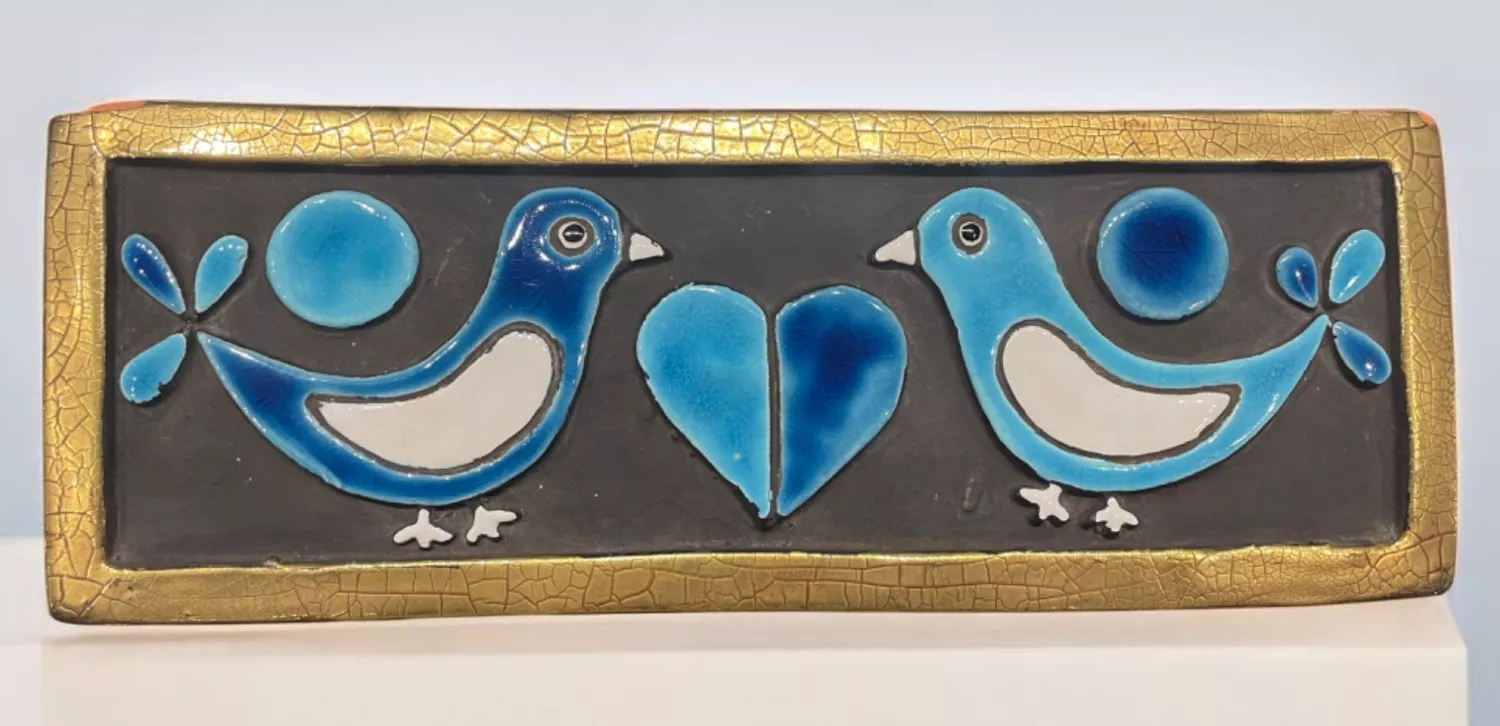
Mithé Espelt's imprint on his period
Mithé Espelt leaves a significant imprint on twentieth-century art history, his original ceramic objects are highly prized, like Line Vautrin or Pierre-Adrien Dalpayrat. His works are always successful at auction.
His signature
Mithé Espelt's works are unsigned, and often recognizable thanks to the felt that the artist affixes to the back of his works.
Expertise your property
If you own a work by Mithé Espelt don't hesitate to request a free appraisal by filling in our online form.
A member of our team of experts and licensed auctioneers will contact you to provide an estimate of the market value of your work.
If you are considering selling your work, our specialists will also guide you through the various alternatives available to obtain the best possible price, taking into account market trends and the specific features of each object.
Estimate in less than 24h
Discover in the same theme

Rating and value of works, drawings and paintings by Elisabe...
Lilla Cabot Perry is an American Impressionist artist of the 20th century, who produced drawings and oil paintings listed at auction.
Learn more >

Rating and value of works, drawings, paintings by André Mass...
André Masson was a 20th-century Surrealist artist who produced drawings and paintings that were successful and highly prized at auction.
Learn more >

Rating and value of paintings by Anne Redpath
Anne Redpath is a Scottish artist who has produced works that are highly rated and valued at auction. 100% free estimate.
Learn more >
Works from the same period sold at auction

Estimated Between €1,000 and €2,000
Mithé ESPELT (1923-2020) Glazed ceramic mirror, "Soleil" model

Estimated 400 - 800
Mithé ESPELT (1923-2020) Round wall mirror, circa 1954, Monaco model

Estimated 2.000 - 4.000
Mithé ESPELT (1923-2020) Round wall mirror, circa 1975, Soleil model

Estimated 1.000 - 2.000
Mithe ESPELT (1923-2020), Round wall mirror model Soleil

Estimated 800 - 1.500
Mithe ESPELT (1923-2020) Square wall mirror, floral design

Estimated 1.000 - 2.000
MITHÉ ESPELT (1923-2020) Round wall mirror, circa 1990, model in stamped earthenware and blue enamel

Estimated 1.800 - 2.700
MITHÉ ESPELT (1923-2020) Wall-mounted mirror, Oblong model circa 1949, in stamped clay and crackled gold

Estimated 1.000 - 2.000
MITHÉ ESPELT (1923-2020). Ouvéa" orange-red glazed ceramic mirror

Estimated 800 - 1.500
MITHÉ ESPELT (1923-2020), Wall mirror, Stèle model, circa 1965

Secure site, anonymity preserved

Auctioneer approved by the State

Free and certified estimates
Frequently asked questions
-
Who is Mithé Espelt, and what is his significance in the history of ceramics?Mithé Espelt was a leading ceramic artist of the 20th century, renowned for her colorful, expressive, and vibrant work. Trained at the most prestigious ceramics schools, she established herself as a key figure in the evolution of modern ceramics, alongside artists such as Georges Jouve and Roger Capron. Her work blends traditional craftsmanship with cutting-edge techniques, transforming utilitarian objects into prized collector’s items.
-
What are the prices of Mithé Espelt's mirrors at auction?Mithé Espelt's mirrors are steadily increasing in value. Handheld mirrors range from €80 to €20,900, circular mirrors from €220 to €27,900, and framed wall mirrors from €400 to €54,000. For example, his “Feu” mirror sold for €54,000 in 2023, confirming the artist’s growing success on the auction market.
-
How can you authenticate a work by Mithé Espelt?Mithé Espelt’s works are not signed, but they are recognizable by the distinctive felt that the artist attaches to the back of her creations. For a comprehensive authentication and an accurate appraisal of your artwork, we recommend requesting a free appraisal from our state-certified auctioneers and experts, with no obligation on your part.
-
How does the appraisal process work at Auctie's?The appraisal is free and non-binding. Simply fill out our online form with the details of your artwork. An expert or certified auctioneer from our team will contact you to examine your item and provide you with an accurate estimate of its market value. If you’re considering selling, our specialists will also guide you toward the best approach to get the best possible price.
-
Is this a good time to sell a mirror by Mithé Espelt?Yes, now is an excellent time to sell a work by Mithé Espelt. The artist’s value on the auction market continues to rise; his mirrors are highly sought after by collectors and regularly fetch high prices at auction. Our experts can help you get the best possible price for your piece by taking current market trends into account.
