



Rating and value of works, prints and paintings by Jacques Villon

Key takeaways
- Jacques Villon (1875–1963), a leading theorist of Synthetic Cubism, has seen his market value fluctuate but has remained a safe bet on the international art market since the 2000s.
- His oil-on-canvas works sell for between €30 and €945,300, while his watercolor drawings and prints range from €5 to €175,110.
- *The Acrobat* (1913), a Cubist composition dominated by red, sold for €945,000 in 2004 at Sotheby’s, exceeding its estimate of €411,000 to €575,400.
Considered one of the most important painters of his time, Jacques Villon (1875-1963) is one of the great theorists of synthetic cubism. His value fluctuates but remains high overall on the auction market, with his works arousing a privileged infatuation on the part of collectors.
If you own a work by or based on the artist Jacques Villon and would like to know its value, our state-approved experts and auctioneers will guide you. Our specialists will carry out a free appraisal of your work, and provide you with a precise estimate of its value on the current market. Thereafter, if you wish to sell your work, we will direct you to the best possible arrangement to obtain the optimum price.
Artist's rating and value
A versatile artist who is mainly involved in synthetic cubism, Jacques Villon is a highly appreciated painter on the art market. Since the 2000s, his price has skyrocketed, making him one of the most sought-after artists on the international market, with French and American buyers alike. Villon's most sought-after works are his cubist canvases. His predominantly red Cubist composition L'Acrobate, dating from 1913, sold for 945,000€ in 2004 by Sotheby's, while it was estimated at between 411,000 and 575,400€.
Order of value from the most basic to the most prestigious
Technique used | Result |
|---|---|
Drawing - watercolor | From € 50 to € 75,370 |
Estamp - multiple | From €5 to €175,110 |
Oil on canvas | From €30 to €945,300 |
Estimate in less than 24h
The artist's works and style
Villon's early career was heavily influenced by Henri de Toulouse-Lautrec. At first, he made little use of the etching technique, producing copper engravings. Later, he would take part in the Fauvist movement without participating in the Salle VII scandal. It was during the birth of Cubism, all the phases of which he knew and experimented with, that Villon would reveal his artistic identity and theorize the stylistic language of Cubism.
Jacques Villon or the plastic translation of Cubism
Jacques Villon, whose real name was Gaston Émile Duchamp, was born in 1875 into a relatively well-off family with a strong interest in art. He was the eldest of a sibling group of artists that included the painter, sculptor and writer Marcel Duchamp, the painter Suzanne Duchamp, and the sculptor Raymond Duchamp-Villon.
He engraved with the etching technique on small cookware, then on copper. His grandfather taught him several techniques, making him a cultured child open to the world. He studied law at the University of Paris, living with his brother Raymond, while frequenting Montmartre. Villon trained at the Beaux-Arts de Rouen on condition that he finished law school, and signed Jacques Villon to dissociate his identity as an artist from that of his brothers.
At the Beaux-Arts de Paris, he then studied under Fernand Cormon, before meeting Toulouse-Lautrec with whom he would work for around ten years producing cinema posters and press illustrations.
While continuing to engrave unceasingly, he helped organize the 1905 and 1906 Salons and took part in Fauvism. He isolates himself from Montmartre and creates the Section d'or, a group including Apollinaire, Picabia, Metzinger, R. Delaunay and Fernand Léger.
In 1944, the galerie Louis Carré acquired his entire studio and devoted an exhibition to him : this was the start of his international success.
He created a graphic language of cubism and made an immense contribution to the artistic progress of his century.
An exhibition grouping his works and those of his siblings was organized in Rouen and then Paris in 1967, four years after his death in his Puteaux studio, at the age of 87.
Find out more about Jacques Villon's work
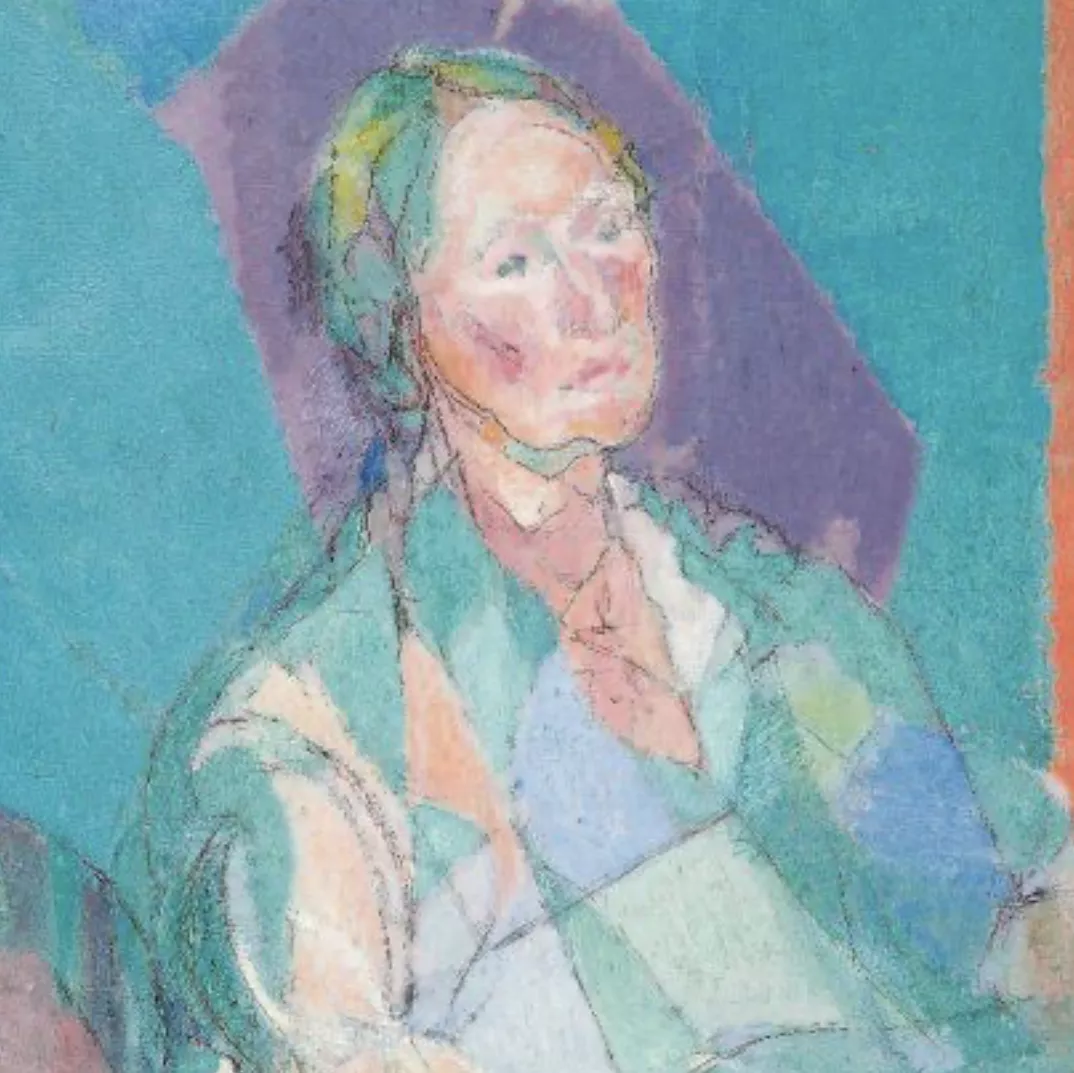
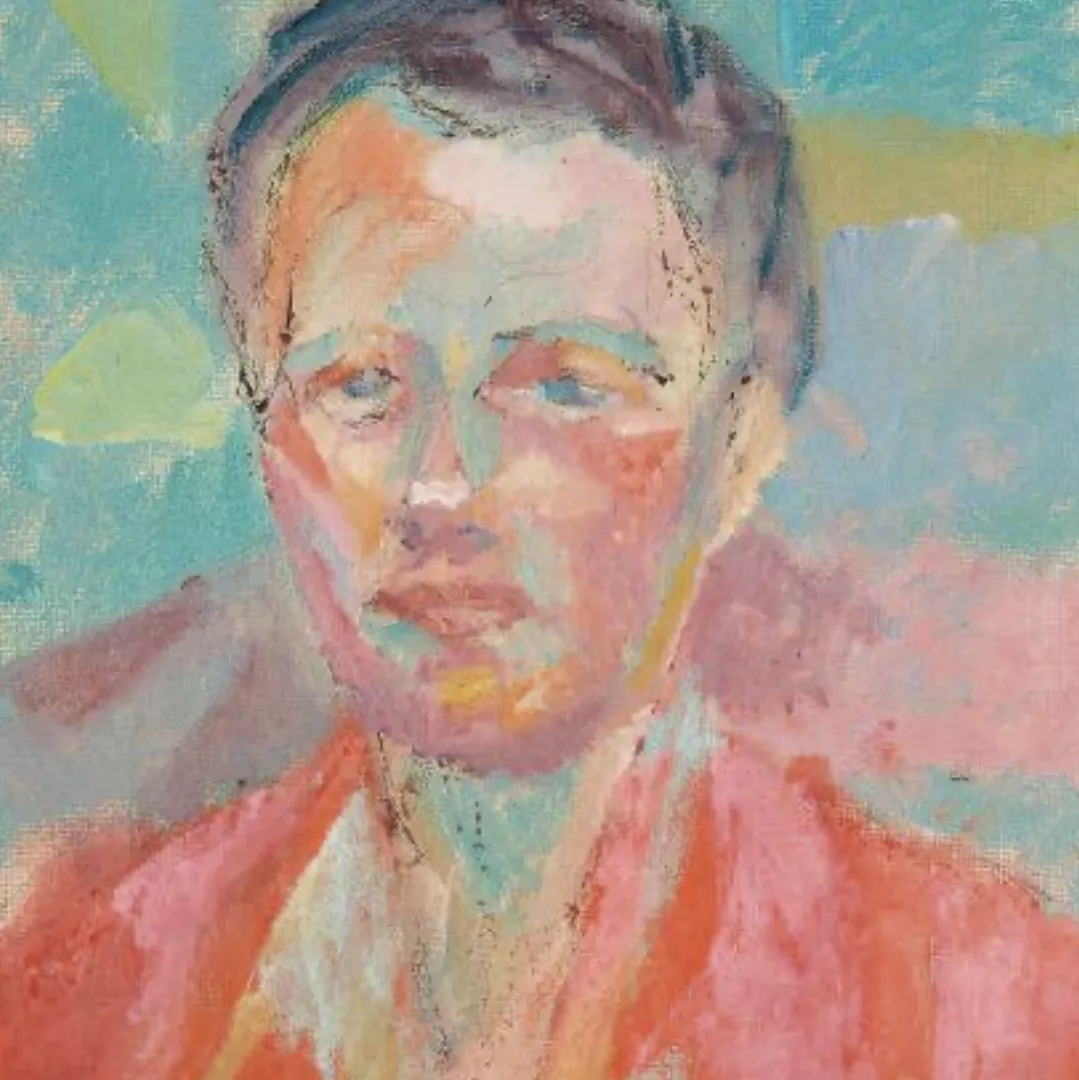
Understanding the different phases of Cubism
In the second half of the 19th century, a new artistic movement was born in France, which was very popular with the public: Impressionism. Many artists took part: Claude Monet was the leading figure, but another painter, Paul Cézanne, stood out from the crowd.
In fact, Cézanne produced many Impressionist canvases during his career, and is still considered one of the masters of this movement. However, he was to become a precursor of later trends. Firstly, Post-Impressionism, and secondly, Cubism, two movements far from unconnected.
Post-Impressionism, which in art history is estimated to have begun in 1910, actually encompasses many different techniques and styles: symbolism, pointillism, synthetism and the Nabis group. The main purpose of this name was to mark the end of Impressionism, which critics and theorists considered outdated at the time.
While it is traditionally said that Impressionism came to an end in 1910, Cézanne actually anticipated Cubism long before. In his painting Gardanne, dating from 1885, we can already easily discern a questioning of the perfect representation of reality and geometric forms.
Plans and perspectives are also turned upside down and totally called into question. All these observations made by Cézanne are at the origin of Cubism.
He reiterates his questioning in his canvas La montagne Sainte-Victoire vue de la carrière Bibemus, in 1897. His thinking had matured, the geometric shapes were less clear-cut, and the perspectives and planes of the painting were called more into question.
Nevertheless, the first phase of (Cézannean) Cubism is thought to have taken place between 1908 and 1910. It was initiated by Picasso and Braque, who knew how to use the milestones set by Cézanne. They wanted to give autonomy to the canvas, and to stop treating two-dimensional volumes realistically.
The perceptual process then collapsed; the aim was to deconstruct it in order to better reconstruct and understand it. This is known as Analytical Cubism (1910-1912). This phase is characterized above all by experimentation, which almost led Braque and Picasso to abstraction.
In the end, it was by linking up with the different levels of meaning in reality and the structure of being in the world that the third phase of Cubism was able to unfold its full interest at Le Bateau-Lavoir : more aesthetic, more real, more comprehensible, synthetic Cubism appealed to other artists such as Juan Gris, who went on to collaborate with Braque and Picasso.
Villon was to study and experiment closely with all these phases, without actually instigating them. Taking an interest in another aspect of this revolution, he would insist on the line and its mechanization, as well as on the facture of his works, which he wanted to be soft and calm.
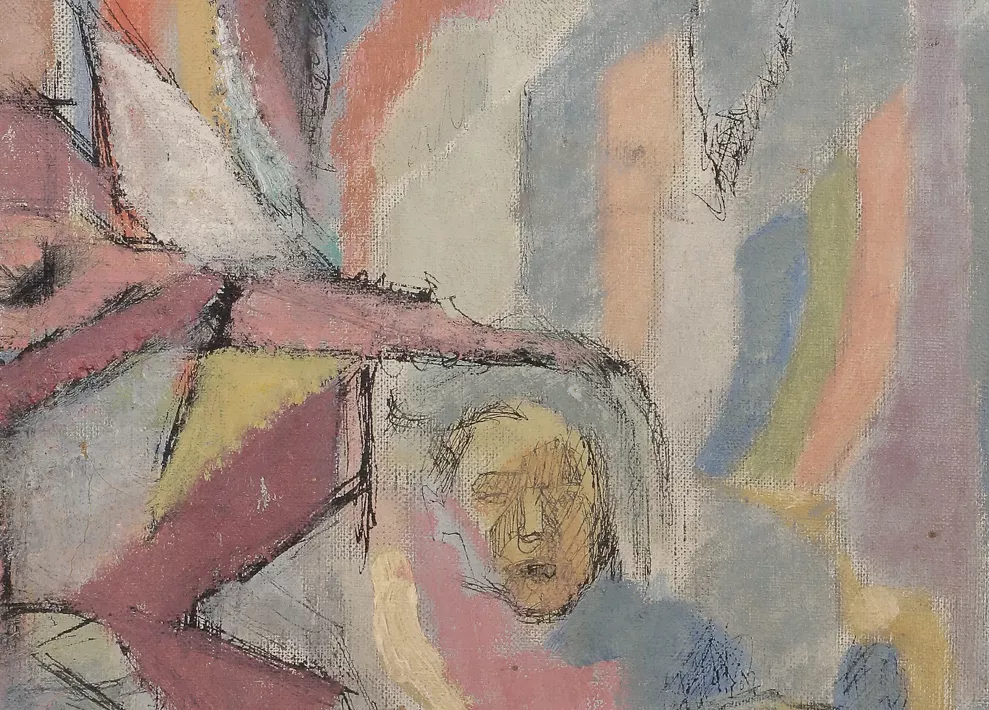
Jacques Villon's contribution to Cubism and its overcoming
Apollinaire, close to Braque and Picasso, plays a fundamental role in the history of the movement, and helps Jacques Villon to conduct his research into overcoming Cubism. Without subscribing to the static, icy approach of analytical cubism (cf. Picasso, Portrait d'Ambroise Vollard), he sought the order and discipline that would enable each colored plane to come alive and find its place in the composition, convinced that he had understood how the eye integrated the material dimension of the work.
He breaks down and recomposes the visual structure of his supports by organizing them into pyramids, four in all : two diagonals connected at the corners allow the subject to take shape.
His approach is rigorous and Cartesian, imbued with the scientific and neurochemical advances of his time, leaving absolutely nothing to chance.
"What appealed to me about Cubism was the search for creation, the discipline that leads to the deliberate, ordered painting, where there is no more room for chance ". - Jacques Villon
To sum up, Jacques Villon's ambition was to translate movement plastically, by breaking down the surface into colored planes. Relentlessly using circles and chromatic charts, he created a graphic language leading to the mechanization of the stroke, something no other cubist had really sought before him.
Much less famous than Juan Gris, Georges Braque and Pablo Picasso, many artists would follow in his wake : Maurice Estève, Jean Bazaine, Léon Gischia, Alfred Manessier ... On his death, Jean Cassou would emphasize his crucial role in the foundation and influence in art history of the cubist movement.
Although little used in the Cubist repertoire, religious iconography was to play an important role in Jacques Villon's work. In addition to the stained glass windows he created for Metz Cathedral, which drew on all his scientific and pictorial theories, the artist used this repertoire on numerous occasions in paintings and engravings.
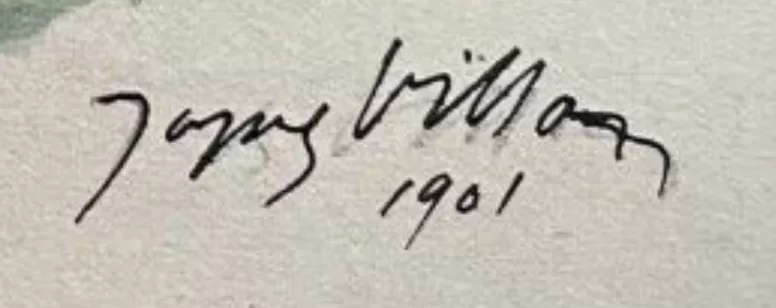
His signature
Not all of Jacques Villon's works are signed. What's more, there are many copies : that's why expertise is important.
Expertise your property
If you own a work by Jacques Villon, don't hesitate to request a free appraisal by filling in our online form. A member of our team of experts and chartered auctioneers will contact you to provide an estimate of the market value of your work.
If you are considering selling your work, our specialists will also guide you through the various alternatives available to obtain the best possible price, taking into account market trends and the specific features of each work.
Estimate in less than 24h
Discover in the same theme

Rating and value of works, serigraphs, paintings by Alain Ja...
Alain Jacquet is a Figuration Nouvelle artist who introduced Pop Art. His works are quoted and successful at auction.
Learn more >

Rating and value of works, fashion drawings by René Gruau
René Gruau is a twentieth-century artist and draughtsman who worked for Dior, among others, and whose work is highly valued and quoted.
Learn more >

Rating and value of furniture, tables, lamps by Clément Rous...
Clément Rousseau is a classic decorator of the 20th century, who has produced works that are quoted and valued on the auction market.
Learn more >
Works from the same period sold at auction


Secure site, anonymity preserved

Auctioneer approved by the State

Free and certified estimates
Frequently asked questions
-
Who was Jacques Villon, and what role did he play in the history of Cubism?Jacques Villon (1875–1963), whose real name was Gaston Émile Duchamp, was one of the leading theorists of Synthetic Cubism. Unlike Picasso or Braque, he was not its founder, but he developed a unique approach by visually translating movement through the decomposition of the surface into colored planes and the mechanization of the line. He created a graphic language of Cubism that influenced many artists and remains recognized as a major figure of his time.
-
What are the price ranges for Jacques Villon's works, depending on the technique used?Prices for Jacques Villon’s works vary considerably depending on the medium: drawings and watercolors range from €50 to €75,370; prints and multiples from €5 to €175,110; and oil paintings on canvas from €30 to €945,300. His Cubist paintings—particularly his predominantly red compositions—are among his most sought-after and expensive works on the market.
-
How do I have a work by Jacques Villon authenticated?To authenticate a work by Jacques Villon, we recommend that you request a free appraisal from Auctie's by filling out our online form. A state-certified auctioneer or appraiser will contact you to conduct the appraisal and provide you with an accurate assessment of your artwork’s market value, with no obligation on your part.
-
Is this the right time to sell a work by Jacques Villon?Yes, now is a good time to sell a work by Jacques Villon. Since the 2000s, his market value has risen steadily, establishing him as a safe bet on the international market and making him highly sought after by French and American collectors. Interest in his Cubist paintings remains particularly high, which helps ensure favorable auction results.
-
How does the appraisal and sale of a work of art take place at Auctie's?At Auctie's, appraisals are free and non-binding: after submitting your request online, an expert or auctioneer will contact you within 48 hours to provide an estimate. If you decide to sell, our specialists will guide you through the various options available to help you get the best possible price, taking into account market trends and the specific characteristics of your artwork.
