



Rating and value of paintings by Hortense Haudebourt Lescot

Key takeaways
- Hortense Haudebourt Lescot’s oil-on-canvas paintings sell for between €200 and €65,000, and her market value has been rising since 2012.
- A French neoclassical painter (1784–1845) who specialized in genre scenes and portraits, she was appointed official painter to the queen in 1827.
- Her works are characterized by a precise academic technique, a luminous color palette, and intimate compositions inspired by her stays in Italy.
If you own a work by or after the artist Hortense Haudebourt Lescot, and would like to know its value, our state-approved experts and auctioneers will offer you their appraisal services.
Our specialists will work to carry out a free appraisal of your work, and provide you with an accurate estimate of its value on the current market.
Then, if you'd like to sell your work, we'll direct you to the best possible arrangement to obtain the optimum price.
Rating and value of the artist Hortense Haudebourt Lescot
Hortense Haudebourt Lescot is an artist known to lovers of neoclassical canvases and portraits. Now, prices for her works are rising at the auctioneers' gavel.
Her oils on canvas are particularly prized, especially by French buyers, and the price at which they sell on the art market ranges from €70 to €65,000, a significant delta but one that speaks volumes about the value that can be attributed to the artist's works.
In 2012, his oil on canvas Autoportrait à la palette was sold for €65,000, while it was estimated at €5,000 to €6,000. Its value is on the rise.
Order of value from a simple work to the most prestigious
Technique used | Result |
|---|---|
Drawing - watercolor | From €70 to €2,800 |
Oil on canvas | From €200 to €65,000 |
Estimate in less than 24h
Style and technique of artist Hortense Haudebourt Lescot
Hortense Haudebourt Lescot (1784 - 1845) was a French painter known for her genre scenes and portraits at the turn of the 19th century. She studied with Guillaume Guillon Lethière, a neoclassical painter of Guadeloupean origin, who introduced her to a rigorous practice of drawing and composition.
She is strongly influenced by neoclassicism in the structure of her works, with a pronounced taste for anecdote and everyday life inherited from genre painters. She develops a personal style that fuses academic precision with narrative vivacity.
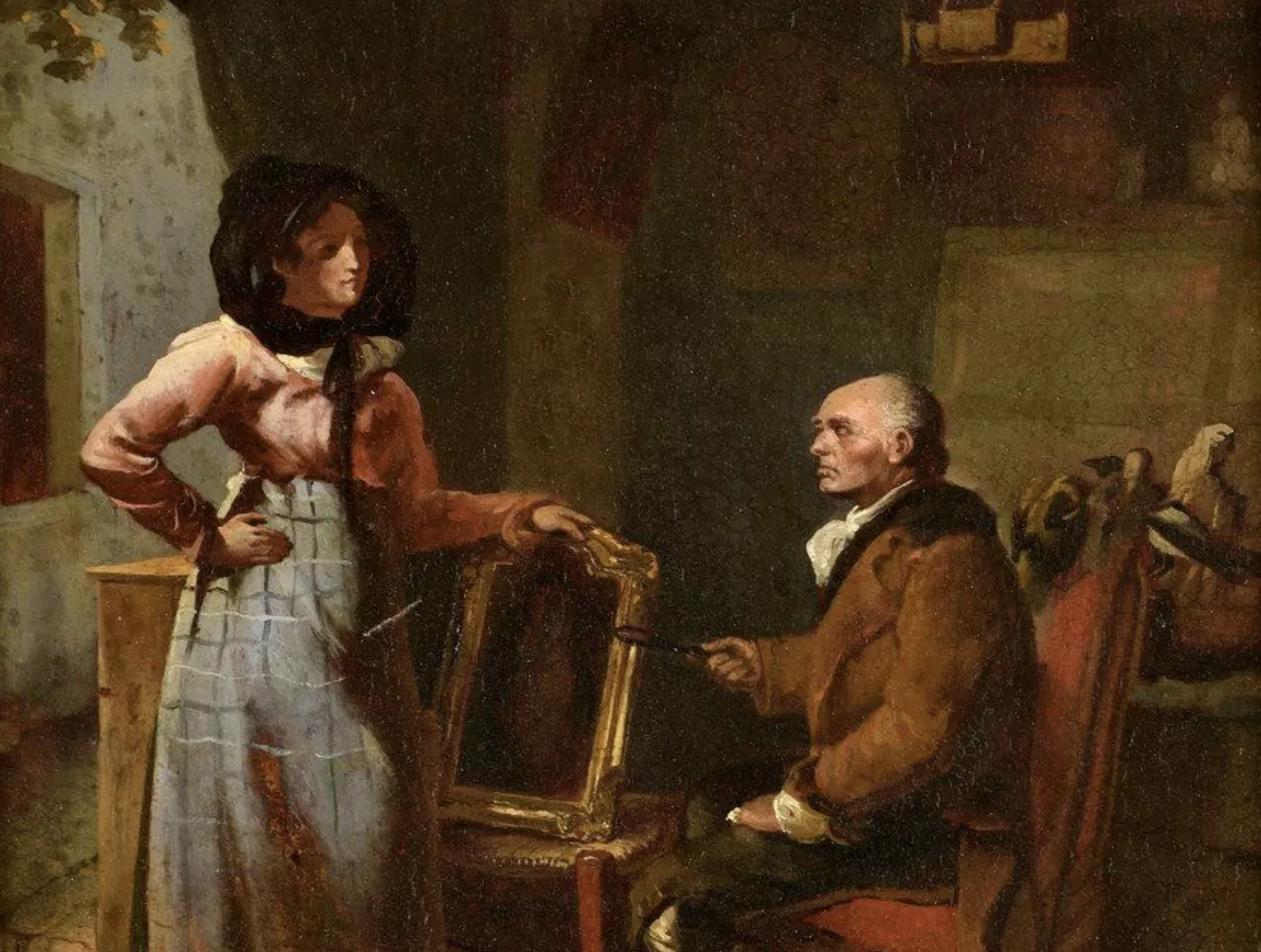
Her drawing is solid, precise, often executed from life or on the spot during her stays abroad. She frequently uses frieze compositions, with a frontal staging, like a little indoor or street theater.
Her frames are tight and the construction of pictorial space is fairly classical : she favors clarity of reading and the balanced arrangement of figures. Her palette is luminous, with light, delicate and nuanced tones, and a subtle use of local color.
She works with discreet but effective chiaroscuro effects to model bodies and give relief to scenes, also showing a taste for varied textures (silks, laces, stones and peasant fabrics), which are rendered with great technical virtuosity.
She shows a predilection for Italian genre scenes, particularly scenes of popular Roman or Neapolitan life, inspired by her stay in Rome. Her painting is narrative, often smiling or tenderized, featuring female figures, children, musicians and artisans.
Hortense Haudebourt Lescot knows how to combine the picturesque and the elegant, with a desire for vivid rather than idealized representation. In her portraits, she pays particular attention to clothing details and facial expression, with a touch of psychology.
She uses oil on canvas as her main medium, but also practices preparatory drawing and painting on panel. Her technical know-how is inherited from academic training, but adapted to more modest formats and more intimate subjects.
Surfaces are smooth, meticulously treated with little impasto, as she seeks sharpness more than substance.
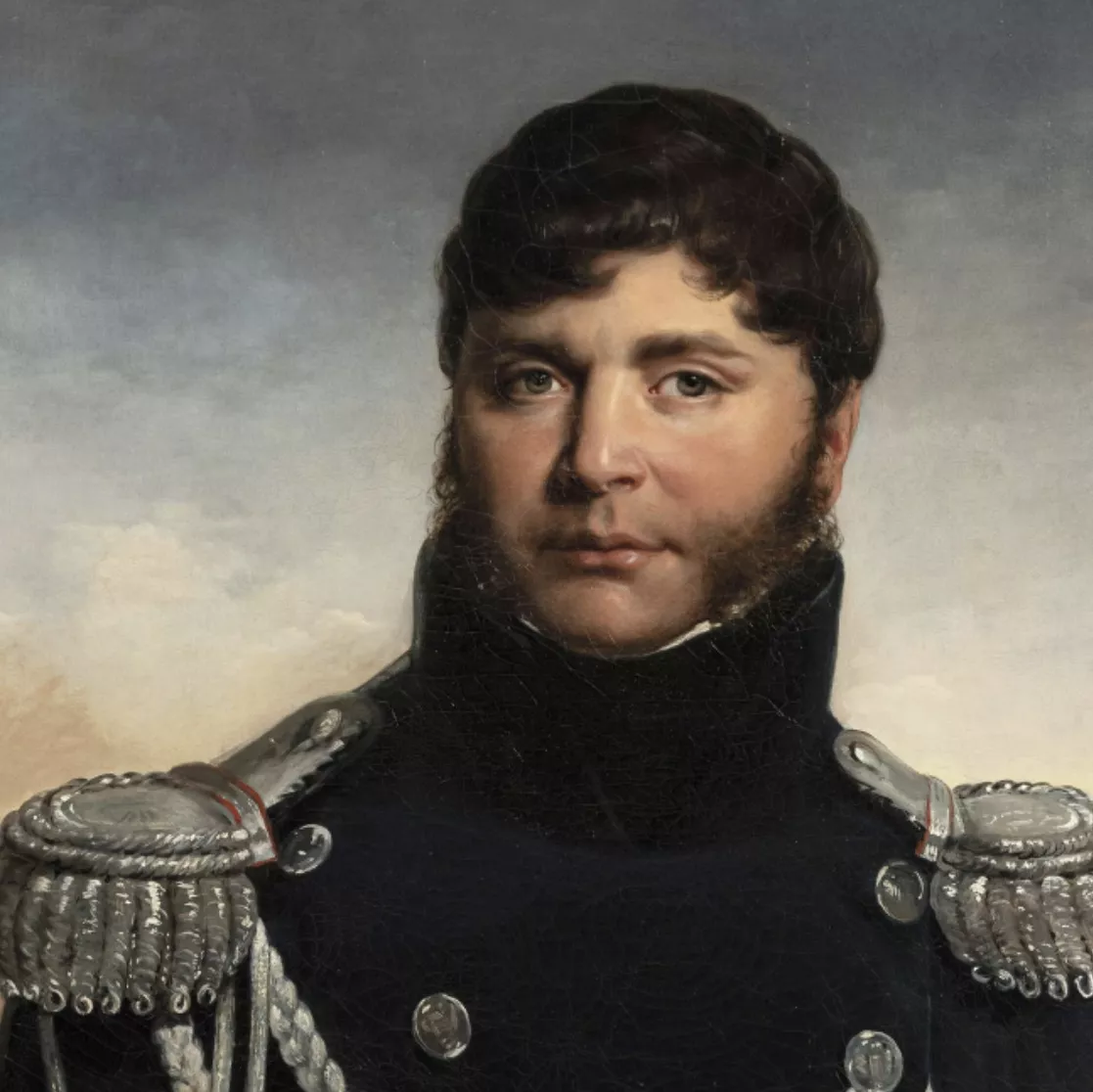
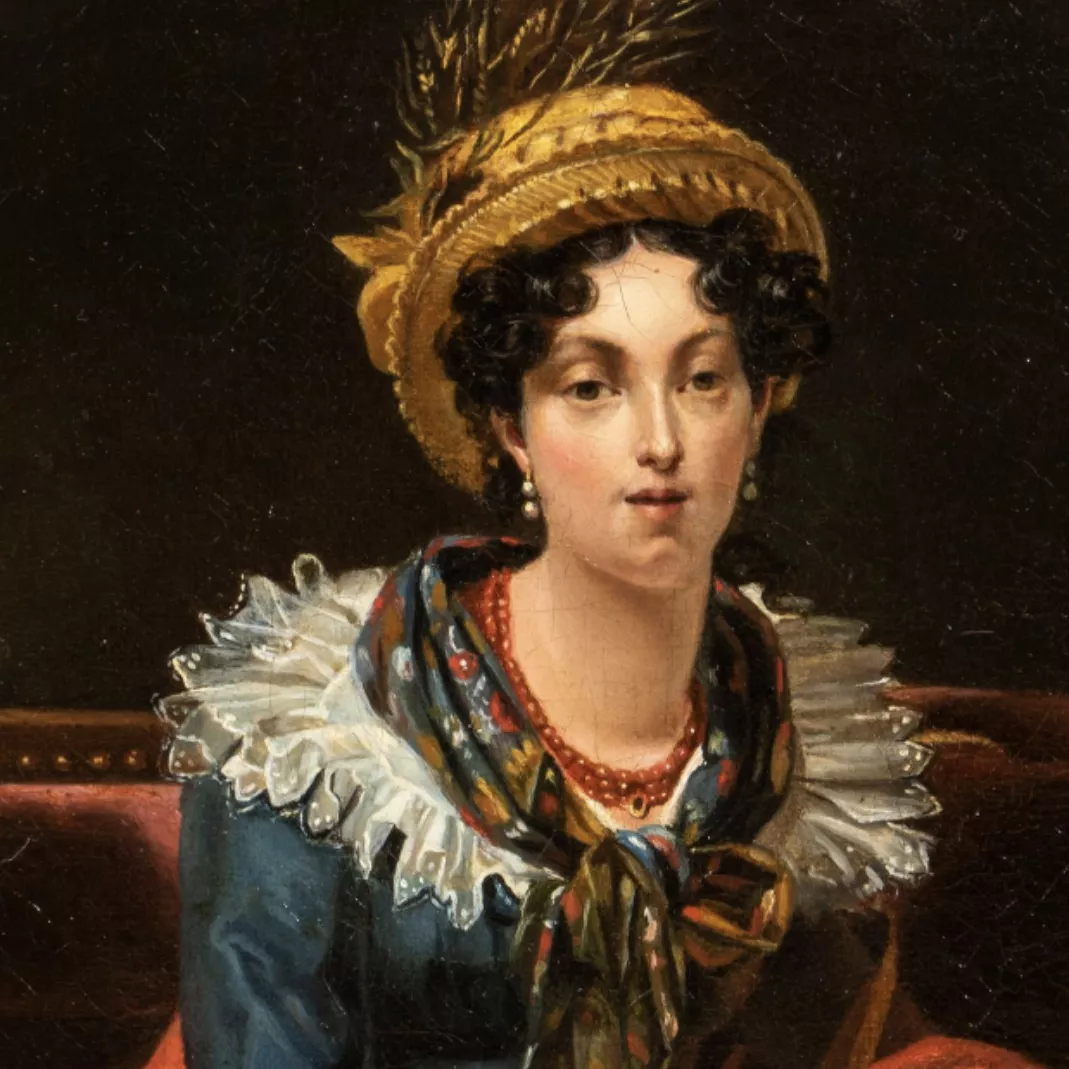
The career of Hortense Haudebourt Lescot
Hortense Haudebourt Lescot (1784 - 1845) was a French painter active during the Empire and Restoration periods. Her full name was Antoinette Cécile Hortense Haudebourt, adding Lescot after her marriage.
A student of Guillaume Guillon Lethière, director of the Académie de France in Rome, she followed his rigorous teaching. He encouraged her to develop an art that was both classical and lively, with a strong grounding in the observation of reality.
She left to live in Rome in 1808: her stay there lasted several years and was fundamental to her career. There she discovered Italian popular life, which became her main source of inspiration, and frequented the Roman artistic colony, rubbing shoulders with other French artists, but developing a very personal style.
Rome became a living laboratory for her : she painted from the motif, in the streets, markets and workshops. She returned to Paris and began exhibiting at the Salon in 1810, where she was well received by critics.
She specialized in Italian genre scenes, which were very popular under the Restoration. She obtained several official commissions, including portraits and small-scale historical paintings, and became a recognized artist, despite the rarity of women admitted to the Salon at the time.
In 1827, she was appointed official painter to Queen Marie-Amélie, wife of Louis-Philippe. This institutional recognition confirmed her status in the Parisian art world.
She was also involved in the training of young artists, particularly women, and married the architect Louis-Pierre Haudebourt -Lescot, hence the adoption of her full name.
She died in Paris in 1845, aged 60, after a discreet but consistent career. Today, she is being rediscovered for her quality of execution, her humanist outlook and her pioneering role among women painters travelers.
Focus on Young Girl Playing Guitar, circa 1820
Young Girl Playing Guitar is a medium-format oil on canvas painted around 1820, typical of genre scenes, housed at the Musée du Louvre in the permanent collections. She painted it on her return from Rome, after her immersion in Italian popular culture.
It depicts a young woman seated, concentrated and playing a six-string guitar. The setting is simple but evocative, depicting a stripped-down bourgeois interior with a few decorative elements, curtain and rustic chair.
The light is soft, lateral, illuminating the musician's face and hands. Ancillary objects are present in the composition (sheet music, cloth, vase) providing a discreet narrative supplement.
The drawing is meticulous, with clean contours, typical of an academic training. Her palette is luminous and harmonious (cameos of ochre, pink, beige and brown) creating a hushed atmosphere.
The touch is fine, smooth and impasto-free, with great attention paid to textures (fabrics, wood, skin). She makes moderate but subtle use of chiaroscuro to model volumes without dramatization.
The theme of the young girl musician is chosen to enhance feminine sensibility and the pleasure arts in the neoclassical tradition. The image suggests concentration, happy solitude, even a suspended moment.
There is no marked anecdote but a sense of familiarity. The artist mixes individual portrait and genre scene, as the young girl becomes the center of an inner world. The work is representative of the intimist turn in post-Napoleonic painting, and testifies to Haudebourt-Lescot's ability to paint femininity without mawkishness, with quiet dignity.
This work can be compared to the interior portraits of Marguerite Gérard or Élisabeth Vigée le Brun, but with a more realistic anchoring. The painting embodies a refined, accessible and sensitive art, at the crossroads of observation and elegance.
Recognizing the artist's signature
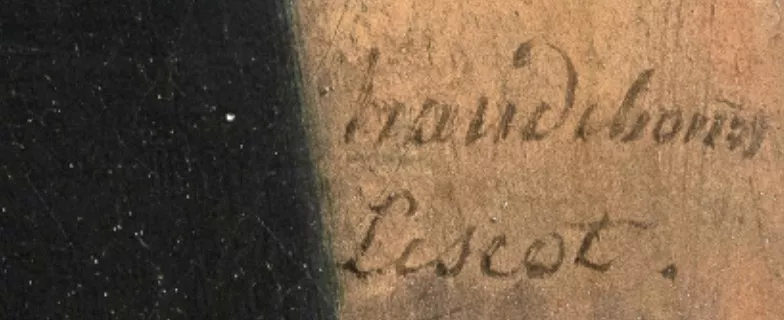
Hortense Haudebourt-Lescot does not necessarily sign her works. Copies may exist, which is why expertise remains important.
Knowing the value of a work
If you happen to own a work by Hortense Haudebourt-Lescot or after the artist, don't hesitate to request a free valuation using our form on our website.
A member of our team of experts and certified auctioneers will contact you promptly to provide you with an estimate of the market value of your work, as well as ad hoc information about it.
If you are considering selling your work, you will also be accompanied by our specialists in order to benefit from alternatives for selling it at the best possible price, taking into account the inclinations of the market.
.Estimate in less than 24h
Discover in the same theme

The value of works, sculptures by Agathon Léonard
Agathon Léonard, 19th century sculptor and bronzemaker, have a work by the artist appraised and valued in less than 24 hours.
Learn more >

Rating and value of works, paintings by Léon Lhermitte
Léon Lhermitte was a 19th-century naturalist painter who produced drawings and oil paintings that are highly prized at auction.
Learn more >

Rating and value of works, drawings and paintings by Élizabe...
Elizabeth Vigée Le Brun was a 19th-century painter who produced many portraits, both drawings and paintings, which are listed at auction.
Learn more >
Other paintings from the same period sold at auction

Estimated 4.000 - 6.000
Ary Scheffer (Dordrecht 1795-1858 Argenteuil) One of the three holy women (meditating on Christ's resurrection after the vision in the tomb?) Oil on canvas

Estimated 800 - 1.500
Attributed to Marie Augustin Zwiller (Didenheim 1850-1939 Neuilly sur Seine) Red-haired female nude, back view

Estimated 500 - 800
Edma MORISOT-PONTILLON (1839-1921) Spectatrice du crépuscule au bord de l'étang Oil on canvas

Estimated 10.000 - 15.000
ABBÉMA Louise, 1853-1927 Portrait of Mme ***, 1879 Oil and gold paint on canvas

Estimated 1800€ - 2500€
Attributed to Thomas Couture (Senlis 1815 - 1879...

Estimated 2000€ - 3000€
Adrien Henri TANOUX (1865-1923) Female nude with...

Secure site, anonymity preserved

Auctioneer approved by the State

Free and certified estimates
Frequently asked questions
-
Who was Hortense Haudebourt Lescot, and what was her artistic style?Hortense Haudebourt Lescot (1784–1845) was a French painter who specialized in genre scenes and neoclassical portraits. A student of Guillaume Guillon Lethière, she developed a personal style that blended academic precision with narrative vitality, showing a marked preference for scenes of Italian folk life that she discovered during her stay in Rome beginning in 1808. She is known for her delicate use of light, her precise draftsmanship, and her ability to capture femininity and intimacy without sentimentality.
-
What are the prices and price range for works by Hortense Haudebourt Lescot?Prices for works by Hortense Haudebourt Lescot vary considerably depending on the medium and quality: drawings and watercolors sell for between €70 and €2,800, while oil paintings on canvas range from €200 to €65,000. Her oil on canvas “Self-Portrait with a Palette” exceeded estimates when it sold for €65,000 in 2012. Her market value is currently on the rise, particularly among French buyers.
-
How can you authenticate a work by Hortense Haudebourt Lescot?To authenticate a work by Hortense Haudebourt Lescot, we recommend that you request a free, no-obligation appraisal from Auctie's. Our team of experts and state-certified auctioneers will examine the work and provide you with an accurate appraisal within 48 hours. This appraisal is particularly important because the artist did not necessarily sign all of her works, and copies may exist.
-
Is this a good time to sell a work by Hortense Haudebourt Lescot?Yes, now is a good time to sell a work by this artist: her market value is on the rise, and her works—particularly her oil-on-canvas paintings—are attracting growing interest from buyers. As a pioneering figure among female travel painters and an artist of recognized talent, Hortense Haudebourt Lescot is gradually being rediscovered.
-
How does the process of selling a work of art at Auctie's work?At Auctie's, we support you every step of the way: start with a free appraisal using our online form, and our specialists will then present you with the best options for selling your artwork at the best possible price. As a licensed auction house, we take market trends into account and guide you all the way through to the final bid.
