



Rating and value of paintings by Georges Ribemont-Dessaignes

Key takeaways
- Ribemont-Dessaignes’ works sell for between €40 and €100,000, with oil-on-canvas paintings commanding the highest prices.
- A leading artist of the Dada movement active from 1910 to 1930, he blended painting, drawing, theater, and poetry with a deliberately absurd and naïve aesthetic.
- A free appraisal is available to assess the authenticity and current market value of your works prior to sale.
If you own a work by or after Georges Ribemont-Dessaignes and would like to know its value, our state-approved experts and auctioneers will offer you their appraisal services.
Our specialists will carry out a free appraisal of your work, and provide you with an accurate estimate of its value on the current market.
Then, if you'd like to sell your work, we'll guide you towards the best possible arrangement to obtain the optimum price.
Rating and value of the artist Georges Ribemont-Dessaignes
The artist Georges Ribemont-Dessaignes leaves behind a body of work characteristic of modern painting, he is famous for his canvases and drawings. Now, prices for his works are rising under the auctioneers' gavel.
His paintings are particularly prized, especially by French buyers. The price at which they sell on the art market ranges from €40 to €100,000, a substantial gap but one that says a lot about the value that can be attributed to Ribemont-Dessaignes' works.
Grand musicien, an oil on cardboard dating from 1920 sold for €100,000, despite being estimated at between €60,000 and €90,000.
Order of value from a simple work to the most prestigious
Technique used | Result |
|---|---|
Estamp - multiple | From €40 to €1,100 |
Drawing - watercolor | From €170 to €85,000 |
Oil on canvas | From €2,800 to €100,000 |
Estimate in less than 24h
Style and technique by artist Georges Ribemont Dessaignes
Georges Ribemont-Dessaignes is a painter and writer behind a multifaceted and experimental body of work. Active between 1910 and 1930, he developed a protean artistic practice that blended painting, drawing, theater, poetry and music.
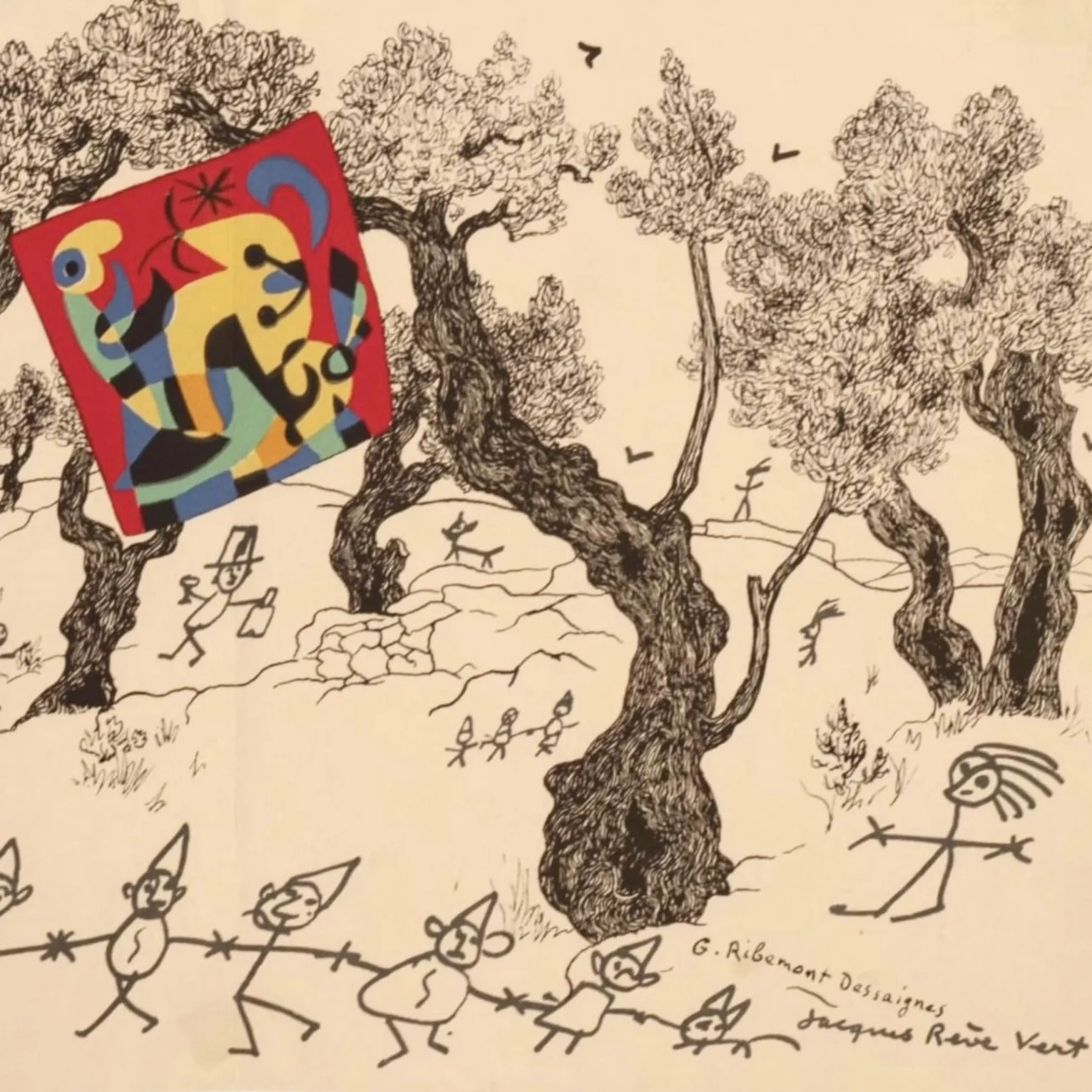
He remained faithful to the spirit of radical experimentation of the Dada group, in which he was a major player. His paintings reject any form of academicism in favor of a deliberately naïve or absurd aesthetic, marked by schematic figures, flat compositions and a distorted use of classical pictorial conventions.
He is influenced by Dada and anti-art. His pictorial work, like his texts, is intended as a critical gesture against the traditional values of bourgeois art, which he categorically rejects.
He uses humor, nonsense and the incongruous as means of aesthetic contestation. His graphics are deliberately simplified, with forms often reduced to silhouettes or symbols.
He takes an approach close to illustration or shadow theater, which gives his works a rather immediate satirical power.
He uses bold, contrasting colors, and employs pure colors that are laid down in solids, reinforcing the direct legibility of the image and its force of visual impact - consistent with a desire for subversive clarity.
With Ribemont-Dessaignes, the boundary between writing and image is quite often blurred, his plastic works participating in a narrative or poetic logic where word, sign and figure intertwine.
Ribemont-Dessaignes' painting, like his literary work, is defined by a refusal of established rules and a quest for absolute formal freedom. It embodies the Dada spirit at its most radical, ironic and inventive.
Georges Ribemont-Dessaignes, his life, his work
Georges Ribemont-Dessaignes is an artist who is part of the Dada group, born in 1884 in Montpellier. He began his artistic training in Paris, at the Académie Julian, where he familiarized himself with painting and quickly developed a taste for literary and plastic experimentation.
His involvement with the Dada movement began in 1919, alongside Tristan Tzara and Francis Picabia. He published manifestos, absurdist poems, plays and drawings.
He thus asserted a critical stance against academism, war and bourgeois conventions. His activity was protean : the artist practiced poetry, theater, painting, the novel and sometimes the essay.
This diversity contributed to making him one of the most complete representatives of the Franco-European avant-garde between the two wars.
His positioning was marginal and independent. After the Dada period, he remained on the bangs of mainstream trends, refusing any fixed appearance. He is interested in esotericism, experimental music and pursues a dense, unclassifiable literary oeuvre.
He collaborates with the Surrealists (Max Ernst, René Magritte, Salvador Dali...) for a time, and distanced himself from it due to political and aesthetic differences, preferring to maintain a freer, more personal stance. He then withdrew from the group due to political and aesthetic differences, preferring to retain the freer, more personal position he had previously held.
Ribemont-Dessaignes continued to write until the 1960s, publishing novels, reviews and memoirs. He died in Saint-Jeannet in 1974, leaving behind a multifaceted body of work, currently being rediscovered for its radicalism and originality.
As a result, Ribemont-Dessaignes remains a rather singular figure of the French avant-garde, whose life and work embody a constant fidelity to the independent, ironic and experimentalist spirit that marked the Dada group and its followers.
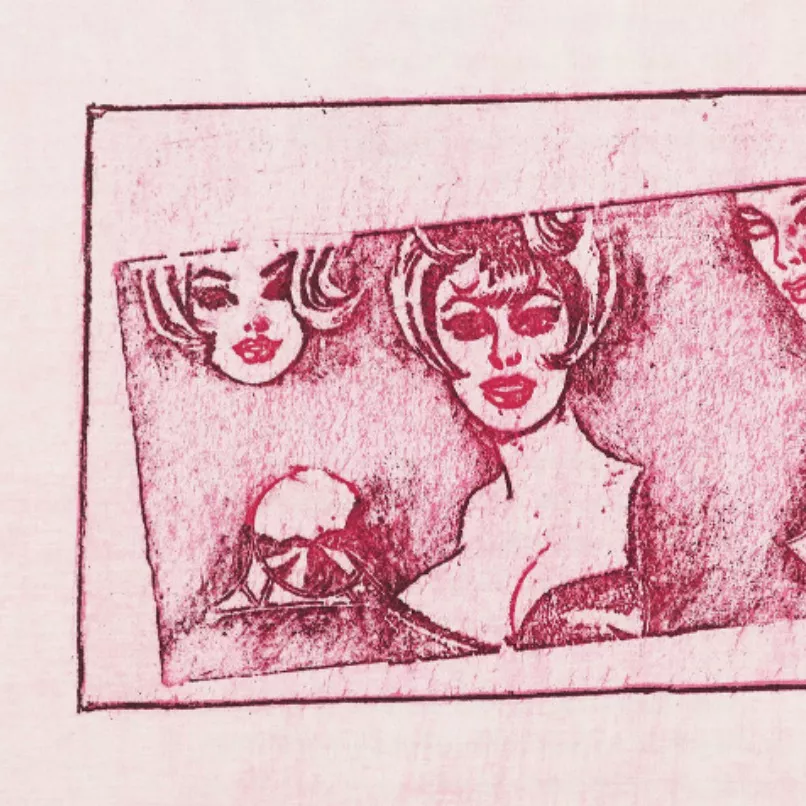
Focus on The Lecturer, Georges Ribemont-Dessaignes, circa 1920
The Lecturer in Ribemont-Dessaignes is a satirical and absurd subject. It depicts an isolated figure, standing on a dais, visibly speaking to an absent or indifferent crowd.
With this choice, Ribemont-Dessaignes derides intellectual authority figures and learned discourse, which is a recurring theme in the Dada universe.
The composition is deliberately simplified : the drawing is characterized by a great economy of means. The figure, reduced to a few schematic lines, is frozen in a rigid attitude. The background is almost empty, reinforcing the scene's effect of isolation and absurdity.
His graphic style is direct and ironic, the work uses a caricature-like graphic style, with thick contours and sparsely-modeled forms. This stylization accentuates the ironic, comic and critical aspect of the subject matter.
The artist does not seek to seduce through virtuosity but to question the visual codes of his time.
Through this rather grotesque figure, the artist attacks the oratorical pretension and vacuity of certain public speeches, notably joining the anti-bourgeois and anti-academic concerns of the Dada group.
This work is typical of his Dadaist commitment. Le Conférencier in fact illustrates the absurd aesthetic dear to Ribemont-Dessaignes, where meaning is deliberately blurred and the image becomes a vehicle for questioning social and artistic certainties.
Through this work, which is both comic and disturbing, Georges Ribemont-Dessaignes opposes institutional logic with the subversive power of drawing. In this way, the Conférencier reveals all the irony and radicalism of an artist who has turned the absurd into a critical tool that is both visual and political.
Georges Ribemont-Dessaignes' imprint on his period
Georges Ribemont-Dessaignes played a decisive role in spreading Dadaist ideas in France from 1919 onwards, through his active participation in reviews, his manifestos and his hybrid creations mixing text, image and stage.
He established himself as a promoter of total creative freedom : through his literary, pictorial and theatrical works, he embodied the spirit of radical experimentation of Parisian Dada, rejecting all academic conventions, aesthetic hierarchies and standards of good taste.
He is a model of intellectual independence, since although associated with the Dada group, and later briefly with Surrealism, he refuses all forms of ideological orthodoxy. His deliberate detachment from the movements with which he was associated made him a free and lucid figure in a context that was often quite conflictual.
He established himself as a passer between different artistic disciplines through his simultaneous practice of painting, poetry, theater, the novel and even music criticism, he embodied a rather rare form of interdisciplinarity, consistent with the dissolution of artistic boundaries advocated by the avant-garde.
His influence is discreet but enduring : if his name remains on the bangs of the great figures of his time, his work is being rediscovered for its inventiveness, critical coherence and influence on the forms of conceptual art and experimental writing that were to emerge in the second half of the twentieth century.
The imprint of Georges Ribemont-Dessaignes therefore lies less in a style than in an attitude : that of an integral, irreverent and independent artist, whose work embodies the desire to liberate art from its formal, ideological and commercial canons.
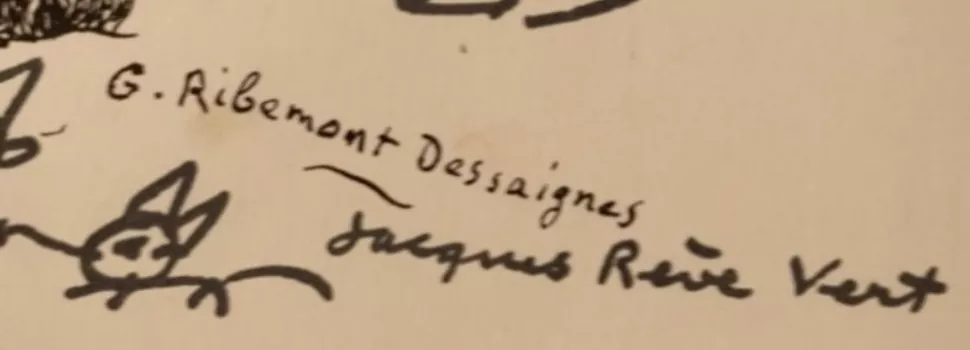
Recognizing the artist's signature
Not all the painter's works are signed. However, with or without a mention, it's important for you to have the work appraised to ensure its originality and to be able to date it. And of course, copies do exist.
Knowing the value of a work
If you happen to own a work by or after Georges Ribemont-Dessaignes, don't hesitate to request a free appraisal using our form on our website.
A member of our team of experts and chartered auctioneers will contact you promptly to provide you with an estimate of the market value of your work, as well as ad hoc information about it.
If you wish to sell your work, you will also be accompanied by our specialists in order to benefit from alternatives for selling it at the best possible price, taking into account the inclinations of the market.
.Estimate in less than 24h
D'autres tableaux modernes figuratifs vendus aux enchères

Estimated 800 - 1.500
Jean Roger SOURGEN (1883-1978) Trees and dunes Oil on panel

Estimated 3.000 - 5.000
Georges LAPCHINE (1885-1951) The port of St Tropez Oil on canvas

Estimated 18.000 - 30.000
Charles CAMOIN (1879-1965) "Le Port de Marseille, 1928" Oil on canvas.

Estimated 1.500 - 3.000
Jean VANDEN EECKHOUDT (1875-1946), Basket of persimmons, Oil on canvas

Estimated 2.000 - 4.000
Charles LACOSTE (1870-1959) Starry night, Oil on paper mounted on canvas
Discover in the same theme

Value and quotation of works, furniture, panels by Gaston Su...
Gaston Suisse, a 20th-century artist and decorator, produced a great deal of lacquered wood furniture. A founder of Art Deco, his work is highly regar...
Learn more >

Rating and value of furniture, lamps, tables by Pierre Chare...
Pierre Chareau is a twentieth-century architect and designer whose furniture is highly prized at auction. Estimated in 24h.
Learn more >

Rating and value of paintings by Pierre Dmitrienko
Pierre Dmitrienko is an abstract painter who has produced works that are highly rated and valued at auction. 100% free estimate!
Learn more >

Secure site, anonymity preserved

Auctioneer approved by the State

Free and certified estimates
Frequently asked questions
-
Who was Georges Ribemont-Dessaignes, and what is his role in art history?Georges Ribemont-Dessaignes (1884–1974) was a leading artist and writer of the Dada movement, active between 1910 and 1930. A painter, draftsman, poet, playwright, and musician, he distinguished himself through his total rejection of academicism and his commitment to absolute formal freedom. A key figure in the Parisian Dada movement alongside Tristan Tzara and Francis Picabia, he embodied a radical and independent avant-garde whose influence continues to be felt in contemporary conceptual art.
-
What are the prices and price ranges for works by Ribemont-Dessaignes?Prices for works by Ribemont-Dessaignes vary considerably depending on the medium and the size of the piece: prints range from €40 to €1,100, drawings and watercolors from €170 to €85,000, and oil paintings on canvas from €2,800 to €100,000. This range reflects the diversity of his body of work and the particularly strong demand for his paintings on the French market.
-
How do I have a work by Ribemont-Dessaignes authenticated and appraised?To authenticate a work of art, we recommend that you request a free, no-obligation appraisal from Auctie's. A state-certified expert or auctioneer will examine your artwork and contact you within 48 hours to provide you with a precise estimate and the necessary information regarding its authenticity, date of creation, and current market value.
-
Is this the right time to sell a work by Ribemont-Dessaignes?Yes, this is a good time to sell a work by this artist. Prices for Ribemont-Dessaignes’ paintings and drawings are rising steadily at auction, particularly in France, where his paintings are highly sought after. Growing interest in the Dada avant-garde and the rediscovery of its influence on contemporary art are driving demand for his works.
-
How does the sale of a work of art work at Auctie's?The process begins with a free appraisal conducted by our experts and auctioneers. If you decide to proceed, we’ll guide you every step of the way through to the auction, offering you the best options for selling your artwork at the highest possible price, taking into account current trends in the art market.
