



Rating and value of Bahman Dadkhah's paintings, sculptures and furniture

Key takeaways
- Bahman Dadkhah's market value has been steadily rising, with his bronze sculptures fetching up to 56,700 euros at auction since the 1980s.
- Bronze sculptures and furniture are his most sought-after works, with prices ranging from 7,300 to 56,700 euros depending on the piece’s prestige.
- A free appraisal is recommended to authenticate his pieces, as the artist does not always sign his works.
If you own a work by artist Bahman Dadkhak or based on his work and would like to know its value, our state-approved experts and auctioneers will guide you.
Our specialists will carry out a free appraisal of your work, and provide you with an accurate estimate of its value on the current market.
Then, should you wish to sell your work, we will direct you to the best possible arrangement to obtain the optimum price.
Artist's rating and value
During the 20th century, Bahman Dadkhah was among the most talented ironworkers of his time. Since then, his reputation has gone from strength to strength.
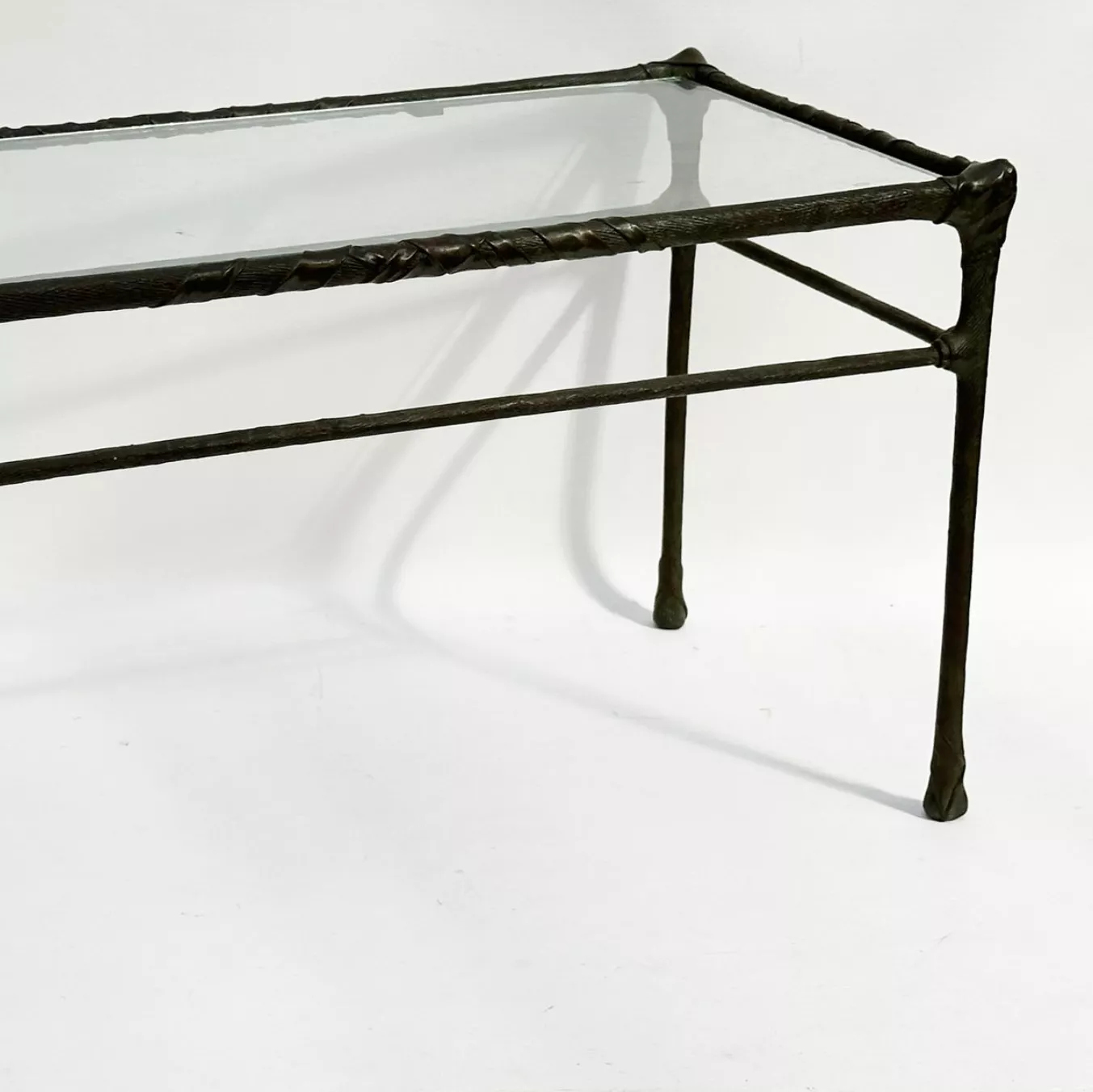
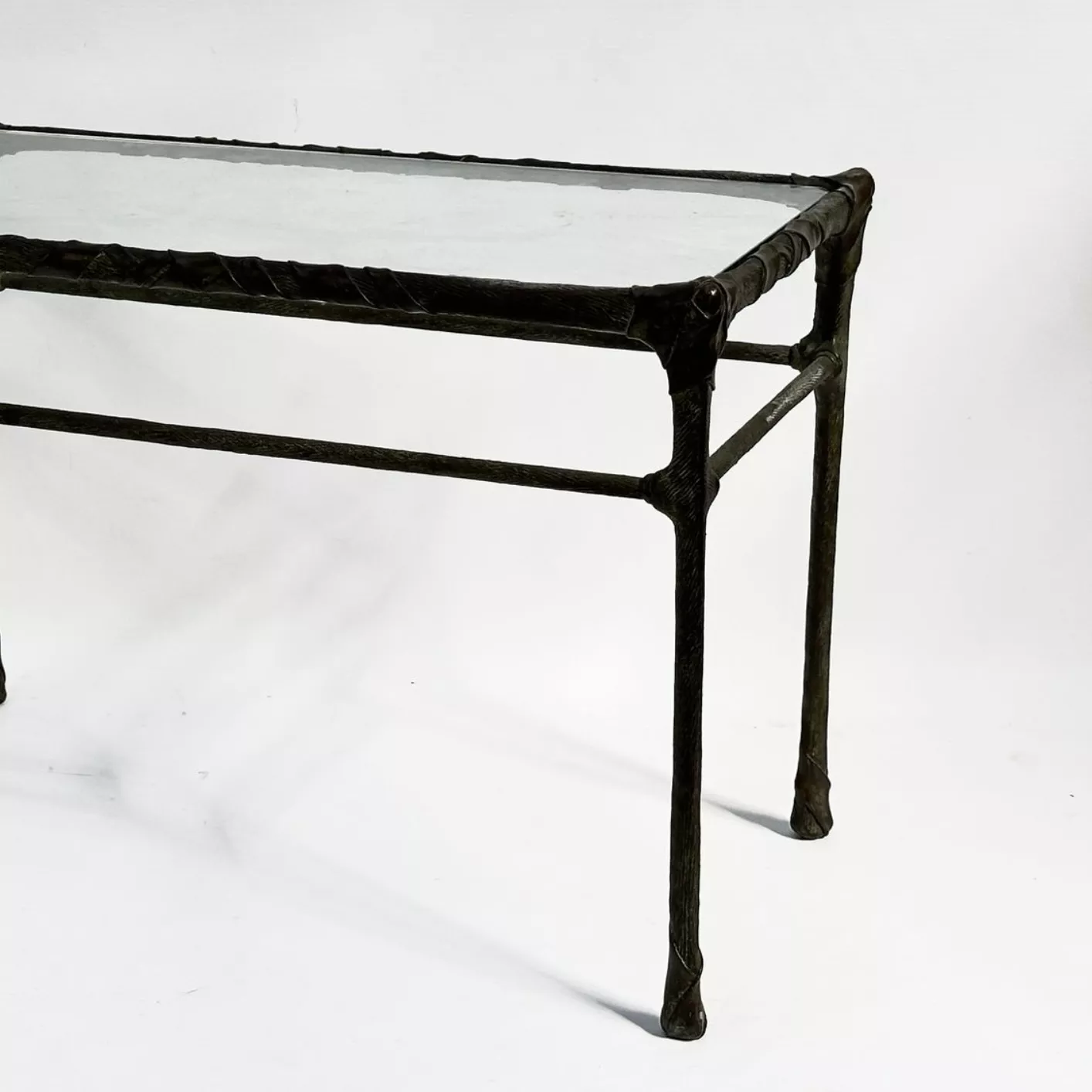
Highly prized by collectors, his tables are popular on the market, especially his bronze sculptures and furniture.
A work signed by Bahman Dadkhah can fetch thousands of euros at auction, as evidenced by his patinated bronze sculpture entitled Family from the Hostages series, dating from 1980, adjudged €56,700 in 2019, whereas it was estimated at between €32,400 and €48,600.
Order of value from the most basic to the most prestigious
Object type | Result |
|---|---|
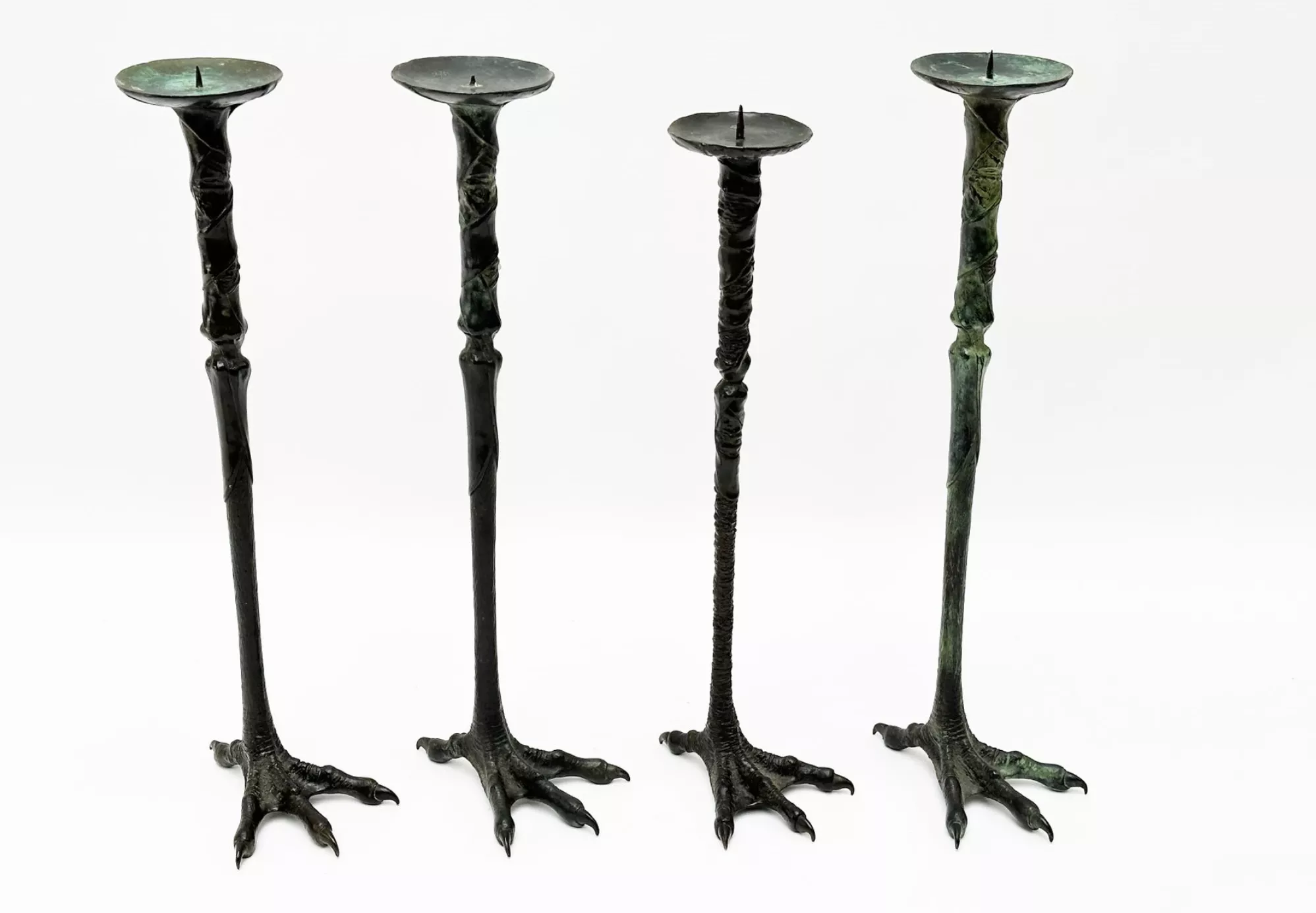
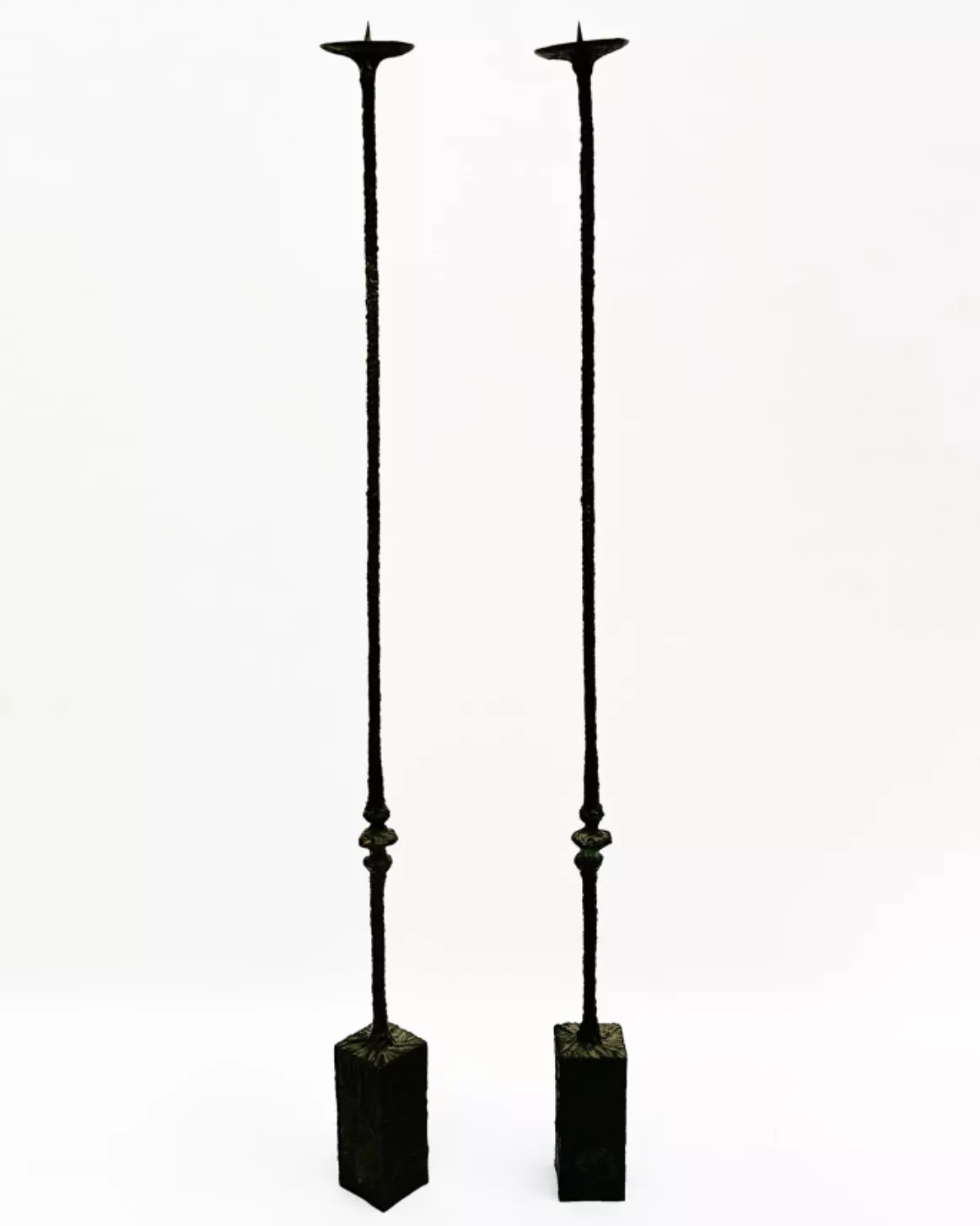
Blackbirds | From €1,300 to €4,800 |
Furniture | From €2,500 to €10,600 |
Painting | From €18,500 to €36,600 |
Sculpture - volume | From €7,300 to €56,700 |
Estimate in less than 24h
The artist's creations and style
Bahman Dadkhah's style, while imbued with a certain formalism, is distinguished by a discreet rigor that never overwhelms the emotion contained in his works.
While the purity of line and simplicity of form evoke a dialogue with Minimalism, his pieces, whether sculptures or utilitarian creations, deploy a language in which each element seems weighed, reflected upon, as if the artist were seeking to reveal some kind of hidden essence.
Carefully chosen metal, glass and wood become the vectors of an investigation into space and volume, where we see a subtle balance emerging between the solidity of the material and a fluidity that can almost be felt to the touch.
The architecture of his work plays on the tension between the austerity of geometric forms and the lightness of curves, creating pieces where simplicity is never fixed. The detail, where it appears, is light, almost fleeting, but determines the poetic aspect of the work.
There's nothing extravagant or theatrical about his work: on the contrary, everything seems quietly obvious, one of those obvious things that, far from being immediately grasped, gains in complexity the longer you dwell on it.
What stands out, beyond the technique, is Dadkhah's ability to inscribe his approach in a register that is both timeless and resolutely contemporary, where each creation doesn't simply fill a void, but redefines its nature.
The life of Bahman Dadkhah
Bahman Dadkhah, born in Tehran in 1949, has long oscillated between varied aesthetic influences, where the rigor of Persian culture blends with the fluidity of modern artistic currents.
His path is that of a man who, after studying in Iran, moved to Paris, where he became familiar with modern art and its multiple resonances. It was in the 1970s, back in Tehran, that he established his first creations and took part in a burgeoning Iranian art scene.
However, it was when he moved to the West in the early 1980s that he underwent a major transformation. His years in Europe and the United States brought him into contact with new art forms, including conceptual art and minimalist sculpture.
It was during this period that he discovered the power of the void and the notion of space, essential elements of his artistic research.
From this period, he borrows both a geometric approach and an economy of means, without ever forgetting the richness of his Persian heritage, which he reinterprets through a resolutely contemporary prism.
In short, his art reflects this quest for a subtle balance between two worlds, each as fascinating as they are contradictory.
On the one hand, the world of tradition, that of Persian calligraphy, poetry and miniature, and on the other, that of abstraction and minimalism, more freed from codes and historical references.
His work is distinguished by a constant search for formal simplicity, but also by a desire to give a new dimension to Iranian art through a permanent dialogue between past and present, between East and West.
.Focus on Transulence, Bahman Dadkhah
It's rare to look at Bahman Dadkhah's painting from this angle, as his seemingly rigorous works appear to conceal nothing more than geometric shapes and clear lines. Yet it is precisely this simplicity that gives his compositions their power.
Take, for example, his painting Translucence. Here, a complex structure of geometric, almost abstract forms unfolds on the canvas, but without denying the spirit of Persian tradition.
The subtle interplay between transparency and opacity, the softness of hues and the intensity of colors creates a space for visual reflection, where each element, each form sheds its materiality to melt into the overall harmony.
It's an invitation to observe beauty in the distortion of perspectives, in the deconstruction of classical forms, while remaining faithful to a singular aesthetic research.
What might seem, at first glance, pure abstraction, turns out to be a discreet homage to Eastern traditions, filtered through the prism of modernity.
In this, the work exudes a quiet strength, an invitation to introspection and the broadening of our perceptions, while remaining anchored in an exploration of the world through form and color.
Bahman Dadkhah's stylistic influences
It's rare to dwell on Bahman Dadkhah's stylistic aspect, as his influences seem too disparate to be brought together under a single banner. Yet a closer look reveals clear traces of certain traditions.
His nuanced work bears the imprint of traditional Persian art, particularly through the fine detail and geometric precision reminiscent of miniatures and ornamental motifs.
However, this is no mere echo of past forms: it's a dialogue.
The artist borrows from Cubism and artists such as Lhote or Villon geometric volumes and to abstraction a sense of color that borders on rigor.
His compositions, rich in nuance and superimposed forms, may also bring to mind certain aspects of the art of Vasarely, particularly the use of color to define and play with space.
Add to this a certain sensitivity to the work of Kandinsky, particularly in the way lines seem to free themselves from the constraints of traditional space, and it's easy to see why Dadkhah's work seems so difficult to categorize.
He is neither entirely Persian, nor entirely Western, but constructs an aesthetic of his own which, while dialoguing with European influences, is nonetheless deeply rooted in his cultural roots.
There is a marriage here between ancient forms and resolutely modern concerns, which enables the artist to create a unique visual universe, oscillating between geometric abstraction and poetic representation of the world.
Bahman Dadkhah's imprint on his period
Bahman Dadkhah's imprint on his period cannot easily be circumscribed into well-defined categories or movements.
However, it's clear that his work has left an indelible mark on the evolution of contemporary art, as much through his ability to fuse Eastern and Western influences as through his technical approach.
In fact, in a context where abstract art seemed to have lost its significance, Dadkhah succeeds in restoring substance to this abstraction, incorporating a sense of color and volume that, far from the anonymity often associated with this genre, gives it an almost tactile dimension.
Through his mastery of geometric shapes and colored spaces, he touches on a form of poetic representation of the world, where rigorous composition blends with a form of pure emotion.
In this, his work is not unlike that of other masters of geometric abstraction, but he succeeds in going beyond mere formal research by infusing his works with a subtle spirituality.
He thus establishes himself as a bridge between two worlds - that of Persian tradition and that of modern art - but also as a precursor in an era that is just beginning to rediscover the infinite possibilities of abstraction.
In this sense, his legacy transcends mere stylistic boundaries and finds its place among artists who, far from being prisoners of their time, have had a lasting influence on it.
Recognizing Bahman Dadkhah's signature
Bahman Dadkhah doesn't always sign his works. That's why if you think you own a piece by the artist, it's important to have it appraised to be sure of the originality of your property.
Expertise your property
If you own a work by Bahman Dadkah, don't hesitate to request a free appraisal by filling in our online form.
A member of our team of experts and licensed auctioneers will contact you to provide an estimate of the market value of your work.
If you are considering selling your work, our specialists will also guide you through the various alternatives available to obtain the best possible price, taking into account market trends and the specificities of each piece.
Estimate in less than 24h
Discover in the same theme

Rating and value of works, paintings by Helmut vom Hügel Kol...
Helmut Kolle is a cubist artist from the first half of the 20th century. Today, his works are quoted on the auction market.
Learn more >

Rating and value of works, drawings, sculptures by Joseph Cz...
Joseph Czaky is a 20th-century Cubist sculptor who produced numerous works that are sought-after and collected on the art market.
Learn more >

Rating and value of paintings by Yvonne Canu
Yvonne Canu is a French neo-Pointillist artist who produced numerous paintings of high value. Estimated 24h.
Learn more >
D'autres oeuvres de mobilier design vendu aux enchères

Estimated 15.000 - 20.000 €
Charlotte PERRIAND (1903-1999) - Suite of 6 "berger" stools.

Estimated 2.500 - 5.000
Percival LAFER (b. 1936) Three-seater sofa model MP 211, circa 1975

Estimated 3.000 - 5.000
Eleanora PEDUZZI-RIVA (born 1939) Ueli BERGER (1937-2008) Klaus VOGT (born 1938) HEINZ ULRICH (20th) DE SEDE (publisher) Modular sofa model DS-600

Estimated Between €4,000 and €6,000
Pierre Chapo (1927-1987) solid elm table

Estimated Between €2,000 and €3,000
Pierre GUARICHE (1926-1995) Suite of 6 4-sided chairs

Estimated 4.000 - 6.000
Roger CAPRON (1922-2006) Soleil rectangular coffee table, circa 1965

Secure site, anonymity preserved

Auctioneer approved by the State

Free and certified estimates
Frequently asked questions
-
Who is Bahman Dadkhah, and what is his artistic background?Bahman Dadkhah, born in 1949 in Tehran, is one of the most talented metalworkers and artists of the 20th century. His work blends traditional Persian heritage with geometric abstraction and modern minimalism, styles he developed during his studies in Paris and after settling in the West in the 1980s. He has established himself as a sure bet on the international art market and is highly sought after by collectors.
-
What is the price range for Bahman Dadkhah's works at auction?Prices vary depending on the type of artwork: candlesticks range from €1,300 to €4,800, furniture between €2,500 and €10,600, paintings between €18,500 and €36,600, and sculptures between €7,300 and €56,700. For example, his bronze sculpture “Family from the Hostages series” (1980) sold for €56,700 in 2019, exceeding its initial estimate of €32,400 to €48,600.
-
How can you authenticate a work by Bahman Dadkhah?Bahman Dadkhah does not always sign his works, which makes authentication crucial. We recommend that you request a free, no-obligation appraisal from Auctie's by filling out our online form. A certified expert or auctioneer will contact you within 48 hours to assess the authenticity and value of your item.
-
How does the appraisal process work at Auctie's?The appraisal is free and non-binding. Simply fill out our online form with the details of your artwork. A member of our team of experts and licensed auctioneers will contact you within 48 hours to provide you with an accurate estimate of your piece’s market value.
-
Is this the right time to sell a work by Bahman Dadkhah?Yes, now is a good time to sell. Bahman Dadkhah’s market value has been steadily rising since the 20th century, and his works are highly sought after by international collectors. The market for geometric abstract contemporary art and designer furniture is experiencing strong demand, which is driving up auction prices.
