



Rating and value of paintings and drawings by To Ngoc Van

Key takeaways
- To Ngoc Van's works sell for between €240 and €852,400 at auction, with strong demand in Asia and France.
- Major oil paintings fetch between €300,000 and €500,000, while paintings on silk can exceed €800,000.
- Works from 1935–1945, his artistic prime, command 1.5 to 2.5 times the value of his later works, particularly his portraits of women.
To Ngoc Van’s paintings and lacquerware fetch up to €852,400 at auction. An appraisal allows us to accurately determine the current market value of your To Ngoc Van artwork and, if applicable, optimize the sale of the piece.
If you own a work by To Ngoc Van and would like to know its value, our state-certified auctioneers will provide a free appraisal based on authenticity, market rating, and recent market results.
Market Value and Appraisal of Artist To Ngoc Van
The artist To Ngoc Van leaves behind a distinctive body of work, consisting primarily of lacquerware and paintings. He is Vietnamese. Currently, prices for his works are rising at auction.
The prices at which his works sell on the art market range from €240 to €852,400—a significant spread that speaks volumes about the value that can be attributed to To Ngoc Van’s works. He is particularly sought after by buyers in Hong Kong, Vietnam, and France.
In 2019, an ink painting titled *Les désabusées*, dating from 1932, sold for €852,400, despite an estimate of between €227,000 and €340,000.
Ranking of value from a simple work to the most prestigious
Technique used | Result |
|---|---|
Print - multiple | From €350 to €2,200 |
Painting | From €2,500 to €535,400 |
Drawing - watercolor | From €240 to €852,400 |
Estimate in less than 24h
Placing the Artist in Context
Period
To Ngoc Van’s career spanned the early 20th century (1906–1954), a formative period for modern Vietnamese painting. He trained at the Indochina School of Fine Arts in the 1920s and 1930s, a pivotal period marked by the fusion of Western academicism and Vietnamese artistic traditions.
His artistic career unfolded between the late colonial period and the early years of the Vietnamese struggle for independence.
He was a pivotal figure bridging the formative phase of Vietnamese pictorial modernity and the politically engaged movements of the mid-century.
Artistic Movements
To Ngoc Van is part of Vietnamese modernism, which consists of a synthesis between Western techniques (modeling, perspective, oil painting) and an artistic sensibility inherited from local traditions.
He depicts female figures, scenes from everyday life, and landscapes. His figurative style is characterized by solid composition and measured stylization.
He treats his subjects with sensitivity, focusing on light, atmosphere, and the inner lives of his figures rather than on strict naturalism. The later period of his body of work is politically engaged, oriented toward themes related to national life and the revolutionary context.
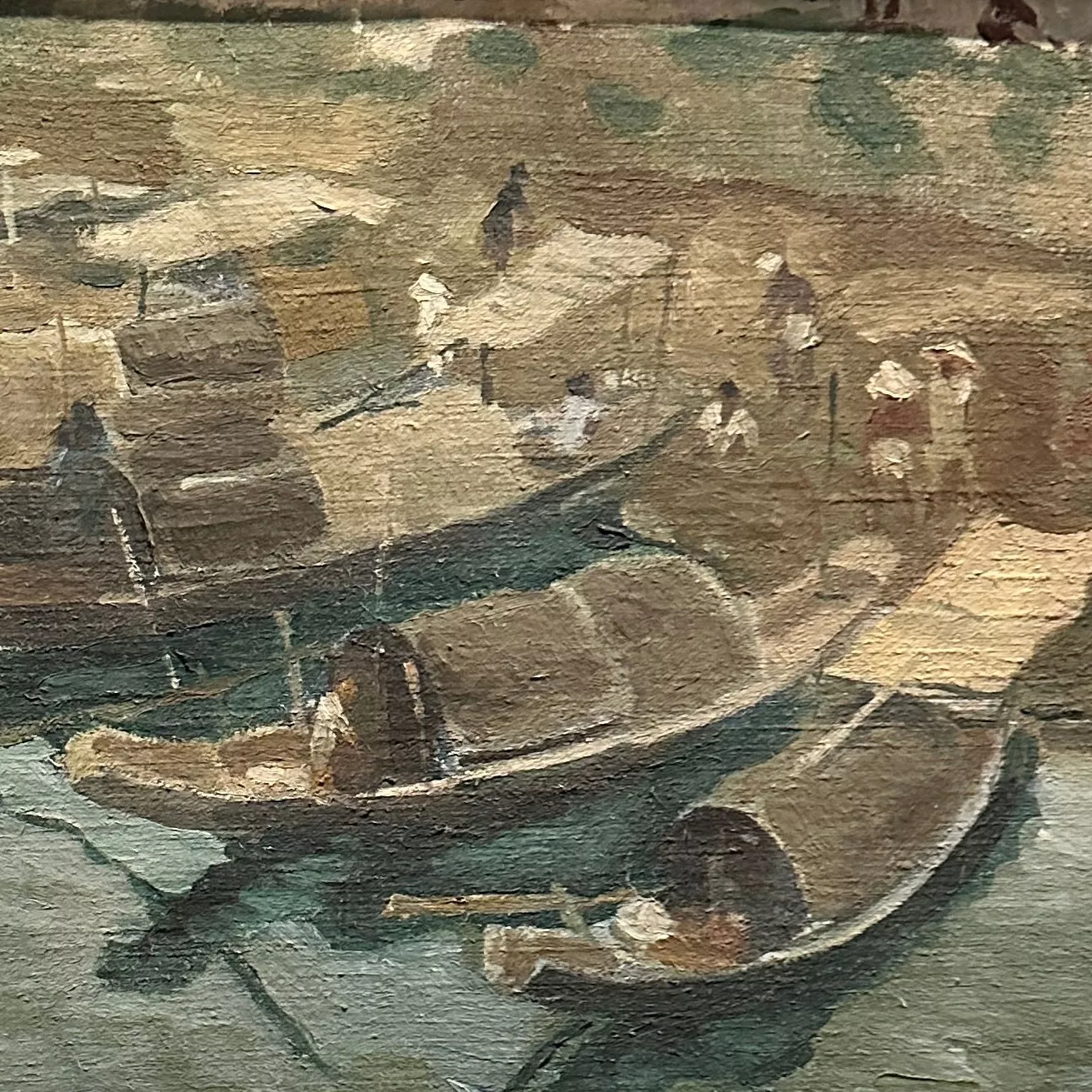
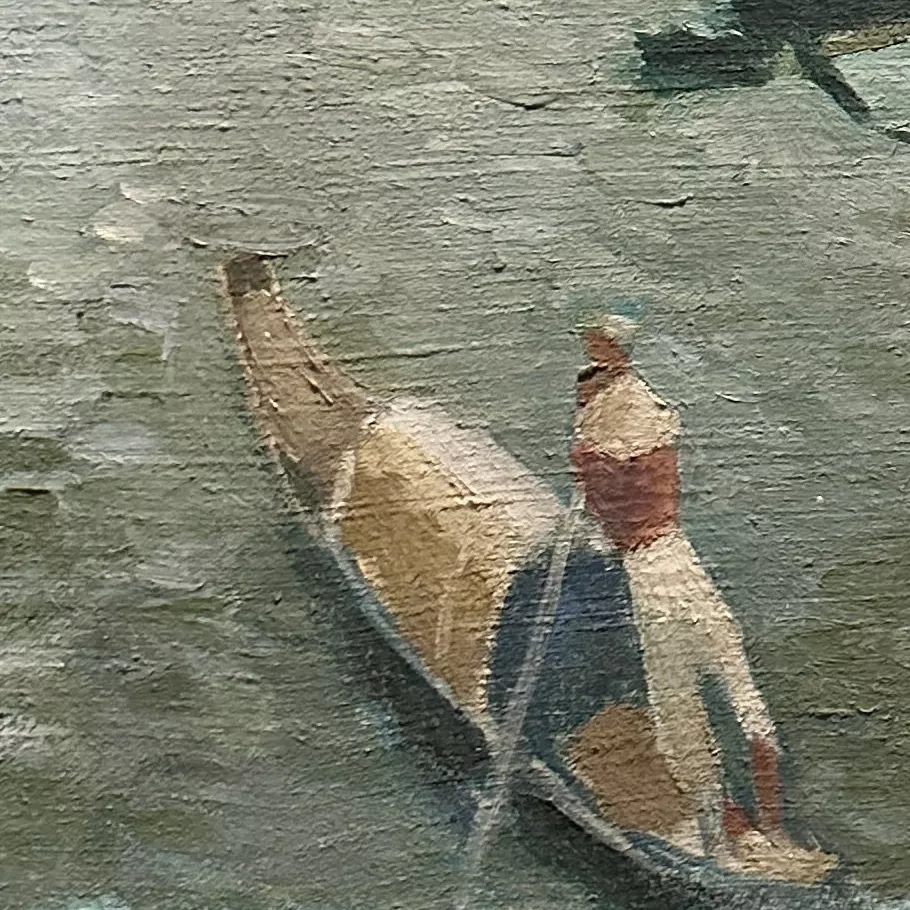
The Life of To Ngoc Van
Cultural Context
To Ngoc Van belongs to the founding generation of modern Vietnamese painting, trained at the Indochina School of Fine Arts, a pivotal institution in the transformation of artistic practices in the 20th century.
Born in 1906, he developed his body of work against the backdrop of a transition between colonial heritage, the assertion of national culture, and the emergence of a modernized realism.
His work is characterized by refined figurative painting, with a focus on light, the construction of volume, and the depiction of the human figure—particularly the female form.
He contributed to the synthesis of Western painting techniques (oil, perspective, modeling) and Vietnamese aesthetic sensibilities, helping to define a modern national pictorial language.
Beginning in the war years, his work shifted toward patriotic and social themes, reflecting art’s engagement with the Vietnamese revolutionary context.
Artistic and Intellectual Circle
Like many Vietnamese artists of his time, his work was influenced by Victor Tardieu and Joseph Inguimberty, who encouraged experimentation with traditional media from a modern perspective.
He was part of the pioneering generation alongside Nguyen Phan Chanh, Mai Thu, and Le Pho, major figures in Vietnamese artistic modernity.
His role as a professor and institutional leader placed him at the center of Vietnamese artistic networks, where he exerted a decisive influence on subsequent generations of painters.

Techniques of To Ngoc Van
The Artist’s Style
To Ngoc Van is a central figure of the first generation to emerge from the Indochina School of Fine Arts, playing a major role in the development of modern Vietnamese painting.
He embraced a sensitive form of naturalism, tempered by an elegant stylization rooted in local pictorial traditions. He excelled at female portraiture, characterized by a particular attention to the model’s psychology and the gentleness of her poses.
His draftsmanship is precise yet supple, revealing a solid academic foundation combined with an exploration of linearity. His palette is light yet luminous, favoring subtle harmonies and diffused light.
His work reflects an interest in everyday Vietnamese life, rendered in a poetic rather than documentary style. He seeks a balance between Western depth and Asian decorative flatness.
Spotlight on a Key Work
Young Girl with a Lily, 1943
This composition centers on a solitary female figure. The rendering of the face and hands is delicate and reveals the finesse of his academic drawing. His palette is soft and dominated by light tones, which reinforces the work’s poetic dimension.
We see a subtle balance between Western volumetric modeling and the decorative flatness of the background. The lily is a symbolic and structuring element in the composition.
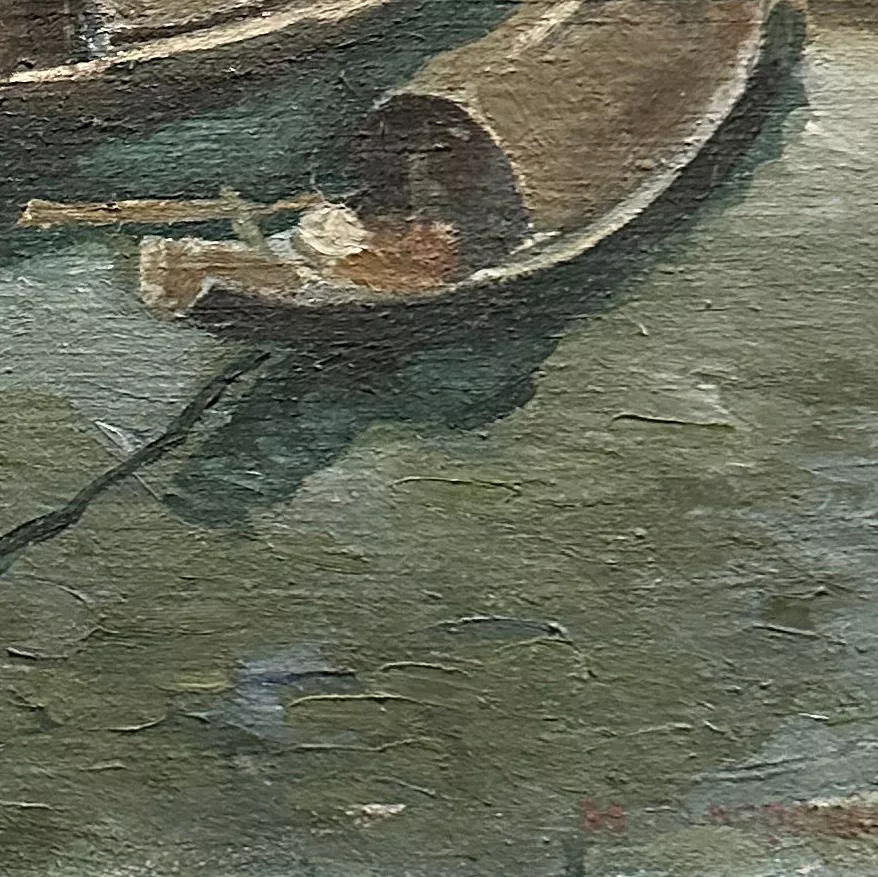
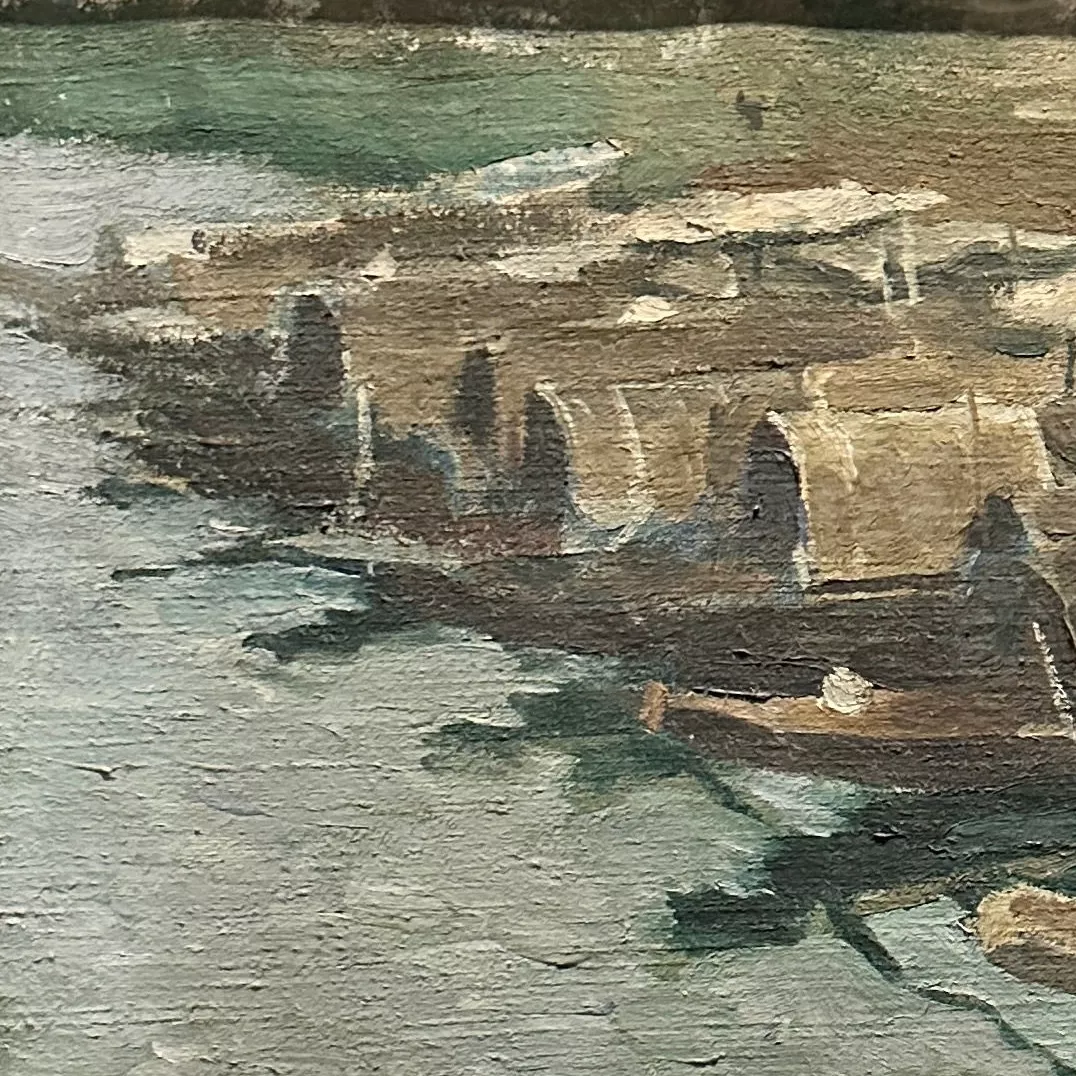
FAQ – How do you appraise a work by To Ngoc Van?
1) How important is the period of creation in determining a work’s value?
A distinction must be made between works created before the Indochina War—which are often the most sought-after for their artistic refinement—and later works, which are marked by specific historical and stylistic influences.
2) What stylistic criteria specific to the artist are key?
For To Ngoc Van, these include the quality of his modeling, the subtlety of his color palette, and the synthesis of Western naturalism and Vietnamese sensibility—particularly evident in his depictions of women, portraits, and scenes of daily life, which are recurring themes in his work.
3) What role do provenance and scholarly documentation play?
A clearly established provenance, inclusion in exhibitions or specialized publications, and consistency with the body of work by artists from the Indochina School of Fine Arts are essential factors in authenticating and enhancing the value of the work.
Market Segmentation
Artwork Prices
To Ngoc Van occupies a high-end segment of the Indochinese market, with strong institutional recognition and sustained demand in Asia.
There is a clear hierarchy among oil paintings, silk paintings, and works on paper. Major oil paintings generally sell for between €300,000 and €500,000. Paintings on silk constitute a significant segment, often ranging from €200,000 to €800,000.
Drawings, gouaches, and studies are part of a mid-range market priced around €10,000 to €80,000.
Factors Affecting Value
Works from the years 1935–1945 represent the artist’s artistic maturity and can fetch prices 1.5 to 2.5 times higher than those of his later or instructional works.
There is a significant premium for elegant portraits of women and intimate scenes, which are the artist’s signature style. Landscapes and studies generally fall at the lower end of the price range.
Early provenance, the quality of the modeling, the condition of the work, and participation in historic exhibitions are the main factors determining price.
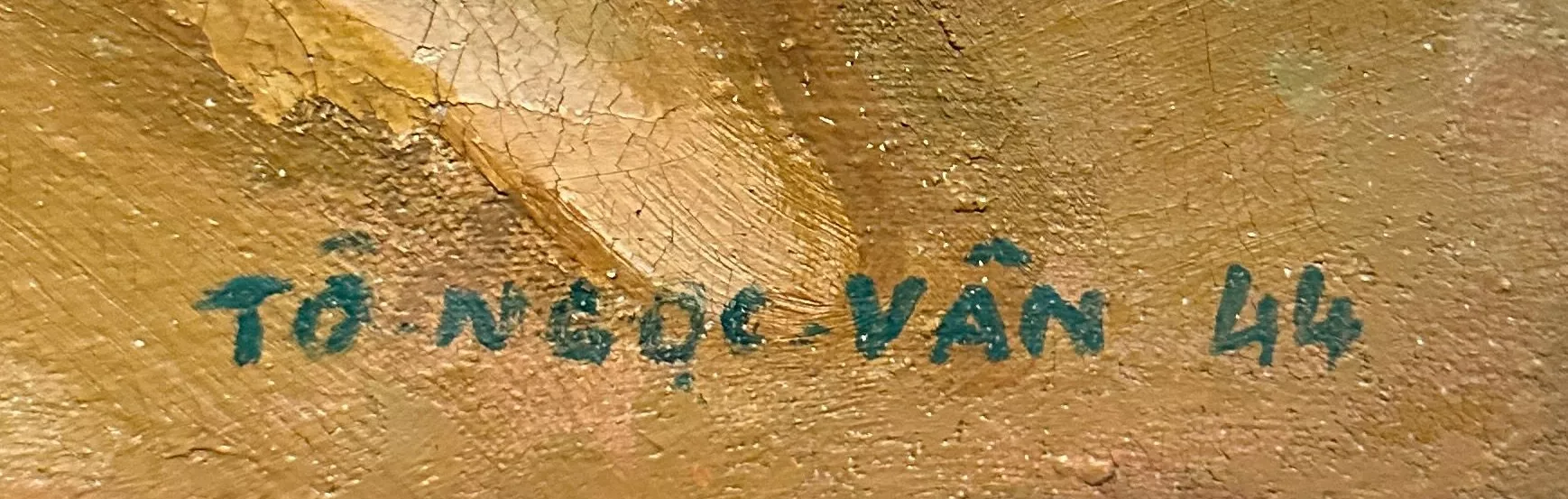
Recognizing the Artist’s Signature
To Ngoc Van usually signs his works. However, it is essential to have your piece appraised to ensure its authenticity.
Get Your To Ngoc Van Artwork Appraised
If you own a work by To Ngoc Van, an appraisal will help you determine its current market value.
Using our online form, our experts and certified auctioneers will conduct a free appraisal and provide you with a reliable estimate of your artwork’s market value.
If you’re considering selling it, we’ll guide you through the process to ensure you get the best possible price.
Estimate in less than 24h
Discover in the same theme

Cote and value of works, drawings, paintings by Alfred Manes...
Alfred Manessier is an artist and painter of expressive abstraction who has produced paintings, drawings and other works listed at auction.
Learn more >

Rating and value of paintings by Ernest Pierre Guérin
Ernest Pierre Guérin is a twentieth-century Pre-Raphaelite painter whose works are highly regarded and valued at auction.
Learn more >

Rating and value of drawings, sculptures and bronzes by Jean...
Jean Carton is a twentieth-century artist who produced sculptures that are highly valued at auction. Estimated in 24h.
Learn more >
Nos records d'enchères à l'hôtel Drouot

Estimated 10.000 - 15.000 €
Ebridge Ayer BURBANK(1858-1949), Young African-American boy, Oil on panel.

Estimated 20.000 - 30.000
EXCEPTIONAL LARGE OVAL DISH IN VINCENNES SOFT PASTE PORCELAIN FROM THE "BLEU CÉLESTE" SERVICE OF KING LOUIS XV AT THE CHÂTEAU DE VERSAILLES

Estimated 20.000 - 30.000
MANUFACTURE ROYALE DE SÈVRES, 18th century "L'Empereur de la Chine" - Portrait of the Emperor Qianlong, Hard porcelain bisque, 1775

Estimated 1.500 - 3.000
HERMÈS, "Kelly" 32 saddle bag in black box calf

Estimated Between €5,000 and €8,000
KRACHKOWSKY (1854-1914), Before the storm, oil on canvas

Estimated 40.000 - 80.000
Alexandre ROUBTZOFF (1884-1949), Portrait of Arbia, oil on canvas

Secure site, anonymity preserved

Auctioneer approved by the State

Free and certified estimates
Frequently asked questions
-
Who is To Ngoc Van, and what is his role in the history of Vietnamese art?To Ngoc Van (1906–1954) was a founding figure of modern Vietnamese painting, trained at the Indochina School of Fine Arts in the 1920s and 1930s. He embodied the synthesis of Western techniques (oil painting, perspective, modeling) and Vietnamese artistic traditions, and exerted a decisive influence on subsequent generations of painters as a teacher and institutional leader.
-
What are the price ranges and values of To Ngoc Van's works?To Ngoc Van's paintings and drawings sell for between €240 and €852,400, depending on the type of work. Major oil paintings generally fetch between €300,000 and €500,000, while paintings on silk range from €200,000 to €800,000. Drawings, gouaches, and studies fall into an intermediate price range of €10,000 to €80,000.
-
How can you authenticate a work by To Ngoc Van?It is essential to have your artwork appraised to verify its authenticity, particularly since To Ngoc Van generally signs his works. Auctie's offers a free, no-obligation appraisal conducted by state-certified auctioneers, who examine the work’s authenticity, provenance, and consistency with the artist’s known body of work.
-
What key factors influence the valuation of a work by To Ngoc Van?Key criteria include the period of creation (the years 1935–1945 mark the artist’s peak and command prices 1.5 to 2.5 times higher), the subject matter (elegant portraits of women and intimate scenes are the most highly valued), the quality of the modeling, the condition, and documented provenance. Participation in historic exhibitions and inclusion in specialized publications also enhance the value.
-
How does Auctie's assist with the sale of a work by To Ngoc Van?As an auction house, Auctie's supports you from the appraisal stage through to the final bid. You can request a free, no-obligation estimate via our online form; our experts will provide a reliable response within 48 hours, and we’ll ensure your artwork is valued at its best until it goes up for auction.
