



Vietnamese Paintings: Appraisals and Auctions

Lacquerware, silk paintings, and the schools of Indochina: the value of Vietnamese paintings varies greatly depending on the artist, technique, and period.
Below you will find all our valuation guides dedicated to Vietnamese paintings—lacquerware, silk paintings, and works by artists from the Indochinese School of Fine Arts. Each guide details the price ranges observed at auction and the factors that determine a work’s value before it is entrusted to our state-certified auctioneers.
Guides on this art movement
See all guides >
Rating and value of paintings and drawings by Le Van De
Van De is a painter from Vietnam's early modern period whose works command high prices and are highly valued at auction.
Learn more >

Rating and value of paintings and drawings by Tran Binh Loc
Tran Binh Loc was a Vietnamese painter from the early 20th century who produced numerous works that are highly valued and command high prices.
Learn more >

Rating and value of paintings and drawings by To Ngoc Van
To Ngoc Van is a Vietnamese modernist painter who has produced numerous works that command high prices at auction.
Learn more >

Rating and value of paintings and laquers by Nguyen Gia Tri
Nguyễn Gia Tri is a leading artist of Vietnamese modernism, who has produced numerous works that are highly prized and valuable.
Learn more >

Rating and value of paintings and silk paintings by Luong Xu...
Luong Xuân Nhi is a modern Vietnamese painter who has produced highly regarded oil on canvas and silk paintings.
Learn more >

Rating and value of drawings and paintings by Hoang Lap Ngon
Hoang Lap Ngon is a late modern Vietnamese artist who has produced works that are highly rated and valued at auction.
Learn more >

Rating and value of paintings and drawings by Nguyen Anh
Nguyễn Anh is a modern Vietnamese artist who has produced many works with high and rising ratings and values.
Learn more >

Rating and value of paintings by Le Tri Dung
Le Tri Dung is a modern Vietnamese painter known for his depictions of horses. His works have a rising reputation.
Learn more >

Rating and value of paintings and laquers by Tran Huu Chat
Tran Huu Chat is a modern Vietnamese painter who has produced panel lacquers and paintings of encouraging value.
Learn more >

Rating and value of paintings and laquers by Le Quoc Loc
Le Quoc Loc is a modern Vietnamese artist who has worked mainly in lacquer. His works are highly valued.
Learn more >

Rating and value of drawings and paintings by Dang Quy Khoa
Dang Quy Khoa is a secondary artist of Vietnamese modernity whose stock could well rise, driven by growing demand in the industry.
Learn more >

Rating and value of drawings and paintings by Ta Thuc Binh
Ta Thuc Binh is a painter of Vietnamese modernity who contributed to the depictions of independence. His works are gaining in value.
Learn more >
Understanding the Value of a Vietnamese Painting
What Is Market Value in the Vietnamese Art Market?
The market value of a Vietnamese painting refers to the benchmark value assigned to it by the secondary market at a given moment, based on the artist’s identity, the medium used, the period of creation, the condition of the work, and current international demand.
This market, which for a long time remained low-key and largely unknown to the Western general public, has experienced spectacular growth since the early 2000s, driven by a new generation of Asian collectors—particularly from Vietnam, Hong Kong, and Singapore—as well as by growing interest from major international auction houses.
Works that previously sold for a few thousand euros in the 1990s now regularly exceed 100,000 euros, and some exceptional pieces have surpassed the one-million-dollar mark at public auction.
This surge reflects both the growing critical and museum recognition of these artists and the inherent scarcity of their output, as the number of works available on the market remains limited relative to what is now a global demand.
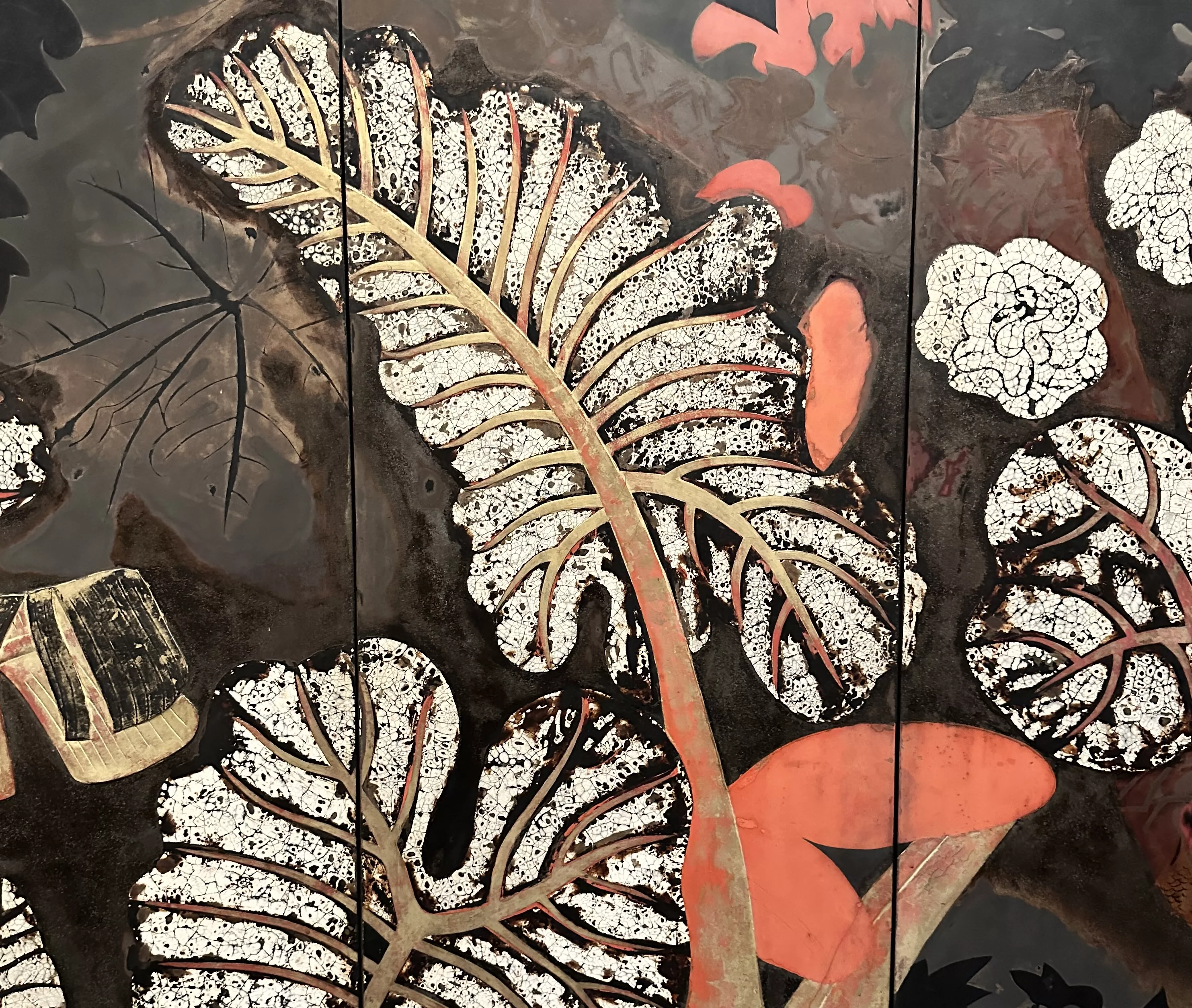
Indochina School of Fine Arts: The Origins of the Classification
Modern Vietnamese painting traces its origins to the founding, in 1925 in Hanoi, of the Indochina School of Fine Arts by the French painter Victor Tardieu, in collaboration with his Vietnamese student Nguyễn Nam Sơn.
Following the Western academic model while promoting traditional Vietnamese techniques and materials, this school trained a generation of artists who achieved an original synthesis between the teachings of European painting and Vietnam’s pictorial identity: silk painting, traditional lacquer elevated to a modern pictorial medium, and oil on canvas approached with a distinctly Asian sensibility.
Lê Phổ, Mai Trung Thứ (often signed Mai-Thu), Vũ Cao Đàm, and Lê Thị Lựu are among the most iconic artists from the school’s first graduating classes, most of whom chose to pursue their careers in France beginning in the 1930s and 1940s.
Nguyễn Phan Chánh, for his part, established himself as the master of silk painting in Vietnam, while Nguyễn Gia Trí elevated Vietnamese lacquer, or sơn mài, to an unprecedented level of refinement. Bùi Xuân Phái, a later figure associated with Hanoi painting, rounds out this pantheon, whose works now dominate auctions dedicated to modern Vietnamese art.
Artist | Active Period | Preferred Medium | Market Demand Level |
Lê Phổ (1907–2001) | 1930–1990 (French career) | Silk, oil on canvas | Very high, with regular record auction prices |
Mai Trung Thứ / Mai-Thu (1906–1980) | 1930–1980 (French career) | Mainly silk, some oil paintings | Exceptional, record prices in the millions |
Vũ Cao Đàm (1908–2000) | 1930–1990 (French career) | Silk, terracotta, sculpture | Very high, strong international demand |
Lê Thị Lựu (1911–1988) | 1930–1980 (French career) | Silk, oil on canvas | Strong, with few works available |
Nguyễn Phan Chánh (1892–1984) | 1925–1980 (remained in Vietnam) | Silk, wash technique | Very prolific, a leading figure in Vietnamese silk painting |
Nguyễn Gia Trí (1908–1993) | 1930–1990 (remained in Vietnam) | Lacquer (sơn mài) | Exceptional, the undisputed master of lacquer |
Bùi Xuân Phái (1920–1988) | 1950–1988 (Hanoi) | Oil and gouache on paper | Highly prolific, an icon of Hanoi painting |
Estimate in less than 24h
The Criteria That Determine the Market Value of a Vietnamese Painting
The market value of a Vietnamese painting is based on a hierarchy of criteria that the auctioneer weighs with particular attention to the unique characteristics of this market.
The artist’s identity remains the primary factor: the difference between the market value of works by Lê Phổ or Mai Trung Thứ and that of a less well-documented artist of their generation can result in a multiplier effect ranging from ten to one hundred.
The period in which the work was created also plays a major role, particularly for artists who emigrated to France: works from their Vietnamese period or their early years in Paris—imbued with a more pronounced sense of nostalgia and fidelity to traditional iconography—are generally sought after with particular intensity by collectors.
The price ranges observed on the secondary market illustrate this considerable variation. A small-format silk painting by a second-tier artist trained at the École de l’Indochine can range from 3,000 to 30,000 euros.
A high-quality silk painting by a renowned artist such as Lê Phổ or Vũ Cao Đàm ranges from 50,000 to 500,000 euros, depending on the size, subject, and period. A large-format lacquer painting by Nguyễn Gia Trí can exceed one million euros.
Exceptional pieces, such as Mai Trung Thứ’s *Mademoiselle Phương*, which sold for $3.1 million at public auction, or Lê Phổ’s *Figures in a Garden*, which sold for 1.7 million euros, demonstrate the potential of major works from this collection when they come to market with impeccable documentation.
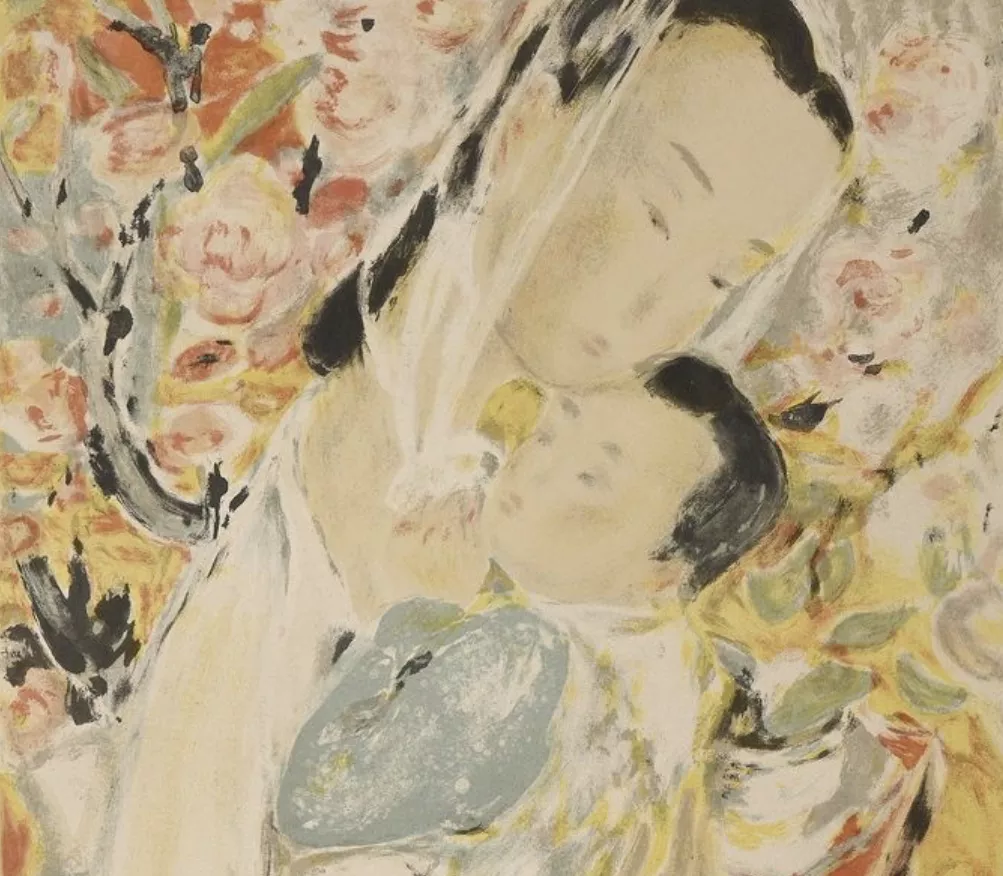
Silk, lacquer, and oil: all media examined
The Hierarchy of Vietnamese Media and Its Impact on Market Value
Modern Vietnamese art is characterized by a diversity of media and techniques that have no strict equivalent in the Western pictorial tradition, and mastery of these constitutes a criterion of expertise in its own right.
Silk painting, which draws on an ancient Far Eastern tradition but was reinvented by artists of the Indochina School, occupies a central place in this body of work: gouache applied to stretched silk through successive layers of rubbing and transparent glazes produces incomparable effects of texture and light, which have become the stylistic signature of Lê Phổ, Mai Trung Thứ, and Vũ Cao Đàm.
Vietnamese lacquer, or sơn mài, constitutes a second major category—and is undoubtedly the most spectacular in terms of auction results.
This traditional technique, used for centuries in furniture and decorative objects, has been transformed by artists such as Nguyễn Gia Trí into a pictorial medium in its own right, using dozens of layers of lacquer, gold and silver powder, and crushed eggshell to create effects of depth and relief that are unique in the world.
Finally, oil on canvas—a technique imported from Europe—has been approached by Vietnamese artists with a distinct sensibility, blending the academic rigor learned in school with a palette and composition imbued with Asian sensibility.
Medium | Characteristics | Estimated Price Range | Market Demand |
Silk (leading artist, iconic subject) | Gouache on stretched silk, transparent glazes, soft color palette | €50,000 — several million € | Exceptional, international |
Silk (second-tier artist or documented anonymous artist) | Identifiable technique, variable quality | €3,000 — €30,000 | Active, broad buyer base |
Lacquer (sơn mài), large format | Layered application, gold and silver powder, relief | €100,000 — several million € | Very strong demand, rare pieces |
Lacquer (sơn mài), medium or decorative size | Traditional technique, floral or figurative motifs | €5,000 — €80,000 | Strong market, growing segment |
Oil on canvas (artist from the Indochina School) | French academic style, Vietnamese sensibility | €20,000 — €500,000 | Very active, high demand |
Painting on paper or gouache | Small format, accessible collection | €2,000 — €25,000 | Growing, new additions to collections |
Paintings on silk and lacquer (sơn mài): the most sought-after works
In the eyes of international collectors, silk painting represents the most accomplished and recognizable expression of modern Vietnamese art.
The female figures, scenes of motherhood, flower-filled gardens, and portraits of children rendered by Lê Phổ and Mai Trung Thứ with that distinctive chromatic softness—powdery pink, watery green, and light brown—have become true icons of the Asian art market. These works, produced in relatively limited quantities throughout their artists’ careers in France, benefit from an inherent rarity that sustainably supports their market value.
Nguyễn Gia Trí’s lacquerwork occupies a unique place in this market, due to the extreme technical complexity of its creation and the considerable time—sometimes several years—required to complete a large lacquer composition.
These works, whose production was necessarily limited, are today considered absolute masterpieces of 20th-century Vietnamese art, and their appearance at public auction is always a market event closely watched by Asian institutions and major collectors.
Estimate in less than 24h
Get a Free Appraisal of a Vietnamese Painting
A certified appraisal by a licensed auctioneer in less than 24 hours
Appraising a Vietnamese painting requires in-depth knowledge of this specialized market, its signature and attribution conventions, and the current state of rapidly changing international demand, now driven by a new generation of collectors based in Asia.
A certified auctioneer has the necessary training and experience to rigorously authenticate these works, particularly given the presence on the market of copies and uncertain attributions—which are common for artists whose fame and market value have risen so rapidly.
Auctie’s offers this expertise free of charge, with a certified response within 24 hours. Whether you’ve inherited a silk painting brought back from Vietnam or Indochina by a family member, wish to have a lacquer piece acquired decades ago appraised, or are considering compiling an estate inventory, the process is the same: submit your piece to a trained expert capable of accurately assessing its value.
What You Need to Provide for an Online Appraisal
For a silk painting or an oil on canvas, please provide clear photographs of the front and back of the work, a close-up of the signature—whether in Latin, Vietnamese, or Chinese characters— the precise dimensions of the composition, and any known provenance information: an old purchase receipt—particularly if the work was acquired directly in Vietnam or Indochina before 1954—a gallery label, or a reference in a sales catalog.
The presence of an artist’s seal, which is common on works on silk, must be noted and photographed in detail, as it is a key element of authentication.
For lacquerware, photographs of the entire piece and close-ups of the surface are essential, particularly to assess the condition of the layered coatings and the possible presence of cracks or lifting.
In cases of doubt regarding attribution—which is particularly common in this collection due to the circulation of copies—a physical examination of the piece will be recommended before any steps are taken to put it up for sale.
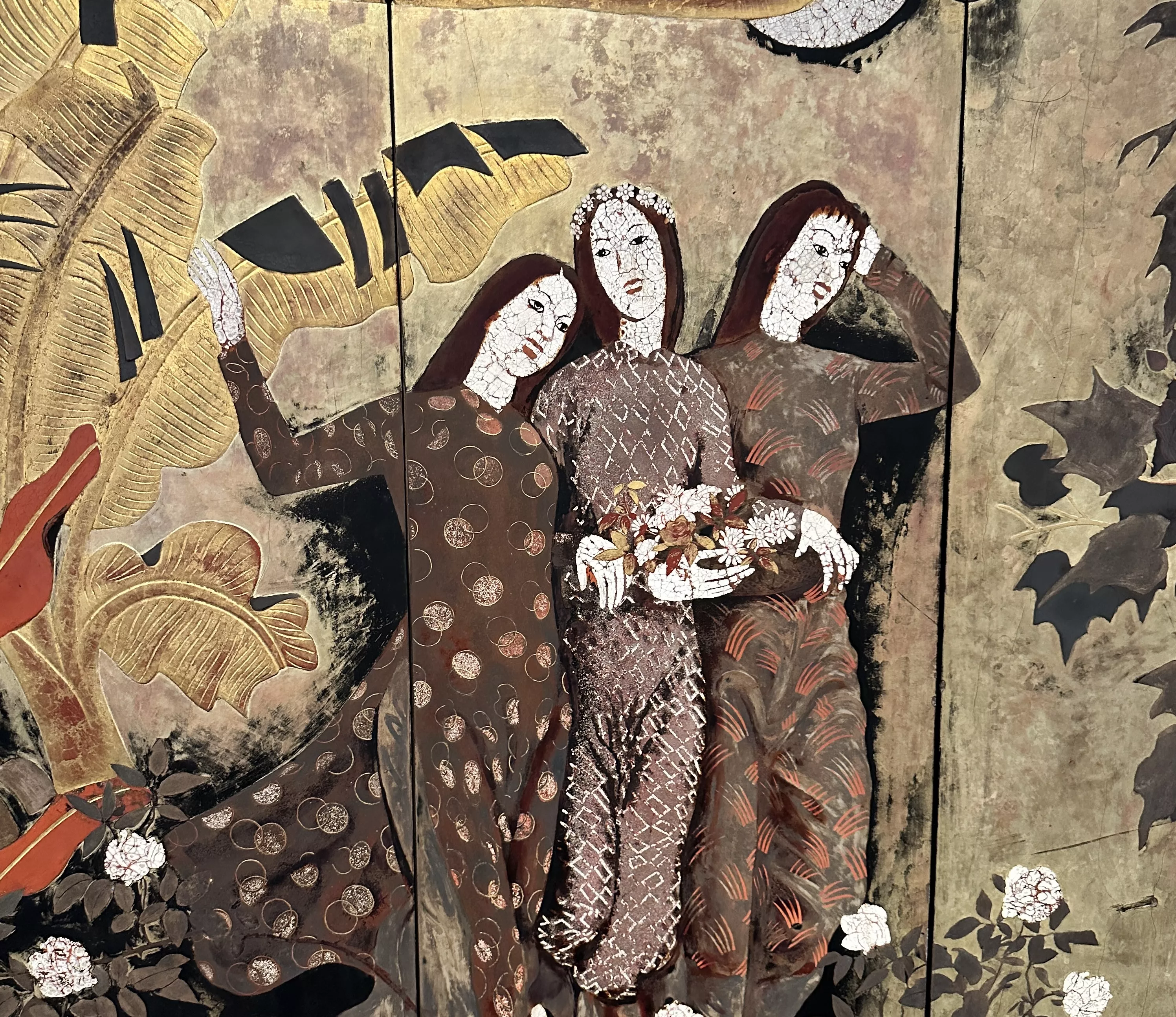
Attribution, Provenance, and Authenticity: The Pillars of Valuation
Signature, Seal, and Catalogue Raisonné: The Impact on Value
The authentication of a Vietnamese painting relies on the combined examination of several elements characteristic of this art form. The signature, which may be written in Latin script, Vietnamese script (Quốc ngữ), or sometimes Chinese characters, is a first point of reference, but it must be compared with documented examples of the artist’s work, as the growing prominence of this market has led, in recent years, a concerning rise in the number of forgeries and misattributions.
The artist’s seal, when present on works on silk, serves as an additional element of authentication that a trained expert knows how to interpret.
For the most extensively documented artists, authoritative reference works serve as the standard in the market. Charlotte Aguttes-Reynier, author of reference works on the revival of modern art in Indochina, has helped shape the scholarly understanding of this body of work, as has research specifically devoted to Lê Phổ, Mai Trung Thứ, and Vũ Cao Đàm by several specialists in the Asian art market.
A work accompanied by a written appraisal from a recognized specialist in the Indochinese School benefits from a stamp of approval that considerably facilitates its sale and provides assurance to the buyer.
Level of Documentation | Impact on market value |
Work listed in a reference catalog or monograph | Maximum guarantee; very significant premium on value |
Work with a written appraisal by a recognized specialist in Vietnamese art | Good guarantee; reassures the buyer and facilitates the sale |
Work bearing an authenticated artist’s seal and a consistent signature | Solid foundation; significantly strengthens market confidence |
Work with documented provenance from Vietnam or colonial Indochina | High value; rare and sought-after traceability |
Work with a legible signature but no other documentation | Conservative estimate; thorough verification recommended |
Work without a signature or traceable provenance | Maximum uncertainty; high risk of being a copy or misattributed |
Provenance and Condition: Their Impact on Value
The provenance of a Vietnamese painting is a particularly decisive factor in building trust in this market. A work acquired directly from the artist or their family, brought back from Vietnam or former French Indochina by a colonial official, a military officer, or a traveler before the major political upheavals of the mid-20th century, and preserved within the same family ever since, enjoys a legitimacy that buyers value very highly.
This long-standing traceability reduces the risk of misattribution and is often the deciding factor when the work is put up for sale.
The condition of these works requires special attention. Silk paintings are particularly sensitive to humidity, direct light, and temperature fluctuations, which can cause discoloration, stains, or tears in the support.
Lacquerware, on the other hand, may exhibit cracks or peeling layers due to the natural aging of the material or inadequate storage conditions, particularly significant differences in temperature and humidity between the original tropical climate and European interiors. A careful examination of these factors is essential before any serious appraisal can be made.
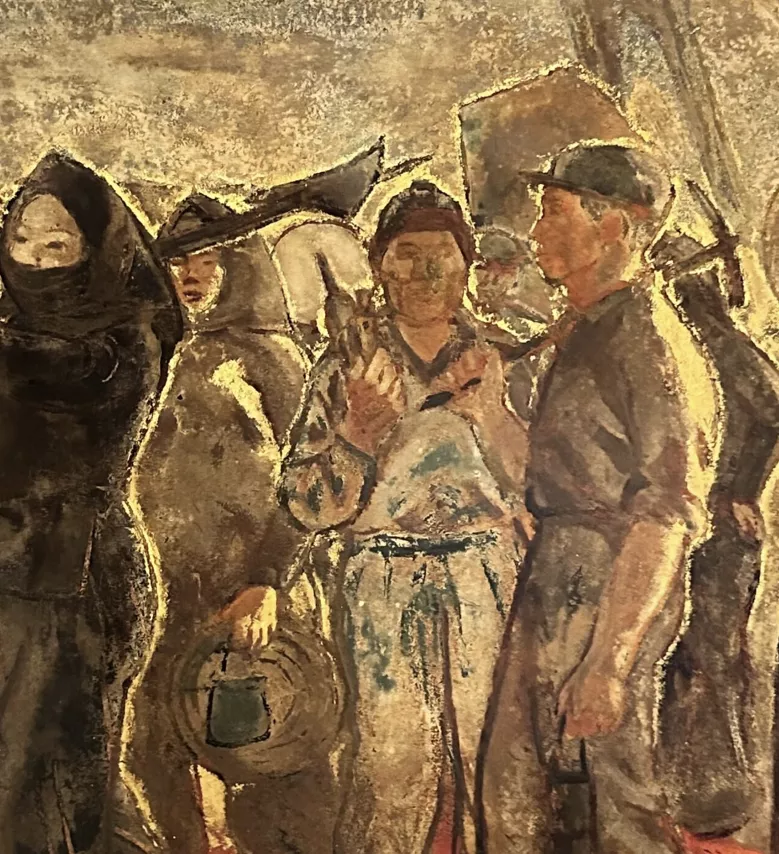
Sell a Vietnamese painting at auction with Auctie's
From the reserve price to the final bid: how the price is determined
Auctions are the most suitable method for selling high-quality Vietnamese paintings in a market where demand—now largely international—can generate fierce competition among multiple collectors interested in the same piece.
The reserve price, set in consultation with the seller, must be carefully calibrated in light of the rapid rise in prices in this segment over the past two decades: a reserve price that is too conservative, based on outdated benchmarks, may fail to reflect the current state of a rapidly changing market.
For major works by the leading figures of the Indochine School, the dynamics of the auction can lead to final prices far exceeding initial estimates, as several Asian collectors are now prepared to engage in intense competition to acquire iconic pieces of this cultural heritage. The auctioneer plays a decisive role here: he must have a precise understanding of the active buyers in this specific market and know how to structure a sale that is directly tailored to them.
Hôtel Drouot and Online Auctions: Reaching the Right Bidders
Auctie’s holds its auctions at Hôtel Drouot, the leading auction venue in continental Europe, founded in 1852 and which, over the decades, has become one of the world’s most active markets for modern Vietnamese art, due to the close historical ties between France and former Indochina.
For a Vietnamese painting, Drouot offers unparalleled visibility among French specialists in this market, as well as among an international clientele that closely follows Parisian auctions dedicated to this body of work.
Auctie’s auctions are also accessible online in real time, allowing collectors based in Hong Kong, Singapore, Ho Chi Minh City, or Hanoi to bid directly from Asia. For modern Vietnamese art—for which the most dynamic demand now comes precisely from this region of the world—this international dimension has become absolutely crucial to achieving the best hammer price.
Estimate in less than 24h
Estate Planning, Inheritance: Valuing an Inherited Vietnamese Painting
Inventory and Distribution of an Estate
Vietnamese paintings frequently appear in the estates of families with ties to former French Indochina: descendants of colonial officials, military personnel who served in the Far East, or simply travelers and art enthusiasts who acquired these works during the 20th century.
These pieces, sometimes having hung for decades in family homes without their current owners knowing their exact value, may now represent a considerable estate asset given the spectacular rise in market prices since the 2000s.
Auctie’s regularly collaborates with notaries to compile comprehensive estate inventories that include Vietnamese and Asian works of art. Each piece is appraised individually, with particular attention paid to issues of attribution, which are often complex for this collection.
The resulting report is an official document that is legally enforceable and may be included in the estate file without reservation.
Confidentiality of the process and preservation of anonymity
The circumstances leading to the appraisal of a Vietnamese painting are often personal: discovery in a family inheritance linked to colonial history, reorganization of a collection, or a decision to sell after a long period of ownership.
Auctie’s handles each case with absolute discretion. The owner’s identity is never disclosed to third parties without their explicit consent, and the works may be offered for sale under complete anonymity if the consignor so desires.
This confidentiality is a fundamental commitment of Auctie’s, applicable at every stage of the relationship, from the initial contact through to the receipt of the proceeds from the sale.
Entrust the appraisal of your Vietnamese painting to Auctie’s
A Vietnamese painting deserves an appraisal that takes into account the unique nature of this market and its remarkable growth over the past two decades.
The diversity of media—silk, lacquer, and oil—the challenges of attribution within a body of work subject to the circulation of copies, and the now fully international scope of demand: these are all factors that only a licensed auctioneer, well-versed in the specificities of modern Vietnamese art, can assess with the rigor they require.
Auctie’s guides you from the initial appraisal through to the final auction, offering the expertise of a state-certified appraiser and the discretion your financial decisions deserve. The appraisal is free, confidential, and non-binding, and you’ll receive a response within 24 hours.
Discover in the same theme
Rating and value of paintings and laquers by Le Quoc Loc
Le Quoc Loc is a modern Vietnamese artist who has worked mainly in lacquer. His works are highly valued.
Learn more >

Rating and value of drawings and paintings by Tran Van Can
Tran Van Can is a painter of Vietnamese realism who has produced paintings and ink drawings whose value is high at auction.
Learn more >

Rating and value of works, paintings by Thuong Lan Nguyen
Thuong Lan, a little-known Vietnamese artist, is nevertheless appreciated at auction. His works are very valuable. Estimated in less than 24h.
Learn more >
Estimate in less than 24h
Frequently asked questions
-
Quelles sont les fourchettes de prix des tableaux vietnamiens selon l'artiste et le support ?Les prix varient considérablement selon l'artiste et la technique. Une peinture sur soie d'un artiste de second rang oscille entre 3 000 et 30 000 euros, tandis qu'une œuvre de maître comme Lê Phổ ou Vũ Cao Đàm peut atteindre 50 000 à 500 000 euros. Les laques de Nguyễn Gia Trí, technique la plus rare et complexe, dépassent régulièrement le million d'euros. Les pièces exceptionnelles, comme celle de Mai Trung Thứ adjugée 3,1 millions de dollars, témoignent du potentiel des œuvres majeures.
-
Comment authentifier un tableau vietnamien et vérifier sa cote ?L'authentification d'un tableau vietnamien nécessite une expertise spécialisée en raison de la circulation de copies sur ce marché. Auctie's propose une estimation gratuite et certifiée par un commissaire-priseur agréé, avec réponse en moins de 24 heures. Pour cela, fournissez des photos nettes du recto et verso, un cliché de la signature, les dimensions exactes et tout élément de provenance disponible. Un examen physique peut être proposé en cas de doute sur l'attribution.
-
Est-ce le bon moment pour vendre un tableau vietnamien ?Oui, c'est un moment favorable. Depuis le début des années 2000, le marché de l'art vietnamien connaît une progression spectaculaire portée par une nouvelle génération de collectionneurs asiatiques et un intérêt croissant des grandes maisons de ventes internationales. La demande mondiale reste soutenue, particulièrement pour les peintures sur soie et les laques, tandis que la rareté structurelle des œuvres disponibles maintient les cotes à la hausse.
-
Comment se déroule une estimation gratuite chez Auctie's ?L'estimation est gratuite et sans engagement. Vous soumettez des photographies de votre tableau vietnamien (recto, verso, signature et détails) ainsi que les dimensions et informations de provenance disponibles. Un commissaire-priseur agréé examine le dossier et vous fournit une expertise certifiée en moins de 24 heures. Si nécessaire, un examen physique de la pièce peut être organisé avant toute démarche de mise en vente.
-
Comment vendre un tableau vietnamien avec Auctie's ?Auctie's, maison de ventes aux enchères agréée, vous accompagne à chaque étape : estimation initiale gratuite, authentification par commissaire-priseur, catalographie détaillée en tenant compte de la provenance et de l'état de conservation, puis mise en vente publique aux enchères. Cette approche garantit la transparence et expose votre œuvre à une audience internationale de collectionneurs spécialisés, optimisant ainsi votre résultat de vente.
