



Abstract Expressionism: Valuation and Auction

Large format, brushwork, and color: the value of Abstract Expressionism varies greatly depending on the artist, the period, and the provenance of the work.
Below you’ll find all our valuation guides dedicated to Abstract Expressionism—Action Painting, Color Field, and works on paper. Each guide details the price ranges observed at auction and the factors that determine a work’s value before it is entrusted to our state-certified auctioneers.
Guides on this art movement
See all guides >
Rating and value of drawings and painting by Sadamasa Motona...
Sadamasa Motonaga is a Japanese artist who has created numerous works that command high prices at auction. 24-hour estimate.
Learn more >

Rating and value of paintings by JonOne
JonOne is one of the world's leading street art artists, and has produced numerous works that are highly rated and valued at auction.
Learn more >

Rating and value of paintings, drawings and sculptures by Ya...
Yayoi Kusama is a Japanese artist known for the use of polka dots in her works, which are highly valued at auction.
Learn more >

Rating and value of paintings by Beauford Delaney
Beauford Delaney is an African-American artist who mainly produced abstract paintings, rediscovered in the 1990s and now quoted.
Learn more >

Ratings and values of paintings by Cecily Brown
Cecily Brown is an English abstract artist who has produced many works that are currently highly rated on the auction market.
Learn more >

Ratings and values of paintings by Willem de Kooning
Willem DE KOONING is an artist who has produced many works that are highly valued at auction. 24h estimate.
Learn more >

Rating and value of paintings by Lynne Drexler
Lynne Drexler is an American Expressionist artist who has produced numerous paintings that are highly rated and valued at auction.
Learn more >

Here's why the value of lyrical abstraction artists will con...
Lyrical abstraction artists such as Hans Hartung and Georges Mathieu are enjoying strong market interest. Their value is set to rise further.
Learn more >

Rating and value of paintings by Janet Sobel
Janet Sobel is a pioneering drip artist. In the shadow of Pollock, her works are nevertheless highly valued at auction.
Learn more >

Rating and value of paintings by Judit Reigl
Judit Reigl is an abstract painter who has produced many works that are highly rated and valued at auction. Estimated in 24h.
Learn more >

Rating and value of paintings by Marcelle Loubchansky
Marcelle Louchansky is a lyrical abstraction artist whose stock has risen in recent years. Her works are highly prized at auction.
Learn more >

Rating and value of paintings by René Duvillier
René Duvillier is an artist of lyrical abstraction who has produced many works that are highly valued at auction.
Learn more >
Understanding the Value of an Abstract Expressionist Work
What Is Market Value in the Abstract Expressionist Market?
The market value of an Abstract Expressionist work refers to the benchmark value assigned to it by the secondary market at a given moment, based on the artist’s identity, the work’s format, the period in which it was created, its condition, the strength of its provenance, and current international demand.
This market is one of the most dynamic and highly publicized in 20th-century art: works by Jackson Pollock, Mark Rothko, and Willem de Kooning regularly rank among the highest auction prices ever recorded in the history of public auctions, across all categories.
Born in New York shortly after World War II, Abstract Expressionism—also known as the New York School—marked a decisive shift in the center of gravity of modern art from Paris to the United States.
This movement brought together artists with radically different practices but united by a shared ambition: to break away from all figuration and make painting itself—its gesture, its medium, its color—the exclusive subject of the work.
This seminal break, combined with the relative scarcity of major works still in private hands, explains the exceptional strength of this market over the past several decades.
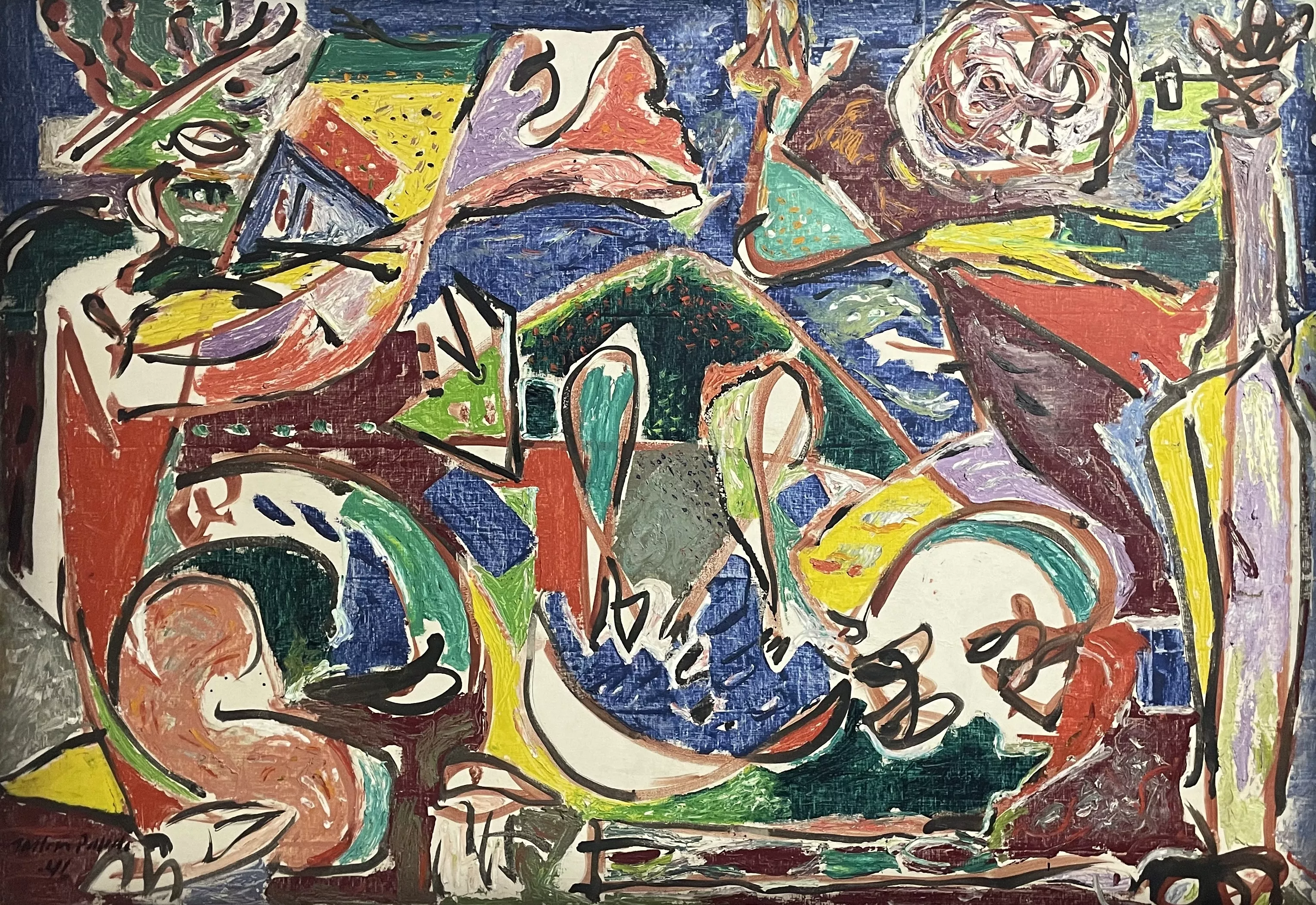
Action Painting and Color-Field Painting: What Are the Differences in the Market?
Abstract Expressionism is divided into two major trends, whose market dynamics—though both driven by very strong international demand—exhibit significant nuances.
Action painting, as the name suggests, emphasizes the gesture, the speed of execution, and the physical imprint of the artist’s body on the canvas. Jackson Pollock is its iconic figure, with his “dripping” technique—which involves splashing or pouring paint directly onto a canvas laid on the floor.
Willem de Kooning, Franz Kline, and Lee Krasner also belong to this movement, whose works are characterized by an immediate visual energy and a dense, carefully worked pictorial texture.
Color-field painting takes a radically different approach: large areas of pure color, applied with apparent economy of gesture, create an effect of contemplation and immersion.
Mark Rothko is its most iconic representative, followed by Barnett Newman, Clyfford Still, and Helen Frankenthaler. These two movements attract collectors with sometimes differing sensibilities, but their respective market values have seen comparable growth over the past few decades, driven by institutional recognition that is now undisputed.
Trend | Leading Artists | Characteristics | Market Demand Level |
Action Painting | Jackson Pollock, Willem de Kooning, Franz Kline, Lee Krasner | Rapid brushstrokes, dripping, dense texture, physical energy | Exceptional, world record auction prices |
Color-field painting | Mark Rothko, Barnett Newman, Clyfford Still, Helen Frankenthaler | Large expanses of pure color, contemplation, immersion | Exceptional, very active institutional market |
Second-generation gestural abstraction | Joan Mitchell, Sam Francis, Norman Bluhm | Legacy of gestural art, more lyrical color, free brushwork | Very strong market, significant recent growth |
Abstract Expressionist sculpture and works on paper | David Smith, Pollock (drawings), de Kooning (drawings) | Insight into the creative process, small formats | Active, accessible and fluid segment |
European lyrical abstraction (similar) | Hans Hartung, Georges Mathieu, Pierre Soulages | Gesture, material, kinship with American Action Painting | Strong, active Franco-European market |
Estimate in less than 24h
The Criteria That Determine the Value of an Abstract Painting
The market value of an abstract expressionist painting is determined first and foremost by the artist’s identity, to an even greater extent than in most other 20th-century art movements.
The gap between the market value of a certified Pollock or Rothko and that of an artist from their circle—even one of high formal quality—is measured in several orders of magnitude.
The creative period is also a decisive factor: for Pollock, works from the classic “dripping” period, between 1947 and 1950, are valued incomparably higher than his early works or those from the end of his career; for Rothko, the large-scale works of his mature period, beginning in the mid-1950s, command the highest prices.
The price ranges observed on the secondary market illustrate this considerable variation. A work on paper or a drawing by a second-tier artist associated with the movement can range from 5,000 to 50,000 euros. A medium-sized canvas by a recognized second-generation artist, such as Joan Mitchell or Sam Francis, ranges from 100,000 to 2 million euros, depending on the period and quality.
Large-format works by Pollock, Rothko, or de Kooning from their classical period consistently exceed ten million dollars and can reach several hundred million for the most exceptional pieces, making these artists the highest-valued in the history of the art market.
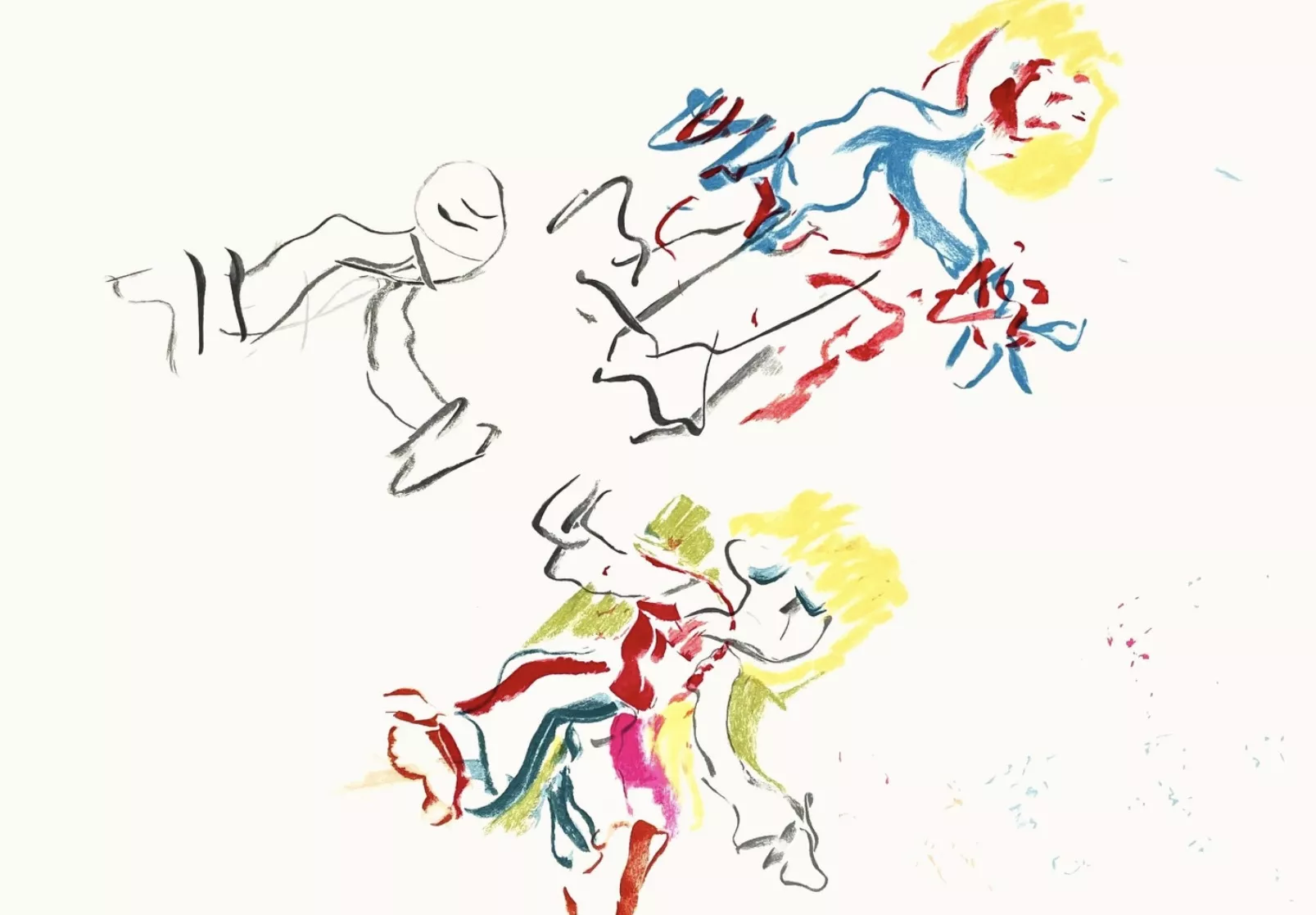
Paintings, drawings, and large-scale works: all works appraised
The hierarchy of abstract works and its impact on value
In Abstract Expressionism, the hierarchy of value is not based on subject matter—since these works are, by definition, non-figurative—but rather on a combination of format, period, technique, and rarity.
Large-scale canvases, which best embody the movement’s immersive and physical ambition, occupy the very top of this hierarchy: they are the works most sought after by museums and the wealthiest collectors, and their increasing rarity on the open market fuels intense international competition whenever they appear at public auction.
Medium-sized works, gouaches, ink drawings, and other drawings constitute a more accessible segment, allowing a broader range of collectors to embrace the movement’s aesthetic.
Sculptures—though rarer in this primarily painterly movement, yet present in the work of artists such as David Smith—occupy a unique place, halfway between Abstract Expressionism and emerging Minimalism. Works on paper by Pollock and de Kooning, long considered minor preparatory works, have been spectacularly reevaluated by the market since the 2000s.
Category | Characteristics | Indicative Price Range | Market Demand |
Large format, major artist, classic period | A work of the highest prestige, immersive format, comprehensive documentation | €10 million — several hundred million | Institutional, exceptional |
Medium-sized canvas, major artist | Top-tier quality, gallery-sized | €1 million — €20 million | Highly sought-after, wealthy collectors |
Second-generation painting (Mitchell, Francis) | Lyrical style, expressive color, growing recognition | €100,000 — €2 million | Very active, strong growth |
Works on paper, gouache, or ink (major artist) | Insight into the creative process, small format | €50,000 — €800,000 | Active, sought-after segment |
Drawing or sketch (second-tier artist) | Spontaneity, entry-level collection piece | €5,000 — €50,000 | Growing, affordable |
Abstract Expressionist sculpture | Rare within the movement, transition toward minimalism | €200,000 — €10 million | Strong market, specialists |
Gestural and large-format canvases: the most sought-after works
In Abstract Expressionism, large scale is an integral part of the artistic project itself, rather than a mere aesthetic choice. Pollock, Rothko, and Newman deliberately created canvases whose dimensions exceed the viewer’s field of vision, creating an effect of total immersion that was at the heart of their pictorial ambition.
These large-format works, when in perfect condition and accompanied by impeccable documentation, are the most sought-after pieces on the global art market, sparking competition among museums, foundations, and major private collectors, which can drive hammer prices to extraordinary heights.
The condition of these large-format works presents a particular technical challenge. Pollock’s canvases, painted with industrial paints and lacquers whose long-term chemical stability was not guaranteed, pose specific conservation challenges that only specialized laboratories are able to diagnose.
Rothko’s canvases, whose layered glazes are extremely fragile when exposed to light and humidity, require rigorous conservation conditions: a poorly preserved Rothko can lose a significant portion of the chromatic intensity that constitutes the essence of its aesthetic and market value.
Estimate in less than 24h
Get a Free Appraisal of an Abstract Artwork
A certified appraisal by a licensed auctioneer in less than 24 hours
Appraising an abstract expressionist artwork is a demanding task that requires in-depth knowledge of the movement’s history, mastery of the painting techniques specific to each artist, and constant monitoring of one of the world’s most active and highly publicized art markets.
The exceptional fame of the movement’s leading figures has given rise to a particularly sophisticated market for forgeries: over the past few decades, several high-profile scandals have revealed the circulation of fake Pollocks and Rothkos of disturbingly high technical quality, which necessitates absolute caution in any attribution process.
As a state-certified auctioneer, Auctie’s possesses the training, experience, and networks necessary to conduct this appraisal with the rigor it demands.
Its appraisal is subject to professional liability and constitutes a legally binding document before any competent authority. It is offered free of charge, with a certified response within 24 hours.
What You Need to Provide for an Online Appraisal
For an abstract expressionist painting, clear, well-lit photographs of the front and back of the work are essential, as well as a close-up of the signature and any inscriptions on the back of the canvas, the precise dimensions of the composition, and any known provenance information: gallery label, purchase invoice, previous certificate of authenticity, or reference in an exhibition catalog or specialized publication.
Any previous restoration or intervention must be noted, as well as the storage conditions under which the artwork has been kept—including exposure to light and fluctuations in humidity—which may have affected its color stability.
For works on paper, gouaches, ink drawings, and other works on paper, it is particularly important to document the condition of the support: pinholes, foxing, discoloration, and traces of previous mounting.
In cases of serious doubt regarding attribution—particularly for artists most vulnerable to the market for forgeries—a thorough physical examination will be recommended prior to any sale, which may include scientific analysis of pigments and supports.
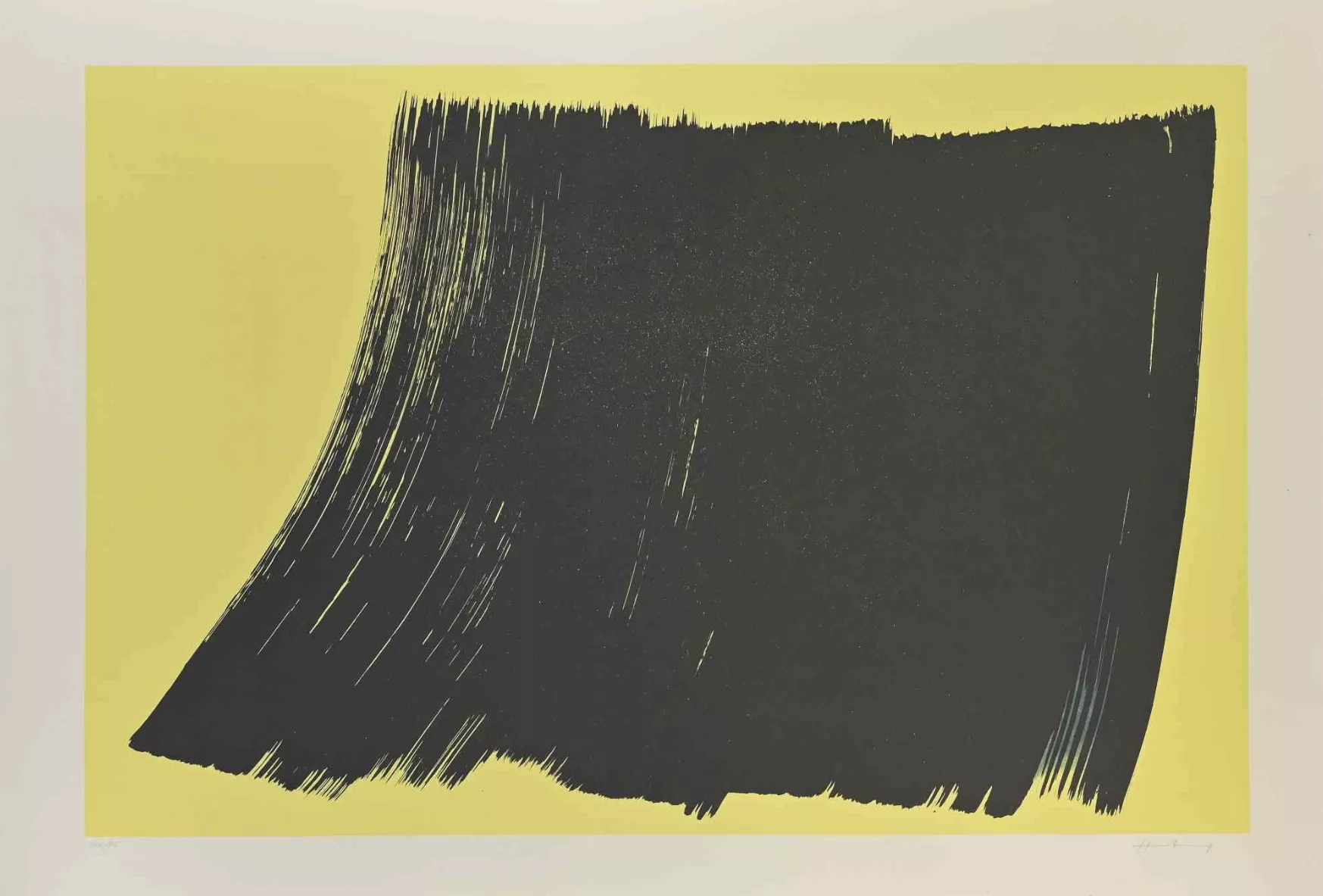
Signature, Provenance, and Authenticity: The Pillars of Valuation
Signature and Catalog Raisonné: Their Impact on Value
The authentication of an abstract expressionist work relies on a set of converging clues, the rigor of which must be proportional to the artist’s reputation.
The signature, when present, is a primary factor, but it is far from sufficient for the most highly valued artists: the sophistication of the counterfeit market in this segment requires an in-depth stylistic analysis, a study of the materials and pigments—often industrial—used by these artists, and a systematic consultation of archives and catalogs raisonné, when they exist.
For the movement’s major artists, catalogs raisonné or authentication committees serve as the definitive authority in the market. The catalog raisonné of Jackson Pollock, compiled by Francis Valentine O’Connor and Eugene Victor Thaw, is the definitive reference: any work not listed in it is immediately suspect and must undergo a thorough expert examination.
For Rothko, the work of David Anfam is authoritative. For de Kooning, the ongoing research under the auspices of the Willem de Kooning Foundation serves as the primary documentary reference. A work listed in one of these catalogs enjoys the highest level of scholarly credibility, which is directly and significantly reflected in its market value.
Level of Documentation | Impact on Market Value |
Work listed in the catalogue raisonné or validated by the artist’s foundation | Maximum assurance; often an essential condition for sale |
Work published in specialized literature or exhibited in a major retrospective | Strong scientific backing; value highly sensitive |
Work with conclusive scientific analysis (pigments, supports) | Guarantee of material authenticity; provides strong assurance to the buyer |
Work accompanied by a written expert opinion from a recognized specialist in the artist’s body of work | Good guarantee; facilitates the sale and reduces risk |
Work with documented provenance from the original gallery | Solid foundation; direct traceability to the artist or their circle |
Work with no documentation, no clear signature, and no provenance | Maximum uncertainty; sale not recommended without prior in-depth appraisal |
Provenance and Condition: Their Impact on Value
The provenance of an abstract expressionist work is a key factor in building trust and determining value; it is all the more decisive given that the period of creation is relatively recent and that traceability should, in theory, be easier to establish than for older works.
The major galleries that represented these artists—the Betty Parsons Gallery, the Sidney Janis Gallery, and the Leo Castelli Gallery, to name just the best known—have compiled archives that often make it possible to trace a work’s history from its creation.
A work with an unbroken chain of ownership from the artist’s studio to the current seller enjoys near-absolute legitimacy on the market.
Condition is a major concern for this movement, whose artists often experimented with non-traditional materials whose long-term stability poses specific challenges.
The industrial paints used by Pollock, Rothko’s layered glazes, and de Kooning’s sometimes substantial impasto require rigorously controlled storage and display conditions.
An examination under raking light and ultraviolet light, supplemented by infrared analysis if necessary, makes it possible to detect alterations, restorations, or repainting, the impact of which on value can be considerable in a market that places the highest value on the physical integrity of the original work.
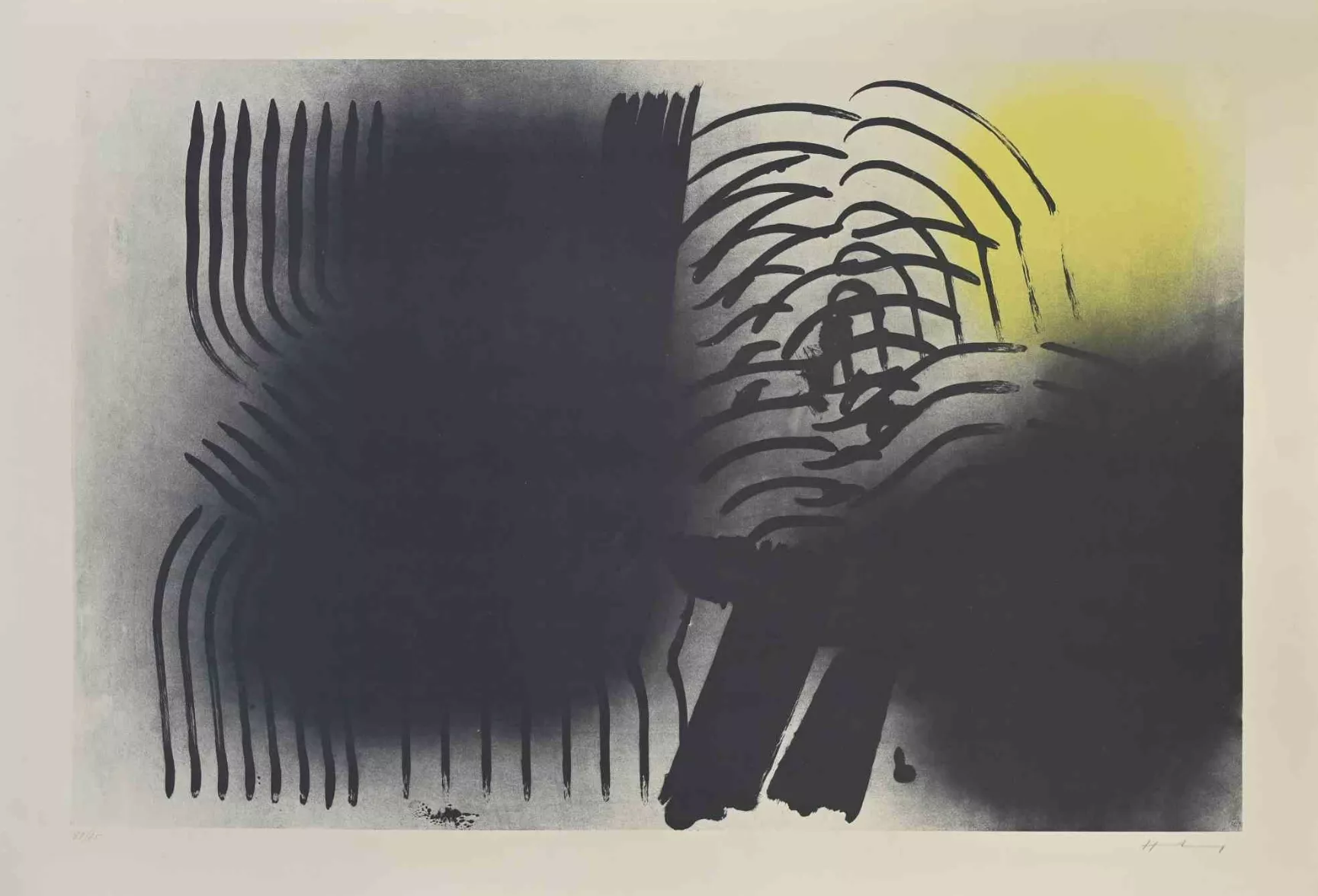
Sell an Abstract Expressionist Work at Auction with Auctie's
From the reserve price to the final bid: how the price is determined
Auctions are the preferred method of sale for high-quality abstract expressionist works, particularly for major pieces whose rarity and international renown warrant exposure to the entire global market.
It produces a public price certified by a notary, resulting from the direct interplay of supply and demand at a given moment. The reserve price, set in consultation with the seller, must be carefully calibrated: for major works, where demand is driven by a limited number of extremely wealthy collectors and institutions, a well-crafted sales strategy can spark competition whose outcome far exceeds initial projections.
For second-generation artists or works on paper, the quality of the catalog entry, the accuracy of the attribution, and the distribution of the catalog to the right specialized collectors remain the most decisive factors in achieving a good result.
The auctioneer plays a vital coordinating role in this process by curating a sale that creates the conditions for productive competition among interested bidders.
Hôtel Drouot and Online Auctions: Reaching the Right Bidders
Auctie’s holds its auctions at Hôtel Drouot, the leading auction venue in continental Europe, founded in 1852 and now frequented by a network of collectors and specialists in modern and contemporary art.
For an abstract expressionist work, Drouot offers visibility among European enthusiasts of the movement, complemented by an online presence that significantly expands the global reach of each auction, in a market where the most active buyers are often based in the United States, Asia, or the Middle East.
An American collector specializing in the New York School, an Asian museum seeking an iconic work of the movement, or a buyer from the Gulf region drawn to the contemplative nature of color-field painting can bid in real time from their home countries.
For Abstract Expressionism—for which demand is truly global and whose reputation extends far beyond the circle of art lovers—this international dimension is almost always decisive in securing the best hammer price.
Estimate in less than 24h
Estate Planning, Inheritance: Valuing an Inherited Abstract Artwork
Inventory and Distribution of an Estate
Abstract Expressionist works are appearing with increasing frequency in the estates of collectors who acquired these pieces in the decades following their creation, at a time when these artists—though already recognized—were still accessible to collectors with substantial but not exceptional means.
A painting or work on paper acquired in the 1960s or 1970s may today be worth considerably more than the heirs realize, making a preliminary appraisal all the more essential before any distribution of the estate.
Auctie’s regularly works alongside notaries to compile comprehensive estate inventories that include modern and contemporary artworks. Each piece is appraised individually, with particular attention paid to issues of attribution and authenticity, which are, in this segment, absolutely decisive factors in determining value.
The resulting report is an official document that is legally enforceable and can be included in the estate file without reservation.
Confidentiality of the process and preservation of anonymity
The circumstances leading to the appraisal of an abstract expressionist work are often personal and sensitive: discovery as part of an inheritance, reorganization of a family collection built up over several decades, or a decision to sell after a long period of ownership.
Auctie’s handles each case with absolute discretion. The owner’s identity is never disclosed to third parties without their explicit consent, and the works may be offered for sale under complete anonymity if the consignor so desires.
This confidentiality is a fundamental commitment of Auctie’s, applicable at every stage of the relationship, from the initial contact through to the receipt of the proceeds from the sale. It is particularly valuable in this segment, where the potentially very high value of the artworks can attract unwanted attention if the sale process is made public prematurely.
Entrust the appraisal of your abstract artwork to Auctie’s
An abstract expressionist artwork deserves an appraisal commensurate with its renown and the considerable stakes it may represent.
The sophistication of the counterfeit market for the most famous artists, the extreme sensitivity of valuations to documentation and provenance, and the depth of an international market that tolerates no approximations: these are all reasons to entrust the appraisal of your piece to a state-certified auctioneer well-versed in the specifics of this demanding segment.
Auctie’s guides you from the initial appraisal through to the final auction, with the rigor of an expert trained in these matters and the discretion your financial decisions deserve. The appraisal is free, confidential, and non-binding, and you’ll receive a response within 24 hours.
Discover in the same theme
Ratings and values of paintings by Willem de Kooning
Willem DE KOONING is an artist who has produced many works that are highly valued at auction. 24h estimate.
Learn more >
Rating and value of paintings by Janet Sobel
Janet Sobel is a pioneering drip artist. In the shadow of Pollock, her works are nevertheless highly valued at auction.
Learn more >
Rating and value of paintings by Judit Reigl
Judit Reigl is an abstract painter who has produced many works that are highly rated and valued at auction. Estimated in 24h.
Learn more >
Estimate in less than 24h
Frequently asked questions
-
Quelles sont les fourchettes de prix pour une œuvre d'expressionnisme abstrait ?Les prix varient considérablement selon l'artiste, la période et le format. Une œuvre sur papier d'un artiste de second rang se situe entre 5 000 et 50 000 euros, tandis qu'une toile de format moyen d'un artiste de seconde génération (Joan Mitchell, Sam Francis) oscille entre 100 000 et 2 millions d'euros. Les grands formats des maîtres comme Pollock, Rothko ou de Kooning dépassent systématiquement les 10 millions d'euros et peuvent atteindre plusieurs centaines de millions pour les pièces les plus exceptionnelles.
-
Comment faire authentifier et estimer une œuvre expressionniste abstraite ?Auctie's, maison de ventes aux enchères, propose une estimation gratuite et sans engagement réalisée par un commissaire-priseur agréé par l'État. Une réponse certifiée vous est transmise en moins de 48 heures. Pour optimiser l'expertise, fournissez des photographies nettes du recto et verso, la signature en détail, les dimensions précises, la provenance connue et l'état de conservation de l'œuvre.
-
Est-ce le bon moment pour vendre une œuvre d'expressionnisme abstrait ?Oui, le marché de l'expressionnisme abstrait est l'un des plus dynamiques et des plus médiatisés de l'art du XXe siècle. La demande internationale reste exceptionnelle, les oeuvres majeures encore en mains privées sont relativement rares, et la reconnaissance institutionnelle du mouvement est désormais incontestée, soutenant une compétition internationale intense à chaque apparition en vente publique.
-
Quels facteurs déterminrent la valeur d'une peinture expressionniste abstraite ?L'identité de l'artiste est le facteur prépondérant, suivi de la période de création, du format de l'œuvre et de l'état de conservation. Pour Pollock, les travaux de la période classique du dripping (1947-1950) sont incomparablement plus valorisés. L'état de conservation est critique : les toiles de Rothko mal conservées peuvent perdre l'intensité chromatique qui constitue l'essentiel de leur valeur marchande.
-
Comment se déroule la vente d'une œuvre chez Auctie's ?Auctie's, commissaire-priseur agréé par l'État, vous accompagne de l'estimation gratuite jusqu'à l'adjudication. Après validation de l'estimation, Auctie's prépare l'œuvre pour la mise en vente, la catalogue, la promeut auprès de collectionneurs institutionnels et privés du monde entier, puis procède à son adjudication publique, garantissant transparence et valorisation optimale de votre patrimoine.
