



Rating and value of paintings by Janet Sobel

Key takeaways
- Prices for Janet Sobel’s works range from €500 to €57,200, with her market value on the contemporary art market rising sharply.
- A pioneer of “all-over” dripping since 1944, she anticipated the technique popularized by Jackson Pollock, using industrial paint and unconventional tools.
- Briefly recognized in the 1940s, she was rediscovered in the 1990s thanks to institutions such as the Centre Pompidou and MoMA.
If you own a work by or based on the artist Janet Sobel and would like to know its value, our state-approved experts and auctioneers will guide you.
Our specialists will carry out a free appraisal of your work, and provide you with an accurate estimate of its value on the current market.
Then, if you wish to sell your work, we'll direct you to the best possible arrangement to obtain the optimum price.
Rating and value of the artist Janet Sobel
Janet Sobel is a well-known artist among modern and contemporary art lovers. Now, prices for her works are rising at the auctioneers' gavel.
Her oils on canvas are particularly prized, especially by American buyers, and the price at which they sell on the art market ranges from €500 to €57,200, a significant delta but one that speaks volumes about the value that can be attributed to the artist's works.
In 2023, his untitled gouache on paper from 1948 sold for €57,200, whereas it was estimated at between €19,000 and €28,500. Its value is rising sharply.
Order of value from the most basic to the most prestigious
Technique used | Result |
|---|---|
Drawing - watercolor | From €500 to €13,000 |
Painting | From €5,500 to €57,200 |
Estimate in less than 24h
The works and style of Janet Sobel
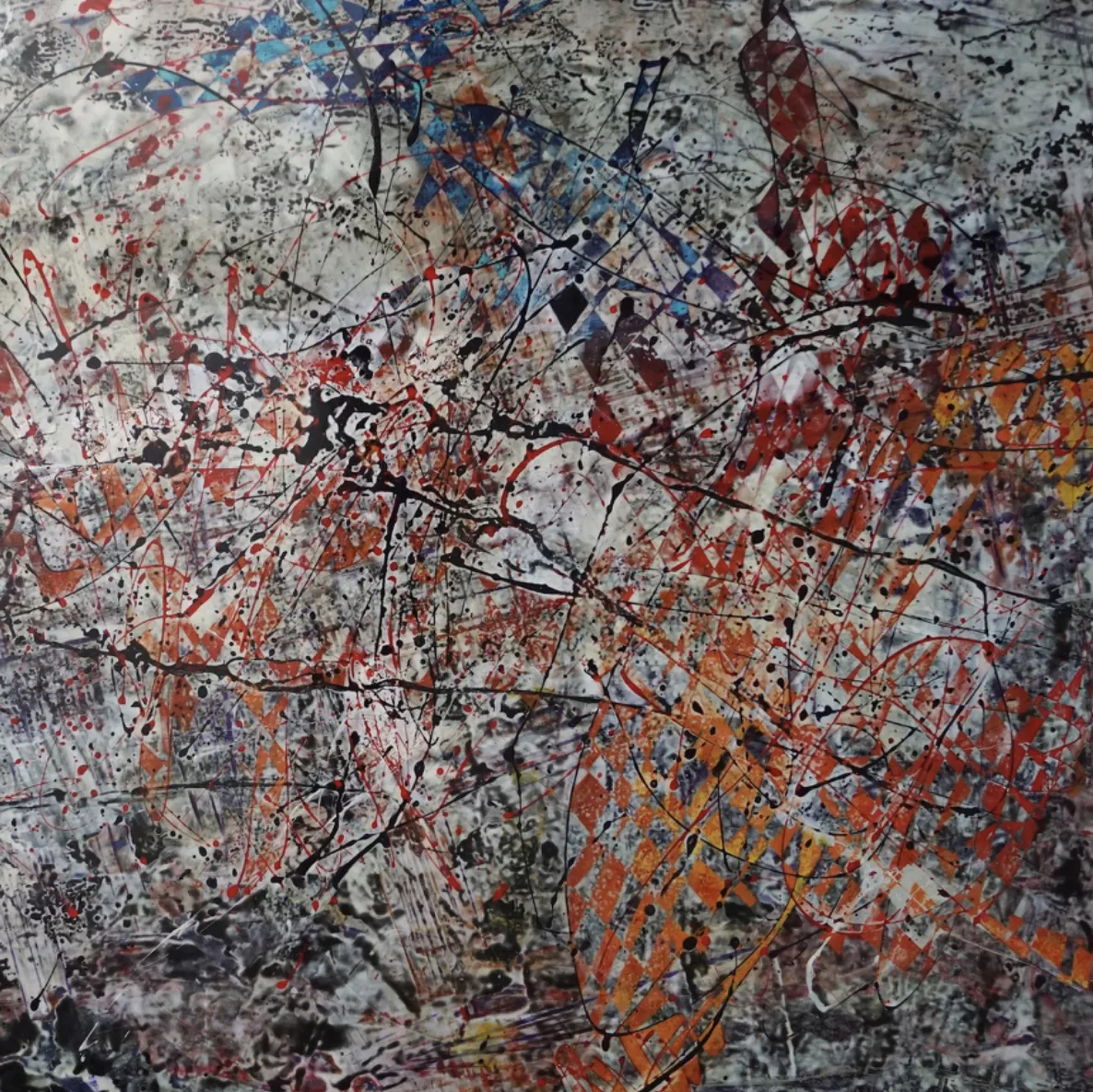
Janet Sobel (1893 - 1968) was a pioneering dripping artist. She took up painting around 1939, without any academic training, and painted her canvases on the floor in her living room in Brighton Beach. She was one of the first to use the " all-over " dripping technique, in which African paint is poured, splashed or dripped all over the surface.
She creates a dense, graphic network right to the edge of the canvas. She works with innovative materials, using enamel or industrial paint, as well as unconventional tools such as a dropper or vacuum cleaner, with the aim of producing effects of tension and movement.
She inherits a surreal, subconscious gestural style. Indeed, her automaton method recalls surrealist artists, while she pursues a free gesture directly inspired by the unconscious.
The layers she applies are multi-stratified : she superimposes paint and figurative motifs (in her early days), then evolves towards total abstraction, using visual weaving effects that evoke tapestries or embroidery.
She fills the entire surface, leaving no empty space, in an obsessive, ornamental style that comes close to the concept of horror vaccui (literally horror of emptiness).
Her work has a formal impact since she was a pioneer before Pollock : she introduced her dripping " all-over " as early as 1944, and her production is recognized as one of the earliest instances of this style by Clement Greenberg (art historian, philosopher and critic) ; and Jackson Pollock himself.
Her work is placed in a duality between figuration and abstraction, gradually moving from figurative, surrealist motifs (faces, flowers) to lyrical abstraction, while retaining her expressive gesture. She employs vivid colors (yellow, pink, green...) whose vibratory interactions support the emotion and energy of the canvas.

The life of Janet Sobel
Janet Sobel (1893 - 1968) was born as Jennie Olechovsky in Katerynoslav (today Dnipro in Ukraine). Born into a Jewish family, she fled persecution after her father died in a pogrom. They emigrated to New York in 1908 and settled in Brighton Beach.
She married Max Sobel around 1910 and raised five children in the Brooklyn neighborhood. She began painting between 1937 and 1939, at the age of 44. She was encouraged by her son Sol, then an art student, and began in her living room, on makeshift supports.
In 1943, she was spotted by collectors such as Sidney Janis and philosopher John Dewey, who helped promote her work. She then exhibited at the Puma Gallery (New York, 1944) and at the Peggy Guggenheim Gallery, where Clement Greenberg and Peggy Guggenheim had the opportunity to discover her drip paintings.
She left New York in 1946 for New Jersey, which reduced her visibility. She had to give up painting because of allergies around 1948, but returned to drawing.
She died in November 1968 in Plainfield, New Jersey, and her work was rediscovered after her death, with retrospective exhibitions such as Women in Abstraction at the Centre Pompidou in 2021. One of her paintings was also exhibited at the Musée Picasso in Paris in 2024, alongside canvases by Pollock in an exhibition dedicated to the artist.
Janet Sobel and Jackson Pollock - Putting them into perspective
Sobel and Pollock undeniably have productions that dialogue. This is the case, for example, with Janet Sobel's Milky Way (1945) and Jackson Pollock's Autumn Rhythm (Number 30) (1950).
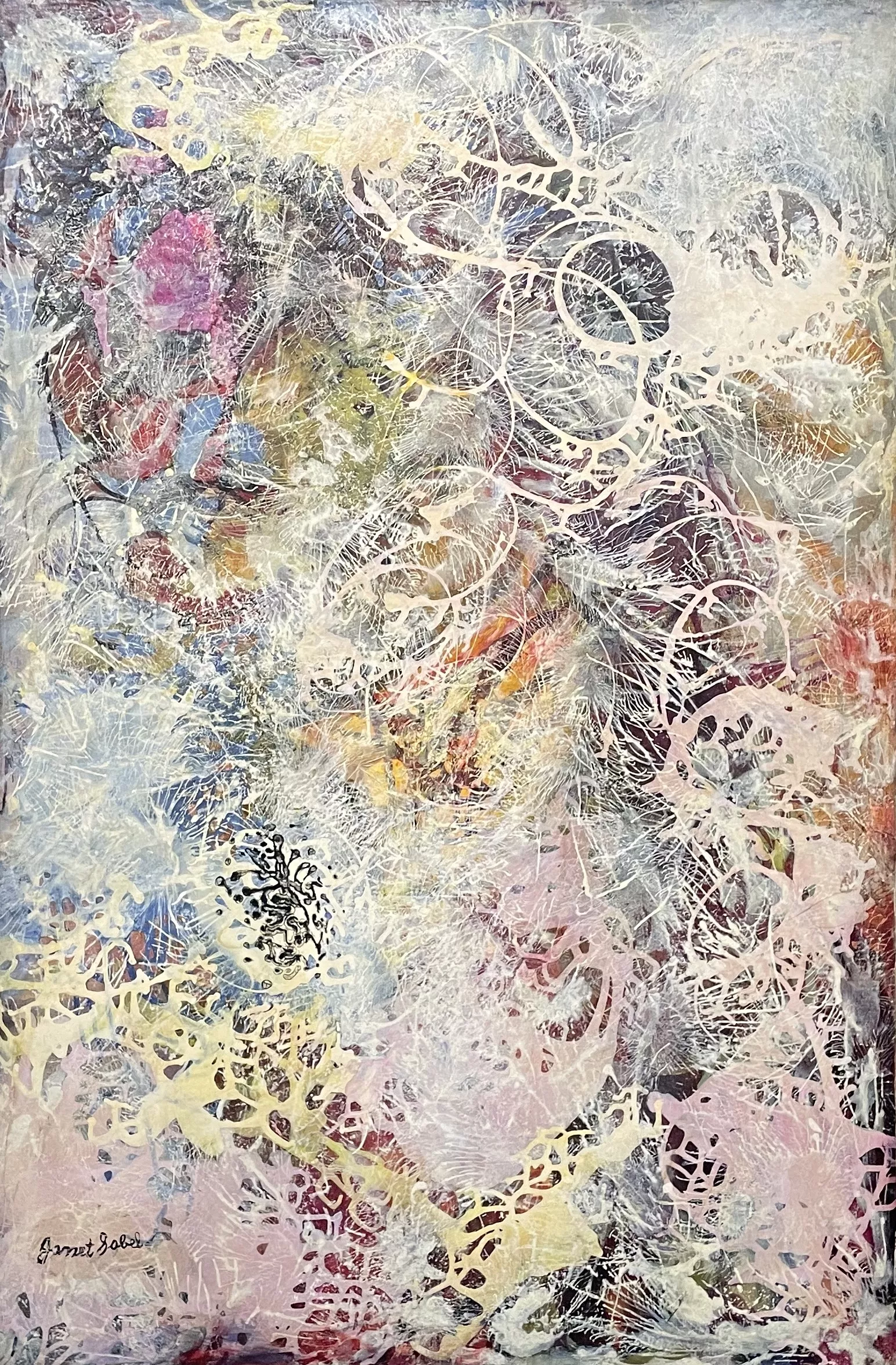
Milky Way is an " all-over " realization made with paint drips, splashes and enamel paint on flat canvas, producing a dense gestural network right up to the edges.
In Pollock's Autumn Rhythm, he uses paint on the ground which is spilled, but also applied through the dripping and pouring technique of industrial enamel controlled by the body in motion, which is the signature of " panting as action ".
Sobel uses paint in luminous, delicate colors (light blue, cream, pink) that evoke a celestial, poetic composition. Pollock works in more complex tones (blacks, grays, browns) with thicker impasto to create visual density.
Both share all-over in visual structure and composition. In Sobel's case, these are uniform patterns covering the entire surface, without center or hierarchy. Pollock's is a self-contained fractal network with no focal point, evoking continuity and infinity (a concept reinforced by fractal analysis).
Each of her works has a singular historical place and influence : Janet Sobel was admired by Greenberg and had an influence on Pollock, who for his part popularized " drip painting " within Abstract Expressionism, benefiting from her notoriety and often being credited as its inventor.
These points serve to highlight Sobel's technical anticipation, often erased by the dominant male reception, but also the shared bodily know-how, but with different temporal and aesthetic expressions.
The contrasting palette indicates two distinct emotional sensibilities. Their historical status is also different, since Sobel is a marginal figure who tends to be better known, while Pollock is a central artist, emerging with an amplified gesture.
The imprint of Janet Sobel
Janet Sobel is an important artist in the history of twentieth-century art. As early as 1944, she developed a method of projecting paint onto canvas laid on the ground, anticipating the dripping gesture later popularized by Jackson Pollock.
Her work Milky Way is the first canvas entirely " all-over " by an American artist, according to some historians such as Sidney Janis and Clement Greenberg.
She employs an intuitive, spontaneous approach derived from art brut and surrealist automatism, which places her in a transition between surrealism and abstract expressionism.
Her work blends ornament, motif, abstraction and the subconscious, with echoes of embroidery, oriental rugs and folk art. This hybridity, which has long been perceived as " feminine " or naïve, has contributed to her invisibilization in the dominant narratives of modern art.
She is today being revalued as a pioneering figure of feminine abstract art, breaking with the masculine codes of action painting. Her role was forgotten, then rediscovered. Although briefly recognized in the 1940s, she was relegated to the shadow of Pollock from the 1950s onwards.
She was rediscovered from the 1990s onwards, notably by art historians and institutions such as MoMA and the Centre Pompidou (Women in Abstraction, 2021). She is now considered a missing link in the history of gestural painting, between modernity and marginality.
Today, her value is being revalued on the market in the image of other artists such as Judit Reigl or Marie Raymond.
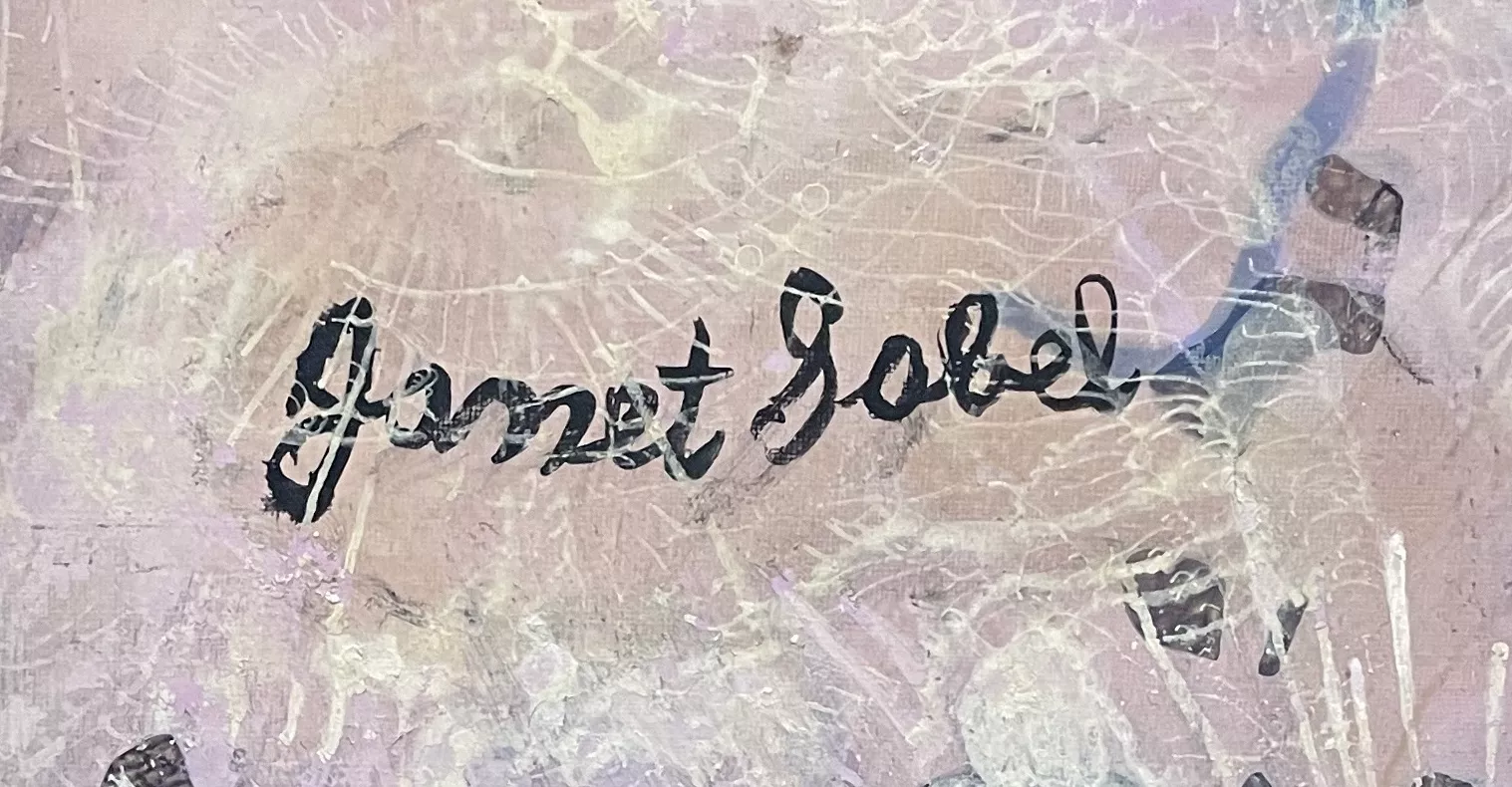
Her signature
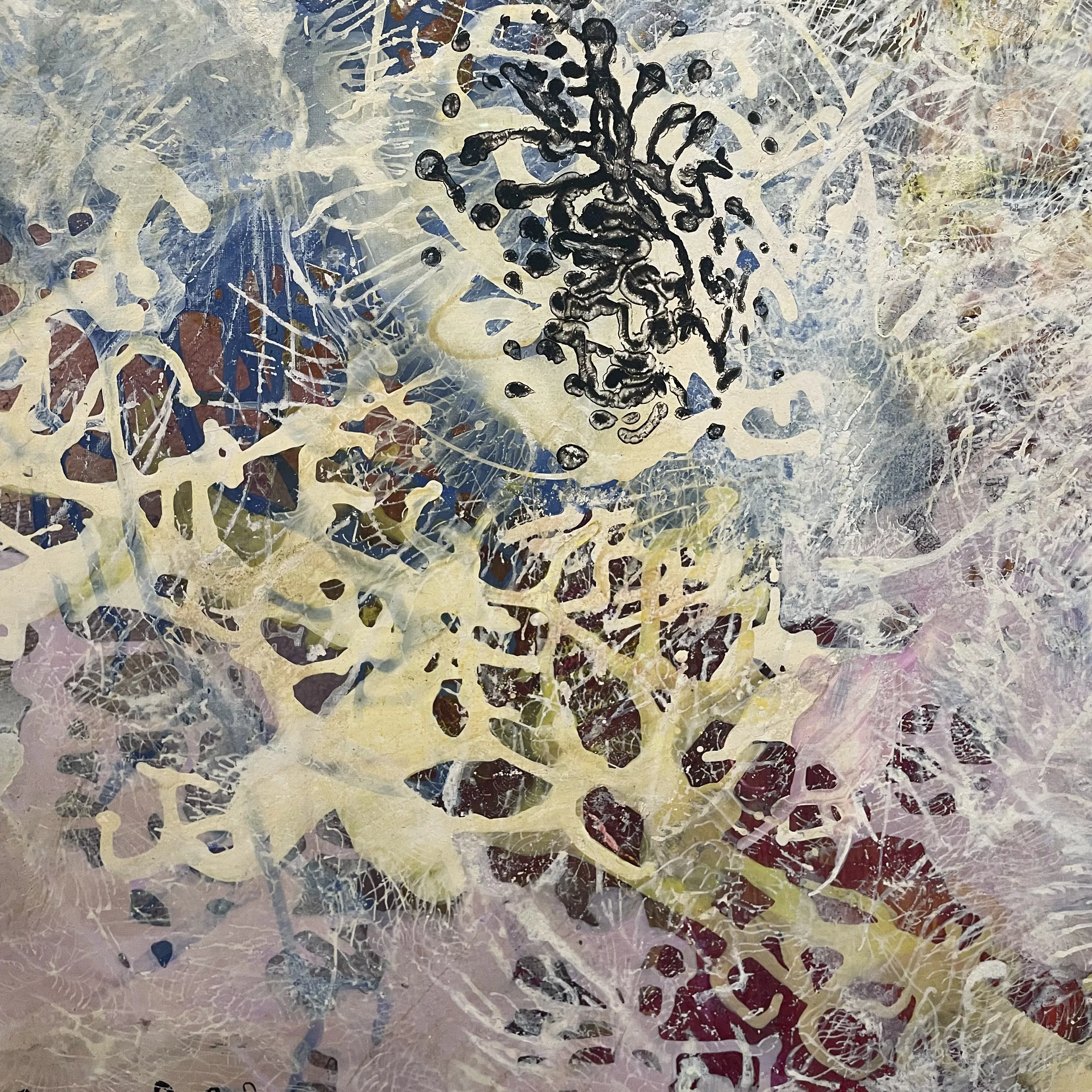
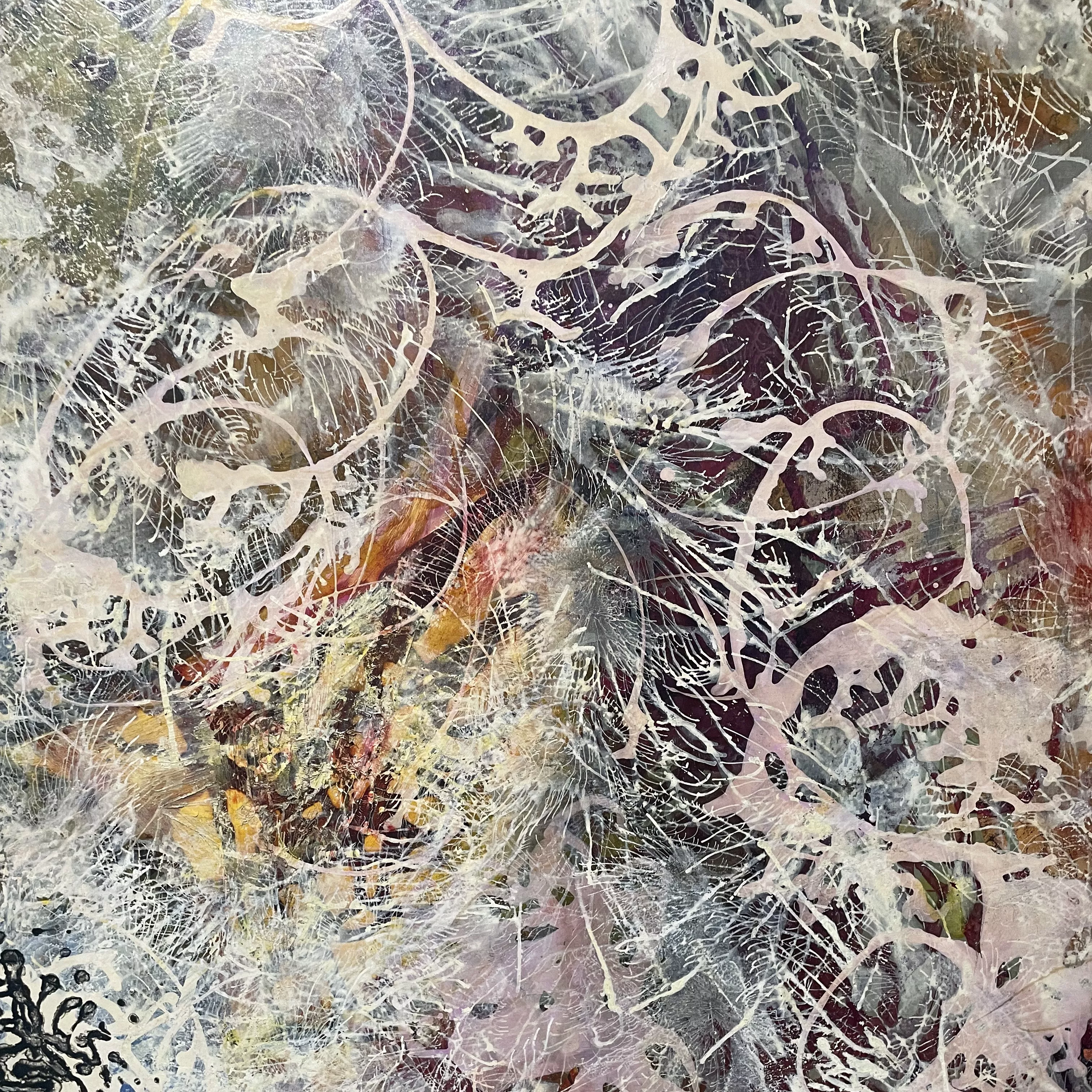
Not all of Janet Sobel's works are signed.
Although there are variations, here is a first example of her signature:
Expertise your property
If you own a work by Janet Sobel, feel free to request a free appraisal by filling in our online form.
A member of our team of experts and licensed auctioneers will contact you to provide an estimate of the market value of your work.
If you are considering selling your work, our specialists will also guide you through the various alternatives available to obtain the best possible price, taking into account market trends and the specific features of each work.
Estimate in less than 24h
Discover in the same theme

Rating and value of the works, Alexandra Shchekotikhina-Poto...
Alexandra Shchekotikhina-Pototskaya is a twentieth-century Russian artist who mainly produced paintings on porcelain, which are highly valued.
Learn more >

Market Value and Price of Louis Valtat's Paintings
Louis Valtat is a Fauvist painter who produced many paintings that are highly valued on the auction market.
Learn more >

Rating and value of paintings by François Gall
François Gall is a Post-Impressionist painter who produced works that are highly valued at auction. Estimated in 24h.
Learn more >
Similar works sold at auction

Estimated 3.000 - 5.000
Claude LALANNE (1925-2019) Mimosa necklace

Estimated 6.000 - 8.000
Vera MOLNAR (1924-2023), Extravagant Line A, Acrylic on canvas

Estimated 10.000 - 15.000
Georges MATHIEU (1921-2012) Composition, 1966 Indian ink and felt collage on paper
![Keith HARING (1958-1990) Dancers with Heart Black marker on paper Dated [19]88 lower right](https://www.aucties.com/img/5695a58d-5c26-45a6-b85a-69ccc3b211fc/capture-decran-2025-04-10-a-12-13-35.png?fm=webp&q=80&crop=1012%2C1013%2C158%2C0&w=353)
Estimated 3.000 - 6.000
Keith HARING (1958-1990) Dancers with Heart Black marker on paper Dated [19]88 lower right

Estimated 500 - 800
Edma MORISOT-PONTILLON (1839-1921) Spectatrice du crépuscule au bord de l'étang Oil on canvas

Estimated 10.000 - 15.000
ABBÉMA Louise, 1853-1927 Portrait of Mme ***, 1879 Oil and gold paint on canvas

Secure site, anonymity preserved

Auctioneer approved by the State

Free and certified estimates
Frequently asked questions
-
Who was Janet Sobel, and what is her role in the history of modern art?Janet Sobel (1893–1968) was a pioneering artist in the dripping style who, as early as 1944, developed a technique of splashing paint onto canvas laid on the floor, anticipating the style later popularized by Jackson Pollock. She is recognized as one of the first American artists to have created a fully “all-over” canvas, blending surrealist automatism, lyrical abstraction, and ornamentation. Long marginalized, she is now recognized as a key figure in the transition from Surrealism to Abstract Expressionism from a female perspective.
-
What is the price range for Janet Sobel's works on the current market?The prices of Janet Sobel's works range from €500 to €57,200. Drawings and watercolors generally range from €500 to €13,000, while paintings (particularly oil-on-canvas and gouaches) range from €5,500 to €57,200. These variations reflect differences in size, technique, date of creation, and provenance. Her market value is currently rising sharply, particularly among American buyers.
-
Is this a good time to sell a work by Janet Sobel?Yes, now is a good time to sell a work by Janet Sobel. Her market value has been rising sharply in recent years, driven by the rediscovery of her pioneering role in the history of abstract art. Her recent exhibitions at the Centre Pompidou (2021) and the Musée Picasso in Paris (2024) have increased her visibility and attracted greater interest from collectors. The art market now recognizes her historical significance and her contribution to Abstract Expressionism.
-
How can I have a work by Janet Sobel appraised and find out its value?You can request a free appraisal from Auctie's by filling out our online form. A certified expert or auctioneer will contact you to examine your piece and provide you with an accurate estimate of its market value within 48 hours, with no obligation. This consultation helps you better understand the specific characteristics of your item (technique, dimensions, date, provenance, condition) and current market trends.
-
How can you sell a work by Janet Sobel and get the best price?Auctie's, an auction house, guides you from the free appraisal all the way through to the final sale. After appraisal, our specialists will guide you through the various options available to maximize the sale price of your artwork, taking into account market trends, provenance, condition, and the unique characteristics of each piece. We’ll advise you on the best sales strategy to showcase your item to collectors.
