



Rating and value of painting by Bernardino Luini

Key takeaways
- Bernardino Luini, a leading painter of the Lombard Renaissance (1480–1532), has works that sell for between €1,600,000 and €1,800,000 on the current market.
- Panel paintings constitute the main segment (€1,600,000 to €1,800,000), while drawings range from €30,000 to €40,000.
- Madonnas and Virgins with the Child are the most sought-after subjects, with prices varying significantly depending on the level of attribution and the condition of the work.
If you own a work by or after the artist Bernardino Luini, and would like to know its value, our state-approved experts and auctioneers will offer you their appraisal services.
Our specialists will carry out a free appraisal of your work, and provide you with an accurate estimate of its value on the current market.
Then, if you wish to sell your work, we will direct you to the best possible arrangement to obtain the optimum price.
Rating and value of the artist Bernardino Luini
Bernardino Luini was a painter and draughtsman active in the early 16th century, and is recognized as a painter of religious subjects.
His paintings and drawings sell on the art market for between €1,600 and €1,800,000, a substantial delta but one that speaks volumes about the value that can be attributed to the artist's works.
His oil on panel Virgin and Child with Saint George, measuring 103.5 x 79.5 cm, was sold for €1,800,000, while it was estimated at between €1,800,000 and €2,000,000.
Order of value from a simple work to the most prestigious
Technique used | Result |
|---|---|
Drawing | From €30,000 to €40,000 |
Painting | From €1,600 to €1,800,000 |
Estimate in less than 24h
Artist's style and technique
Bernardino Luini (1480/85 - 1532) was a major painter of the Lombard Renaissance, active mainly in Milan and Lombardy. His work falls within the sphere of leonardimse, without being a simple imitator.
He sought a balance between idealism, expressive softness and narrative legibility. He trained in Lombardy, probably in Milan. The influence of Leonardo da Vinci was decisive, since he was present in Milan at the end of the 15th century.
He combines Leonardian principles in the softness of faces, sfumato and harmonious composition. His heritage also comes from the earlier Lombard tradition (Borgognone, Zenale).
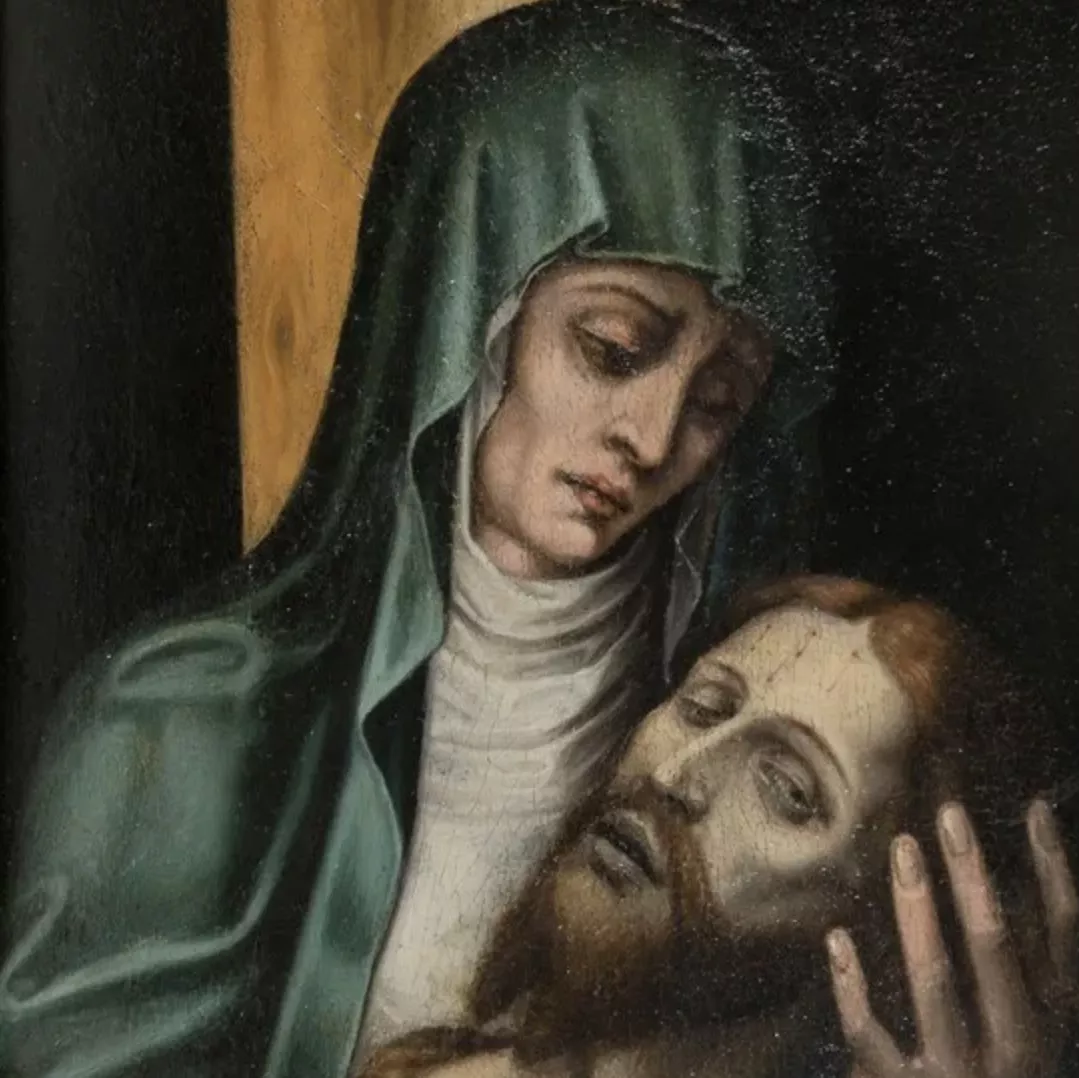
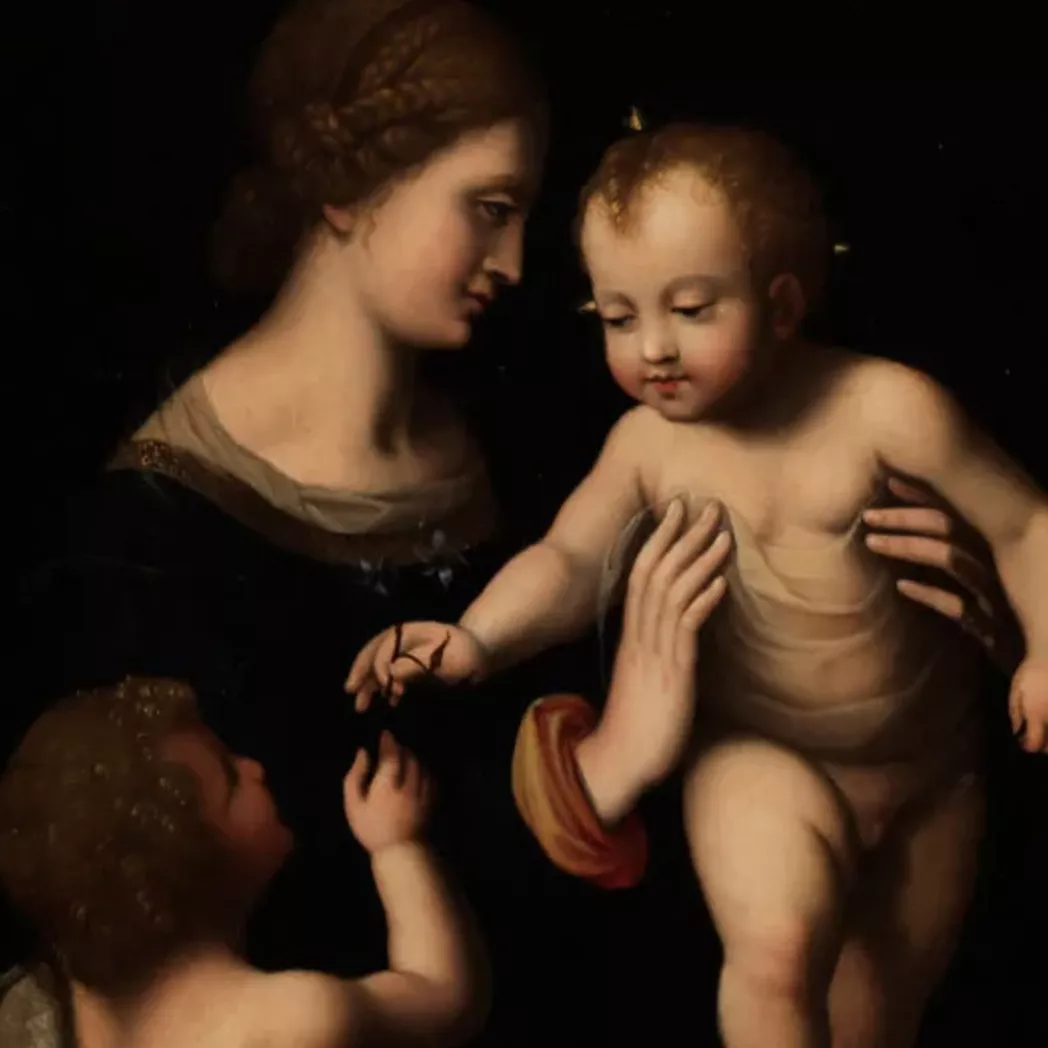
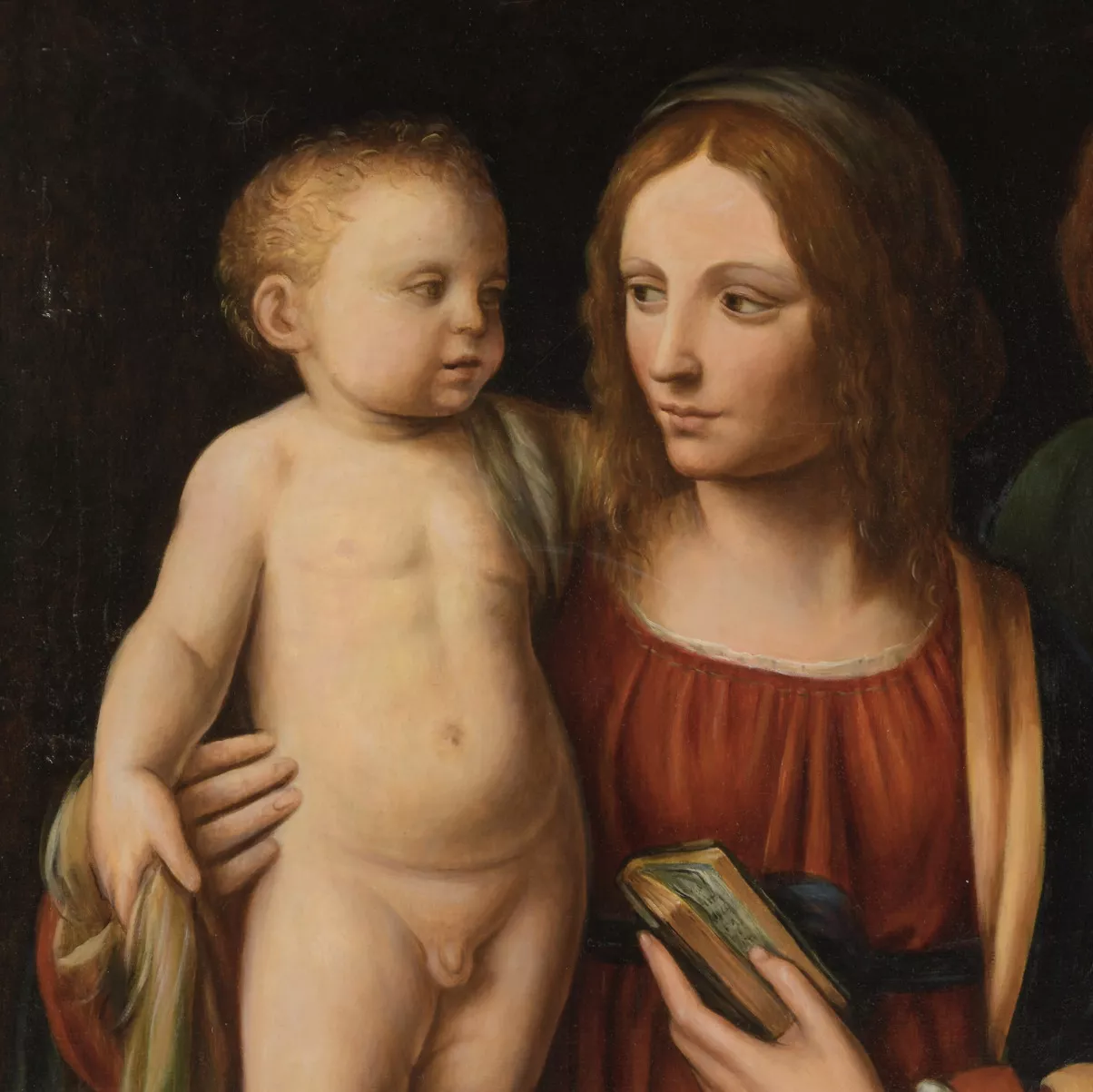
His iconographic domains are all part of religious painting, with Virgins with Child, Madonnas, isolated saints and mural fresco cycles. These themes are treated from a devotional and pedagogical perspective.
The figures are idealized, the faces oval, the features regular, and the expressions calm and interiorized. There is no dramatic tension; the artist gives precedence to serenity and piety.
The compositions are clear, balanced and frontal. The spatial organization is simple, favoring the legibility of the religious message. Figures are arranged in stable, often pyramidal patterns.
Spaces are shallow, with no spectacular illusionist intent. Backgrounds are often neutral or lightly landscaped. The space serves as a frame for the figure rather than an autonomous subject.
The light is soft and diffuse, with an absence of violent contrasts. The light envelops the figures and reinforces their spiritual dimension. The palette is harmonious and moderate, with deep blues, muted rogues, soft greens and warm skin tones.
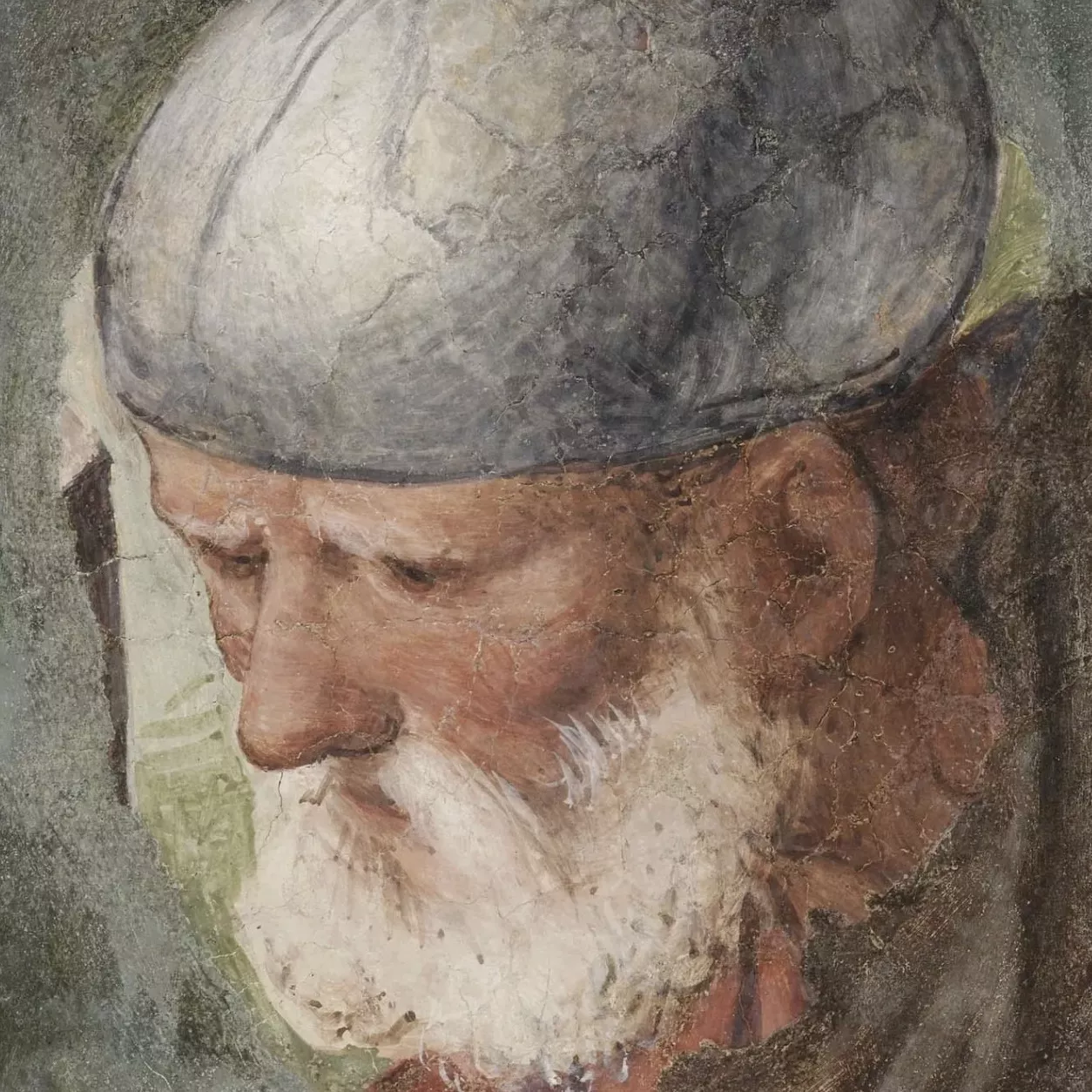
Color is used to support form and emotion, not for stand-alone decorative effect. He mainly uses oil on panel, sometimes on canvas at the end of his career. He also created frescoes for mural commissions (churches, convents). The technique is mastered, without formal experimentation.
He makes measured use of sfumato, inherited from Leonardo. Contours are slightly blurred, avoiding any linear harshness.
The life of Bernardino Luini
Bernardino Luini was born around 1480 in Dumenza, near Lake Maggiore in Lombardy. He came from a local artisanal and artistic background, conducive to learning painting. He initially trained in Lombardy, probably in Milan.
He assimilated early on the legacy of Leonardo da Vinci, active in Milan from 1482. He acquired Leonardo's influence through direct observation of the works, by frequenting the Milanese artistic milieu, and by circulating drawings and models.
He was active from the beginning of the 16th century. His early works are marked by a strong stylistic proximity to Leonardo. He quickly established himself as a painter appreciated for the softness and legibility of his compositions.
He worked mainly in Milan, Saronno, Lugano and various Lombard cities. He carried out numerous religious commissions for churches, convents and brotherhoods. He participated in major decorative mural cycles.
The frescoes at the Sanctuary of Santa Maria dei Miracoli in Saronno (c. 1525-1530), considered one of his masterpieces. He produced numerous Madonnas and Virgins with Child, now in public and private collections.
Luini did not seek radical innovation, but played an essential role in disseminating the Leonardian language to a wider public, and developed a personal style based on gentleness and clarity. He ran an active workshop, responding to sustained demand.
He sometimes worked in collaboration with assistants, which explains the complexity of his assignments. His output was substantial, and of variable quality depending on the degree of intervention of the master.
He continued to receive commissions until the early 1530's. His style evolved little, remaining faithful to his initial principles. He was long confused with Leonardo da Vinci or his close circle, particularly in the 19th century.
Market segmentation and artist's rating
The artist's market is extremely restricted for autograph works. The supply is dominated by studio works, circle works and works by leonardizing Lombard followers. Autograph paintings are extremely rare in public sales.
Painting on panel (oil on wood) has historically been the core segment. Works on canvas are marginal and late. The market for drawings is virtually non-existent at public auction, with the majority held in institutional collections.
Autographs are not very present on the market and are mainly held in museum collections. Bernardino Luini's workshop is the most highly valued segment that is really accessible, and there is strong institutional and private demand.
Works attributed to Luini's circle or as a follower are part of a majority segment, with values highly dependent on quality and stylistic proximity.
Madonnas and Virgins with Child are the most sought-after segment. Isolated saints and half-figures belong to an intermediate market. Complex narrative scenes are rarer, and in a narrower market.
Medium formats (40 - 80 cm) are the most sought-after and compatible with private devotion. Large-format altarpieces are extremely rare on the market.
The major valuation criteria are the level of attribution, pictorial quality and consistency with the recognized corpus, original support, state of preservation and historical provenance.
To sum up, the market is structurally bullish for museum-quality Leonardo painters, with an extreme polarization of prices according to attribution, mirroring other artists of the same period such as Simon Vouet, Lucas Gassel or Rachel Ruysch.
Recognizing the artist's signature
Bernardino Luini very rarely signed his works. That's why, if you think you own one, expertise is vital.
Know the value of a work
If you happen to own a Bernardino Luini work, request a free appraisal without further delay via our form on our website.
A member of our team of experts and licensed auctioneers will contact you promptly to provide you with an estimate of the value of your work, as well as any relevant information about it.
If you are considering selling your work, you will also be accompanied by our specialists in order to benefit from alternatives for selling it at the best possible price.
.Estimate in less than 24h
Discover in the same theme

Rating and value of works, drawings, paintings by Lavinia Fo...
Lavinia Fontana is a 17th-century painter who produced many oil paintings. She is highly rated and sought-after at auction.
Learn more >

Rating and value of paintings by Antonio Tempesta
Antonio Tempesta is an Italian Mannerist painter who produced works that are listed and valued on the auction market.
Learn more >

Rating and value of drawings and paintings by Jacopo Zucchi
Jacopo Zucchi is a Mannerist painter whose paintings and drawings command high prices at auction.
Learn more >
Other paintings from the same period sold at auction

Estimated 1.000 - 2.000
Early 17th-century Flemish school, after Luca Longhi (Ravenna 1507-1580 Ravenna) or Barbara Longhi (Ravenna 1552 - 1638 Ravenna) Virgo Lactans Oil on panel (parquetage)

Estimated 300 - 500
Surroundings of Hieronymus Francken (Herentals 1578-1628 Paris) The Circumcision of Our Lord Jesus Christ Oil on panel

Estimated 1000€ - 2000€
Jan Jansz. Van der Stoffe (Leiden 1611-1682 Leiden)...

Estimated 3000€ - 5000€
Attributed to Simon de Vlieger (Rotterdam 1601-1653 Weesp)...

Estimated 1700€ - 2000€
Claude Vignon (Tours 1593-1670 Paris) The Crucifixion of...

Estimated 150€ - 200€
Jacques CALLOT (1592 - 1635) First interlude :...

Secure site, anonymity preserved

Auctioneer approved by the State

Free and certified estimates
Frequently asked questions
-
Who was Bernardino Luini, and what was his artistic context?Bernardino Luini (1480/85–1532) was a leading painter of the Lombard Renaissance, active primarily in Milan. He was part of the Leonardo school without being a mere imitator, assimilating Leonardo da Vinci’s principles (the softness of the faces, sfumato, harmonious composition) while developing a personal style based on clarity and serenity. He established himself as one of the key figures in bringing the Leonardo style to a wider audience, specializing in religious painting.
-
What is the price range for works by Bernardino Luini?Bernardino Luini’s paintings and drawings sell for between €1,600 and €1,800,000, with a wide range reflecting the level of attribution and quality. Drawings generally range from €30,000 to €40,000, while paintings—particularly Madonnas and Virgins with the Child—constitute the highest-valued segment. This variation depends heavily on the attribution status (autograph, workshop, circle, or follower).
-
How can you authenticate a work by Bernardino Luini?Bernardino Luini very rarely signed his works, which makes expert appraisal essential. We recommend that you request a free, no-obligation appraisal via our online form. A certified expert or auctioneer will examine your artwork and provide you with a detailed appraisal within 48 hours, taking into account attribution criteria, pictorial quality, and provenance.
-
Is this the right time to sell a work by Bernardino Luini?Yes, the market for high-quality Leonardo-style painters is structurally bullish, particularly for Madonnas and Virgins with the Child, the most sought-after segment. Institutional and private demand remains strong, particularly for studio-produced works and those of museum quality. Our specialists will identify the best time and the optimal approach to sell your work at the best price.
-
How does the appraisal and sale process work at Auctie's?The appraisal is free and non-binding: simply fill out our online form, and an expert will contact you shortly; you’ll receive a detailed appraisal of your artwork within 48 hours. If you’d like to sell, we’ll guide you every step of the way—from appraisal to auction—and offer you the best options to achieve the highest possible price.
