



Rating and value of paintings by Charles Euphrasie Kuwasseg

Key takeaways
- Charles Euphrasie Kuwasseg, a 19th-century French landscape painter, sees his works sell for between €30 and €31,400, depending on the technique and format.
- Oil-on-canvas paintings constitute the main segment of the market, with medium-sized works (40–70 cm) forming the core of the market and commanding higher prices.
- Demand remains stable and steady in France and Western Europe for Alpine and mountain landscapes, with no marked volatility or speculative trends.
If you own a work by or after the artist Charles Euphrasie Kuwasseg, and would like to know its value, our state-approved experts and auctioneers will offer you their appraisal services.
Our specialists will carry out a free appraisal of your work, and provide you with an accurate estimate of its value on the current market.
Then, should you wish to sell your work, we will direct you to the best possible arrangement to obtain the optimum price.
Rating and value of the artist Charles Euphrasie Kuwasseg
Charles Euphrasie Kuwasseg is a French pstimpressionist painter who follows in the footsteps of the 19th-century marine painters. He is also an engraver and lithographer, and his works are appreciated on the auction market.
The price at which these are sold ranges from €30 to €31,400, a substantial delta but one that speaks volumes about the value that can be attributed to Kuwasseg's works.
The oil on canvas Venice, dating from 1869, sold for €31,400, whereas it was estimated at between €21,400 and €28,500.
Order of value from a simple work to the most prestigious
Technique used | Result |
|---|---|
Miniature | From €160 to €1,500 |
Drawing - watercolor | From €30 to €1,600 |
Painting | From €80 to €31,400 |
Estimate in less than 24h
Artist's style and technique
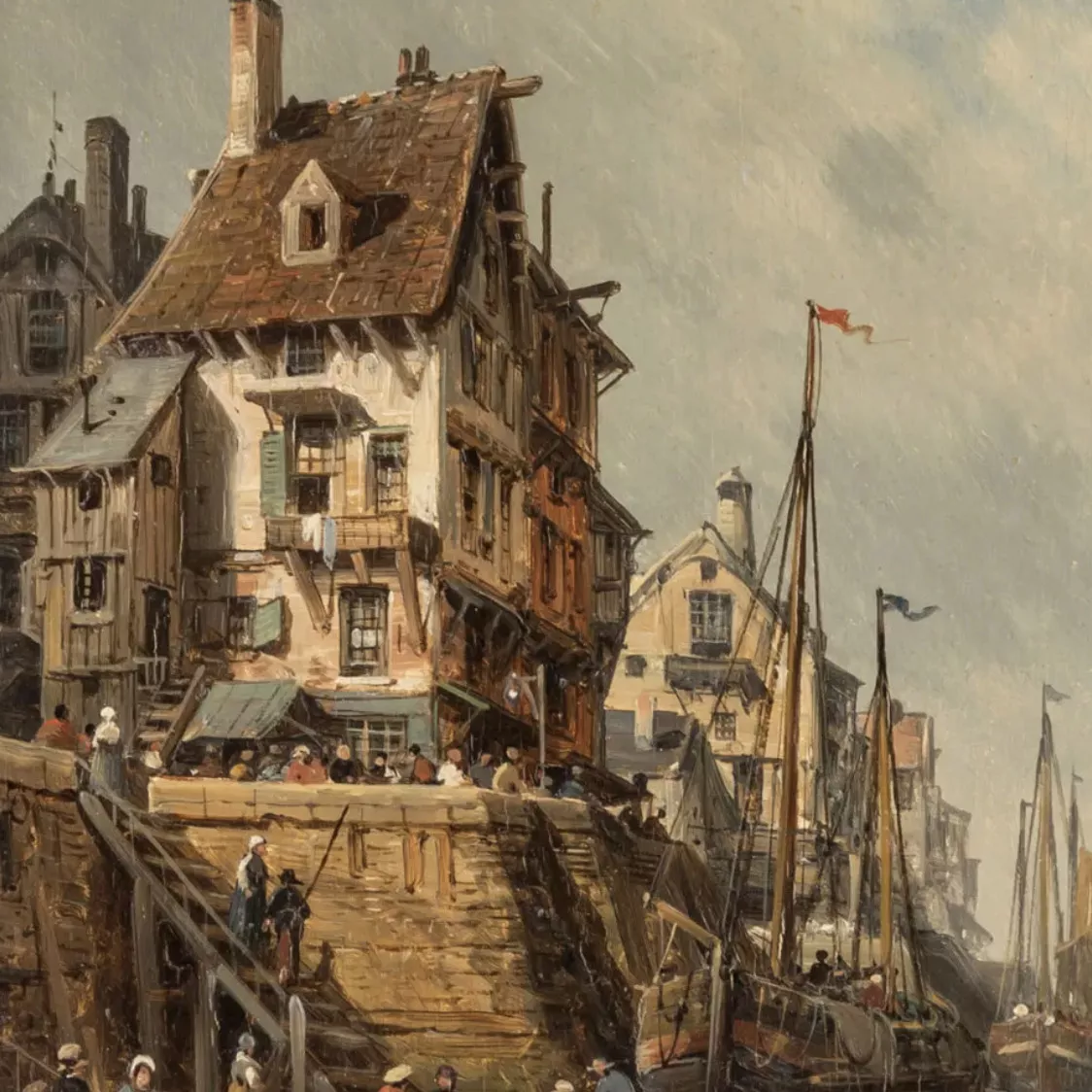
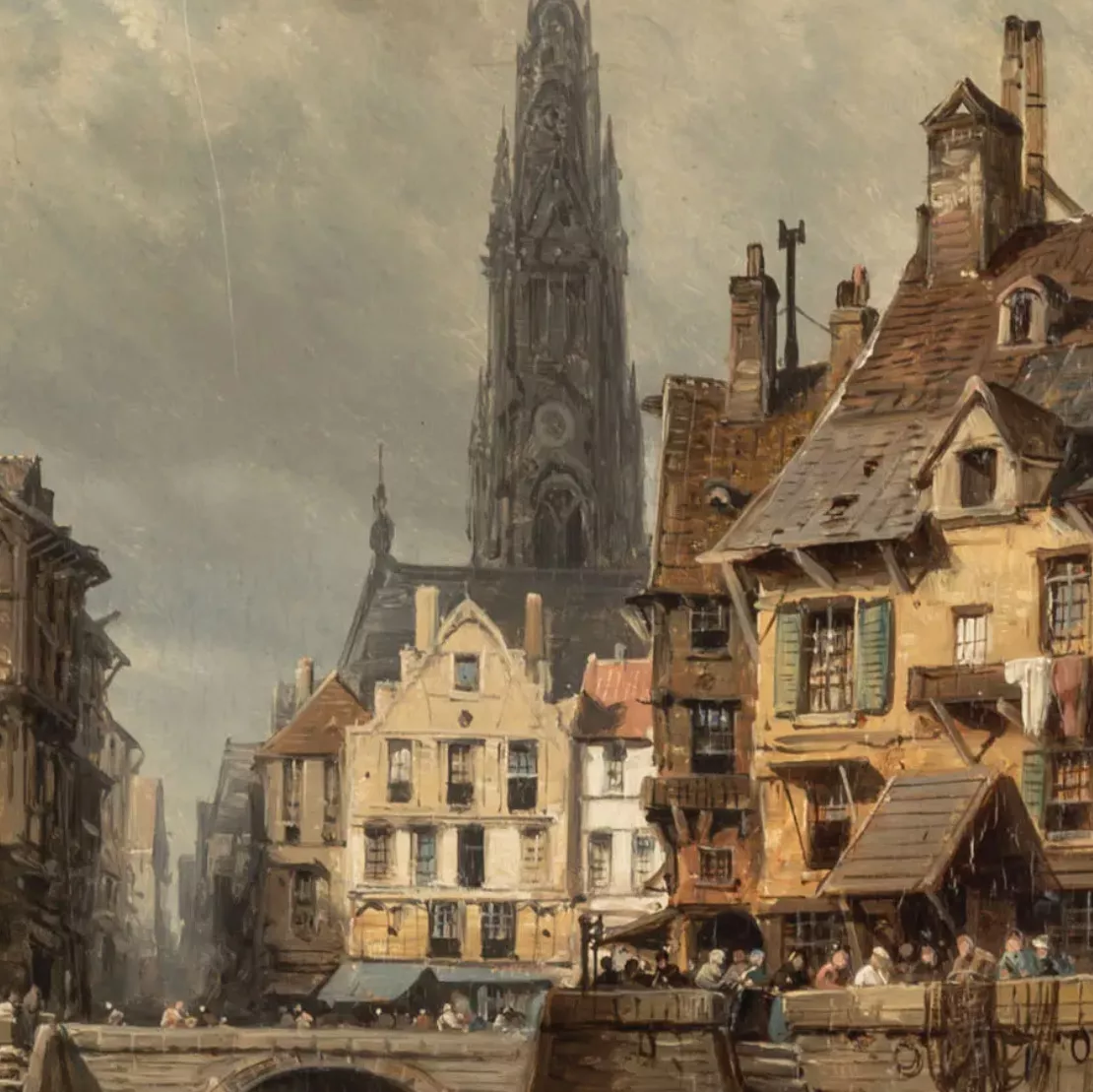
Charles Euphrasie Kussaweg was a 19th-century French landscape painter. He was part of the late-Romantic landscape tradition, with an assertive naturalist sensibility.
His work lies at the crossroads of landscape Romanticism and descriptive realism aimed at a bourgeois clientele. The dominant themes are alpine and pre-alpine landscapes, valleys, rivers, waterfalls, animated skies and atmospheric effects, scenes of idealized nature.
His representations are rarely animated with figures. Landscape is conceived as an autonomous subject, without historical or mythological narrative. Nature is depicted as a grand, ordered spectacle, with an idealized yet credible vision based on observation.
He seeks a balance between topographical fidelity and political effect. His compositions are structured in successive planes, with an intermediate plane that structures the space and a luminous or mountainous background.
Kussaweg makes frequent use of diagonal lines (rivers, paths) to guide the eye. The organization is classic, inherited from academic landscape painting. Luminous and atmospheric effects are important, with changing skies, reflections on water and contrasts between shaded and illuminated areas.
His palette is rich but controlled, with deep greens, nuanced blues and grays, ochre browns for soil and rocks. His brushwork is controlled and relatively smooth, without excessive impasto.
He superimposes thin layers to build depth and atmospheric transitions. The pictorial material is measured, serving the legibility of the motif. There is no visible gesture or expressive facture.
The drawing is precise and structures the composition before coloring. He is influenced by the European Romantic landscape tradition (German and Austrian schools) but also by the heritage of 19th-century French landscape painting.
The life of Charles Kuwasseg
Charles Euphrasie Kuwasseg (1833 - 1904) was born in Draveil, Essonne. He came from a family of Austrian origin, which explains certain aesthetic affinities with the Central European landscape. The cultural context was marked by the rise of landscape painting as an autonomous genre in the 19th century.
He trained as a painter in France, within an academic framework. He was influenced by the teaching and heritage of Romantic and Naturalist landscape painting. He assimilated classical principles of composition, drawing and atmospheric rendering.
He began exhibiting in the mid-19th century, and regularly took part in the Paris Salon, the main vehicle for official recognition at the time. He soon specialized in landscapes, which became the central focus of his career.
He was appreciated by a bourgeois and institutional clientele for his legible, decorative landscapes. He achieves official recognition through his repeated presence at Parisian exhibitions, and is appreciated along with other landscape artists such as Lazare Bruandet, Paulin Bertrand or Albert Gabriel Rigolot.
His landscape output is abundant, with alpine and pre-alpine valleys, rivers, waterfalls and mountain scenes, and idealized landscapes of European inspiration. His work was designed to meet a sustained demand in the 19th-century landscape market.
He worked in a context in which landscape was becoming a major genre, valued both artistically and commercially. He positioned himself on the bangs of the emerging avant-gardes, while retaining a modernity moderated by attention to light and atmosphere.
He continued to work until the end of the century, and is today recognized as a representative landscape painter of 19th-century France. His works are held in public and private collections.
Market segmentation and artist's rating
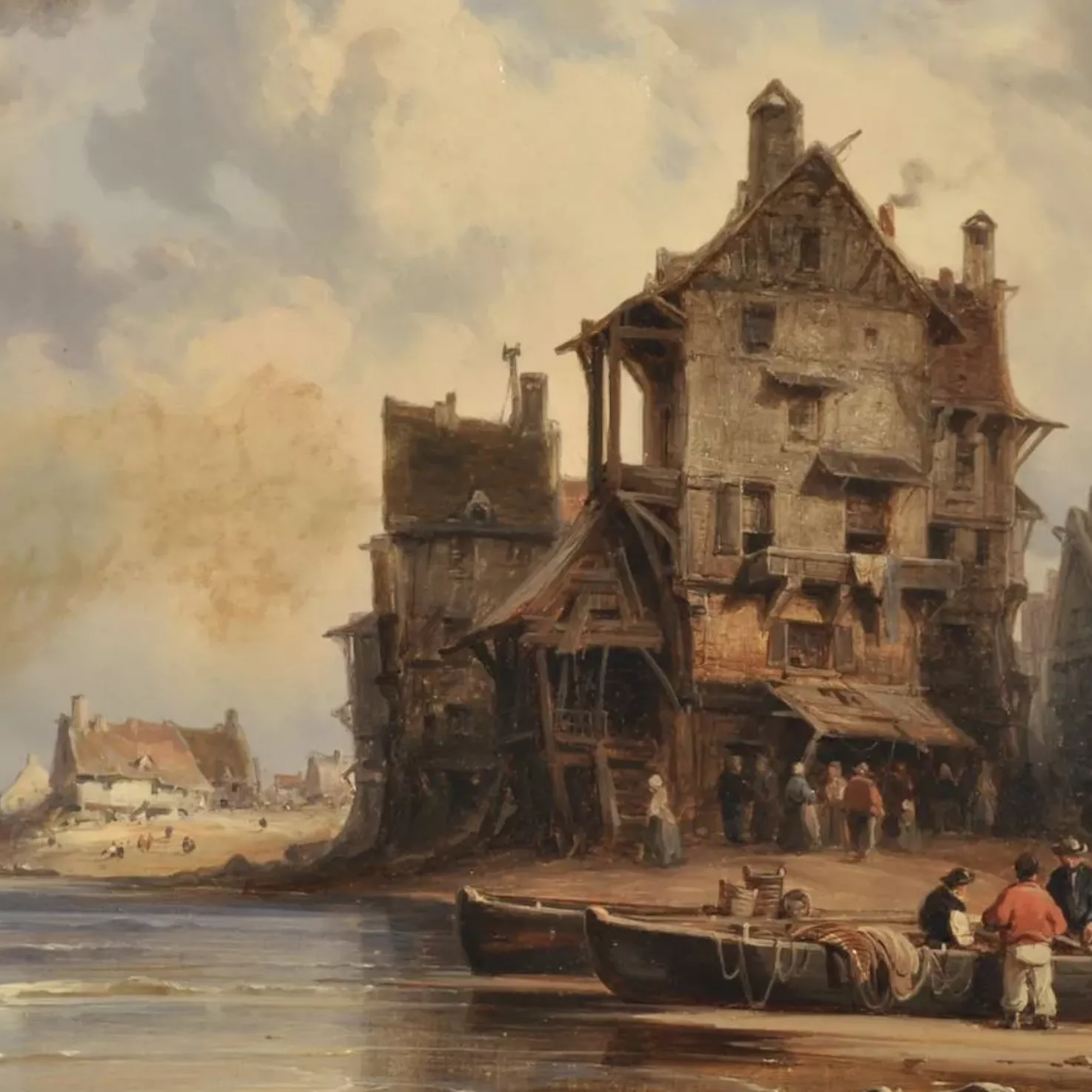
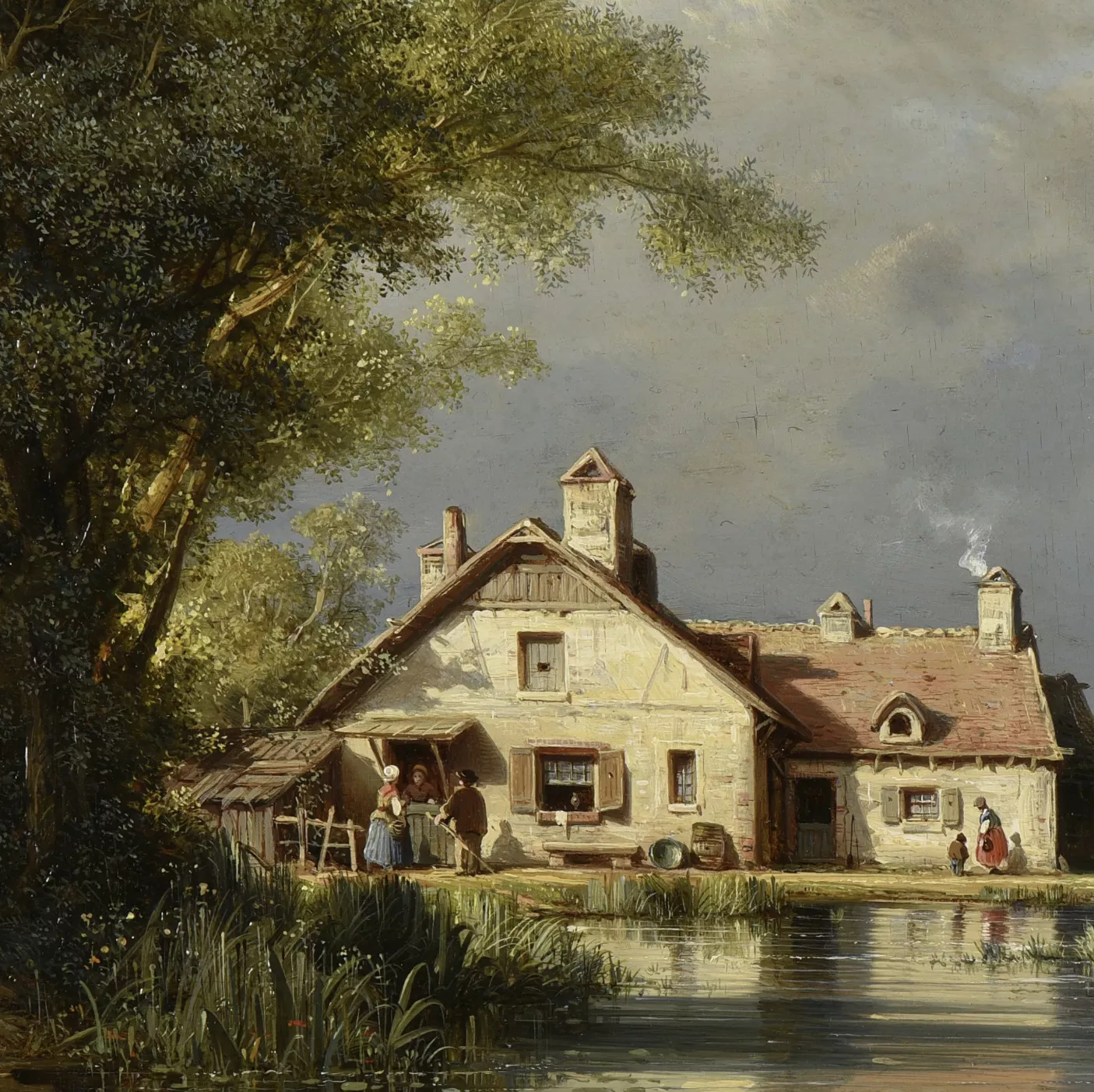
For Charles Kuwasseg's body of work, oils constitute the main and almost exclusive market segment. Oils on panel are rarer and often of small format. Drawings and graphic works are very rare and form part of a marginal market.
The dominant subjects are alpine and pre-alpine landscapes, rivers and idealized landscapes without figures. Mountain and river scenes are the most sought-after. Small formats (20 - 35 cm) are an entry-level market with high turnover.
Medium formats (40 - 70 cm) form the core of the market, with better value. Large formats over 80 cm are rarer, in a more selective market but with possible premiums.
Valuation criteria are the quality of the composition in planes and the depth of the landscape, atmospheric effects (sky, light, water), state of preservation (cracks, visible restorations), legible signature and provenance.
The market is located mainly in France in generalist sales, but also in Western Europe (Switzerland, Germany, Austria) with regular interest in Alpine landscapes.
The market is stable and regular, with no marked volatility. Demand is steady for mountain and water landscapes, easily integrated into contemporary interiors. There is no speculative dynamic, but good liquidity for well-presented works.
Charles Euphrasie Kuwasseg thus occupies a solid intermediate segment of the 19th-century landscape painting market. Medium-format oils on canvas form the core of the quotation.
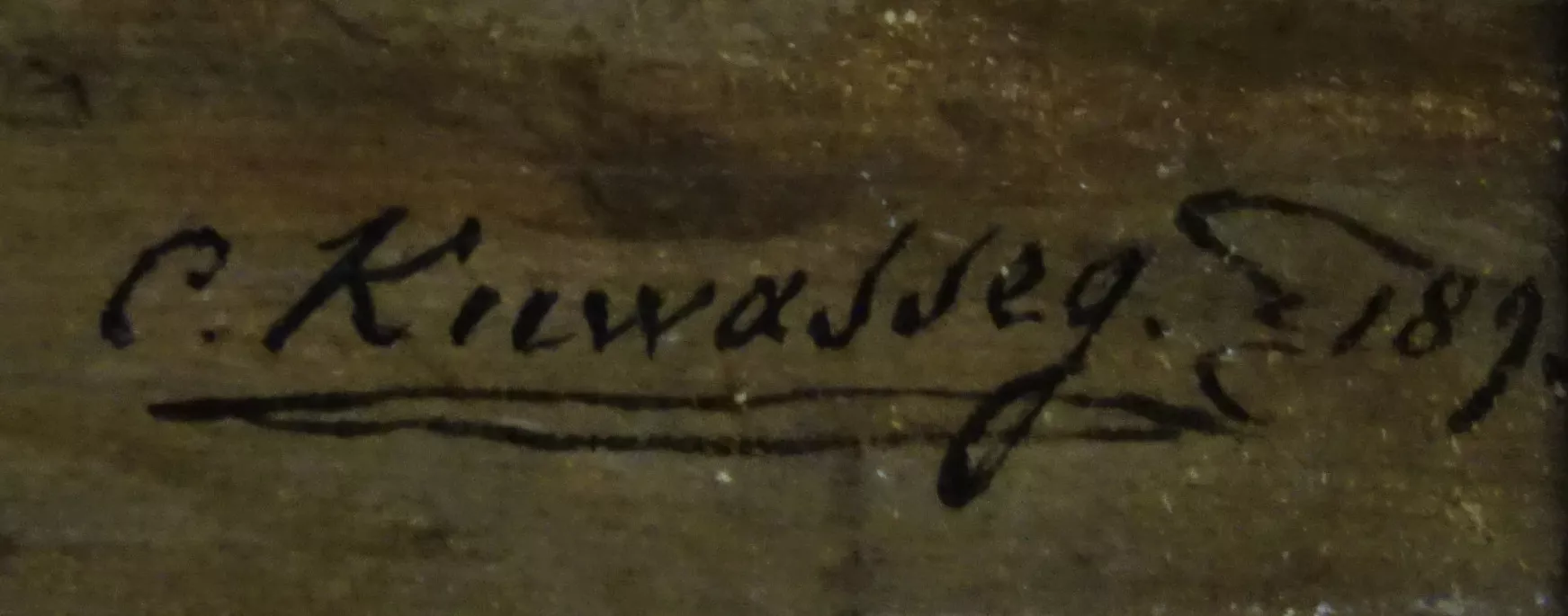
Recognizing the artist's signature
Charles Euphrasie Kuwasseg signs at the bottom of his canvases with his name in all lower-case letters. In some works, he also inscribes the date
.
How to find out the value of a work
If you happen to own a work by Charles Euphrasie Kuwasseg, request a free valuation without further delay via our form on our website.
A member of our team of experts and licensed auctioneers will contact you promptly to provide you with an estimate of the value of your work, as well as ad hoc information about it.
If you are considering selling your work, you will also be accompanied by our specialists in order to benefit from alternatives for selling it at the best possible price.
.Estimate in less than 24h
Discover in the same theme

The value of Benedict Masson's paintings and drawings
Rating and value of the artist Bénédict Masson, an artist belonging to the French school of the 19th century.
Learn more >

Rating and value of paintings by Charles Olivier de Penne
Charles Olivier de Penne is a nineteenth-century painter who produced works that are highly regarded and valued at auction. Estimate in 24h.
Learn more >

Rating and value of sculptures and bronzes by Antonin Mercié
Antonin Mercié is a 19th-century neoclassical sculptor whose works are highly prized at auction.
Learn more >
D'autres tableaux modernes figuratifs vendus aux enchères

Estimated 800 - 1.500
Jean Roger SOURGEN (1883-1978) Trees and dunes Oil on panel

Estimated 3.000 - 5.000
Georges LAPCHINE (1885-1951) The port of St Tropez Oil on canvas

Estimated 18.000 - 30.000
Charles CAMOIN (1879-1965) "Le Port de Marseille, 1928" Oil on canvas.

Estimated 1.500 - 3.000
Jean VANDEN EECKHOUDT (1875-1946), Basket of persimmons, Oil on canvas

Estimated 2.000 - 4.000
Charles LACOSTE (1870-1959) Starry night, Oil on paper mounted on canvas

Secure site, anonymity preserved

Auctioneer approved by the State

Free and certified estimates
Frequently asked questions
-
Who was Charles Euphrasie Kuwasseg, and what was his artistic style?Charles Euphrasie Kuwasseg (1833–1904) was a 19th-century French painter who specialized in romantic and naturalist landscapes. Of Austrian origin, he distinguished himself through his depictions of Alpine and pre-Alpine landscapes, rivers, and waterfalls, emphasizing topographical accuracy and atmospheric effects. His work, created for a bourgeois clientele, straddled the line between academic tradition and moderate modernity, without aligning with the avant-garde movements of his time.
-
What are the prices and price ranges for works by Charles Euphrasie Kuwasseg?Kuwasseg's works range in price from €30 to €31,400. Miniatures range from €160 to €1,500, drawings and watercolors from €30 to €1,600, and paintings from €80 to €31,400. Medium-sized oil-on-canvas paintings form the core of the market and command the highest prices. Factors such as composition, atmospheric effects, condition, and provenance significantly influence value.
-
How can a work by Charles Euphrasie Kuwasseg be authenticated and appraised?To authenticate a work of art and determine its exact value, we recommend that you request a free, no-obligation appraisal from Auctie's. Our team of experts and state-certified auctioneers will examine your artwork and provide you with a detailed appraisal within 48 hours, including relevant information regarding its authenticity and current market value.
-
Is this the right time to sell a work by Charles Euphrasie Kuwasseg?Yes, now is a good time to sell. The market for Kuwasseg landscapes is stable and steady, with consistent demand for its alpine and riverside scenes, which blend easily into contemporary interiors. It benefits from good liquidity and a lack of volatility, ensuring a secure sale at a fair price.
-
How does the sale of a work of art work at Auctie's?Auctie's supports you every step of the way: a free, no-obligation appraisal by our experts, followed by guidance on the best sales strategy to achieve the optimal price. Our licensed auctioneers manage the entire process through to the auction, ensuring maximum visibility and interest in your artwork on the auction market.
