



Rating and value of drawings and paintings by Paul Gauguin

Key takeaways
- Paul Gauguin’s works sell for between €10 and €91.7 million at auction, with his painting “Maternité II” selling for €91.7 million in 2022.
- His Tahitian and Marquesan paintings (1891–1903) are worth two to three times as much as his European works, representing the pinnacle of his artistic output.
- Complex figurative compositions featuring a fully developed Symbolist iconography command prices exponentially higher than his studies, with some exceeding 50 million euros.
Paintings and drawings by Paul Gauguin trade up to €91,746,540 on the auction market. An appraisal enables us to accurately determine the price of your work by Paul Gauguin on the current market and to optimize, if necessary, the sale of a work.
If you own a work by Paul Gauguin and would like to know its value, our state-approved auctioneers will carry out a free appraisal based on authenticity, quotation and recent market results.
Rating and value of the artist
Paul Gauguin is a highly rated post-impressionist artist, his works selling for significant amounts on the auction market.
Today, the prices at which his works are sold on the auction market range between €10 and €91,746,540, a considerable delta but one that speaks volumes about the value that can be attributed to Gauguin's works.
Sought after by collectors, works by Paul Gauguin can fetch tens of thousands of euros at auction, as evidenced by his oil on canvas Maternité II, dating from 1899, sold for €91,746,540 in 2022.
Order of value from the most basic to the most prestigious
Technique used | Result |
|---|---|
Estamp - multiple | From €10 to €625,000 |
Drawing - watercolor | From €90 to €6,614,600 |
Painting | From €100 to €91,746,540 |
Estimate in less than 24h
Situating the artist
Period
Paul Gauguin (1848 - 1903) is part of the second half of the 19th century and the turn towards the 20th century, a period of profound questioning of academic standards and the dominant naturalistic aesthetic.
He had a close and conflicted relationship with Van Gogh, particularly during their cohabitation in Arles, and an intellectual closeness with Émile Bernard, with whom he developed the principles of synthetism and cloisonnism.
He exerted a major influence on the avant-gardes of the early 20th century and occupies a seminal position in the history of modern art.
Currents
Gauguin was initially close to Impressionism in the 1870s - 1880s, but soon broke away, judging this aesthetic to be too attached to sensitive perception and not conceptual enough. His career is marked by geographical and existential ruptures that are inseparable from his artistic project.
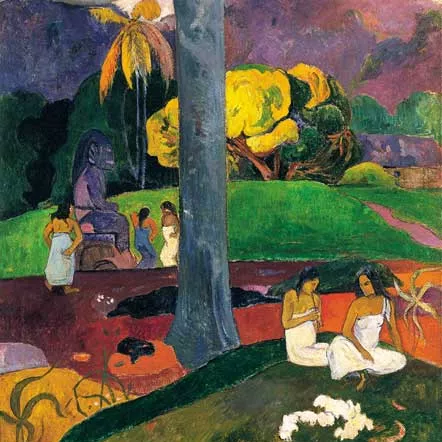
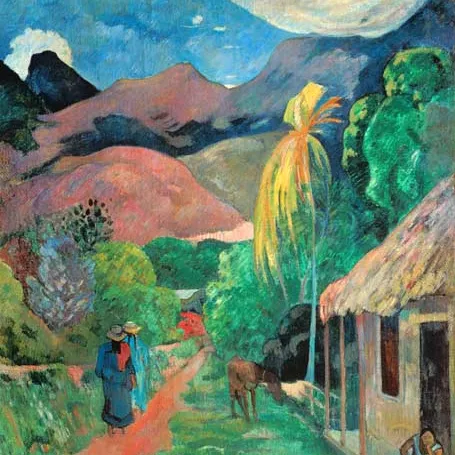
He is a central figure of post-impressionism, understood as a set of approaches aimed at going beyond impressionism through synthesis, subjectivity and the intellectual construction of the image. He is also the founder of synthesism, characterized by flat tints of color, simplified forms and a strong symbolic dimension.
Paul Gauguin's life
Cultural context
Paul Gaguin was born in Paris in 1848 and spent part of his childhood in Peru, a fundamental experience in the construction of his imagination and his relationship with exoticism.
He first pursued a career as a sailor, then as a stockbroker, and gradually turned to painting from the 1870s, at a time of personal and professional rupture. He was close to Impressionism in his early years, but quickly moved away from it to develop an autonomous aesthetic based on the synthesis of forms.
Artistic identity
Gauguin gradually moved towards expressive color and the rejection of naturalism. His move to Brittany, in particular Pont-Aven, marked a decisive stage in the development of his pictorial language, nourished by symbolic and spiritual references.
From the 1890s onwards, he made several trips to French Polynesia, where he sought an art he considered more primitive and freed from Western conventions. His final years, marked by illness, poverty and isolation, took place in the Marquesas Islands, where he died in 1903.

Techniques of the artist
Style of Paul Gauguin
The artist's style is characterized by a clear break with Impressionism, in favor of conceptual painting based on the subjectiivity and symbolic meaning of the image.
He developed synthetism, with the aim of simplifying forms, compartmentalizing colored surfaces and condensing visual perception, emotion and ideas into a unified composition. From then on, color took on an expressive, non-naturalistic function.
Focus on a key work
Where do we come from ? What are we ? Where are we going ?
This is a large-scale composition that Gauguin produced in Tahiti, conceived as a testamentary and synthetic work of his artistic and philosophical thought. In it, he gives a symbolic reading of human existence, structured from right to left, from birth to death.
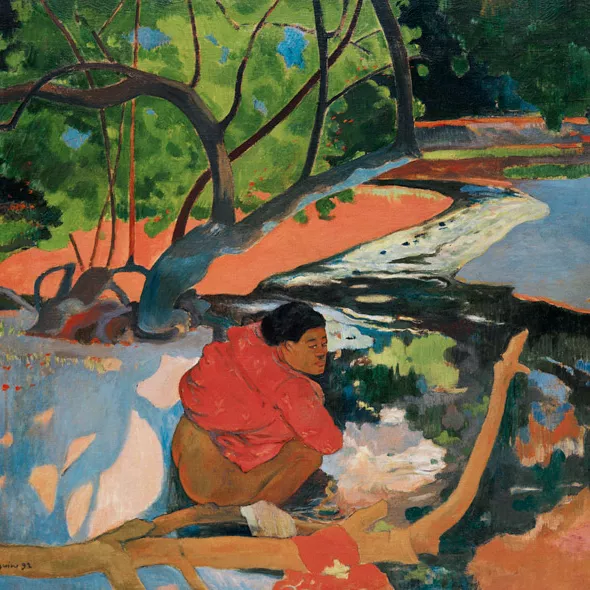
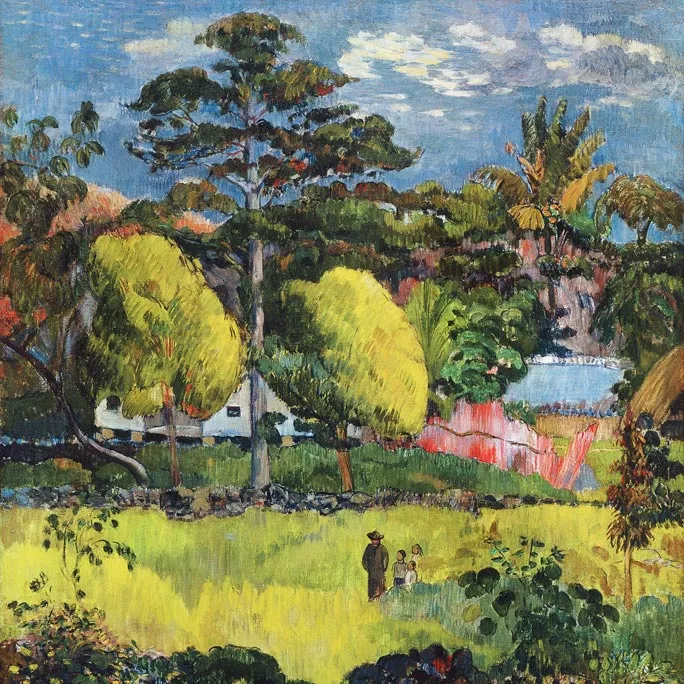
He radically simplifies forms, with extended chromatic flat tints that are characteristic of synthetism, privileging the expression of the idea over the observation of reality. He makes arbitrary use of color.
This work is a manifesto for the rejection of naturalism and academicism, affirming the quest for a primitive, interior and symbolic art.
FAQ : How to estimate a work by Paul Gauguin ?
The estimate begins by identifying the technique used, with an examination of the support and dimensions, dating and signature.
2) What criteria of style and iconography are decisive ?
The analysis focuses on the period of creation, distinguishing in particular Breton works, those produced in Arles and above all Tahitian and Marquesan productions, which are characterized by a stylization of forms and a synthetic construction of space.
3) What importance does the Tahitian period have in the valuation ?
Works produced during the artist's Polynesian sojourns occupy a central place in the assessment of value, due to their rarity, their historical importance in the evolution of modern art and their strong demand on the international market.
Market segmentation and figures
Price of works
Gauguin belongs to a high-level market, dominated by the major international places, his quotation is durably part of the segment blue chip.
Paintings are the most prestigious segment, with auctions frequently between €5 and €50 million, with some masterpieces exceeding this threshold in private sales. Works on paper form part of an active market, with prices generally between €200,000 and €3 million.
Sculptures and woodcuts form part of a smaller, but highly valuable segment with current results between €500,000 and €5 million.
Valuation factors
Complex figurative compositions, which incorporate accomplished symbolist iconography reach exponentially higher price levels than studies or transitional works, sometimes confined to amounts below €500,000.
There is a clear premium for the Tahitian and Marquesan works (1891 - 1903), which are considered the pinnacle of his production, these works can be worth two to three times more than the European works from the Breton and Parisian periods.
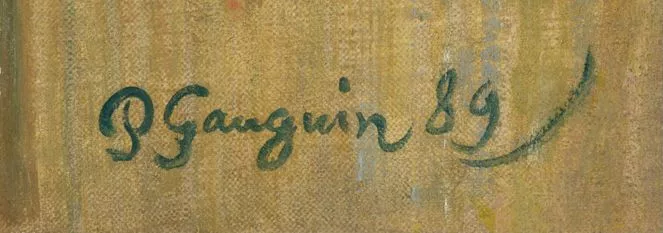
His signature
Not all of Paul Gauguin s works are signed.
Although there are variations, here is a first example of his signature:
Have your work appraised by Paul Gauguin
If you own a work by Paul Gauguin, an appraisal can help you appreciate its value on today's market.
From our online form, our experts and certified auctioneers carry out a free appraisal and provide you with a reliable estimate of your work's market value.
If you're considering selling it, we'll work with you to ensure it fetches the best value.
Estimate in less than 24h
Discover in the same theme

Rating and value of works, paintings, drawings by Alfred Rol...
Alfred Roll was a 19th-century realist painter of landscape scenes and portraits. His works have a stable, high rating.
Learn more >

Rating and value of Raymond Sudre's sculptures, bronzes and...
Raymond Sudre is a French academic sculptor who has produced many works that are highly regarded and valued at auction.
Learn more >

Rating and value of marines paintings by Hendrik Willem Mesd...
Hendrik Willem Mesdag was a marine painter associated with the Hague School, who produced numerous paintings that fetch high prices at auction.
Learn more >
D'autres tableaux modernes figuratifs vendus aux enchères

Estimated 800 - 1.500
Jean Roger SOURGEN (1883-1978) Trees and dunes Oil on panel

Estimated 3.000 - 5.000
Georges LAPCHINE (1885-1951) The port of St Tropez Oil on canvas

Estimated 18.000 - 30.000
Charles CAMOIN (1879-1965) "Le Port de Marseille, 1928" Oil on canvas.

Estimated 1.500 - 3.000
Jean VANDEN EECKHOUDT (1875-1946), Basket of persimmons, Oil on canvas

Estimated 2.000 - 4.000
Charles LACOSTE (1870-1959) Starry night, Oil on paper mounted on canvas

Secure site, anonymity preserved

Auctioneer approved by the State

Free and certified estimates
Frequently asked questions
-
Who was Paul Gauguin, and what is his significance in art history?Paul Gauguin (1848–1903) was a major Post-Impressionist artist who founded Synthetism and Cloisonnism. A central figure in modern art, he broke away from Impressionism to develop an aesthetic based on expressive color, the simplification of forms, and symbolism. His stays in French Polynesia, particularly in Tahiti and the Marquesas Islands, marked the peak of his career and profoundly influenced the avant-garde movements of the 20th century.
-
What are the average prices of Paul Gauguin's works at auction?Gauguin’s works sell for between €10 and €91,746,540, depending on the medium and historical significance. Paintings, the most prestigious category, generally fetch between 5 and 50 million euros; drawings and watercolors range from €200,000 to €3 million; prints from €10 to €625,000. Works from Tahiti and the Marquesas Islands are worth two to three times as much as those from his European period.
-
How can you authenticate a work by Paul Gauguin and determine its exact value?To authenticate and appraise a work by Gauguin, the best course of action is to request a free appraisal from state-certified auctioneers. Our experts assess authenticity by examining the technique, medium, dimensions, date, and signature, then determine the value based on recent market results and criteria such as the period of creation and iconography.
-
Why are Gauguin's Tahitian works more highly valued?Gauguin’s Tahitian and Marquesan works (1891–1903) are considered the pinnacle of his career. They are characterized by a radical stylization of forms and a highly accomplished synthetic composition, and are in high demand on the international market due to their rarity and their fundamental historical significance in the evolution of modern art.
-
What is the process for selling a work by Paul Gauguin at Auctie's?Auctie's supports sellers every step of the way: a free, no-obligation appraisal conducted by experts within 48 hours, followed by an auction to ensure the best possible value. Our certified auctioneers conduct a reliable appraisal based on authenticity, current market value, and an analysis of the international market for Gauguin’s works.
