



Rating and value of artists and objects by Ernest Baptiste Leveillé

Key takeaways
- Glassware by Ernest Baptiste Leveillé sells for between €30 and €27,460 at auction, with red pieces being particularly sought after.
- In 2023, a patterned vase dating from 1900 exceeded its estimate, selling for €27,460 instead of the projected €9,000 to €13,000.
- Glass vases decorated with floral and naturalistic motifs, characteristic of Art Nouveau, are the pieces most sought after by collectors.
Ernest Baptiste Leveillé’s paintings and glassworks sell for up to €27,460 at auction. An appraisal allows us to accurately determine the current market value of your Ernest Baptiste Leveillé artwork and, if applicable, optimize the sale of the piece.
If you own a work by Ernest Baptiste Leveillé and would like to know its value, our state-certified auctioneers will provide a free appraisal based on authenticity, market rating, and recent market results.
Market Value and Appraisal of Works by Ernest Baptiste Leveillé
Ernest Baptiste Leveillé is a French artist well known among crystal enthusiasts. If you own one of his works, its value may be higher than you think. On the art market, prices for Leveillé’s works can reach very high levels at auction.
His glass vases are particularly prized by French and American buyers, and the prices at which they sell on the art market range from €30 to €27,460—a fairly significant gap, but which speaks volumes about the value that can be attributed to the works of Ernest Baptiste Leveillé.
In 2023, a large vase with predominantly red motifs dating from 1900 sold for €27,460, while it had been estimated at between €9,000 and €13,000.
A range of values from a simple piece to the most prestigious
Object | Result |
|---|---|
Glass | From €30 to €27,460 |
Estimate in less than 24h
Placing the Artist in Context
Period
Ernest Baptiste Leveillé (1841–1913) was active during the revival of the decorative arts in France. His career flourished during the Belle Époque, a period marked by a boom in experimentation with glass arts, decorative design, and objets d’art.
He was part of a phase in which the boundaries between craftsmanship, decorative art, and artistic creation were being redefined.
Artistic Movements
Leveillé’s body of work is part of the fin-de-siècle decorative arts and is part of the movement to reevaluate the applied arts as an autonomous field of creation. It shares affinities with Art Nouveau through its taste for naturalistic motifs and the decorative integration of line.
He contributed to the development of art glass as an artistic medium, at the intersection of technique, ornamentation, and formal exploration. He frequently employed floral, botanical, or organic motifs characteristic of late-19th-century glasswork.
This context is shared with artists such as Émile Gallé and René Lalique, for whom glass became a medium for both aesthetic and technical experimentation.
The Life of Ernest Baptiste Leveillé
Cultural Context
Born in 1841, Leveillé was part of the revival of the decorative arts in 19th-century France, a period marked by the rise of the arts and crafts industries and a renewed appreciation for artisanal skills.
He established himself as a glassmaker, contributing to a technical and artistic tradition in which glasswork combined masterful craftsmanship with aesthetic exploration. His artistic milieu was shaped by stylistic shifts ranging from decorative naturalism to the early stages of Art Nouveau, a movement characterized by an emphasis on line and ornamentation.
He contributed to the production of objects and decorative elements in which transparency, color, and light played a defining role in the perception of form.
Artistic and Intellectual Circle
His career unfolded within the circle of 19th-century artisans and glassmakers, in dialogue with major manufacturers and workshops specializing in glasswork.
He worked within a context shaped by the explorations of designers such as Émile Gallé and René Lalique, major figures in the revival of decorative glass in France.
World’s fairs and decorative arts exhibitions served as essential platforms for showcasing and gaining recognition for this type of work, facilitating the spread of designs and technical innovations.

The Artist's Techniques
Ernest Baptiste Leveillé’s Style
The artist’s work focuses on decorative glass, combining artisanal craftsmanship with aesthetic exploration. He employs a variety of techniques—including blown, engraved, and enameled glass—to create a rich array of textures and patterns. He displays a preference for naturalistic motifs (plants, flowers, stylized landscapes) characteristic of the fin-de-siècle sensibility.
He places particular emphasis on transparency and the play of light, utilizing the material for its optical qualities. His colorful palette is achieved by incorporating pigments into the glass mass or by applying enameled decorations.
Spotlight on a Key Work
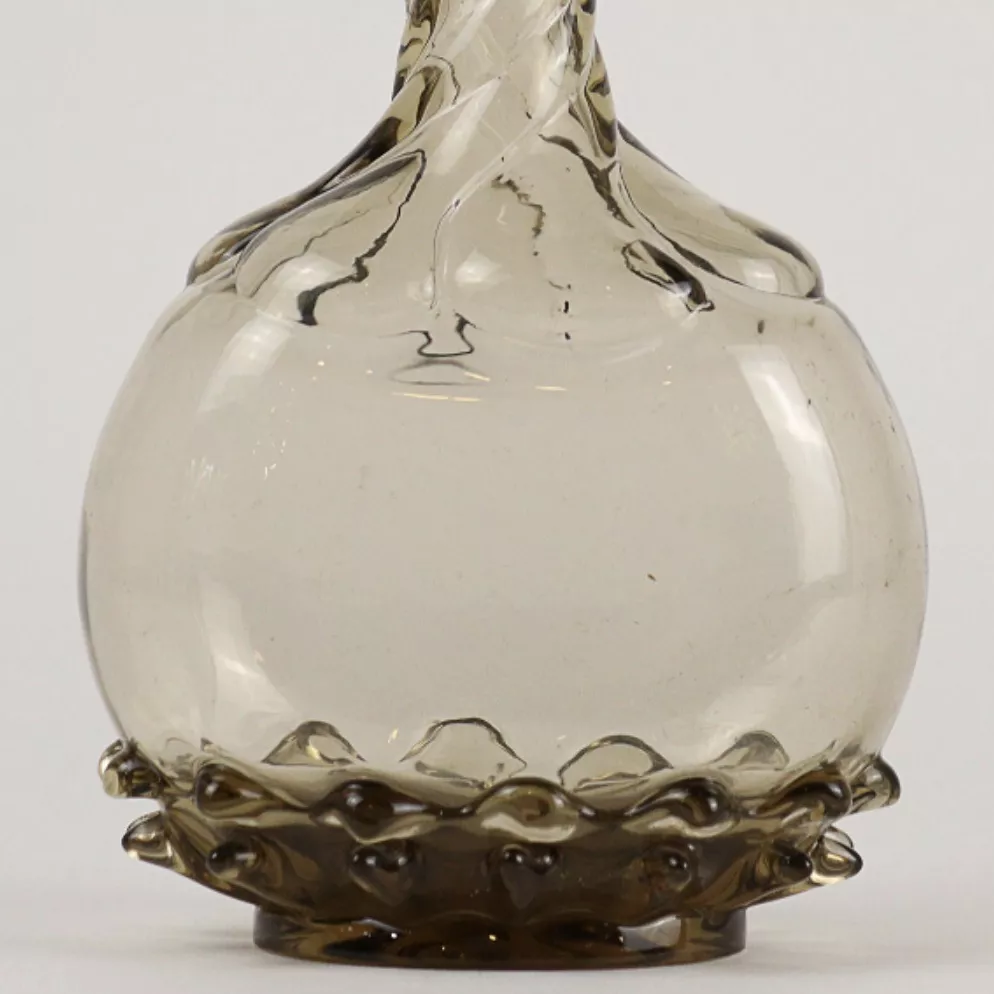
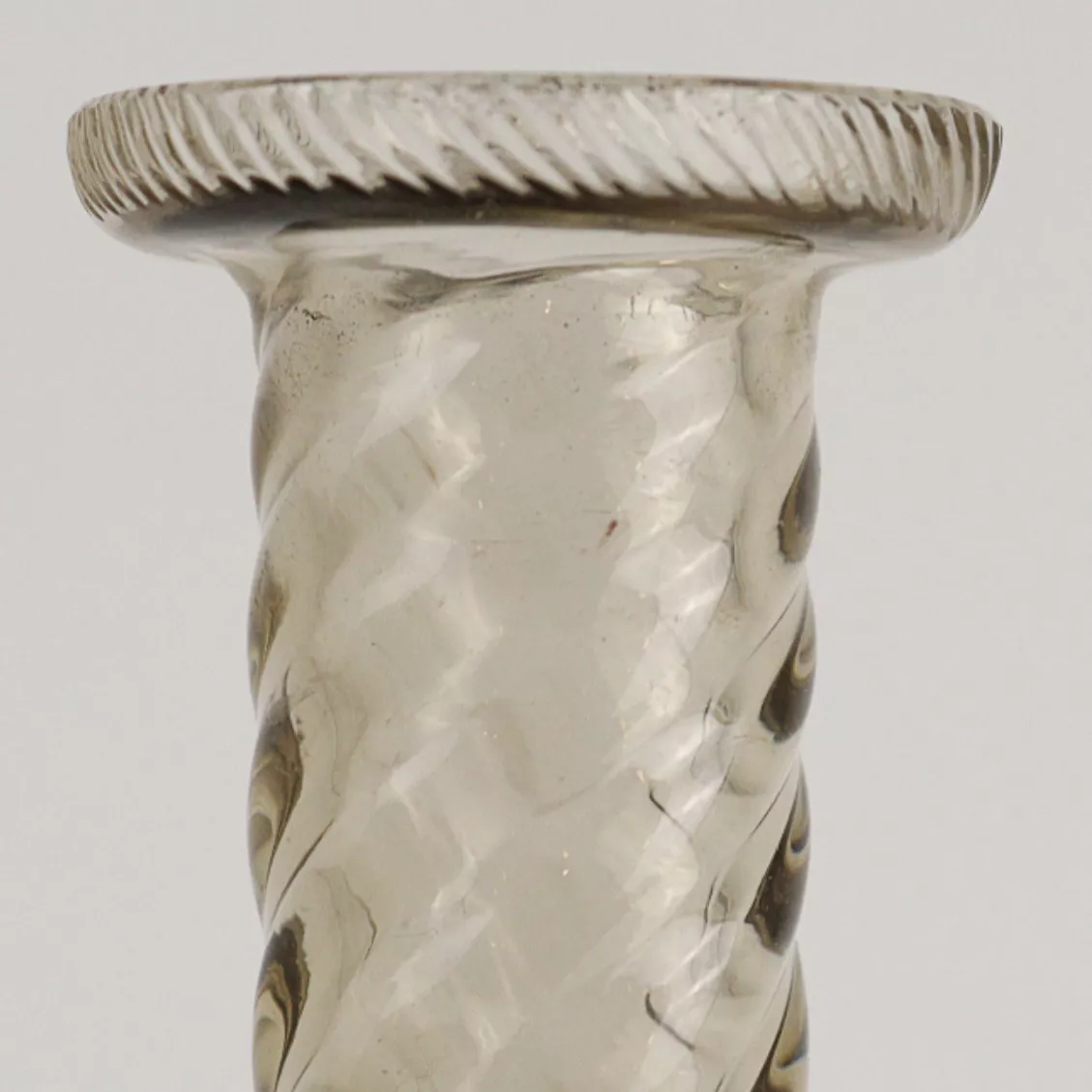
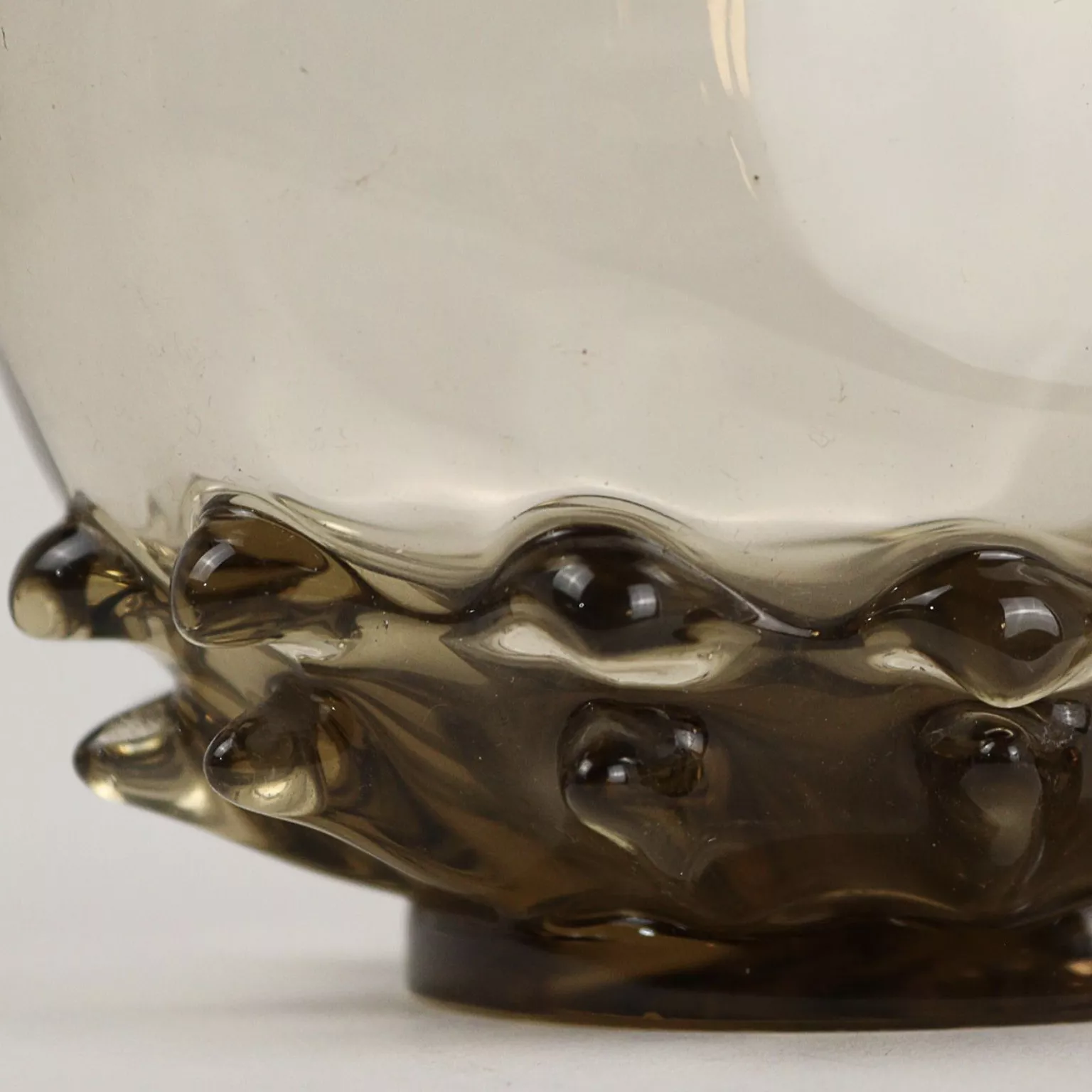
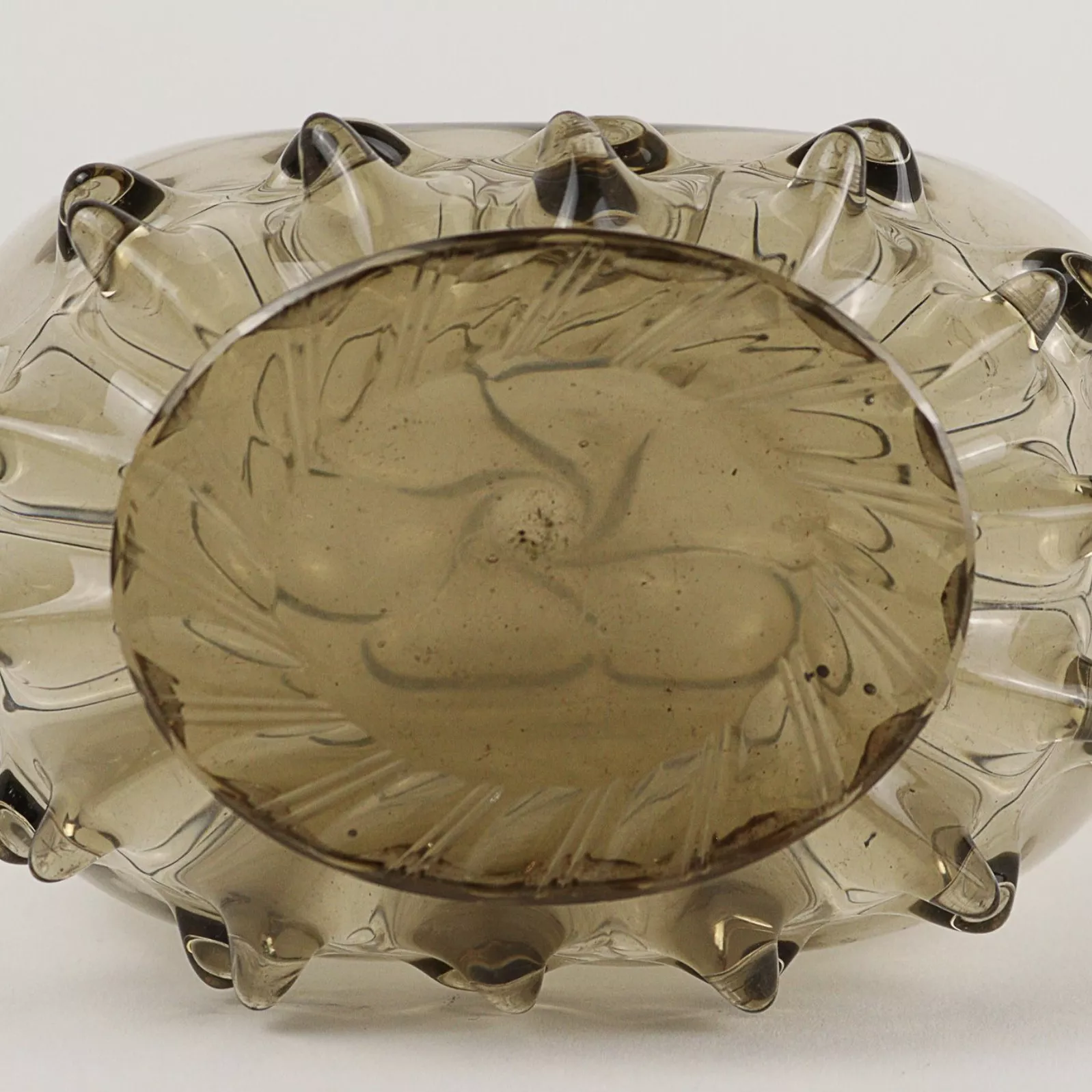
Vase with Floral Decoration (circa 1900)
This vase features an elegant, slender shape typical of decorative pieces from the late 19th century. The floral decoration is stylized, incorporating plant motifs and sinuous lines.
The artist works with transparency and translucency, creating plays of light within the material. The nuanced colors are achieved through layering or inclusion, enhancing the visual richness. The surface is sometimes worked in relief or engraved, accentuating the object’s tactile quality.
This work is representative of Art Nouveau glass, in which utilitarian function is combined with refined decorative artistry.
FAQ – How do you appraise a work by Ernest Baptiste Leveillé?
1) What technical criteria specific to glasswork are key?
The analysis focuses on the quality of the glass paste or blown glass, the mastery of inclusions, color gradients, and textural effects, as well as the precision of the finishes—all essential elements for assessing the value of a glasswork piece.
2) How important are style and artistic context?
The work is placed within the context of the decorative arts of the late 19th and early 20th centuries, examining stylistic influences—particularly naturalism and Art Nouveau—that may shed light on the artist’s work.
3) What role do the signature and studio marks play?
The presence of an engraved, enameled, or cast signature, as well as the identification of a studio or collaboration, are key factors in authentication and valuation.
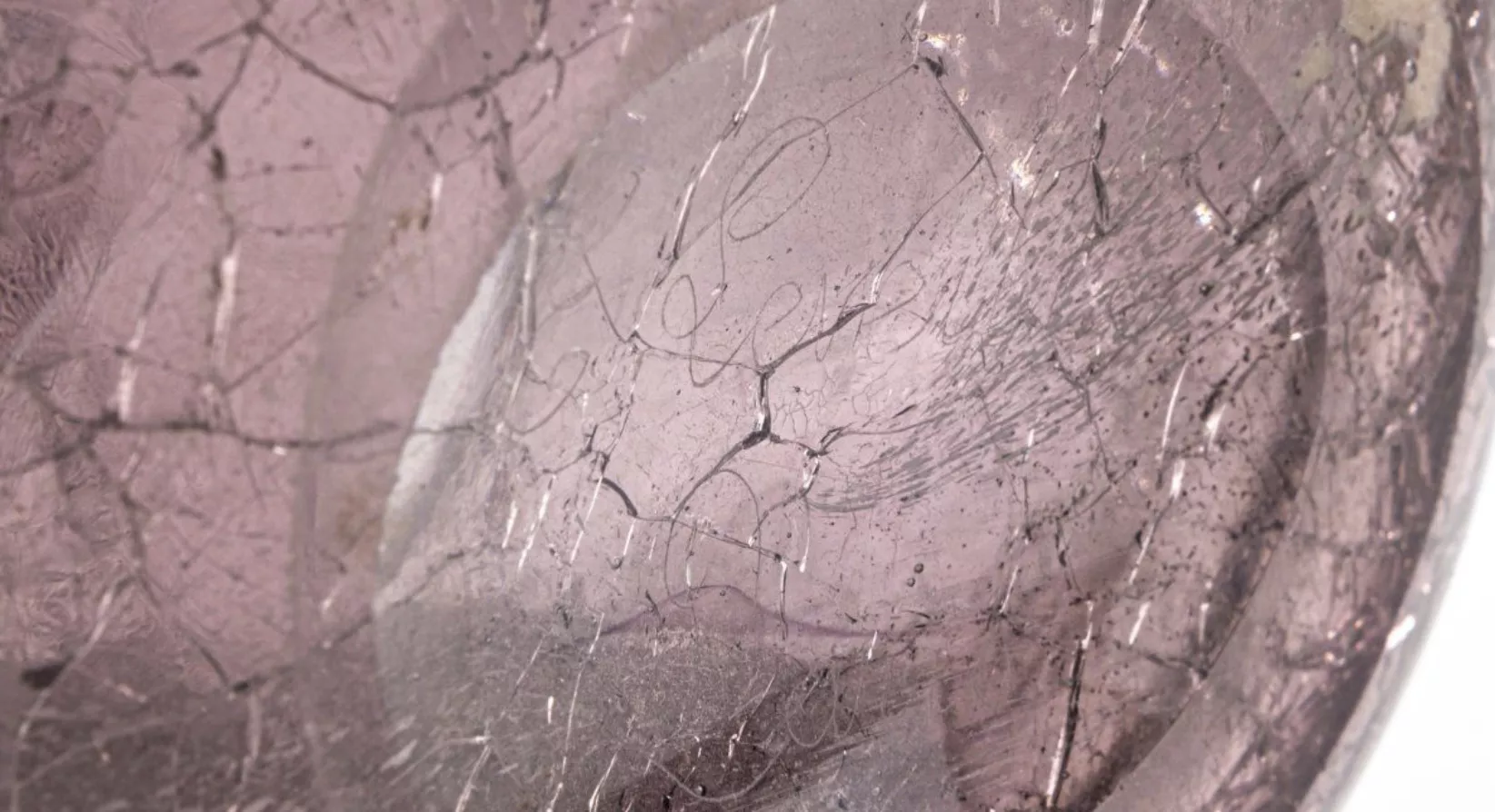
Identifying Ernest Baptiste Leveillé’s Signature
Not all items produced by Leveillé are signed. That is why it is important to have your pieces appraised.
Get Your Ernest Baptiste Leveillé Artwork Appraised
If you own a work by Ernest Baptiste Leveillé, a valuation will help you determine its current market value.
Using our online form, our experts and certified auctioneers will conduct a free appraisal and provide you with a reliable estimate of your artwork’s market value.
If you’re considering selling it, we’ll guide you through the process to ensure you get the best possible price.
Estimate in less than 24h
Discover in the same theme

Value and quotation of works, paintings by Paul Trouillebert
Trouillebert was a 19th-century French painter. He produced a large body of work, including paintings. Estimated in less than 24h.
Learn more >

Rating and value of works, drawings, paintings by Étienne Bo...
Étienne Bohot was a 19th-century painter influenced by Romanticism, who produced drawings and oils on canvas that are highly prized at auction.
Learn more >

Rating and value of paintings by Giuseppe de Nittis
Giuseppe de Nittis is an Italian artist of 19th-century modernity who lives in Paris. His works are highly valued.
Learn more >
Nos records d'enchères à l'hôtel Drouot

Estimated 10.000 - 15.000 €
Ebridge Ayer BURBANK(1858-1949), Young African-American boy, Oil on panel.

Estimated 20.000 - 30.000
EXCEPTIONAL LARGE OVAL DISH IN VINCENNES SOFT PASTE PORCELAIN FROM THE "BLEU CÉLESTE" SERVICE OF KING LOUIS XV AT THE CHÂTEAU DE VERSAILLES

Estimated 20.000 - 30.000
MANUFACTURE ROYALE DE SÈVRES, 18th century "L'Empereur de la Chine" - Portrait of the Emperor Qianlong, Hard porcelain bisque, 1775

Estimated 1.500 - 3.000
HERMÈS, "Kelly" 32 saddle bag in black box calf

Estimated Between €5,000 and €8,000
KRACHKOWSKY (1854-1914), Before the storm, oil on canvas

Estimated 40.000 - 80.000
Alexandre ROUBTZOFF (1884-1949), Portrait of Arbia, oil on canvas

Secure site, anonymity preserved

Auctioneer approved by the State

Free and certified estimates
Frequently asked questions
-
Who is Ernest Baptiste Leveillé, and what is his artistic background?Ernest Baptiste Leveillé (1841–1913) was a leading French glass artist of the Belle Époque, specializing in decorative art glass. He worked within the context of the revival of the applied arts and shared the aesthetic concerns of designers such as Émile Gallé and René Lalique, particularly the incorporation of naturalistic motifs and the play of light through glass.
-
What is the price range for Leveillé vases and objects?Leveillé vases and glass objects sell for between €30 and €27,460 at auction. This wide range reflects variations in the quality, size, and condition of the pieces. In 2023, a large vase with red motifs dating from 1900 sold for €27,460, exceeding its initial estimate of €9,000 to €13,000.
-
How can you authenticate a work by Leveillé and determine its true value?To authenticate and appraise a work by Leveillé, we recommend requesting a free appraisal from Auctie's. Our auctioneers and experts analyze the authenticity, the technical quality of the glass, the signature, the provenance, and recent market results to determine a reliable value for your piece.
-
What are the technical criteria that influence the value of a Leveillé vase?The value depends on the quality of the glass paste, the skill with which inclusions and textural effects are controlled, the precision of the finishes, and the richness of the glazed or engraved decorations. The emphasis placed on transparency, color gradients, and the play of light also characterizes the artist’s work and directly influences its value.
-
How do I sell a work by Leveillé through Auctie's?Auctie's guides you from the initial appraisal to the auction sale. After a free, no-obligation appraisal conducted by our experts within 48 hours, we’ll tailor a sale to your piece by optimizing its presentation and promotion to French and international collectors interested in art glass from this period.
