



Rating and value of paintings and photographies by Marie-Jo Lafontaine

Key takeaways
- Marie-Jo Lafontaine’s works sell for between €300 and €100,000 depending on the type: small-format photographs range from €300 to €5,000, while major installations range from €30,000 to €100,000.
- A pioneering Belgian video artist who has been internationally recognized since Documenta 8 in Kassel in 1987, with more than 200 auction results dating back to the 1990s.
- Her passing in May 2026 during a retrospective at the Museum of Flanders is expected to lead to a reassessment of her market value in the medium term.
Marie-Jo Lafontaine’s works sell for up to £89,500 (approximately €100,000) at auction. An appraisal allows us to accurately determine the current market value of your Marie-Jo Lafontaine artwork and, if applicable, optimize the sale of the piece.
If you own a work by Marie-Jo Lafontaine and would like to know its value, our state-certified auctioneers will provide a free appraisal based on authenticity, market rating, and recent market results.
Market Value and Appraisal of Artist Marie-Jo Lafontaine
Marie-Jo Lafontaine is a Belgian artist whose market value has long been established on the international market, with over 200 recorded auction results since the late 1990s, primarily in Belgium, Germany, and France.
Small-format photographs and multiples typically sell for between €300 and €5,000, while large-scale photographic installations and video sculptures— the most sought-after pieces in her body of work, regularly fetch estimates of €30,000 to €80,000, with a record set at Christie’s in 1999 at £89,500, or approximately €100,000.
His passing in May 2026 sparked renewed interest in his work, a trend that upcoming auctions will help confirm over time.
Ranking from the most basic to the most prestigious
Technique used | Result |
|---|---|
Photographs and multiples | Approximately €300 to €5,000 |
Installations and major works | Approximately €5,000 to €100,000 |
Estimate in less than 24h
Who Is Marie-Jo Lafontaine?
Time Period
Marie-Jo Lafontaine was born on November 17, 1950, in Antwerp, Belgium, and died on May 28, 2026. She studied from 1975 to 1979 at La Cambre, the National Higher School of Visual Arts in Brussels, before embarking on a career spanning nearly fifty years of creative work, from the late 1970s until her death.
Her career spanned the rise of video art and video sculpture—fields in which she was one of the international pioneers—during a period marked by the emergence of new media in contemporary art.
She was appointed professor of visual arts and multimedia at the Staatliche Hochschule für Gestaltung in Karlsruhe, a position that cemented her reputation in Germany, a country where her work resonated particularly strongly.
Themes
Marie-Jo Lafontaine’s work, at the intersection of sculpture, video, photography, and textiles, explores universal themes: the tension between Eros and Thanatos, passion and reason, beauty and violence, suffering and pleasure, through powerful images of human and animal bodies placed in extreme situations.
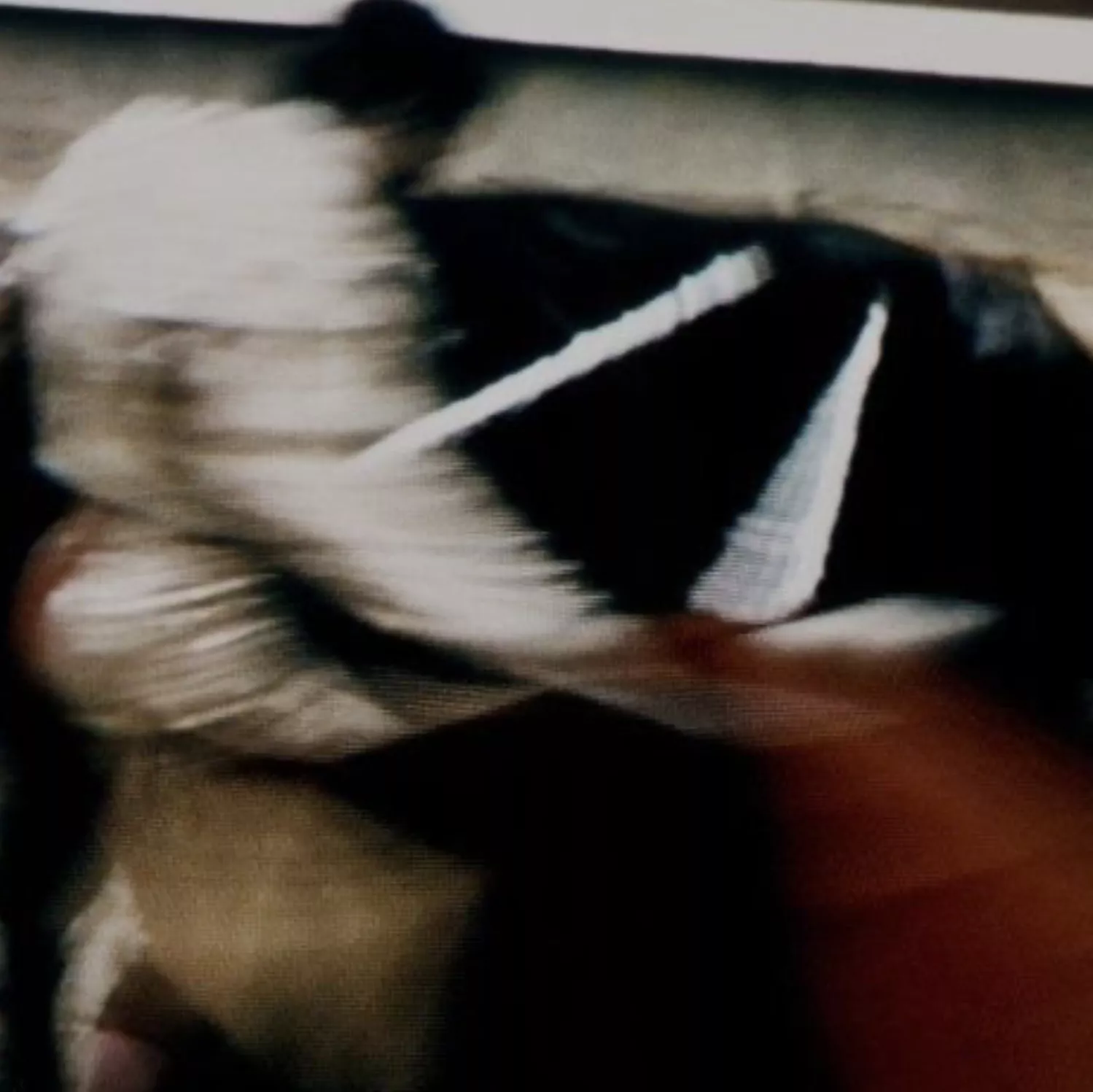
She gained international recognition in 1987 with the installation “Les Larmes d’acier” (Tears of Steel), presented at Documenta 8 in Kassel: a controversial video sculpture consisting of seven columns and 27 monitors displaying images of weightlifters caught between suffering and pleasure, set to a backdrop of opera music.
This seminal work has since been exhibited at LACMA in Los Angeles and the Museum für Gegenwartskunst in Basel, and remains the most iconic piece of her career.
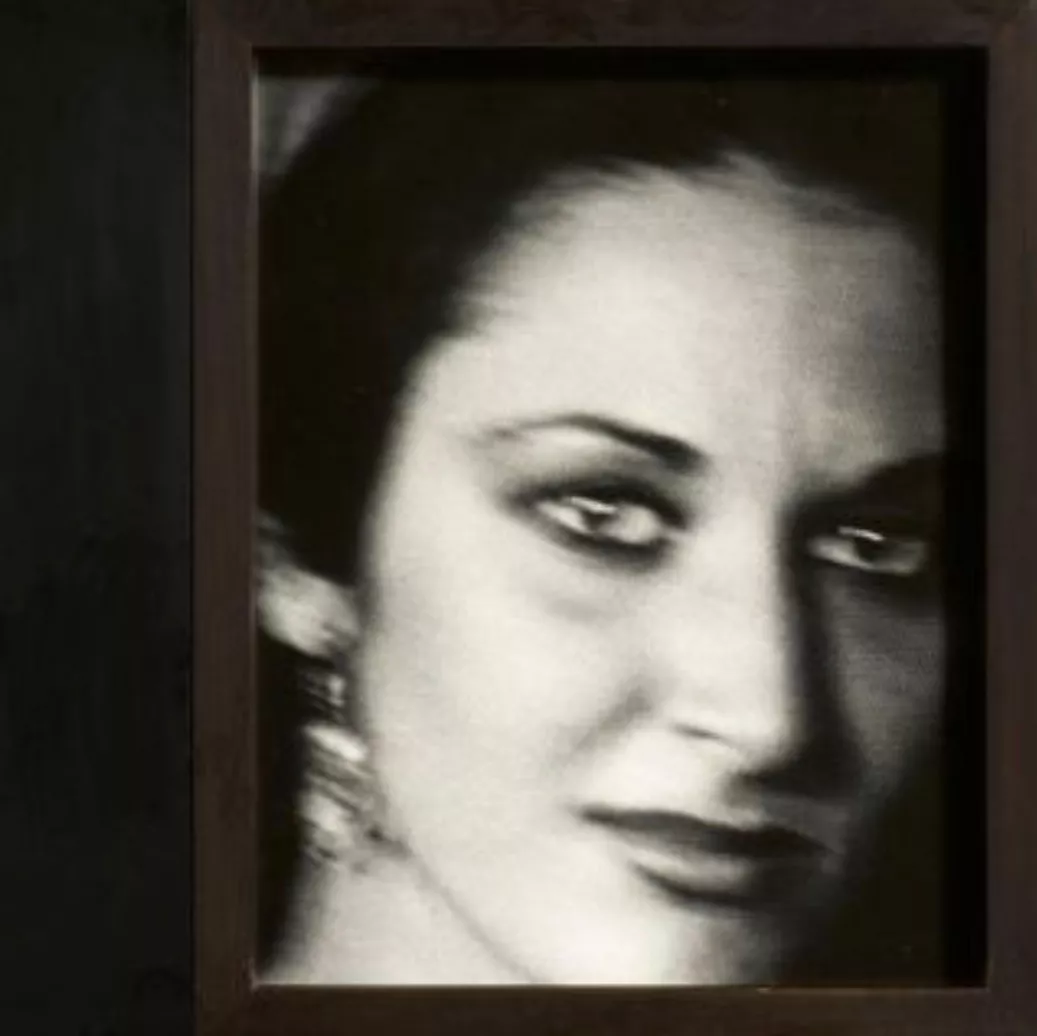
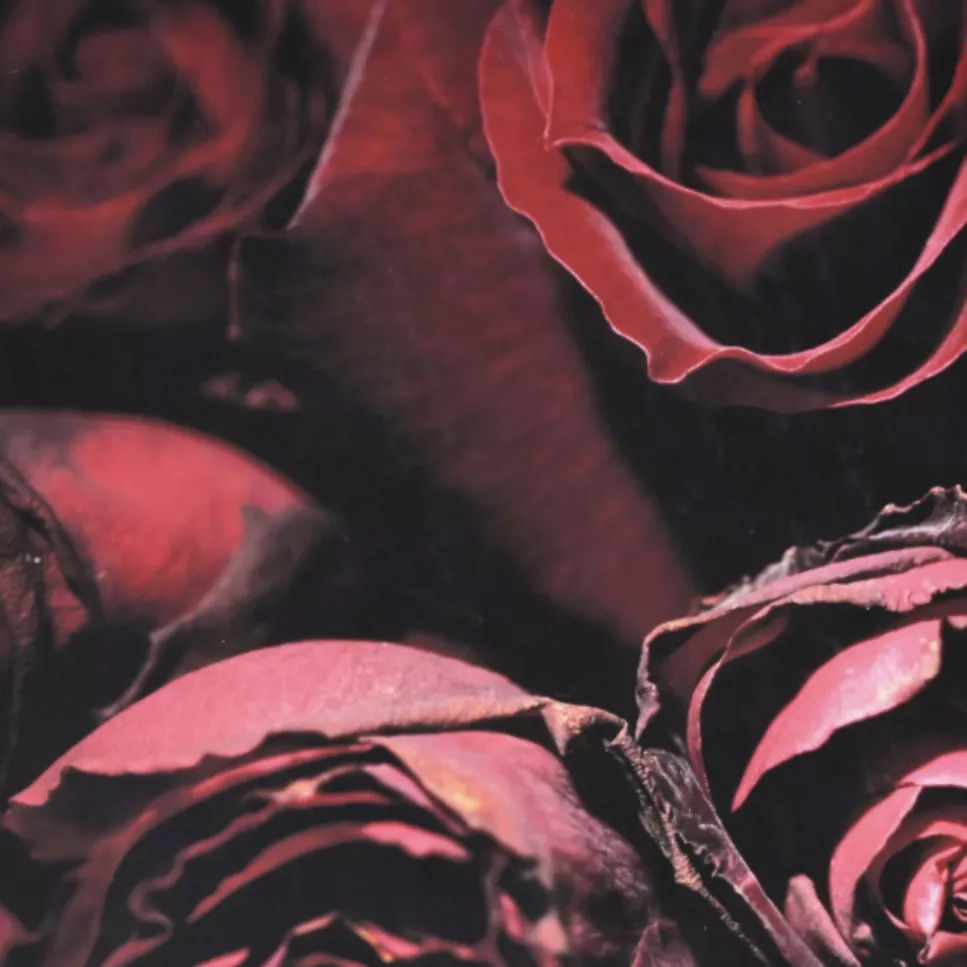
She went on to create a series of major video installations: “La Marie Salope” (1980, Paris Biennale, Centre Pompidou), “A las cinco de la tarde” (1984, Tate Gallery), “Victoria” (1988), “Tout Ange est terrible” (1992), and “The Swing” (1999), before turning more toward photography with the portrait series “Babylon Babies ” (2000–2002), which explores youth and its freedoms in contemporary society.
The Life of Marie-Jo Lafontaine
Cultural Background
A native of Antwerp, Marie-Jo Lafontaine lived and worked for many years in Brussels, at the heart of a particularly dynamic Belgian art scene in the field of new media.
Her appointment as a professor in Karlsruhe also established her firmly within the German art scene, where she enjoyed early and sustained recognition.
Intellectual and Artistic Circle
Her work has been exhibited and documented by galleries such as Walter Storms Galerie (Munich), Galerie Ronny Van de Velde and Geukens & De Vil (Antwerp), Galerie Trigano, and the Belgian Gallery (Paris, Knokke-Heist, Brussels). She has been the subject of major retrospectives at the Jeu de Paume National Gallery in Paris (1999) and at the Botanique in Brussels (2008–2009).
In 2013, she painted the official portrait of the Belgian royal couple, King Philippe and Queen Mathilde. At the time of her passing, a retrospective titled “Tout ange est terrible” was dedicated to her at the Museum of Flanders in Cassel.
Market Segmentation and the Artist's Market Value
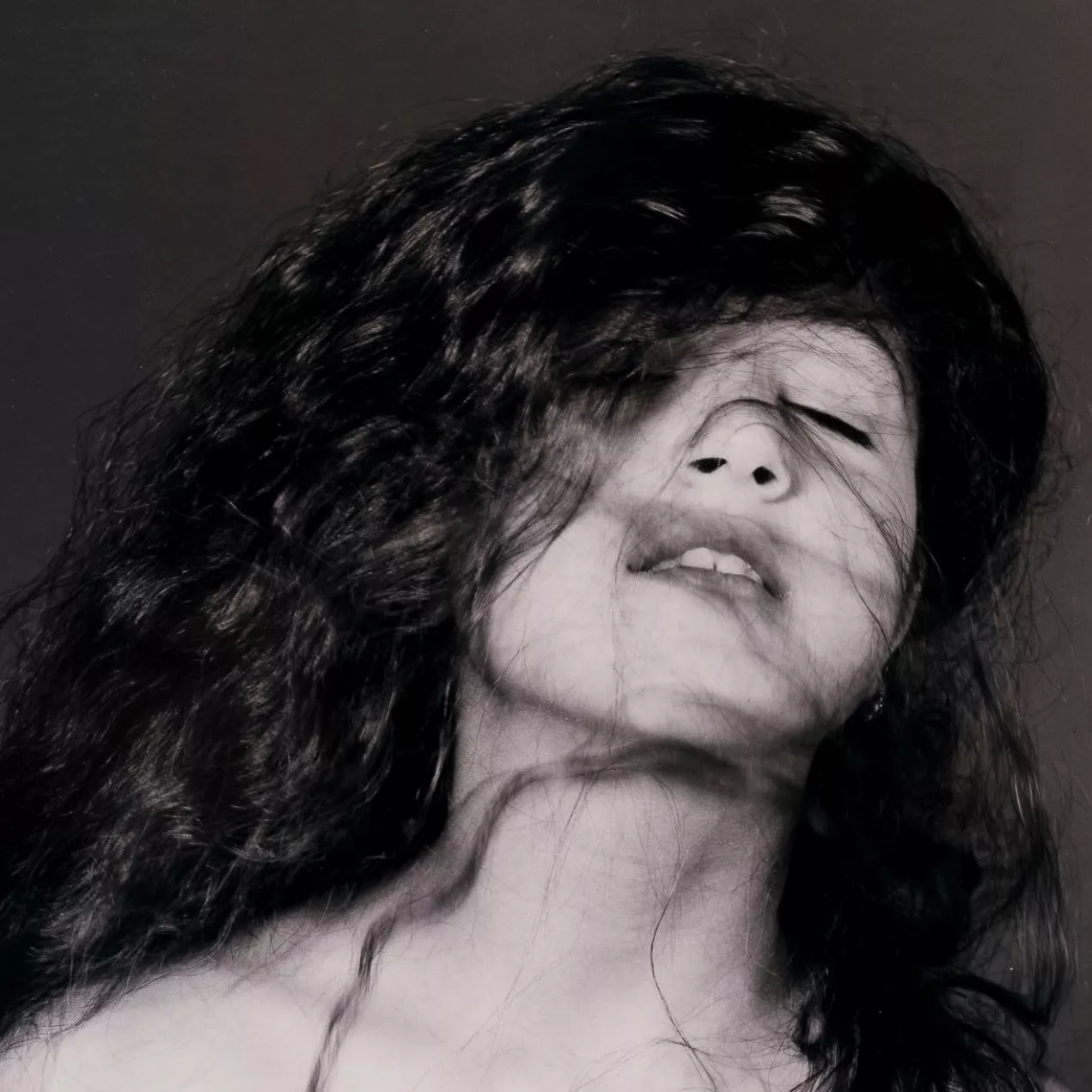
Marie-Jo Lafontaine’s market is structured around two distinct segments: on the one hand, the photographs from the “Babylon Babies” series and medium-format prints, which regularly sell for between €1,000 and €10,000; on the other hand, major video installations and sculptures, which are rarer at public auctions, with estimates regularly exceeding €30,000 and reaching tens of thousands of euros, as evidenced by a recent estimate of €50,000 to €80,000 at Auktionshaus Kloss.
Germany and Belgium account for the bulk of transactions, reflecting the artist’s dual presence—between her native country and the country where she taught and exhibited particularly extensively.
Factors
The international recognition she gained as early as 1987 at Documenta 8 in Kassel forms the foundation of her market value, making her one of the few Belgian artists of her generation to enjoy such early and enduring museum recognition in the field of video art.
Her recent passing on May 28, 2026, occurred while a retrospective dedicated to her was being held at the Museum of Flanders in Kassel—a museum context that typically accompanies a revaluation of an artist’s market value in the months and years following their death.
The public recognition she gained through projects outside the strictly artistic realm, such as creating the official portrait of the Belgian royal couple in 2013 or the screening of her film during the opening ceremony of the 2006 FIFA World Cup in Frankfurt, has also broadened her audience beyond the circle of contemporary art collectors alone.
She is following in the footsteps of artists who have been rediscovered and celebrated, such as Barbara Hepworth, Baya Mahieddine, and Isabelle Waldberg.
FAQ – How do you appraise a work by Marie-Jo Lafontaine?
1) What types of works by Marie-Jo Lafontaine are legitimately available on the market?
Most commonly found are photographic prints from her iconic series (“Babylon Babies,” “Les Baigneuses”), pieces from the “Immaculata” series, as well as—more rarely—sculptures, woven tapestries, and elements of video installations, the latter being the most sought-after and highly valued pieces.
2) How does recognition by museums support the value of her work?
The presentation of “Larmes d’acier” at Documenta 8 in Kassel in 1987, followed by the retrospectives at the Jeu de Paume (1999) and the Botanique in Brussels (2008–2009), represent key milestones in the market. A work documented as having been included in one of these exhibitions generally commands a higher estimate.
3) How can a work by Marie-Jo Lafontaine be identified and authenticated?
Identification is based on the signature, title, and date—which are generally affixed to the back of the photographic medium—as well as on consistency with the artist’s documented series and gallery provenance. For video installations and sculptures, exhibition documentation and numbered editions are essential elements of authentication.
Her Signature
Marie-Jo Lafontaine’s works are generally signed, titled, and dated on the reverse side of the photographic medium. Video installations and sculptures are most often accompanied by exhibition documentation or a certificate rather than a signature directly visible on the work itself. In case of doubt, particularly for older pieces or complex installations, a direct appraisal is still recommended.
Have Your Artwork Appraised
If you own a work by Marie-Jo Lafontaine, please feel free to request a free appraisal by filling out our online form.
A member of our team, composed of experts and certified auctioneers, will contact you to provide an estimate of your artwork’s market value.
If you’re considering selling your artwork, our specialists will also guide you through the various options available to help you achieve the best possible price, taking into account market trends and the unique characteristics of each piece.
Estimate in less than 24h
Nos records d'enchères à l'hôtel Drouot

Estimated 10.000 - 15.000 €
Ebridge Ayer BURBANK(1858-1949), Young African-American boy, Oil on panel.

Estimated 20.000 - 30.000
EXCEPTIONAL LARGE OVAL DISH IN VINCENNES SOFT PASTE PORCELAIN FROM THE "BLEU CÉLESTE" SERVICE OF KING LOUIS XV AT THE CHÂTEAU DE VERSAILLES

Estimated 20.000 - 30.000
MANUFACTURE ROYALE DE SÈVRES, 18th century "L'Empereur de la Chine" - Portrait of the Emperor Qianlong, Hard porcelain bisque, 1775

Estimated 1.500 - 3.000
HERMÈS, "Kelly" 32 saddle bag in black box calf

Estimated Between €5,000 and €8,000
KRACHKOWSKY (1854-1914), Before the storm, oil on canvas

Estimated 40.000 - 80.000
Alexandre ROUBTZOFF (1884-1949), Portrait of Arbia, oil on canvas
Discover in the same theme

Rating and value of works, drawings, paintings by Charline V...
Charline Von Heyl is a 21st-century German contemporary artist whose drawings and oil paintings are sought-after at auction.
Learn more >

Rating and value of Silvia Bächli's drawings
Silvia Bächli is a contemporary artist who has developed drawing as an autonomous discipline. Listed on the market, her works are valued
Learn more >

Rating and value of drawings and paintings by Rachelle Krieg...
Rachelle Krieger is an American contemporary artist whose paintings command high prices at auction.
Learn more >

Secure site, anonymity preserved

Auctioneer approved by the State

Free and certified estimates
Frequently asked questions
-
Who is Marie-Jo Lafontaine, and why is her work internationally recognized?Marie-Jo Lafontaine (1950–2026) was a Belgian artist and pioneer of video sculpture and new media art. She gained international recognition in 1987 with the installation “Les Larmes d’acier” (Tears of Steel), presented at Documenta 8 in Kassel—a major work consisting of seven columns and 27 video monitors. Her work, which explores the tensions between Eros and Thanatos through powerful images of the human body, has been exhibited at LACMA in Los Angeles, the Tate Gallery, and the Jeu de Paume in Paris.
-
What are the prices and price ranges for Marie-Jo Lafontaine's works?Medium-format photographs and multiples generally sell for between €300 and €5,000. Video installations and major sculptures—the most sought-after works—regularly fetch between €30,000 and €80,000, with a record of £89,500 (approximately €100,000) set at Christie’s in 1999. The artist’s market is structured around two distinct segments based on the technique and size of the work.
-
How can you authenticate a work by Marie-Jo Lafontaine?Photographs are generally signed, titled, and dated on the back of the print. For video installations and sculptures, exhibition documentation, numbered editions, and certificates are the essential elements of authentication. If in doubt, we recommend requesting a free appraisal from Auctie's: a certified auctioneer will analyze the work and provide you with a reliable estimate within 48 hours.
-
Is this a good time to sell a work by Marie-Jo Lafontaine?Yes, the current market conditions are favorable for a sale. The artist’s recent passing on May 28, 2026—which coincided with a retrospective at the Museum of Flanders in Cassel—typically leads to a sustained revaluation in the market. His early and enduring recognition by museums in the field of video art, as well as his broader public profile (having painted the official portrait of the Belgian royal couple in 2013), support a future appreciation of his works.
-
How does the appraisal and sale process work at Auctie's?The appraisal is free and non-binding. Simply fill out our online form: a certified expert or auctioneer will contact you to appraise your artwork and provide you with an estimate of its market value within 48 hours. If you’re considering selling, our specialists will guide you through the available options to help you get the best possible price, taking current market trends into account.
