



Rating and value of works, sculptures by Igor Mitoraj

Key takeaways
- Mitoraj’s bronze and marble sculptures sell for between €20 and €508,100, with particularly high prices for major works from the 1990s.
- The Franco-Polish artist (1944–2014) reinterprets ancient statuary by fragmenting human bodies, creating a post-classical modernity that symbolizes human vulnerability and the tragic human condition.
- Drawings and watercolors are valued at €350 to €7,000, while prints range from €120 to €4,600; sculptures remain the pieces most sought after by collectors.
If you own a work by or after Igor Mitoraj, and would like to know its value, our state-approved experts and auctioneers will offer you their appraisal services.
Our specialists will carry out a free appraisal of your work, and provide you with a precise estimate of its value on the current market.
Then, should you wish to sell your work, we will direct you to the best possible arrangement to obtain the optimum price.
Rating and value of the artist Igor Mitoraj
Mitoraj leaves in his wake a highly singular body of work, in the surrealist or abstract vein, depending on the work. A talented sculptor, he was one of the most famous artists of his time.
Prices for his works are now flying off the auctioneers' hammers. His bronzes and marbles are especially prized by French, Polish and Italian buyers. The price at which they sell on the art market ranges from €20 to €508,100, a considerable delta but one that speaks volumes about the value that can be attributed to Mitoraj's works.
In 2020, a bronze sculpture dating from 1996 depicting Icarus sold for €508,100 while it was estimated at between €216,100 and €432,400.
Order of value from a simple work to the most prestigious
Technique used | Result |
|---|---|
Drawing - watercolor | From 350 to 7 000€ |
Multiple print | From 120 to 4 600€ |
Bronze and marble statues | From 20 to 508 100€ |
Estimate in less than 24h
Style and technique of the artist Igor Mitoraj
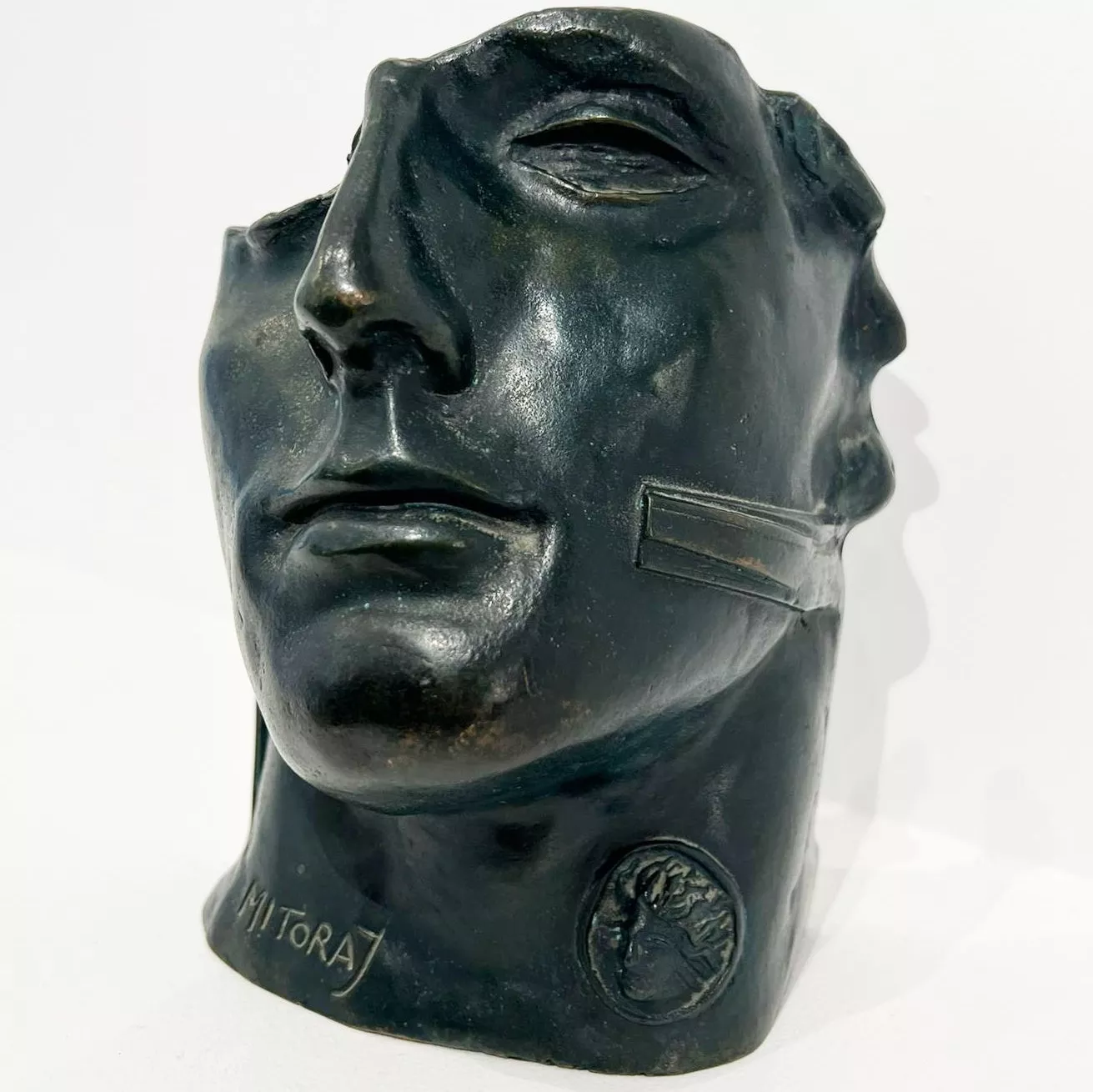
Igor Mitoraj has mainly created sculptures. Rare drawings and prints are also available. The artist focuses his work on the human body, revisiting the canons of ancient sculpture to propose a post-modern result.
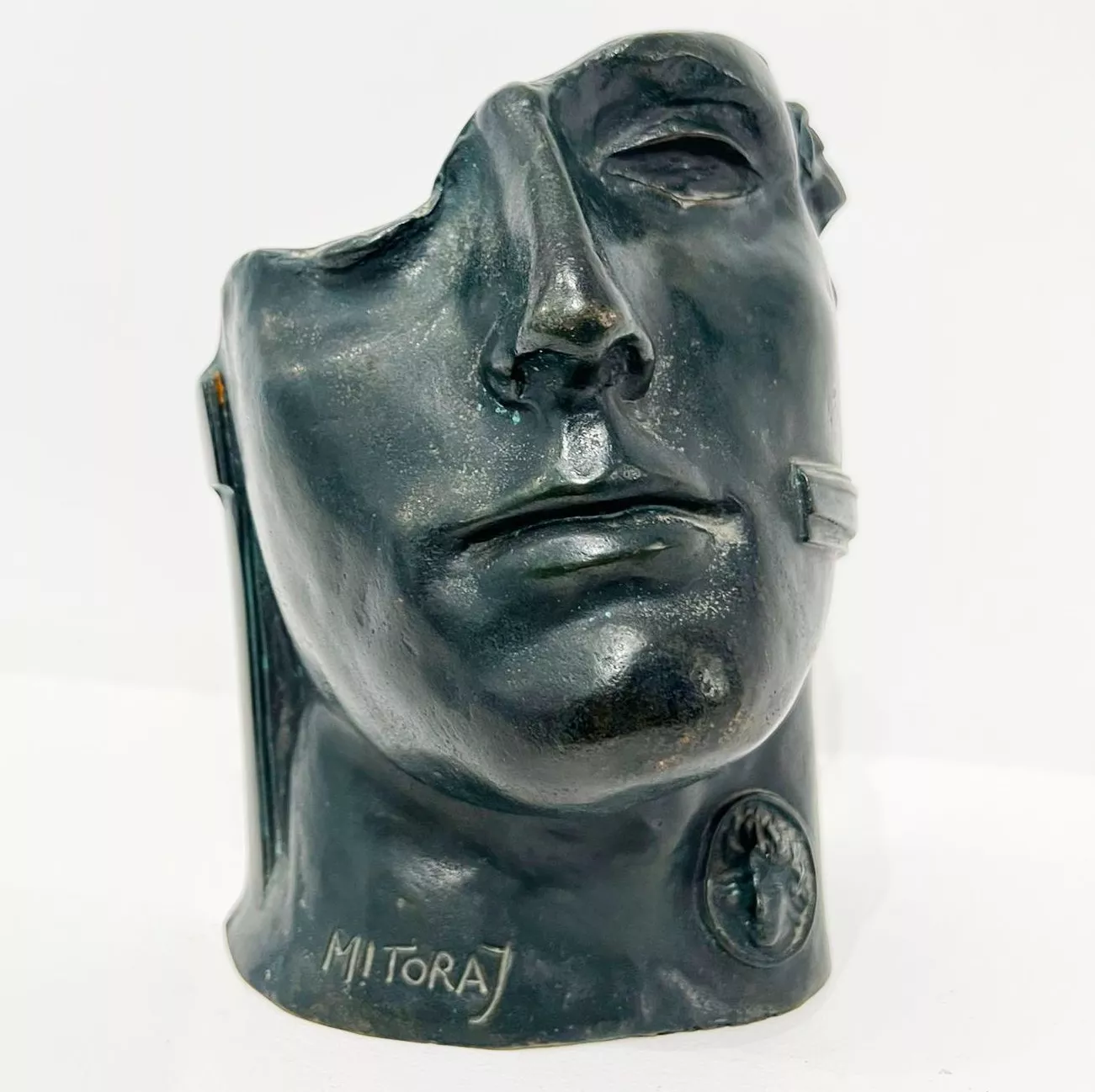
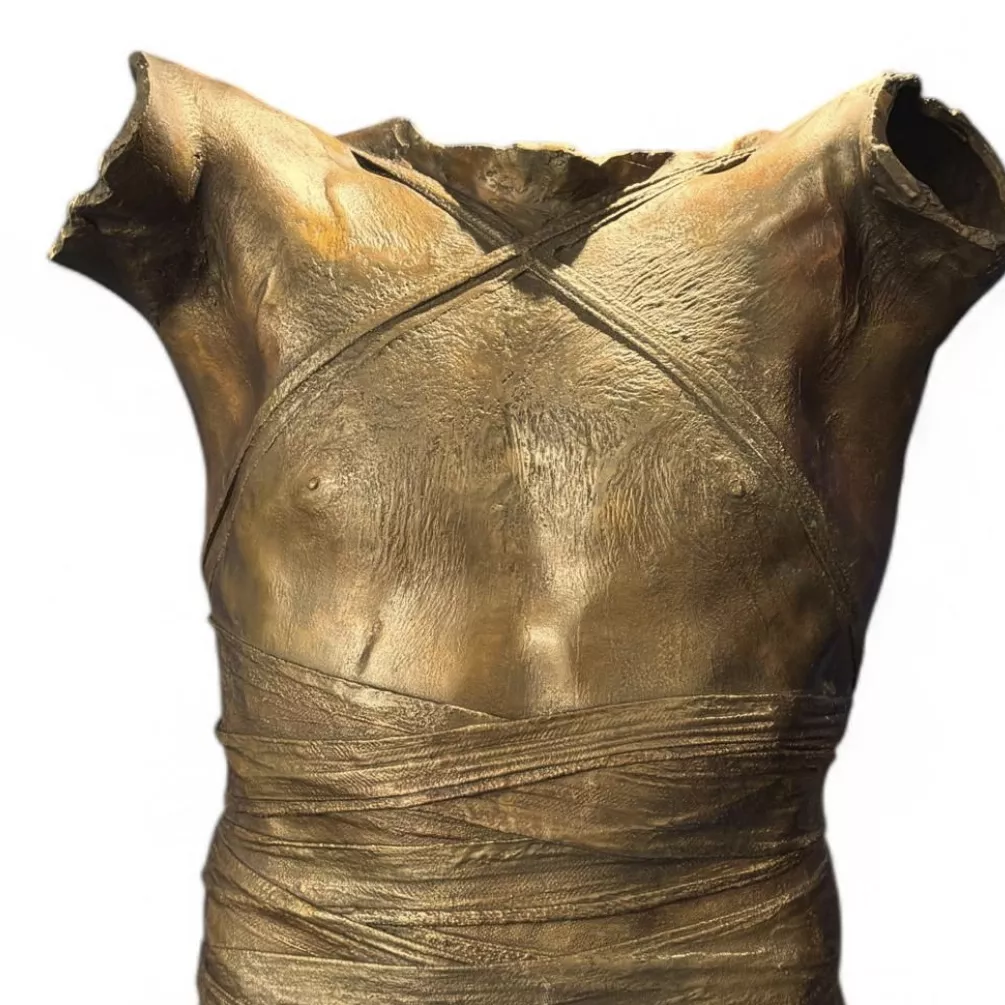
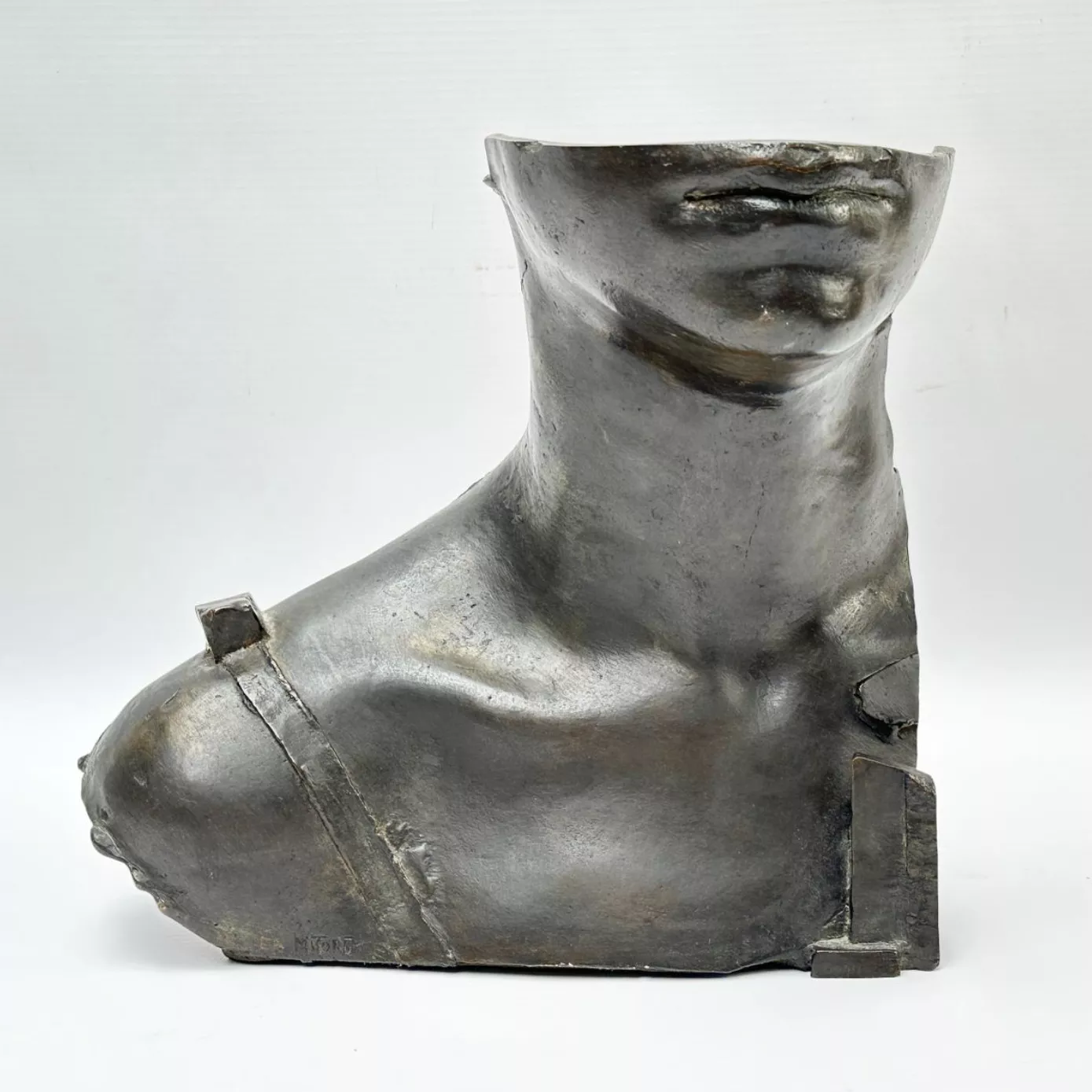
He likes to cut up bodies and depict only heads, busts or legs. He also plays with the size of human body parts. He assumes a certain classicism by revisiting it, and adheres to a figurative tradition by drawing on Greek, Roman and Etruscan art.
He favors a refined, stable, balanced form, avoiding any outrageous expressivity. The classical canon is still present, but fragmented, mutilated and amputated, introducing a modernity of ruin.
Bodies are armless, faces eyeless, busts gouged out and heads bandaged, ensuring that lack becomes language. This fragmentation is not decorative, but symbolizes human vulnerability, wounded memory or the rift between beauty and suffering.
It also evokes the traces of time, as if her works had passed through the centuries or were already relics. The surface is smooth, the patina matte or verdigris, the treatment sober, almost sacred, without excessive material effects.
He revisits Greco-Roman myths, not to illustrate but to meditate on the human condition, the fall, failure and threatened beauty. His figures, often with closed eyes, inspire contemplation, silence and introspection.
The absence of visible emotion reinforces an atemporal, almost funerary or votive presence. The works often have a frontal, compact form, and the block is sculpted in the manner of a sarcophagus or frieze fragment.
He plays with broken symmetry (a single arm, a bandaged eye and a wing), which introduces a discreet tension into the formal stability. The work may often appear unfinished, but is always strongly closed, like an autonomous object of memory.
By refusing immediate political, social or narrative references, Mitoraj creates a sculpture that is readable in all cultures. He revives a form of modern sacredness, in which the human figure becomes an archetype, a relic or a secular icon.
His sculptures are conceived for the space insofar as they dialogue with architecture, light and the urban or natural landscape.
.
Igor Mitoraj or the revival of ancient statuary
Igor Mitoraj (1944-2014), a French-Polish artist, has become a key figure in art history. Born in Oederan, Saxony, he began his artistic training at the Krakow School of Fine Arts, where he studied under Kantor.
He was soon fascinated by pre-Hispanic art, and so set off for Central America to draw inspiration from the monumental heads of the Maya, Aztec, Olmec and other pre-Columbian civilizations.
He stayed in Mexico for four years, and the influence of this trip is enormously noticeable in his work: when he sculpts heads, they are disproportionate. In 1976, he exhibited his work in Paris, then returned to Tuscany to work in marble. There, he set up a sculpture studio, where he worked with marble while continuing to use terracotta and bronze.
He received numerous commissions for public places, some of his works causing controversy.
His works exhibited at the Valley of the Temples, Sicily, have been classified as World Heritage.
He deliberately flays his statues, and does not represent full bodies. Some of his works approach ancient works in the state of preservation in which they are known today (cf The Victory of Samothrace or The Venus de Milo for the most famous). Like Salvador Dali, he gave bronze a new lease of life.
He died in Paris in 2014.
Focus on Cracked Tyndare, Igor Mitoraj, 1998
Cracked Tyndare is a work in patinated bronze, approximately 4.5 meters high, installed in the Boboli Gardens in Florence, but can also be seen in print in Pietrasanta or at exhibitions in Paris.
The male face is depicted in a generally idealized way, with calm features, closed eyelids, a straight mouth and a Greek profile. It is a fragment of a colossal head, without neck or shoulders, set on a bare stone base.
Horizontal cracks run through the bronze, as if the face were slowly crumbling away. The title refers to Tyndare, king of Sparta in Greek mythology, who is also Helen's putative father. The work evokes mutilated Hellenistic or Roman sculptures, found in ruins during excavations.
Here, however, the destruction is voluntary and integrated into the plastic design. The cracks do not disfigure, but highlight the surface like geological or temporal scars.
They aim to reveal the fragility of the ideal, the impermanence of beauty and the tragic condition of human matter. Yet the face retains its nobility insofar as injury becomes beauty.
The cracked Tyndara has become one of the symbols of Mitoraj's work. It has been frequently reproduced, collected and exhibited in major European cities. It embodies his poetics of ruin, his tragic humanism and his desire to turn the fragment into a form of eternity.
Mitoraj's imprint on his era
Mitoraj marks his era with the originality of his works. Behind his wounded and incomplete statues lies a genuine intellectual approach. Today, his stock is very high and his works are in demand on the auction market.
He is now one of the most prominent 20th-century sculptors on the auction market, along with François-Xavier and Claude Lalanne or César.
Recognizing the artist's signature
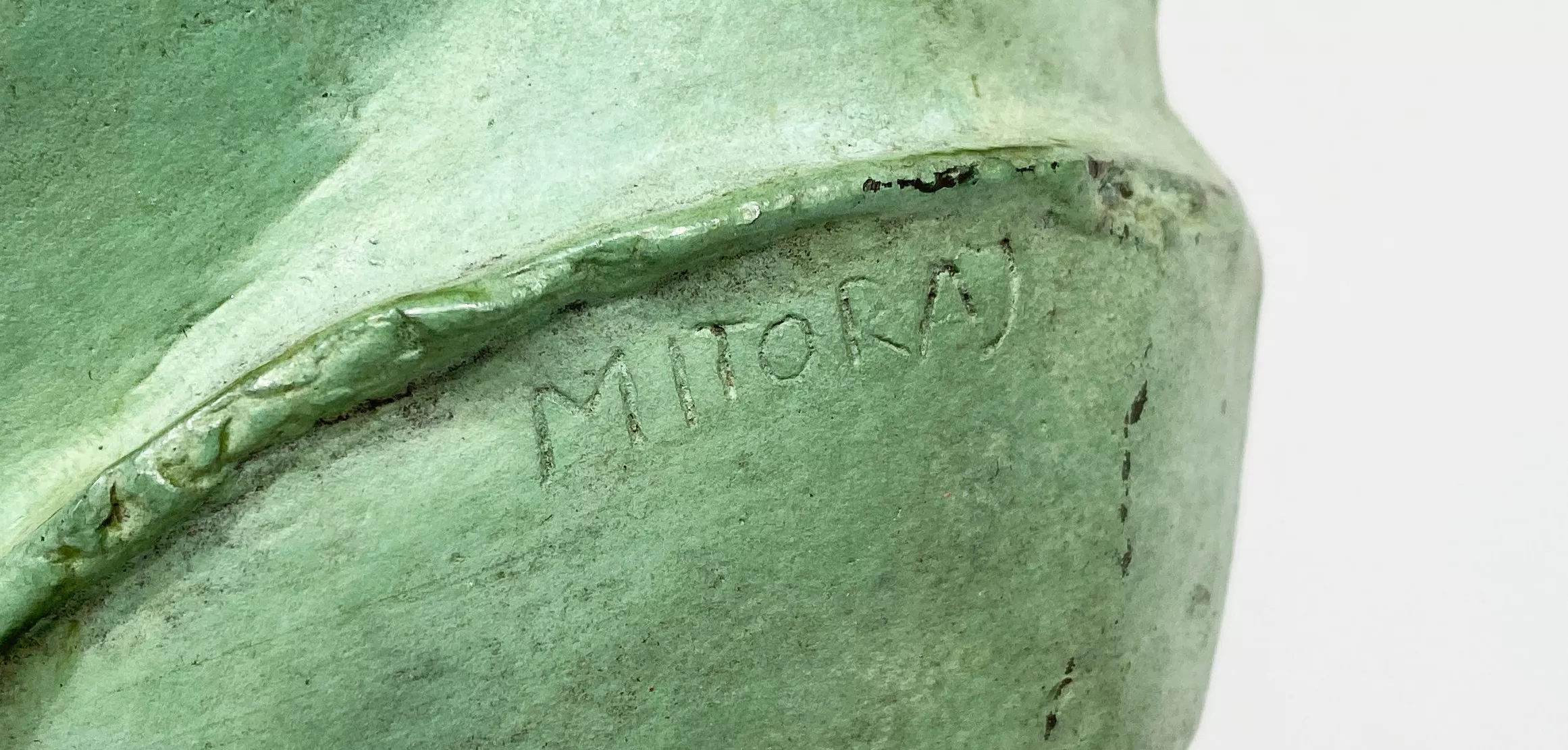
Mitoraj's works are usually signed. He engraves " Mitoraj " in bronze, marble or terracotta. However, many copies exist, so it's important to have your work appraised. It's also possible that a Mitoraj bronze is signed differently, which is why it's important to ask for an appraisal.
Estimate in less than 24h
Knowing the value of a work
If you happen to own a work by Mitoraj or after the artist, don't hesitate to request a free appraisal using our form on our website.
A member of our team of experts and licensed auctioneers will contact you promptly to provide you with an estimate of the market value of your work, not forgetting to send you ad hoc information about it.
If you wish to sell your work, you will also be accompanied by our specialists in order to benefit from alternatives for selling it at the best possible price, taking into account market inclinations.
Discover in the same theme

Rating and value of drawings, furniture and armchairs by Pau...
Paul Iribe was an Art Deco designer and decorator. He produced works that are highly valued and quoted.
Learn more >

Rating and value of paintings, drawings and lithographs by P...
Paul Delvaux is a Belgian surrealist artist whose works are highly valued on the auction market.
Learn more >

Rating and value of paintings by Barbara Hepworth
Barbara Hepworth is an abstract artist who has produced sculptures and paintings that are highly rated and valued at auction.
Learn more >
Works by the artist sold at auction

Estimated 5.000 - 8.000
Igor MITORAJ (1944-2014), Bust of Asclepius, Green patina bronze sculpture

Estimated 4.000 - 6.000
Igor MITORAJ (1944-2014), Character, Charcoal on paper

Estimated 3.500 - 5.000
Igor MITORAJ (1944-2014), Hélios, Bronze with beige patina

Estimated 6000€ - 8000€
Igor MITORAJ (1944-2014) Argos Bronze bust with...

Estimated 3500€ - 5000€
Igor MITORAJ (1944-2014) Centurion Bronze with blue patina...

Estimated 3000€ - 5000€
Igor MITORAJ (1944-2014) Persée Bronze with brown patina...

Secure site, anonymity preserved

Auctioneer approved by the State

Free and certified estimates
Frequently asked questions
-
Who was Igor Mitoraj, and what is his artistic style?Igor Mitoraj (1944–2014) was a Franco-Polish sculptor who became a leading figure in contemporary art. His style reinterpreted ancient sculpture by deliberately fragmenting forms: armless bodies, eyeless faces, and cracked busts. This fragmentation symbolizes human vulnerability and wounded memory, transforming absence into a visual language. His works engage in a dialogue with architecture and light, creating a form of modern sacredness inspired by Greco-Roman and pre-Hispanic art.
-
What is the price range for Mitoraj's sculptures?The prices of Igor Mitoraj’s works range from €20 to €508,100, depending on the medium and the size of the piece. His bronze and marble sculptures, which are particularly sought after, command the highest prices. For example, a bronze sculpture of Icarus from 1996 sold for €508,100 in 2020. Drawings and watercolors range from €350 to €7,000, while prints range from €120 to €4,600.
-
How do I have a work by Igor Mitoraj authenticated and appraised?To authenticate a work by Mitoraj, we recommend that you request a free, no-obligation appraisal from Auctie's. Our auctioneers and certified experts will examine your piece and provide you with an accurate estimate of its current market value within 48 hours. This step is essential because many copies exist, and some bronze sculptures may be signed in an unconventional manner.
-
Is this the right time to sell a work by Mitoraj?Yes, this is an excellent time to sell a work by Mitoraj. His market value is currently very high, and his sculptures are in high demand on the auction market. Mitoraj ranks among the 20th-century sculptors most frequently featured at auctions, alongside renowned masters such as the Lalanne and César. Demand remains strong, particularly in France, Poland, and Italy.
-
How does the sale of a work of art work at Auctie's?At Auctie's, we support sellers every step of the way: a free appraisal by an expert, followed by guidance on the best sales strategy to achieve the highest possible price. Our specialists advise you on your sales options and manage the entire process through to the final sale. You benefit from the expertise of certified auctioneers and their in-depth knowledge of the current market.
