



Rating and value of First World War paintings

Key takeaways
- Paintings from World War I sell for between €55 and €760,000, with significant variations depending on the artist, condition, and subject matter.
- Post-Impressionist paintings command the highest prices (€120 to €760,000), while academic paintings remain more affordable (€55 to €147,300).
- A free appraisal can identify the artist and accurately assess the market value, even for unsigned paintings.
If you own a painting from the First World War, and would like to know its value, our state-approved experts and auctioneers will offer you their appraisal services. Our specialists will carry out a free appraisal of your object, and provide you with a precise estimate of its value on today's market. Then, if you wish to sell your painting, we will guide you towards the best possible means of obtaining the best possible price. The price of a painting can vary greatly depending on the artist's identification, its state of preservation, the school of the painting or the subject depicted.
Rating and value of Great War paintings
Great War paintings are appreciated and sought after by collectors. The price at which they sell on the art and auction market ranges from €55 to €760,000, a considerable delta but one that speaks volumes about the value that can be attributed to your paintings. They are prized by buyers of all nationalities, and are of interest to some collectors because they are sometimes less expensive than masterpieces when the artist is not identified. The oil on canvas by Édouard Detaille and Alphonse de Neuville entitled Fantassins du 122ème ligne, for example, fetched €12,000 while it was estimated at between €12,000 and €15,000.
Order of value ranging from the simplest to the most prestigious painting
Type of paintings tables | Result |
|---|---|
Academic tables | From 55 to 147,300 |
Tableaux des Nabis | From €400 to €540,700 |
Impressionist paintings | From €175 to €600,500 |
Post-Impressionist paintings | From €120 to €760,000 |
Estimate in less than 24h
Reasons to have a painting from this era appraised at auction
If you own a painting depicting the First World War conflict, you may be unaware of its value. Indeed, even if the painting is not signed, it is possible in some cases to identify the artist. If it's listed on the auction market, then the price could rise very quickly. It is also possible that the artist is not identifiable and that we can only know the school of the painting.
Defining a war painting
A war painting is a work often painted on a flat surface, which will in most cases be made with the technique of oil on canvas. Some works, however, are produced using drawing, etching, charcoal, oil on bristol or other techniques. These are no longer, as in the 19th century and particularly in the case of First Empire paintings of battle scenes, history paintings in the academic sense of the term.
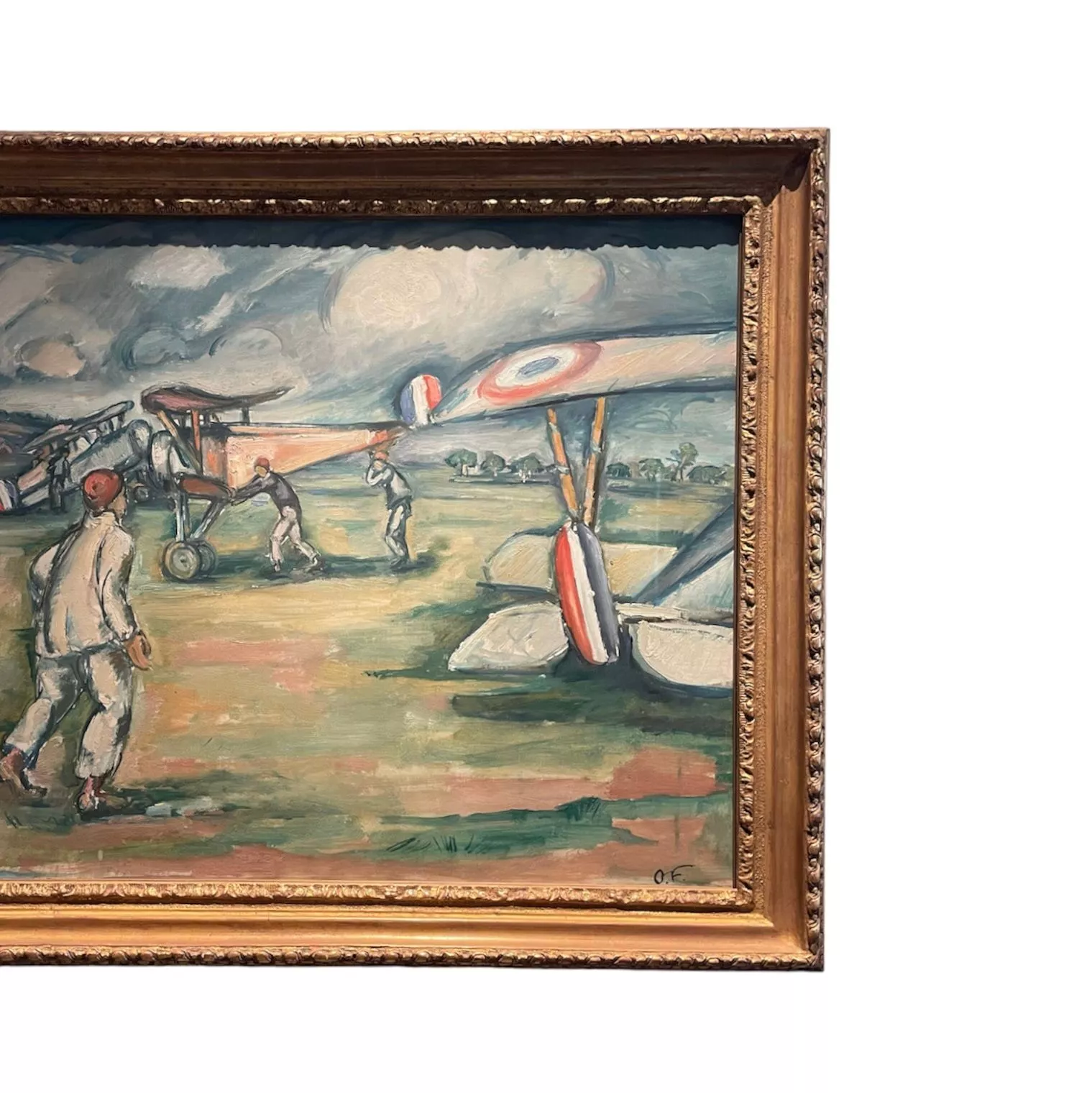
Artists are taking advantage of the new artistic currents emerging at the beginning of the 20th century, and ceasing to conform to the material and stylistic constraints of the Académie. All currents were put to good use. Some artists made war painting their specialty, but others like Maurice Denis or Othon Friesz painted a few canvases inspired by a conflict without devoting their entire output to it.
Works from this specific period are sought after by collectors, but are much less valuable than World War II paintings.
Representing the Great War
The twentieth century was marked by two major wars that exerted a great influence on the history of art.
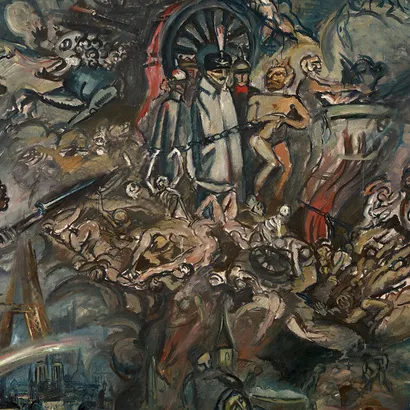
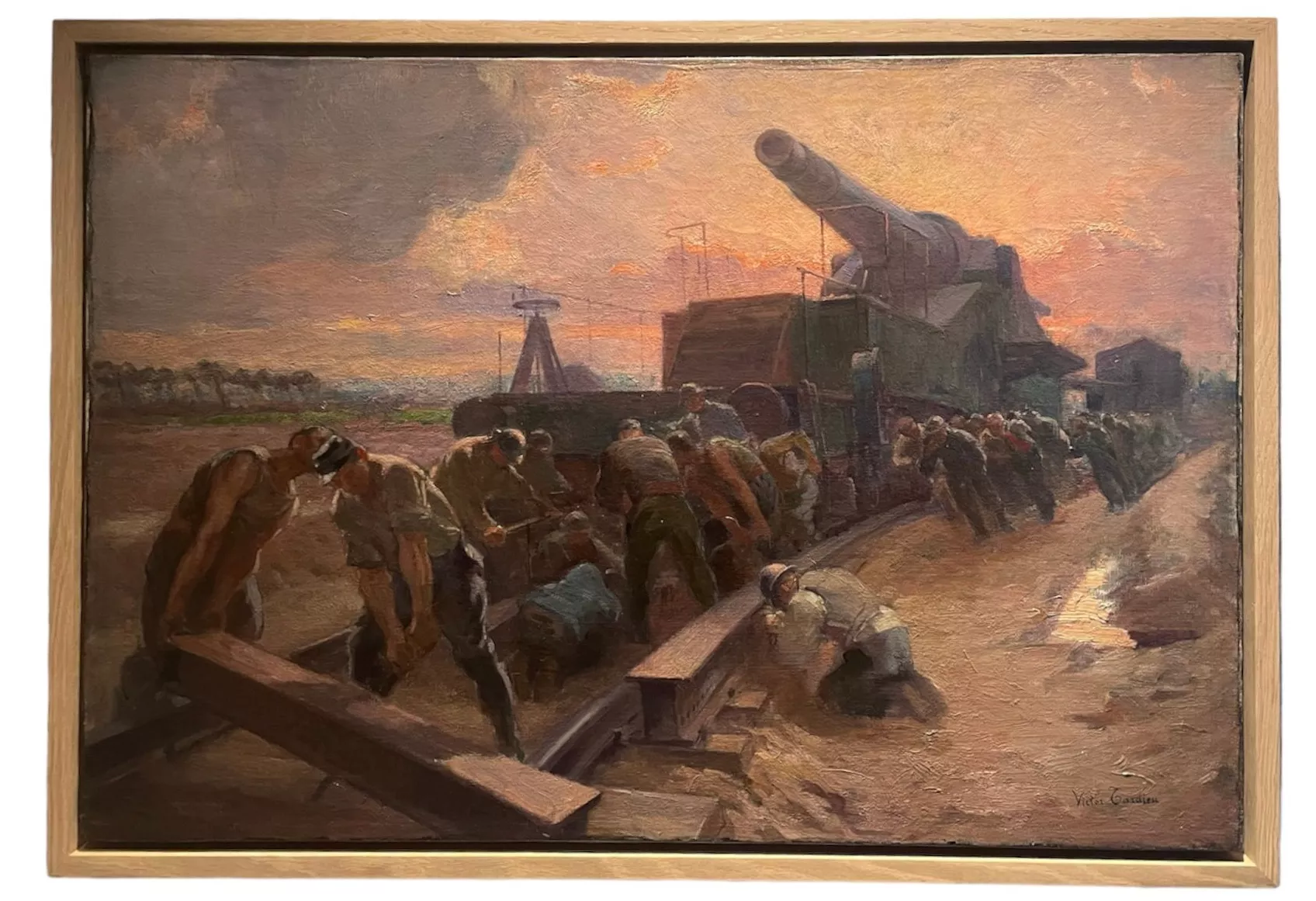
During the First World War, painters were inspired by the everyday life of soldiers, the number of soldiers who died at the front, and the weapons used. They remained in the vein of impressionism and realism, without too much distortion of bodies and shapes. The colors used can sometimes be very light, however paintings from this period give the impression that the dominant color is gray. In the paintings by Maurice Denis depicting the conflicts of this period, a gray veil seems to cover the picture. The violence of war remains underlying, and the dead are represented in the image of the bodies of the living. As in literature, painting of the Great War is positioned in retreat from reality, like Voyage au bout de la nuit.
Some artists, however, represent those who died at the front with great realism, like the painter Jean-Louis Forain and his painting of the Verdun cemetery. The violence of war is visible, but in a more concealed way than in World War II painting.
The signing of paintings
Many war paintings from the Great War are not signed, and neither are the backs of their frames. That's why it's important to have your work appraised.
Knowing the definite value of your painting
If you happen to own a war painting from any school, or think you might, don't hesitate to request a free appraisal using our form on our website. A member of our team of experts and chartered auctioneers will contact you promptly with an estimate of the market value of your painting, and will provide you with all the relevant information. If you wish to sell your product, you will also be accompanied by our specialists in order to benefit from alternatives to sell it at the best possible price, taking into account the inclinations of the market.
Estimate in less than 24h
Works from the same period sold at auction

Estimated 15.000 - 20.000 €
Alfred Auguste Janniot (1889-1968) attributed to : Very large bas-relief

Estimated 80 € - 120 €
Paul COLIN (1892-1985) "Impression de", Rugby au casino de Paris 1928.

Estimated 2 000 € - 3 000 €
Delphin ENJOLRAS (1857-1945) "A Midsummer Night's Dream", Oil on canvas
Discover in the same theme

Rating and value of sculptures, bronzes and drawings by Jose...
Joseph Czaky is a twentieth-century Cubist artist whose works are highly valued and quoted on the auction market.
Learn more >

Rating and value of paintings by Louis Icart
Louis Icart is an Art Deco painter who produced works that are listed and valued on the auction market. Estimated in 24h.
Learn more >

Rating and value of vases and ceramics by Gabriel Argy Rouss...
Gabriel Argy Rousseau is a French ceramist and glassmaker who has produced works that are highly regarded and valued at auction.
Learn more >

Secure site, anonymity preserved

Auctioneer approved by the State

Free and certified estimates
Frequently asked questions
-
What factors influence the value of a World War I painting?The value of a painting from the Great War depends primarily on the artist’s identity, the painting’s condition, the artistic school to which it belongs, and the subject depicted. A painting signed by an artist who commands high prices at auction can fetch very high prices, while an unidentified work or one by a lesser-known artist will remain more affordable for collectors.
-
What is the price range for World War I paintings?Paintings from the Great War sell for between €55 and €760,000, depending on their provenance and quality. Academic paintings start at around €55 to €147,300, while Post-Impressionist works or those signed by renowned masters can reach €760,000 or more.
-
How do I have a World War I painting appraised at Auctie's?Auctie's offers a free, no-obligation appraisal of your painting. Simply fill out the form on our website or contact us directly: a state-certified expert or auctioneer will contact you promptly to evaluate your artwork and provide you with an estimate of its market value within 48 hours.
-
Why have an unsigned painting from World War I appraised?Even if a painting is unsigned, it is often possible to identify the artist—or at least the artistic school to which it belongs—through expert appraisal. This identification can significantly increase its market value if the artist is listed in auction catalogs, which is why it is important to have your artwork appraised.
-
Is this a good time to sell a painting from World War I?Yes, paintings from the Great War are currently appreciated and sought after by collectors around the world. They represent an attractive opportunity for sellers, especially since some works may be less expensive than masterpieces when the artist is unidentified, which broadens the potential market.
