



Rating and value of works, drawings, paintings by Gen Paul

Key takeaways
- Gen Paul (1895–1975), a self-taught French Expressionist painter, maintains a high and stable market value, with a 4% increase in 2024.
- Oil-on-canvas works fetch between €80,000 and €140,000, such as *The Guitar Player*, which sold for €140,000 at Artcurial in 2008; 75% of sales take place in France.
- His paintings from the 1920s are the most sought-after by collectors, who appreciate his bold use of color and expressionist light.
A self-taught French painter, Gen Paul (1895-1975) established himself as an influential figure on the Paris art scene. Associated with the Expressionist movement as well as the School of Paris, Gen Paul stood out for his bold and skillful use of color and light. Very present on the art market, the artist maintains a high valuation.
If you own a work by or based on the artist Gen Paul and would like to know its value, our state-approved experts and auctioneers will guide you.
Our specialists will carry out a free appraisal of your work, and provide you with a precise estimate of its value on the current market.
Then, if you'd like to sell your work, we'll guide you towards the best possible arrangement to get the best price for it.
Artist's rating and value
By their unique style, Gen Paul's works meet with great success with collectors. On the market, their quotations remain stable and high overall, although certain categories of work, such as paintings from the 1920s, are among the artist's most prized.
75% of Gen Paul's sales take place in France, and 62% of lots are sold in the painting category. In 2024, his price rose by 4%.
Some of the artist's works can fetch hundreds of thousands of euros at auction, as evidenced by his painting The Guitar Player, which fetched €140,000 at Artcurial in 2008.Order of value from the most basic to the most prestigious
Technique used | Result |
|---|---|
Estamp - multiple | From €10 to €3,000 |
Drawing - watercolor | From €10 to €27,441 |
Oil on canvas | From €80 to €140,000 |
Estimate in less than 24h
The artist's works and style
AGen Paul, a key figure in Art Brut and French Expressionism, develops a style that draws on raw, instinctive gestures, where the violence of the line mingles with the density of color.
Initially influenced by academic art and the early discoveries of Impressionism, his work quickly evolved into a radical break with the artistic conventions of his time.
Far from the traditional canons, he forged a singular visual language in which form and color, in perpetual confrontation, free themselves from realist constraints to express the turbulence of the human soul.
His technique, all boldness and spontaneity, calls for powerful brushstrokes and intense use of color, often pure and contrasting, which envelops the subjects in raw energy.
The drawing, often spontaneous and vibrant, is an essential feature of his work, which he executes without traditional academic mastery, but with a rare emotional intensity.
Gen Paul favors expressive compositions, where the interaction between artist and material seems to embody an inner confrontation, an exploration of the unconscious that translates into deformed human figures and tormented landscapes.
Through his canvases, he bears witness to an era in search of meaning, while seeking to render the power of individual experience through a radical, visceral technique.
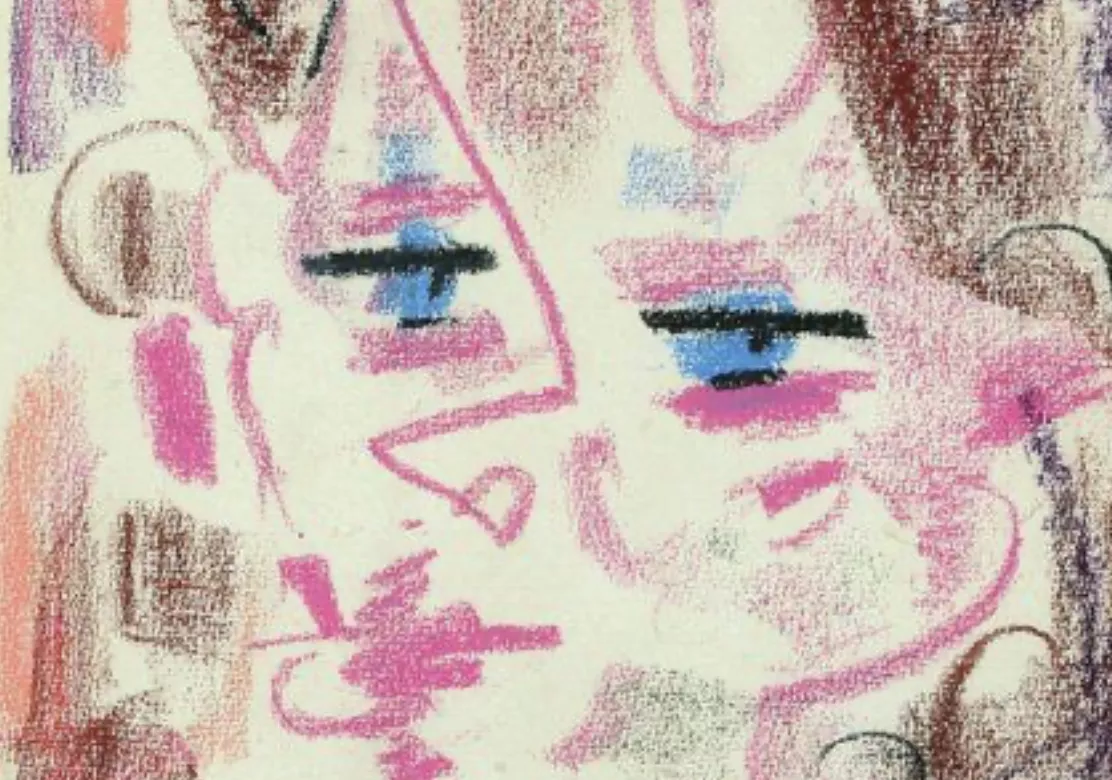
Gen Paul, his life, his work
Eugène Paul, known as Gen Paul, was born in 1895 in Montmartre. From an early age, Gen Paul showed a keen interest in art, drawing and painting with passion.
Apprentice to an upholsterer, then trained in the decorative arts, the young artist officially launched his career after the First World War.
In the early 1920s, Gen Paul exhibited his work for the first time at the Salon d'Automne and the Salon des Indépendants.
His artistic style, characterized by vivid colors, bold use of light and expressive forms, attracted the attention of critics and the public alike. At the same time, the artist was rubbing shoulders with renowned artists such as Camille Pissarro.
Contrary to the works of expressionist artists, Gen Paul's work is cheerful, full of optimism and showing an interest in the simplicity of everyday life. Nevertheless, the artist experienced a depression in the 30s, which had an impact on his art. The Second World War marked a pause in Gen Paul's career. Mobilized and then taken prisoner, the artist could only manage to draw the daily life and atrocity of the War.
During his captivity, Gen Paul befriended writer Louis-Ferdinand Céline. The two friends collaborated a few years later.
After his release, Gen Paul returned to Paris and resumed his art with determination.
In his lifetime, Gen Paul enjoyed a certain notoriety. Indeed, the artist regularly exhibited in France and abroad. Gen Paul died in Paris in 1975, leaving behind a great artistic legacy.
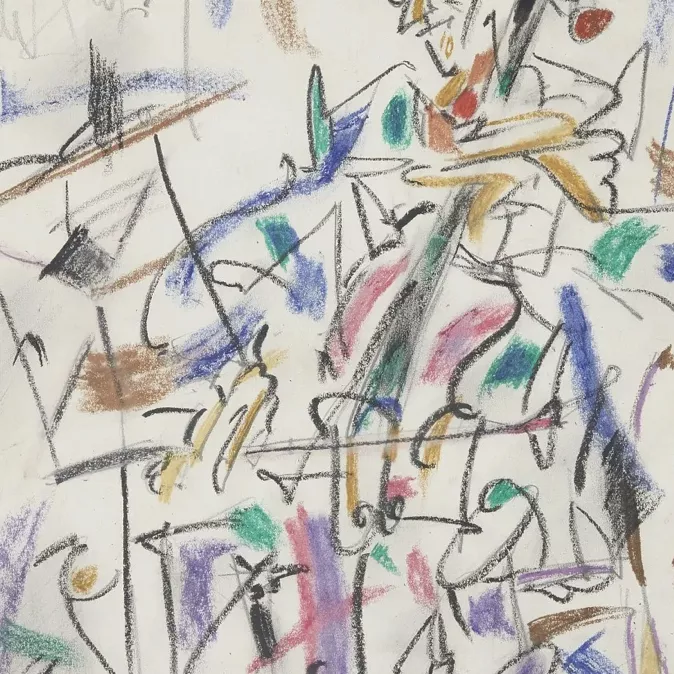
Focus on Gen Paul, Le combat
Gen Paul's work Le Combat perfectly illustrates his ability to capture inner violence, while offering a striking reflection on human tensions. Through the use of color and form, he renders visible the intensity of confrontation.
The distorted, often intertwined bodies are neither distinct nor fixed, as if seeking to escape the canvas while remaining prisoners of the impulse that drives them. The palette, composed of warm, vivid tones, accentuates the brutal aspect of the combat, but also the suffering that ensues.
The artist doesn't just suggest the action; he turns it into a whirlwind, a tangle of dynamic forms that seem to overflow, refusing to submit to the rules of academic perspective.
The artist's gestures, while imbued with a certain spontaneity, are not devoid of precision. Every brushstroke appears to be a deliberate act, a necessary move, orchestrated to make the violence of the battle palpable.
The use of chiaroscuro, reinforced by sharp contrasts, allows Gen Paul to play with light and shadow, adding a dramatic and psychological dimension to the scene. We are shown not only the physical confrontation, but also the emotional intensity of this face-to-face encounter.
In this work, each movement seems to crystallize into a fixed dynamic, inviting us to question what is beyond form, beyond the body.
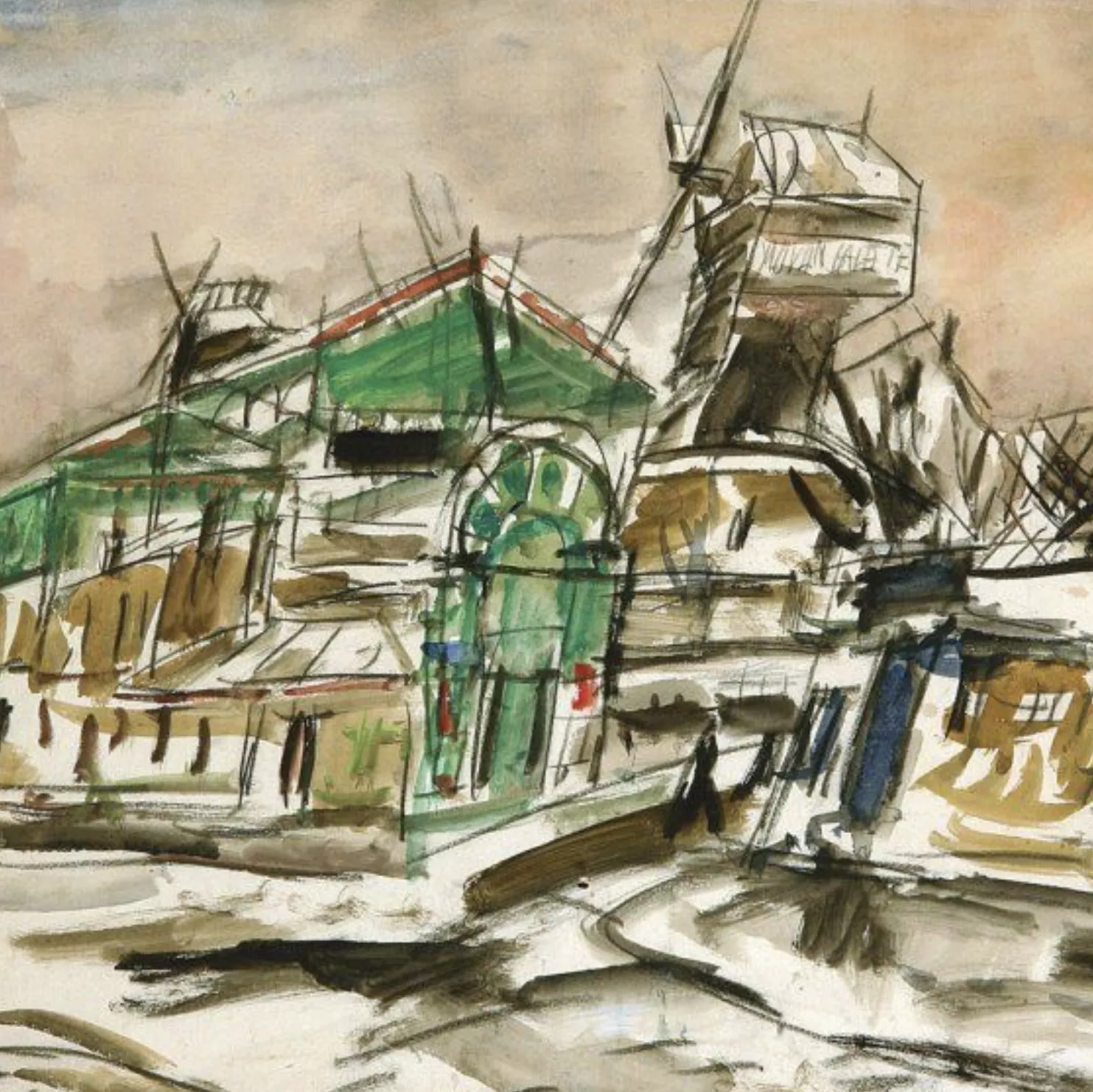
Gen Paul's imprint on his period
Gen Paul's imprint on his period is distinguished by a radical approach, with unprecedented expressive power, that refuses to compromise.
Coming from an era beset by social and political upheaval, notably the devastating consequences of the First World War, the artist asserts himself with a raw, unvarnished vision of human reality.
Through his deformed figures and dark color palette, he seeks not to embellish or soften existence, but to capture its brutality, suffering and chaos.
His drawing becomes incisive, his incisive forms and often disfigured figures reveal the anguish that haunts the human soul. Far from the traditional and academic canons, he defies artistic conventions by introducing an aesthetic violence that translates inner turmoil.
He's not afraid to show pain and decay, making his painting poignant and raw. His work thus bears witness to the fragility of the human being, to a devastated era, while offering a vision of art that refuses to be aestheticized.
Far from a quest for ideal beauty, Gen Paul inscribes his art in an exploration of naked truth, of the human being in his abysses, through a stripped-down technique, but with a striking strength, which makes him a privileged witness to the heartbreak of his time.
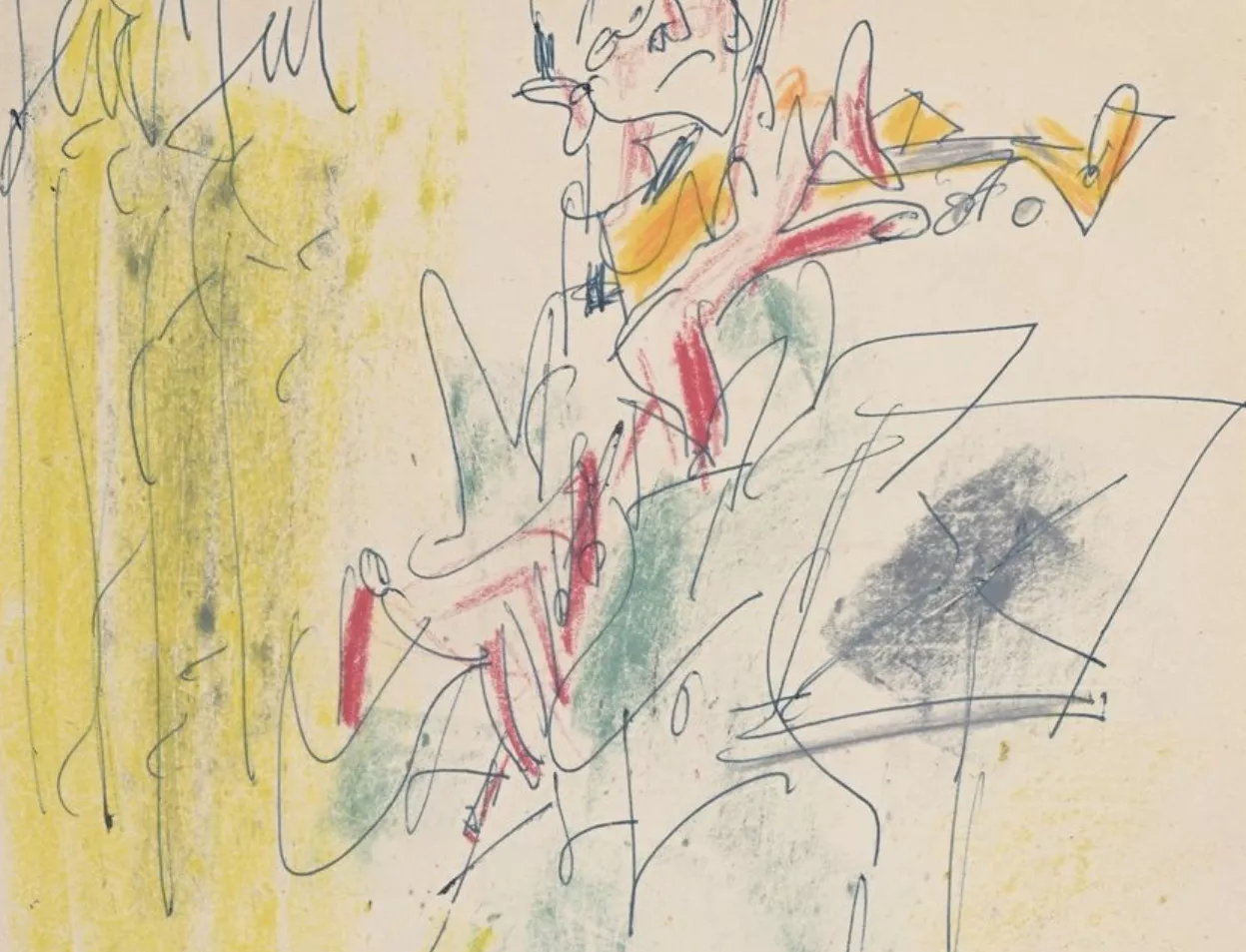
Gen Paul's stylistic influences
Gen Paul's stylistic influences are evident in his frank and uncompromising approach to human reality, often perceived through the prism of suffering and violence.
Like his contemporaries such as Georges Rouault and Ernst Ludwig Kirchner, he stands out for his willingness to break with convention and capture the intensity of human emotions.
However, where Rouault opts for a more religious and mystical representation of the human condition, Gen Paul chooses a more brutal, almost clinical expression. In his drawings, the distortion of forms seems to amplify the sense of decay and anguish, while referring to a reality devastated by war and social violence.
Compared to artists like Otto Dix or Max Oppenheimer, Gen Paul takes a similar approach in his critique of society, but his more nervous and expressive lines convey an almost palpable inner violence.
The imprint of Fauvism is also felt in his choice of colors, vivid and contrasting, which accentuate the drama of his scenes and the torment of his characters.
These influences, while present, don't prevent him from expanding his own visual language, blending social criticism with a more subjective, intimate approach to the individual.
Gen Paul doesn't just reflect society in his works, but seeks to tear the veil of reality to extract a naked truth, often disturbing and unvarnished.
This refusal of complacency, this willingness to confront humanity in its rawest dimension, places the artist in a position of both observer and denouncer, between a personal work and a reflection on the times that shaped him.
His signature
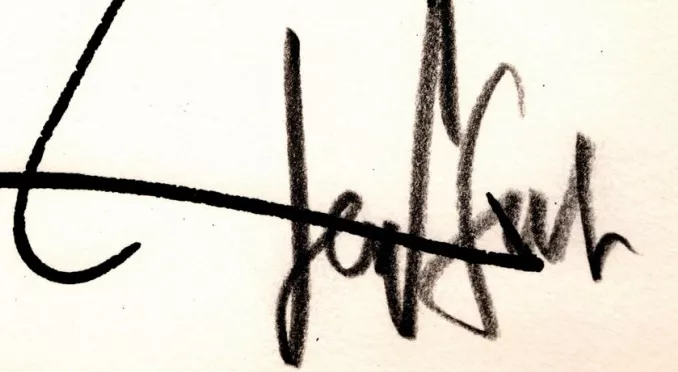
Not all of Gen Paul's works are signed.
Although there are variations, here's a first example of his signature:
Expertise your property
If you own a work by Gen Paul, feel free to request a free appraisal by filling in our online form.
A member of our team of experts and licensed auctioneers will contact you to provide an estimate of your work's market value.
If you are considering selling your work, our specialists will also guide you through the various alternatives available to obtain the best possible price, taking into account market trends and the specific features of each work.
Estimate in less than 24h
Discover in the same theme

Rating and value of Jacques-Émile Ruhlmann furniture, tables...
A study of one of the great masters of cabinetmaking and the decorative arts in the 1920s and 1930s: Jacques-Emile Ruhlmann
Learn more >

Tableaux Alix Aymé - Value, quotation, artist
Alix Aymé is a 20th-century French artist. Her drawings and paintings are successful and highly prized at auction.
Learn more >

Rating and value of paintings by Henry Émile Vollet
Henry Émile Vollet is a French painter who worked in Vietnam and produced works that are sought-after and quoted on the auction market.
Learn more >
Similar works sold at auction


Secure site, anonymity preserved

Auctioneer approved by the State

Free and certified estimates
Frequently asked questions
-
Who is Gen Paul, and what is his artistic style?Gen Paul (1895–1975) was a self-taught French painter and an influential figure in the Parisian art scene, associated with the Expressionist movement and the School of Paris. He stood out for his bold use of color and light, developing a raw and expressive style characterized by distorted forms, powerful brushstrokes, and an intense color palette, rejecting academic conventions to explore emotional turbulence.
-
What are the price and value ranges for Gen Paul's works, broken down by medium?Gen Paul’s works command varying prices depending on the medium: prints range from €10 to €3,000, drawings and watercolors from €10 to €27,441, and oil paintings on canvas from €80 to €140,000. His paintings from the 1920s are among the most sought-after, with some works fetching hundreds of thousands of euros at auction. In 2024, the artist’s market value increased by 4%.
-
How can you authenticate a work by Gen Paul and determine its exact value?To authenticate a work by Gen Paul and obtain an accurate estimate, we recommend that you submit a request for a free appraisal with Auctie's. Our experts and state-certified auctioneers will examine your artwork and provide you with a detailed assessment of its current market value, with no obligation on your part.
-
Is this the right time to sell a work by Gen Paul?Yes, now is a good time to sell a work by Gen Paul. The artist maintains a high and stable market value in the art world, with a 4% increase in 2024. His works are highly popular among collectors, particularly his paintings, which account for 62% of lots sold, and 75% of transactions take place in France, reflecting strong demand.
-
How does the appraisal and sale of a work of art take place at Auctie's?At Auctie's, appraisals are free and non-binding. After you fill out our online form, an expert or licensed auctioneer will contact you to appraise your artwork. If you decide to sell, our specialists will guide you through the various options available to help you get the best price, taking into account market trends and the specific characteristics of your item.
