



Rating and value of paintings by Marcel Mouly

Key takeaways
- Marcel Mouly’s works sell for between €10 and €47,550; one oil on canvas sold for €47,550 in 2008, exceeding its initial estimate.
- A 20th-century Fauvist painter (1918–2008), Mouly is known for his synthetic compositions that use flat areas of color and negative space to evoke light.
- Collectors are particularly interested in his Fauvist works depicting nature, although his non-Fauvist paintings also fetch tens of thousands of euros.
If you own a work by or based on the artist Marcel Mouly and would like to know its value, our state-approved experts and auctioneers will guide you.
Our specialists will carry out a free appraisal of your work, and provide you with a precise estimate of its value on the current market.
Then, if you wish to sell your work, we will direct you to the best possible arrangement to obtain the optimum price.
Artist's rating and value
On the art market, works by Marcel Mouly are quite common. Associated with the Fauvist group, works from this movement are the most sought-after by 20th-century collectors, particularly those depicting nature.
Also prized, his works that are not categorized as Fauvist can fetch tens of thousands of euros at auction. Marcel Mouly's works sell for between €10 and €47,550 on the art market, a substantial gap but one that says a lot about the value that can be attributed to these works.
In 2008, his oil on canvas La rue espagnole à Peniscola sold for €47,550 while it was estimated at between €31,000 and €47,000, suggesting a significant upside potential for his works.
Order of value from the most basic to the most prestigious
Technique used | Result |
|---|---|
Estamp - multiple | From €10 to €1,400 |
Drawing - watercolor | From €30 to €12,000 |
Painting | From €100 to €47,550 |
Estimate in less than 24h
The artist's style and technique
Marcel Mouly's works are characterized by synthetic, compressed compositions (i.e., the horizon line is drawn at the height of the painting), a sacrifice of detail and a simplification of light.
The link between color and light is established through the flat color or the fragmented brushstroke, leaving the canvas in reserve. This presence of reserve in the painting aims to evoke light and the dazzle it produces on the viewer in a sparing manner. He was an essential member of the Fauvist group.
Marcel Mouly, a forgotten figure of Fauvism
Marcel Mouly (1918-2008) was a 20th-century Fauvist painter.
Born in Paris, Marcel Mouly produced his first drawings in 1931, inspired by the port of Le Havre. To help his parents, who were of modest means, he dropped out of school at the age of 13 to take on several jobs that would enable him to support his family financially. At the same time, he continued to paint.
From 1935, he attended André Auclair's evening classes on Boulevard du Montparnasse. His progress was interrupted by his military service in the Navy, where he was seriously wounded. Hospitalized, he struggled to recover and worked at a succession of food trades until the outbreak of the Second World War.
In 1942, the Gestapo caught him drawing in a war zone. Suspected of being a spy, he was imprisoned in Fresnes for three months. At the same time, he met Édouard Pignon, a painter from the Nouvelle École de Paris, with whom he would work for some time.
After the 1945 armistice, he finally had the opportunity to exhibit and promote his work, first at the Salon d'Automne and then at the Salon de Mai. His paintings can be found alongside artists such as Jean le Moal, Maurice Estève, or Fernand Léger.
Marcel Mouly is renowned for working relentlessly, painting every day. He sometimes cut short the daily routine of his studio with trips all over France, where he produced drawings and sketches to feed his canvases.
From 1950 onwards, his fame enabled him to hold regular solo exhibitions, mostly in Paris. In 1956 and 1957, he was awarded the Prix de la Critique.
He died in 2008 in Clamart.
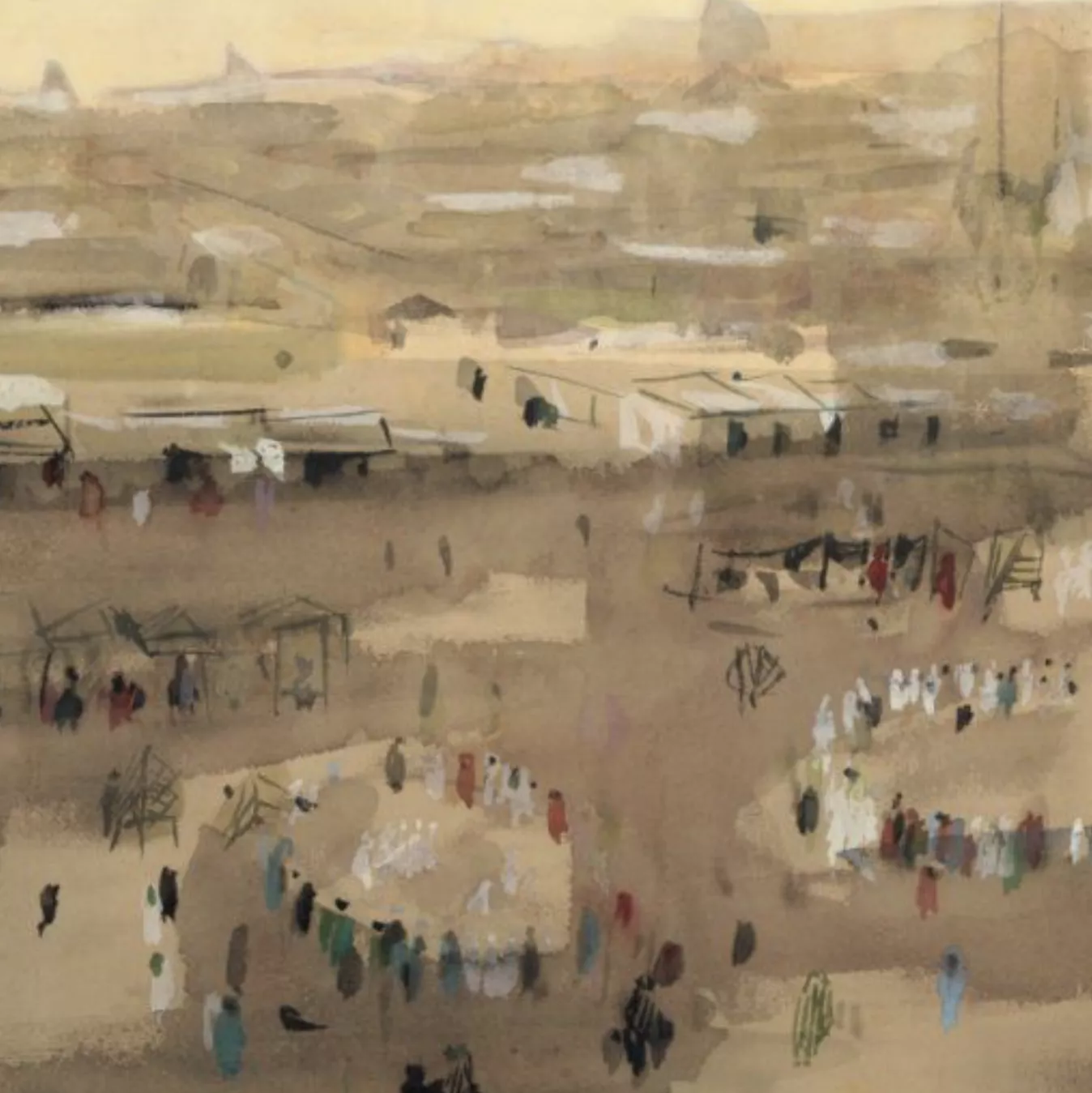
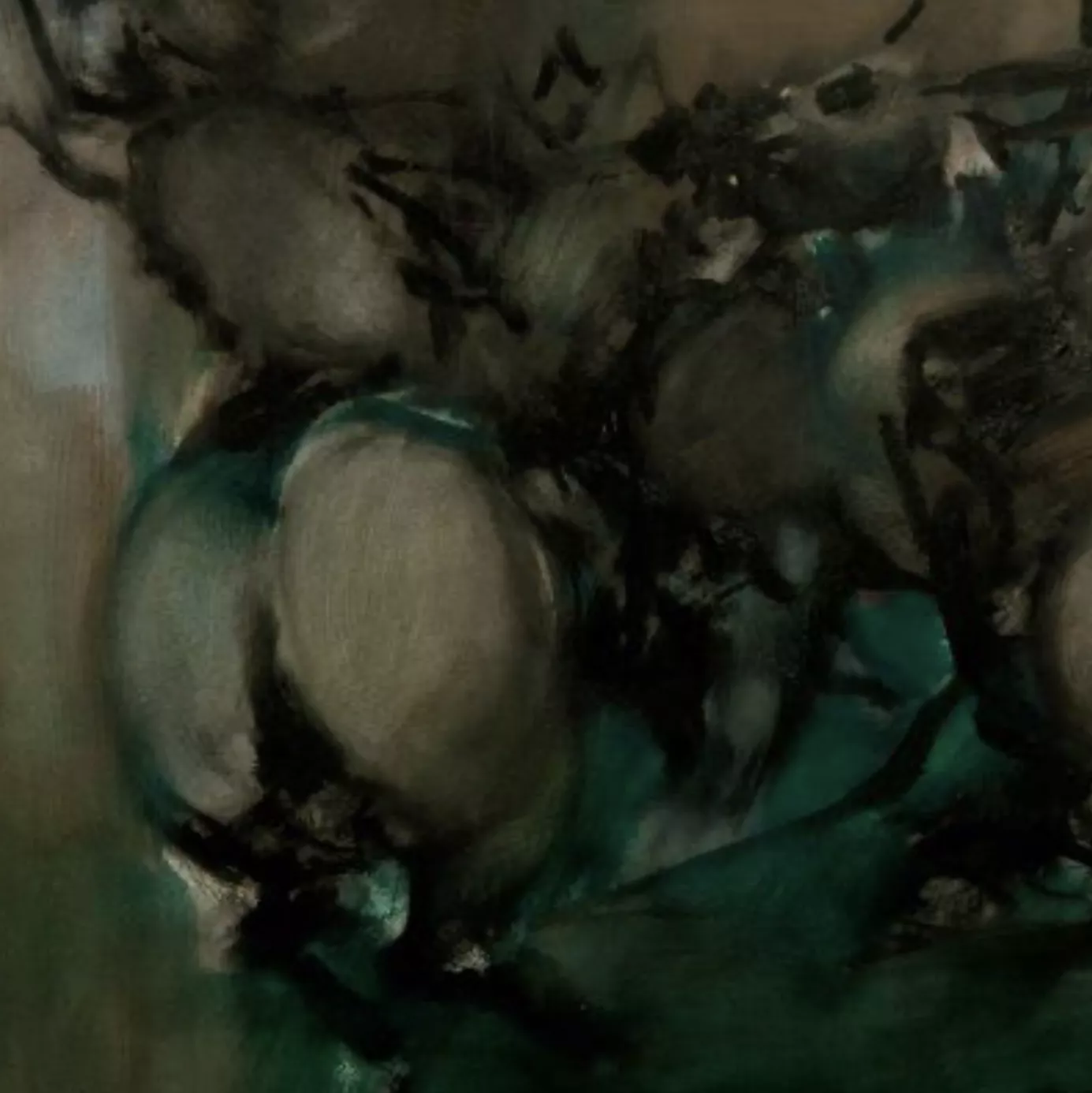
Focus on La vie calme avec la chaise, Marcel Mouly, 1996
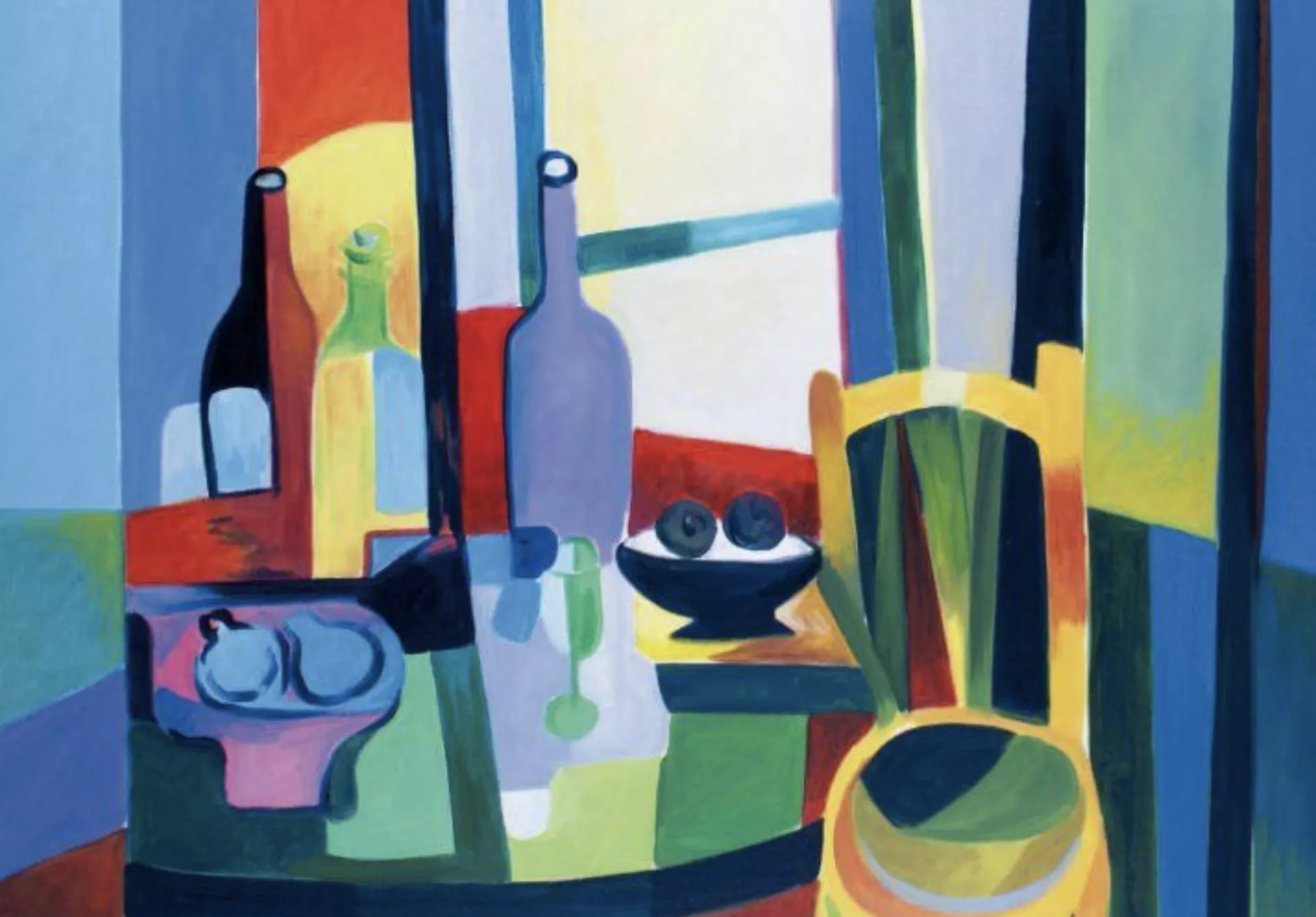
In La vie calme avec la chaise, Marcel Mouly, true to his fauve style, focuses on a compact, collected composition, where lines and colors play a prominent role.
The scene, which might seem banal at first glance - a chair, a few bottles and some fruit - is transformed under his brush into a colorful symphony.
Mouly opts here for a platter of frank, bright colors, such as red, yellow and blue, which do not seek to imitate reality, but rather to exalt the light and intensity of the objects.
The simplification of light is striking. Contrary to the pictorial tradition that seeks to reproduce the subtle interplay of light and shadow, Mouly adopts a more radical approach: shadows disappear almost completely, in favor of a diffuse, homogeneous light, evoked by the bright colors.
The strong contrast between these colors creates a kind of brilliance, a dazzling effect that comes close to Fauvist experiments, particularly those by Matisse or Derain, where pure color becomes a vector of light in its own right.
The compositional lines in this painting are sharp, even angular, a characteristic that recalls the influence of Cubism. The chair, the central element of the composition, is not depicted from a realistic perspective. It seems almost decomposed, its lines blending into those of the bottles and other elements.
This choice by Mouly shows his interest in the simplification of forms and the fragmentation of space, a process inherited from cubist masters such as Picasso.
However, unlike the latter, Mouly retains a certain legibility in his compositions: each object remains identifiable, despite the apparent deconstruction of forms.
The painting also plays with the notion of reserve. The spaces left empty, notably around the chair and the bottles, accentuate this sensation of bright light, as if the objects themselves were bathed in an unreal clarity.
These reserves, though sparing, are skilfully placed to offer the viewer visual breathing space and reinforce the dynamism of the whole. This process is reminiscent of André Derain's work, where light is not directly represented, but suggested by flat tints and striking contrasts.
In La vie calme avec la chaise, Marcel Mouly demonstrates his mastery of the balance between form and color. The composition, though deliberately simplified, offers a visual richness in which every line and every colored flat contributes to the construction of a scene both familiar and transfigured by the expressive use of color.
In this painting, Mouly shows all the strength of Fauvism, sublimated by a Cubist influence that structures his vision.
The role of Fauvism in the 20th century
Fauvism, a short-lived but essential artistic movement of the early 20th century, played a determining role in the evolution of modern art.
By freeing color from its descriptive functions, Fauvist painters, under the impetus of figures such as Henri Matisse and André Derain, introduced a new way of conceiving painting, where color became the pure expression of sensation.
This movement, though short-lived, paved the way for a deeper exploration of artistic subjectivity. Fauvism thus laid the foundations for many of the artistic revolutions that followed, notably abstraction and cubism, as exemplified by the work of Marcel Mouly.
In La vie calme avec la chaise, Mouly takes up this Fauvist heritage through his flat tints of vibrant color, while incorporating a Cubist influence marked by the fragmentation of forms.
The major contribution of Fauvism lies in this ability to simplify form to better make room for the expressive power of color.
By breaking with academic conventions and seeking the essence of the object or scene represented, the Fauvists created an unprecedented pictorial language, a bridge between the figurative and the abstract.
This language went on to nourish other currents such as Expressionism and Informal Art, confirming Fauvism as a crucial turning point in the history of twentieth-century art, where visual emotion takes precedence over the faithful representation of reality.
Marcel Mouly's imprint on his period
Marcel Mouly made a lasting mark on his period, notably through his hybrid works that blended Fauvism and Cubism, providing a perfect introduction to the pictorial and artistic upheavals taking place in the twentieth century.
Today, many of his works are exhibited in museums in France and around the world, but private collectors play the greatest role in preserving his work.
A relatively unknown Fauvist today, his work is nevertheless particularly appreciated by modern art collectors. He is also a leading exponent of the twentieth-century art movement. Categorized as a Fauvist, he was nonetheless open to other influences and never remained locked into his own pictorial movement during his career.
The artist's signature
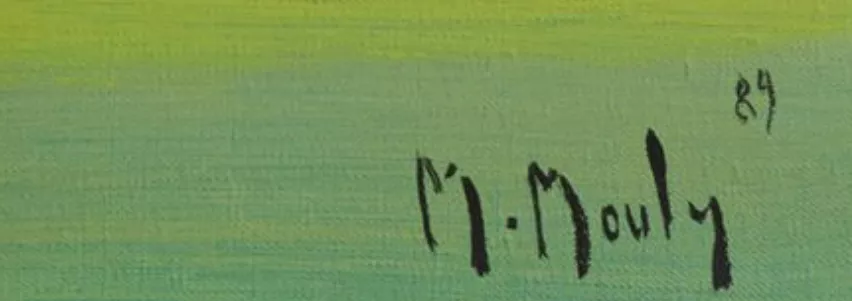
Not all of Marcel Mouly's works are signed.
Although there are variations, here is a first example of his signature :
Expertise your property
If you happen to own a work by Marcel Mouly, request a free appraisal without further delay via our form on our website.
A member of our team will contact you promptly to provide you with an estimate of the value of your work, as well as any relevant information about it.
If you are considering selling your work, our specialists will also be on hand to help you find alternative ways of selling it at the best possible price.
.Estimate in less than 24h
Discover in the same theme

Value and rating of Édouard Cazaux's ceramics
Édouard Cazaux, a 20th-century ceramist, produced a significant body of ceramics. His works are highly valued and appreciated.
Learn more >

Rating and value of paintings by Jean Buhot
Jean Buhot was a twentieth-century Orientalist painter who produced oil-on-canvas paintings that enjoyed relative success at auction.
Learn more >

Rating and value of drawings and paintings by Senkichiro Nas...
Senkichiro Nasaka is a Japanese artist and member of the Gutai movement whose works are highly sought after and valuable. 24-hour estimate.
Learn more >
Similar paintings sold at auction


Secure site, anonymity preserved

Auctioneer approved by the State

Free and certified estimates
Frequently asked questions
-
Who is Marcel Mouly, and what is his artistic background?Marcel Mouly (1918–2008) was a 20th-century Fauvist painter born in Paris. An important but often overlooked figure in Fauvism, he distinguished himself through hybrid works that combined Fauvism and Cubism. After World War II, he exhibited regularly at the Salon d’Automne and the Salon de Mai alongside masters such as Fernand Léger, and received the Critics’ Prize in 1956 and 1957.
-
What is the price range for Marcel Mouly's paintings and drawings?Marcel Mouly's works sell for between €10 and €47,550, depending on the medium and quality. Prints and multiples range from €10 to €1,400, watercolor drawings from €30 to €12,000, and paintings from €100 to €47,550. For example, his oil on canvas titled “La rue espagnole à Peniscola” sold for €47,550 in 2008, exceeding its initial estimate.
-
How can you authenticate a work by Marcel Mouly?To authenticate a work by Marcel Mouly, we recommend that you request a free, no-obligation appraisal using the form on the Auctie's website. A state-certified auctioneer or appraiser will examine the work and provide you with a detailed assessment of its value and authenticity within 48 hours.
-
Is this the right time to sell a work by Marcel Mouly?Yes, now is a good time to sell. Marcel Mouly’s works, particularly those associated with the Fauvist movement, are sought after by collectors of 20th-century modern art. The market for this type of work remains dynamic, and paintings in particular show upside potential, as evidenced by the fact that auction results have exceeded estimates.
-
How does the appraisal and sale process work at Auctie's?The appraisal is free and non-binding: simply submit your artwork via our online form, and an expert will contact you shortly to provide an appraisal within 48 hours. If you decide to sell, our specialists will guide you through the process from appraisal to auction, offering you the best options to achieve the highest possible price.
