



Rating and value of paintings by Mai Thu

Key takeaways
- Works by Mai Thu (1906–1980), a Franco-Vietnamese artist, sell for between €40 and €2,148,900 at auction, with prices rising sharply since 2015.
- Finished watercolors and drawings generally sell for between €15,000 and €80,000, while studies and small-format works cost between €3,000 and €10,000.
- The ink-on-silk work “Le Concert” exceeded its estimate in 2025, selling for €1,380,000 against an estimate of €450,000–€650,000, confirming the explosive rise in its value.
If you own a work by Mai Thu or after the artist, and would like to know its value, our state-approved experts and auctioneers will offer you their appraisal services.
Our specialists will carry out a free appraisal of your work, and provide you with a precise estimate of its value on the current market.
Then, if you wish to sell your work, we will direct you to the best possible arrangement to obtain the optimum price.
Rating and value of the artist Mai Thu
The artist Mai Thu leaves behind a distinctive body of work, composed mainly of drawings and paintings. He is French-Vietnamese. Now, prices for his works are rising under auctioneers' hammers.
The price at which they sell on the art market ranges from €40 to €2,148,900, a significant gap but one that speaks volumes about the value that can be attributed to Mai Thu's works.
He is especially prized by buyers from Hong Kong, Vietnam and France. In 2021, an oil on canvas entitled Portrait de Mademoiselle Phuong was sold for €2,148,900, while it was estimated at between €805,840 and €999,240. Its value has exploded in recent years.
Order of value from a simple work to the most prestigious
Technique used | Result |
|---|---|
Drawing - watercolor | From €230 to €714,955 |
Estamp - multiple | From €40 to €17,790 |
Oil on canvas | From €1,800 to €2,148,900 |
Estimate in less than 24h
Style and technique of artist Mai Thu
Trung Thu Mai's style and technique are characterized by several aspects.
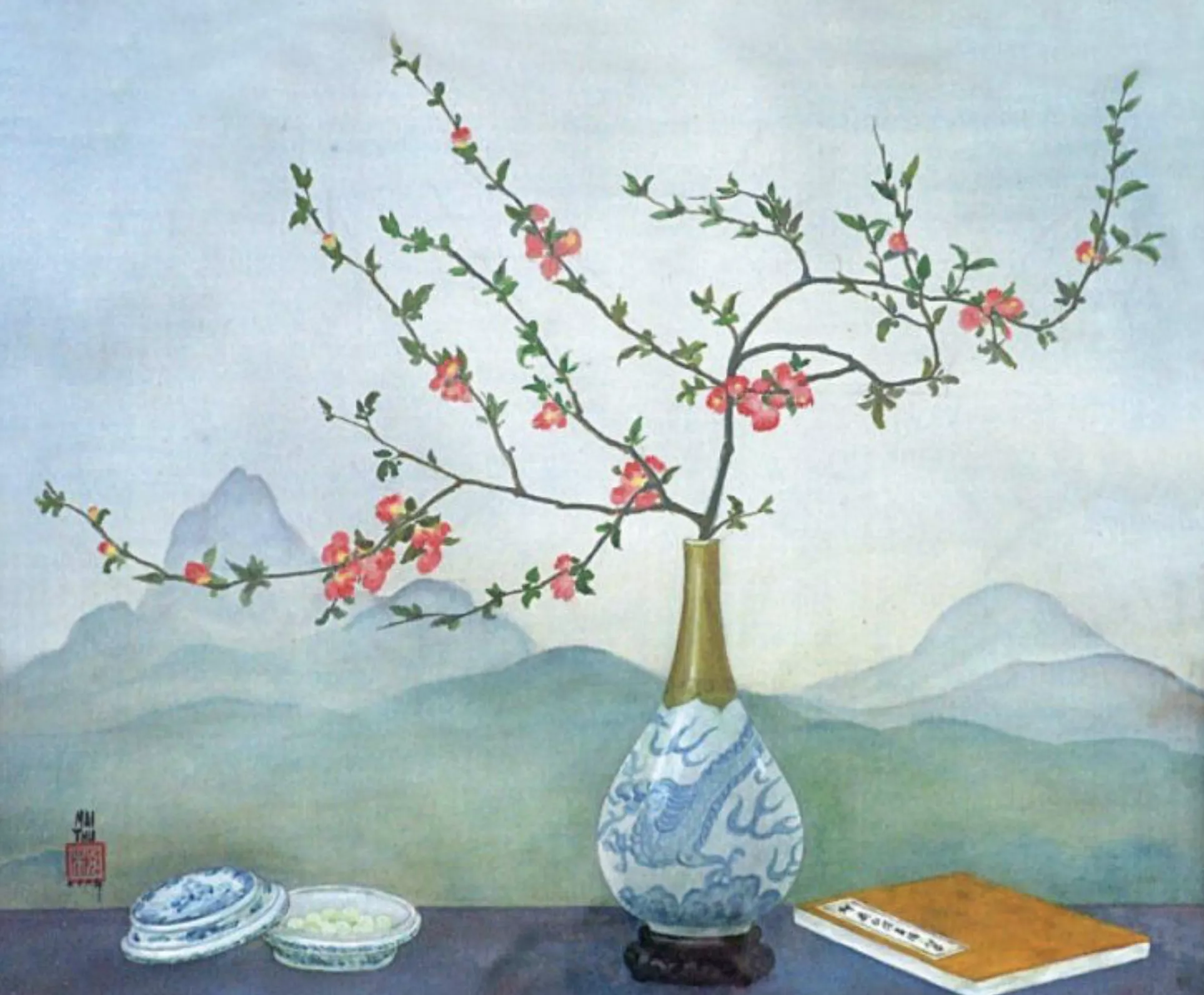
He makes extensive use of silk painting, a traditional Vietnamese technique that he modernizes by incorporating many Western influences.
He is also influenced by miniature painting and calligraphy, using delicate, precise strokes reminiscent of Asian art, with a very particular attention to detail.
His color palette is fairly soft, using harmonious pastel tones that reinforce a relatively peaceful and poetic atmosphere.
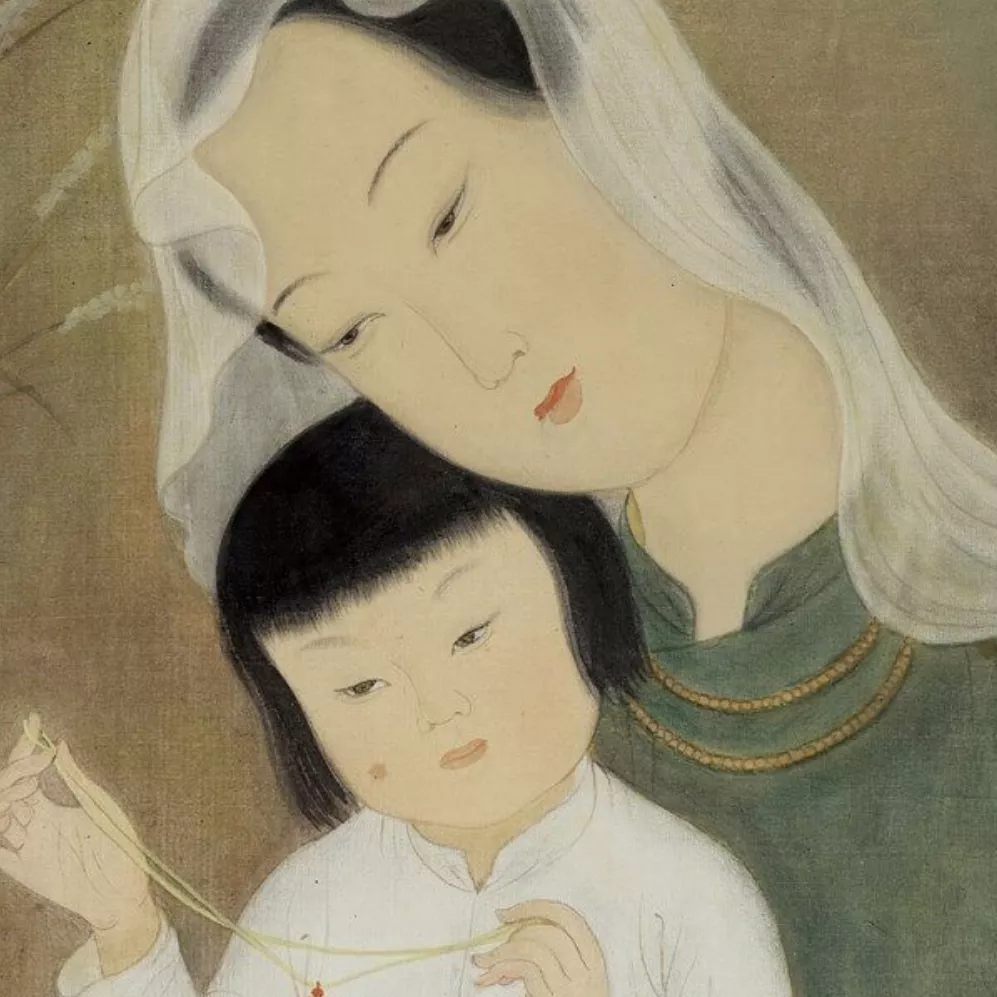
He uses fairly recurring subjects in his works : everyday scenes from Vietnam, portraits of women and children. The composition is quite balanced, carried by natural influences of Asian painting, with a fluid and natural organization of elements.
He uses mixed techniques, using gouache and ink on silk, to achieve effects of transparency and lightness.
Furthermore, the artist makes his own frames to better integrate the work into its space and accentuate its refined spaciousness.
His approach is quite sensitive, highlighting the elegance and grace of the subjects he depicts.
The life of Mai Thu
Trung Thu Mai was a Vietnamese painter born in 1906. His father was a high-ranking dignitary at the Court of Hué. He studied at the Lycée Français in Hanoi and was part of the first graduating class of the city's Ecole des Beaux-Arts. As soon as he graduated, he became a drawing teacher at the Lycée de Hué.
In Vietman, he rubbed shoulders with the painters Vu Cao Dam, Nam Son Nguyen and Le Pho, with whom he travelled to Paris for the 1937 Decorative Arts Exhibition. His success was fairly immediate, as the public at the time was quite partial to Far Eastern painting.
He collaborated with UNICEF to contribute to peace and independence in Vietnam. To this end, he filmed President Ho Chi Minh during his visit to France.
He consistently refused to work with American galleries after this stance, but nevertheless abandoned his partnership with UNICEF, even though the organization had enabled him to achieve a certain notoriety.
His work is imbued with traditional Vietnamese music, which he plays himself and whose performers he depicts on his canvases. Throughout his career, he developed his own compositional technique: le pongé sur soie, where he uses flat tints and rubs of gouache on silk.

The Artist's Techniques
Style
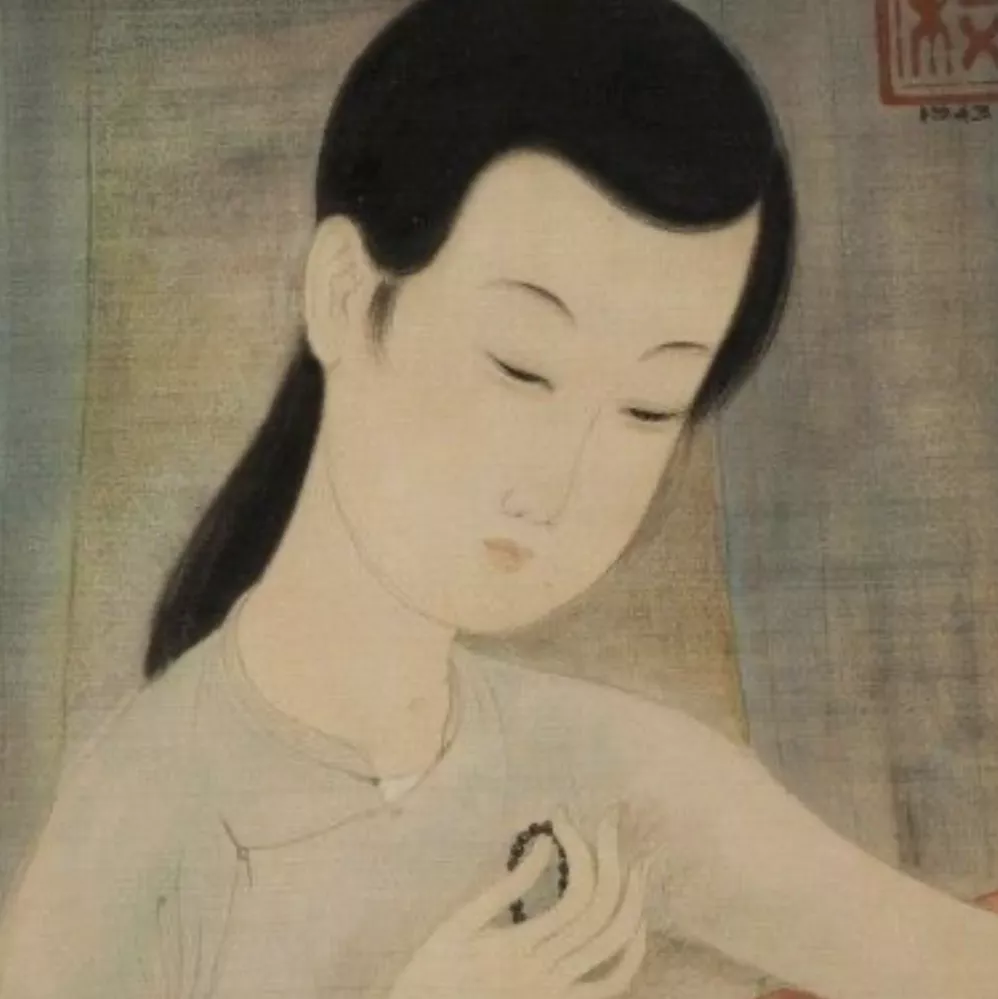
Mai Thu’s body of work is characterized by an aesthetic of delicacy, derived from silk painting and adapted to paper using extremely economical techniques. He places absolute priority on the line: a continuous, supple, calligraphic outline that structures the figure.
She uses watercolor in layers of transparent washes, producing effects of atmospheric softness and chromatic lightness. Her palette is light and harmonious, featuring pinks, pale ochres, and muted greens, which emphasize subtle modulation rather than contrast.
The spatial composition is flat and decorative, deliberately limiting perspective depth in favor of surface balance. The synthesis between Western academic training and Far Eastern sensibility is masterfully executed, particularly in the restraint of expression.
Spotlight on a Key Work
Young Girl with a Book, watercolor and ink on paper, 1950s
In this work, the fine, continuous ink line defines the contours with great economy of artistic means. The transparent watercolor washes delicately modulate the volumes without resorting to illusionistic modeling.
The background is reduced to the essentials and serves as a decorative backdrop without competing with the main figure. The work is representative of Mai Thu’s graphic language, in which technical virtuosity is placed at the service of refined poetry.
Focus on Young Girl with Lotus, Trung Thu Mai
In Young Girl with Lotus, Trung Thu Mai bases her work on a balanced composition where the central figure, a young girl holding a lotus, occupies space with grace and restraint.
The posture depicted is fluid and the curves quite delicate, making it possible to recall traditional Vietnamese art, among other prints and miniatures.
As opposed to more volumetric Western compositions, the image retains a certain flatness, with few marked shadows and a fairly subtle perspective.
Concerning colors and materials, the palette is dominated by pastel and earthy tones, reinforcing the soft, intimate atmosphere.
Painting on silk brings a rather singular texture, the pigments lightly penetrating the fiber, helping to give a transparent, light effect. The play of contrasts is quite subtle, with soothing chromatic harmonies rather than a brutal burst of color.
He treats the surface of the work so that it is almost smooth, with fairly gentle transitions between hues, and a fairly minimalist treatment of volume. Mai Thu suggests depth through the superimposition of patterns and the fluidity of lines, rather than through marked shading.
He pays particular attention to detail and floral motifs, lending an impression of delicacy - without breaking with the simplicity of the subject matter.
Through this work, Mai Thu is part of a movement that aims to reinterpret Vietnamese pictorial heritage by incorporating a Western influence, especially in the treatment of portraits.
The artist played a key role in the dissemination of Vietnamese art in the West, and took part in the exhibitions of the Indochina School of Fine Arts, being one of the first to introduce a refined, poetic aesthetic.
His approach would inspire other Vietnamese artists, who were also seeking a balance between tradition and modernity, and between East and West, not least in contemporary silk painting.
Although Young Girl with Lotus illustrates Vietnamese tradition in its medium and subject, the work stands out for its rather subtle pictorial treatment, which is influenced by Western art.
The artist thus succeeds in creating a unique visual language, where the softness of the forms and the symbolic richness of the floral motif manage to transcend the simple portrait to become a poetic evocation of Vietnam.
Knowing the value of a work
If you happen to own a work by Mai Thu or after the artist, don't hesitate to request a free appraisal using our form on our website.
A member of our team of experts and certified auctioneers will contact you promptly to provide you with an estimate of the market value of your work, not forgetting to send you ad hoc information about it.
If you wish to sell your work, you will also be accompanied by our specialists in order to benefit from alternatives to sell it at the best possible price, taking into account market inclinations.
Estimate in less than 24h
Discover in the same theme

Rating and value of works, paintings by Helmut vom Hügel Kol...
Helmut Kolle is a cubist artist from the first half of the 20th century. Today, his works are quoted on the auction market.
Learn more >

Rating and value of drawings and photographs by Gustav Kluci...
Gustav Klucis is a Russian artist who played an active role in Soviet propaganda. Today, his works are highly prized.
Learn more >

Rating and value of paintings by Gabriele Münter
Gabriele Münter is an Expressionist artist who has produced many works that are highly valued at auction. 24h estimate
Learn more >
Works from the same period sold at auction

Estimated 2500 - 5000 €
Henri EPSTEIN (1892-1944), View of the village through the trees, Oil on canvas

Estimated 3 000 - 5 000
Gaston SUISSE (1896-1988), Engraved polychrome lacquer panel on tortoiseshell lacquer background.

Estimated 500 - 800 €
Louis BUISSERET (1888-1956) - Water carrier, Portugal, circa 1943, Oil on canvas

Estimated 1000 - 2000 €
NGUYEN TUONG LAN (1906-1947) - Ink and gouache painting on silk depicting a temple.

Estimated 2.000 - 4.000
VIETNAM, 20th century. Lacquer on panel, fishermen and sampans on a river. Signed Thanh and dated 55

Secure site, anonymity preserved

Auctioneer approved by the State

Free and certified estimates
Frequently asked questions
-
Who was Mai Thu, and what is her artistic background?Mai Thu (1906–1980) was a Franco-Vietnamese artist and a member of the first generation of modern Vietnamese artists trained at the École des Beaux-Arts d'Indochine. His work combines Western academic mastery of drawing with the aesthetic sensibility of the Asian painting tradition, particularly through his famous drawings, watercolors, and paintings on silk, which are characterized by clean lines and great delicacy.
-
What is the price range for Mai Thu's watercolors and drawings?Mai Thu’s watercolors and drawings sell for between €40 and €2,148,900, depending on the technique and quality. Mature watercolors generally sell for between €15,000 and €80,000, ink drawings and highlighted drawings between €8,000 and €30,000, while studies or small-format works range from €3,000 to €10,000.
-
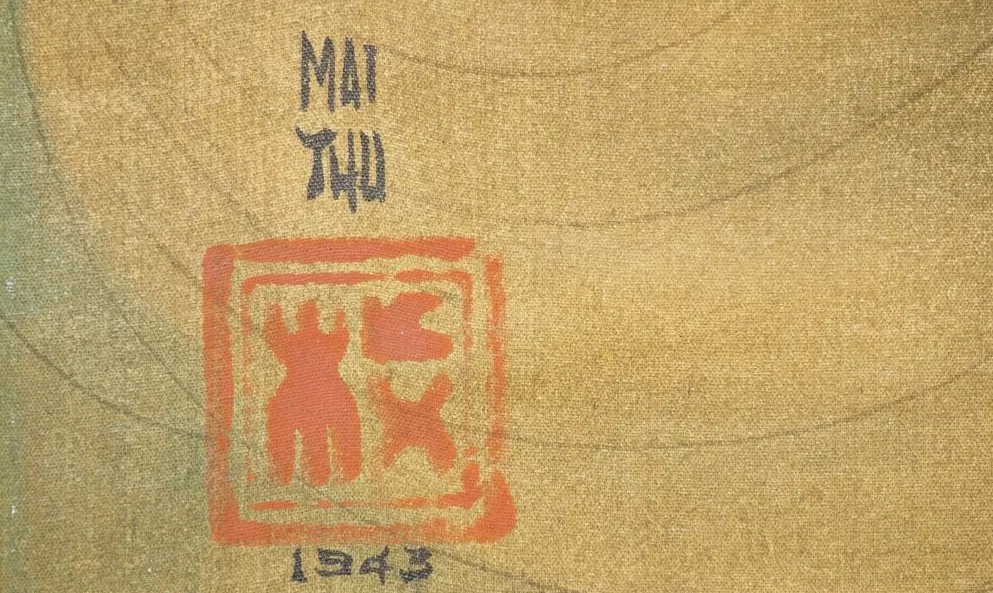
How can you authenticate a work by Mai Thu?Authenticating a work by Mai Thu requires professional expertise, as the artist’s work has been widely copied. We recommend that you submit your artwork for a free appraisal by our certified auctioneers and experts, who will examine the technique, the signature (in French and Chinese), the seal, the dimensions, and the condition to confirm its authenticity.
-
Is this a good time to sell a work by Mai Thu?Yes, this is an excellent time to sell a work by Mai Thu. The artist has seen a sharp rise in her market value since 2015 and is among the most sought-after Vietnamese artists on the international scene. Her works regularly fetch record prices at auction and enjoy strong demand, particularly among collectors in Hong Kong, Vietnam, and France.
-
How does the appraisal process work at Auctie's?Appraisals at Auctie's are free and non-binding. Simply fill out our online form with photos and information about your artwork. Our auctioneers and certified experts will then conduct a thorough appraisal and provide you with a reliable estimate of the market value within 48 hours, before assisting you with the sale if you wish.
