



Rating and value of paintings by Jean Fautrier

Key takeaways
- Jean Fautrier, a leading figure in French lyrical abstraction (1898–1964), has seen his market value rise steadily in the contemporary art market.
- Fautrier’s paintings fetch between €220 and €4.3 million, such as his composition “Pièges” (1946), which sold for €4.35 million in 2021.
- Major works from his “Otages” series sell for between €500,000 and over €1 million, depending on size, provenance, and international exhibition history.
If you own a work by or based on the artist Jean Fautrier and would like to know its value, our state-approved experts and auctioneers will guide you.
Our specialists will carry out a free appraisal of your work, and provide you with an accurate estimate of its value on the current market.
Then, should you wish to sell your work, we will direct you to the best possible arrangement to obtain the optimum price.
Artist's rating and value
Considered a major artist of lyrical abstraction, Jean Fautrier exhibited widely during his lifetime. As a result, he already enjoyed a certain notoriety and presence on the art market.
Today, his stock continues to rise, with the artist establishing himself as a sure bet on the art market, the prices at which they sell ranging from €10 to €4,354,140 on the art market.
A work by Fautrier can fetch hundreds of thousands of euros at auction, as evidenced by his composition Pièges, dating from 1946 sold for €4,354,140 in 2021, while it was estimated at between €1,161,100 and €1,741,650.
Order of value from the most basic to the most prestigious
Technique used | Result |
|---|---|
Estamp - multiple | From €10 to €44,000 |
Drawing - watercolor | From €80 to €45,630 |
Sculpture - volume | From €640 to €340,000 |
Painting | From €220 to €4,354,140 |
Estimate in less than 24h
The artist's style and technique
Jean Fautrier (1898 - 1964) is a major figure in French informal art. He developed an approach in which matter took precedence over figuration, testifying to a desire to express raw emotion through painting.
The artist works with serious themes; his Otages series, for example, was born in reaction to the horrors of the Second World War; the figures are barely suggested, as if dominated by the matter they dissolve.
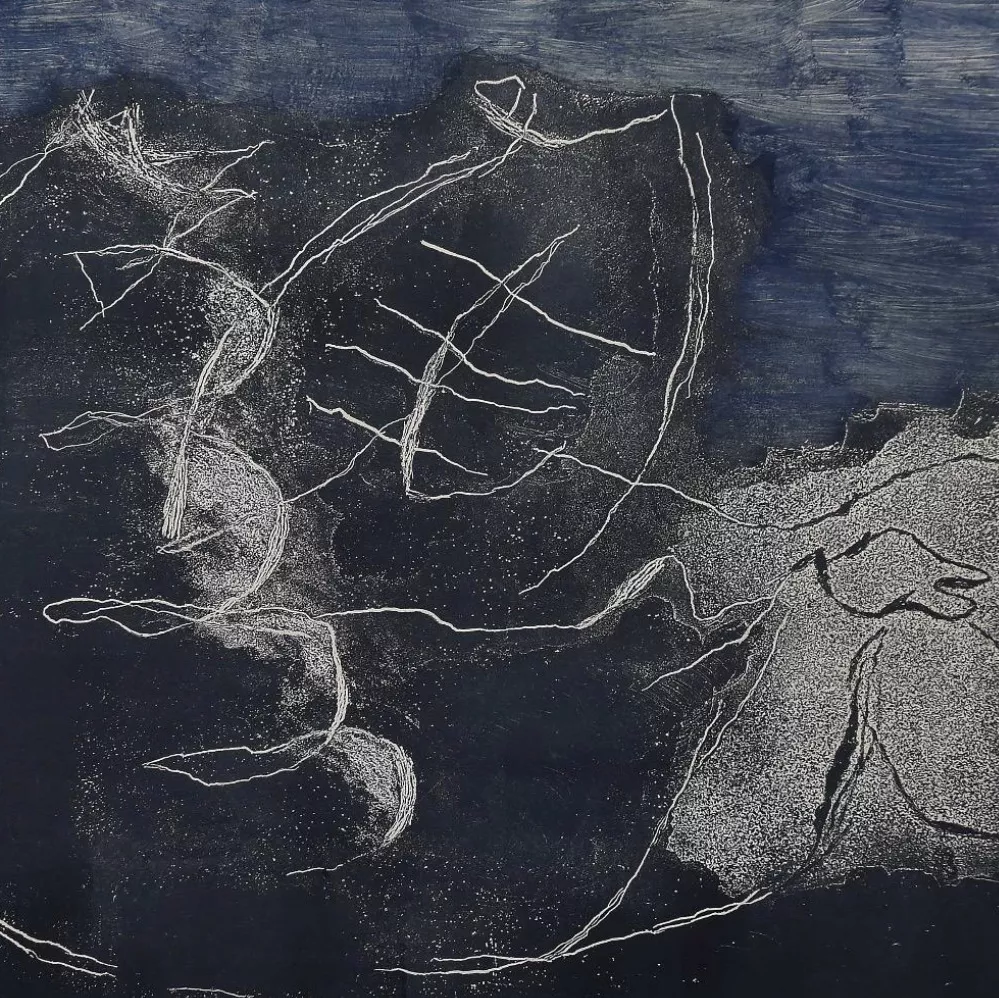
He uses a very restricted palette, working in particular with grays, blacks and whites, which are employed to modulate texture and play on brilliance or density, applying thick layers, sometimes up to 1 cm thick, with a highly worked impasto more akin to relief sculpture than classical painting.
His technique often includes the use of encaustic, which consists in binding paint to wax, giving his works a matt, grainy and tactile finish. He sometimes adds sand and pigments, and generally anything that enriches the texture.
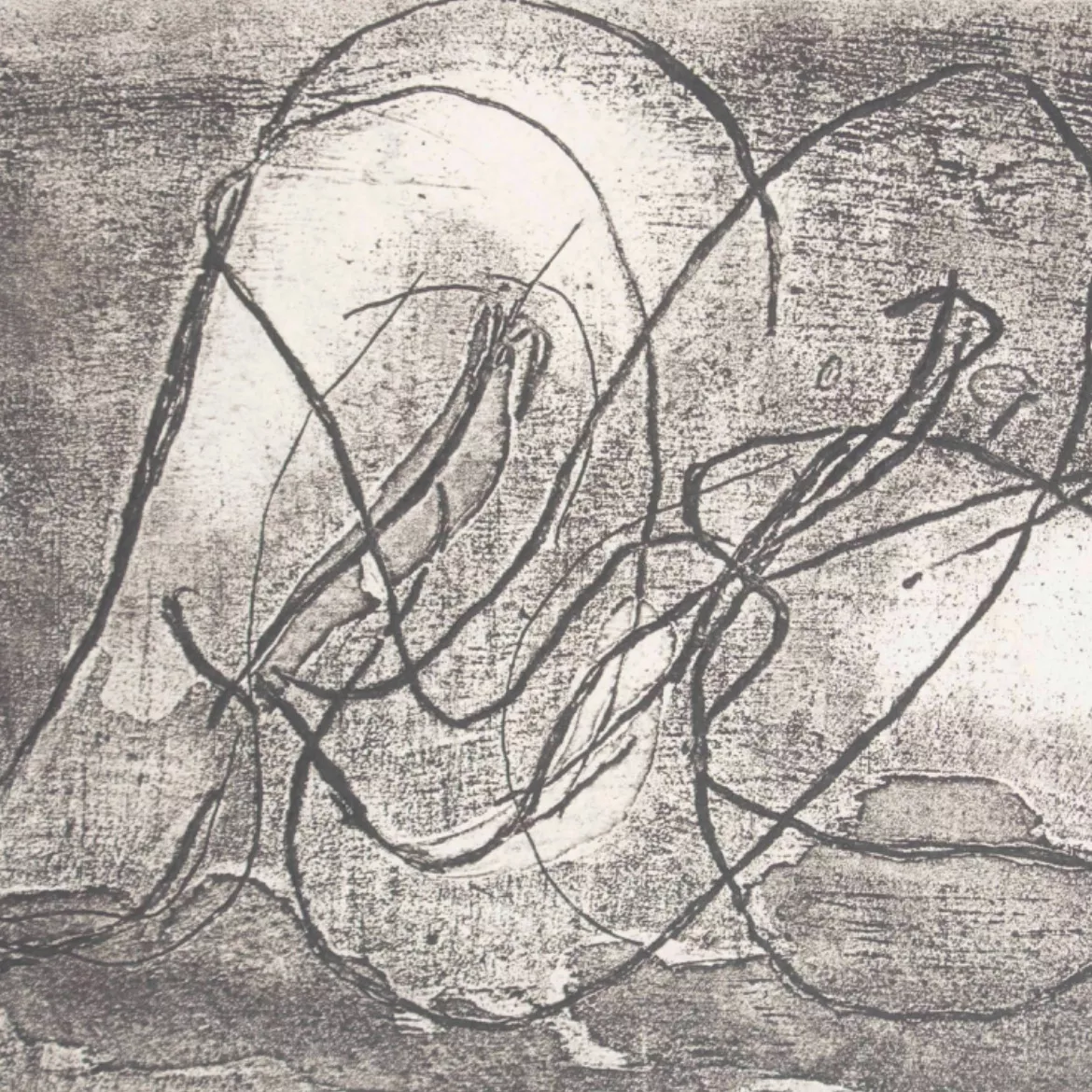
The works are not constructed, but flow in a gesture that blends controlled chance and force of gesture. This is sometimes referred to as event-painting. The shapes, which are often organic, emerge from the material itself, suggesting silhouettes almost buried in the surface.
Each canvas becomes an abstract relief, where the eye navigates between light and shadow, but also between density and emptiness. Fautrier's work is part of the European post-war period, a break with geometric abstraction: his language is raw, intimate and resolutely modern.
He shares Dubuffet's quest for primitive expression, but explores painting as an object, and matter as a subject. His work strongly influenced subsequent generations of informal artists in Europe and the U.S.
.
Artist's rating and value
Major works by Fautrier, notably canvases from the Otages series or large-format informal textures can fetch sums ranging from €500,000 to over €1 million, depending on the work's size, provenance and historical impact.
Results for medium-format works are generally expected between €150,000 and €400,000, particularly in the case of prestigious provenance or notable exhibition (museums, galleries).
Smaller works or paper, meanwhile, commonly have an estimate between €30,000 and €100,000, with variations depending on their condition, technical quality and presence within the catalog raisonné. We sometimes see increases of +20 to +50% for exceptional works, particularly in periods of high demand.
Inversely, however, works of lesser notoriety or produced in minor formats sometimes see estimate reductions of 10 to 30% for lack of targeted buyers.
A clear provenance or presence in an international exhibition can add 20% to 50% more value on the final estimate. Works belonging to the Otages series, which is emblematic of his artistic commitment, are generally the most sought-after and therefore the most highly priced.
The life of Jean Fautrier
Jean Fautrier (1898 - 1964) was born in Paris. Today, he is an essential figure in French informal art. As a child, he emigrated to London with his mother after a family bereavement in 1908. He went on to attend the Royal Academy of Arts (1912), then the Slade School of Fine Art, but never fully blossomed. He cultivated a great admiration for Turner.
Fautrier returned to Paris in 1920, quickly occupying a studio in Montmartre and then in Montparnasse from 1923. His first solo exhibition took place at the Galerie Visconti (1924), and was followed by support from Jeanne Castel and dealer Paul Guillaume.
He worked in figurative styles (still lifes, nudes, landscapes, thus becoming part of post-expressionism), and then produced a series of engravings for Dante's Inferno (1928), which were not published.
Faced with financial difficulties, he left Paris in 1934 to teach skiing in Tignes and run a hotel in Savoie, but managed his creative work in parallel. He returned to Paris before the war in 1939, and took part in the Resistance.
In 1943, he was arrested by the Gestapo, but managed to flee and found refuge in Châtenay - Malabry. He then created his major series Otages and Massacres, powerful works that express the tragedy of war. Other artists to choose this path include Otto Dix, Max Beckmann, Maurice Mendjinsky or Georg Baselitz.
The exhibition at Galerie Drouin in 1945 marked the start of his public success. In the 1950s, Fautrier developed a new series, Originaux-Multiples, a mixed technique combining painting and engraving, with the help of his partner Jeanine Aeply.
Fautrier received the Grand Prix at the Venice Biennale in 1960 and at the Tokyo Biennale in 1961. Until his death in 1964, he continued to produce abstract, procedural works that were both sensitive and radical.
A retrospective of his work was held the year of his death at the Musée d'Art Moderne in Paris, and numerous donations enriched public collections. Since then, his work has been regularly exhibited (retrospectives have been held in Paris, Osaka and Winterthur), consolidating his place as one of the great pioneers of European informal art.
style="text-align justify">.
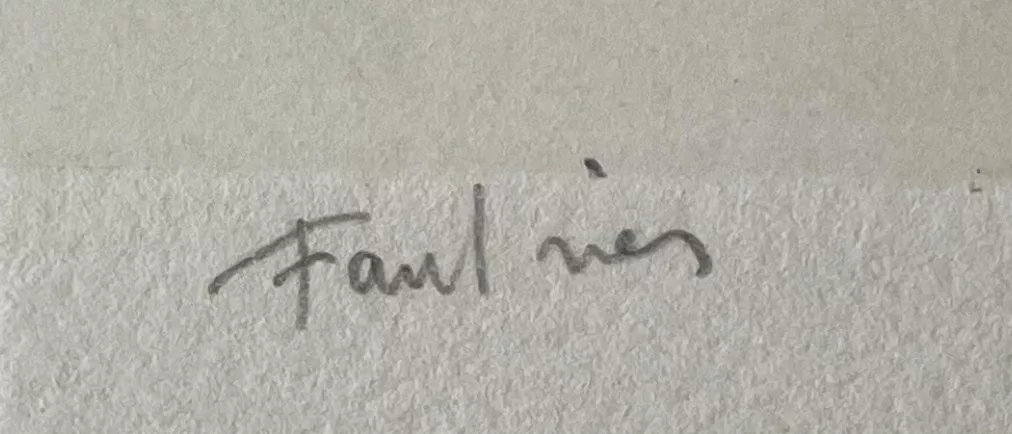
His signature
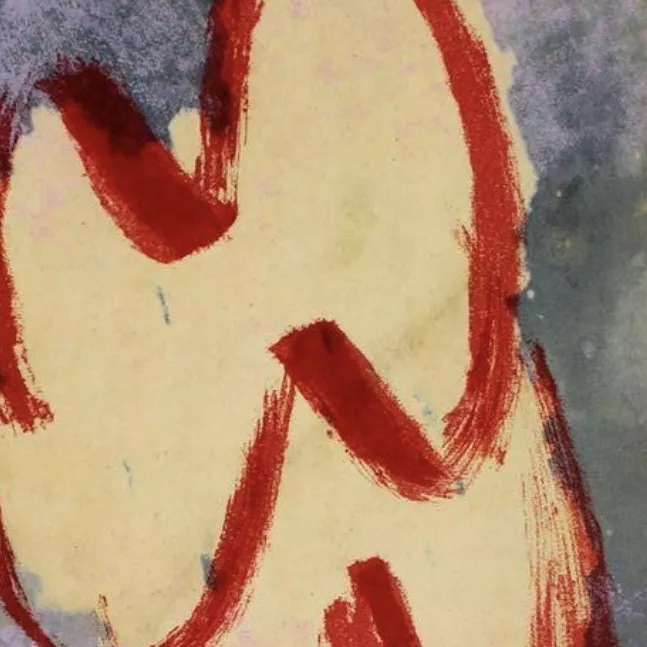
Although there are variations, here's a first example of his signature :
Expertise your property
If you own a work by Jean Fautrier, don't hesitate to request a free appraisal by filling in our online form.
A member of our team of experts and certified auctioneers will contact you to provide an estimate of the market value of your work.
If you are considering selling your work, our specialists will also guide you through the various alternatives available to obtain the best possible price, taking into account market trends and the specific features of each work.
Estimate in less than 24h
Discover in the same theme

Rating and value of paintings, drawings and watercolors by Y...
Yves Brayer is a twentieth-century figurative painter who has produced numerous works that are quoted and in demand on the auction market.
Learn more >

Rating and value of paintings by Tadeusz Makowski
Tadeusz Makowski is a twentieth-century Polish painter who produced works of considerable value at auction.
Learn more >

Rating and value of paintings by André Barbier
André Barbier is a twentieth-century Impressionist painter who produced paintings that are highly valued at auction.
Learn more >
D'autres tableaux abstraits vendus aux enchères

Estimated 2.000 - 4.000
Serge POLIAKOFF (1900-1969), Composition en rouge et bleu. 1965, Lithograph

Estimated Between €5,000 and €8,000
Jean MIOTTE (1926-2016), acrylic on canvas

Estimated 3.000 - 5.000
Roberto MATTA (1911-2002), Composition, Gouache on canvas

Secure site, anonymity preserved

Auctioneer approved by the State

Free and certified estimates
Frequently asked questions
-
Who is Jean Fautrier, and what is his artistic background?Jean Fautrier (1898–1964) was a leading figure in French Informel art and lyrical abstraction. A postwar artist, he made his mark by breaking away from geometric abstraction, developing a raw and intimate artistic language grounded in the material itself. His iconic series, notably the *Otages* created in response to the horrors of World War II, profoundly influenced subsequent generations of Informel artists in Europe and the United States.
-
What are the price ranges for Jean Fautrier's works?Prices for Fautrier’s works vary considerably depending on the type and size: major paintings from the *Otages* series or large-format works can fetch between 500,000 euros and over one million euros; medium-sized works range from €150,000 to €400,000; small-format works and works on paper range from €30,000 to €100,000. Price variations of +20% to +50% are observed for exceptional works, while less well-known works may see price reductions of 10% to 30%.
-
How can you authenticate a work by Jean Fautrier and determine its value?You can request a free, no-obligation appraisal from Auctie's by filling out an online form. A state-certified expert or auctioneer will examine your piece and provide you with an accurate estimate of its current market value within 48 hours. This service is completely free and allows you to determine the authenticity and market value of your item.
-
How do provenance and exhibition history affect the value of a work by Fautrier?A clear provenance or inclusion in an international exhibition can add 20 to 50 percent to a work’s final estimate. The works from the *Otages* series, emblematic of his artistic commitment, are the most sought-after and therefore the most highly valued. Conversely, the absence of a prestigious provenance or notable exhibition history can negatively impact the value.
-
How can you sell a work by Jean Fautrier and get the best price?Auctie's, an auction house, guides you from the appraisal to the final bid. After a free appraisal of your item, our specialists will help you choose the best sales approach, taking into account market trends and the unique characteristics of each piece, in order to achieve the best possible price for your creation.
