



Rating and value of paintings by Catherine Zoubtchenko

Key takeaways
- The oil-on-canvas paintings by Catherine Zoubtchenko, a Franco-Russian abstract artist born in 1937, sell for between €40 and €20,000, with prices rising sharply since the 1980s.
- Works from the 1960s and 1970s command higher prices than later pieces, and medium- to large-sized works that are signed and dated fetch several thousand euros at auction.
- Watercolor drawings range from €50 to €1,500, while the market—primarily French—remains in a consolidation phase, with estimates ranging from €800 to €2,000 for smaller works.
If you own a work by or based on the work of artist Catherine Zoubtchenko and would like to know its value, our state-approved experts and auctioneers will guide you.
Our specialists will carry out a free appraisal of your work, and provide you with a precise estimate of its value on the current market.
Then, should you wish to sell your work, we will direct you to the best possible arrangement to obtain the optimum price.
Rating and value of the artist Catherine Zoubtchenko
Catherine Zoubtchenko is a well-known artist among lovers of modern and contemporary art. Now, the prices of her works are rising at the auctioneers' gavel.
Her oils on canvas are particularly prized, especially by American buyers, and the price at which they sell on the art market ranges from €40 to €20,000, a significant delta but one that speaks volumes about the value that can be attributed to the artist's works.
In 2013, his work Monik, an oil painting dating from 1963, sold for €20,000, while it was estimated at between €15,000 and €20,000. His value is rising sharply.
Order of value from the most basic to the most prestigious
Technique used | Result |
|---|---|
Drawing - watercolor | From €50 to €1,500 |
Oil on canvas | From €40 to €20,000 |
Estimate in less than 24h
The works and style of Catherine Zoubtchenko
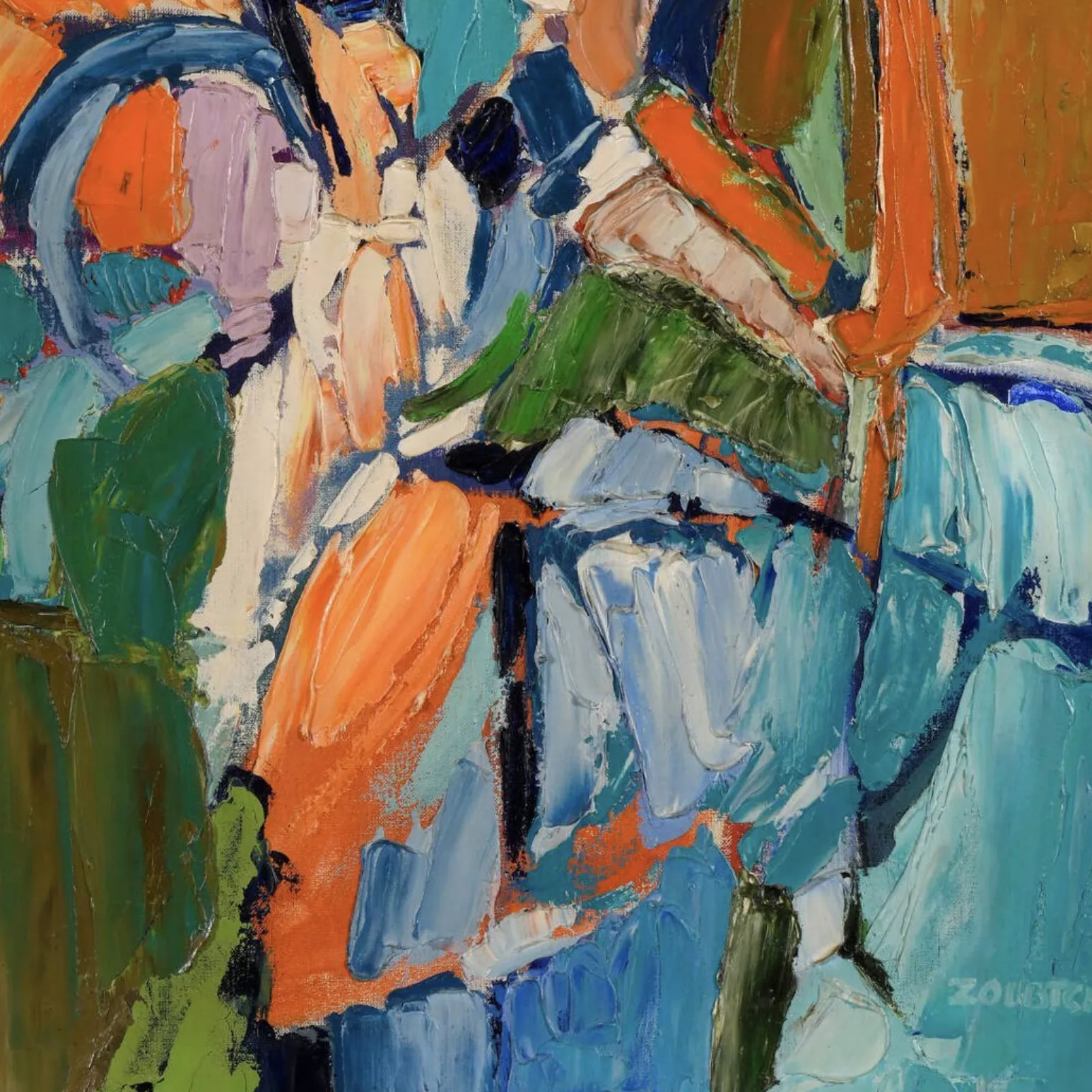
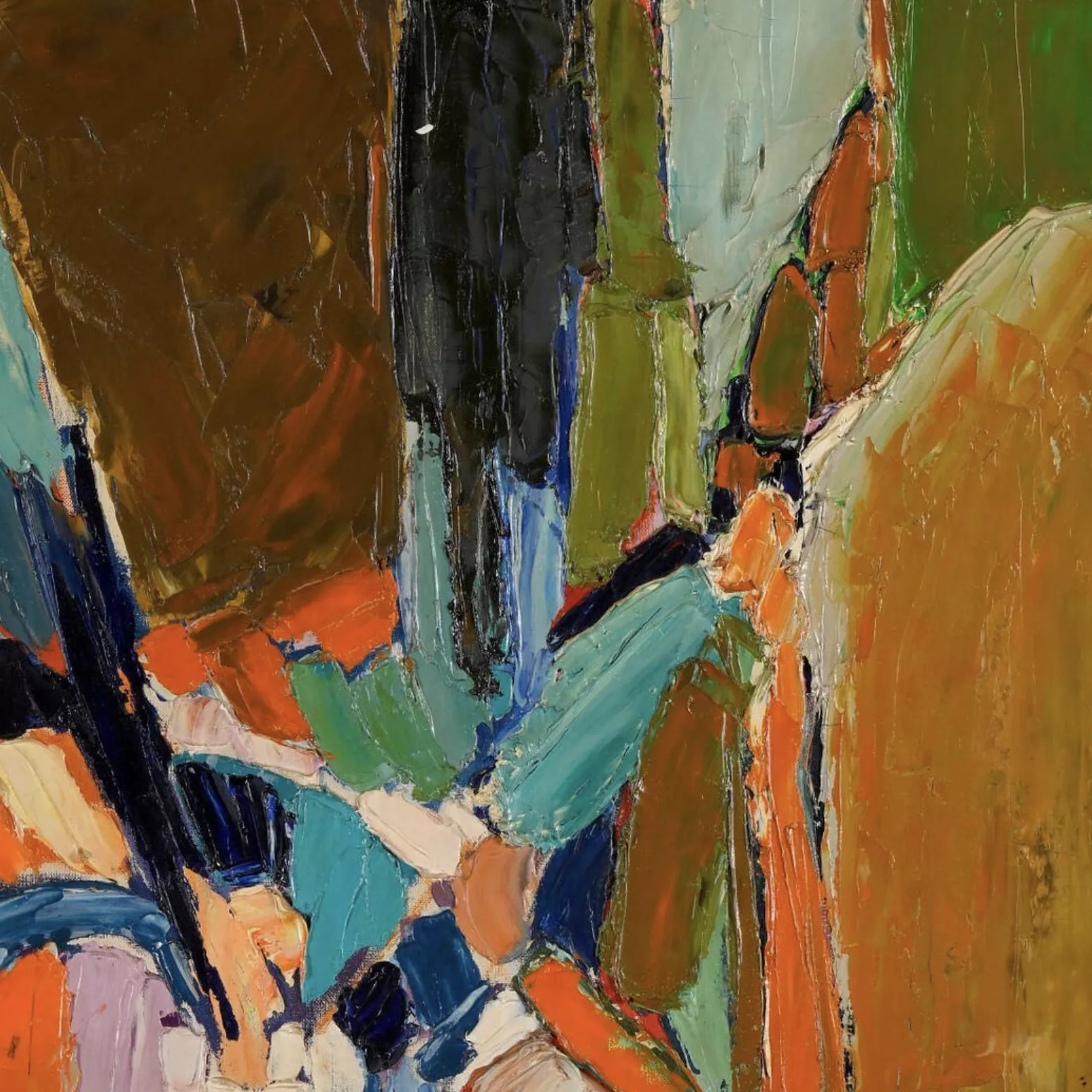
Catherine Zoubtchenko is a Franco-Russian artist born in Leningrad in 1937, who has lived in Paris since 1954. Her work is essentially oriented towards non-figurative abstraction, with an emphasis on color, geometric composition and the materiality of the pictorial gesture.
Her visual vocabulary combines angular shapes and intense chromatic flat tints such as triangles, squares, stripes and a colorful modular construction. She varies in scale, with medium to large canvases, often signed and dated, marking periods of chromatic experimentation.
The internal structure is dynamic, with compositions arbitrating a tension between geometric stability and chromatic vivacity, evoking both order and expression. The supports are varied, with oil on canvas, sometimes gouache or watercolor on paper depending on the series.
The pictorial application is rich, with a use of pure color, moderate impastos and a juxtaposition of solids and strokes, with an emphasis on surface rather than illusion.
The compositions are modular : the geometric structure is often inscribed in a network, the canvas is subdivided into articulated chromatic zones, requiring precise calibration of shapes. The chromatic palette is deliberate, with vivid hues of blues, greens, reds and purples, and neutrals such as grays and blacks, deployed to create visual rhythms and depth effects.
Signature and dating are visible; each work is usually signed, dated, and sometimes titled or annotated on the reverse.
The life of Catherine Zoubtchenko
Catherine Zoubtchenko was born in 1937 in Leningrad (USSR - Russia). In 1941, she was deported with her parents to Berlin by the Nazi occupiers. She moved to Paris in 1954, where she began her career as a painter. The artist studied at the Académie de la Grande Chaumière and the Académie Julian between 1954 and 1955.
She became the sole pupil of André Lanskoy from 1958, and became a figure of non-figurative abstract painting in France. Her works have been sold at auction since the late 1980s, with current prices amounting to several thousand euros. She has held several exhibitions in France and Europe.
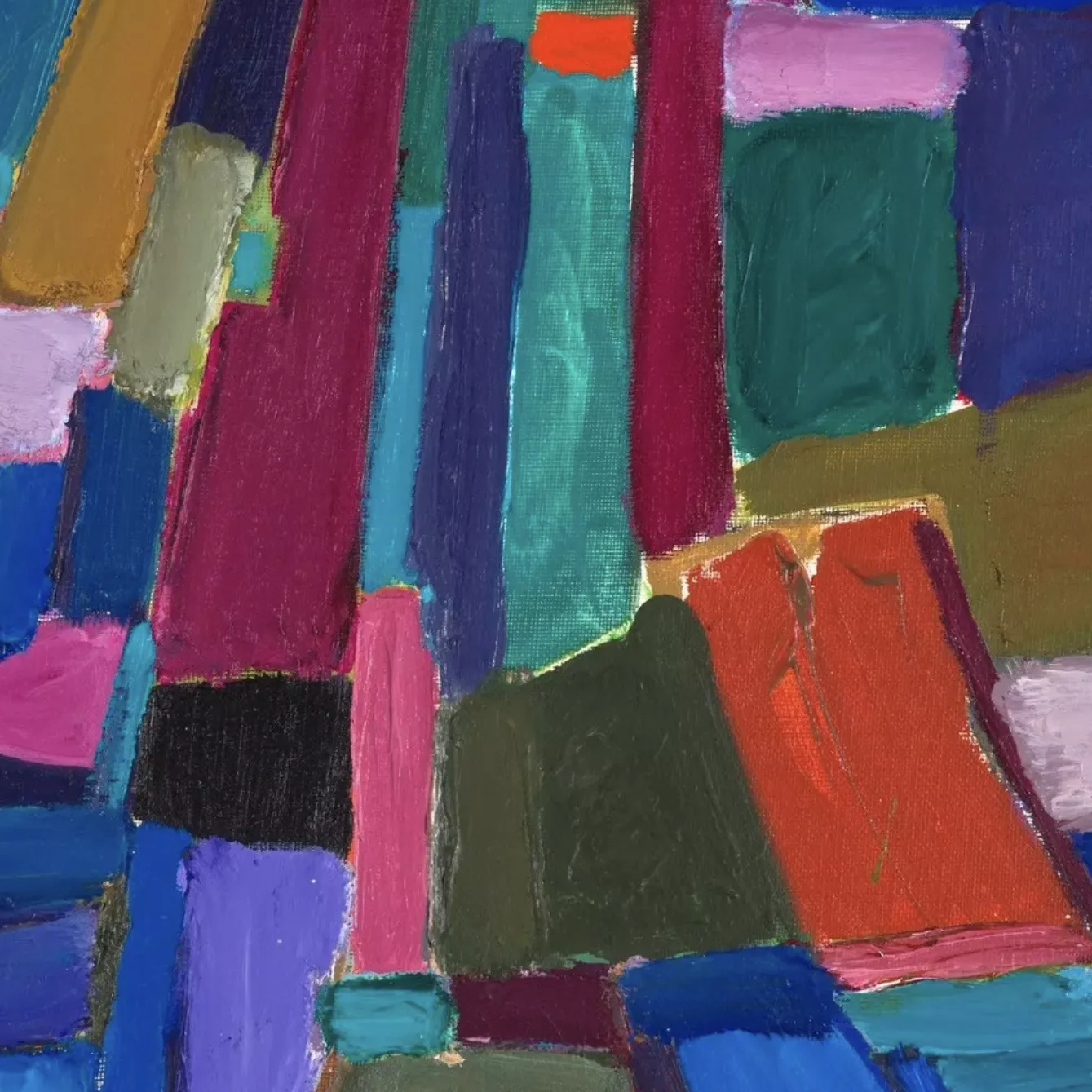
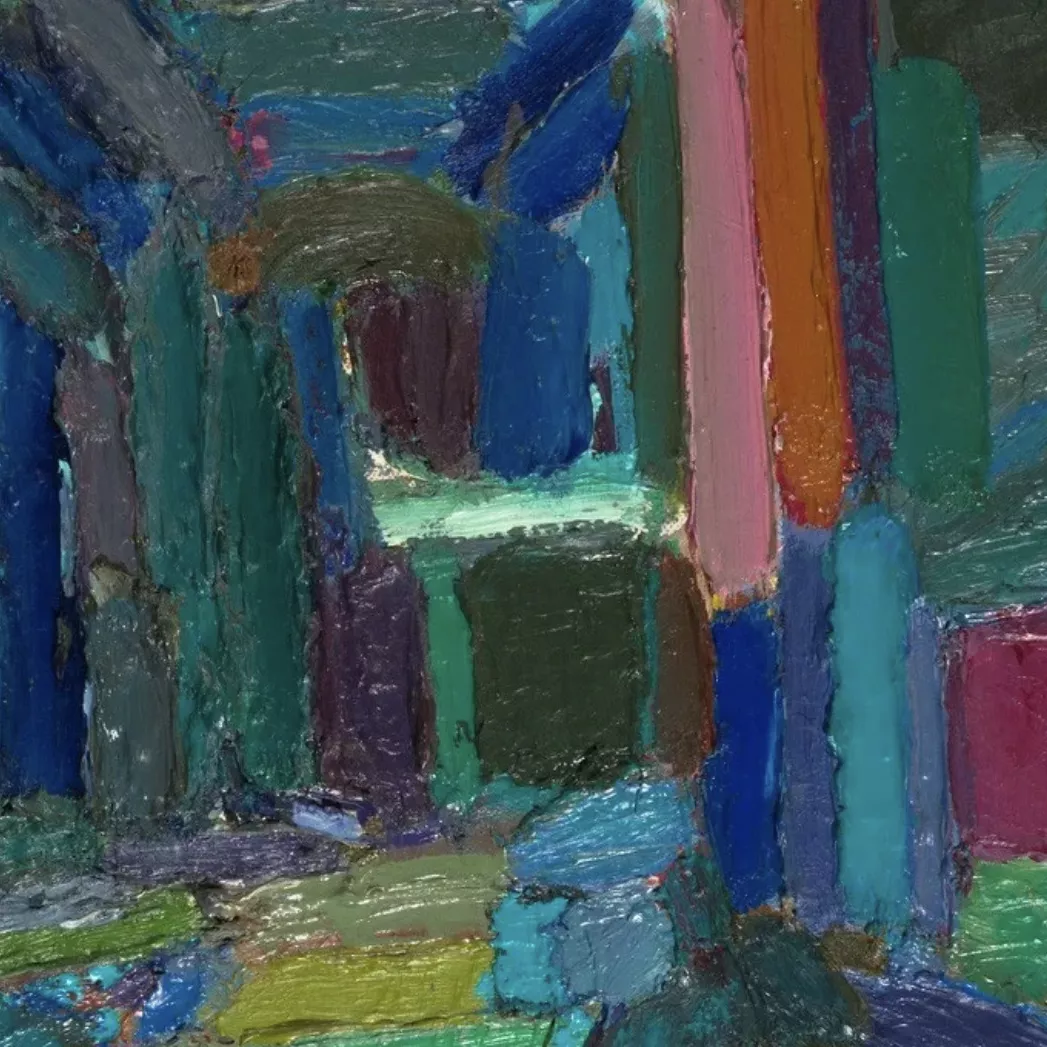
Focus on Abstract Composition 1, Catherine Zoubtchenko
This modestly-sized work (43 x 56 cm) features geometric and angular shapes (stripes, obliques, rectangles) that are nested within one another, suggesting a dynamic visual rhythm.
The palette shows a contrast between cool tones (greens, blues) and warmer or darker touches (reds, blacks). The balance between these values creates visual tension. The style of non-figurative abstraction is fully assumed, with no identifiable reference to figuration; everything is constructed through form, color and structure.
The work follows in the footsteps of Lanskoy's teaching, but asserts its own formal and chromatic autonomy. The dialogue between cold forms and more vibrant colors can be interpreted as a balance between calm and intensity, and between structural restraint and expressiveness.
This work illustrates that abstraction does not mean the absence of sensation, but rather the visual translation of an emotion or structural thought. This painting is emblematic of the 1960s period in Zoubtchenko's work, a period when she asserted her geometric abstract language.
It allows us to compare her work with that of other geometric abstract artists of the period such as Sonia Delaunay or Jean Dewasne, and measure his singularity, in particular his way of blending geometry and chromatic dynamics.
Technically, this work marks the artist's mastery of surface construction and color treatment, without recourse to figuration.
Market segmentation and artist's rating
The works targeted for Catherine Zoubtchenko are medium to large abstract paintings on canvas, with gouache or paper variants for secondary collections. Typical buyers are post-war abstract art collectors, French and Parisian galleries, and geometric and modern art collectors.
The market is mainly located in France with extensions to French-speaking Europe, with some Belgian or Swiss auction entries noted.
Influencing factors are the date of production (the 1960s-70s seem to command higher prices), the medium (oils on canvas are worth more than gouaches on paper), the quality of the signature and date, as well as provenance, the good condition of the work and mentions in exhibition catalogs.
There are opportunities for moderately priced entries (a few hundred to a few thousand euros) for secondary works or smaller dimensions. Major works fetch several thousand euros.
The artist's works for sale often appear with estimates around €800 - €2,000 for secondary formats. A gouache on paper signed and dated circa 1987, for example, was estimated at €500 - 600, while it sold for €2,050.
The price range shows a wide amplitude, indicating that the quotation is not firmly established at a very high level compared to higher-ranking abstract artists. Large-format or significant works in date of creation (1960s) seem to be better valued than small pieces or late, minority works.
The market still appears to be in a consolidation phase, and institutional recognition as well as the artist's historicity may influence a potential rise in quotation.
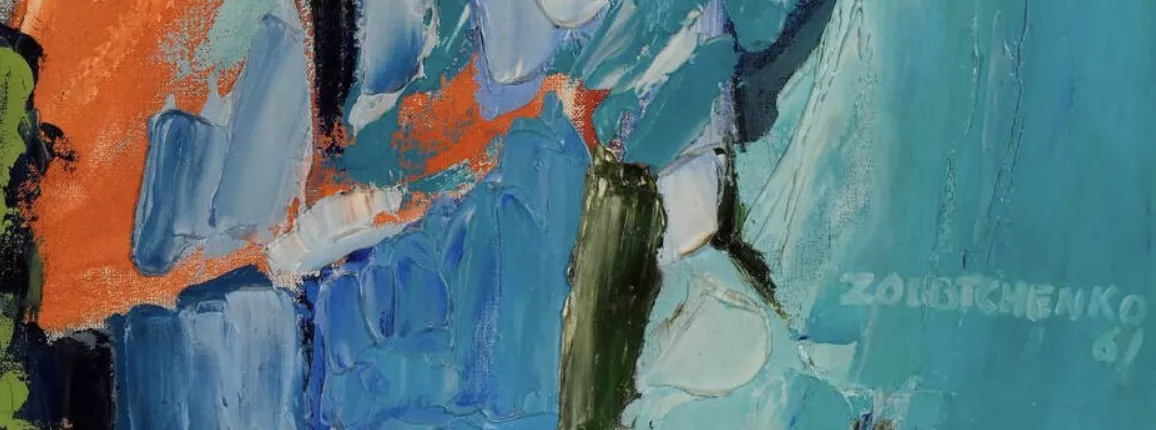
Her signature
Not all of Catherine Zoubtchenko's works are signed.
Although there are variations, here's a first example of her signature:
Expertise your property
If you own a work by Catherine Zoubtchenko, don't hesitate to request a free appraisal by filling in our online form.
A member of our team of experts and certified auctioneers will contact you to provide an estimate of the market value of your work.
If you are considering selling your work, our specialists will also guide you through the various alternatives available to obtain the best possible price, taking into account market trends and the specific features of each work.
Estimate in less than 24h
Discover in the same theme

Rating and value of works, fashion drawings, paintings by Ge...
Georges Barbier was a twentieth-century French illustrator and fashion designer who produced drawings and paintings listed at auction.
Learn more >

Rating and value of works, drawings, paintings by Jean Metzi...
Jean Metzinger is a twentieth-century cubist and fauvist artist who produced drawings and oil paintings sold at auction.
Learn more >

Rating and value of paintings by Lovis Corinth
Lovis Corinth is a German Expressionist painter who produced works that are highly rated and valued at auction. 24h estimate.
Learn more >
D'autres tableaux abstraits vendus aux enchères

Estimated 2.000 - 4.000
Serge POLIAKOFF (1900-1969), Composition en rouge et bleu. 1965, Lithograph

Estimated Between €5,000 and €8,000
Jean MIOTTE (1926-2016), acrylic on canvas

Estimated 3.000 - 5.000
Roberto MATTA (1911-2002), Composition, Gouache on canvas

Secure site, anonymity preserved

Auctioneer approved by the State

Free and certified estimates
Frequently asked questions
-
Who is Catherine Zoubtchenko, and what is her artistic background?Catherine Zoubtchenko is a Franco-Russian artist born in 1937 in Leningrad who has lived in Paris since 1954. A leading figure in non-figurative abstraction in France, she studied at the Académie de la Grande Chaumière and the Académie Julian before becoming André Lanskoy’s sole student in 1958. Her work is characterized by geometric compositions with intense blocks of color, combining structural order and chromatic expressiveness.
-
What is the price range for Catherine Zoubtchenko's works?The prices of Catherine Zoubtchenko’s works range from €40 to €20,000, depending on the medium and size. Her oil paintings on canvas, which are particularly sought after, sell for between €40 and €20,000, while her drawings and watercolors range from €50 to €1,500. Major works from the 1960s and 1970s, especially large-format pieces, fetch several thousand euros, with typical estimates ranging from 800 to 2,000€ for smaller works.
-
How can I authenticate a work by Catherine Zoubtchenko and get an estimate?To authenticate and appraise a work by Catherine Zoubtchenko, contact Auctie's, which offers a free, no-obligation appraisal. Our team of experts and state-certified auctioneers will examine your artwork and provide you with an accurate estimate of its market value within 48 hours, taking into account the technique, dimensions, signature, date, and condition.
-
Is this a good time to sell a work by Catherine Zoubtchenko?Yes, now is a good time to sell a work by Catherine Zoubtchenko. Prices for her works are rising steadily on the auction market, and the market is consolidating as the artist gains increasing recognition. Her oil-on-canvas paintings, which are particularly sought after, are seeing a sharp rise in value, especially among American and European collectors.
-
How does the sale of a work of art work at Auctie's?Auctie's supports sellers from the appraisal stage through to the auction. After a free appraisal of your artwork, our specialists will guide you toward the best sales strategy to achieve the highest possible price, taking into account market trends and the unique characteristics of your piece. As an auction house, we guide you through every step of the sales process.
