



Rating and value of paintings by Arnulf Rainer

Key takeaways
- Works by Arnulf Rainer sell for between €30,000 and €160,000 at auction, with some paintings fetching as much as €600,000.
- A leading figure in Austrian abstract art, the artist developed “Surpeintures” as early as the 1950s, a technique involving the creative overpainting of existing surfaces.
- Values vary depending on the medium: prints from €20,000 to €60,000, watercolor drawings from €200 to €135,000, and paintings from €200 to €600,000.
If you own a work by or based on the artist Arnulf Rainer and would like to know its value, our state-approved experts and auctioneers will guide you.
Our specialists will carry out a free appraisal of your work, and provide you with an accurate estimate of its value on the current market.
Then, should you wish to sell your work, we will direct you to the best possible arrangement to obtain the optimum price.
Artist's rating and value
The works of Arnulf Rainer are quite present and appreciated on today's art market. A major representative of Austrian abstraction, Arnulf Rainer has produced works in a variety of media, including drawn photographic portraits.
Prized by collectors, his works sell for between €30 and €160,000 on the auction market, a considerable range but one that speaks volumes about the value that can be attributed to the artist's works.
In 2020, his oil on Schwarze Übermalung auf Braun, dating from 1955/56, sold for €600,000, while it was estimated at between €120,000 and €150,000.
Order of value from the most basic to the most prestigious
Technique used | Result |
|---|---|
Estame - multiple | From €20 to €60,000 |
Drawing - watercolor | From €200 to €135,000 |
Painting | From €200 to €600,000 |
Estimate in less than 24h
Artist's style and technique
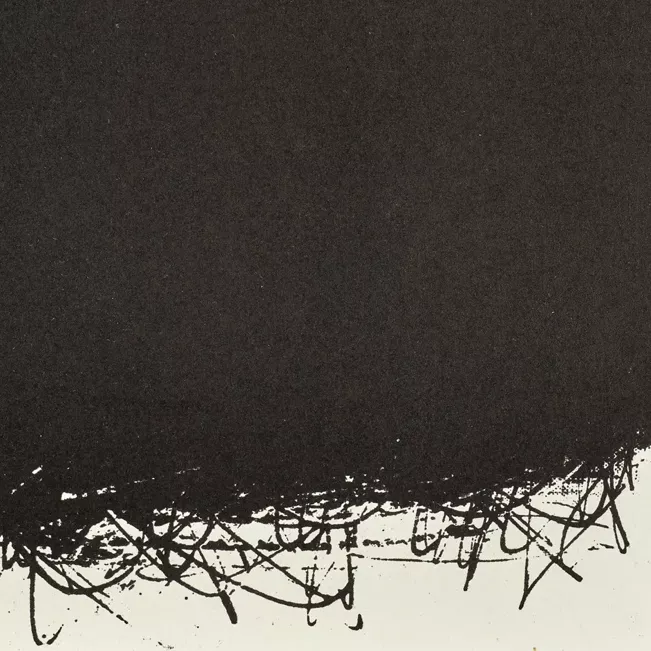
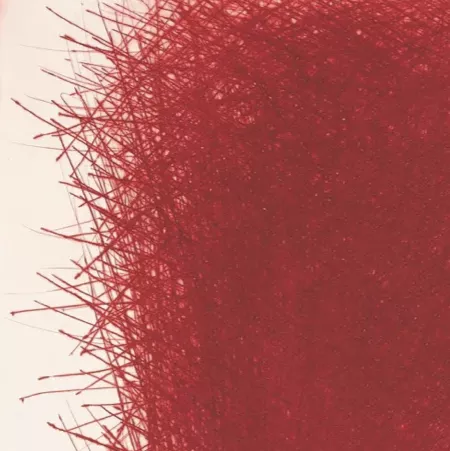
Arnulf Rainer's style and technique are distinguished by an approach in which the pictorial gesture dominates, making each canvas an experience between matter and emotion. His famous "Overpaintings", initiated in the 1950s, as well as the work of drawing directly on photography embody this singular approach.
Rainer covers existing works or photographs with thick layers of paint, often applied in frenetic movements.
This process, both destructive and creative, produces compositions in which the original support remains perceptible, but veiled, evoking a constant dialogue between the visible and the invisible.
The use of a dark palette, dominated by deep blacks and intense reds, reinforces the dramatic force of his works.
The paint, applied with an almost aggressive vigor, conveys a spontaneity that evokes the currents of abstract expressionism, while retaining an identity of its own.
With Rainer, every gesture carries meaning, oscillating between a desire to erase and a desire to reveal, as if the layer of paint added carried a hidden message.
The artist's interest in the human body is also expressed in his works, where he plays with the limits of figuration. Covered or altered faces and bodies become symbols of transformation, questioning memory and identity.
Through these coverings, Rainer does not seek to destroy, but to transcend, creating works in which the tension between destruction and resilience becomes intense.
Through this unique and deeply introspective technique, Arnulf Rainer succeeds in redefining the boundaries of art. His creations, imbued with strength and ambiguity, bear witness to an unceasing quest for the power of paint to transcend appearance, making a lasting mark on contemporary art.
The life of Arnulf Rainer
It is precisely in its ability to revisit the boundaries of the medium that Arnulf Rainer's art stands out as an essential milestone in contemporary history.
As early as the 1950s, the Austrian artist upended pictorial conventions with his first "Overpaintings", a gesture as radical as it was ambivalent: covering an existing work with a thickness of material, where erasure becomes creation.
This approach, which might seem destructive, actually draws on a long tradition of experimentation, recalling the scratchings of the Surrealists or the superimpositions of informal art.
But where Rainer breaks new ground is in the violence and density of his gesture, which seeks neither harmony nor appeasement, but rather a direct confrontation with surface and subject.
In the 1960s, his work evolved into hybrid works where painting meets photography, notably through a series of self-portraits that border on exorcism.
Here again, the process does not seek formal purity: on the faces emerge scratched features, over-layers that blur the reading, defying any attempt at classical figuration.
These explorations reflect an almost metaphysical quest, where the artist seems to seek, in the very act of disfiguration, an inner truth.
Rainer thus inscribes his work in a constant dialogue with destruction and reinvention, themes that resonate with the experimentation of his contemporaries, such as the Viennese Actionists, while distinguishing himself from them through a profoundly introspective rigor.
True to his refusal of all concessions, Arnulf Rainer took part in the Venice Biennale in 1978, marking the impact of his approach with this international recognition. His works, by turns subversive and meditative, reveal a tension between control and excess, erasure and revelation.
In this paradox, he left his mark on the art of his time, joining such figures as Antoni Tàpies or Jean Fautrier in their exploration of the limits of matter and the pictorial act.
If the history of contemporary art remembers Rainer, it is precisely for his ability to combine introspection and radicalism in a deeply embodied gesture.
Arnulf Rainer's imprint on his period
Factually, it's in his way of redefining the relationship to image and material that Arnulf Rainer leaves a singular imprint on his era.
In establishing the act of covering, scratching or superimposing as a creative principle, he questions the very notions of completion and destruction in art, breaking with the classical vision of a work frozen in its perfection.
His "Surpeintures" of the 1950s, in which erasure becomes a founding and driving gesture in creation, resonate as a visceral response to the traumas of the post-war era and the quest for a new aesthetic for a world under reconstruction.
This process, in which the act of painting becomes an almost existential struggle, would profoundly influence the introspective, gestural approaches of contemporary artists, particularly in the circles of informal art and lyrical abstraction, found in artists such as Debré or Mathieu.
In the 1960s, his exploration of the boundaries between painting and photography opened up new perspectives on the hybridization of mediums, a questioning that ran throughout the second half of the 20th century.
His self-portraits marked by superimposition, where the face becomes a battlefield, anticipate the reflections on identity and subjectivity that would characterize the following decades, finding echoes in the work of artists such as Cindy Sherman or Francis Bacon.
Through his rigor and boldness, Rainer helped establish Austrian art on the international scene, alongside the Viennese Actionists, while maintaining a unique posture marked by a spiritual and meditative quest.
Beyond his works, Rainer's influence extends to a re-reading of the very function of the artist: one who, through gesture, questions the flaws of image and matter, rather than delivering a soothed vision of them. This radicalism, both aesthetic and conceptual, has made him a key figure in contemporary art, joining the likes of Alberto Burri and Lucio Fontana in their desire to shatter established frameworks.
Rainer, with his approach both introspective and universal, makes a profound mark on an era in search of new forms of visual language.
Focus on Faces Farces, Arnulf Rainer
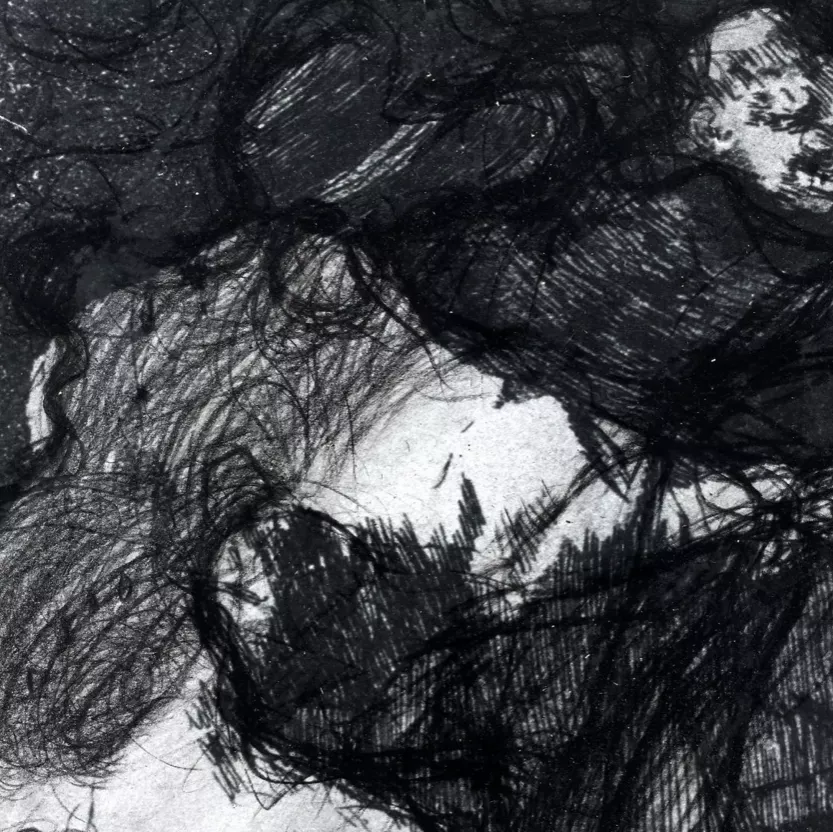
Among Arnulf Rainer's iconic works, his Face Farces from the 1970s embody an aesthetic and conceptual radicalism that continues to provoke questioning.
Originally, a photograph - that medium of instantaneity and objective capture - which the artist subjects to a violent metamorphosis through expressive, sometimes frenetic pictorial layers.
The strokes become scratches, betraying an underlying violence present throughout the artist's entire career. The series Face Farces also imposes its intensity, through all the emotions it is led to transmit to the viewer.
Rainer, by crossing out his own face, questions the notion of identity, perceived not as a stable given, but as a perpetual flux of transformations, a reactor in motion, ready to explode every second.
In this way, he joins a line of artists who have explored the human condition through the distortion of the body, thus joining Egon Schiele or Francis Bacon in their quest for exacerbated expressivity.
However, where Schiele and Bacon scrutinize the flesh in all its fragility, Rainer attacks the image itself, abusing it, almost denying it, to extract a raw essence.
The influences of this approach extend to contemporary artists who question the relationship between the photographic medium and pictorial intervention.
More than that, Face Farces questions the observer's own perception: how far can an image be altered before it ceases to be recognizable?
This series, on the borderline between the grotesque and the sublime, testifies to Rainer's ability to turn erasure into a universal language, where apparent chaos becomes the access point to a profound reflection on the self and the relationship to the visible world.
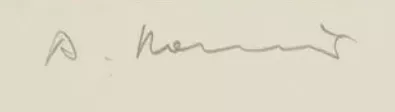
His signature
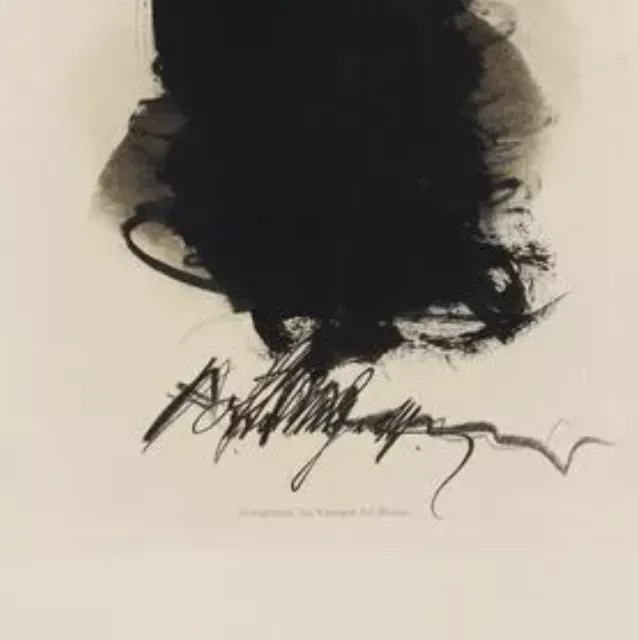
Not all of Arnulf Rainer's works are signed.
Although there are variants, here is a first example of his signature:
Expertise your property
If you happen to own a work by or after Arnulf Rainer, don't hesitate to request a free valuation by filling in our form on our website.
A member of our team of experts and certified auctioneers will contact you promptly to provide you with an estimate of the value of your work, and will ensure that you receive ad hoc information about it.
If you're thinking of selling your work, our specialists will also help you find alternatives to sell it at the best possible price, taking into account the inclinations of the market and its specific features.
Estimate in less than 24h
Discover in the same theme

Rating and value of furniture, tables and armchairs by Arman...
Armand Albert Rateau is a 20th-century designer and decorator whose works are highly prized and sought-after at auction. Estimated in 24h.
Learn more >

Rating and value of paintings by Marcel Mouillot
Marcel Mouillot is a twentieth-century figurative painter who produced many works that are highly valued at auction.
Learn more >

Rating and value of paintings by Vilhelms Purvitis
Vilhelms Purvitis is a major Latvian painter who has produced many works that are highly valued at auction.
Learn more >
D'autres tableaux abstraits vendus aux enchères

Estimated 2.000 - 4.000
Serge POLIAKOFF (1900-1969), Composition en rouge et bleu. 1965, Lithograph

Estimated Between €5,000 and €8,000
Jean MIOTTE (1926-2016), acrylic on canvas

Estimated 3.000 - 5.000
Roberto MATTA (1911-2002), Composition, Gouache on canvas

Secure site, anonymity preserved

Auctioneer approved by the State

Free and certified estimates
Frequently asked questions
-
Who is Arnulf Rainer, and what is his artistic movement?Arnulf Rainer is a leading Austrian artist in the field of Austrian abstraction, known for his radical innovations beginning in the 1950s. He is famous for his “Overpaintings,” a technique in which he covers existing works or photographs with thick, expressive layers of paint, creating a dialogue between destruction and creation. His approach would profoundly influence Informel, lyrical abstraction, and contemporary explorations of identity and pictorial matter.
-
What is the price range for Arnulf Rainer's paintings on the auction market?Arnulf Rainer's works generally sell for between €30 and €160,000 at auction, with significant variations depending on the medium. Prints and multiples range from €20 to €60,000, drawings and watercolors from €200 to €135,000, and paintings from €200 to €600,000. Some exceptional pieces may exceed these initial estimates at auction.
-
How can you authenticate a work by Arnulf Rainer and have it appraised?To authenticate and appraise a work by Arnulf Rainer, we recommend that you request a free, no-obligation appraisal from Auctie's by filling out our online form. A state-certified expert or auctioneer will examine your artwork and provide you with an estimate of its value within 48 hours. This process will also allow you to obtain accurate information about your item before making any decision to sell.
-
When is the best time to sell a work by Arnulf Rainer?The market for contemporary art and Austrian abstract art remains dynamic and highly regarded by collectors. Arnulf Rainer’s works have enjoyed established international recognition, particularly since his participation in the 1978 Venice Biennale, making this a good time to sell. Our experts will advise you on the optimal conditions based on your specific artwork and current market trends.
-
How does the sale of a work of art work at Auctie's?At Auctie's, we support you every step of the way: a free, no-obligation appraisal by an expert; advice on sales strategies tailored to your artwork and the market; and comprehensive management through to the final bid at auction. Our licensed auctioneers ensure that your artwork receives maximum visibility and is showcased in the best possible way to achieve the highest possible price.
