



Rating and value of paintings by Marie Louise von Motesiczky

Key takeaways
- Marie-Louise von Motesiczky’s oil-on-canvas paintings sell for between €40 and €20,300, with prices rising sharply since 2023.
- An Austrian artist born in 1906, she blends German Expressionism with British and Dutch influences, creating introspective portraits of remarkable psychological depth.
- Her works, which blend expressive figuration with an earthy color palette, reflect a universal quest for humanity and remain relatively unknown to the general public despite their growing artistic value.
If you own a work by artist Maire-Louise de Motesiczky or based on her work and would like to know its value, our state-approved experts and auctioneers will guide you.
Our specialists will carry out a free appraisal of your work, and provide you with an accurate estimate of its value on the current market.
Then, should you wish to sell your work, we'll direct you to the best possible arrangement to obtain the optimum price.
Rating and value of the artist Marie-Louise von Motesiczky
Marie-Louise von Motesiczky is an autruchian artist known to modern art enthusiasts. Now, the prices of her works are rising under the auctioneers' gavel.
Her oils on canvas are particularly prized, especially by French buyers, and the price at which they sell on the art market ranges from €40 to €20,300, a significant delta but one that speaks volumes about the value that can be attributed to the artist's works.
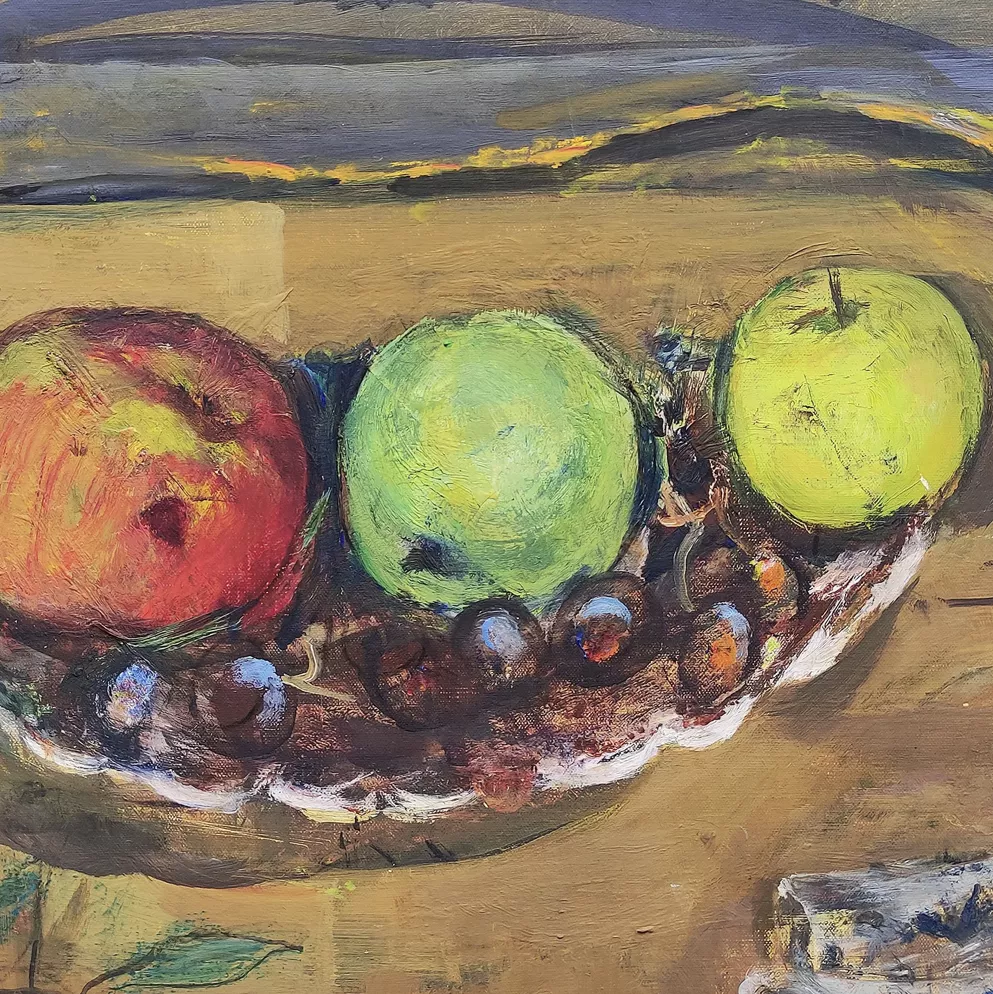
In 2023, his oil on canvas Nature morte, bol de fuit avec une grenade, dating from 1960 sold for €20,300, whereas it was estimated at between €1,000 and €1,300. Its value has risen sharply.
Order of value from the most basic to the most prestigious
Technique used | Result |
|---|---|
Drawing - watercolor | From €40 to €360 |
Oil on canvas | From €50 to €20,300 |
Estimate in less than 24h
The artist's works and style
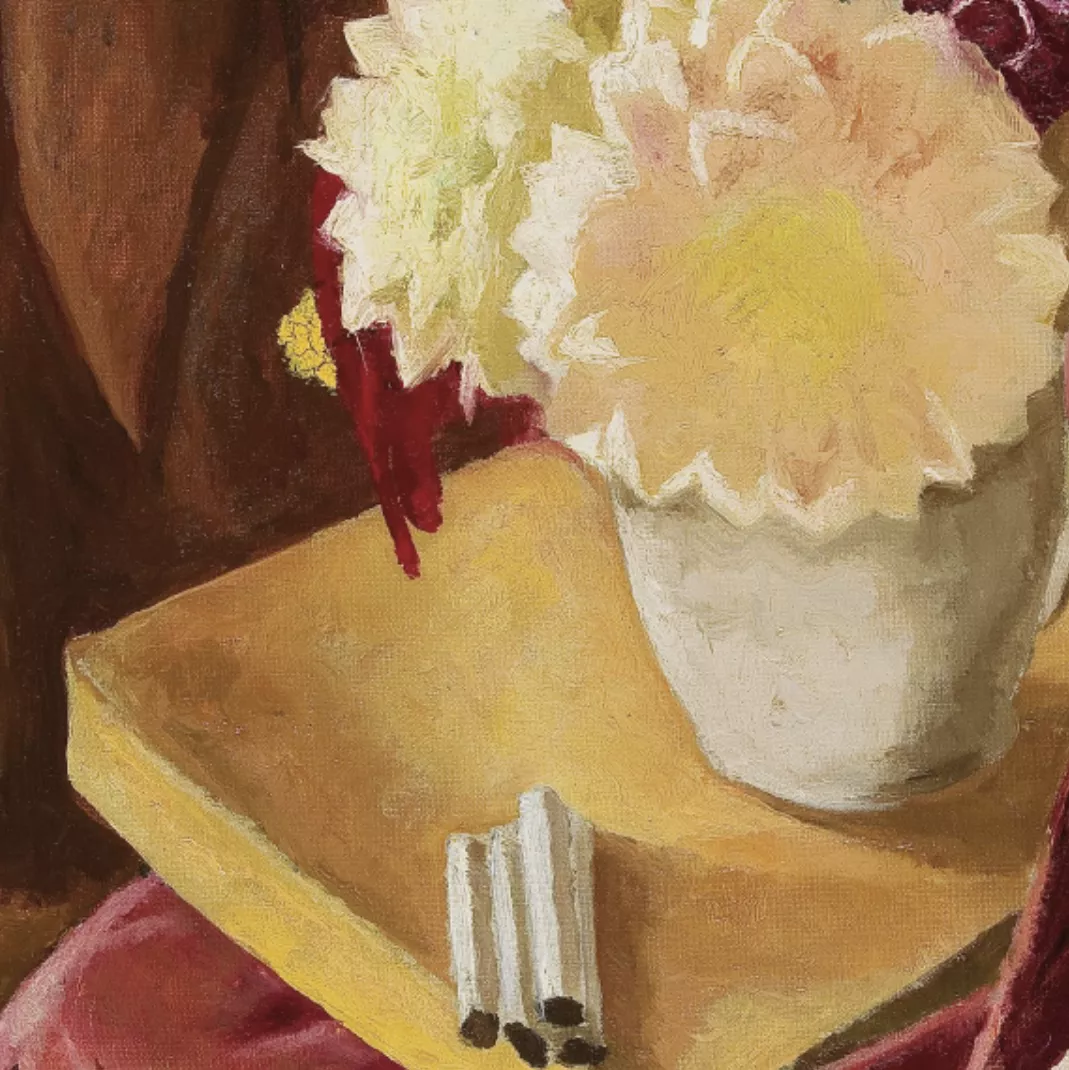
Marie-Louise von Motesiczky's style and technique reveal a poignant sensitivity and psychological depth that mark her work with remarkable singularity.
Her pictorial approach blends expressive figuration with a palette rich in earthy tones and subtle contrasts, creating works in which the intimate dialogues with the universal.
Inspired by contemporaries such as Oskar Kokoschka or Max Beckmann, it borrows from Expressionism its ability to convey emotion through the controlled deformation of forms, while retaining an anchoring in tangible reality.
Her portraits, often centered on familiar or anonymous figures, acutely capture moods, tensions and frailties, transforming each face into a mirror of human emotions.
In her technique, von Motesiczky favors superimposed layers of paint, creating a rich, vibrant texture that adds a tactile dimension to her canvases.
This process, combined with a subtle interplay of light and shadow, lends a unique depth to his compositions, where every detail seems to reveal a hidden part of the story or character depicted.
Backgrounds, often suggested rather than detailed, serve to reinforce the intensity of the central figures, while inscribing the subjects in a space imbued with atmosphere.
Marie-Louise von Motesiczky, with this technical mastery and incisive eye, transcends the conventions of her time to offer a work deeply rooted in the human.
Her paintings, at once intimate and universal, bear witness to an artistic commitment that places emotion and inner truth at the heart of her approach, making her a key figure in twentieth-century European expressionism.
The life of Marie-Louise de Motesiczky
Marie-Louise von Motesiczky was born in 1906 in Vienna, into a cultured aristocratic family close to the intellectual circles of the time. Her youth was marked by a flourishing artistic environment, in which art and music played a central role.
She showed an early talent for painting and, encouraged by her mother Henriette, undertook studies with masters such as Max Beckmann, whose influence on her work was to prove decisive.
The years of apprenticeship in Germany and Paris strengthened her technical mastery and nurtured her imagination, while she developed a deeply personal sensibility.
The rise of Nazism in 1938 tragically disrupted her trajectory. Forced to leave Vienna because of her Jewish origins, she found refuge in the Netherlands, before settling permanently in London in 1939. Although painful, this exile marked a turning point in her artistic career.
Isolated from her homeland, she channeled her emotions into introspective painting, where the melancholy of loss shines through. Henriette, the central figure in her life, became a recurring subject in her paintings, her portraits conveying a tenderness mingled with a poignant lucidity in the face of old age and human frailty.
In London, although she moved within an intellectual circle that included Elias Canetti, her work remained relatively unknown to the general public. She rarely exhibits and prefers a discreet life, focused on her art and reflections.
However, her canvases, imbued with expressive power and profound humanity, assert themselves as unique testimonies of her time, bearing witness to both exile and resilience.
In parallel, she maintained a constant practice of correspondence and journaling, which shed light on her relationship to art and the human condition.
Marie-Louise von Motesiczky passed away in 1996 in Hampstead, leaving behind a rich and intense body of work.
Today, her work is recognized as an essential contribution to European expressionism, combining personal memory with universal questions about loss, identity and hope.
The stylistic influences of Marie-Louise von Motesiczky
The stylistic influences of Marie-Louise von Motesiczky are part of a remarkable synthesis of tradition and avant-garde. Trained in Frankfurt under Max Beckmann, she drew on Expressionism for a bold exploration of the human psyche.
Her compositions reflect this influence through strong contours, slightly distorted forms and an intense palette, dominated by deep, muted hues.
This Expressionist heritage is integrated with his introspective approach, each brushstroke seeking to capture the emotional essence of his models.
Exile in London marks another key stage in his artistic evolution. The influence of British painters such as Walter Sickert, with their taste for intimate, everyday scenes, is reflected in his paintings, where detail and light play a crucial role.
In parallel, his knowledge of 17th-century Dutch painting, particularly in the treatment of textures and the mastery of lighting effects, further enriches his work.
The rigor of the New Objectivity, among others founded by Otto Dix, a movement seeking to combine realistic observation and a critical eye, also tinges its style with analytical depth.
Marie-Louise von Motesiczky transcends these multiple currents to elaborate a deeply personal pictorial language. Her works, blending psychological truth and technical subtlety, embody a singular artistic vision, where each painting becomes a meditation on the human, memory and time.
The imprint of Marie-Louise von Motesiczky
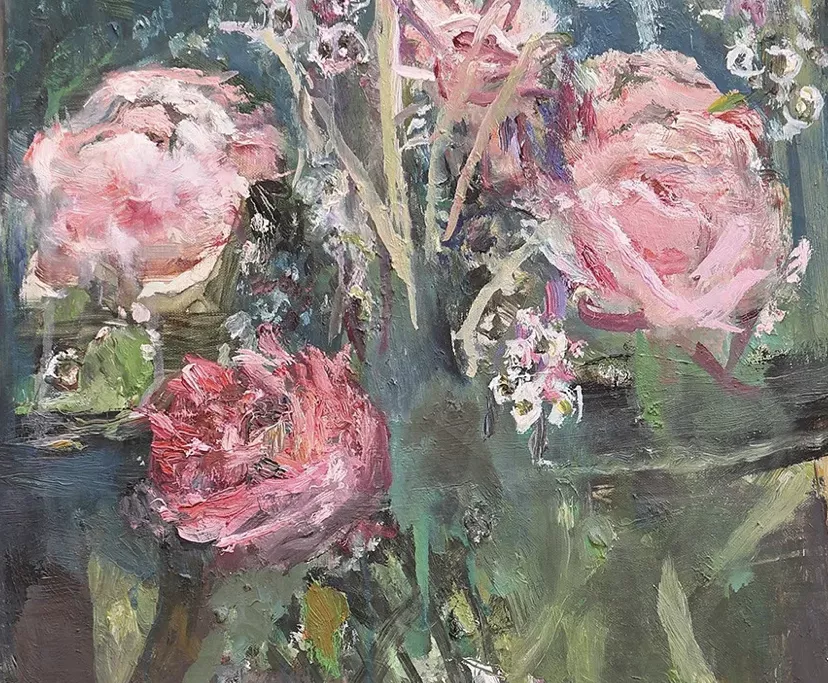
The imprint left by Marie-Louise von Motesiczky on her era lies in her ability to reconcile the major artistic concerns of the 20th century with a deeply personal vision.
A painter of introspection, she asserted herself in a context dominated by historical upheavals and stylistic mutations, while remaining faithful to a quest for universal humanity.
Trained in the wake of Germanic Expressionism, she adopts an approach where line and color convey emotion as much as reflection, and where each painting becomes a window onto the soul of its subjects.
Her exile in London, imposed by the tragic events of history, enriched her art by offering her a new cultural scene. She integrated into it with subtlety, bringing to the British tradition a breath of intensity from Central Europe.
Her way of fusing local influences and continental heritage enabled her to build a bridge between two artistic universes, becoming a discreet but essential figure in the post-war artistic landscape.
By comparing her work to that of Walter Sickert or the great Dutch masters, we perceive in her a desire to transcend genres, mixing portraiture, genre scenes and modern allegories.
Marie-Louise von Motesiczky also marked her period by the timeless dimension of her art. While the avant-gardes experimented with radical ruptures, she chose to follow a pictorial tradition that revisited the past while dialoguing with the questions of her time.
Through portraits of rare psychological depth and compositions imbued with sensitivity, she gives a singular voice to those who often remain on the margins of the great narratives.
Far from noisy movements and ephemeral successes, Marie-Louise von Motesiczky's legacy rests on a silent but vibrant body of work, which continues to resonate with its accuracy, sincerity and humanity. She thus leaves an indelible imprint, a witness to a troubled century and an unceasing quest for meaning.
She is today a woman relatively unknown to the general public, but whose sensitivity is appreciated by true modern art lovers. This does not mean that she is any less valued on the art market.
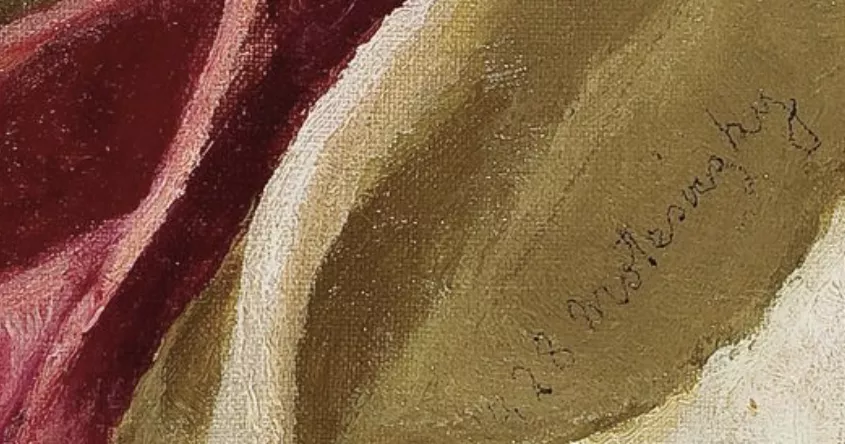
Her signature
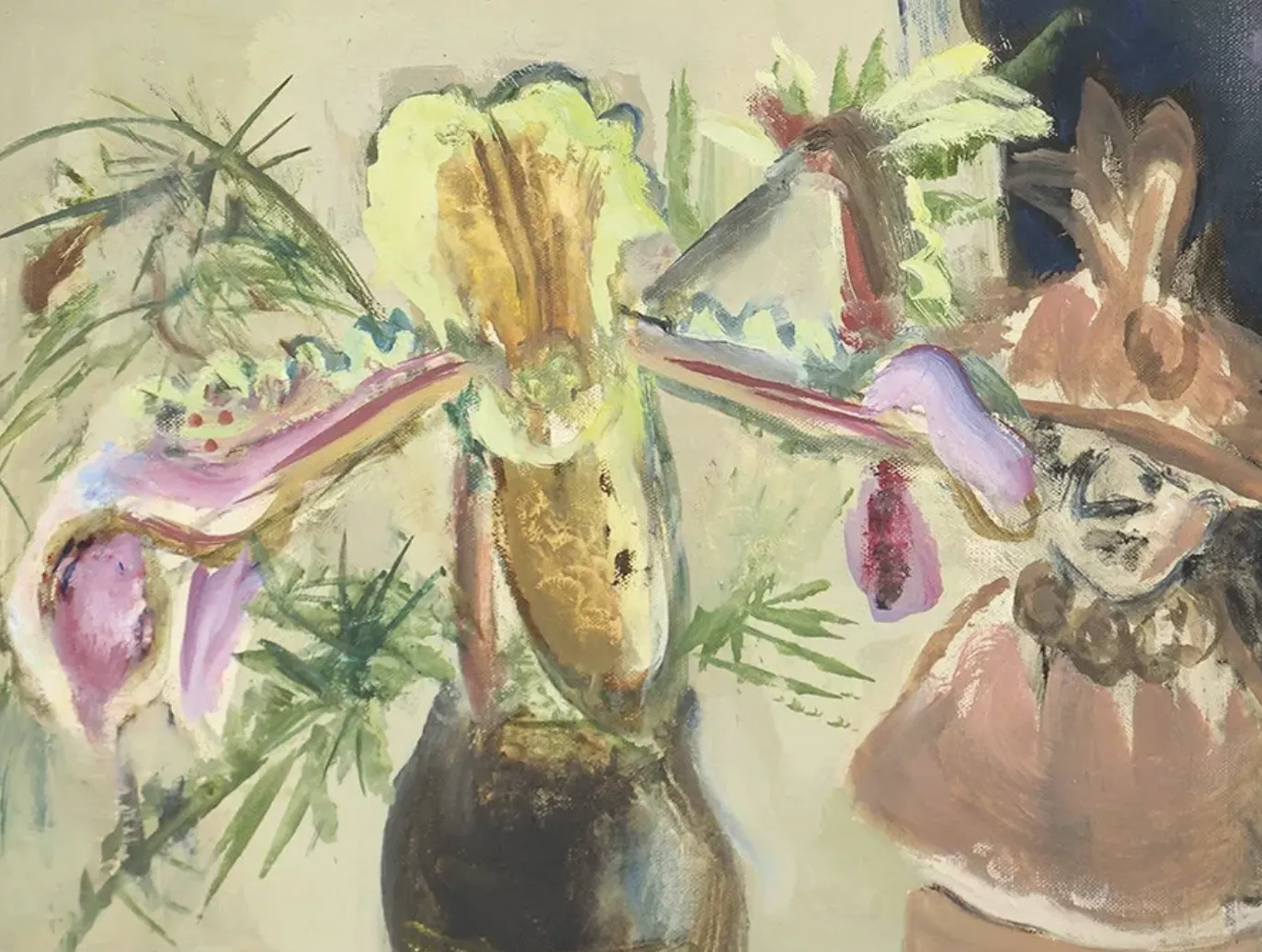
Not all of Marie-Louise von Motesiczky's works are signed.
Although there are variations, here is a first example of her signature:
Expertise your property
If you own a work by Marie-Louise von Motesiczky, don't hesitate to request a free appraisal by filling in our online form.
A member of our team of experts and licensed auctioneers will contact you to provide an estimate of the market value of your work.
If you are considering selling your work, our specialists will also guide you through the various alternatives available to obtain the best possible price, taking into account market trends and the specific features of each work.
Estimate in less than 24h
Discover in the same theme

Rating and value of works, drawings, paintings by Étienne Di...
Étienne Dinet was an Orientalist painter of the early 20th century who produced many oil on canvas paintings listed at auction. Estimated in 24h.
Learn more >

Rating and value of drawings, furniture and armchairs by Pau...
Paul Iribe was an Art Deco designer and decorator. He produced works that are highly valued and quoted.
Learn more >

Rating and value of Charles Catteau's ceramics, vases, stone...
Charles Catteau is a Franco-Belgian ceramist of the Art Nouveau and Art Deco periods, who produced works of great value.
Learn more >
D'autres tableaux expressionnistes vendus aux enchères


Secure site, anonymity preserved

Auctioneer approved by the State

Free and certified estimates
Frequently asked questions
-
Who is Marie-Louise von Motesiczky, and what is her artistic background?Marie-Louise von Motesiczky (1906–1996) was a leading Austrian artist of 20th-century European Expressionism. Trained in Frankfurt under Max Beckmann, she was forced into exile in London in 1939 because of her Jewish heritage. Her work, introspective and deeply humanistic, blends the German Expressionist tradition with influences from British and Dutch painting, offering a unique vision of the human psyche through portraits and compositions of rare psychological depth.
-
What is the price range for Marie-Louise von Motesiczky's paintings?The prices of Marie-Louise von Motesiczky’s works range from €40 to €20,300, depending on the medium and quality. Drawings and watercolors generally range from €40 to €360, while oil-on-canvas paintings—which are particularly sought after—range from €50 to €20,300. Her market value is rising sharply: in 2023, the oil on canvas “Still Life, Bowl of Fruit with a Pomegranate” (1960) exceeded estimates, selling for 20,300 €.
-
How can you authenticate and appraise a work by Marie-Louise von Motesiczky?To authenticate and appraise a work by Marie-Louise von Motesiczky, we recommend that you request a free appraisal from Auctie's by filling out our online form. A state-certified expert or auctioneer will contact you to examine the artwork and provide you with an accurate estimate of its market value, with no obligation on your part.
-
Is this a good time to sell a work by Marie-Louise von Motesiczky?Yes, now is a good time to sell a work by Marie-Louise von Motesiczky. Her market value has been rising sharply in recent years, particularly among French buyers, and her work is gaining increasing recognition among modern art enthusiasts. The prices achieved at auction reflect a dynamic market and growing demand for this artist, who was long overlooked by the general public.
-
How does the sale of a work of art work at Auctie's?Auctie's supports you every step of the way: after a free, no-obligation appraisal by our experts (response within 48 hours), our auctioneers will guide you toward the best sales strategy to maximize the price of your artwork. We take into account market trends, provenance, and the unique characteristics of each painting to ensure a successful sale.
