



Rating and value of works, drawings, paintings by Henry Emile Vollet

Key takeaways
- Works by Henry Émile Vollet (1861–1945) sell for between €40 and €32,000, with oil-on-canvas paintings commanding the highest prices.
- His drawings and watercolors are valued between €60 and €3,400 and are highly sought after by Belgian buyers for their realistic and Orientalist depiction of Vietnam.
- Trained at the École des Beaux-Arts in Paris, the artist blends influences from Delacroix, Toulouse-Lautrec, and Japanese prints into a precise depiction of Vietnamese life.
If you own a work by or after Henry Émile Vollet, and would like to know its value, our state-approved experts and auctioneers will offer you their appraisal services.
Our specialists will carry out a free appraisal of your work, and provide you with a precise estimate of its value on the current market.
Then, if you wish to sell your work, we will direct you to the best possible arrangement to obtain the optimum price.
Rating and value of the artist Henry Émile Vollet
Henry Émile Vollet leaves behind a body of work that is both realistic and orientalist. Prices for his works are now skyrocketing under auctioneers' gavels. His paintings are highly prized, especially by Belgian buyers.
The price at which they sell on the art market ranges from €40 to €32,000, a very substantial gap but one that speaks volumes about the value that can be attributed to Vollet's works.
In 2019, his oil on canvas Night Party on the Little Lake of Hanoi sold for €32,000 while it was estimated at €15,000 to €18,000. Its quotation is stable.
Order of value from a simple work to the most prestigious
Technique used | Result |
|---|---|
Estamp - multiple | From €40 to €1,300 |
Drawing - watercolor | From €60 to €3,400 |
Oil on canvas | From €65 to €32,000 |
Estimate in less than 24h
Style and technique by artist Henry Émile Vollet
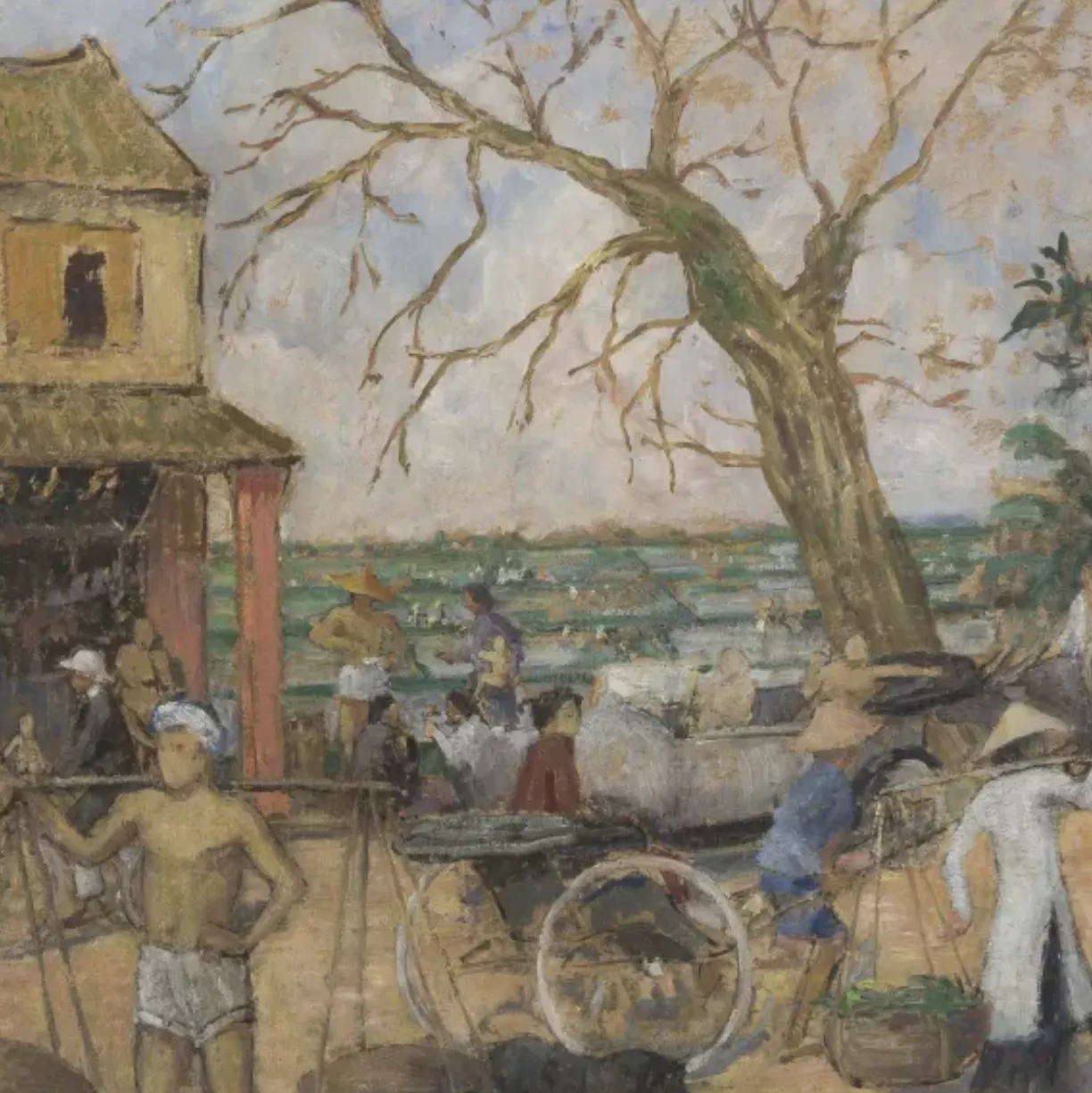
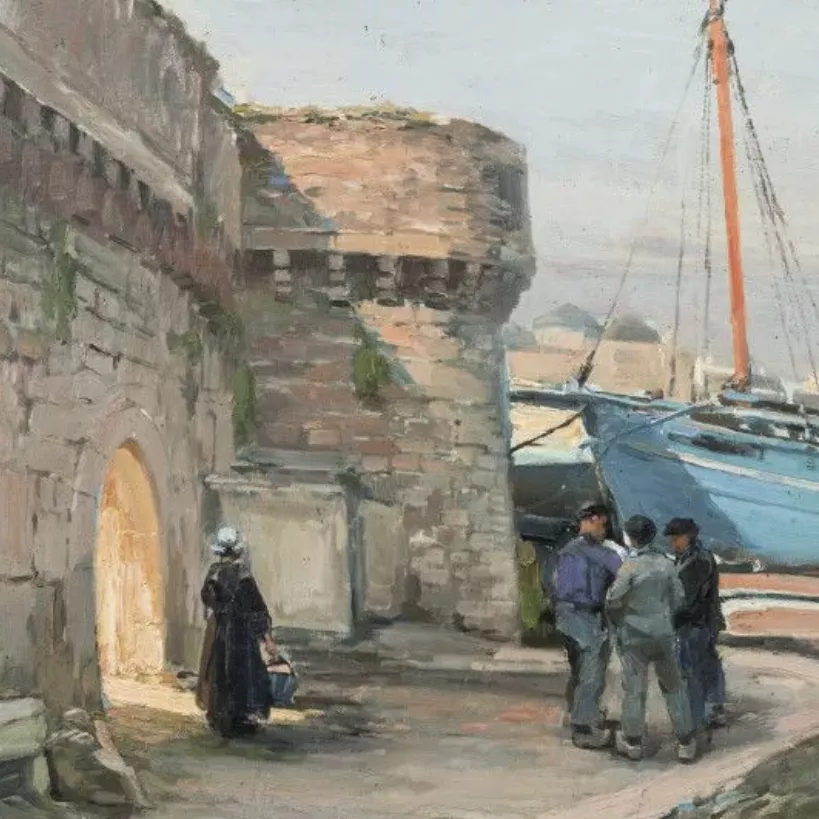
Henry Émile Vollet belongs to the realist movement, while developing an imagination nourished by orientalism, influenced by exotic scenes from Vietnam, a country he discovers and depicts with a sensitivity attentive to the play of light and chromatic contrasts.
His work oscillates between a meticulous observation of reality and a freer vision, where the evocation of elsewhere takes on almost dreamlike accents.
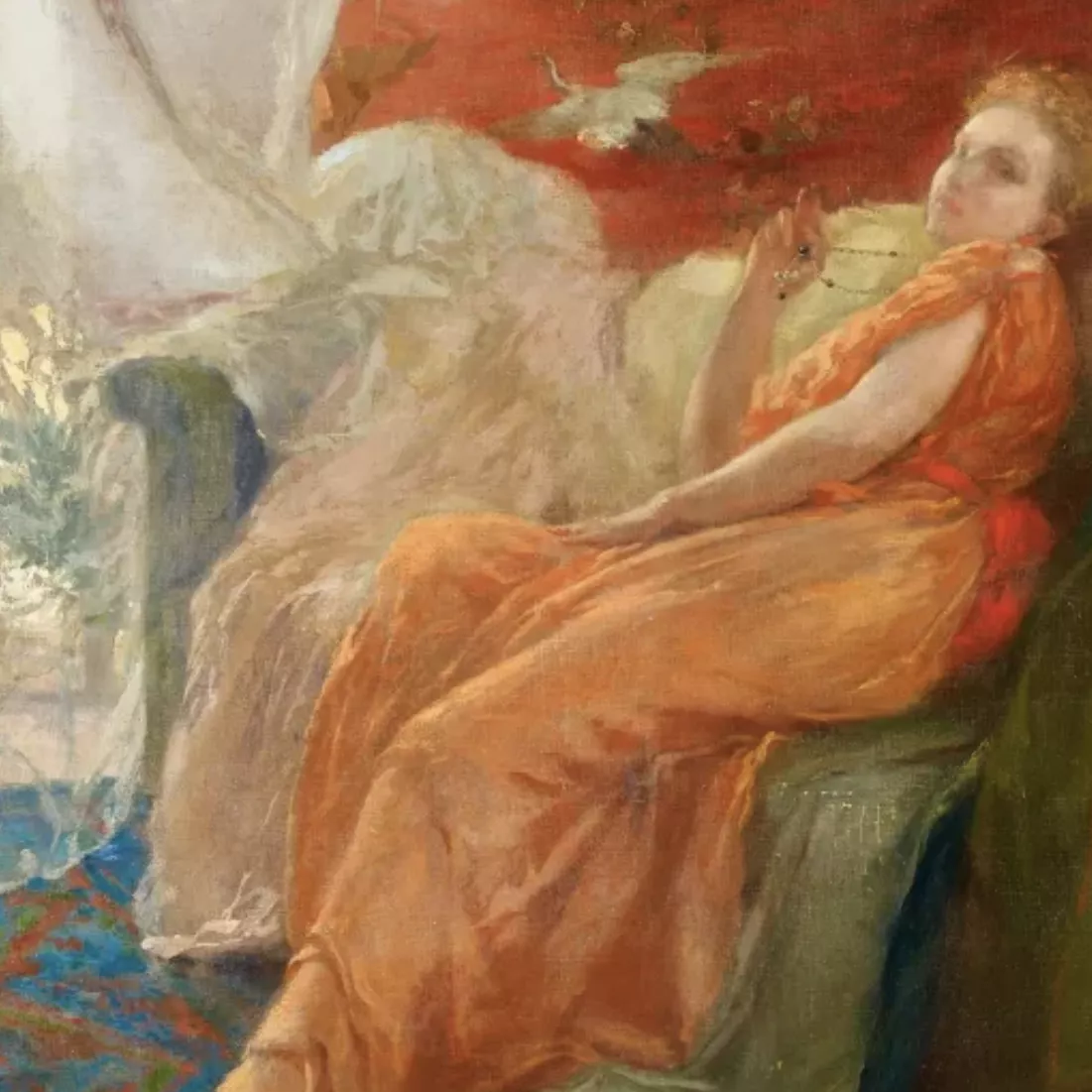
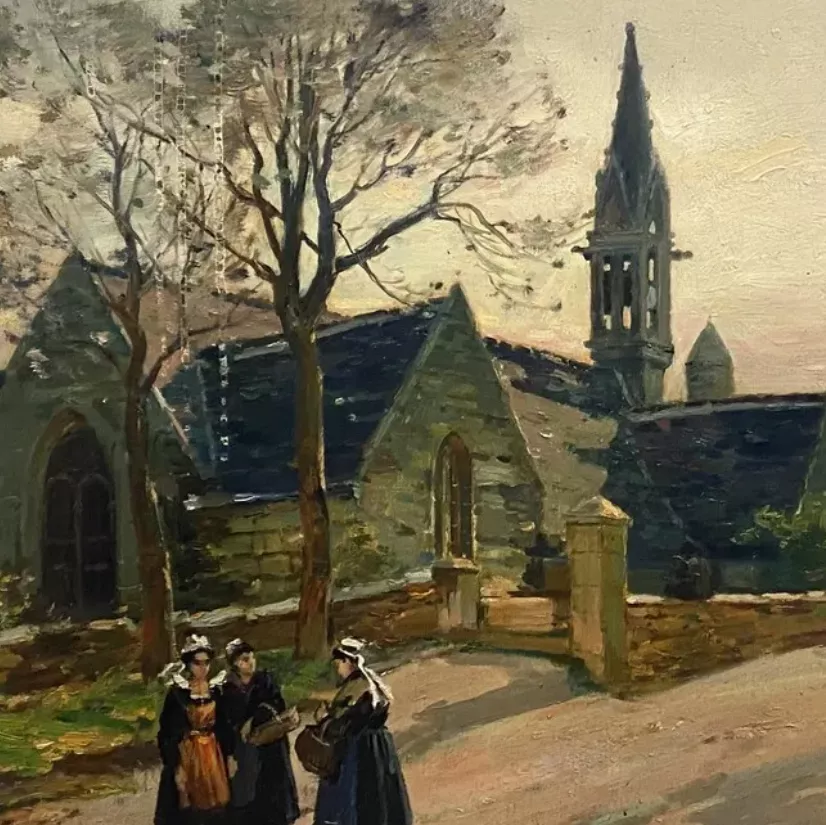
His influences are multiple: he draws from Delacroix for the dramatic intensity of his compositions and the richness of his color ranges, while the influence of Toulouse-Lautrec is evident in the economy of line and the liveliness of his sketches, capturing the immediacy of movement with a sure gesture.
This synthesis of drawing rigor and expressive fluidity is found throughout his output, whether drawings, oils on canvas or prints, where he explores the nuances of black and white with a keen sense of values and modeling.
His work on the Orient is not limited to a fantasized vision: he strives to accurately depict everyday gestures, popular figures and landscapes bathed in light, while infusing a particular atmosphere that goes beyond mere documentary transcription.
Through his approach to reality, Vollet asserts a sensibility close to naturalism, where every detail contributes to reinforcing the presence of the subjects and the intensity of the scenes depicted.
The life of Henry Émile Vollet
Henry Émile Vollet (1861-1945) was a French painter whose career was built between France and Asia.
Trained in Fernand Cormon's studio at the École des Beaux-Arts in Paris, he rubbed shoulders with the great names of the art scene of his time before turning to a style of painting in which reality blends with a more lyrical approach.
Few details remain of his personal life, but his work bears witness to a deep attachment to Vietnam, where he spent long periods and drew much of his inspiration.
Contemporary of Victor Tardieu and Alix Aymé, he shares with them the same attentive eye for Vietnamese culture and landscapes, translating in his canvases and drawings the delicacy of faces, the solemnity of religious rites and the gentleness of scenes from everyday life.
His precise line and sense of values recall the heritage of Cormon's workshop, while his work on color and light evokes the influence of the Orientalists.
His work, widely acclaimed during his lifetime, earned him several distinctions: he received an honorable mention at the Salon des Artistes Français in 1888 and a bronze medal at the 1900 Universal Exhibition, recognitions that consecrated his talent and the singularity of his pictorial approach.
His work, at the crossroads of realism and poetic evocation, remains a precious testimony to Vietnam in the early 20th century, between tradition and modernity.
Focus on Une scène de procession vietnamienne, Henry Émile Vollet
One of Henry Émile Vollet's most remarkable drawings is une scène de procession vietnamienne, where the artist captures the movement and solemnity of the ritual with striking precision.
With a lively, confident stroke, he sketches the elongated silhouettes of the bearers, the hieratic figures of the priests and the crowd crowding around the procession.
The attention paid to the clothing details and expressions of the figures lends the whole an impression of almost documentary realism, while the interplay of shadows and highlights adds subtle depth to the composition.
This drawing reveals Vollet's ability to capture the moment, translate the fluidity of gesture and compose a lively scene without ever overloading the space.
His precise yet supple line evokes the influence of Japanese prints and recalls, in its spontaneity, the work of Henri de Toulouse-Lautrec.
Through this work, Vollet doesn't just illustrate an event: he recreates its atmosphere, rendering on the drawing the slow rhythm of the procession, the fervor of the moment and the solemnity of the faces.
His gaze, at once precise and imbued with a certain gentleness, inscribes this drawing with an approach in which observation blends with an almost poetic sensibility.
Henry Émile Vollet's imprint on his period
Henry Émile Vollet leaves a singular imprint through his drawings, which bear witness to an attentive eye and sensitive approach to Vietnamese reality.
Trained in Fernand Cormon's studio, he retains from this teaching a keen sense of composition and rigor in line. His on-the-spot drawings precisely capture the atmosphere of bustling streets, the graceful postures of local people and scenes of everyday life.
Far from the frozen representations of academic Orientalism, Vollet favors a direct transcription of reality, where every line seems to vibrate under the intensity of the gaze.
His work, influenced by Japanese printmaking and the graphic research of Toulouse-Lautrec, is distinguished by a subtle use of contrast and an economy of means that reinforce the expressiveness of the subject.
The silhouettes stand out with clarity, the clothes are sometimes reduced to simple flowing lines, and the whole evokes a sensation of spontaneous movement.
Through his drawings, Vollet doesn't just illustrate a picturesque Vietnam: he captures its nuances, fleeting gestures, moments of life that escape a fixed vision.
His graphic work thus constitutes a precious testimony to an era in the throes of change, where Vietnam, still under colonial influence, retains an identity of its own that the artist seeks to translate with sincerity.
His drawings, disseminated through exhibitions and publications, left their mark on the artists of his time, particularly those who, like Victor Tardieu or Alix Aymé, pursued a work of observation and representation of Vietnam through drawing and illustration.
If his name remains less well-known than other figures of Orientalism, the legacy of his drawings remains essential to understanding the artistic perception of Indochina at the turn of the twentieth century.
Henry Émile Vollet's stylistic influences
Henry Émile Vollet is part of an artistic tradition that blends realism, orientalism and graphic influences borrowed from the great masters of the 19th century.
Trained in Fernand Cormon's studio, he inherited a rigorous education in which drawing played a central role, and observation of reality was paramount.
From this academic training, he retained a taste for precision of line and careful construction of his compositions, while gradually freeing himself from the strict codes of realism to develop a more spontaneous and expressive style.
Among his major influences was Eugène Delacroix, whose vibrant palette and Orientalist scenes imbued with dramatic energy he admired.
Like Delacroix, Vollet was not content to idealize the Orient; he sought to restore its vitality and depth through a direct approach to the motif.
His work also shows a filiation with Henri de Toulouse-Lautrec, notably in his use of line as an expressive element in its own right.
Like Lautrec, he captures movement and attitude with an economy of means, favoring fluid contours and dynamic compositions. Japanese prints were another obvious source of inspiration.
The influence of Japonism, very much in evidence at the end of the 19th century, can be seen in his use of flat tints of color, simplification of form and a particular attention to bold framing.
This influence is particularly apparent in his drawings, where figures stand out elegantly against minimalist backgrounds, in a quest for balance and clarity.
Finally, his long stay in Vietnam further enriched his artistic language. Immersed in a different visual universe, he absorbed the decorative motifs, gestural figures and particular light of Indochina.
This impregnation gives his works a singular identity, where Western academic rigor meets a graphic sensibility inspired by Asian arts.
Recognizing the artist's signature
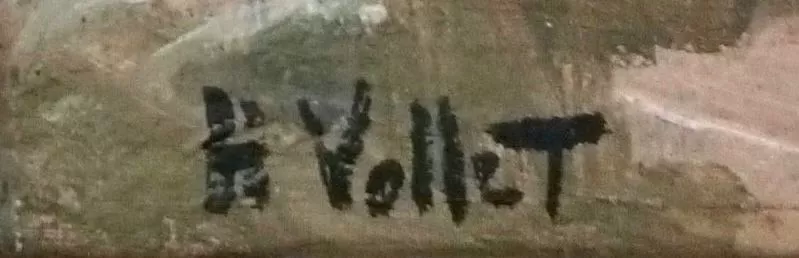
Not all of Henry Émile Vollet's works are signed. They may be at the bottom of the painting, but if you think you own one, it's best to have it appraised to be sure of the originality of your property.
Knowing the value of a work
If you happen to own a work by or after Henry Émile Vollet, don't hesitate to request a free valuation using our form on our website.
A member of our team of experts and licensed auctioneers will contact you promptly to provide you with an estimate of the market value of your work, not forgetting to send you ad hoc information about it.
If you wish to sell your work, you will also be accompanied by our specialists in order to benefit from alternatives to sell it at the best possible price, taking into account market inclinations.
Estimate in less than 24h
Discover in the same theme

Rating and value of paintings and drawings by Léon Bazile Pe...
Léon Bazile Perrault is a French painter of firework art who produced numerous works of high value.
Learn more >

Rating and value of paintings by Huguette Caland
Huguette Caland is a Lebanese artist who has produced abstract works in various media, working with the body and eroticism.
Learn more >

Rating and value of drawings and paintings by André Planson
André Planson is a 20th-century painter inspired by Fauvism, whose works command high prices and are highly valued at auction.
Learn more >
Works from the same period sold at auction

Estimated 4.000 - 6.000 €
EUGÈNE LEROY (1910-2000), Maison dans un sous bois, oil on canvas mounted on panel.

Estimated 500 - 800 €
Louis BUISSERET (1888-1956) - Water carrier, Portugal, circa 1943, Oil on canvas

Estimated 3000-5000€
Alexandre Roubtzoff - View of Tunis (small format)

Estimated 100-200€
Vassiliew Slavik, Oil on canvas

Estimated 1.000 - 2.000
TRAN DUY (1920-2014). École des beaux-arts de l'Indochine, preparatory class 1945, ink and color painting on silk

Estimated 800 - 1.500
Jean Roger SOURGEN (1883-1978) Trees and dunes Oil on panel

Secure site, anonymity preserved

Auctioneer approved by the State

Free and certified estimates
Frequently asked questions
-
Who is Henry Émile Vollet, and what is his artistic background?Henry Émile Vollet (1861–1945) was a French painter trained at the École des Beaux-Arts in Paris in Fernand Cormon’s studio. His work combines realism and Orientalism, enriched by his extended stays in Vietnam. A contemporary of Victor Tardieu and Alix Aymé, he received an honorable mention at the Salon des Artistes Français in 1888 and a bronze medal at the 1900 World’s Fair, cementing his talent and his unique painterly approach.
-
What is the price range for Henry Émile Vollet's drawings?Henry Émile Vollet's drawings and watercolors sell for between €60 and €3,400, while his oil paintings on canvas fetch prices ranging from €65 to €32,000. His market value is stable, with significant variations depending on the medium, subject matter, and historical significance of the work.
-
How can you authenticate a drawing by Henry Émile Vollet?To authenticate a work by Henry Émile Vollet, we recommend that you request a free appraisal from Auctie's. Our team of experts and state-certified auctioneers will examine your piece and provide you with an accurate appraisal within 48 hours, with no obligation on your part.
-
Is this a good time to sell a drawing by Henry Émile Vollet?Yes, now is a good time to sell. Henry Émile Vollet’s market value is stable, and his works are seeing growing demand, particularly among Belgian buyers and collectors interested in Orientalism and 19th-century graphic art. The market appreciates his drawings, which demonstrate a sensitive approach to Vietnamese reality.
-
How does the appraisal and sale process work at Auctie's?Appraisals at Auctie's are free and non-binding. Simply fill out our online form, and an expert will contact you shortly to provide you with the estimated market value of your artwork. If you decide to sell, our specialists will guide you through the process from start to finish to help you get the best possible price, taking current market trends into account.
