



Daum: History of Crystalware, Craftsmanship, and Appraisal

Key takeaways
- Daum, a Lorraine-based crystal manufacturer founded in 1878, became an internationally renowned art studio as early as 1891 thanks to the brothers Auguste and Antonin.
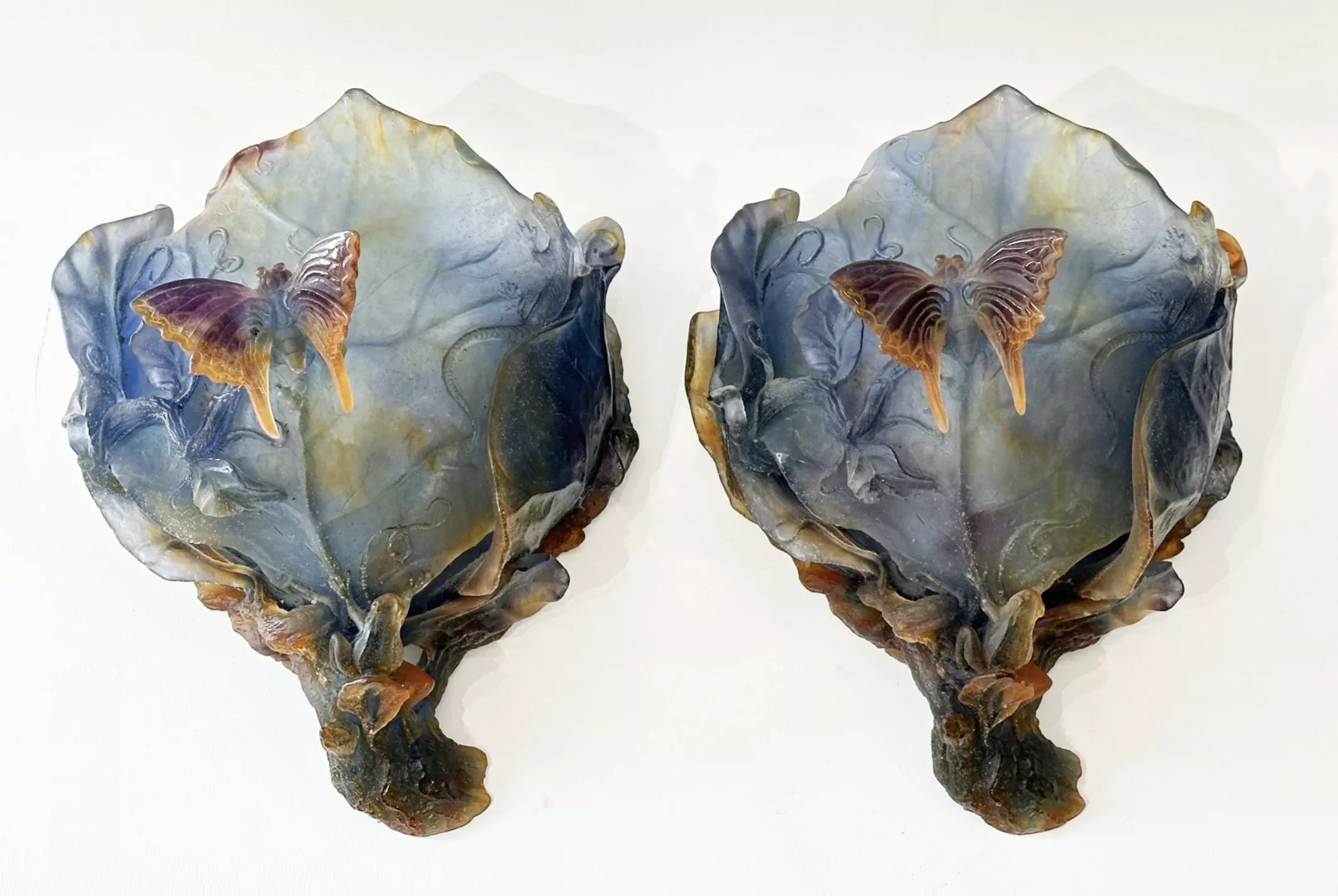
- Art Nouveau pieces made of glass paste (1891–1914) featuring floral motifs command the highest prices, as their rarity and heritage value are recognized by museums worldwide.
- Three major techniques underpin the production: opaque colored pâte de verre, transparent blown crystal, and semi-translucent crystal paste developed in 1968 for sculpture.
Glass paste, Nancy Art Nouveau, and carved crystal: the value of Daum pieces varies greatly depending on the technique, the series, and the condition.
Below you’ll find all our valuation guides dedicated to Daum—glass paste vases, crystal sculptures, and Daum editions. Each guide details the price ranges observed at auction and the factors that determine a piece’s value before you entrust it to our state-certified auctioneers.
Guides on this brand
See all guides >
Rating and value of sculptures and bronzes by Marie-Paule De...
Marie-Paule Deville-Chabrolle was born in 1952 and has produced a number of sculptures that are highly prized at auction.
Learn more >

Rating and value of Amalric Walter paperweights, vides-poche...
Amalric Walter is a twentieth-century glassmaker who collaborated with Daum, producing works that are highly regarded and valued.
Learn more >

Amalric Walter vases rating and value
Amalric Walter is a twentieth-century glassmaker who produced works for Daum that are highly prized at auction.
Learn more >

Rating and value of works, sculptures by Amalric Walter
Almaric Walter is a 20th-century sculptor who collaborated with Daum. His works are valued at auction. Estimate in 24h
Learn more >

Rating and value of Daum crystal works, Nancy school
After 1945, the Daum glassworks produced a number of crystal works that are highly prized on the auction market. They have a stable, fairly high marke...
Learn more >

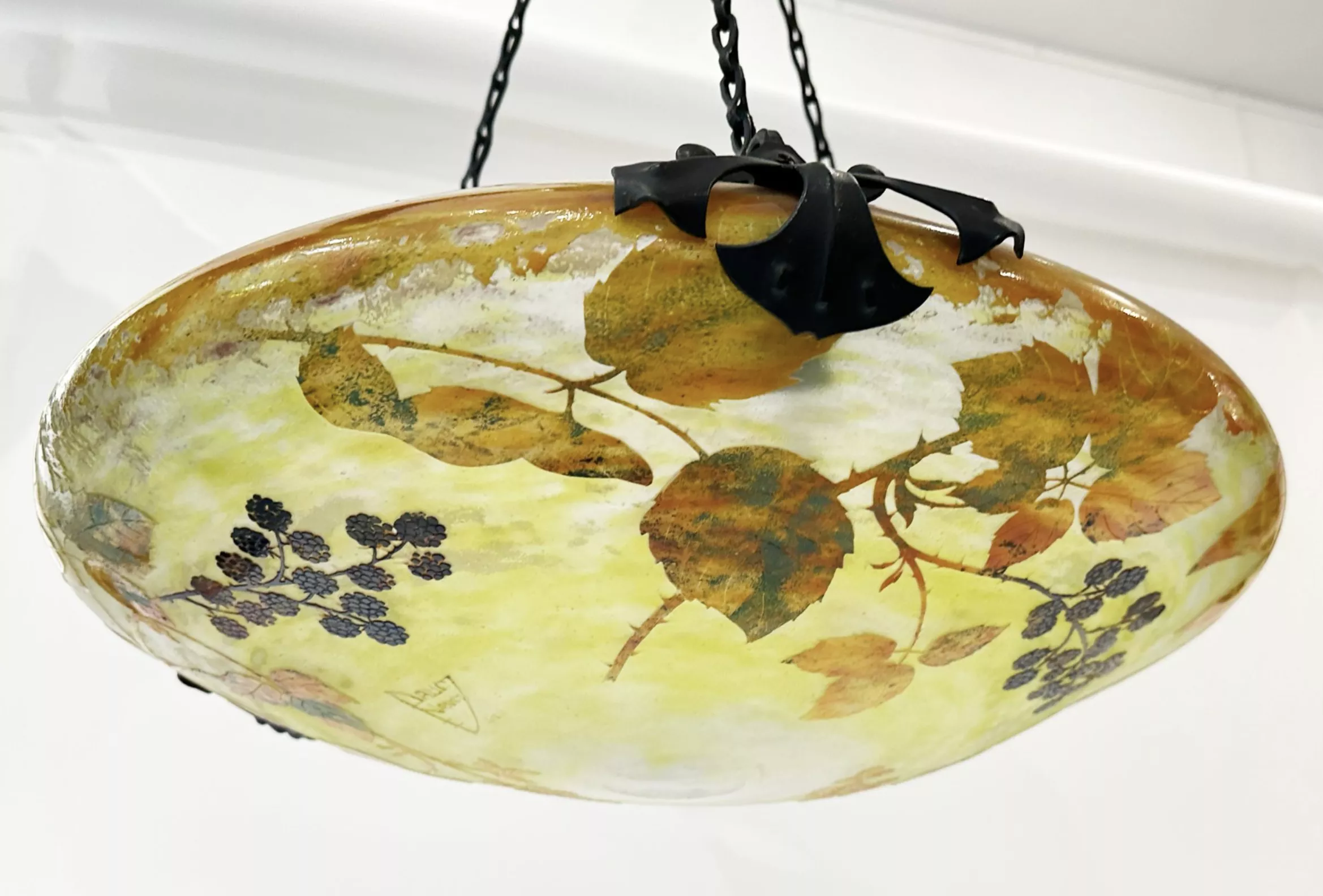
Value and rating of Daum lamps
Daum, a glassmaker founded in the 19th century, has produced a number of highly prized sales at auction.
Learn more >

Estimate, price of the works, pâte de verre vases, Daum vase
Daum produces glassware in series, and has brought glass paste back into fashion. Daum's market value is stable. Estimation in 24h.
Learn more >
Daum, the Lorraine crystal manufacturer founded in Nancy in 1878
1878: Jean Daum takes over the Sainte-Catherine Glassworks
In 1878, Jean Daum took over the Sainte-Catherine Glassworks in Nancy, a factory that at the time specialized in the production of everyday glassware without any particular artistic focus.
This acquisition, driven primarily by commercial considerations, nevertheless marked the beginning of a creative journey that would profoundly shape the history of French decorative arts.
Auguste and Antonin Daum, the two brothers at the helm of the factory
Credit for transforming an ordinary industrial glassworks into an internationally renowned art studio goes to Jean Daum’s sons, Auguste and Antonin. Auguste, more focused on business management, and Antonin, driven by a deep artistic passion, formed a complementary duo whose fruitful partnership would give rise to creations of remarkable stylistic and technical quality.
From Industrial Glassware to Fine Art Crystal
The transformation of the factory from industrial glassware production to high-end art crystal took place gradually beginning in the early 1890s, under the direct leadership of Antonin Daum.
This profound transformation involved the recruitment of specialized designers and technicians, as well as significant investments in new techniques for decorating and shaping glass.
Date | Key Event |
1878 | Jean Daum takes over the Verrerie Sainte-Catherine in Nancy |
1891 | Creation of the first artistic department |
1904 | Daum becomes a founding member of the École de Nancy |
1939–1945 | Production halted during World War II |
1968 | Reinvention of the lost-wax technique |
Today | A leading international contemporary art glass studio |
Estimate in less than 24h
Daum and the École de Nancy: At the Heart of Art Nouveau
1891: The Creation of the First Artistic Department
In 1891, Daum established the first department within the factory entirely dedicated to artistic production, thus marking a definitive break from the company’s purely industrial focus. This department quickly brought together talented artists and technicians, whose creations would soon rival those of the finest European glassworks.
Daum, a Founding Member of the École de Nancy Alongside Émile Gallé
In 1904, Daum helped found the Provincial Alliance of Art Industries, known as the École de Nancy, alongside leading figures such as Émile Gallé, Louis Majorelle, and Victor Prouvé. This founding association attests to the recognition the manufactory enjoyed at the time within the Lorraine Art Nouveau movement, of which it embodied one of the most accomplished expressions in the field of glass.
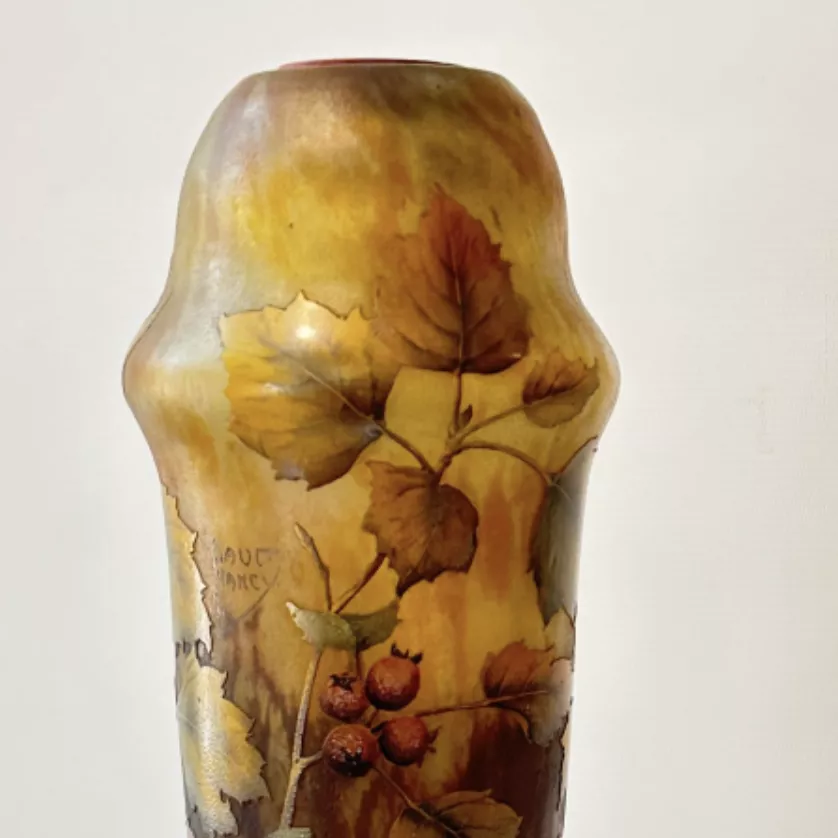
Jacques Gruber, Henri Bergé, Almaric Walter: the company’s artists
Several leading artists contributed, in various ways, to the creative richness of the Daum factory during the Art Nouveau era. Jacques Gruber, Henri Bergé, and Almaric Walter each brought a distinct sensibility that enriched the company’s stylistic repertoire, enabling it to offer a far more diverse creative range than that of a single-artist manufacturer.
The influence of the École de Nancy on Daum’s production extended beyond mere style to also impact the company’s commercial and institutional dimensions: its membership in this network of Lorraine-based manufacturers—collectively recognized for their artisanal excellence—has played a lasting role in associating the Daum name with a reputation for superior quality in the minds of the public and international collectors.
International Recognition, from Art Nouveau to the Present Day
World’s Fairs: Showcases of Lorraine’s Craftsmanship
The World’s Fairs of the late 19th and early 20th centuries provided Daum with crucial international visibility.
The awards won at these prestigious events firmly established the manufacturer’s reputation on the international stage and paved the way for a clientele of collectors and museums around the world.
A clientele of collectors and museums around the world
Daum pieces from the Art Nouveau period are now featured in the world’s leading museum collections, from the Musée des Arts Décoratifs in Paris to the Metropolitan Museum of Art in New York. This institutional recognition serves as an indirect yet tangible factor in enhancing the value of pieces from this period that enter the secondary market.
Daum, a crystal manufacturer associated with major French institutions
Throughout its history, Daum has developed close ties with major French institutions, notably producing pieces for the Élysée Palace and creating sculptures in collaboration with renowned artists. These institutional commissions help reinforce the company’s artistic legitimacy in the eyes of collectors.
Period | Technique | Artistic Evolution |
1891–1914 | Glass paste, interlayer, acid etching | Art Nouveau, floral motifs and landscapes |
1920–1940 | Art Deco, geometric shapes | Transition to abstraction |
1968 to the present | Lost-wax casting, crystal paste | Contemporary sculpture and artistic collaborations |
Daum’s Craftsmanship: From Glass Paste to Blown Crystal
Glass paste, a technique rediscovered in the 20th century
Glass paste, an ancient technique involving the melting of crushed glass in a mold to create opaque forms in a variety of hues, is one of Daum’s most recognizable technical hallmarks.
Rediscovered and perfected by the manufactory in the late 19th century, this technique allows for the creation of textural and color effects that are impossible to achieve through traditional glassblowing.
Blown Glass and Hot Crystal Work
Alongside pâte de verre, the manufactory has also mastered the classic glassblowing techniques, whether free-blown or mold-blown glass.
These techniques allow for the creation of lighter and more transparent forms, which are often subsequently decorated using acid etching or the application of enamels—processes that constitute other stylistic hallmarks of Daum’s production.
1968: The Reinvention of the Lost-Wax Technique
The year 1968 marked a major creative renaissance for the manufacturer, with the reinvention of the lost-wax technique applied to crystal. This process, which involves pouring molten crystal into a mold made from a wax model that is subsequently melted away, allows for the creation of sculptures of remarkable precision and expressiveness, paving the way for a new generation of collaborations with contemporary artists.
Object Category | Material | Use |
Glass paste vase | Colored glass paste | Decoration |
Crystal sculpture | Crystal paste using the lost-wax method | Collection and decoration |
Perfume bottle | Blown crystal or glass paste | Luxury Fragrance Bottles |
Daum's Iconic Collections
Glass paste vases and sculptures from the Art Nouveau era
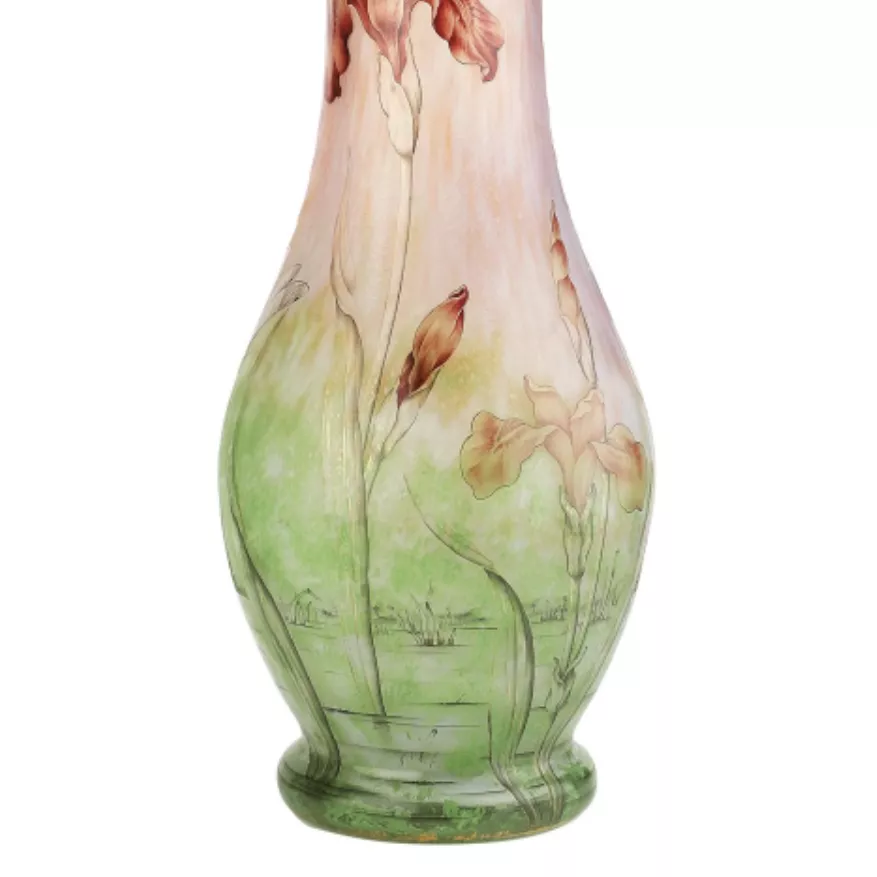
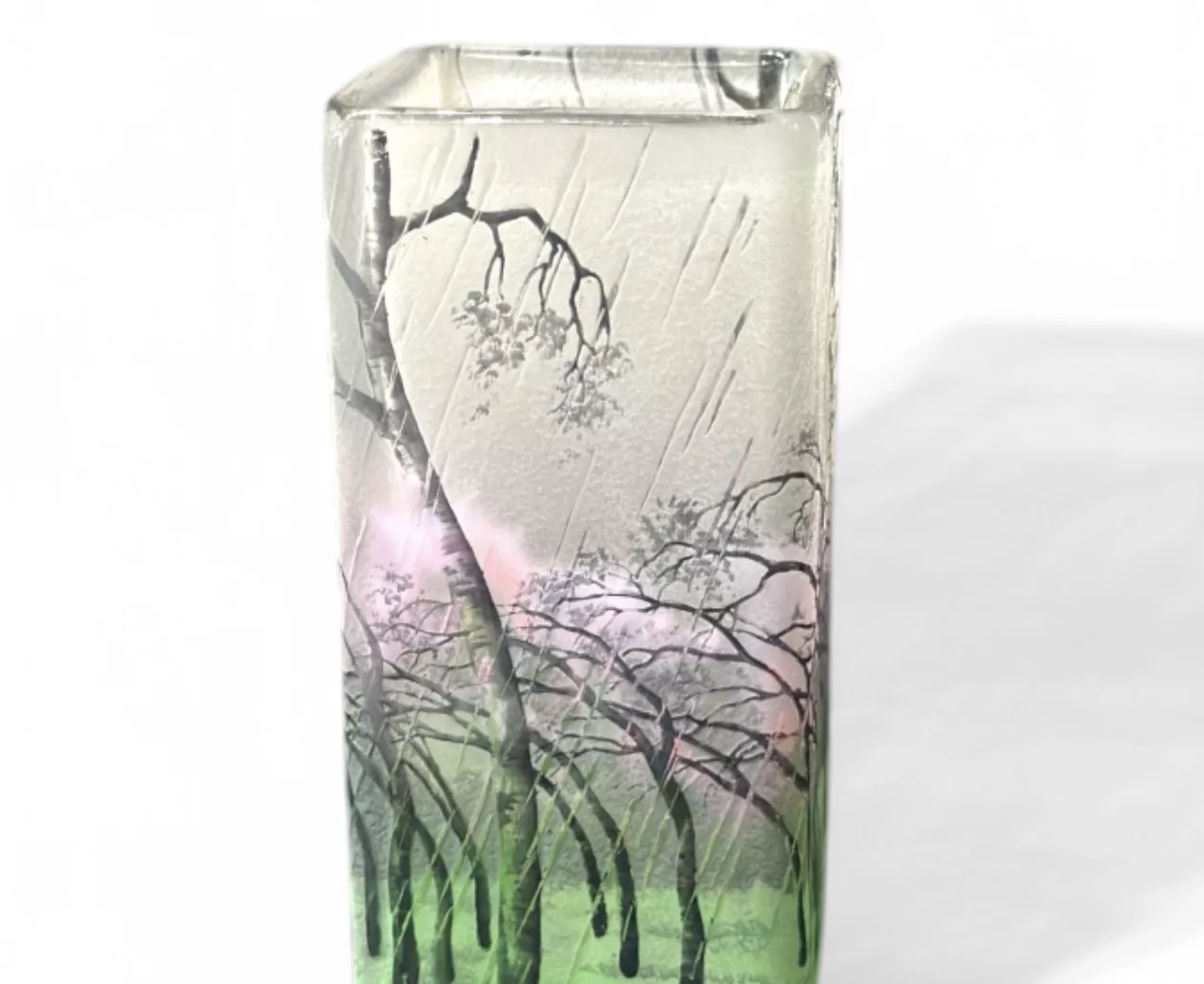
The vases produced by the manufactory during the Art Nouveau period—decorated with floral motifs, rural landscapes, or nocturnal scenes created using acid-etching and glass marquetry—are the most sought-after pieces on the Daum market.
Their rarity, due to the natural limitations of artisanal production during that period, explains the sometimes very high prices achieved at specialized auctions.
Ginkgo, arum, passion rose: iconic floral motifs
The floral repertoire is one of the most recognizable stylistic hallmarks of Daum’s production, ranging from the arum motif to the ginkgo or rose. These motifs, rendered in blown glass, pâte de verre, or enamel, allow collectors and experts to quickly identify pieces and serve as an essential criterion for attribution during appraisals.
Panthers, Elephants, Cats: Daum’s Crystal Animal Figures
Beyond its floral repertoire, the manufactory has developed a line of animal sculptures in crystal paste that is particularly prized by contemporary collectors. These pieces, often cast using the lost-wax method in numbered series, command strong prices on the decorative arts market.
Estimate in less than 24h
Daum Crystal Today: Tableware and Luxury Decor
Crystal vases, perfume bottles, and incense holders
The company’s contemporary production spans a wide range of categories, from decorative vases to perfume bottles and crystal paste incense holders. These pieces, accessible to a more diverse audience of collectors, form the commercial foundation upon which the manufacturer’s long-term viability rests.
Contemporary Sculptures and Art Objects
The crystal paste sculptures produced by the manufactory, in regular collaboration with renowned contemporary artists, represent the most dynamic and highly valued segment of its current production. Produced in limited, numbered editions, they combine Daum’s artisanal excellence with an artist’s reputation—two factors that enhance their value and complement each other favorably on the secondary market.
Collaborations with Contemporary Artists and Designers
Since the 1970s, Daum has pursued a policy of sustained collaborations with contemporary artists and designers, helping to regularly renew its creative repertoire while attracting a clientele of collectors who appreciate the artistic dimension of the work, beyond mere artisanal craftsmanship.
Crystal, glass paste, crystal paste: What are the differences?
Blown crystal: transparency and brilliance
Blown crystal is distinguished by its characteristic transparency and unique brilliance, achieved through the material’s lead oxide-enriched composition. This material, the most traditional in the Daum repertoire, is used for the most classic pieces in the collection, as well as for lost-wax sculptures.
Glass paste: an opaque, colorful material
Glass paste, an opaque and highly colored material, produces visual effects very different from those of blown crystal. Its matte, velvety appearance, combined with a sometimes striking richness of color, makes it the material of choice for creations that most closely resemble sculpture.
Crystal paste, Daum’s innovation since 1968
Developed beginning in 1968, crystal paste represents the manufactory’s major technical innovation in the second half of the 20th century. Combining the optical properties of crystal with the sculptural possibilities of pâte de verre, it enables the creation of sculptures of unparalleled precision and chromatic depth.
Material | Properties | Impact on Value |
Blown crystal | Transparent, brilliant | High for antique, decorated pieces |
Glass paste | Opaque, colored | Very high for signed Art Nouveau pieces |
Crystal paste | Semi-translucent, carved | High for numbered contemporary sculptures |
Ultimately, collecting Daum involves distinguishing between three markets with distinct dynamics: that of antique Art Nouveau pieces, whose rarity and heritage value are now well-established; that of contemporary crystal paste creations, whose value depends closely on the renown of the collaborating artist; and finally, the market for transitional pieces from the interwar period, which are still insufficiently documented to be subject to pricing as precise as that of the other two categories.
How to Authenticate a Daum Piece
Signature, stamp, and “Daum Nancy France” engraving
Every Daum piece bears an engraved or inlaid signature reading “Daum Nancy” or “Daum Nancy France,” depending on the period of production. This signature, whose style has evolved over the decades, is the first authentication element examined by the expert, even before the piece undergoes stylistic analysis.
Numbered Models and Limited Editions
Sculptures and collectible pieces produced in limited editions generally bear an engraved number corresponding to the piece’s position in the total series produced. This numbering, when accompanied by a certificate of authenticity, significantly enhances the piece’s estimated value.
Provenance, Condition, and Original Documentation
Documented provenance, the condition of the glass or crystal paste, and the preservation of the original papers are additional criteria that are decisive for the expert when evaluating a Daum piece.
Type of Piece | Indicative price range |
Signed Art Nouveau vase | 1,500 to 30,000 euros |
Numbered crystal paste sculpture | 500 to 5,000 euros |
Antique perfume bottle | 300 to 3,000 euros |
What Determines the Value of a Daum Piece
Period of creation: Art Nouveau, Art Deco, or contemporary
The period of creation is the primary factor determining value, with pieces from the Art Nouveau era generally commanding the highest prices due to their rarity and historical significance to the French decorative arts movement.
Rarity of the model and signature of the collaborating artist
The rarity of a model—linked to the number of pieces produced and the renown of any collaborating artist associated with its creation—is a major factor in determining value, particularly for contemporary sculptures produced in very limited series.
Condition of the crystal and quality of the coloring
The overall condition of the glass or crystal—including the absence of chips or cracks—and the quality of the coloring, a particularly important criterion for pâte de verre pieces whose hues may fade over time, round out the expert’s technical assessment.
Get a Free Appraisal of Your Daum Pieces
Auctie's offers all owners of Daum crystal a free appraisal service, conducted by a state-certified auctioneer, within twenty-four hours.
A certified appraisal by a licensed auctioneer within 24 hours
This appraisal is based on a review of detailed photographs of each piece, including the signature and the overall condition of the crystal or pâte de verre, to allow the expert to assess all valuation criteria.
Free appraisal in less than 24 hours Let Auctie’s appraise your Daum crystal: a certified response within 24 hours, with no obligation and complete confidentiality. |
Information and photos needed for a reliable online appraisal
To help the expert provide an accurate estimate, we recommend submitting the following:
Clear photographs of the piece from multiple angles
A photo of the signature or stamp
The serial number, if the piece has one
Any available documentation of provenance
Sell Your Daum Crystal at Auction with Auctie's
From the reserve price to the final bid: aiming for the best price
The auction of a Daum piece begins with setting a reserve price consistent with the initial estimate. Bidders then participate until the item is sold, at which point the final price is determined.
Hôtel Drouot and online auctions: reaching crystal collectors
The reputation of Hôtel Drouot, combined with the growth of online auctions, allows us to reach an international audience of collectors who are particularly drawn to well-documented Art Nouveau pieces and the most sought-after contemporary sculptures.
“Auctie’s appraised and then sold a Daum Art Nouveau vase inherited by our family, providing a very detailed analysis of the decorative technique and the period of production.”
Testimonial from a client, sale conducted by Auctie’s.
Inheritance, Moving: What to Do with an Inherited Daum Collection?
Inventory of a Crystal Collection and Estate Distribution
In the context of an estate, taking inventory of an inherited Daum collection is an essential preliminary step before dividing the estate among the heirs. Engaging a certified auctioneer helps establish an objective value for each piece.
Selling, Keeping, or Passing On an Inherited Item
Once the inventory is complete, several options are available to the heirs: keep the piece, pass it on, or sell it at auction. Auctie’s guides this decision-making process without ever pressuring you into a hasty decision.
Confidentiality of the process and seller anonymity are preserved
Auctie's guarantees every owner absolute confidentiality throughout the process, with anonymity maintained until the decision to put the item up for sale is made.
Glossary of Daum Crystal and Glass Art
Term | Definition |
Glass paste | Crushed glass melted in a mold; an opaque, colored material |
Lost-wax | A casting technique using a wax model that is later melted away |
Blown crystal | Crystal shaped by hand-blowing |
Acid etching | A decorative technique involving the selective etching of the glass surface |
Starting price | Starting price set for the opening of the auction |
Award | Final award of the item to the highest bidder |
Provenance | Documented history of a piece’s successive owners |
Estimate in less than 24h
Let Auctie's appraise your Daum crystal
Free appraisal in less than 24 hours Auctie's, a licensed auctioneer, will appraise your Daum crystal vases, sculptures, and other pieces free of charge in less than 24 hours, with complete confidentiality. |
Discover in the same theme
Amalric Walter vases rating and value
Amalric Walter is a twentieth-century glassmaker who produced works for Daum that are highly prized at auction.
Learn more >
Rating and value of works, sculptures by Amalric Walter
Almaric Walter is a 20th-century sculptor who collaborated with Daum. His works are valued at auction. Estimate in 24h
Learn more >
Rating and value of Daum crystal works, Nancy school
After 1945, the Daum glassworks produced a number of crystal works that are highly prized on the auction market. They have a stable, fairly high marke...
Learn more >

Secure site, anonymity preserved

Auctioneer approved by the State

Free and certified estimates
Frequently asked questions
-
What factors influence the value of a Daum piece?The value of a Daum piece varies greatly depending on several factors: the technique used (glass paste, blown crystal, or crystal paste), the period of creation, the motifs (floral or animal), the condition, and the presence of a signature. Signed Art Nouveau pieces made of pâte de verre command the highest prices, while contemporary sculptures made of pâte de cristal also depend on the renown of the collaborating artist.
-
How can you authenticate a Daum piece and determine its value?To authenticate a Daum piece and determine its exact value, we recommend requesting a free appraisal from Auctie's. Our state-certified auctioneers and experts will examine your piece with no obligation and provide you with a detailed estimate within 48 hours, taking into account all evaluation criteria specific to Daum.
-
Is this the right time to sell a Daum piece?Yes, now is a good time to sell a Daum piece. Vintage Art Nouveau pieces are widely recognized as part of our cultural heritage, contemporary crystal paste sculptures are in steady demand among collectors, and pieces from the interwar period are gradually regaining popularity. The Daum market remains dynamic and is highly regarded by decorative arts enthusiasts worldwide.
-
What is the difference between glass paste, blown crystal, and Daum crystal paste?Glass paste is an opaque, colorful material available in a variety of shades, prized for Art Nouveau creations. Blown crystal is transparent and brilliant, used for classic pieces and sculptures. Crystal paste, a Daum innovation since 1968, combines the optical properties of crystal with the sculptural possibilities of glass paste, allowing for sculptures of remarkable precision.
-
How does the sale of a Daum piece work at Auctie's?At Auctie's, we guide you through the process from the free appraisal to the final sale. After our experts evaluate your item, we list it in a specialized or general auction depending on its nature, present it to a wide range of collectors and museums, and manage the entire transaction. Our teams will keep you regularly updated on the progress of the sale.
