



Value and rating of Daum lamps

Key takeaways
- Daum lamps sell for between €350 and €350,670, with a Daum-Majorelle water lily lamp fetching €149,700 in 2019.
- Founded in 1878 in Nancy by Jean Daum, the manufacturer excels in innovative techniques such as pâte de verre, acid etching, and multilayer glass.
- Pieces produced in limited editions (200 to 300 copies maximum) blend Art Nouveau and Art Deco styles with natural motifs and geometric patterns.
If you own a lamp made by the Daum glassworks or after, and would like to know its value, our state-approved experts and auctioneers will offer you their appraisal services.
Our specialists will carry out a free appraisal of your work, and provide you with a precise estimate of its value on the current market.
Then, should you wish to sell your work, we'll direct you to the best possible arrangement to obtain the optimum price.
Rating and value of Daum lamps
Daum is a French glassmaker quite well known to lovers of crystal lamps. If you own one, it may be worth more than you think. On the art market, prices for Daum lamps can be very high at the auctioneers' gavel.
Their lamps are particularly prized and the price at which they sell on the art market ranges from €350 to €350,670, a fairly substantial range, but one that says a lot about the value that can be attributed to Daum lamps.
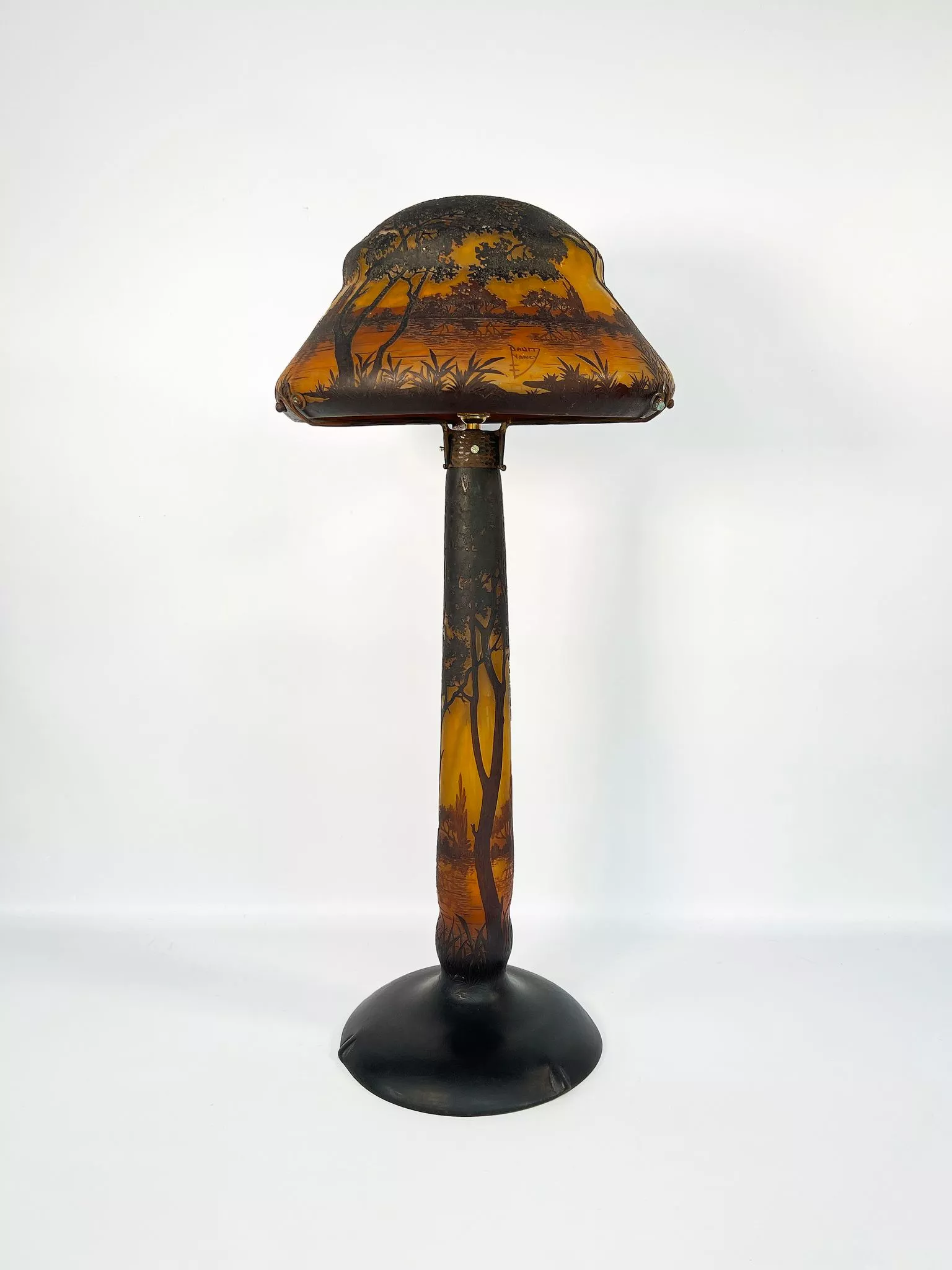
In 2019, a " nénuphar " table lamp, made in collaboration with Jacques Majorelle sold for €149,700 while it was estimated at between €105 700 and €158 500 by Christie's, so the high estimate was almost reached.
Order of value from a single work to the most prestigious
Type of lamp | Result |
|---|---|
Lighting lamp - bedside lamp | From €350 to €149,700 |
Luster - suspension | 450 to 29 500€ |
Classic lighting | From 450 to 350 670€ |
Estimate in less than 24h
The style and technique of Daum
The style and technique of Daum glassware embody both the elegance of Art Deco and unique craftsmanship.
Founded by Jean Daum near Nancy after the war against Prussia, Daum established itself as one of the major figures in French glass art, drawing inspiration from the work of Émile Gallé.
Much more than just a glassworks, Daum quickly became a workshop for artistic creation, combining finesse and innovation.
Jean Daum, driven by the desire to perpetuate the art of glass, introduced pioneering techniques that married traditional processes with innovative aesthetic research.
Daum's pieces, often influenced by the natural forms and plant motifs characteristic of Art Nouveau, gradually evolve towards the more geometric, structured lines of Art Deco, while retaining a poetic dimension.
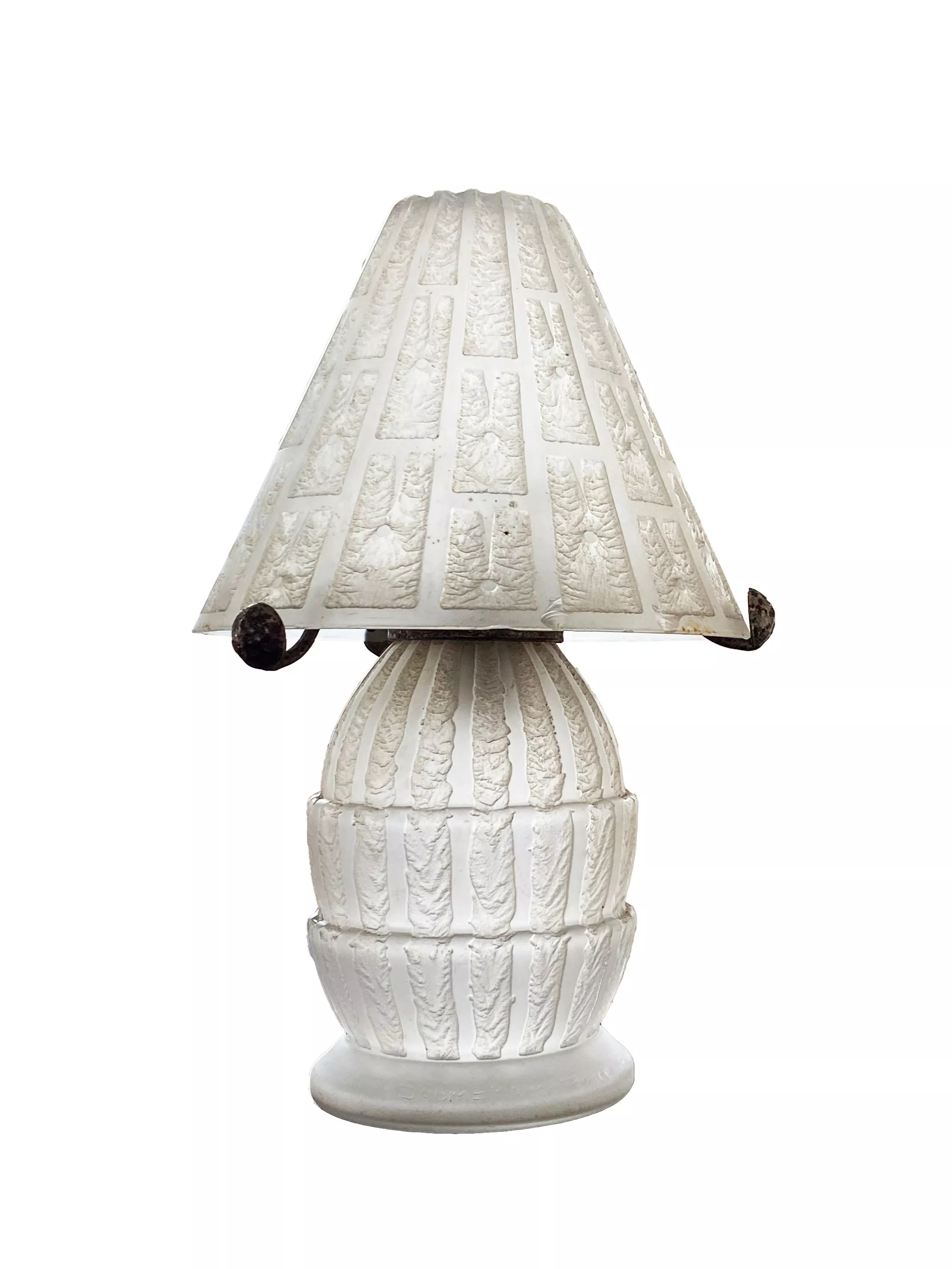
The house stands out for its use of pâte de verre, a complex technique that produces striking nuances and reliefs, and requires perfect mastery of the material.
This method, which involves melting colored glass fragments, gives the works a particular brilliance and velvety texture, creating light effects that magnify the details.
Under the guidance of his sons Auguste and Antonin, Daum also perfected acid etching and color inlay, techniques that create pieces with refined patterns and subtle contrasts.
Technical innovation, combined with a bold artistic vision, propels Daum to the rank of world reference in glass and crystal, where each creation becomes a timeless work of art, the fruit of a harmonious fusion of tradition and modernity.
.
The history of the Daum glassworks
The history of the Daum glassworks is that of a visionary family business that has established itself as a pillar of French glass art.
Founded by Jean Daum (1825-1885), a passionate glassmaker, the Daum house is today recognized worldwide for its excellence and innovation.
Initially a notary in northern France, Jean Daum changed course after the war against Prussia, settling in Nancy and founding a glassworks there in 1878.
From the outset, he integrated his son Auguste into the venture, giving the company a family spirit that would remain one of its hallmarks.
On Jean's death, Auguste Daum took over as head of the glassworks and surrounded himself with his brother Antonin, who brought an artistic dimension to the business. Under Antonin's artistic direction, the Daum glassworks distinguished itself with bold, refined creations.
He mastered a variety of glassmaking techniques, including acid decoration, multi-layered glass and wheel engraving, all of which gave pieces unprecedented depth and relief.
Antonin Daum signed numerous works, and his name became a guarantee of quality and creativity, prized by collectors the world over.
The arrival of talents such as Jacques Grüber, the first artist hired by the glassworks, marked a decisive turning point. Grüber took on the task of designing unique, elegant pieces, contributing to the artistic identity of the house.
In 1893, the manufacture caused a sensation at the Chicago World's Fair, its first international recognition. Building on this success, Daum went on to exhibit throughout France, racking up awards.
At the 1900 World's Fair, the Daum glassworks, alongside the Gallé house, was rewarded for the excellence of its craftsmanship, affirming its place in the art world.
The artistic team is enriched by new talents such as Henri Bergé, Émile Writz and Amalric Walter, each bringing their own sensibility and expertise.
Together, they shape a unique aesthetic universe, where material becomes poetry, and contribute to the artistic influence of Daum glassworks far beyond French borders.
Focus on a Daum and Majorelle lamp with foliage decoration
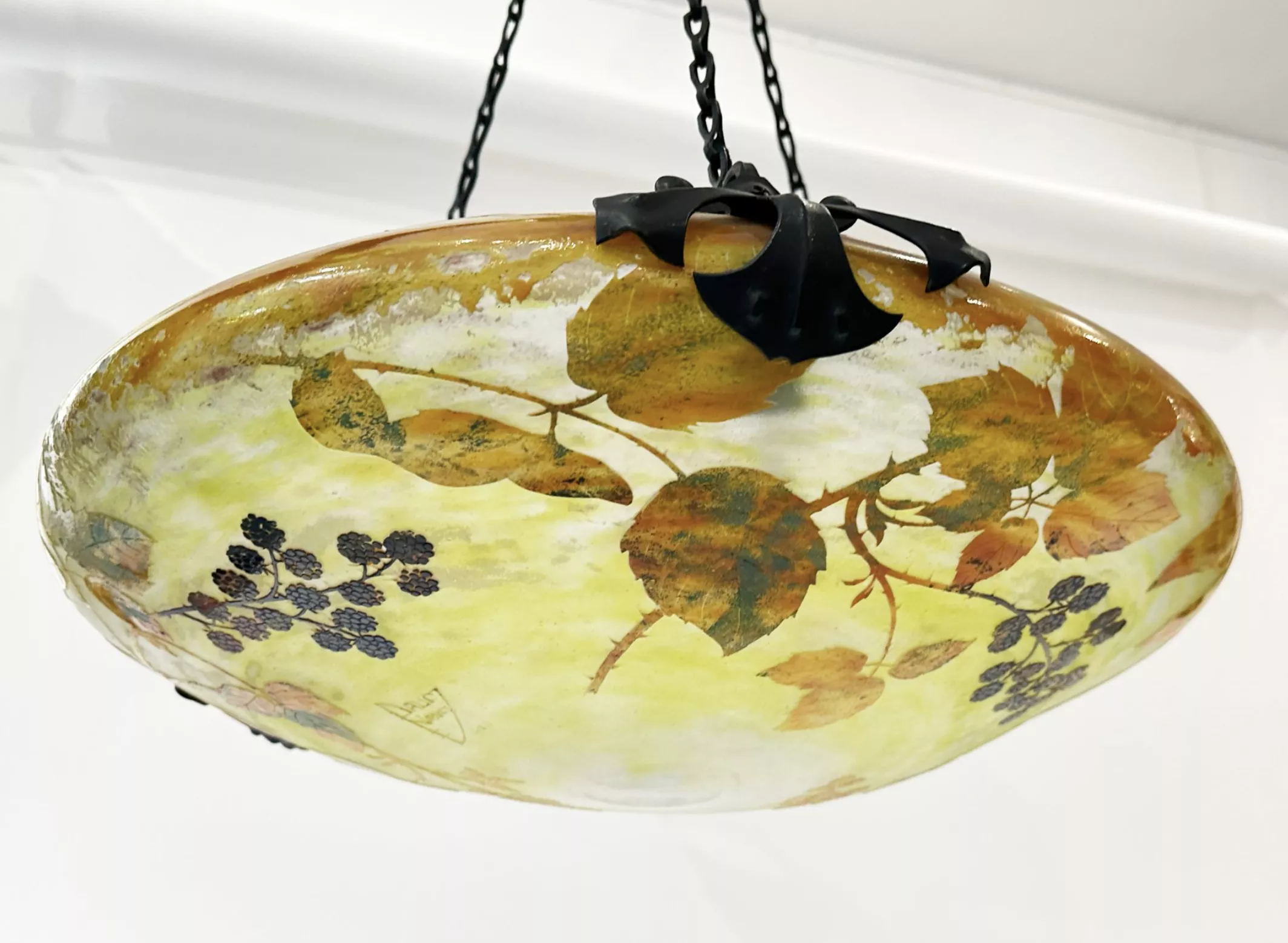
This lamp by Daum and Majorelle perfectly conveys the subtle, organic elegance of Art Nouveau. Here, autumn foliage patterns come alive in the soft light, capturing the essence of soothing nature.
The choice of warm hues, where golden yellow rubs shoulders with touches of coppery brown, evokes a forest bathed in light, creating a warm, enveloping atmosphere.
The acid etching technique brings to life the details of the leaves, the meticulous veins and precise contours of the berries, while the slightly raised texture lends the décor a striking realism.
This technical mastery underlines Daum's heritage in the art of glass and crystal, where every shade and shape seems to integrate naturally into the material.
The wrought-iron stand, adorned with delicate curves and solidly crafted by Majorelle, completes this work of art with understated yet assertive elegance. The symbiosis of glass and metal reflects the quest for harmony so dear to the craftsmen of the time.
Through this lamp, Daum and Louis Majorelle offer us a veritable ode to nature.
The object becomes a tribute to autumn, its colors, its poetry, capturing the light and diffusing it gently. An example of craftsmanship that delicately blends art and functionality.
Initiation to Art Nouveau glassmaking : Jean-François Bourriaud
The success of Daum lamps
The success of Daum lamps is based on a perfect balance between technical innovation and aesthetic refinement, which makes each piece a coveted object.
As soon as the factory opened in 1878, Jean Daum took the approach of Émile Gallé, a pioneer of Art Nouveau, as his model, and adopted the technique of acid decoration to bring Daum creations to life.
His sons, Auguste and Antonin, continued this heritage, while innovating with the use of pâte de verre, a precious material that produces striking, almost sculptural reliefs, which lend themselves admirably to stylized motifs.
Each series of Daum lamps is produced in a limited edition, with a small number of pieces (200 to 300 at most), which reinforces their rarity and value on the auction market.
The diversity of models offered by the glassworks testifies to a constantly renewed inventiveness: from table lamps to nightlights, via suspensions, chandeliers or even floor-standing lamps.
Despite this variety, all Daum creations remain rooted in the Art Deco style, with sober, elegant lines that adapt harmoniously to contemporary as well as classic interiors.
Among the most sought-after pieces are those resulting from prestigious collaborations, notably with Jacques Majorelle.
These lamps, signed by this creative association, are particularly prized at auction, reaching sales records and embodying the very essence of Daum's craftsmanship and artistic vision.
Recognizing the signature on a Daum product
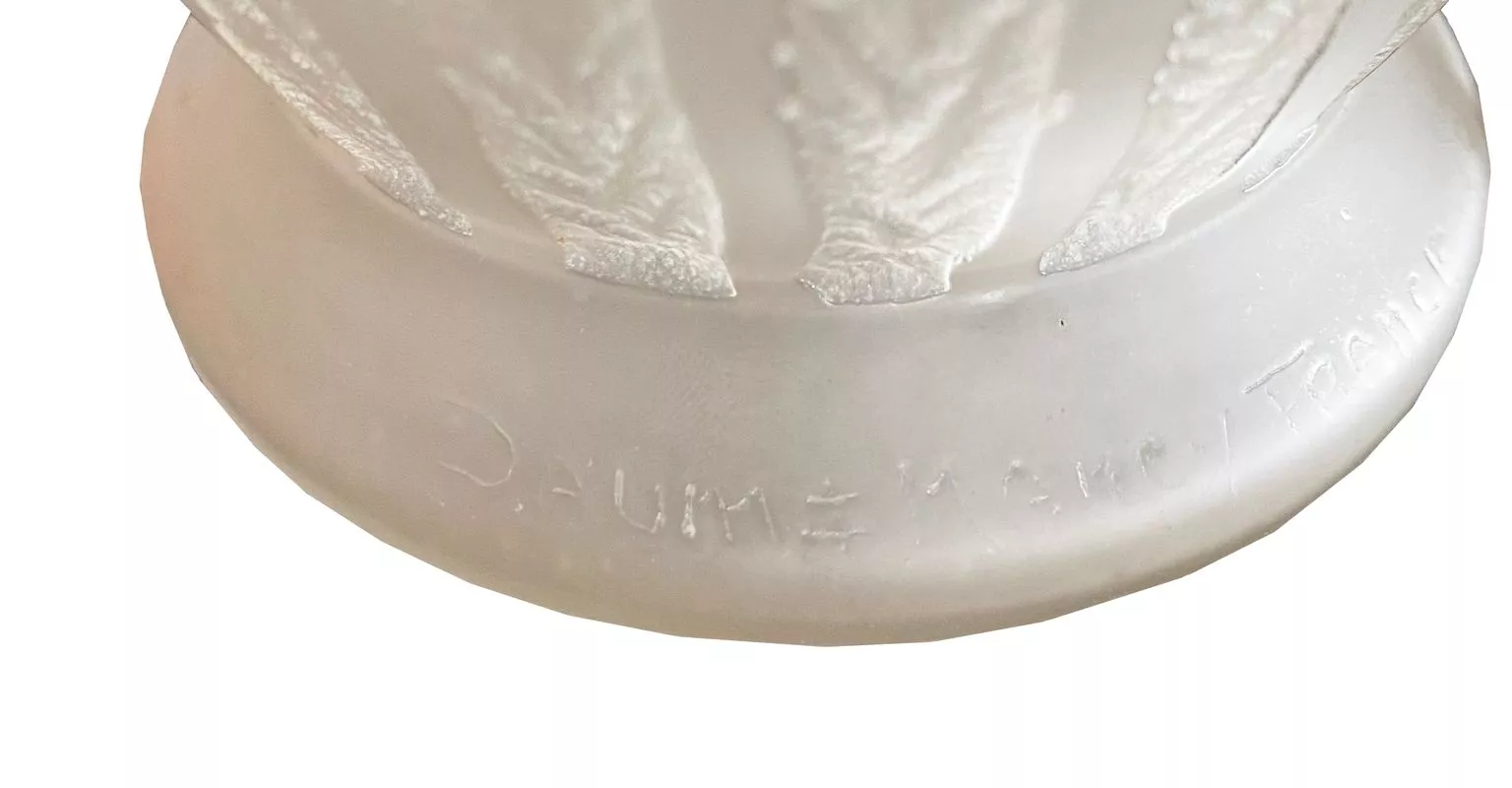
Not all lamps produced by the Daum glassworks are signed. What's more, as several artists have worked and sometimes collaborated for the factory, the vase (or lamp) may be signed with another name even though it was produced by the Daum glassworks. That's why it's important to have your pieces appraised.
Estimate in less than 24h
Discover in the same theme

Kurt Schwitters, analysis and rating of his value on the art...
Kurt Schwitters, visionary artist of the Dada movement, appraise a work by Kurt Schwitters, estimate and market values.
Learn more >

Value of works and paintings by Mela Muter
Mela Muter, a 20th-century painter, produced many paintings during her career. Their value is on the rise.
Learn more >

Rating and value of paintings by Marcel Mouly
Marcel Mouly is a little-known Fauvist painter whose value is high on the auction market. Free estimate in 24h.
Learn more >
Works by Daum sold at auction

Estimated 1 500 € - 2 000 €
DAUM NANCY Large mushroom lamp.

Estimated 1.500 - 3.000
DAUM - NANCY, Vase with shouldered ovoid body and small tubular neck

Estimated 1.000 - 2.000
DAUM - NANCY, Tubular vase with three-lobed hot-modelled neck

Estimated 10.000 - 15.000
DAUM - NANCY, "Water iris and dragonflies". Ovoid vase with conical neck on hemmed base

Secure site, anonymity preserved

Auctioneer approved by the State

Free and certified estimates
Frequently asked questions
-
Who is Daum, and what is his historical background?Daum is a French glassworks founded in 1878 by Jean Daum in Nancy, which has become one of the leading names in French glass art. Under the leadership of his sons Auguste and Antonin, the company established itself as a global leader by blending traditional glassmaking techniques with the aesthetics of Art Nouveau and later Art Deco. The company distinguished itself through major technical innovations, such as the use of pâte de verre and acid etching, and was honored at the World’s Fairs in Chicago (1893) and Paris (1900).
-
What are the current market prices for Daum lamps?The prices of Daum lamps vary considerably depending on the type and rarity: nightlights and bedside lamps sell for between €350 and €149,700, chandeliers and pendant lights between €450 and €29,500, and classic lighting fixtures between €450 and €350,670. The most prestigious pieces, particularly those resulting from collaborations with Jacques Majorelle, command record prices: a Daum and Majorelle “water lily” lamp sold for €149,700 in 2019.
-
How can you authenticate a Daum lamp and determine its value?It is recommended that you have your lamp appraised by certified experts, as not all Daum pieces are signed, and some may bear the names of other artists who collaborated with the manufacturer. Auctie's offers a free, no-obligation appraisal by specialized auctioneers and experts, with a response within 48 hours, to determine the authenticity and exact value of your piece.
-
What techniques characterize Daum's creations?Daum lamps are characterized by sophisticated techniques: pâte de verre (the fusing of colored glass fragments to create striking reliefs), acid etching to produce refined details, multilayered glass, and wheel engraving. These methods produce a velvety texture and enhanced lighting effects, with subtle nuances and striking contrasts, always rooted in the Art Nouveau and Art Deco aesthetics.
-
Is now a good time to sell a Daum lamp?Yes, the market for Daum lamps remains dynamic and attractive: these pieces continue to be highly sought after by collectors, with an inherent scarcity (limited editions of 200 to 300 pieces at most) that supports their prices. Prestigious collaborations, such as those with Majorelle, continue to set sales records, making these lamps sound investments.
