



Rating and value of Daum crystal works, Nancy school

Key takeaways
- Daum crystal pieces vary widely in price depending on the type: sculptures range from €50 to €57,000, vases from €70 to €80,800, and chandeliers from €450 to €29,500.
- The manufacturer is renowned for its refined techniques, such as multilayer glass, acid etching, and wheel engraving, which create pieces with unique relief patterns.
- Founded in Nancy in 1878 by Jean Daum, the glassworks became a global benchmark thanks to the artistic innovation of brothers Auguste and Antonin, which was celebrated at the World’s Fairs of 1893 and 1900.
If you own a crystal object made by the Daum glassworks or after, and would like to know its value, our state-approved experts and auctioneers will offer you their appraisal services.
Our specialists will carry out a free appraisal of your work, and provide you with a precise estimate of its value on the current market.
Then, should you wish to sell your work, we'll direct you to the best possible arrangement to obtain the optimum price.
Rating and value of Daum crystal works
Daum is a French glassmaker quite well known to crystal enthusiasts. If you own one, it may be worth more than you think. On the art market, prices for Daum crystal works can be very high at the auctioneers' gavel.
Their animal-themed crystal works are particularly prized, and the price at which they sell on the art market ranges from €50 to €80,800, a fairly substantial range, but one that says a lot about the value that can be attributed to Daum crystals.
In 2022, the 1978 crystal and gilded bronze sculpture Oiseau de Daum by François-Xavier Lalanne sold for €38,000 while it was estimated at €10,000 to €15,000, more than twice the high estimate.
Order of value from a simple work to the most prestigious
Type of crystal object | Result |
|---|---|
Sculpture (flowers, animals...) | From 50 to 57,000€ |
Crystal vase | From 70 to 80,800€ |
Lustre - suspension | From €450 to €29,500 |
Estimate in less than 24h
Style and technique of Daum glassmaking
The Daum house style is distinguished by a bold fusion of complex techniques and a relentless pursuit of artistic perfection.
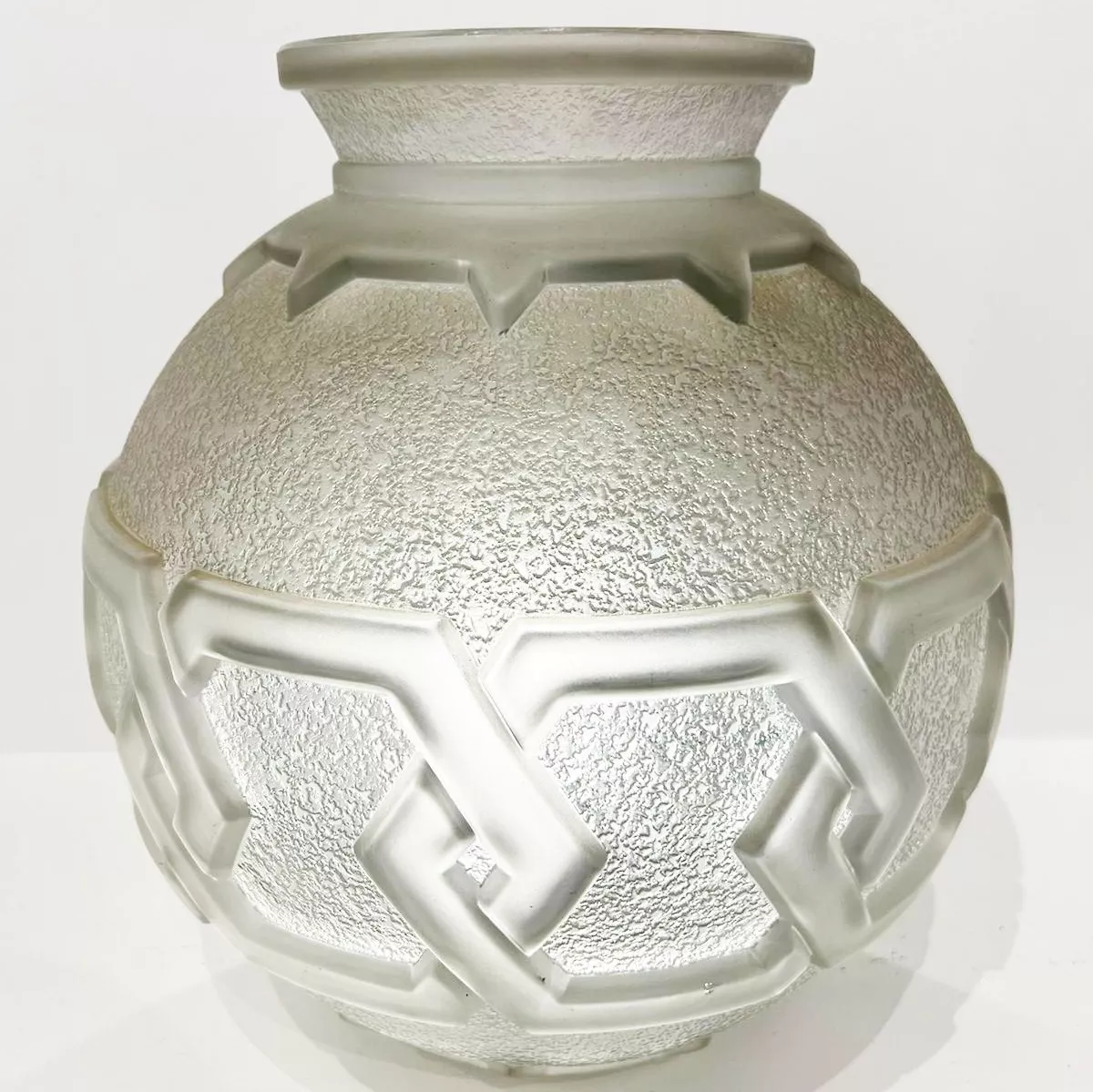
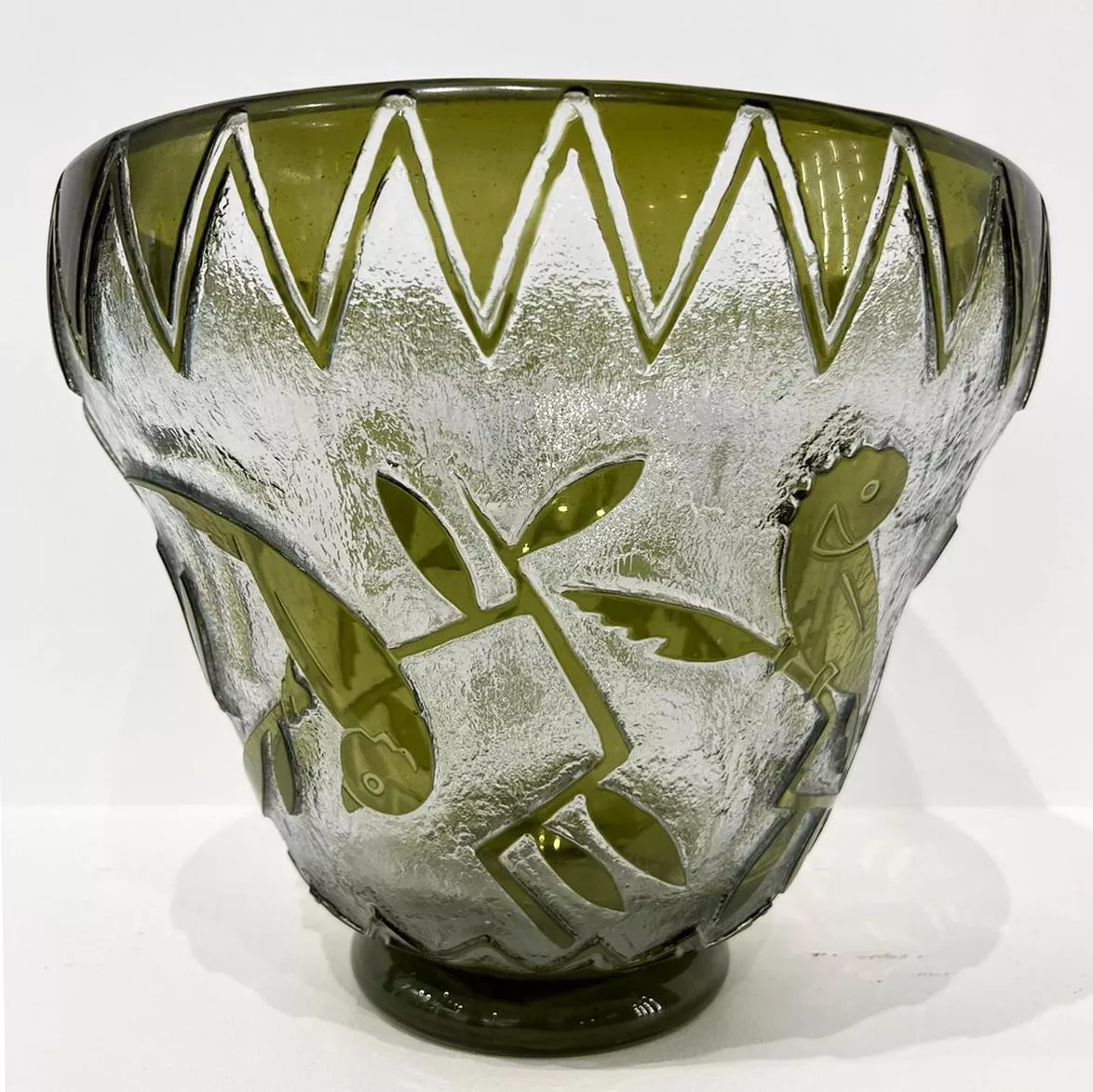
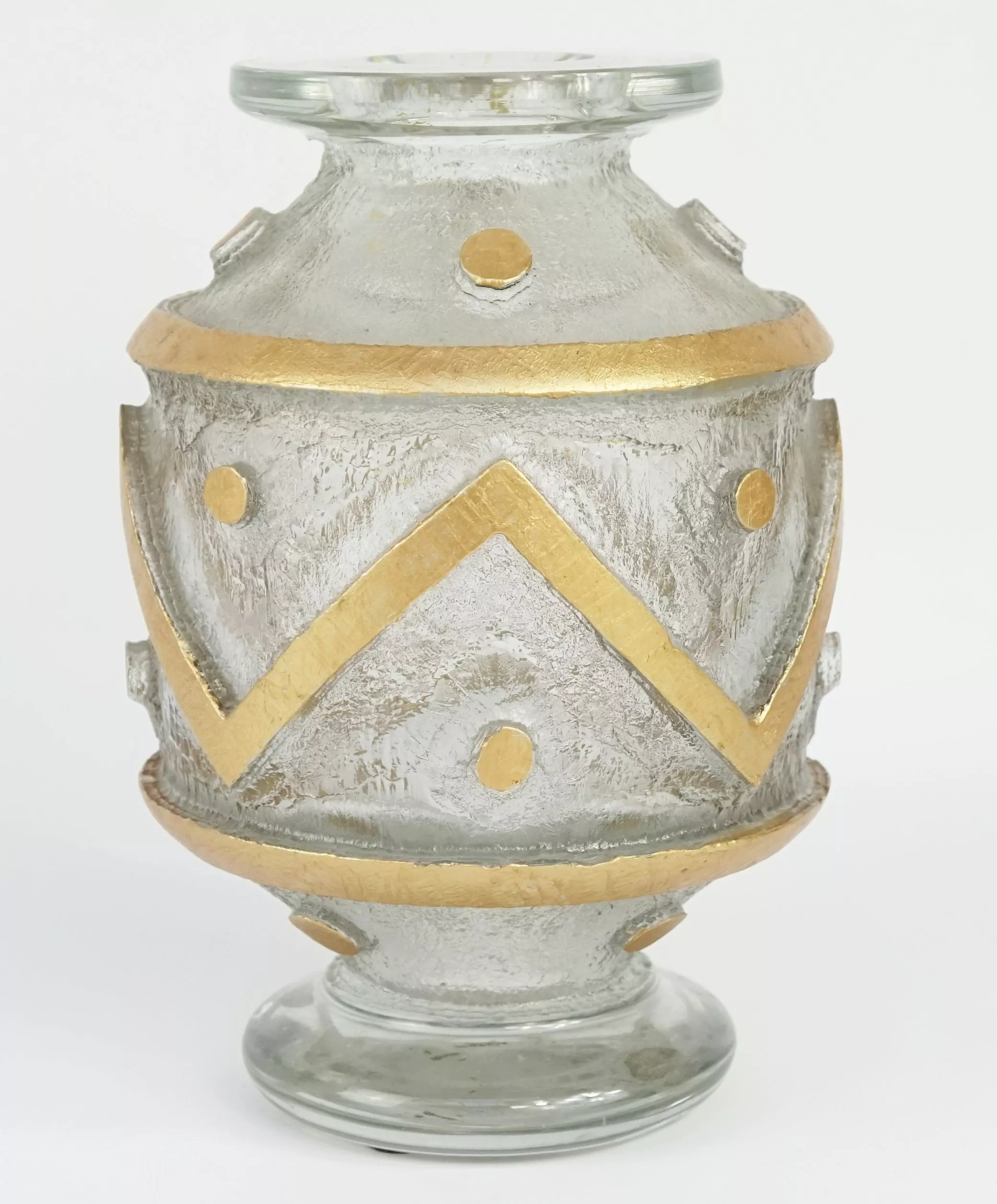
From its earliest days, the glassworks innovated with refined processes such as multi-layered glass, where each layer of glass is patiently superimposed and etched to reveal patterns of deep, nuanced hues.
This meticulous workmanship, combined with acid decoration, gives pieces a unique texture and relief, capable of capturing light and transforming objects into veritable works of art.
Wheel engraving, practiced by highly skilled craftsmen, allows for unparalleled finesse in detail, giving creations a living, almost sculptural character.
The Daum house also draws its inspiration from nature, taking the shapes of flowers, leaves and landscapes and sublimating them into elegant, dreamlike compositions.
Inviting artists such as Jacques Grüber and Henri Bergé, Daum closely combines art and technique, creating a style that is both timeless and deeply rooted in Art Nouveau.
This singular signature makes Daum glassware a symbol of French creativity and savoir-faire.
The Daum glassworks: a history of excellence and artistic innovation
Jean Daum (1825-1885), a notary by profession in northern France, was behind one of France's greatest glassmaking houses.
Fleeing the ravages of the Franco-Prussian war, he moved to Nancy in 1878, where he opened his own glassworks, laying the foundations for a family business that would become a global benchmark.
From the very beginning, his son Auguste Daum was involved in the adventure, showing an interest and passion that would see the house evolve towards new horizons.
On Jean Daum's death, Auguste took over the reins, soon joined by his brother Antonin, whose artistic sensibility marked a turning point for the manufacture.
Antonin, a true visionary, developed the artistic department, and his signed creations, often prized on the auction market, became the symbol of Daum's excellence.
From his earliest works, Antonin Daum innovated by exploring acid decoration, an uncommon technique at the time, while exploiting sophisticated processes such as multi-layered glass and wheel engraving.
These methods gave the works a unique character, relief and depth that would become Daum's artistic signature.
Visionary, Antonin recruits Jacques Grüber, a talented creator, who becomes the glassworks' first official artist, initiating a strong link between art and exceptional craftsmanship.
Their collaboration led them to the Chicago World's Fair in 1893, where the company's savoir-faire captured international attention.
Thereafter, the Daum glassworks exhibited throughout France, accumulating distinctions and awards. At the 1900 Paris Universal Exhibition, the manufacture, alongside the Gallé glassworks, won a prestigious prize, establishing Daum's international renown.
This recognition attracted new talents to the house, such as Henri Bergé, Émile Writz and Almaric Walter, whose diverse styles enrich Daum's artistic repertoire.
The Schneider brothers also made their debut here, helping to strengthen the institution's artistic and technical heritage.
The Daum glassworks, then, has stood the test of time, retaining its innovative spirit, offering works always imbued with unrivalled refinement and artistic daring.
Focus on a Daum vase with iris decoration
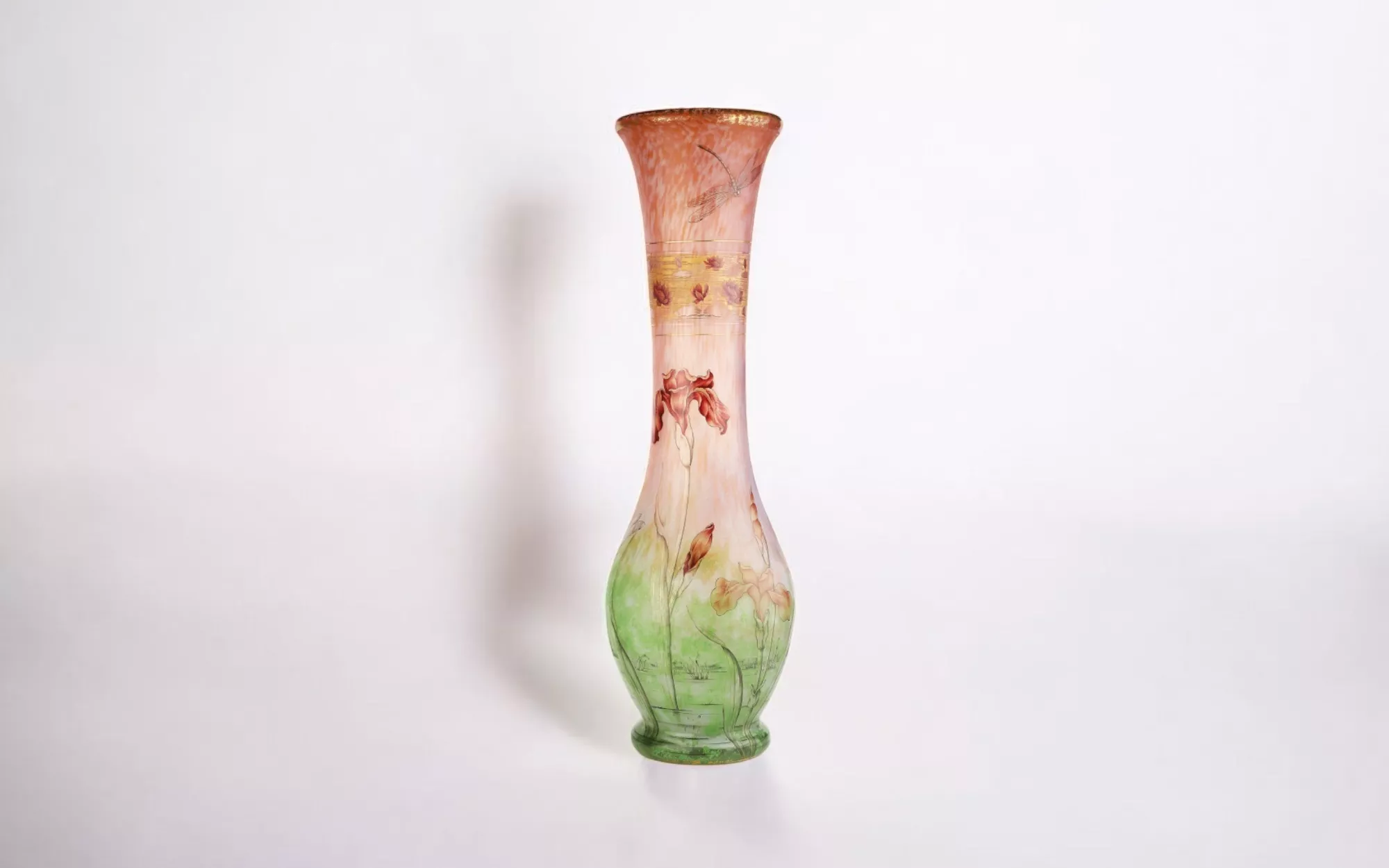
This vase by Daum embodies the finesse and elegance characteristic of Art Nouveau, with a touch of plant poetry. The choice of a delicate floral motif, in this case irises, is typical of the naturalistic inspiration that inhabits Daum creations.
This motif gently extends along the slender silhouette of the vase, subtly shifting from a soft green background to salmon pink, creating a gradient effect reminiscent of daybreak over a garden in bloom.
The color transition testifies to exceptional technical mastery, where each layer of glass seems to melt into the next, giving the whole a dreamlike appearance.
Fine etching and acid staining bring out the delicate details of the petals and stems, while the slender shape of the slightly flared neck gives the piece a refined, slender allure.
A delicately engraved dragonfly on the top of the vase completes this bucolic atmosphere, adding an element of life within this plant scene.
This type of piece demonstrates the Daum brothers' talent for marrying technique and artistic inspiration, transforming natural elements into decorative objects of rare beauty.
With this vase, Daum offers a true tribute to nature, sublimating materials and infusing their glass with an almost living breath, capturing light and diffusing it into a soft glow.
La cristallerie Daum - Ina
The success of Daum crystal: between tradition and innovation
In the early days of the factory, Daum's signature pieces were made in pâte de verre, a technique that, while prized for its textural and color effects, was distinguished by its lead-free chemical composition, offering a less transparent rendering than crystal.
The transition to crystal, which is heavier and brighter thanks to the addition of lead, opens up new perspectives for the home.
This material, regulated in France since 1971, requires a strict composition containing at least 24% lead oxide and a specific refractive index to ensure this dazzling transparency.
While glass and crystal share the same silicon oxide base, their atomic structure differs, imposing distinct cutting techniques, adapted to the particularities of each material.
After the Second World War, as raw materials for glass paste became increasingly scarce, the manufacture under the management of Henri and Michel Daum, grandsons of Jean Daum, chose to direct its production towards crystal.
This transition marks the beginning of a new era, with creations that explore the elegance of the material in collections of flutes, glasses and animal sculptures, which will become iconic.
In the following years, Antoine Froissart, Jean Daum's great-grandson, perfected the crystal formula to achieve an unparalleled level of transparency, further enhancing the quality and renown of Daum pieces.
From 1968, Jacques Daum opened the manufacture to collaborations with contemporary artists such as Salvador Dalí and César, bringing a bold artistic dimension to his crystal creations.
It was also during this period that Daum innovated by developing pâte de cristal, an innovative material composed of groisil, which enabled the glassworks to diversify its collections while solving financial challenges.
Today, Daum perpetuates this heritage by promoting exceptional works, such as its crystal chess sets, both transparent and colorful, which testify to the alliance between tradition and innovation.
Recognizing the signature on a Daum product
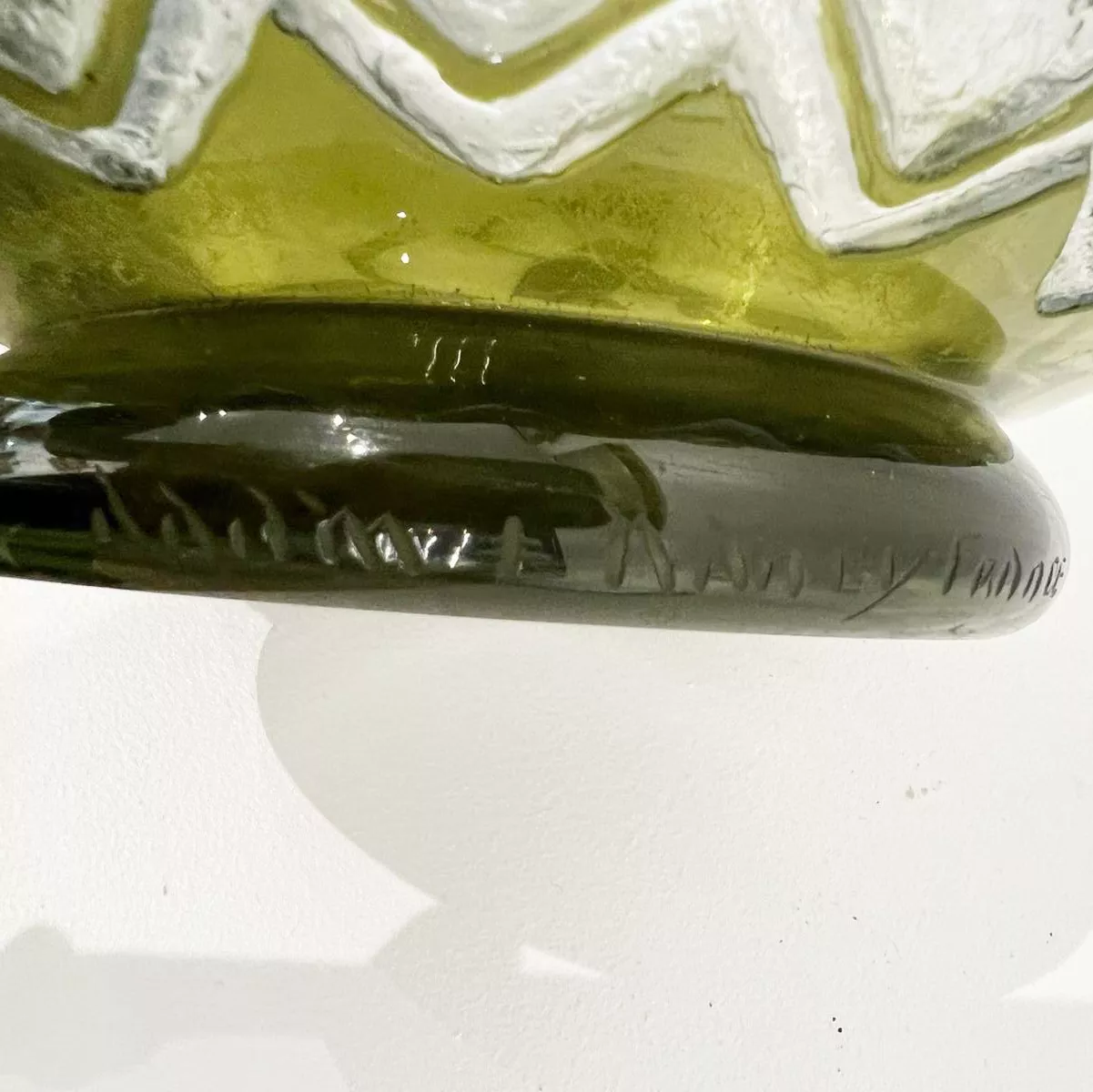
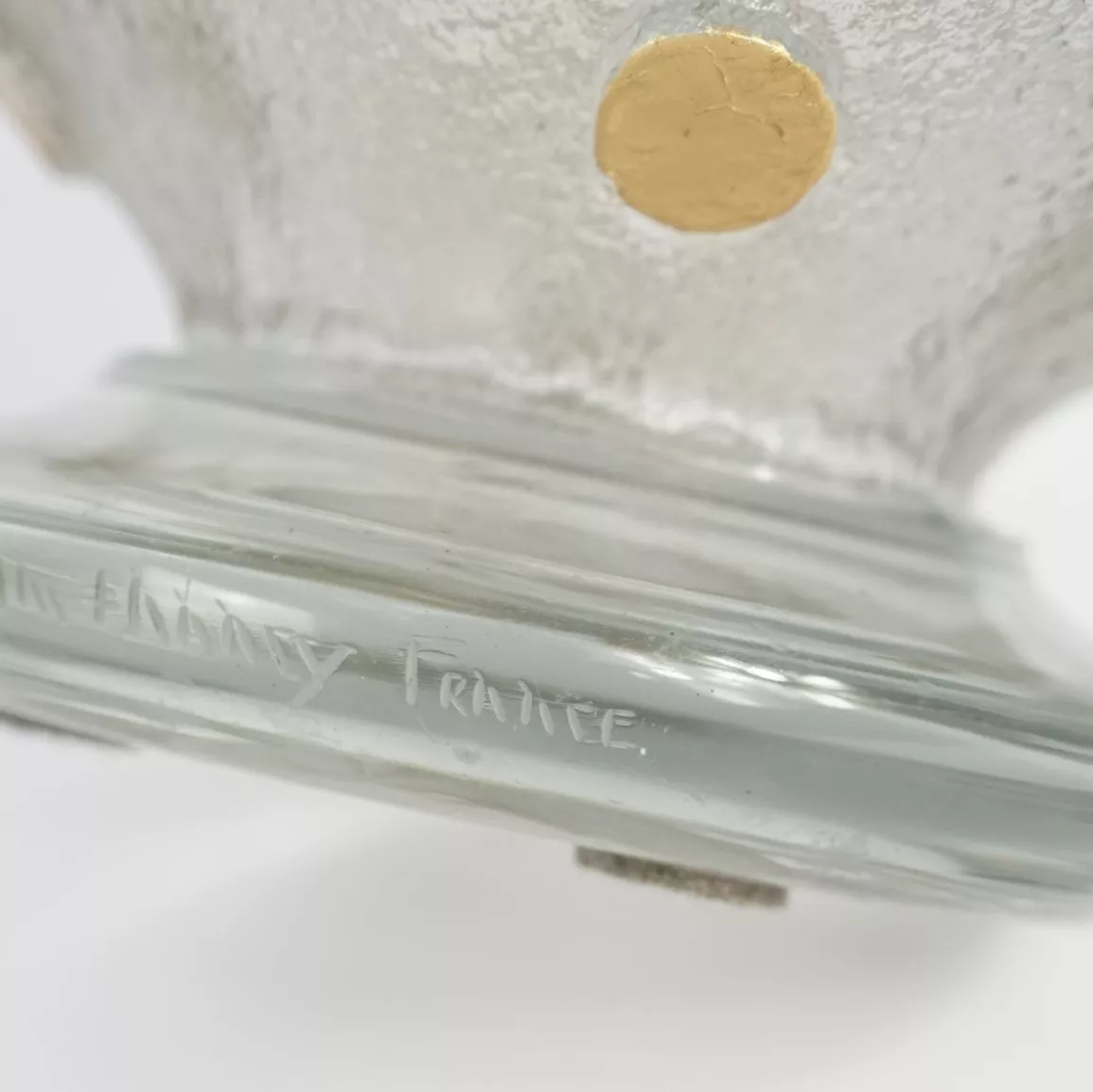
Not all crystal objects produced by the Daum glassworks are signed. Moreover, as several artists have worked and sometimes collaborated for the manufactory, the object may be signed with another name even though it was produced by the Daum glassworks. That's why it's important to have your pieces appraised.
Knowing the value of a work
If you happen to own a crystal work by Daum or after the manufacture, don't hesitate to request a free appraisal using our form on our website.
A member of our team of experts and licensed auctioneers will contact you promptly to provide you with an estimate of the market value of your work, not forgetting to send you ad hoc information about it.
If you are considering selling your work, you will also be accompanied by our specialists in order to benefit from alternatives to sell it at the best possible price, taking into account market inclinations.
Estimate in less than 24h
Works by Daum sold at auction

Estimated 1 500 € - 2 000 €
DAUM NANCY Large mushroom lamp.

Estimated 1.500 - 3.000
DAUM - NANCY, Vase with shouldered ovoid body and small tubular neck

Estimated 1.000 - 2.000
DAUM - NANCY, Tubular vase with three-lobed hot-modelled neck

Estimated 10.000 - 15.000
DAUM - NANCY, "Water iris and dragonflies". Ovoid vase with conical neck on hemmed base
Discover in the same theme

Rating and value of works, paintings by Helmut vom Hügel Kol...
Helmut Kolle is a cubist artist from the first half of the 20th century. Today, his works are quoted on the auction market.
Learn more >

Rating and value of World War II and Holocaust paintings
Paintings related to the Second World War are highly prized on the auction market. Their value is often very high.
Learn more >

Rating and value of Pierre Paulin's furniture, chairs and ta...
Pierre Paulin is one of the 20th century's leading designers, whose furniture is highly prized and sought-after on the auction market.
Learn more >

Secure site, anonymity preserved

Auctioneer approved by the State

Free and certified estimates
Frequently asked questions
-
Who was Daum, and what was its role in Art Nouveau?Daum is a French glassworks founded in 1878 in Nancy by Jean Daum, which has become one of the world’s leading manufacturers of glass and crystal. Under the leadership of his sons Auguste and Antonin, the company established itself as a symbol of Art Nouveau by pioneering sophisticated techniques such as multilayer glass, wheel engraving, and acid etching. Recognized at the 1900 Paris World’s Fair alongside Gallé, Daum attracted major artists such as Jacques Grüber and Henri Bergé, blending technical excellence with naturalistic inspiration.
-
What is the price range for Daum crystal pieces at auction?Daum crystal pieces vary widely in value depending on their type and rarity. Animal and floral sculptures sell for between €50 and €57,000, vases for between €70 and €80,800, and chandeliers for between €450 and €29,500. Some exceptional pieces far exceed their initial estimates: in 2022, a crystal and gilded bronze sculpture titled “Oiseau” sold for 38,000 €, despite being estimated at between 10,000 and 15,000 €.
-
How can you authenticate a Daum crystal piece and determine its true value?We recommend that you request a free, no-obligation appraisal through Auctie's. Our state-certified auctioneers and experts will examine your piece to verify its authenticity, attribution, and condition. Please note that not all Daum pieces are signed, and some were created by other artists collaborating with the manufacturer, which makes professional appraisal essential. You will receive an accurate assessment of the market value within 48 hours.
-
Is this the right time to sell a Daum crystal piece?Yes, this is a good time to sell a Daum crystal piece. The market for Art Nouveau and French crystalware remains vibrant, with collectors showing consistent interest in high-quality pieces. Auctions regularly show that Daum pieces exceed initial estimates, particularly those featuring animal or floral motifs. Auctie’s will help you secure the best selling conditions based on current trends.
-
How does the process of selling a work of art at Auctie's work?The process begins with a free, no-obligation appraisal conducted by our experts or licensed auctioneers, who will contact you within 48 hours. Once the authentication and valuation are complete, our specialists will present you with the best options for selling your item at the best price, taking market trends into account. We then guide you through the entire process, from start to sale, ensuring transparency and professionalism at every step.
