



Rating paintings 19th century - Auctie's

Key takeaways
- The value of a 19th-century artwork varies depending on the artistic movement (Neoclassicism, Impressionism, Symbolism) and is determined based on auction results, appraisals, and how frequently the work appears at auction.
- The artist’s identity is the primary factor in determining value, but the subject matter, format, condition, signature, and documented provenance also significantly influence the price.
- An estimate provided by a certified auctioneer within 24 hours serves as a reliable basis for selling, insuring, or retaining the artwork, with no obligation.
Understanding the Market Value of a 19th-Century Artwork
What Is an Artist’s Market Value in the Art Market?
An artist’s market value refers to the benchmark value assigned to their works on the secondary market—that is, in transactions occurring after the initial sale.
It is not a fixed figure: it is a dynamic value that evolves based on auction results, current museum and critical discourse, retrospective exhibitions, and, more broadly, the cycles of taste that shape the art market.
For 19th-century artists, determining this market value is particularly complex. The century is exceptionally rich in style, encompassing late Neoclassicism, Romanticism, Realism, Naturalism, nascent Impressionism, Symbolism, and the early stages of Modernism.
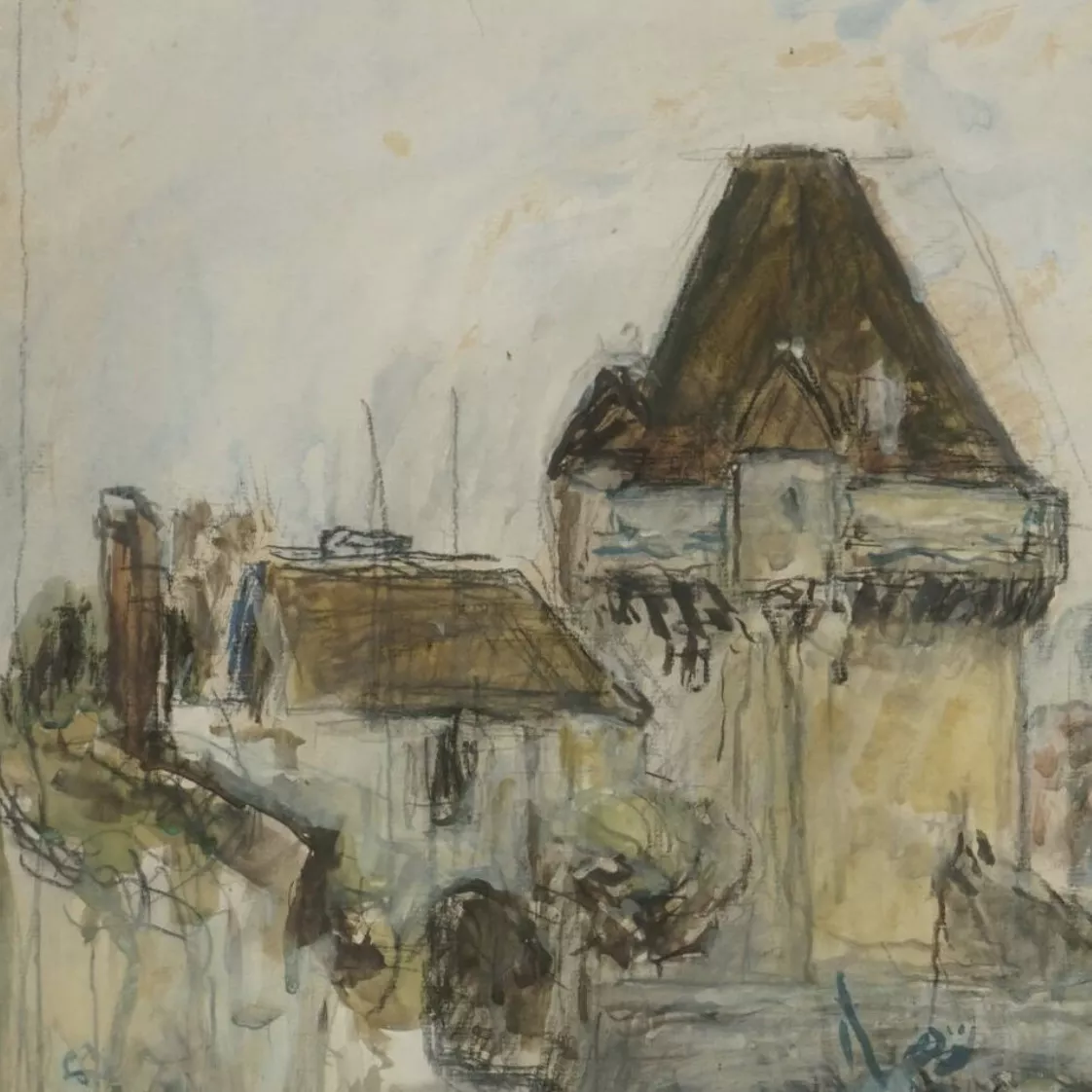
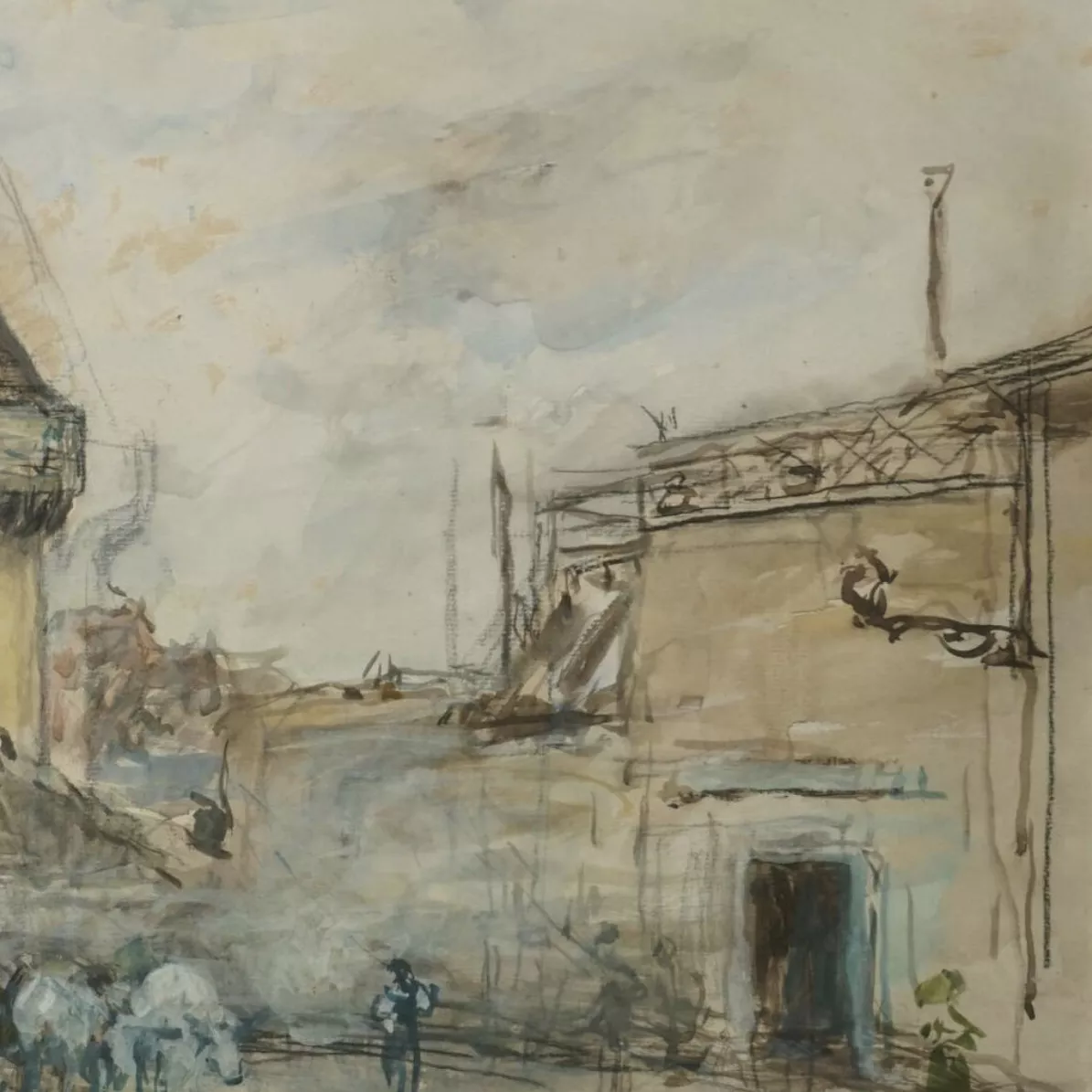
A landscape painter from the Barbizon School such as Théodore Rousseau or Charles-François Daubigny, an academic Orientalist such as Gérôme or Fromentin, a “Pompier” portraitist like William-Adolphe Bouguereau, or a precursor of Impressionism like Johan Barthold Jongkind—do not follow the same market logic, and their works do not appeal to the same buyers.
Knowing the market value of a 19th-century work therefore means, first and foremost, being able to situate it precisely within this rich and varied landscape.
Market value is determined based on objective data: auction results recorded in major specialized databases, estimates published in auction catalogs, and the frequency with which an artist’s works come up for auction.
An artist whose paintings sell regularly enjoys a liquid and verifiable market value; conversely, an artist who is rarely seen on the market has a less stable market value, which can hold surprises—both upward and downward.
The Major Art Movements of the Century
Artistic Movement | Approximate Period | Representative Artists |
Neoclassicism | 1780–1850 | Jacques-Louis David, Jean-Auguste-Dominique Ingres, Anne-Louis Girodet |
Romanticism | 1815–1850 | Eugène Delacroix, Théodore Géricault, Caspar David Friedrich |
Barbizon School / Realism | 1830–1870 | Gustave Courbet, Jean-François Millet, Théodore Rousseau, Daubigny |
Orientalism | 1830–1880 | Jean-Léon Gérôme, Eugène Fromentin, Alexandre-Gabriel Decamps |
Academicism / Art pompier | 1850–1900 | William-Adolphe Bouguereau, Alexandre Cabanel, Thomas Couture |
Impressionism | 1860–1890 | Claude Monet, Edgar Degas, Camille Pissarro, Berthe Morisot |
Symbolism | 1880–1910 | Odilon Redon, Gustave Moreau, Fernand Khnopff, Pierre Puvis de Chavannes |
Post-Impressionism | 1886–1910 | Paul Cézanne, Paul Gauguin, Vincent van Gogh, Georges Seurat |
The Criteria That Determine the Market Value of a 19th-Century Work of Art
The market value of a 19th-century painting or drawing results from a combination of factors that only a seasoned expert can properly prioritize. None of these factors can be assessed in isolation; it is their interaction that determines the price level a work can reasonably command.
Criterion | Impact on Market Value |
Artist’s Identity and Reputation | Primary factor; the artist’s market standing determines the entire valuation |
Subject matter and format of the work | Large formats and prestigious subjects generally command higher prices |
Technique and medium | Oil on canvas > oil on panel or cardboard; watercolors and drawings are valued differently |
Condition | Tears, overpainting, excessive cracking, or clumsy restorations significantly reduce value |
Signature | The presence, legibility, and authenticity of the signature are decisive factors |
Documented provenance | A traceable collection history enhances confidence and value |
Exhibitions and Literature | Inclusion in an exhibition catalog or a catalog raisonné increases the work’s value |
Creative period | Certain periods in an artist’s career are more highly prized than others |
Get a Free Appraisal of a 19th-Century Artwork
Paintings, oil-on-canvas works, watercolors, and drawings: all media appraised
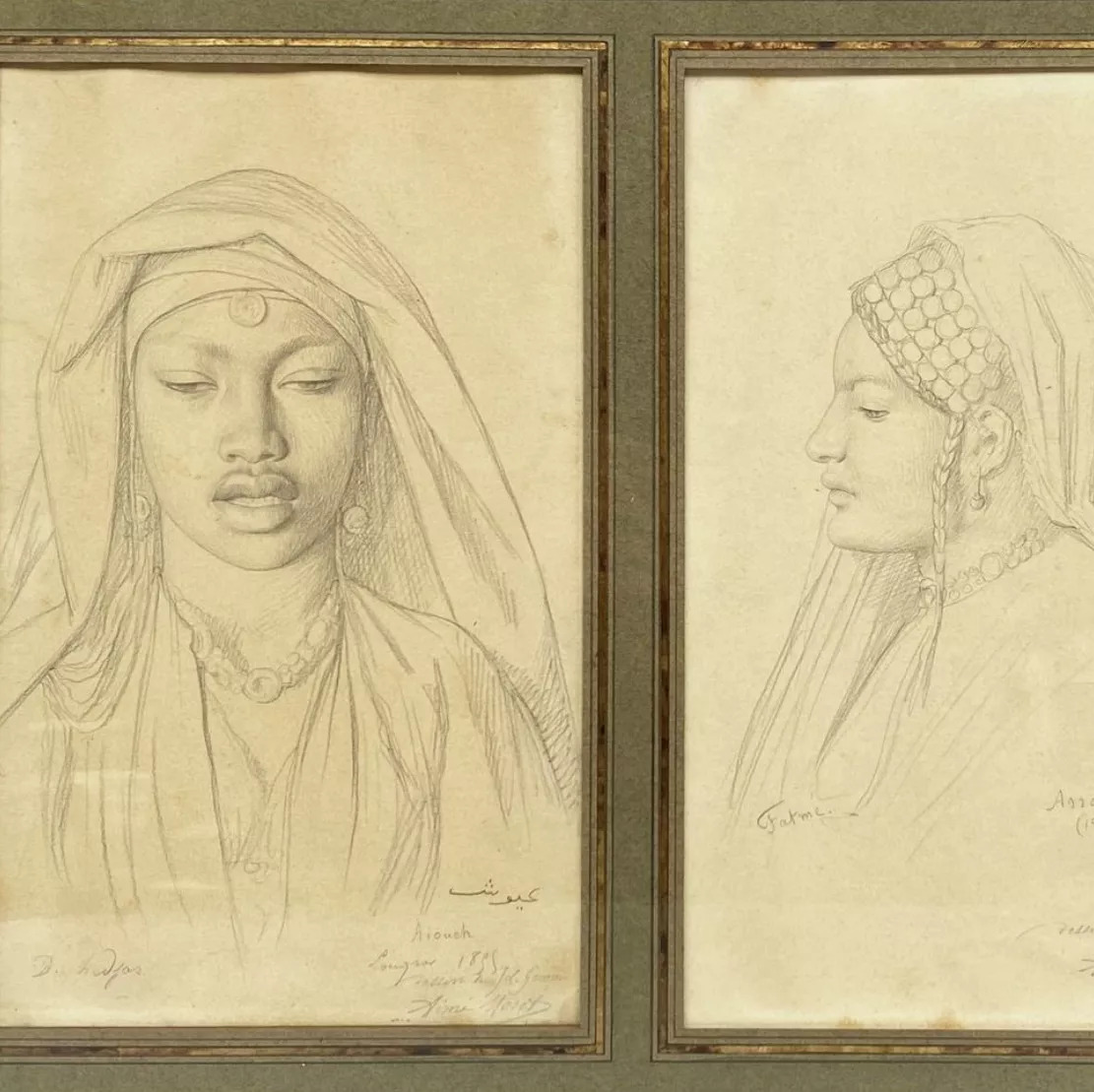
The 19th century was a time of technical diversity. While oil on canvas remains the standard medium for large-scale compositions, the period also produced a considerable number of works on paper: watercolors, pencil, red chalk, and pen drawings, as well as preparatory studies and sketches that often reveal a freedom of brushwork absent from the finished works.
These works on paper were long underestimated; today, they are in growing demand among collectors who see them as a more accessible gateway to a master’s oeuvre.
Auctie’s expertise covers all of these media without exception. A large-format oil landscape, a travel watercolor, a charcoal nude study, a preparatory sketch, or a portrait pastel: each work is examined according to its own specific criteria, with the rigor demanded by the technical diversity of the century.
The auctioneer takes into account not only the visible condition of the pictorial surface but also the medium itself—the stretcher, canvas, paper, and frame—whose characteristics can provide valuable information regarding the piece’s date and authenticity.
A certified appraisal by a licensed auctioneer in less than 24 hours
Having a 19th-century artwork appraised shouldn’t be a time-consuming or intimidating process.
Auctie’s has designed a simple, fast, and completely free appraisal process: simply submit high-quality photographs of the artwork—front and back—along with a description of known details, such as dimensions, signature, and any provenance, to receive an initial certified appraisal in less than 24 hours.
This appraisal is conducted by a state-certified auctioneer, whose opinion is backed by their professional liability.
It comes with no obligation to sell and does not bind you in any way. It simply provides you with a solid, well-documented basis for deciding what to do next: keep the artwork, insure it for its fair market value, pass it on as a gift or through an estate, or entrust it to Auctie’s for auction.
Estimate in less than 24h
Authentication, provenance, and attribution: the pillars of valuation
Signature, Catalog Raisonné, and Expert Appraisal of the Artist
The authentication of a 19th-century work relies on a set of converging clues, none of which is sufficient on its own to establish certainty. The signature is the first element examined: its presence is reassuring, but it does not guarantee authenticity.
Signed forgeries do exist, and authentic works that are unsigned or signed by someone associated with the artist’s studio regularly appear on the market. Analysis of the signature must therefore be combined with a stylistic analysis, a study of the support and materials, and, whenever possible, a comparison with the artist’s documented works.
The catalogue raisonné serves as the ultimate reference for artists who have one. It lists all of the artist’s recognized works, along with their provenance, exhibition history, and bibliography.
A work listed in the catalogue raisonné benefits from scientific validation, which greatly facilitates its sale and supports its market value.
For artists who do not yet have one, the appraisal process relies on consulting archives, comparing the work to reference pieces, and, where appropriate, seeking the opinion of recognized experts in the field.
Value of the Works and Impact on Market Value
Level of Documentation | Impact on Market Value |
Work listed in the catalogue raisonné | Maximum assurance; significant premium on value |
Work exhibited and published in specialized literature | Strong endorsement; significant increase in value |
Work accompanied by a written appraisal from a recognized specialist | Good provenance; facilitates sale |
Work with a legible signature and documented provenance | Solid foundation; reliable valuation possible |
Work without documentation or signature | Estimate based on stylistic and material analysis; greater uncertainty |
Provenance, Condition, and Restoration: Their Impact on Value
A work’s provenance—that is, its complete history of ownership from its creation to its current owner—is a major factor in building trust in the art market.
A work whose history can be traced through major private collections, renowned public auctions, or institutional collections enjoys a legitimacy that buyers value highly. Conversely, a provenance that is incomplete or impossible to establish can raise questions, even for a work of high quality.
Condition is the other key factor. A 19th-century oil on canvas may have survived 150 years without major intervention and remain in a condition close to the original; it may also have undergone repainting, re-stretching, abrasive cleaning, or restorations of varying quality that have altered the pictorial surface.
An assessment of the condition is not limited to visual inspection: examination under raking light and ultraviolet light can reveal interventions made after the work’s creation and help gauge their impact on the work’s value.
Selling a 19th-Century Artwork at Auction with Auctie’s
From the reserve price to the final bid: how prices are determined
Price formation in the auction room follows a different logic than that of the private market.
The reserve price, set by the auctioneer in consultation with the seller, sends a signal to the market: if it’s too high, it discourages bidders and risks leaving the work unsold; if it’s too low, it may not reflect the item’s true value, even though the dynamics of the auction can always correct this upward.
Setting the reserve price is a technical process that requires precise knowledge of market benchmarks and a nuanced assessment of demand at the time of the sale.
Once bidding begins, the price is determined freely, under the direction of the auctioneer who leads the proceedings in the auction room. For high-quality 19th-century works, competition among several motivated bidders can lead to final prices significantly higher than the initial estimate.
Step | What Happens |
Preliminary Estimate | The auctioneer establishes a value range based on market benchmarks |
Setting the reserve price | Agreement between the seller and the auctioneer; notice sent to bidders |
Publication of the catalog | The artwork is presented to potential buyers, both in the auction room and online |
Auction | Bidding opens at the reserve price and proceeds freely |
Sold | The auctioneer awards the lot to the highest bidder |
Settlement | The proceeds from the sale, after deducting fees, are paid to the seller |
Hôtel Drouot and Online Auctions: Reaching the Right Bidders
Hôtel Drouot is the leading auction house in continental Europe. Founded in 1852, it hosts thousands of auctions each year covering the entire spectrum of the art market, from modest works to exceptional pieces.
For a 19th-century work, selling at Drouot means gaining visibility among an audience of professional buyers, dealers, collectors, and art enthusiasts that few other venues can bring together simultaneously.
Auctie’s auctions are also accessible online, which extends the geographic reach of each sale far beyond the Paris auction hall.
A German collector specializing in Barbizon landscape painters, an American museum seeking a leading Orientalist, or a Swiss art lover passionate about the Symbolist works of Odilon Redon or Gustave Moreau can bid in real time from their offices.
For 19th-century works, whose collectors are scattered across the globe, this international dimension is often decisive in securing the best possible hammer price.
Estate Planning, Inheritance: Valuing a 19th-Century Work of Art Received as an Inheritance
Inventory and Distribution of an Estate
19th-century artworks are among the assets most frequently discovered during estate inventories.
Paintings that have hung in family homes for decades, watercolors stored in boxes, drawings forgotten in portfolios: these pieces, whose value is not always known to the heirs, can represent a significant portion of the estate to be divided.
An inaccurate valuation—whether too high or too low—exposes heirs to tax complications and disputes over the division of the estate that can prove costly.
Auctie’s regularly assists with estate settlements, working directly with the notaries responsible for the estate’s liquidation.
The inventory is conducted piece by piece, with a precise description of each item: dimensions, technique, medium, condition, signature, known provenance, and an estimate of market value as of the reference date. The resulting report has official status and can be included in the estate file without reservation.
Confidentiality and Anonymity
The circumstances leading to the appraisal of an inherited artwork are often personal and sensitive. Auctie’s handles each case with absolute discretion, regardless of the nature of the matter: estate settlement, divorce, asset reorganization, or a decision to sell.
The owner’s identity is never disclosed to third parties without their explicit consent, and the works can be offered for sale under complete anonymity if the owner so desires.
This confidentiality is a core commitment of Auctie’s, not merely a promise made for the occasion. It allows you to approach the appraisal process—and, if applicable, the sale—with the peace of mind that a financial decision of this nature deserves.
Entrust the appraisal of your 19th-century artwork to Auctie’s
A 19th-century artwork deserves an appraisal commensurate with its complexity. Given the multitude of artistic movements, the diversity of techniques, the challenges of authentication, and the sensitivity of a market that values both the intrinsic quality of the piece and the strength of its documentation, appraising a painting or drawing from this period is not a process to be left to chance.
Auctie’s provides you with the expertise of a state-certified auctioneer, well-versed in the specifics of the 19th-century art market, capable of authenticating, valuing, and—if you wish—selling your artwork under the best possible conditions, both at the Hôtel Drouot and online.
The appraisal is free, confidential, and non-binding, and you’ll receive a response within 24 hours.
Estimate in less than 24h
Discover in the same theme

Rating and value of old Belgian paintings, drawings and engr...
Early paintings by the Antwerp school are very popular at auction, and their value is rising. Rubens and others are highly prized.
Learn more >

Baccarat vase price and value
Vases from the famous Baccarat crtistallerie are highly prized at auction. They are much sought-after.
Learn more >

Estimating the value and price of a bronze
Bronzes account for a significant proportion of works on the auction market. For some artists, they are highly prized and very valuable.
Learn more >
D'autres tableaux orientalistes vendus aux enchères

Estimated 15.000 - 20.000 €
Jacques MAJORELLE (1886-1962) - Fishermen embarking, Abidjan, Ivory Coast - Oil on canvas.

Estimated 40.000 - 80.000
Alexandre ROUBTZOFF (1884-1949), Portrait of Arbia, oil on canvas

Estimated 5.000 - 8.000
Alexandre ROUBTZOFF (1884-1949), The Sidi Makhlouf Mosque, oil on canvas

Estimated 2.000 - 4.000
Henri PONTOY (1888-1968), The Telouet kasbah in the Ounila valley, Oil on canvas

Estimated 1.500 - 2.500
Henri PONTOY (1888-1968) Animated view of a kasbah in the Atlas Mountains

Estimated 3.000 - 4.000
Henri PONTOY (1888-1968), Fantasia at the foot of the Atlas, Oil on canvas

Secure site, anonymity preserved

Auctioneer approved by the State

Free and certified estimates
Frequently asked questions
-
What is a 19th-century artist's market value, and how does it change over time?An artist’s market value refers to the benchmark value of their works on the art market. It is not fixed: it is a dynamic value that evolves based on auction results, museum news, retrospective exhibitions, and shifts in taste. For 19th-century artists, market value is particularly complex because the century encompasses numerous movements (Neoclassicism, Romanticism, Impressionism, Symbolism) with differing market dynamics.
-
How can you authenticate a 19th-century artwork and determine its value?Authentication is based on a combination of converging evidence: the signature, stylistic analysis, examination of the support and materials, and consultation of the catalogue raisonné, if available. To obtain a reliable and certified authentication, we recommend submitting photographs of the artwork to Auctie's: a state-certified auctioneer will provide you with a free, no-obligation estimate within 24 hours.
-
What criteria determine the market value of a 19th-century work of art?Value is based on several criteria: the artist’s identity and reputation (the primary factor), the subject and format of the work, the technique and medium (with oil on canvas being preferred), the condition of the work, the signature, documented provenance, mentions in exhibitions or art literature, and the period of the artist’s career. No single criterion is evaluated in isolation; it is their interaction that determines the price.
-
How do provenance and condition affect the value?A traceable and documented provenance significantly enhances buyers’ confidence and the value of the artwork. The condition of the artwork is a decisive factor: a piece that has been preserved close to its original state will be valued more highly than one that has undergone repainting, re-stretching, or restoration of uneven quality. Interventions made after the work’s creation can be detected under raking light and ultraviolet light, and their impact on the value can be assessed.
-
How do I sell a 19th-century artwork through Auctie's?Auctie's supports sellers from the appraisal stage through to the auction. An auctioneer first establishes a value range and then works with you to set the reserve price. The artwork is then presented to buyers in the auction room and online prior to the auction. Selling with Auctie's at the Hôtel Drouot gives you access to an international audience of professionals, dealers, and collectors, thereby maximizing both the reach and the final price.
