



Rating and value of paintings by Elizabeth Jane Gardner Bouguereau

Key takeaways
- Elisabeth Bouguereau (1837–1922), a Franco-American academic painter, has seen her works fetch record prices, notably *La Captive*, which sold for €418,800 in 2019.
- Her oil-on-canvas paintings are valued between €410 and €418,800, while her drawings and watercolors range from €95 to €12,200 depending on quality and authenticity.
- A student of William Adolphe Bouguereau, she is known for her smooth academic style, her biblical and mythological subjects imbued with feminine sensibility, and a palette of harmonious pastel tones.
If you own a work by or after the artist Elisabeth Jane Gardner Bouguereau, and would like to know its value, our state-approved experts and auctioneers will offer you their appraisal services.
Our specialists will work to carry out a free appraisal of your work, and will provide you with an accurate estimate of its value on the current market.
Then, if you wish to sell your work, we will direct you to the best possible arrangement to obtain the optimum price.
Rating and value of the artist Elisabeth Jane Gardner Bouguereau
Elisabeth Bouguereau is an artist known to portrait enthusiasts. Compared with other painters in the same situation - artistically speaking, as well as in terms of visibility, one assumes that her works could reach unheard-of amounts at auction.
Women artists of the 19th century, pupils in the studios of undisputed grand masters such as David or Ingres, like Adelaïde Labille-Guiard or Sophie Allart, are seeing their valuations rise considerably on today's art market.
In 2019, her oil on canvas La captive, sold for €418,800 at Sotheby's, while it was estimated at between €218,100 and €305,400.
Order of value from a single work to the most prestigious
Technique used | Result |
|---|---|
Drawing - watercolor | From €95 to €12,200 |
Oil on canvas | From €410 to €418,800 |
Estimate in less than 24h
Style and technique of artist Elizabeth Bouguereau
Elizabeth Bouguereau (1837 - 1922) was an American academic painter who became a leading figure in the Paris Salon.
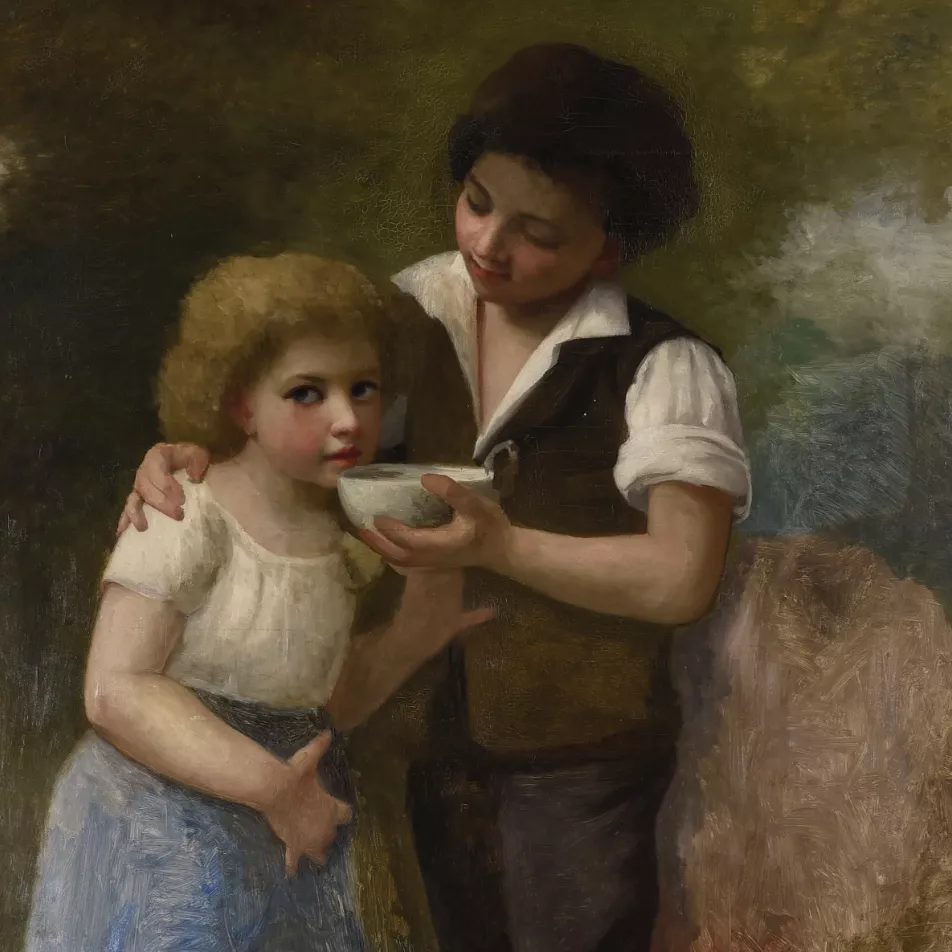
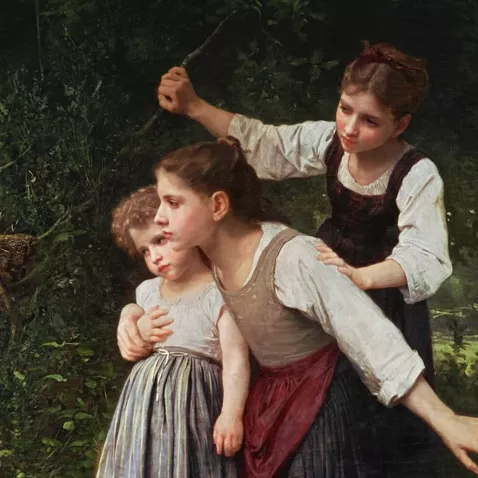
She studied painting with Hugues Merle, Lefebvre and then William Adolphe Bouguereau, her husband. She adopted a smooth workmanship, precise drawing and balanced composition that are typical of academic classicism.
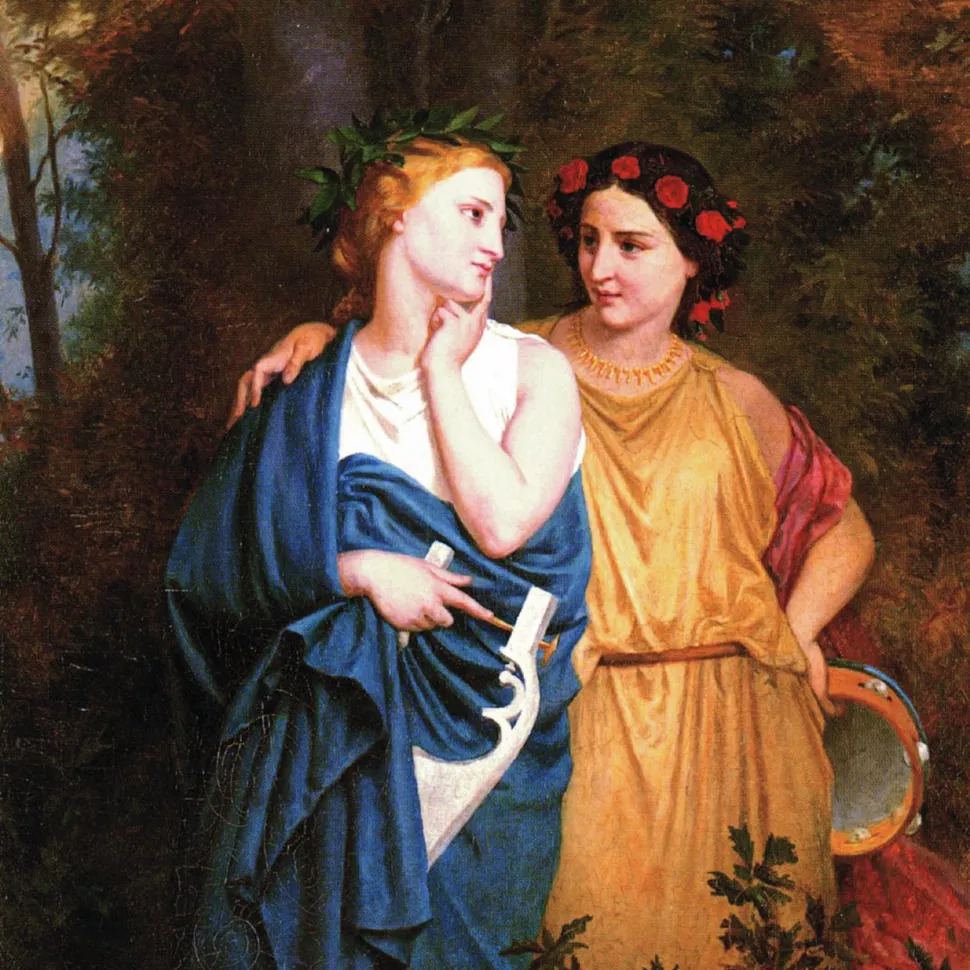
Her subjects include biblical (Moses in the Reeds), mythological or pastoral (The Shepherd David) episodes, which are often imbued with gentleness and feminine piety.
She works like her husband, insisting on a polished, luminous, almost idealistic rendering of flesh, fabrics and complexions, clearly assuming this stylistic filiation.
Her academic drawing is mastered : contours are sharp, poses balanced, and proportions perfect. In this way, she inherits her studio studies and the strict codes of academic realism.
The pictorial layer is satiny, and she applies the paint smoothly, without empiricism or visible traces, to give the surface a polished, homogeneous appearance. The palette is soft and harmonious, preferring pastel tones, enhanced by pinks, whites and rich accents (reds, greens) to reinforce the scene's understated emotion.
Her figures, which are often female, display a discreet interiority with secret laughter, lowered gazes and discreet gestures, all details that are unique to her despite the stylistic resemblance.
She emphasizes tenderness, motherhood and trust, addressing her art to a sensitive and moralistic audience, as evidenced by commissions in girls' schools.
Her critical reputation is controversial, for she willingly assumed her imitation, declaring : " I'd rather be the best imitator than not exist ".
She thus perpetuated and personalized the academic tradition with a rigorous atelier, an aesthetic utilitarianism dear to the bourgeoisie, but with an intimate, feminine sensibility, which ensured her enduring success at the Salons.
The life of Elizabeth Jane Gardner Bouguereau
Elizabeth Bouguereau was a Franco-American artist and a singular figure of academic art in the 19th century.
Born in 1837 in Exter, New Hampshire (USA), she came from a Protestant family of modest origins. She studied at the School of the Museum of Fine Arts in Boston, and became professor of French and art at the Young Ladies Seminary in Worcester.
In 1864, she decided to leave for Paris to perfect her art, a daring project for an American woman artist at the time.
She studied at private academies such as the Académie Julian (one of the few places open to women at the time) under Tony Robert-Fleury, Jules Lefebvre and Hugues Merle. She then became a pupil and companion of William Adolphe Bouguereau, adopting his style and pictorial codes. Their relationship began in the 1870s, but the marriage was delayed by some twenty years because Bouguereau's mother objected.
They finally married in 1896, after the death of Bouguereau's mother. She thus became at once the wife, pupil and collaborator of one of the most influential painters of her time.
In 1876, she won a medal at the Paris Salon, becoming one of the first American women to receive this kind of distinction.
She continued to paint and exhibit under her own name, without completely melting into her husband's shadow. She was highly regarded for her sentimental, religious and mythological paintings, particularly among the conservative French and American bourgeoisie.
She positioned herself as a model figure for transatlantic women artists at the end of the 19th century. She died in Paris in 1922, aged 84. Her work was little studied in the twentieth century, as it was long perceived as secondary to that of her husband.
Today, she is being revalued as one of the first American women to achieve a successful artistic career in France on this scale.
Focus on The Shepherd David, Elizabeth Bouguereau, circa 1895
The Shepherd David is an oil on canvas by the artist circa 1895, depicting the biblical young David, before his confrontation with Goliath, depicted as a peaceful teenager playing the harp in a bucolic setting.
The framing is centered, with David placed in the middle of the canvas, seated on a stone, framed by sheep and green hills.
The balance is classical, the scene perfectly symmetrical and structured, with an effect of stability and serenity that is inherited from academic compositions.
The finish is smooth and meticulous, the flesh rendered with a delicacy proper to Bouguereau's tradition, without impasto or visible traces of brushwork. Her drapery is mastered: the folds of fabric are painted with classic precision, giving the garment a soft, flowing texture.
The light work is intended to be soft, so that the light envelops the figure, emphasizing the face and the harp, and creating a silent atmosphere. His features are fine, his gaze downcast and his attitude contemplative. The figure is not heroic but contemplative, almost feminine in its gentleness.
The melancholy is restrained, the absence of dramatic tension gives the image a moving, calm, inward tone conducive to meditation.
The painting thus presents David not as a future warrior but as a model of purity and divine inspiration. The work's reception is favorable hailed at the time for its formal beauty and edifying message, the work is emblematic of the bourgeois taste for moral and accessible painting.
This work bears the signature of a woman artist, combining academic refinement and personal sensibility, proof of Gardner's artistic autonomy, even in close proximity to Bouguereau.
Recognizing the artist's signature
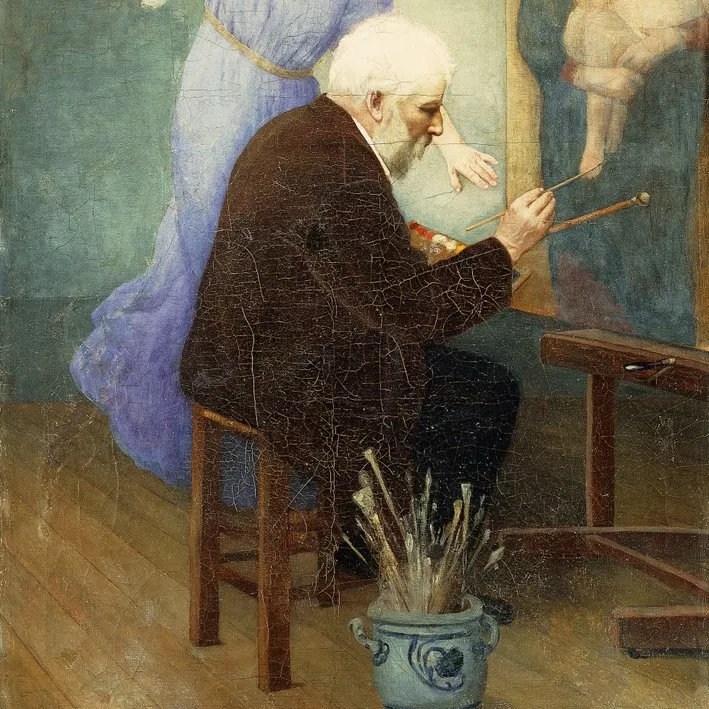
Elizabeth Bouguereau does not necessarily sign her works. Copies may exist, which is why expertise remains important.
Knowing the value of a work
If you happen to own a work by Elizabeth Bouguereau or after the artist, don't hesitate to request a free valuation using our form on our website.
A member of our team of experts and chartered auctioneers will contact you promptly to provide you with an estimate of the market value of your work, as well as ad hoc information about it.
If you are considering selling your work, you will also be accompanied by our specialists in order to benefit from alternatives for selling it at the best possible price, taking into account the inclinations of the market.
.Estimate in less than 24h
Discover in the same theme

Rating and value of paintings by Stanislas Lépine
Stanislas Lépine was a 19th-century landscape painter who produced many works that are highly valued at auction.
Learn more >

Rating and value of drawings and paintings by Achille Laugé
Achille Laugé is a Neo-Impressionist painter whose paintings and drawings command high prices at auction.
Learn more >

Rating and value of drawings and paintings by Henri Martin
Henri Martin was a 19th-century Post-Impressionist painter whose works command high prices at auction.
Learn more >
Works from the same period sold at auction

Estimated 6.000 - 8.000
Michel Martin DRÖLLING (1786-1851), Portrait of Dominique Alexandre "Charles" Legrand (1790-1808), oil on canvas

Estimated 800 - 1.500
Attributed to Marie Augustin Zwiller (Didenheim 1850-1939 Neuilly sur Seine) Red-haired female nude, back view

Estimated 3.000 - 5.000
Charles Alexandre Debacq (Paris 1802-1850 Paris) The Temptation of Saint Anthony the Great Oil on canvas (from Haro)

Estimated 500 - 800
Edma MORISOT-PONTILLON (1839-1921) Spectatrice du crépuscule au bord de l'étang Oil on canvas

Estimated 1.500 - 3.000
Jules Victor Génisson (Saint-Omer 1805-1860 Bruges) The procession of the Blessed Sacrament in the ambulatory of the collegiate church of Saint-Pierre de Louvain Oil on panel

Estimated 10.000 - 15.000
ABBÉMA Louise, 1853-1927 Portrait of Mme ***, 1879 Oil and gold paint on canvas

Secure site, anonymity preserved

Auctioneer approved by the State

Free and certified estimates
Frequently asked questions
-
Who was Elizabeth Jane Gardner Bouguereau, and what was her artistic background?Elizabeth Bouguereau (1837–1922) was a Franco-American academic painter born in the United States. She moved to Paris in 1864 to refine her art, studied under masters such as Jules Lefebvre and Hugues Merle, and later became the student and wife of the famous William Adolphe Bouguereau. She won a medal at the Paris Salon in 1876 and was among the first American women to achieve such a successful artistic career in France, specializing in academic paintings of biblical, mythological, and pastoral subjects.
-
What are the price ranges for Elizabeth Bouguereau's paintings?Prices vary significantly depending on the technique and quality of the work. Drawings and watercolors generally range from €95 to €12,200, while oil paintings on canvas span a much wider range, from €410 to €418,800. The painting *La captive*, sold at Sotheby’s in 2019, exceeded estimates to fetch €418,800, illustrating the growing appreciation of 19th-century female painters in today’s art market.
-
How can you authenticate a work by Elizabeth Bouguereau and verify its attribution?Auctie's offers a free, no-obligation appraisal to authenticate your artworks. Our state-certified auctioneers and experts examine the artwork in detail, verify the signature (as Elizabeth Bouguereau did not always sign her paintings), and study the provenance and stylistic characteristics to confirm the attribution. You will receive an accurate estimate of its market value within 48 hours.
-
Is this the right time to sell a work by Elizabeth Bouguereau?Yes, this is an excellent time. Female artists of the 19th century—particularly the students of great masters such as Bouguereau—are seeing their value rise considerably in today’s art market. Elizabeth Bouguereau is gradually regaining recognition among collectors and museums after decades of obscurity in the 20th century.
-
How does the sale of a work of art work at Auctie's?Auctie's guides you from the appraisal to the auction. After a free, no-obligation appraisal, our specialists will inform you of your artwork’s value and suggest the best options for selling it at the highest possible price, taking current art market trends into account. Our team of experts and licensed auctioneers ensures an optimal sale.
