Have your books and manuscripts appraised free of charge
Have your books and manuscripts appraised free of charge
Key takeaways
Auctie's offers a free appraisal of antique books and manuscripts conducted by certified auctioneers to determine their precise market value.
Prices for antique books vary considerably, ranging from €25 to €1.7 million, with books of hours reaching up to €1.7 million depending on their rarity and quality.
The appraisal is based on several criteria: the edition (first editions are highly prized), the condition, the historical provenance, the rarity, and the cultural or intellectual significance of the work.
If you own one or more antiquarian books, and would like to know their value, our state-approved experts and auctioneers will offer you their appraisal services.
Our specialists will work to carry out a free appraisal of your work, and provide you with an accurate estimate of its value on the current market.
Antiquarian books are currently sought-after collectibles. If you own one or more, they may be worth more than you think. On the art market, prices for these objects can be very high at the auctioneer's hammer.
They are particularly prized and the price at which they sell on the art market ranges from €25 to €1.7 million, a fairly substantial range, but one that says a lot about the value that can be attributed to these objects.
Their appraisal is also very complicated and subject to numerous rules. The value of your diamond can vary according to many factors, and it needs, for all the reasons listed below, to be entrusted to a specialist.
In 2017, a first edition of Montaigne's Essays was acquired for $50,0000 at Christie's.
Ranging in value from a simple antique book to the most prestigious
Type of antique book
Result
Antique law book
From €25 to 6,500
Antique history book
From 20 to 47,620
Ancient Bibles
From 20 to 91,750€
Ancient books of hours
From 30 to 1 727 200€
Have your objects estimated for free by our experts
Estimate in less than 24h
Antiquarian books and collectible manuscripts present themselves as precious relics, silent witnesses of time, prized by seasoned collectors and enlightened lovers of history and literature alike.
Their beauty lies not only in their material rarity, but also in their ability to capture the spirit of a bygone era, translating social, intellectual and cultural developments over the centuries.
These works, often magnified by illuminations or artistic bindings, offer a fascinating plunge into past sensibilities, while marking advances in thought and writing.
Whether a richly ornate medieval manuscript or a first edition of a literary masterpiece, these objects embody human history in tangible, irreplaceable form.
Why are these ancient books and manuscripts so precious?
Their value often exceeds that of mere material: it lies in the story they carry, in their rarity, in the context of their creation, and in their impact on the generations that followed.
Each antique book has its own journey through time, its own owners, and sometimes, its own secrets.
These artifacts are mirrors of a past where every word, every illumination was traced by hand, representing hours of painstaking work.
Enlightened Bibles, scientific or philosophical treatises, and great works of literature are not only objects of reading, but also works of art that span the ages.
Take, for example, the famous Gutenberg Bible, the very symbol of the printing revolution, printed in the mid-15th century. Considered the first mass-printed book in the Western world, it marks a radical breakthrough in the dissemination of knowledge.
Only a few copies remain today, and in 2013, one of them sold for over $14 million, illustrating just how much this object is not only a technical feat but also a historical monument.
Another treasure from ancient times, the Codex Leicester, a manuscript written by Leonardo da Vinci, reflects the master's visionary spirit.
Filled with notes on varied themes such as astronomy or geology, it was auctioned for over $30 million at a 1994 sale, testifying to the intimate link between art, science, and innovation during the Renaissance.
Manuscripts, on the other hand, convey a very special intimacy, that of a singular hand, that of an author capturing moments of reflection, of creation.
An emblematic example is Jane Austen's manuscript, Lady Susan, the draft of a novel that later revealed her literary genius under the title of Northanger Abbey.
This text, charged with the author's personality and burgeoning talent, sold in 2008 for over a million dollars.
Equally valuable, the diary of Samuel Pepys, the 17th-century British civil servant who described the daily life of his time with rare acuity, fetched over $1.5 million at auction, underlining how personal accounts can become priceless archives of collective history.
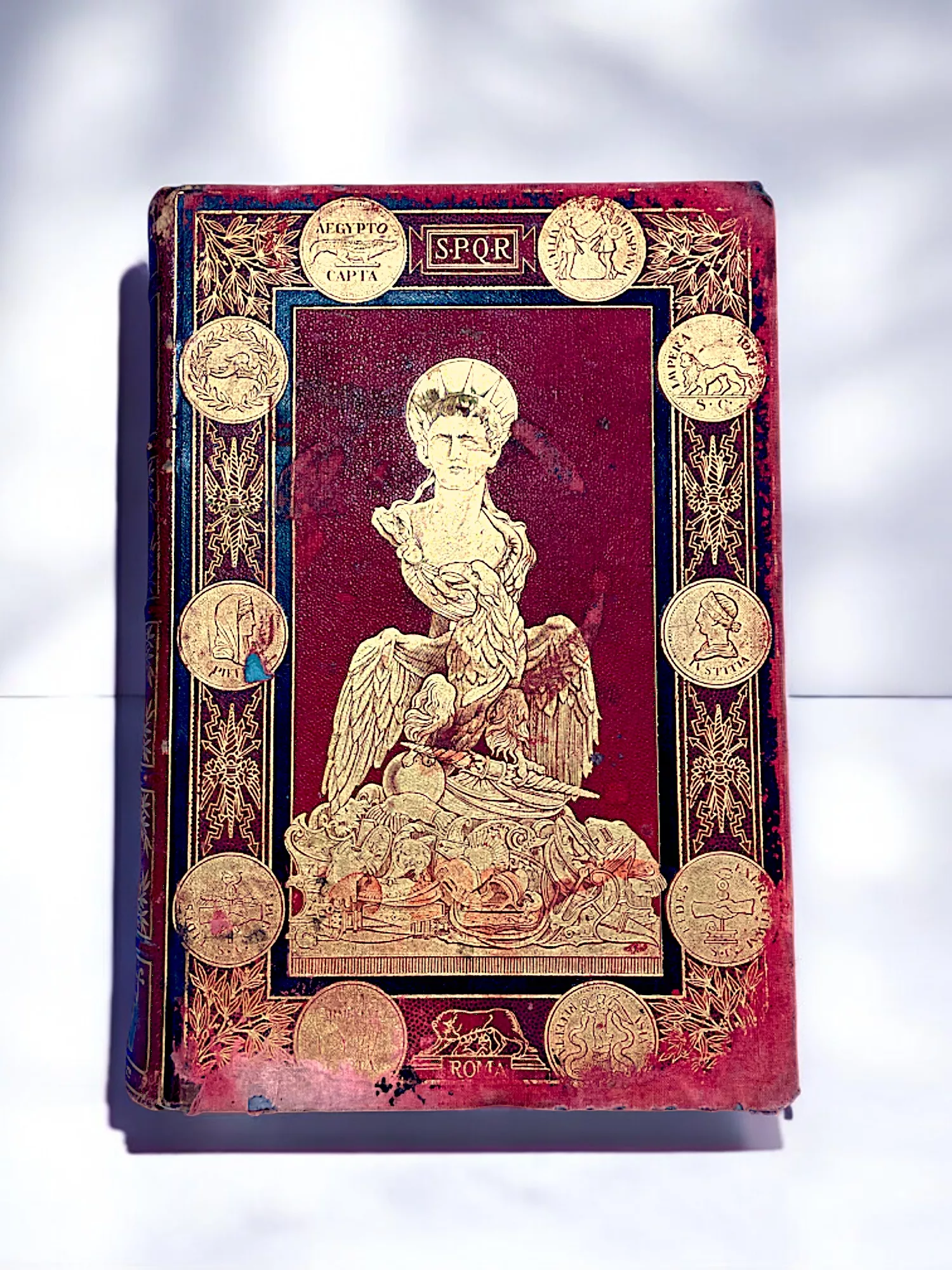
Couverture d'un livre ancien sur Rome
Characteristics to consider when valuing an antiquarian book
To estimate the value of an antiquarian book, several key criteria must be taken into account. First, the edition is often a determining factor.
The older the book, and especially if it's a first edition, the greater its rarity and value. First editions, generally produced in small quantities, are highly prized by collectors.
For example, a first edition by a famous author, such as Voltaire or Dickens, can fetch high sums at auction.
Condition is also crucial. An antique book in good condition, with all its pages intact, without stains or tears, will be worth more. The quality of the binding also counts, especially if it's period, leather or vellum.
Even if a restoration has been done, as long as it's done with care, it can still add a certain elegance to the work.
Another important factor is provenance. If a book belonged to a historical figure or comes from a prestigious collection, this adds cachet and, therefore, value. Bookplates (ownership marks), handwritten annotations or author dedications are all details that make a book unique.
A book that belonged to a royal figure or was annotated by a famous thinker, for example, will be particularly coveted.
Of course, the rarity of the book plays an essential role. If a book exists in only a few copies, or has survived major historical events, it becomes all the more valuable. Works such as the Gutenberg Bible are sought after not only for their antiquity, but also because very few copies are still in circulation.
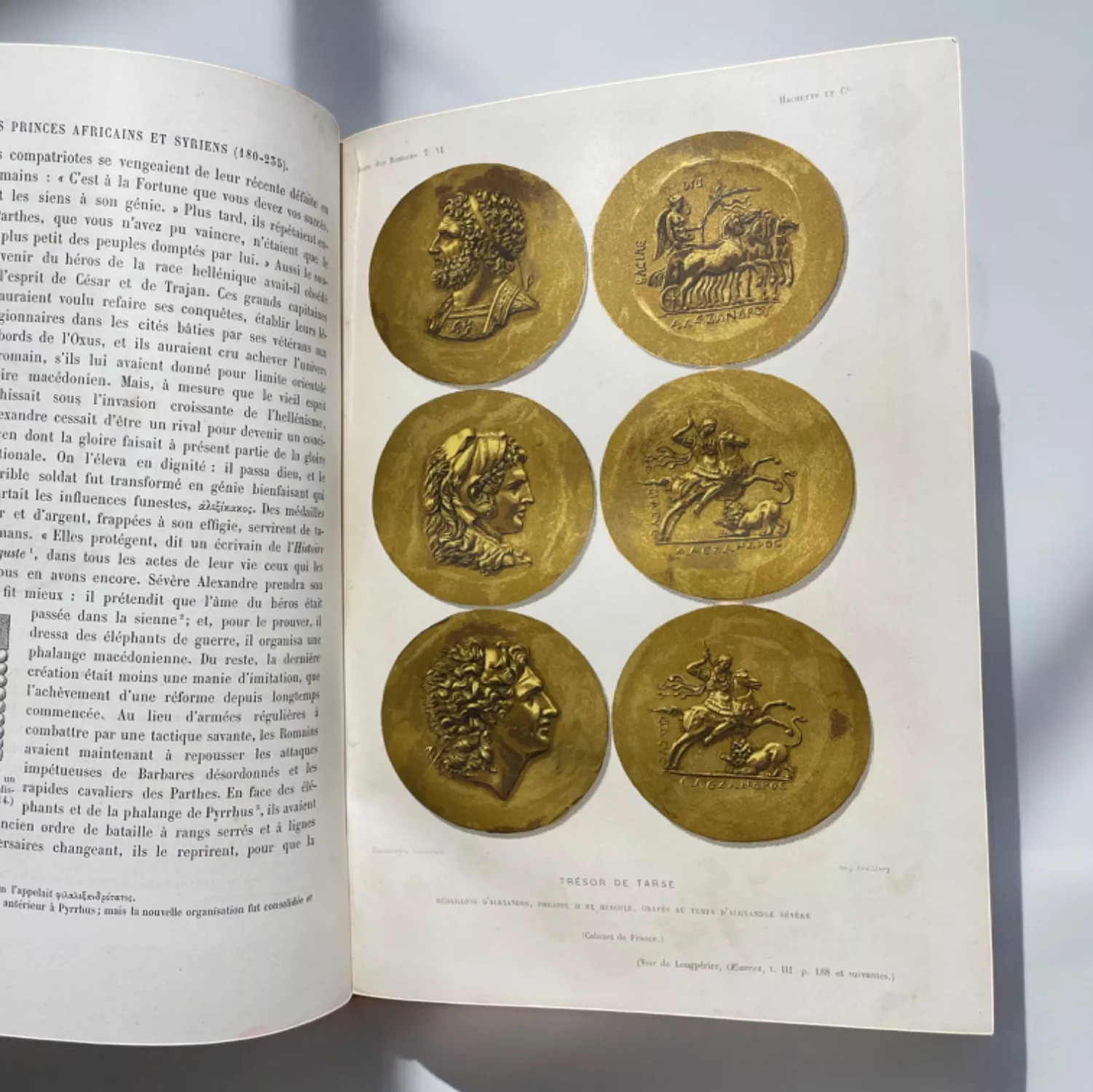
Livre ancien sur Rome, intérieur illustré
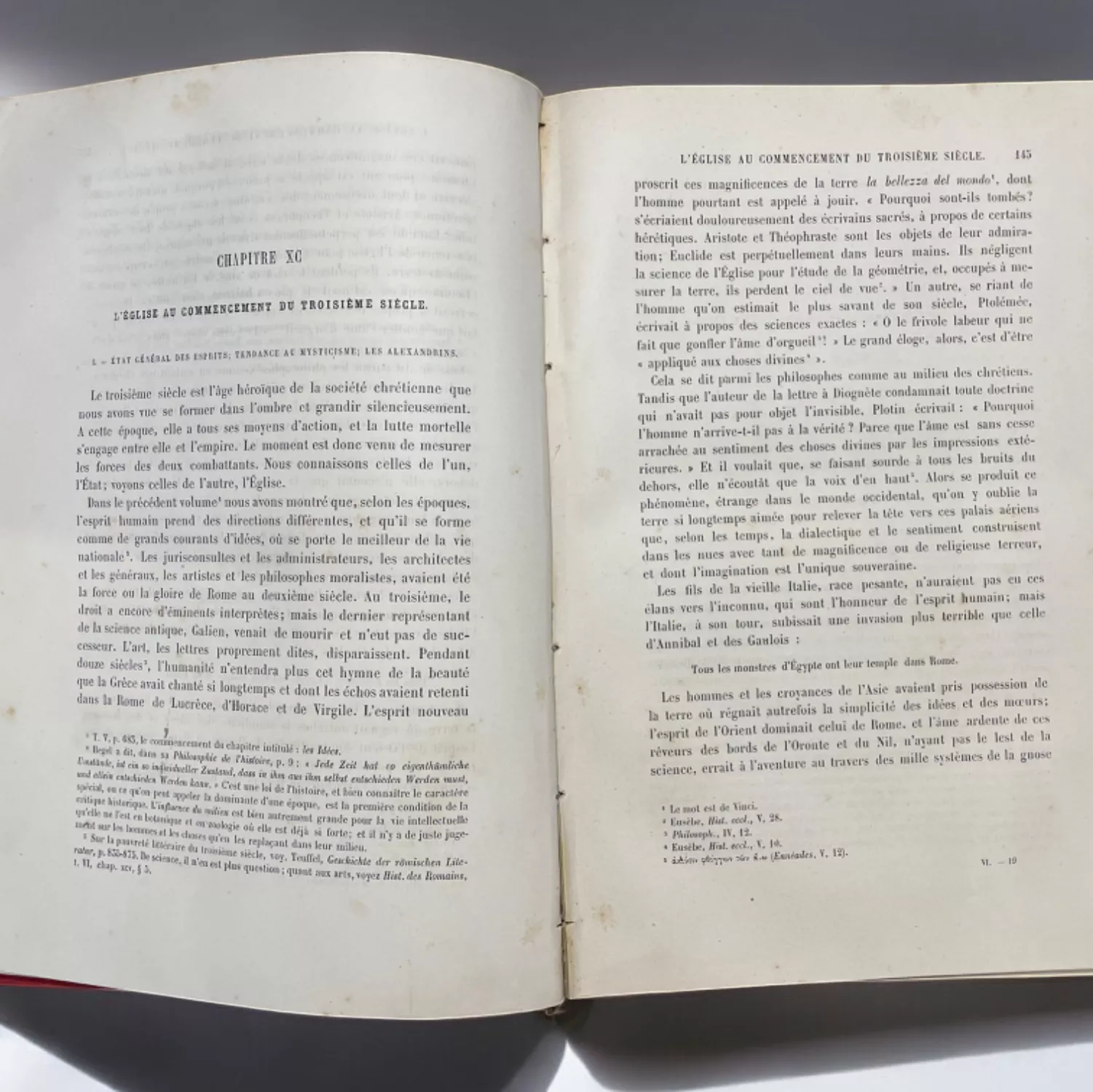
Livre ancien sur Rome, intérieur
The visual and artistic quality of the book also comes into play. Some old books contain extremely fine engravings or illuminations.
The rarer these illustrations are, and the more they are created by renowned artists, the more the book gains in value.
Gilded illuminations or master engravings can transform a book into a veritable collector's item.
Finally, the historical or intellectual importance of the book is an essential criterion. Certain works have marked turning points in the history of thought or played a key role in historical events.
For example, a first edition of Montaigne's Essais or a revolutionary scientific treatise such as Newton's are extremely prized, not only for their rarity, but also for their contribution to human knowledge.
So, the value of an antiquarian book depends on a set of factors that go far beyond its mere age.
Its edition, condition, history, rarity and cultural significance form a whole, which only qualified experts, such as auctioneers, can accurately assess.
These specialists are there to ensure that each book finds its rightful place on the market, whether at auction or as a private acquisition.
The appraisal of an antiquarian book is based on precise criteria, similar to the valuation methods established in the field of art and antiques. Like the certificates provided by laboratories for diamonds, the authenticity of an antiquarian book is often confirmed by specialized experts or academic institutions, who verify the edition, provenance and integrity of the work.
Nicolas Asvisio
Over the years, Nicolas has established solid collaborations with numerous auctioneers. These partnerships have resulted in memorable auctions, where priceless literary pieces have found new owners. His reputation as a reliable expert gives him a place of choice in auction rooms, where his advice is often sought.
Send a message
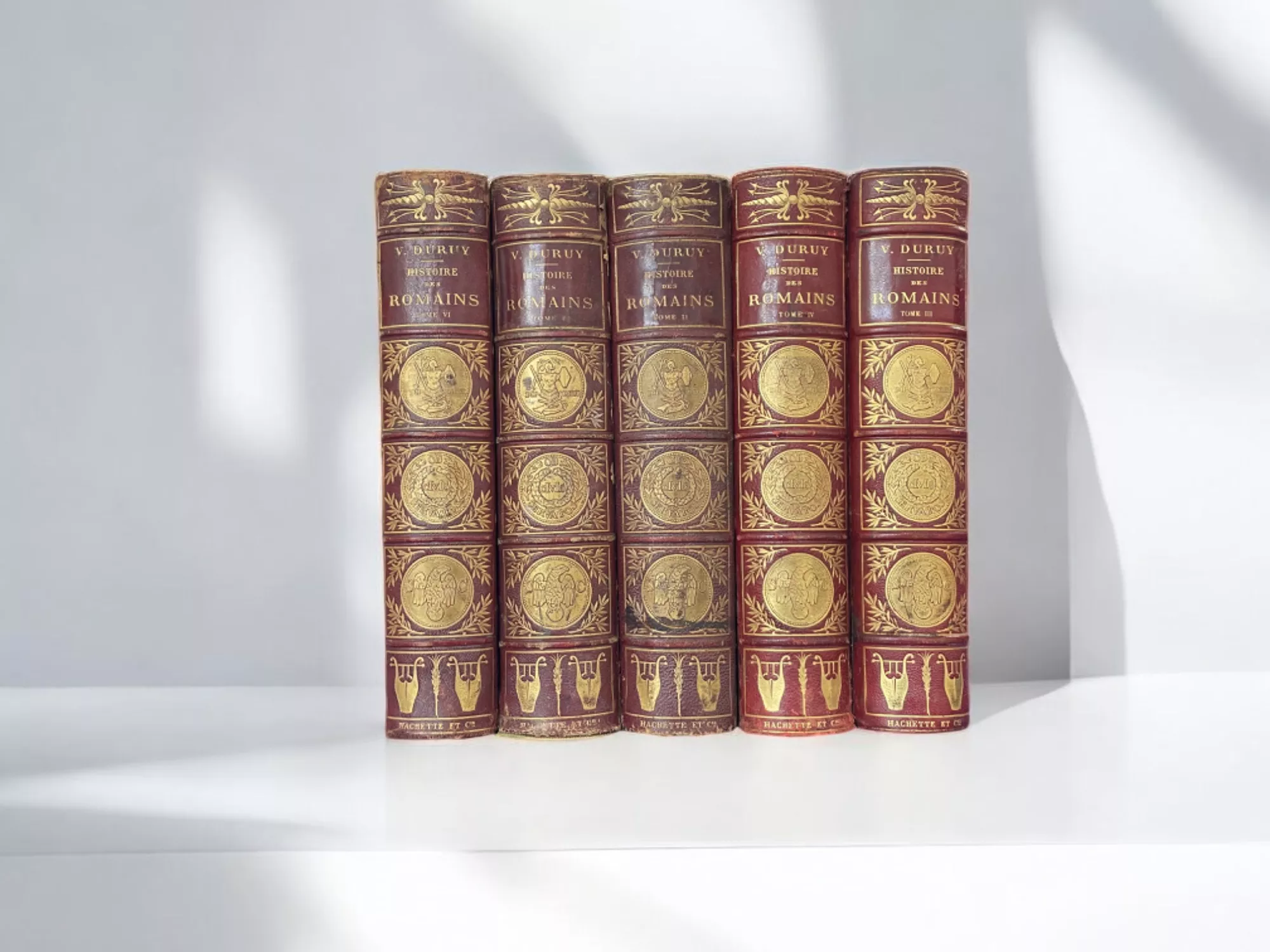
Encyclopédie de livres anciens
The technical aspects of appraising an antiquarian book
Among the essential criteria, we find first and foremost edition and rarity. Like carats for a diamond, the importance of a first edition or limited print run significantly increases a book's value.
First impressions of major works, such as the works of Shakespeare or Rabelais, are particularly sought-after. An antique book from a small production run, like a rare diamond, quickly becomes a precious collector's item.
Then, the state of preservation is decisive. A well-preserved book, with its original binding, intact pages and no modern annotations, is much more prized than a damaged copy.
As with diamonds, where purity is assessed, the visual and material quality of the book - its binding, engravings, uncut margins - directly influence its value. This is also the case for antique paintings.
Moreover, a skilfully executed restoration can, if authentic and respectful of the work, preserve or even enhance its value.
Just as the ethical provenance of a diamond influences its quotation, the history of a book plays a crucial role in its valuation. If a book has belonged to a historical figure, this adds a special cachet.
Marks of ownership, such as bookplates or author dedications, increase its interest, just as a diamond from a reputable source will have greater appeal.
Provenance traceability is of paramount importance, as is documentation detailing previous owners and conditions of preservation.
The geographical provenance of the book can also come into play, particularly for incunabula or works printed in important cultural centers of the Renaissance, such as Venice or Paris, in the same way that the origin of a diamond influences its rarity and value.
Finally, experts will look at the intellectual and cultural significance of the text, similar to analyzing a diamond's proportions to maximize its brilliance.
An ancient book that played a key role in the transmission of ideas, or contributed to scientific, literary or philosophical revolutions, will be highly sought after.
Thus, works such as the first edition of Darwin's Origin of Species, or founding texts of Enlightenment philosophy, are prized not only for their antiquity, but also for the historical impact they had.
In short, the valuation of an antiquarian book requires a global and technical approach, taking into account its history, its condition, and its importance in the intellectual heritage, just as a diamond is judged on its 4C.
Have your objects estimated for free by our experts
What are the main factors that determine the value of an antique book?
The value of an antique book depends on several key factors: the edition (a first edition is more sought after), the condition (intact pages, original binding), provenance (whether it belonged to a historical figure or a prestigious collection), the rarity of the print run, and the historical or intellectual significance of the text. Illuminations, engravings, or original annotations also add value. Only qualified experts can accurately assess all of these criteria.
How can I get a free appraisal of an old book or manuscript?
Auctie's offers a free, no-obligation appraisal conducted by state-certified auctioneers and specialized experts. You can submit a request for an estimate, and our specialists will provide you with an accurate assessment of your item’s market value within 48 hours. This estimate does not obligate you to sell in any way.
What is the price range for antique books?
The prices of antique books vary considerably depending on their type and characteristics. On the current market, they range from €25 for simple volumes to several million euros for exceptional pieces. For example, antique law books range from €25 to €6,500, while books of hours can reach up to €1,727,200. The most prestigious copies (first editions, with notable provenance) far exceed these price ranges.
Why is now a good time to sell an antique book?
Antique books and manuscripts are currently highly sought after by collectors and history enthusiasts. The market shows strong demand for these collectibles, particularly for rare items or those with prestigious provenance. Auctie's can help you find the best sales strategy to achieve the highest possible price during this favorable market period.
How does the sale of an antique book work at Auctie's?
Auctie's guides you from appraisal to auction. After a free, no-obligation appraisal conducted by our auctioneers, we will recommend the best sales approach based on the characteristics of your item. We manage the entire process leading up to the auction to ensure you receive the most competitive price for your antique book or manuscript.