



Rating and value of sculptures and bronzes by Jean-Jacques Feuchère

Key takeaways
- Sculptures by Jean-Jacques Feuchère (1807–1852) sell for between €150 and €170,000, with prices varying depending on the quality and rarity of the work.
- His masterpiece, “Satan Meditating on His Crime” (1833), fetched €170,000 at auction in 2022, exceeding the initial estimate of €60,000 to €80,000.
- A sculptor of the “Black Romanticism” movement, Feuchère mastered bronze with exceptional precision, particularly through his collaboration with the foundryman Honoré Gonon and his meticulous surface work.
If you own a work by or after the artist Jean Jacques Feuchère, and would like to know its value, our state-approved experts and auctioneers will offer you their appraisal services.
Our specialists will carry out a free appraisal of your work, and provide you with an accurate estimate of its value on the current market.
Then, if you wish to sell your work, we will direct you to the best possible arrangement to obtain the optimum price.
Rating and value of the artist Jean Jacques Feuchère
Jean-Jacques Feuchère is an artist from the Realist group. His legacy consists of sculptures in various materials and drawings. At present, prices for his works are exploding at the auctioneers' gavel.
His sculptures are particularly prized above all by French and English buyers, and the price at which they sell on the art market ranges from €150 to €170,000, a considerable delta but one that speaks volumes about the value that can be attributed to Feuchère's works.
In 2022, a bronze, Satan meditating on his crime, probably his most famous work, dating from 1834 sold for €170,000 while it was estimated at €60,000 to €80,000. The artist's quotation is high and varies according to the quantity of works present on the auction market.
Order of value ranging from a single work to the most prestigious
Technique used | Result |
|---|---|
Drawing - watercolor | From €240 to €500 |
Sculpture - volume | From €150 to €170,000 |
Estimate in less than 24h
Style and technique of the artist Jean-Jacques Feuchère
Jean-Jacques Feuchère (1807 - 1852) was a sculptor at the crossroads of dark romanticism and neoclassicism. His work embodies a dark romantic vein, inherited from his contemporaries and his master Jean-Pierre Cortot.
He nevertheless retains a classical rigor in composition and is interested in fantastic, religious, mythological or allegorical subjects, with a predilection for marginal or ambivalent figures such as fallen angels, the damned and accursed poets.
His style is in keeping with dark romanticism, with a pronounced taste for mystery, melancholy and transgression. His work demonstrates an excellent mastery of bronze, and he collaborated with the best Parisian foundrymen of his time, such as Honoré Gonon, enabling him to produce pieces of extreme precision.
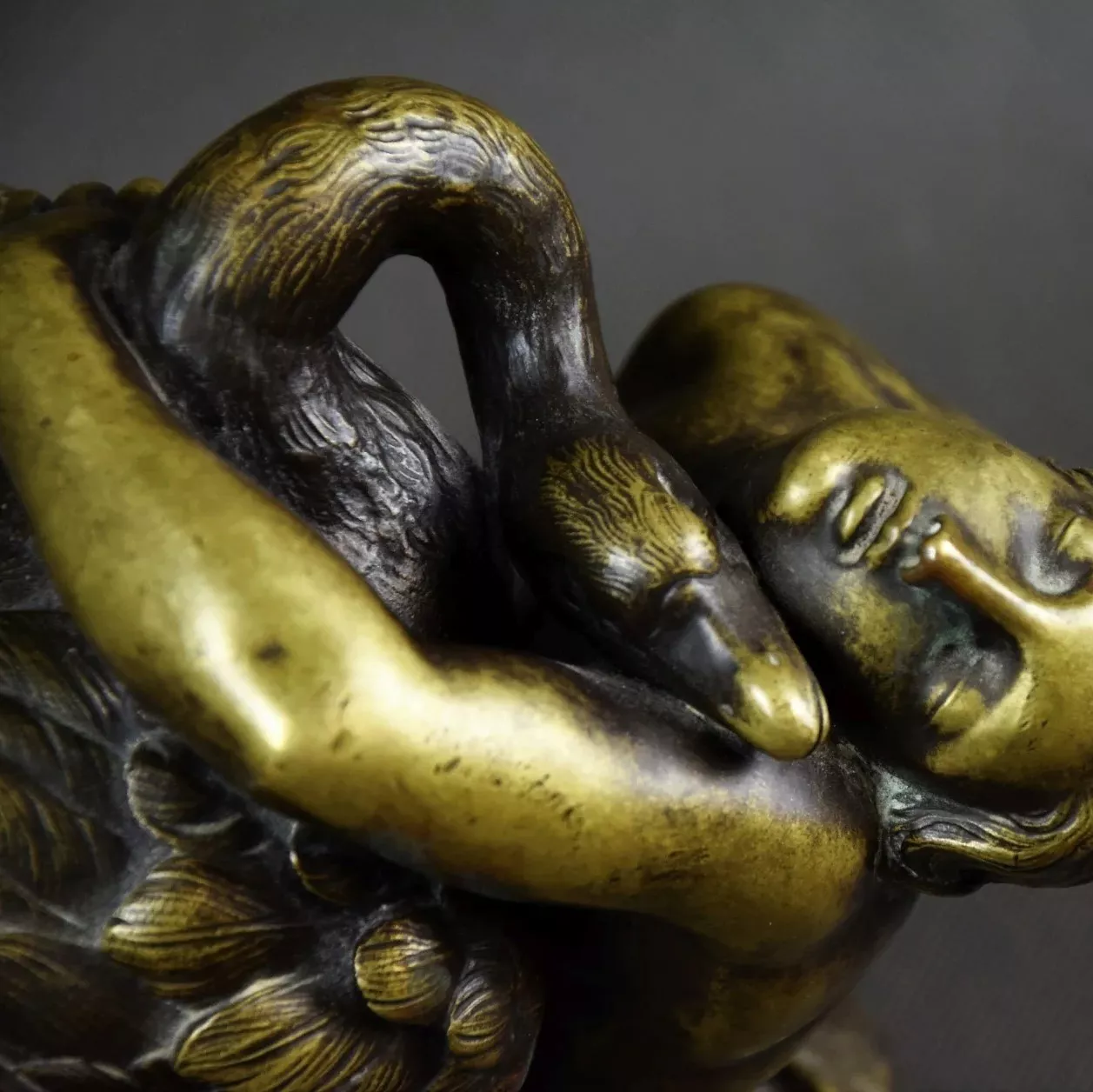
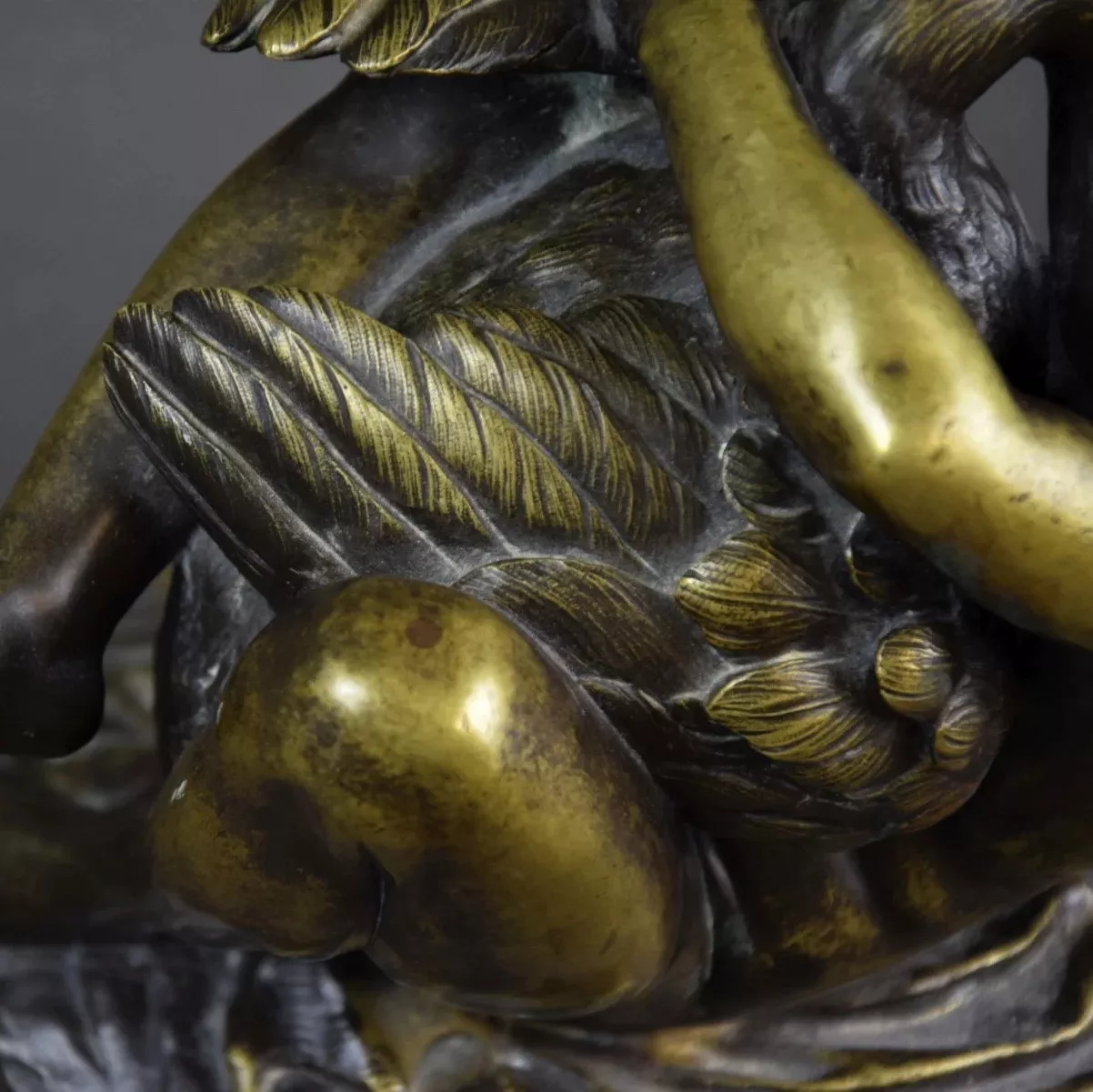
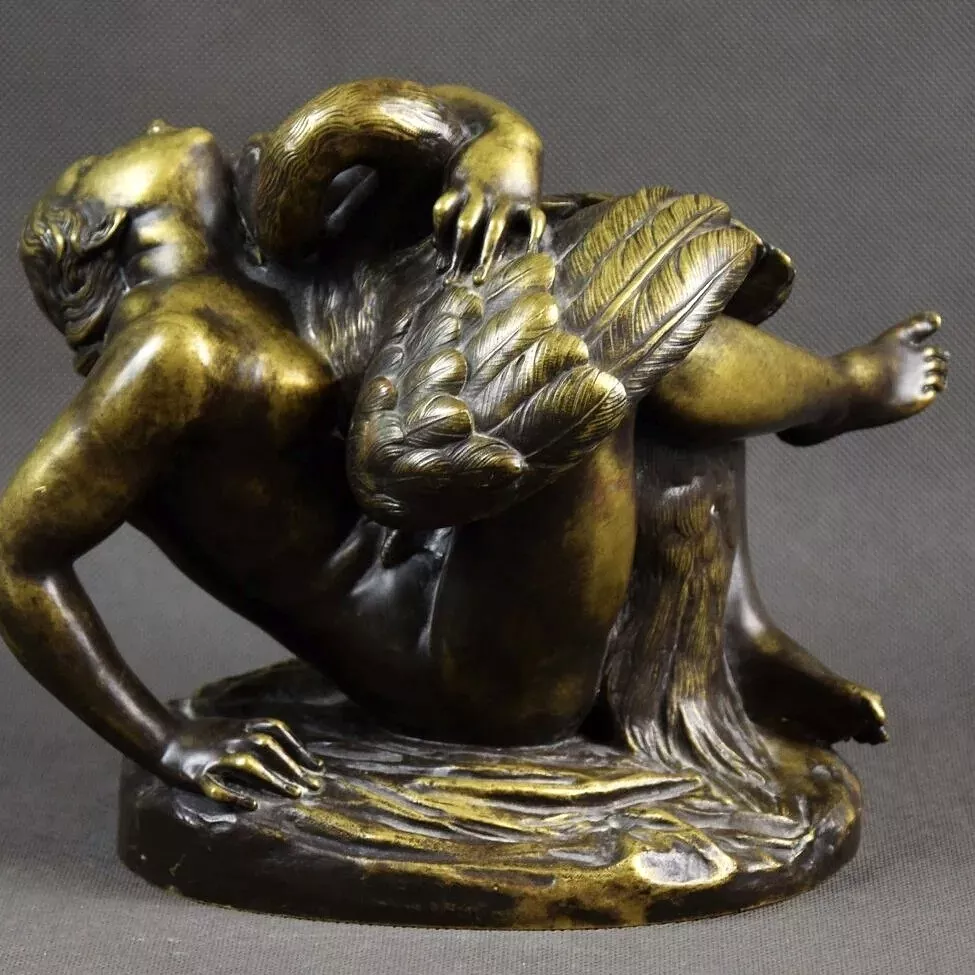
His bronzes thus feature finely chiseled surfaces, with a subtle interplay between smooth areas and textured details (folds of skin, fabrics, wings, hair...). He also excels in modeling wax and clay, carefully preparing his compositions, which are often highly theatrical.
Feuchère uses light as a dramatic element, alternating massive volumes and deep hollows, giving his figures an emerging or disappearing effect.
The rendering of flesh and organic surfaces is often contrasted with metallic accessories, rocks or stylized flames, accentuating the supernatural character of certain sculptures.
He pays great attention to facial expressions, which often blend pain, ecstasy, gravity and concern in an expressive rather than naturalistic logic. Postures are often stretched or bent, reflecting a certain inner tension, as in his famous Satan curled up on himself.
The bodies he works with are nervous, sometimes lean, reflecting an aesthetic of suffering or revolt, far removed from classical heroic ideals. Feuchère drew his inspiration from the Bible, but also from Dante, Byron and, more broadly, from literary Romanticism, combined with a personal reading of Christian iconography.
He was one of the first French sculptors to embody a symbolist vision ahead of its time, as opposed to official historical commissions. In this way, he blends narrative sculpture, religious imagery and black poetry, in a deeply personal body of work.
The life of Jean-Jacques Feuchère
Jean Jacques Feuchère was born in Paris in 1807, in a post-revolutionary context conducive to the reinvention of the arts. A pupil of Jean-Pierre Cortot, he benefited from a rigorous academic training in the neoclassical taste and completed his apprenticeship with direct observation of the antiques.
However, the artist quickly developed a darker, more introspective sensibility. He exhibited at the Paris Salon as early as 1831, and was regularly noticed there for works that were both technically masterful and thematically atypical.
Satan meditating on his crime (1833) became an emblematic work of his. In it, he presents a curled-up, introspective figure far removed from classical demonic representations.
He frequented Romantic artistic and literary circles, particularly those sensitive to dark romanticism and fantasy. He collaborated with major bronze casters, including Honoré Gonon, which enabled him to distribute some of his works on a large scale.
He also carried out decorative commissions for public monuments and churches, without ever abandoning his more personal vein. He also worked for goldsmiths and decorators, designing refined objects (candelabras, ornamental fonts) in the Romantic taste.
Although academically trained, Feuchère stood out for his bold thematic choices, inspired by Christian mysticism, Gothic literature and moral symbolism. In this way, he drew inspiration from artists of his time such as Charles Valton or James Pradier.
He attracted both critics and admirers, and did not bend to the official fashions of the July monarchy, exploring figures of pain, isolation and downfall, often seen as prefiguring fin-de-siècle symbolism.
Jean-Jacques Feuchère died prematurely at the age of 45, most of his career having taken place under the July monarchy, in a pivotal moment between late Classicism and visionary Romanticism. His work was long marginalized, but has been revalued since the 20th century for its contribution to dark romanticism and the emergence of visionary art in sculpture.
.
Focus on Satan meditating on his crime, Jean-Jacques Feuchère, 1833
Satan meditating on his crime is a work by Feuchère first produced in 1833 and reproduced over several years, a victim of its success. Dimensions vary according to the font, the original version being modest in size as it was designed for the edition font.
The work is held in several collections, notably at the Louvre (sculpture department collection). It depicts a nude Satan, folded in on himself, seated and pensive in a posture totally unprecedented for the period.
The choice of subject departs from classical representations of Satan as a flamboyant or triumphant figure. Here, Feuchère depicts him in doubt, remorse or perhaps bitter lucidity, head bowed, hands clasped and shoulders hunched.
The work humanizes evil by emphasizing introspection and melancholy, rather than monstrosity or spectacular damnation. The body is dense, compact and closed in on itself, symbolizing the character's psychic tension.
The muscles are marked but unostentatious, as Feuchère favors anatomical expressiveness over physical power. The face, semi-shadowed by the posture, suggests thought rather than rage, creating a meditative, silent atmosphere.
The work is in the vein of dark romanticism, close to Byron, Goethe or Goya, with a fascination for ambivalent shadow figures, fallen but lucid. In its treatment, it foreshadows certain symbolist tropes of the late 19th century (solitude, inner fall and metaphysical doubt).
The figure becomes almost an allegory of the artist himself, in his duality between light and night, knowledge and revolt. The casting is of great finesse, with meticulous work on the surfaces : smooth, matte skin, contrasted by areas of shadow.
The patina, often a deep brown or nuanced black accentuates the gravity of the subject. The closed composition creates an autonomous, almost spherical form, which can be analyzed from all sides.
When presented at the 1833 Salon, the work intrigued but disturbed by its unusual subject and emotional charge. It was often republished in the 19th century, which explains its recurrent presence at auctions, and became a collector's item prized by lovers of romanticism and symbolism.
It is now considered one of the first modern figures of introspective sculpture, on the border between myth and psychology.
.
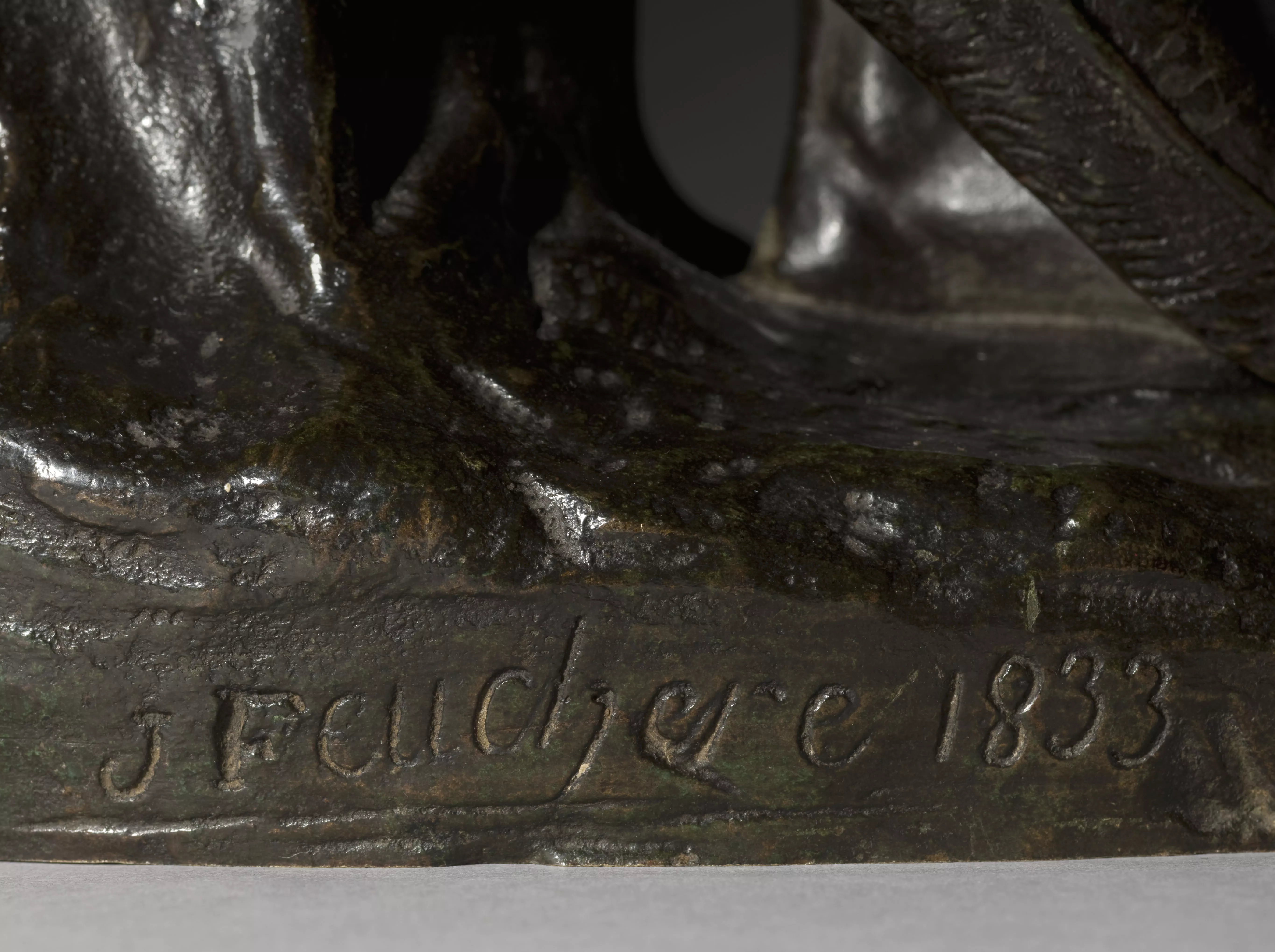
Recognizing Jean-Jacques Feuchère's signature
The artist doesn't always sign his works. It's best if you think you own one to have your property appraised. The signature may differ depending on the type of work : sculpture, drawing or other. There are also copies, which is why expertise is important.
Knowing the value of a work
If you happen to own a work by or after Jean-Jacques Feuchère, don't hesitate to request a free valuation using our form on our website.
A member of our team of experts and certified auctioneers will contact you promptly to provide you with an estimate of the market value of your work, as well as ad hoc information about it.
If you are considering selling your work, you will also be accompanied by our specialists in order to benefit from alternatives for selling it at the best possible price, taking into account the inclinations of the market.
.Estimate in less than 24h
Discover in the same theme

The value of works, paintings by Olivier Merson
Luc Olivier Merson is one of the last neoclassical historical painters. His works are still valued and quoted.
Learn more >

Rating and value of paintings by Constance Mayer
Constance Mayer is a neoclassical artist associated with Pierre-Paul Prud'hon, who has produced numerous works of high value and standing.
Learn more >

Rating and value of sculptures and bronzes by Pierre-Jules M...
Pierre-Jules Mène is a 19th-century animal sculptor who produced a series of works that are highly prized and valued.
Learn more >
D'autres bronzes anciens vendus aux enchères

Estimated Between €5,000 and €8,000
Agathon LEONARD (1841-1923), Dancer with scarf, bronze lamp, ed. Susse frères

Estimated 3.000 - 5.000
Raoul LARCHE (1860-1912) The fisherman, Bronze with green patina

Estimated 600 - 800
Hercules Farnese, bronze, reproduction after Glycon of Athens

Estimated 1.500 - 3.000
Jules FRANCESCHI (1825-1893) Hébé et l'aigle de Jupiter, gilded bronze

Estimated 800 - 1.500
Henry Étienne DUMAIGE (1830-1888), bronze print

Estimated 1.500 - 3.000
Antoine Louis BARYE (1796-1875) Eagle and heron, bronze print with shaded brown-green patina

Secure site, anonymity preserved

Auctioneer approved by the State

Free and certified estimates
Frequently asked questions
-
Who was Jean-Jacques Feuchère, and what was his artistic background?Jean-Jacques Feuchère (1807–1852) was a French sculptor who bridged the gap between “dark Romanticism” and Neoclassicism. A student of Jean-Pierre Cortot, he distinguished himself through thematically daring works inspired by Christian mysticism and Gothic literature, exploring figures of suffering and isolation. His work, long marginalized, was reevaluated in the 20th century for its major contribution to “dark Romanticism” and the emergence of a visionary art form in sculpture.
-
What is the price range for Feuchère's sculptures?The prices of Feuchère’s sculptures vary considerably depending on their size and condition, ranging from €150 for simple pieces to €170,000 for major works. In 2022, the iconic bronze sculpture “Satan Meditating on His Crime” (1834) sold for €170,000, exceeding its initial estimate of €60,000 to €80,000. Drawings and watercolors range from €240 to €500.
-
How can you authenticate a work by Feuchère and determine its exact value?To authenticate a work of art and determine its exact value, we recommend that you request a free, no-obligation appraisal from Auctie's. Our state-certified experts and auctioneers will examine your item and provide you with an accurate estimate within 48 hours, along with detailed information about the artwork, including its provenance and condition.
-
Is now the right time to sell a work by Feuchère?Yes, now is a good time to sell a sculpture by Feuchère. The artist’s market value is currently high and rising: his works are attracting growing interest from French and British collectors, and auction prices regularly exceed initial estimates, as demonstrated by the record-breaking sale of “Satan Meditating on His Crime” in 2022.
-
How does the sale of a work of art work at Auctie's?Auctie's supports you from the free appraisal all the way through to the auction. After the appraisal, our specialists will present you with the best options for selling your artwork at the best possible price, taking into account market trends and collectors' preferences. We guide you through the entire process with no initial obligation.
