



Rating and value of paintings by Giuseppe de Nittis

Key takeaways
- Prices for works by Giuseppe de Nittis range from €20 to €768,900, with a record set by *A Walk Along the Champs-Élysées* in 1874.
- Oil-on-canvas paintings are the most valuable segment (€340 to €768,900), while prints and drawings are less expensive (€20 to €226,900).
- The Italian artist (1846–1884) holds a prominent position in the market for 19th-century modern painting and is particularly prized by French and Italian collectors.
If you own a work by or after Giuseppe de Nittis, and would like to know its value, our state-approved experts and auctioneers will offer you their appraisal services.
Our specialists will carry out a free appraisal of your work, and provide you with an accurate estimate of its value on the current market.
Then, should you wish to sell your work, we will direct you to the best possible arrangement to obtain the optimum price.
Rating and value of the artist Giuseppe de Nittis
Giuseppe de Nittis leaves behind a very singular body of work, in the neoclassical movement. Prices for his works are now rising under the auctioneer's hammer. His paintings are particularly sought-after, especially by French and Italian buyers.
The price at which they sell on the art market ranges from €20 to €768,900, a substantial range but one that says a lot about the value that can be attributed to the works of Giuseppe de Nittis.
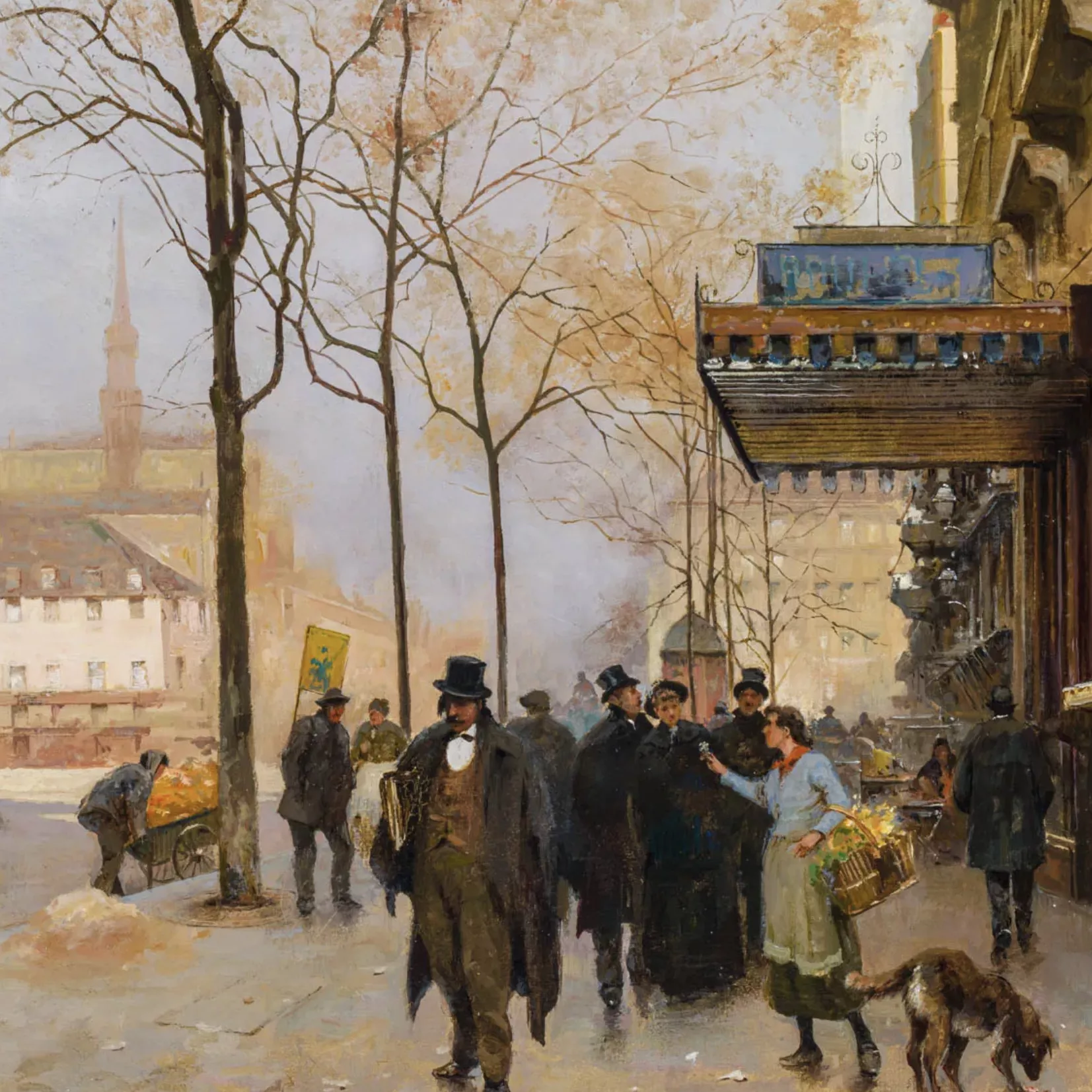
His oil on canvas Une marche le long des Champs-Élysées sold for €768,900, whereas it was estimated at €133,700 to €200,000.
Order of value from a simple work to the most prestigious
Technique used | Result |
|---|---|
Estamp - multiple | From €20 to €5,000 |
Drawing - watercolor | From 350 to 226 900€ |
Oil on canvas | From 340 to 768 900€ |
Estimate in less than 24h
Style and technique of Giuseppe de Nittis
Giuseppe de Nittis was an Italian painter of the 19th century, and a major figure of European modernism. He occupies an intermediate position between Realism, the Italian Macchiaoli and French Impressionism, without however fully adhering to them.
His work focuses on the representation of modern life. He first trained in southern Italy, before settling permanently in Paris and joining international artistic circles.
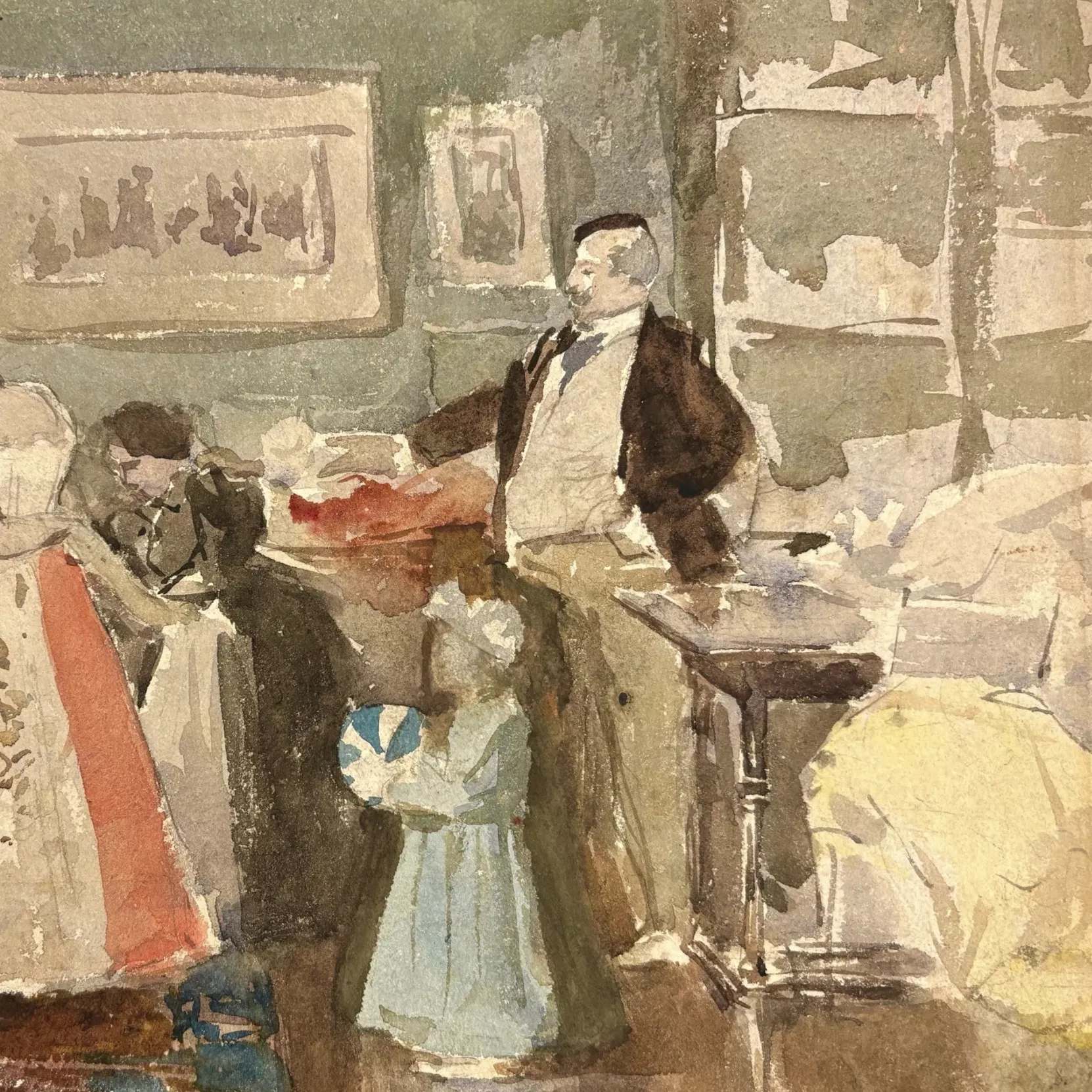
He produced modern urban views of Paris (boulevards, squares, racecourses) and London (bridges, parks, fog). His social scenes are elegant, with strollers and horse races.
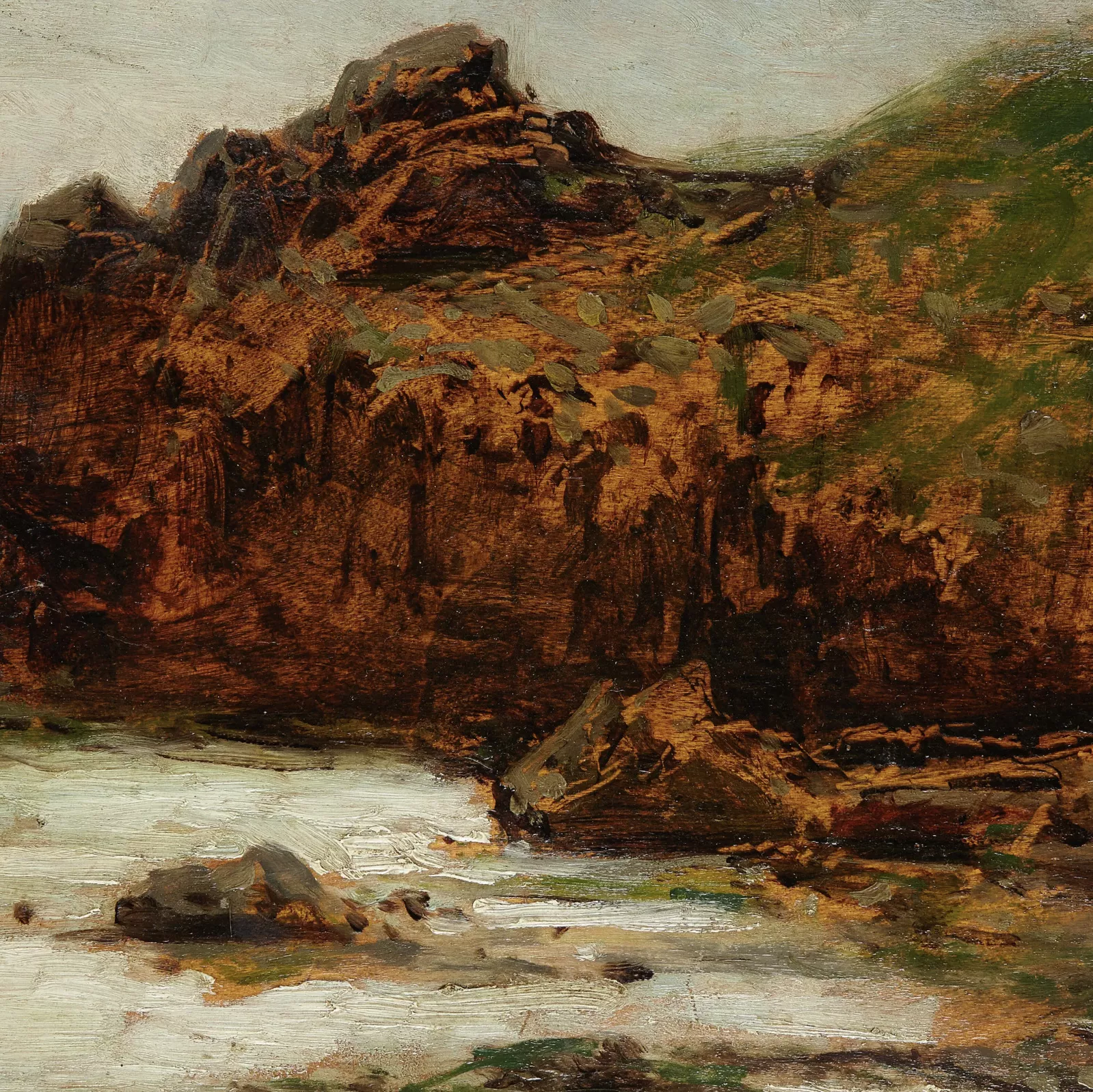
He also depicts seaside landscapes and the Italian countryside. His work shows a central interest in the Haussamanian city, crowds, traffic and contemporary leisure.
Modernity is approached with him as a visual and social fact, and not as radical experimentation. His compositions are open and often asymmetrical. The viewpoints are plunging or slightly off-center, with a notable inlfuence of photography and Japanese prints in the framing.
His perspective is controlled but softened, with spaces constructed to suggest movement and depth. He uses circulation axes as structuring lines. His chromatic palette is clear and refined, with colored grays and cool blues. He rejects violent contrasts and favors tonal harmony.
The life of Giusseppe de Nittis
Giuseppe de Nittis (1846-1884) was born in Barletta, in the Kingdom of the Two Sicilies (southern Italy), into a modest social background far removed from the major Italian artistic centers.
He entered the Naples Institute of Fine Arts, but soon found his academic training too restrictive. He was expelled from the institution because of his independence and refusal of strict academic standards.
He became close to the Macchiaioli movement, an Italian movement that advocated direct observation of reality, plein-air painting and the study of light effects. His first works were devoted to landscapes and rural scenes in southern Italy.
He moved to Paris in 1867 and quickly became integrated into artistic and social circles. Paris became the center of his career and of the distribution of his works. He exhibited regularly at the Salon from 1869, and achieved rapid critical and commercial success, being appreciated for his modern, elegant scenes.
He took part in the first Impressionist exhibition in 1874, and maintained close links with Degas, Manet, Vuillard, Bonnard and Caillebotte, while still refusing to fully identify with the Impressionist group.
He married Léontine Gruvelle, a cultivated, worldly woman. Their salon became a meeting place for artists, writers and critics. He led an intense social life, in keeping with his pictorial subjects.
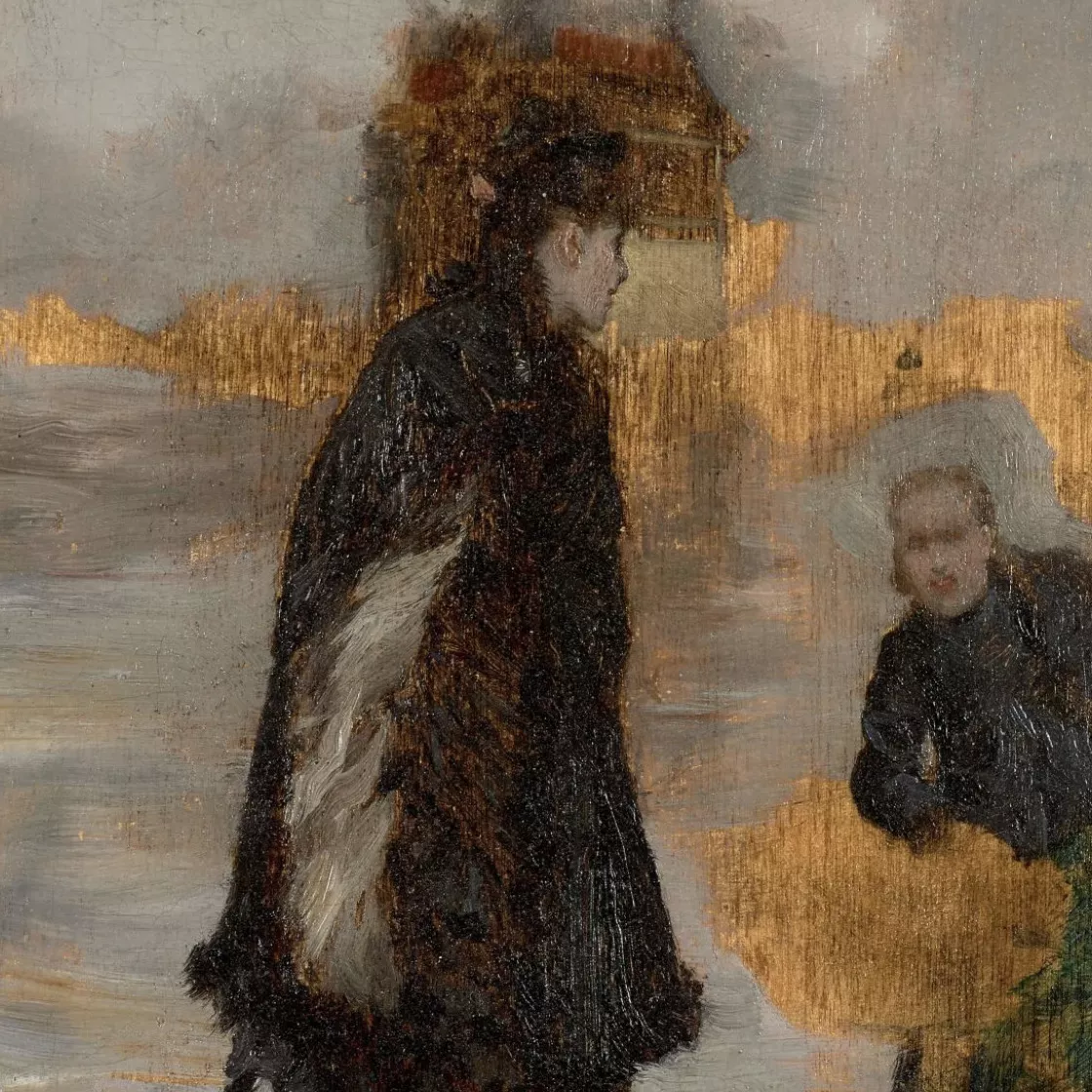
He continued to travel to Italy and England, London playing an important role in his work, particularly for its misty atmospheres. His health was fragile, and he died prematurely in Paris in 1884, at the age of 38, of a stroke.
His works are today held in numerous international public collections, including the Musée d'Orsay and other Italian museums. He is recognized as a central figure of 19th-century pictorial modernity.
Market segmentation and artist's rating
The market for works by Giuseppe de Nittis is international, solid and hierarchical, pertaining to 19th-century modernist painting. The artist is at a high level, close to the major Impressionists without depending directly on them.
Supply is limited due to the artist's short career. Oils on canvas are the most valued central segment, while works on panel or cardboard are rarer and form part of a secondary but sought-after market.
Pastels and drawings constitute a specific segment with documentary and decorative interest. As far as subjects are concerned, modern urban views (Paris, London) constitute the premium segment of the market, with boulevards, crowd scenes and climatic atmospheres.
Italian landscapes and seascapes belong to a slightly lower but active segment. The mature Parisian period (1870 - 1880) is at the top of the market. Early Italian works have a lower valuation but are historically important.
Medium to large formats (60 - 120 cm) are the most sought-after. The determining criteria for valuation are the subject clearly identified as modern, atmospheric and chromatic quality, state of preservation , signature and dating as well as provenance and exhibition history.
The market is stable, supported by the rarity of the works, museum recognition and the continuing appeal of paintings of modern life.
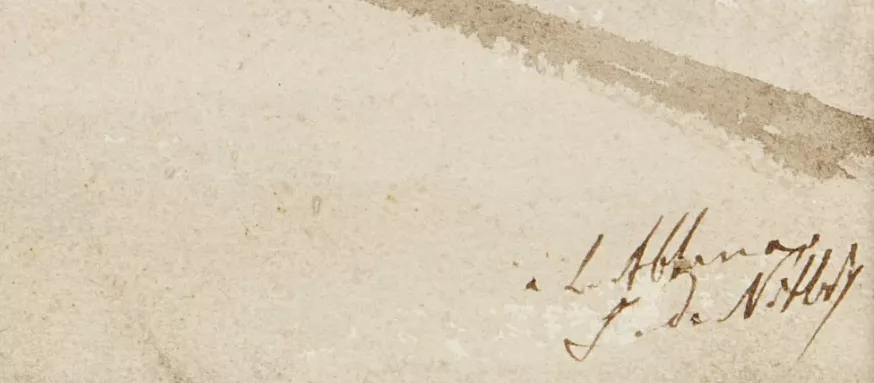
Recognizing Giuseppe de Nittis's signature
Giuseppe de Nittis's works are usually signed. However, with or without a mention, it is important for you to have the work appraised to ensure its originality and to be able to date it. What's more, there are many copies of course.
.
Knowing the value of a work
If you happen to own a work by or after Giuseppe de Nittis, don't hesitate to request a free appraisal using our form on our website.
A member of our team of experts and chartered auctioneers will contact you promptly to provide you with an estimate of the market value of your work, as well as any relevant information about it.
If you wish to sell your work, our specialists will also be on hand to offer you alternatives for selling it at the best possible price, taking into account market inclinations.
Estimate in less than 24h
D'autres tableaux impressionnistes vendus aux enchères

Estimated 6.000 - 8.000
Mikhail Markianovich GUERMACHEFF (1867 - 1930) House under the snow, oil on canvas

Estimated 2.000 - 4.000
Jean DUFY (1888-1964) Vase of anemones, Watercolor

Estimated 600 € - 800 €
Henri ZUBER (1844-1909), Bridge at Artemare. Oil on canvas.
Discover in the same theme

Value and quotation of works, paintings by Jules Adler
Jules Adler, a 20th-century naturalist painter, produced a number of drawings and oil paintings that are both valuable and stable.
Learn more >

Rating and value of Russian paintings by Adolf Baumgartner S...
Adolf Baumgartner Stoiloff is a Russian military painter who has produced works that are sought after by collectors, with a high value.
Learn more >

Rating and value of drawings and paintings by Horace Vernet
Horace Vernet was a French Romantic and Orientalist painter who produced numerous paintings that are highly valued and command high prices.
Learn more >

Secure site, anonymity preserved

Auctioneer approved by the State

Free and certified estimates
Frequently asked questions
-
Who was Giuseppe de Nittis, and what was his artistic background?Giuseppe de Nittis (1846–1884) was a major Italian painter of the 19th-century modern movement, born in Barletta. He occupied a unique position between Realism, the Italian Macchiaioli, and French Impressionism, without fully adhering to any single movement. Settling in Paris in 1867, he distinguished himself through his modern urban scenes, crowd scenes, and refined atmospheres, while maintaining close ties with Degas, Manet, and Caillebotte.
-
What is the price range for works by Giuseppe de Nittis?The prices of Giuseppe de Nittis’s works vary considerably depending on the medium and subject matter. Prints range from €20 to €5,000, drawings and watercolors from €350 to €226,900, and oil paintings on canvas from €340 to €768,900. Cityscapes of Paris and London represent the premium segment of the market, while Italian landscapes and seascapes are priced slightly lower.
-
How can you authenticate a work by Giuseppe de Nittis?To authenticate a work by Giuseppe de Nittis, we recommend that you request a free appraisal from our state-certified auctioneers and experts via our online form. Although his works are generally signed, copies do exist, and a thorough appraisal will confirm the originality and date of your painting or drawing and ensure its authenticity.
-
Is this the right time to sell a work by Giuseppe de Nittis?Yes, this is a good time to sell a work by Giuseppe de Nittis. The market is stable and supported by the scarcity of his works, international recognition by museums (notably the Musée d’Orsay), and sustained interest in 19th-century paintings depicting modern life. Prices continue to rise steadily at auction, particularly for urban views of Paris and London.
-
How does the appraisal process work at Auctie's?The appraisal is free and non-binding. Simply fill out our online form with information and photos of your artwork. An expert or auctioneer from our team will contact you promptly to provide you with an estimate of the market value and relevant information. If you decide to sell, we’ll then guide you through the best options to help you get the best possible price.
