Maroussia Tarassov-Vieillefon
Maroussia Tarassov-Vieillefon appraises your Russian paintings from the 18th to the 20th century with Auctie's.






Key takeaways
If you own a work by the artist Cornelius Krieghoff or based on his work and would like to know its value, our state-approved experts and auctioneers will guide you.
Our specialists will carry out a free appraisal of your work, and provide you with an accurate estimate of its value on the current market.
Then, should you wish to sell your work, we will direct you to the best possible arrangement to obtain the optimum price.
An important Dutch-Canadian artist, Cornelius Krieghoff has a high rating on the auction market. Having worked mostly in Canada, he is one of the best-known painters of his time.
Appreciated, Krieghoff's works sell for between €70 and €142,900 on the art market, a sizeable delta but one that speaks volumes about the value that can be attributed to the artist's works.
In 2021, alandscape painting entitled Quebec Farm fetched €323,650, whereas it was estimated at between €10 and €323,650. The result therefore far exceeded the high estimate.
Technique used | Result |
|---|---|
Drawing - watercolor | From €1,100 to €23,800 |
Estamp - multiple | From €10 to €33,000 |
Oil on canvas | From €650 to €323,650 |
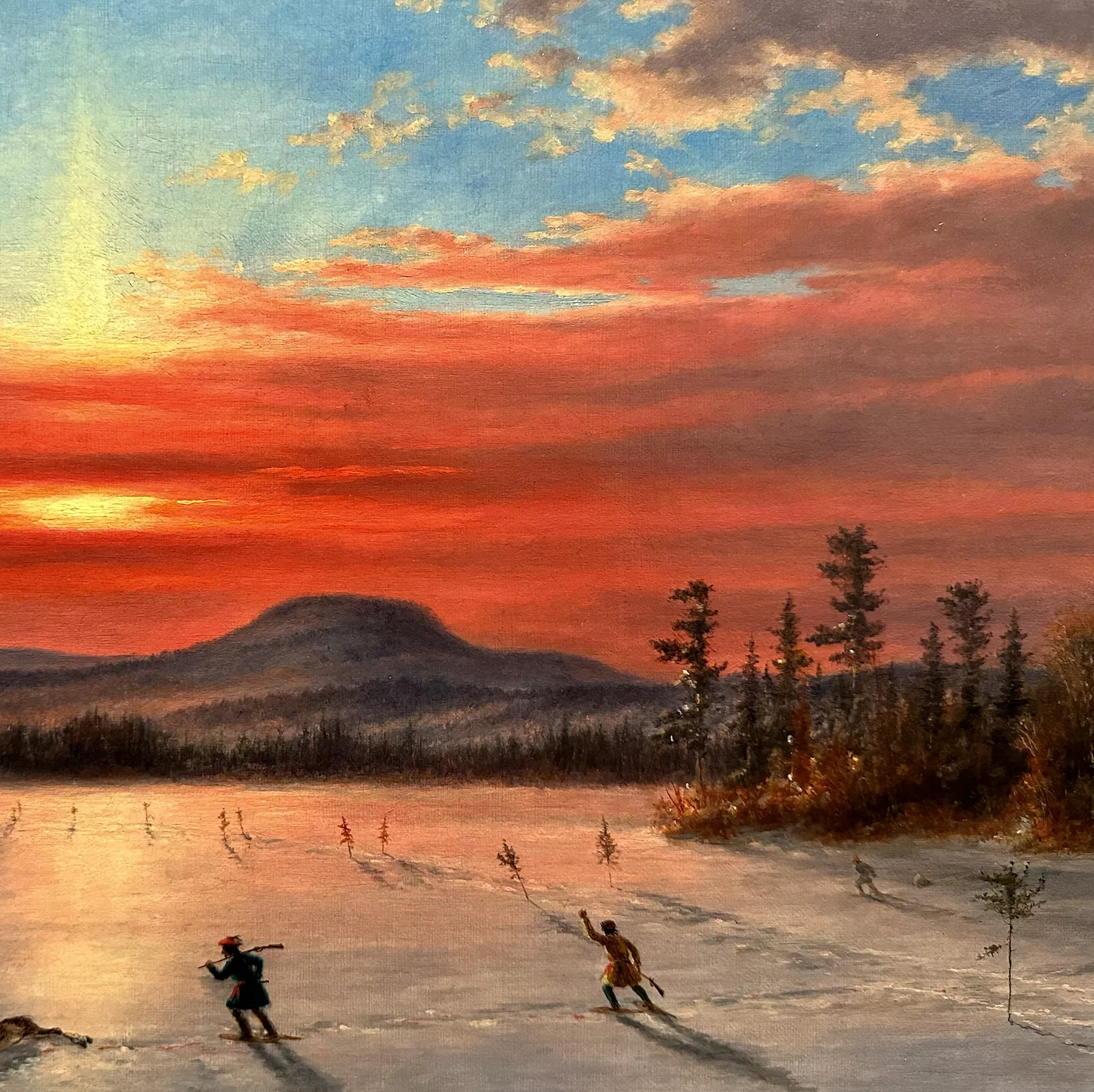
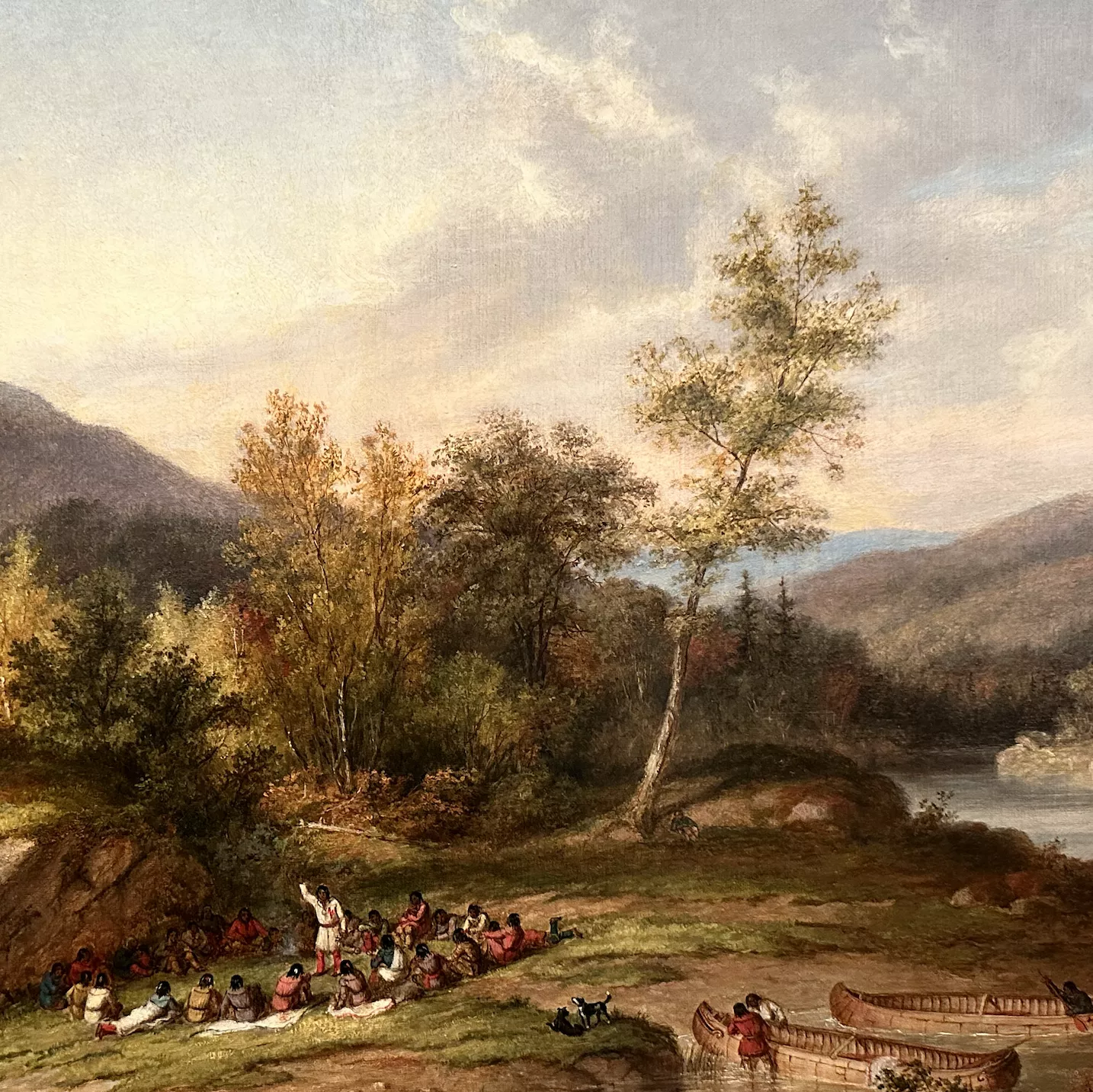
Cornelius Krieghoff produced a rich variety of works during his career, including drawings, prints and, above all, paintings.
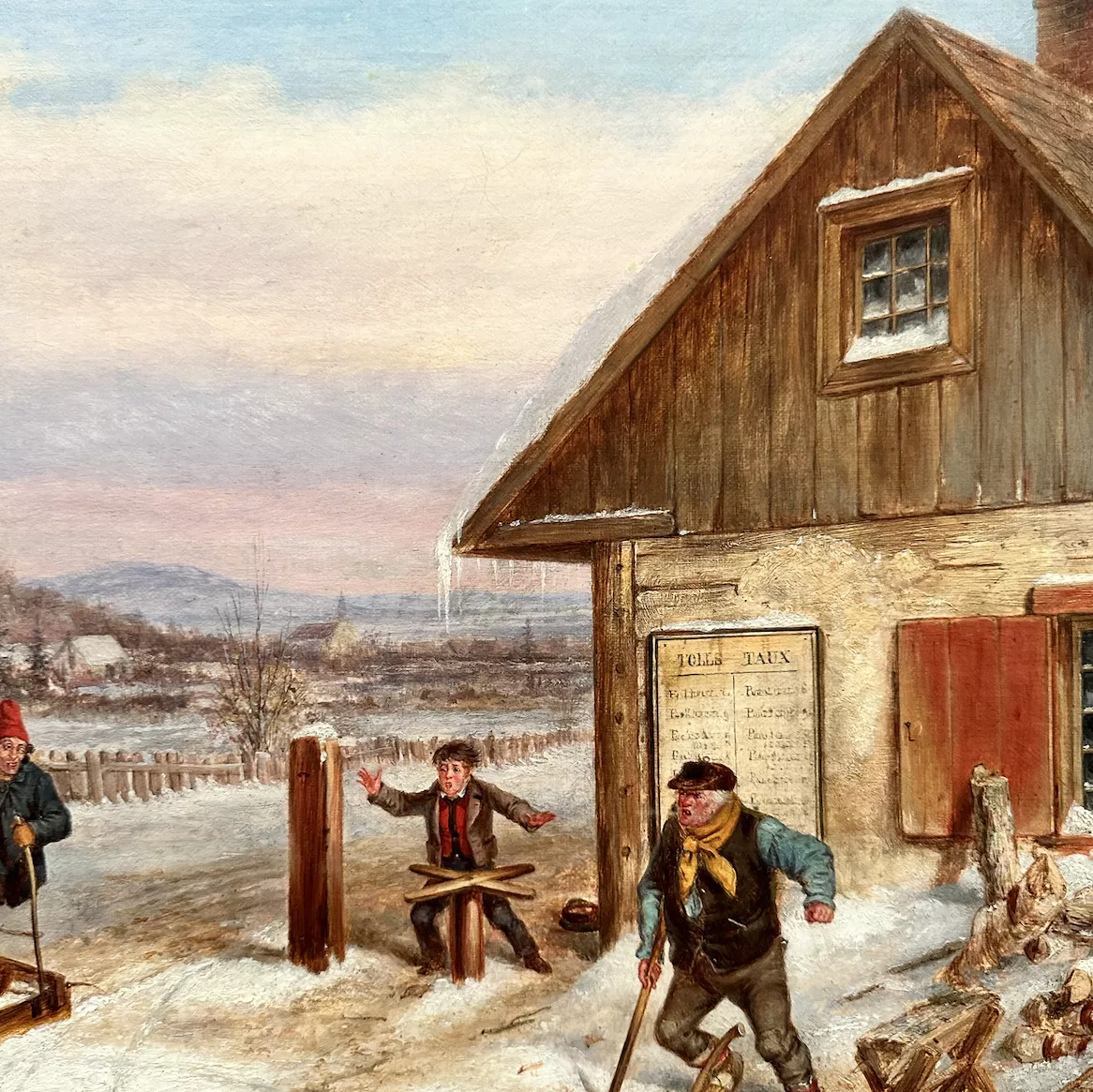
Heavily influenced by his Dutch origins, his work bears witness to great meticulousness, particularly in the precision with which he renders every detail, whether of nature or scenes from everyday life.
This methodical and rigorous approach, typical of the Flemish school, lends his works an almost documentary dimension, while retaining an artistic sensibility of their own.
Paradoxically, although his Dutch heritage is undeniable, the craftsmanship of his paintings bears striking similarities to that of Russian painters.
This is evident not only in the choice of subjects - often melancholy winter or rural scenes - but also in the treatment of light, which plays a central role in creating an atmosphere that is both luminous and intimate.
In addition, the composition of his works, structured and balanced, recalls the attention paid to spatial harmony by 19th-century Russian artists.
Curiously, however, these stylistic correspondences with the Russian school are not the result of any direct influence, nor of any genealogical or formal link with Russian artists.
This aesthetic duality makes Krieghoff an artist of subtle influences, able to cross cultural boundaries while retaining a deeply personal and unique identity.
.
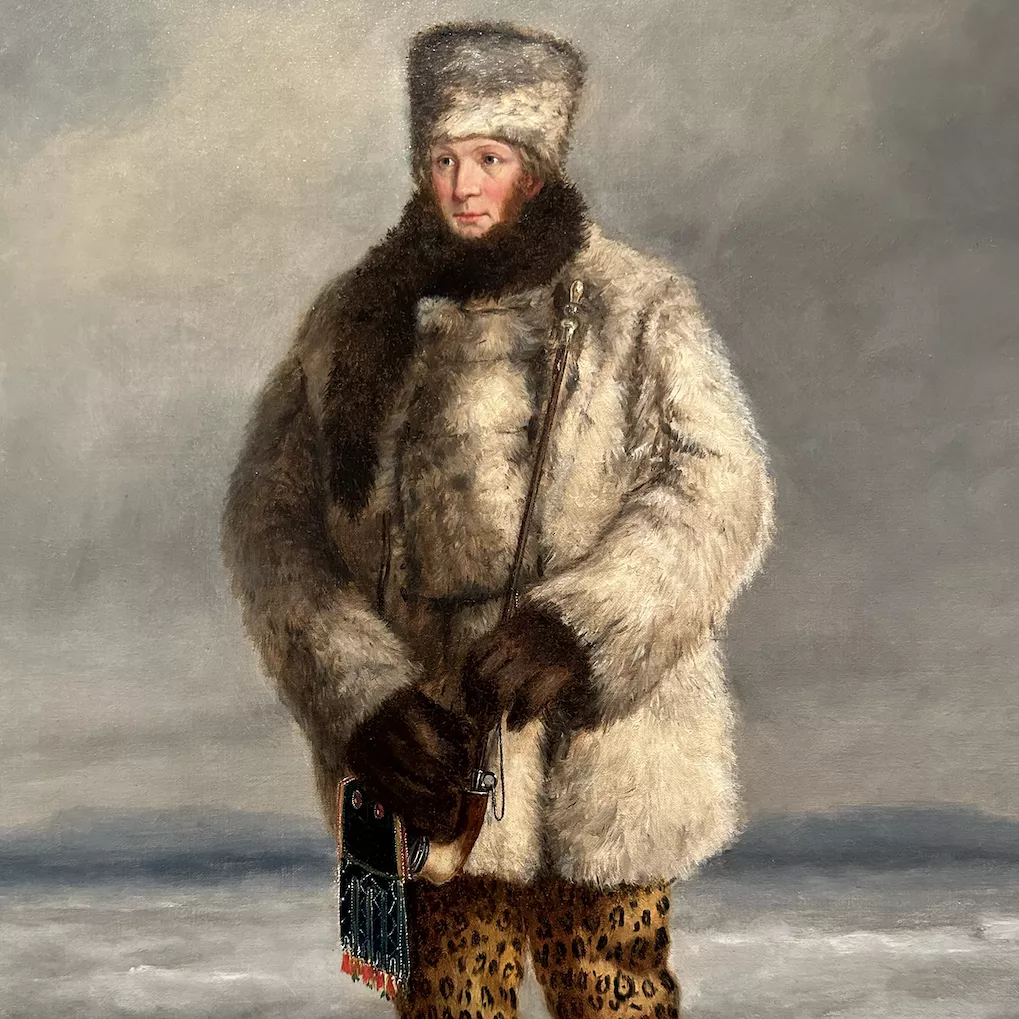
Cornelius Krieghoff (1815-1872), an emblematic figure of Canadian Realism, was a painter of Dutch origin. Born in Amsterdam, he grew up in a Europe in the throes of cultural and artistic change.
Initially drawn to music, he soon turned to painting, imbibing the techniques and aesthetics that would mark his later works.
While little information is available about his family background, it's clear that his youth was marked by an insatiable curiosity for the arts, prompting him at an early age to leave his native country to explore the world.
At the age of 18, he embarked on a life of travel, a quest for new experiences and artistic influences.
In 1837, he enlisted in the US Army on his arrival in New York, an experience that shaped not only his view of the landscapes of the North American continent, but also his way of capturing scenes of military life.
Having deserted, however, Krieghoff was forced to keep a low profile, crossing the border to Canada. The choice of this country was not made at random: geographical proximity and family ties, in particular with his Canadian-born wife, influenced this crucial decision that would shape his artistic destiny.
In Canada, he continued his artistic training, but his ambition did not stop there. In search of more refined skills, he flew to Paris, where he attended the École du Louvre under the tutelage of Michel Martin Drolling.
There, he perfected his technique by copying the masterpieces of the French masters, a common practice that enabled him to acquire a flawless mastery of nuances and classical compositions. This Parisian period had a profound effect on him, enriching his artistic vocabulary and refining his sense of detail.
On his return to America, Krieghoff resumed his nomadic life, multiplying his travels between Toronto, Rochester and Montreal. These travels offered him new perspectives for his art, and it was at this time that he began to immortalize the wild landscapes of Canada as well as the aboriginal peoples.
Fascinated by their traditions and way of life, he then focused on depicting these communities, capturing with particular sensitivity the dignity and simplicity of their existence within the vast natural expanses.
These works, imbued with a deep respect for aboriginal culture, are part of an approach that is both artistic and ethnographic, making Krieghoff a privileged witness of his time.
Maroussia Tarassov-Vieillefon appraises your Russian paintings from the 18th to the 20th century with Auctie's.
The painting by Cornelius Krieghoff we're looking at here captures a winter scene where figures are set in horse-drawn sleighs, moving over snow-covered ground.
The cool color palette used for the snow and sky, with shades of pink and blue, immediately immerses us in the luminous, crystalline atmosphere of a Nordic twilight.
This wintry depiction, combining realism of detail with a certain atmospheric poetry, is not unlike the works of Russian painters such as Iosif Krachkowsky, Constantin Westchiloff or Alexandre Iacovleff.
As with Krachkowsky, the treatment of winter is not merely descriptive, but deeply evocative. The snowy landscape, far from being a mere backdrop, here becomes a character in its own right, a majestic backdrop that amplifies these travelers' sense of displacement and adventure.
The sky, all shades of pink, purple and blue, conveys a changing light, typical of winter twilight.
With Krachkowsky, we often find this same attention to winter light, where the snow, far from being static, becomes a mirror for the sky and its multiple reflections. Krieghoff, like Krachkowsky, manages to capture the delicacy of these moments, when nature seems to breathe in a different way in the cold.
The powerful, vigorous movement of the horses, meanwhile, evokes the works of Constantin Westchiloff, particularly his depictions of landscapes enlivened by scenes of hunting or horse racing.
With Westchiloff, as with Krieghoff, there is a dynamic tension between the static elements of the landscape and the energy of the figures in action. Here, the horses are painted with great anatomical precision, and their movement is rendered with a keen sense of detail.
The power of the animals is apparent beneath the biting cold, and their advance, though harmonious, contrasts with the quietude of the surrounding landscape.
This duality between movement and immobility is a characteristic that Krieghoff shares with Russian artists, who know how to render the vital force present in their compositions, while respecting a certain serenity of the environment.
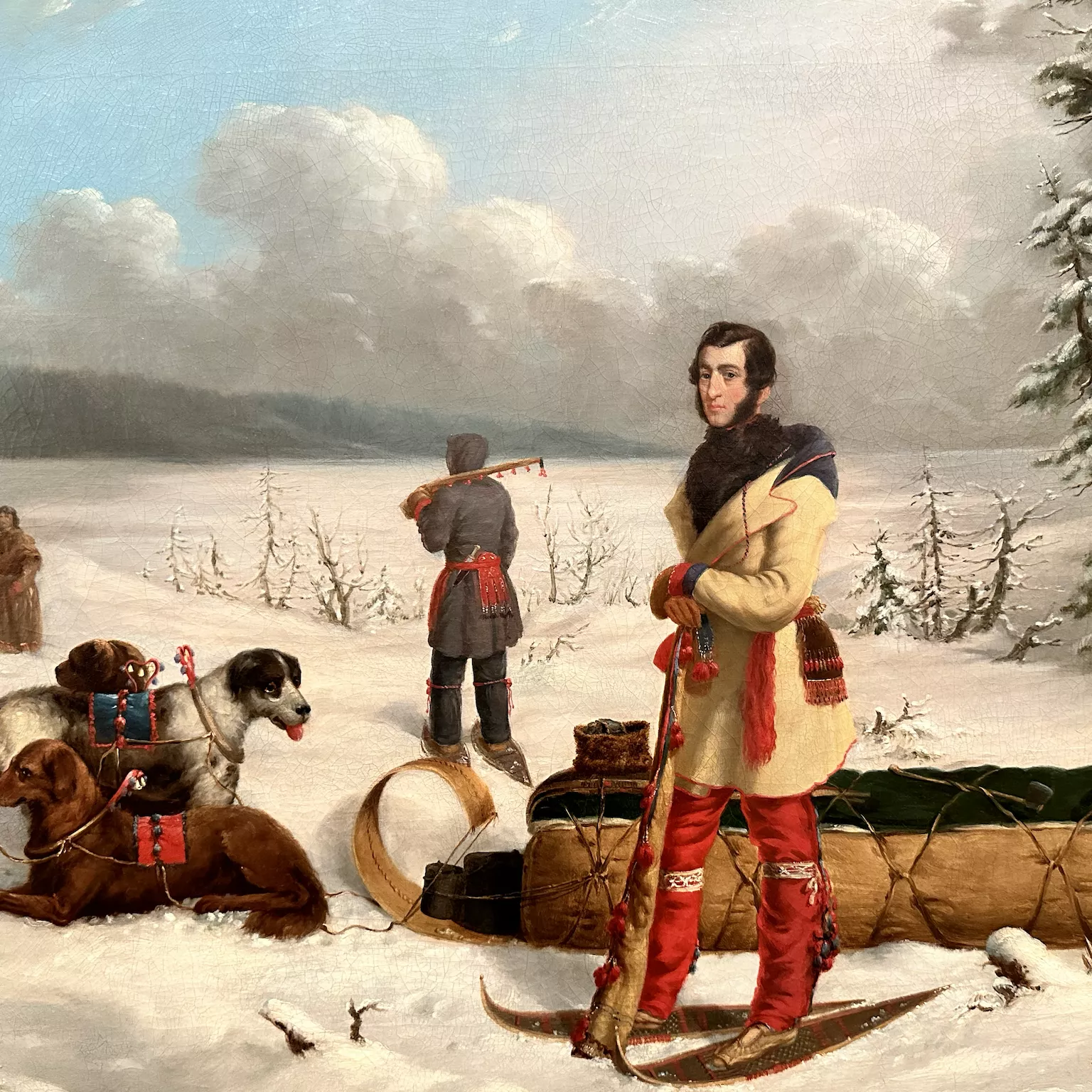
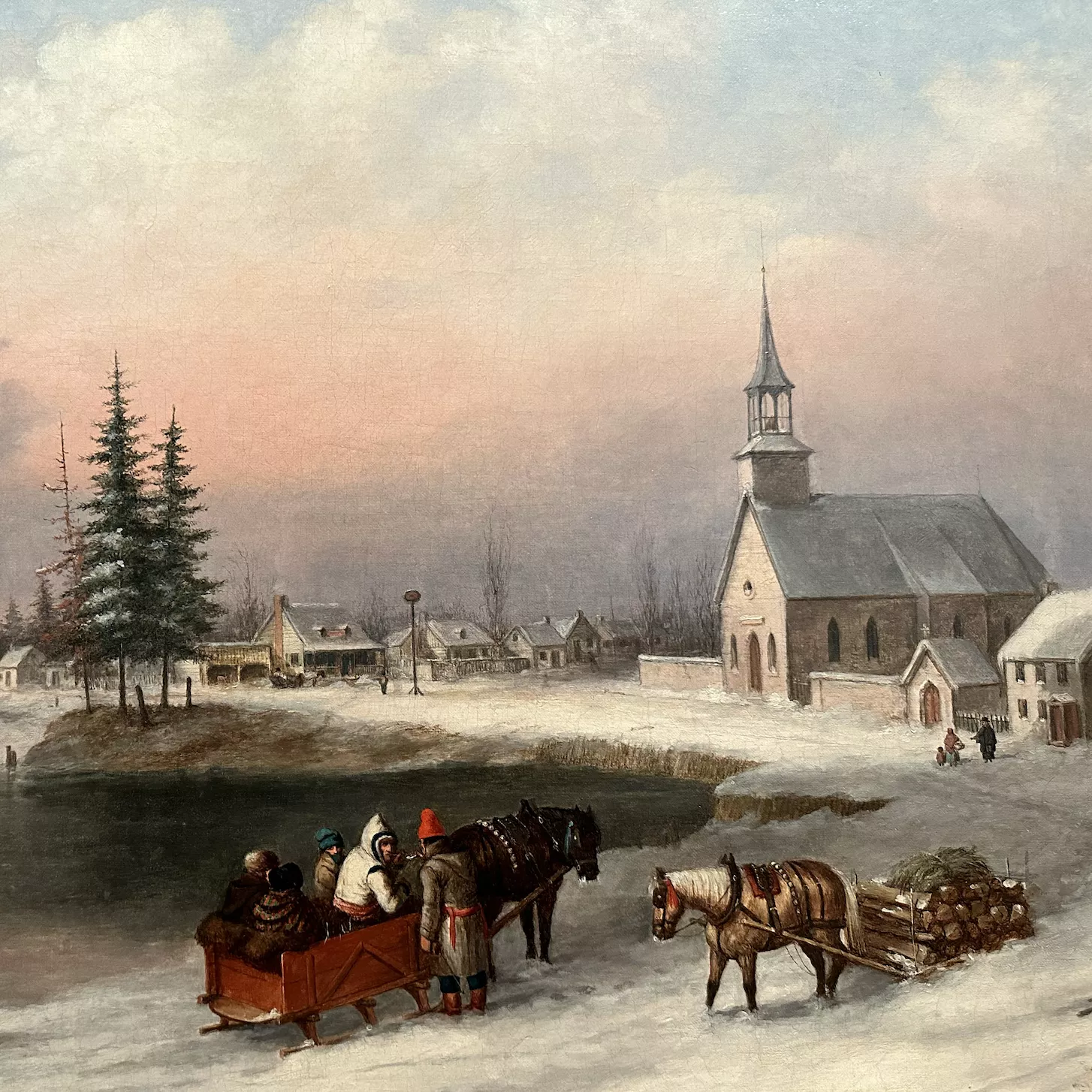
Finally, the figures in the sleds, dressed in furs, reinforce this sense of controlled coldness. Krieghoff, like Alexander Iacovleff, sets out to accurately depict the way of life of the inhabitants of cold regions.
The detailed furs and relaxed postures of the passengers recall a scene from everyday life in winter, while evoking human resilience in the face of harsh natural conditions.
Iacovleff, in his depictions of exotic peoples, takes a similar look at traditional costumes and local customs, seeking to capture the essence of a way of life with great ethnographic respect.
Krieghoff, in his way of painting sleighs, horses and their occupants, offers a window into everyday life in northern regions, just as Iacovleff did for Asian or African cultures.
In short, this scene by Krieghoff shares many affinities with the works of Krachkowsky, Westchiloff and Iacovleff.
All seek to transcend mere realism to capture an atmosphere, an emotion, and an intimate relationship between man and nature.
Far from being a simple depiction of a sleigh ride, this canvas by Krieghoff tells a story of resistance, beauty and communion with the elements, echoing the sensibilities of Russian artists who, too, were able to immortalize the harsh winters of their lands.
Cornelius Krieghoff was a painter who profoundly influenced 19th-century art in Canada. His works, often depicting scenes of daily life, Canadian landscapes and Aboriginal peoples, have become essential records of Canadian history and culture.
They are part of prestigious collections, both private and public, and are actively sought after by many collectors, playing a crucial role in preserving his artistic legacy.
Although some of his works are now in major museums in Canada and internationally, it is art enthusiasts who, by acquiring and preserving his paintings, have enabled Krieghoff to maintain his place in art history.
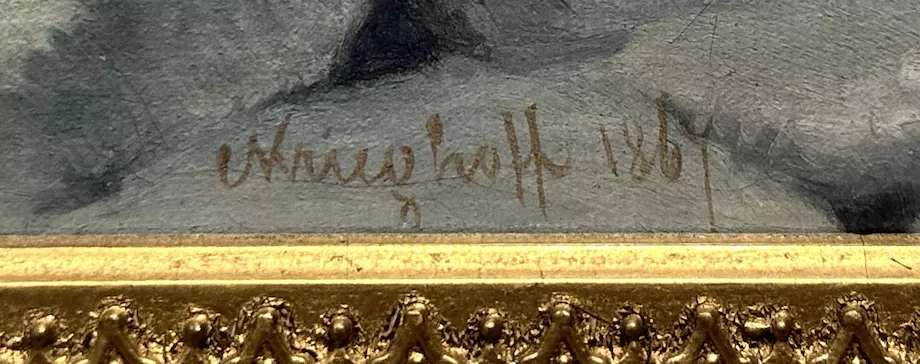
Not all of Cornelius Krieghoff's works are signed.
Although there are variations, here is a first example of his signature:

Value and quotation of works, paintings by Carolus Duran
Carolus Duran, 19th-century portrait painter, is popular on today's art market. His works have a stable value. Estimate in 24h.
Learn more >

Rating and value of paintings by Martin Drölling (father)
Martin Drölling was a 19th-century painter, famous for painting with the hearts of the Kings of France. His paintings are highly prized.
Learn more >

Rating and value of paintings by Marie Denise Villiers
Marie Denise Villiers was a French neoclassical painter, a pupil of Jacques-Louis David, who produced a number of paintings listed at auction.
Learn more >
Estimated 2 000 € - 3 000 €
Delphin ENJOLRAS (1857-1945) "A Midsummer Night's Dream", Oil on canvas
Estimated Between €800 and €1,500
Alexandre ROUBTZOFF (1884-1949), View of Notre Dame de Paris, oil on canvas
Estimated Between €5,000 and €8,000
KRACHKOWSKY (1854-1914), Before the storm, oil on canvas
Estimated 2.000 - 4.000
Charles LACOSTE (1870-1959) Starry night, Oil on paper mounted on canvas
Estimated 5.000 - 8.000
Robert PINCHON (1886-1943) View of a port on the banks of the Seine, Oil on canvas
Estimated 3.000 - 5.000
Henri Adrien TANOUX (1865-1923) The Slave Trader, oil on canvas

Secure site, anonymity preserved

Auctioneer approved by the State

Free and certified estimates


