



Value and rating of Japanese swords: katanas, wakizashi, tanto

Key takeaways
- Japanese swords generally sell for between €10 and €6,060, with a rare Kamura katana fetching €382,000 in 2013.
- Katanas from different historical periods vary in price: Edo period (€200 to €32,000), Muromachi period (€1,000 to €45,000), Meiji period, and World War II (€100 to €8,000).
- A 13th-century nihonto sold for $418,000 in 1992; katanas by renowned master smiths can fetch several hundred thousand euros.
If you own a Japanese sword, and would like to know its value, as well as, if you don't know, the period and model of the weapon, our state-approved experts and auctioneers will offer you their appraisal services.
Our specialists will carry out a free appraisal of your weapon, and provide you with a precise estimate of its value on today's market.
Then, if you wish to sell your object, we will direct you to the best possible device to obtain the optimum price.
Rating and value of Japanese swords
Japanese swords are among the most sought-after military collectibles on the auction market.
However, price differences can be considerable depending on model, engraving, state of preservation, who it belonged to, and other criteria. Now, prices for these weapons can rise considerably under the auctioneer's hammer.
Buyers from all over the world are interested in sales of certain rare pieces. The price at which they sell on the art market ranges from €10 to €6,060, at the moment, a substantial gap but one that says a lot about the value that can be attributed to Indian swords. In 2013, a Kamura katana from the collection of Dr. Walter Ames Compton sold for €382,000. A look back at past auctions and more details on these weapons.
Order of value from the simplest to the most prestigious katana
Sword type | Estimation |
|---|---|
Katana dating from World War II | From €300 to €8,000 |
Katana dating from the Meiji period | From €100 to €8,000 |
Katana dating from the Edo period | From 200 to 32,000€ |
Katana dating from the Muromachi period | From 1,000 to 45,000€ |
Estimate in less than 24h
The difference between the katana and the wakizashi
The katana and the wakizashi, two emblematic swords of Japan, differ essentially in size and use. The longer katana, with a blade generally measuring between 60 and 75 centimetres, was the main weapon of the samurai.
It was not only used in combat, but also as a symbol of social status, honour and discipline. Its subtle curvature, designed to facilitate rapid and precise cuts, made it a formidable weapon on the battlefield.
The wakizashi, shorter with a blade of around 30 to 60 centimetres, served as a complement to the katana. It was intended for close combat, where the katana's breadth could become a disadvantage.
More than just a weapon, it had a versatile function: it was also used for everyday tasks, and even in certain rituals such as seppuku, ritual suicide.
Samurai often wore these two swords together, forming what was known as the "daisho", a set that symbolized both the warrior's power and rank.
The history of the katana and wakizashi
The history of the Japanese sword can be divided into several distinct periods, each reflecting an evolution in the technique and symbolism of these weapons. The first swords, called jōkotō, date back to before the 7th century.
They were straight, double-edged and of relatively simple quality. At this time, forging methods were still rudimentary and swords served primarily military functions.
With the kotō, made between the 7th and 14th centuries, swords adopted a more pronounced curvature. This period marked a major advance in forging, enabling greater maneuverability and fighting efficiency.
The katana then became the embodiment of Japanese power and craftsmanship. Master smiths perfected the art of forging, integrating spiritual and cultural aspects into each blade.
During the Shintō era, between the 15th century and the Meiji revolution of 1868, the quality of swords became more variable. We see the manufacture of more utilitarian war swords, but also ornamental swords of great finesse.
Some pieces are forged not only for combat, but also to display social status or adorn the homes of nobles, bringing a balance between function and aesthetics.
Shin-shintō, produced after the Edo era, take a more artistic turn. As Japan enters a more peaceful period, swords are no longer seen solely as weapons of war.
They become works of art, valued for their beauty and craftsmanship. The tradition continues with gendaitō, contemporary swords that continue to preserve the essence of samurai culture while adding a touch of modern innovation.
Thus, the katana and wakizashi, although designed for warrior purposes, are today strong cultural symbols of Japan, celebrated for their aesthetics, history and profound symbolism.
Their sleek forms, combined with unparalleled technical skill, make them prized collector's items, still imbued with the spirit of the samurai.
The different names for Japanese swords
The katana is similar to several other varieties of Japanese sword, such as the chisakatana (between 45 and 60 cm), which is in some ways a shorter version of the katana.
Other examples include the chokuto, which looks like a straight katana, the dotanuki, which is thicker than most katanas, the o-katana, which is a particularly long katana (over 75 cm), and the uchigatana, one of the ancestors of the modern katana.
The Shin gunto is a specific version of the katana used by the Japanese military during the war period, stretching from the early 1930s to the end of the Second World War.
The myths surrounding the katana
The katana, the legendary sword of the samurai, is surrounded by tales steeped in mysticism. Its manufacture was a sacred process, in which blacksmiths, regarded as artists, worked under the blessing of Shinto priests.
The weapon was not only used in battle, it also symbolized the soul of its bearer. These craftsmen were so renowned that they enjoyed a notoriety comparable to that of famous painters, such as Pablo Picasso or Vincent Van Gogh, in their own time and field.
Among the legends surrounding the katana, the tameshigiri occupies a special place. This test consisted in assessing the quality of the blade by making cuts on inanimate bodies, or even living criminals.
Only master swordsmen, endowed with impeccable technique, were allowed to perform this ritual. These trials reinforced the katana's reputation not only as a formidable weapon, but also as an object of almost supernatural power.
Thus, through these myths and practices, the katana still embodies honor and mastery today, and remains an emblematic figure of feudal Japan.
Making and market value
Katana-making is an age-old art, which has survived the ages while retaining its aura of mystery. Each blade is the fruit of rigorous work, where each stage, from forging to polishing, is executed with a precision that is the stuff of tradition.
Katanas forged during the Second World War, in particular, are today considered rare and sought-after pieces.
In Japan, a few licensed master gunsmiths still perpetuate this art, although the production of genuine katanas remains strictly regulated. These weapons are now seen as objets d'art, more than mere tools of war.
On the art market, the value of a katana can vary significantly. Modern replicas, often mass-produced, can sell at affordable prices, sometimes for a few hundred euros.
This is the same logic as for other collectible weapons, including, for example, sabres à garde, sabres de hussard et de cavalerie or sabres du Ier Empire.
However, katanas forged by renowned masters such as Masamune or Muramasa are of an altogether different scale.
These works, often kept in private collections or classified as national treasures, can fetch staggering prices, amounting to several hundred thousand euros at auction.
These rare and precious blades, beyond their material value, testify to the artistic genius of Japanese blacksmiths and continue to fascinate collectors worldwide.
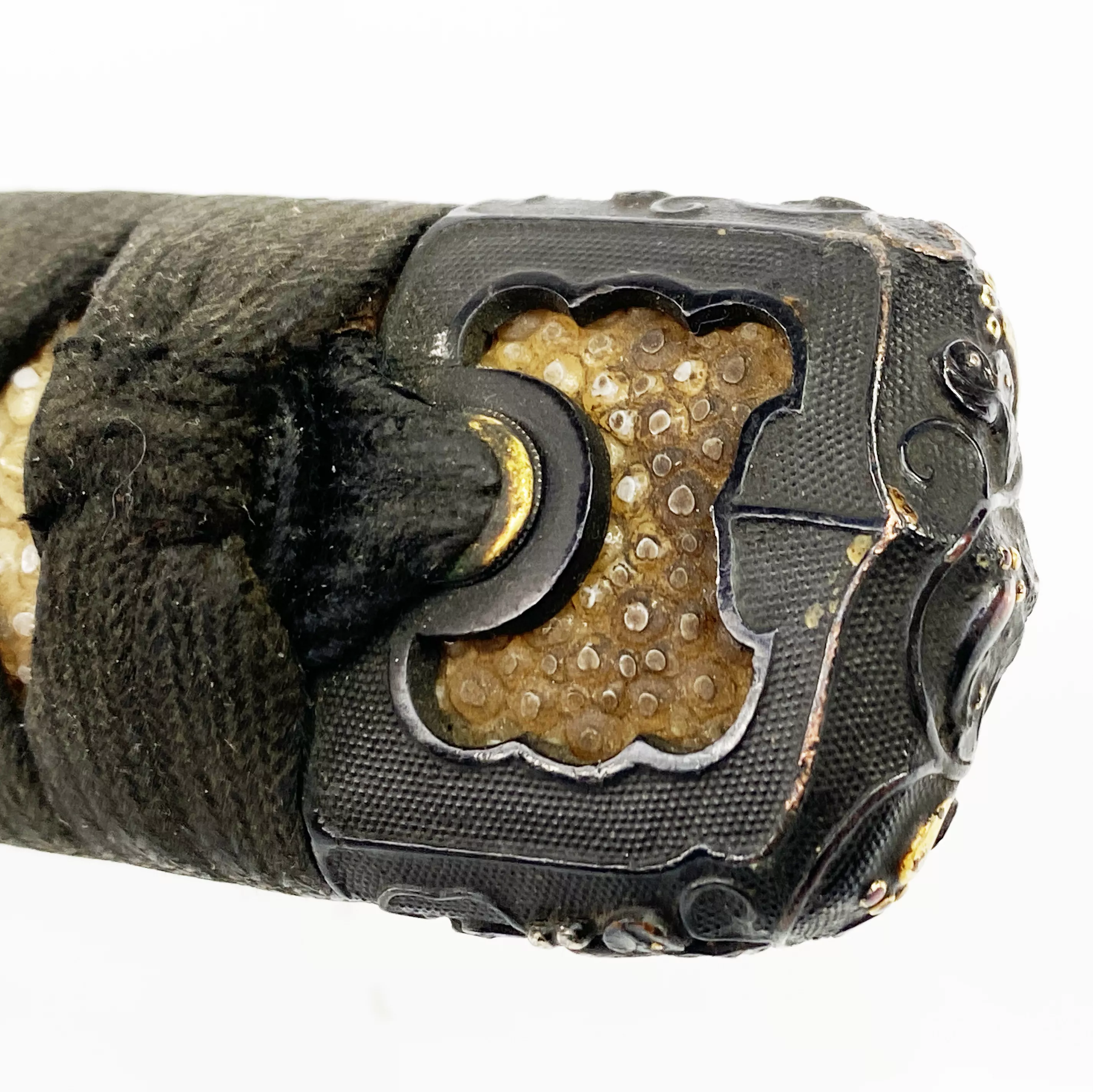
Useful information
Historic masterpieces are rarely marketed today, most being kept in museums or passed down through family heirlooms. The sale of some museum-quality katanas is prohibited by law due to their value.
However, antique samurai swords sold can fetch six-figure prices. In 1992, a 13th-century Nihonto sold for $418,000, the most valuable ever sold.
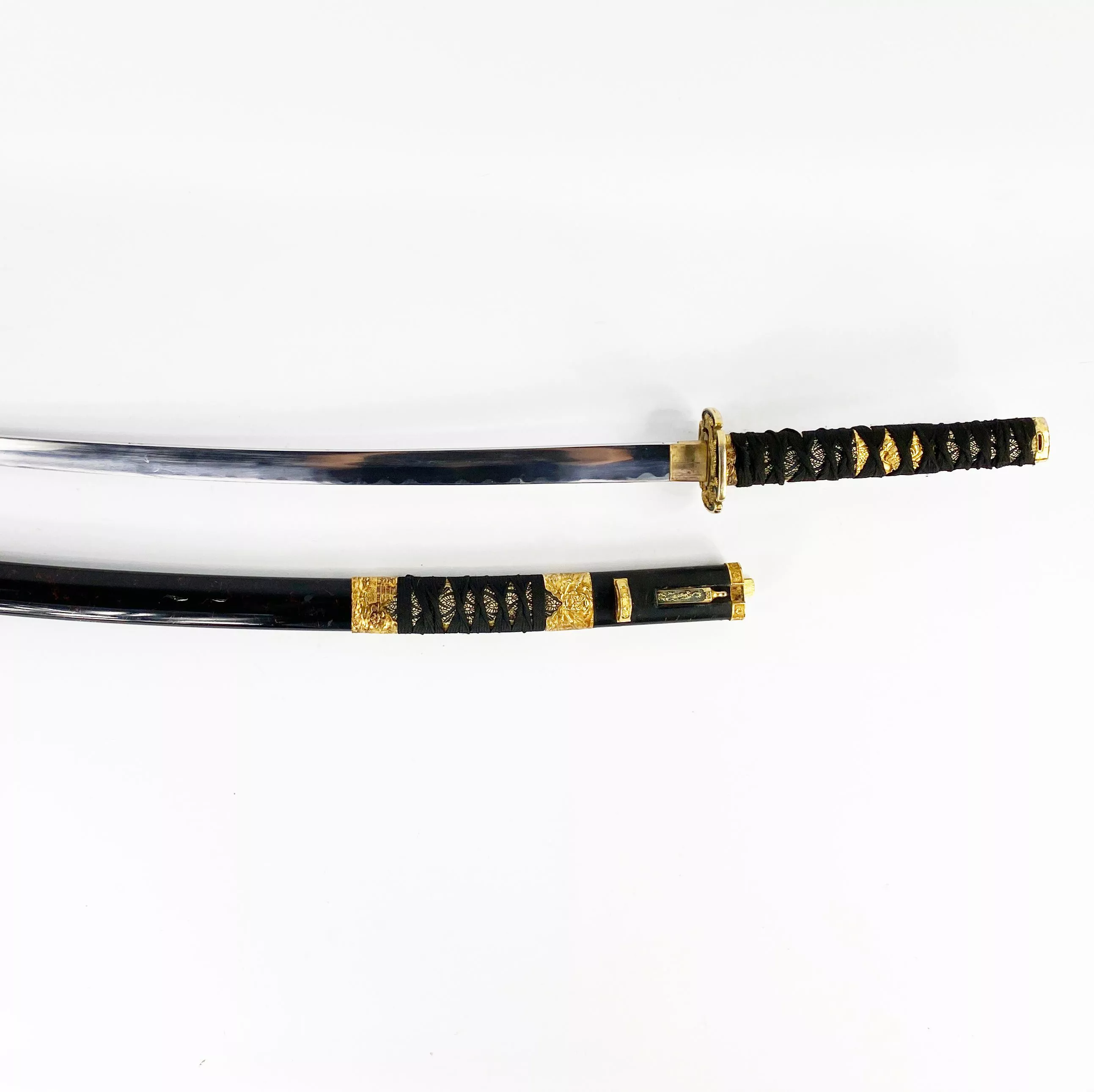
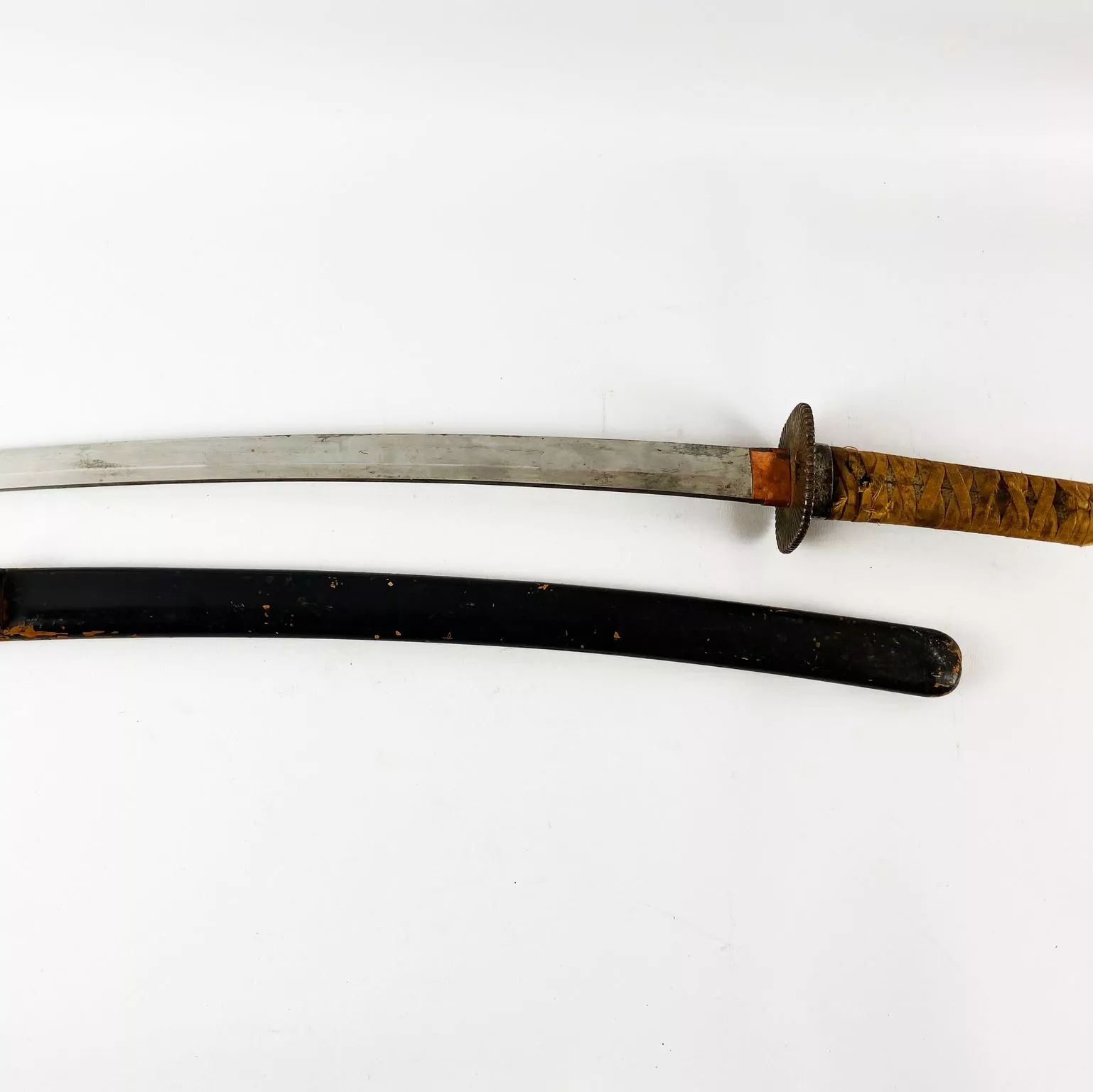
When buying a fully assembled katana, check the value of each element separately, as they may not match the quality or age of the blade. Individual elements can be acquired to reassemble a sword.
Estimate in less than 24h
Discover in the same theme

Rating and value of works, paintings by Thuong Lan Nguyen
Thuong Lan, a little-known Vietnamese artist, is nevertheless appreciated at auction. His works are very valuable. Estimated in less than 24h.
Learn more >

Market Value and Pricing of Coral Jewelry and Chinese Corals
Corals are precious collectors' items that can be highly valued at auction. 100% free and certified estimate!
Learn more >

Rating and value of drawings and paintings by Iwasa Matabei
Iwasa Matabei was a Japanese artist from the early Edo period who produced numerous works that are highly prized and valuable.
Learn more >
More Japanese swords at auction

Estimated 1.500 - 2.000 €
Gold Cross of the Order of Saint Stanislas, 2nd class.

Estimated 3.000 - 5.000 €
Japanese armor. Japan, Meiji era.

Estimated 1000 - 2000 €
NGUYEN TUONG LAN (1906-1947) - Ink and gouache painting on silk depicting a temple.

Estimated 500 - 1000 €
CHINA, Ming Dynasty, 17th century - Cast-iron statuette depicting a Taoist figure

Estimated 400 - 600 €
Katana, Unidentified signature.

Estimated 400 - 600 €
Katana. Unsigned (mumei).

Secure site, anonymity preserved

Auctioneer approved by the State

Free and certified estimates
Frequently asked questions
-
What is the difference between a katana and a wakizashi?The katana is a longer sword (60 to 75 cm) that served as the samurai’s primary weapon and symbolized their social status, whereas the wakizashi is shorter (30 to 60 cm) and was used as a secondary weapon for close combat and everyday tasks. Samurai often carried both swords together, forming a set called “daisho” that represented their power and rank.
-
What is the price range for a Japanese sword at auction?The prices of Japanese swords vary considerably depending on the model, condition, and historical period. A katana from World War II sells for between €300 and €8,000, while a katana from the Muromachi period can fetch between €1,000 and €45,000. Exceptional pieces signed by renowned master swordsmiths such as Masamune or Muramasa can exceed several hundred thousand euros.
-
How do you authenticate and appraise a Japanese sword?Auctie's offers a free, no-obligation appraisal of your saber. Our state-certified auctioneers and experts will examine the weapon to determine its period, model, condition, and current market value. You will receive an accurate estimate within 48 hours.
-
Is this a good time to sell a Japanese sword?Yes, Japanese swords are among the most sought-after military collectibles on the international auction market. Buyers from around the world are particularly interested in rare and authentic pieces, which creates a favorable opportunity for sellers to command top prices.
-
How do I sell a Japanese sword on Auctie's?Contact Auctie's for a free appraisal of your sword. If you decide to sell it, our experts will guide you toward the best possible approach to get the highest price. As a licensed auction house, we’ll support you every step of the way, from the initial appraisal through to the auction sale.
