



Ratings and values of paintings by Otto Wols

Key takeaways
- Otto Wols, a leading figure in lyrical abstraction and Informel art after 1945, has seen his market value rise steadily, with a 27% increase in 2025.
- Prices for his works vary widely between €5 and €4,244,100, with paintings commanding the highest valuations compared to prints and drawings.
- Auction record: “Vert Strié Noir Rouge” (1946–48) sold for €4,244,100 in 2019 at Sotheby’s, exceeding the initial estimate of €446,800 to €670,000.
If you own a work by the artist Otto Wols or based on his work and would like to know its value, our state-approved experts and auctioneers will guide you.
Our specialists will carry out a free appraisal of your work, and provide you with an accurate estimate of its value on the current market.
Then, should you wish to sell your work, we will direct you to the best possible arrangement to obtain the optimum price.
Artist's rating and value
Considered a major artist of lyrical abstraction, Wols exhibited widely during his lifetime. As a result, he already enjoys a certain notoriety and presence on the art market.
Today, his quotation continues to rise, with the artist establishing himself as a sure bet on the art market, the prices at which they sell ranging from €5 to €1,666,170 on the art market.
A work by Otto Wols can fetch millions of euros at auction, as demonstrated by his composition Vert Strié Noir Rouge, dating from 1946-48 sold for €4,244,100 in 2019, while it was estimated at between €446,800 and €670,000.
Order of value from the most basic to the most prestigious
Technique used | Result |
|---|---|
Estamp - multiple | From €10 to €21,500 |
Drawing - watercolor | From €150 to €182,000 |
Painting | From €4,200 to €4,244,100 |
Estimate in less than 24h
The artist's style and technique
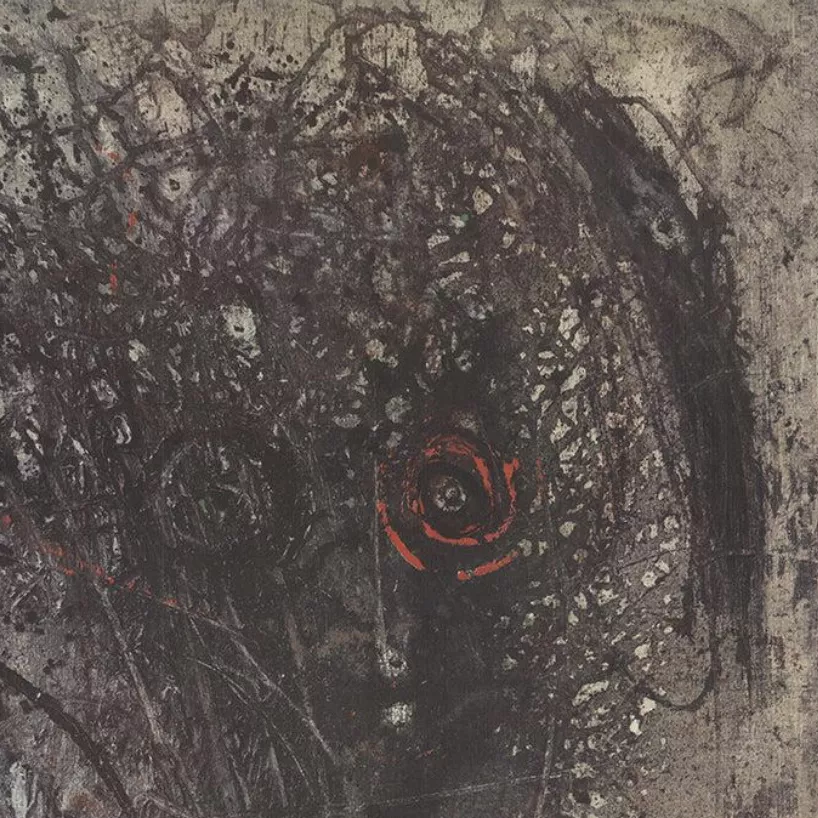
Otto Wols is a central figure of the lyrical abstraction (Mathieu, Debré) and informal art, in France after the Second World War. He is often associated with tachisme, a term formalized in the 1950s to describe gestural stains, drips and splashes in abstract painting.
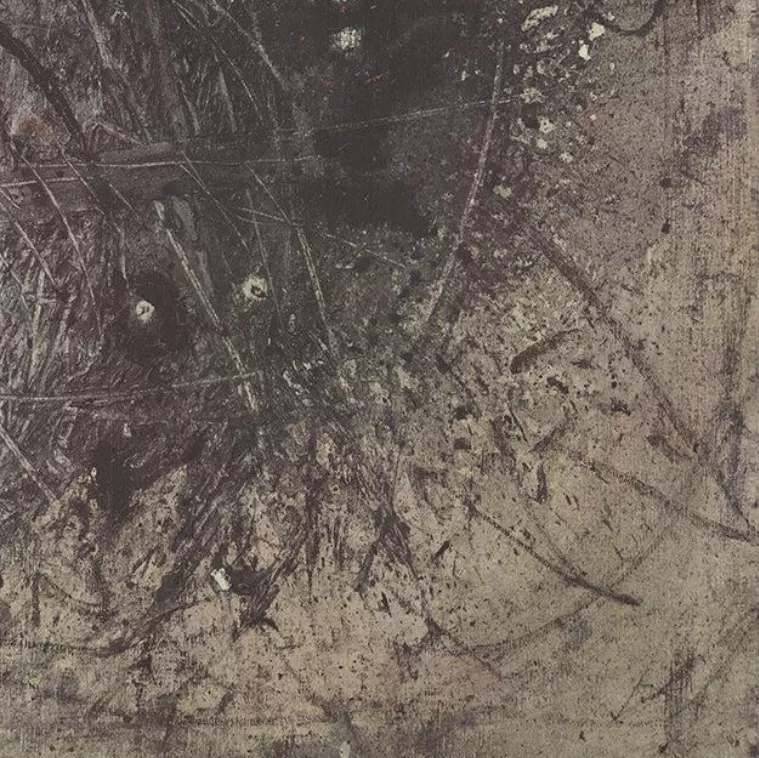
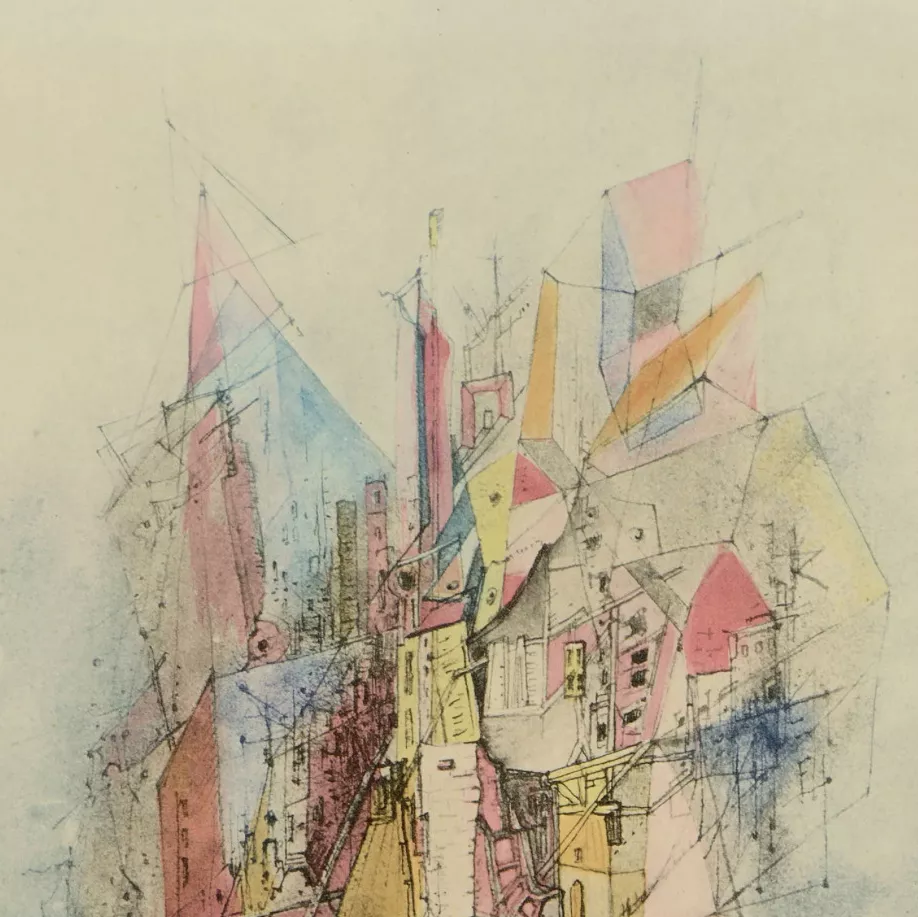
He inscribes his work in a poetic posture of matter, where plastic emotion is more important than rigid composition. He shows a predilection for fine lines, also named " fil de toile " or " fil d'araignée ", which are traced almost like inscriptions on the background. He uses translucent colors or glazes.
Hues are subdued, rather than using strong empty chromatic masses, reflecting a desire for sobriety. He frequently uses dripping, making use of controlled drips and stains, and sometimes scraping or incising into the paint layer.
He sometimes applies paint directly from the tube, with a spontaneous gesture of projection rather than a set-up. He also makes occasional use of impasto, and layers in some late canvases to give relief and density.
The composition is not centered on the figure but on the path of the gesture, the traces of the pictorial act and the imprint of the tool. He works on a variety of media, including canvas, paper, drawing and watercolor. He also uses overprinting, the multiple and visible repentance with successive layers and retractions.
He integrates controlled chance into his works, the gesture then gives way to the unpredictable element, but within a controlled poetic framework. The scale is often modest; his works are not spectacular large formats, but more intimate compositions where detail counts.
In later paintings, he evokes floral forms, emanations and abstract efflorescences, between explosion and organic.
The life of Otto Wols
Otto Wols (1913 - 1951) was an abstract painter born in Berlin. His father, Alfred Schulze (1878 - 1929), was a high-ranking civil servant involved in cultural institutions, which exposed Wols to artistic circles early on. In 1919, his family moved to Dresden, where he came into contact with the art world, notably Otto Dix.
He was also a musician, playing banjo and violin in his youth. In 1929, his father became seriously ill and died, a major personal trauma for the artist. In 1932, on the recommendation of the painter-experimenter Moholy-Nagy, he left Germany for Paris.
In France, where he had no papers or work permit, he survived through photography. The pseudonym " Wols " appears around 1937, stemming from a mistake in a telegram, it's a contraction of Wolfgang and Schulze). Between 1933 and 1935, he lived in Spain (Barcelona, Majorca, Ibiza), working as a cab driver, German teacher and guide.
He also refused German military service, which in practice made him stateless or a deserter in the eyes of certain countries. From September 1939, he was interned as a German national in several French camps (Colombes, Neuvy-sur-Barangeon, Montargis, Les Milles).
At the Les Milles camp, he produced surrealist drawings and watercolors. On October 29, 1940, he was released, and his marriage to Gréty played a decisive role. Between 1940 and 1942, he and Gréty retreated to Dieulefit (Drôme), and he continued to experiment with watercolors, oils and photographs, but suffered from alcoholism and poor health.
In 1945, he returned to Paris. He exhibited his watercolors at the René Drouin gallery, and received moral and material support from Jean-Paul Sartre. In 1947, he exhibited some forty canvases at the gallery, marking an artistic breakthrough in the Parisian milieu.
From 1948 to 1950, he took part in exhibitions in Paris, Milan and New York despite his health problems. In 1951, his condition deteriorated, and he suffered from lung inflammation, cirrhosis of the liver and jaundice. He was hospitalized and spent some time in rehab.
During the night of August 24-25, 1951, an ingestion of tainted meat caused him to have a seizure, and he died on September 1, 1951 in Paris. He is subsequently buried in Père-Lachaise.
Market segmentation and artist rating
Wols belongs to the post-war, informal art and lyrical abstraction segment. This is a niche market for specialized collectors, post-1945 galleries and modern art institutions.
Demand is concentrated on major works (canvases, large formats) rather than small works on paper. Relative scarcity (galleries, private sales) accentuates the strict selection of buyers, and the primary market (galleries, private sales) is very restricted for Wols, with the majority of transactions taking place via public auctions (secondary market).
Geographically, it is art market centers that play a major role, namely Paris, London and New York, in building the quotation of artists like Wols. 1457 public auctions were recorded for Wols. Prices ranged from 24 USD to 5,744,765 USD (record realized at Sotheby's London in 2019).
In recent 12-month averages, paintings are at 35,400 USD, and works on paper at 31,250 USD. In secondary auctions, watercolors and minor signatures are estimated at between $8,000 and $12,000, depending on the type of work on paper.

Although the average rating is moderate, the artist climbs to 1509 of the world ranking, achieving annual sales of €282,168. His quotation increased by +27% in 2025. 63.3% of lots were sold in the drawing - watercolor category. The presence of an extreme record (5.7 M USD) also shows high volatility and significant speculative potential.
Valuation factors for Wols will therefore be provenance, support (canvas or paper), condition, period of creation, and stylistic importance in the artist's career.
.
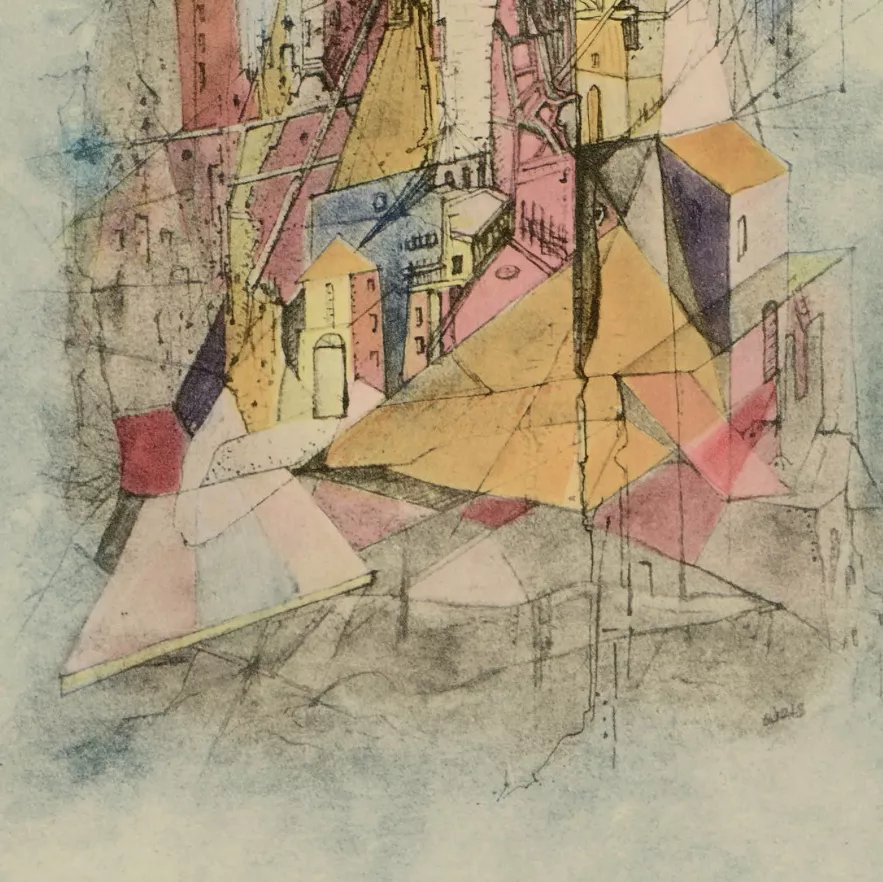
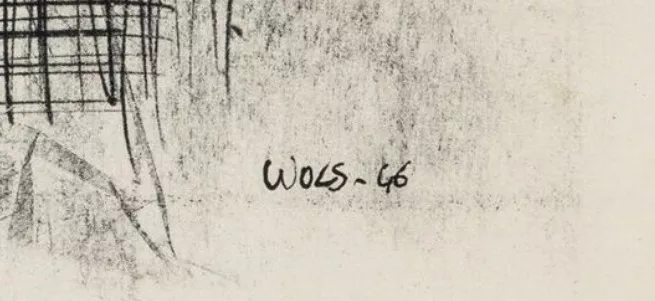
His signature
Although there are variations, here's a first example of his signature :
Expertise your property
If you own a work by Otto Wols, don't hesitate to request a free appraisal by filling in our online form.
A member of our team of experts and licensed auctioneers will contact you to provide an estimate of the market value of your work.
If you are considering selling your work, our specialists will also guide you through the various alternatives available to obtain the best possible price, taking into account market trends and the specific features of each work.
Estimate in less than 24h
Discover in the same theme

Rating and value of Nicolas de Staël's drawings, lithographs...
Nicolas de Staël is a Franco-Russian painter who has produced works including drawings and prints that are highly prized and sought-after at auction.
Learn more >

Rating and value of paintings by Lee Ufan
Lee Ufan is a contemporary South Korean artist who has produced works of considerable value at auction.
Learn more >

Rating and value of paintings by Georges Ribemont-Dessaignes
Georges Ribemont-Dessaignes is an artist who has produced many works that are highly valued at auction. 24h estimate.
Learn more >
D'autres tableaux abstraits vendus aux enchères

Estimated 2.000 - 4.000
Serge POLIAKOFF (1900-1969), Composition en rouge et bleu. 1965, Lithograph

Estimated Between €5,000 and €8,000
Jean MIOTTE (1926-2016), acrylic on canvas

Estimated 3.000 - 5.000
Roberto MATTA (1911-2002), Composition, Gouache on canvas

Secure site, anonymity preserved

Auctioneer approved by the State

Free and certified estimates
Frequently asked questions
-
Who was Otto Wols, and what is his significance in modern art?Otto Wols (1913–1951) was a central figure in lyrical abstraction and postwar French Informel art. A Berlin-born abstract painter who fled Nazi Germany, he settled in Paris in 1932 and became a leading figure in the Tachist movement. Although he died prematurely at the age of 38, his influence on European abstraction remains profound, and his market value has continued to rise ever since.
-
What are the prices and price ranges for Otto Wols' works?Prices for Otto Wols’s works vary considerably depending on the medium: prints range from €10 to €21,500, drawings and watercolors from €150 to €182,000, and paintings from €4,200 to over €4 million. His world record stands at $5.7 million (achieved at Sotheby’s London in 2019 for the composition “Vert Strié Noir Rouge”). On a 12-month average, his paintings are valued at approximately $35,400.
-
How can I have a work by Otto Wols authenticated and appraised?Auctie's offers a free, no-obligation appraisal of your artwork. Simply fill out our online form, and a state-certified expert or auctioneer will contact you to provide an accurate estimate of your item’s market value. We examine, among other things, the provenance, medium, condition, period of creation, and stylistic significance of the artwork.
-
Is this a good time to sell a work by Otto Wols?Yes, now is a good time to sell a work by Otto Wols. The artist’s market value has risen by 27% in 2025, and he has established himself as a safe bet in the art market. International demand remains strong, particularly in major art hubs (Paris, London, New York), and the secondary market for public auctions offers excellent visibility for this type of artwork.
-
How does the sale of a work of art work at Auctie's?Auctie's supports you from start to finish: after a free and confidential appraisal of your artwork, our specialists will guide you toward the best sales strategy, taking into account market trends and the unique characteristics of your piece. We then organize the public auction as a licensed auction house, thereby maximizing your final sale price.
