



Rating and value of works, sculptures and furniture by Lucien Burquier

Key takeaways
- Sculptures by Lucien Burquier, a French sculptor born in 1943, sell for between €200 and €1,500 at auction.
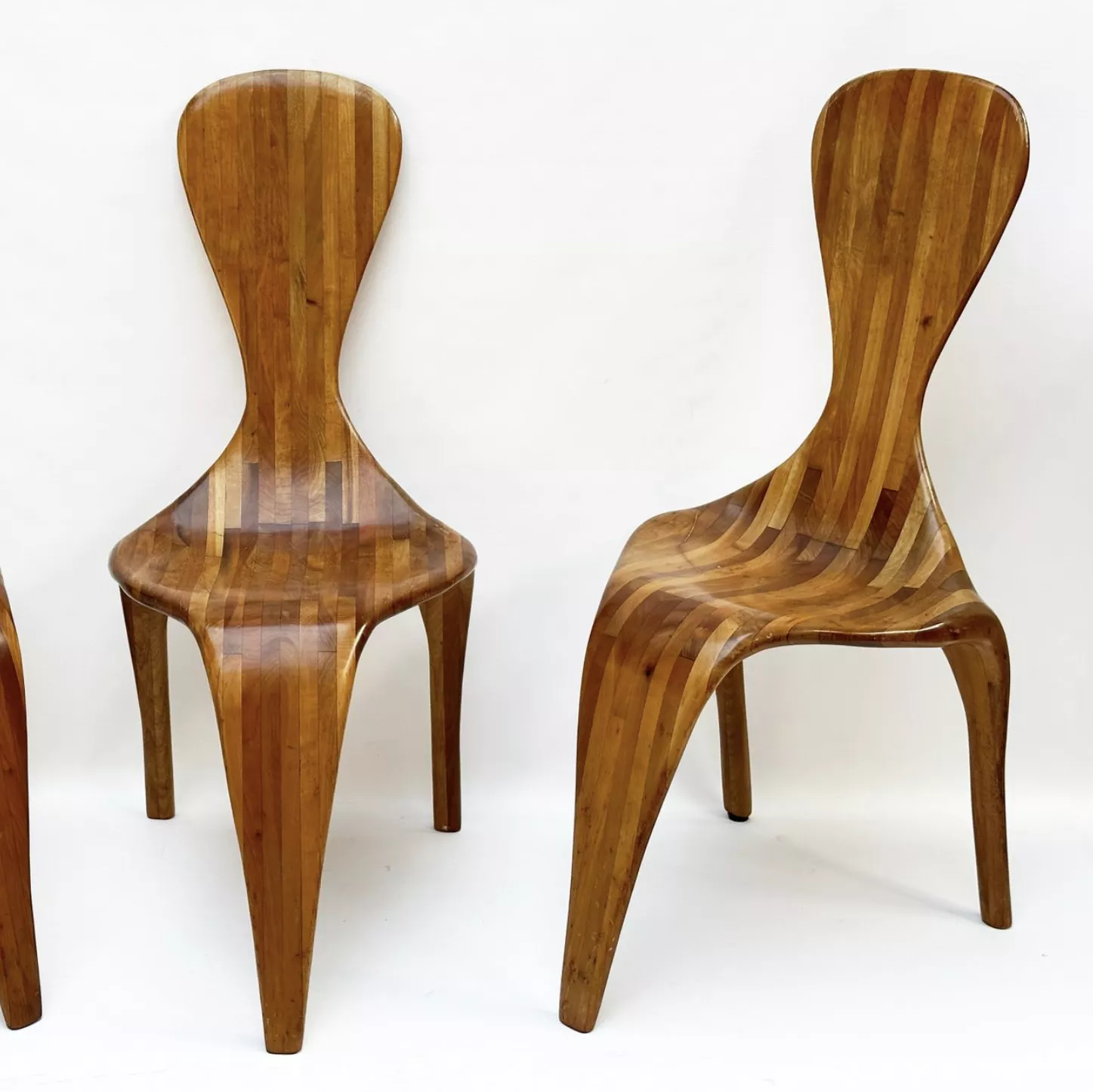
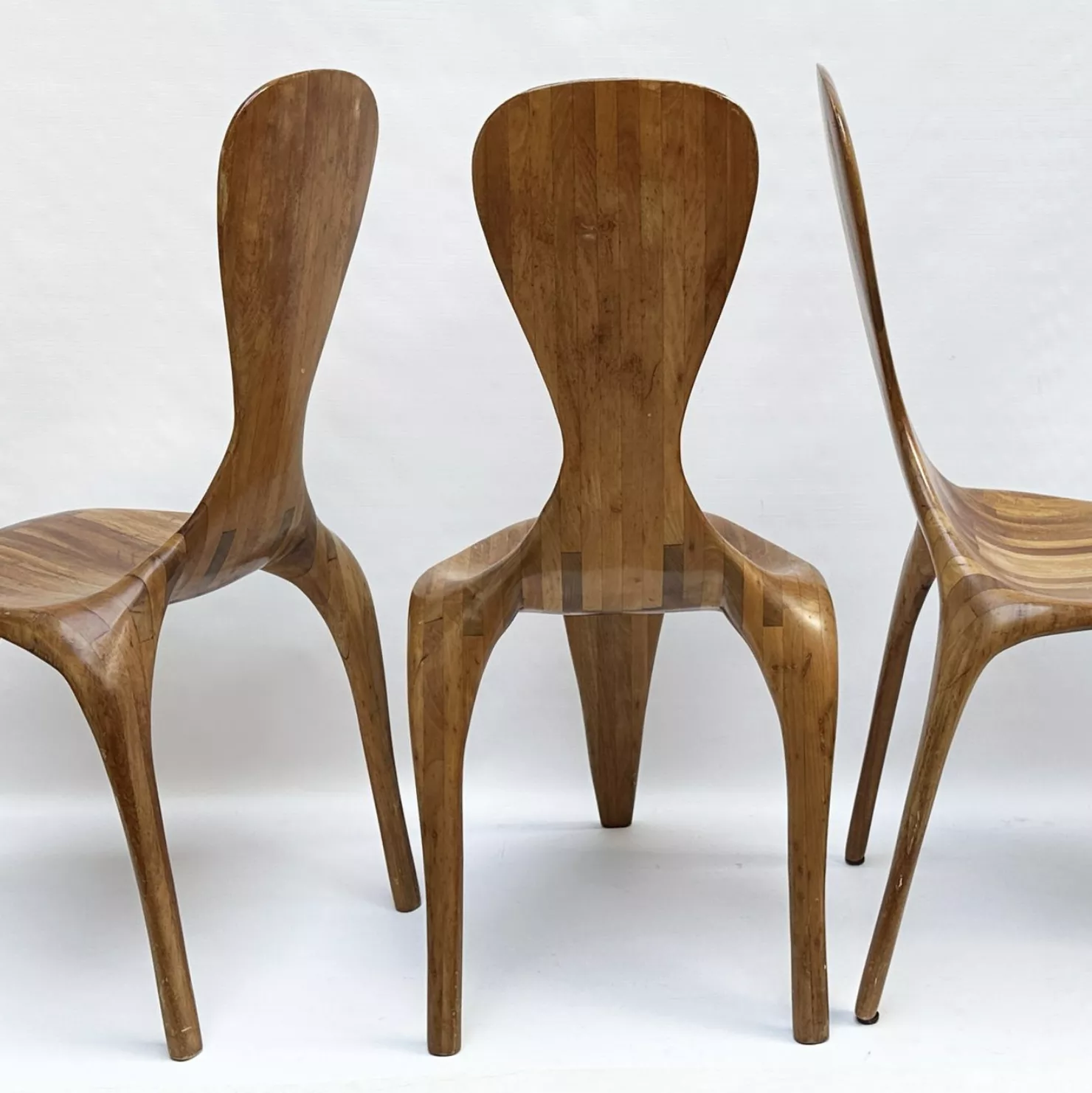
- His furniture, particularly carved wooden chairs, fetches prices ranging from €300 to €1,500, such as the set of six chairs that sold for €1,500 in 2024.
- His style, characterized by organic forms, a lack of excessive ornamentation, and a mastery of wood textures, ranks him among France’s leading contemporary sculptors.
If you own a work of art by or after Lucien Burquier, known as Polyte Solet, and would like to know its value, our state-approved experts and auctioneers will offer you their appraisal services.
Our specialists will carry out a free appraisal of your work, and provide you with an accurate estimate of its value on the current market.
Then, should you wish to sell your work, we will direct you to the best possible arrangement to obtain the optimum price.
Rating and value of Lucien Burquier's works
Lucien Burquier produced unique sculptures and furniture. Now, prices for these creations can rise considerably under the auctioneer's hammer. His sculptures are particularly prized, by buyers from all over the world.
The price at which they sell on the art market ranges from €200 to €1,500, at the moment, a substantial gap but one that says a lot about the value that can be attributed to Lucien Burquier's works.
In 2024, a suite of six wooden chairs,dating from 2001 sold for €1,500, originally estimated between €1,500 and €3,000.
Order of value from the most basic to the most prestigious
Technique used | Result |
|---|---|
Sculpture - volume | From €200 to €800 |
Furniture | From €300 to €1,500 |
Estimate in less than 24h
Style and technique of artist Lucien Burquier
Lucien Burquier's style is distinguished by an innovative approach and a relentless pursuit of fluidity.
From the outset, he chose to explore organic forms and motifs inspired by nature, fusing tradition with contemporary elements.
His artistic vision drives him to create works that invite contemplation, while moving away from the rigidity of classical forms.
Burquier favors diverse materials, particularly ceramics, which he manipulates with great mastery to reveal their intrinsic beauty. He sculpts with care, each piece the fruit of a dialogue between the material and the artist.
His work highlights textures and nuances, giving his works a tactile, sensory dimension.
Contrary to many artists of his time, Burquier avoids ornamental overload, opting for compositions where harmony is essential.
Every line is thought through, every curve becomes an invitation to explore the interactions between forms and space. The artist thus questions the relationship between the object and its environment, creating a subtle balance between full and empty.
This reflection on space is at the heart of his creative process, which he carries out with patience and deep curiosity.
Burquier observes, experiments and hones his techniques to create works that exude an understated elegance, yet rich in emotion.
Each sculpture tells a story, where apparent simplicity hides a complexity of feeling, testifying to a deep artistic commitment.
The career of Lucien Burquier
Lucien Burquier, known as Polyte Solet, is a contemporary sculptor who works mainly in wood. His sculptures, often sold on the auction market, are characterized by their warmth and expressiveness.
He has also created a number of monumental works for public commissions.
Lucien Burquier, born in 1943 in Vienne, is a French sculptor who is establishing himself as a major figure in contemporary art in France.
From the very beginning, Burquier demonstrated a style that was both bold and refined, influenced by his personal experiences and reflections on nature.
His artistic journey began in earnest when he entered the École des Beaux-Arts in Lyon, where he was trained by masters of traditional sculpture - a teaching that did not translate directly into his works, but remained essential to his development.
However, it was his experience working with renowned artists that marked a decisive turning point. Under their influence, Burquier developed a fascination for organic textures and forms, elements that would become the hallmark of his creations.
After several years of apprenticeship, Burquier opened his own workshop, a space where he gave free rein to his creativity.
He soon moved away from academic canons to explore a more personal style, playing with material to create sculptures of great elegance, yet astonishing expressive power.
In particular, wood, his material of choice, enables him to create works that are both solid and light, in a constant search for harmony between man and nature.
In 1980, he exhibited at the Salon d'Automne, where his work was hailed for its originality. From then on, Burquier began to explore more abstract compositions, while retaining an intimate link with the human figure.
His sculptures, though stylized, continue to reflect a great sensitivity to lines and light.
It is over the decades that he affirms his singular style, characterized by a formal simplicity that takes nothing away from the emotional depth of his works.
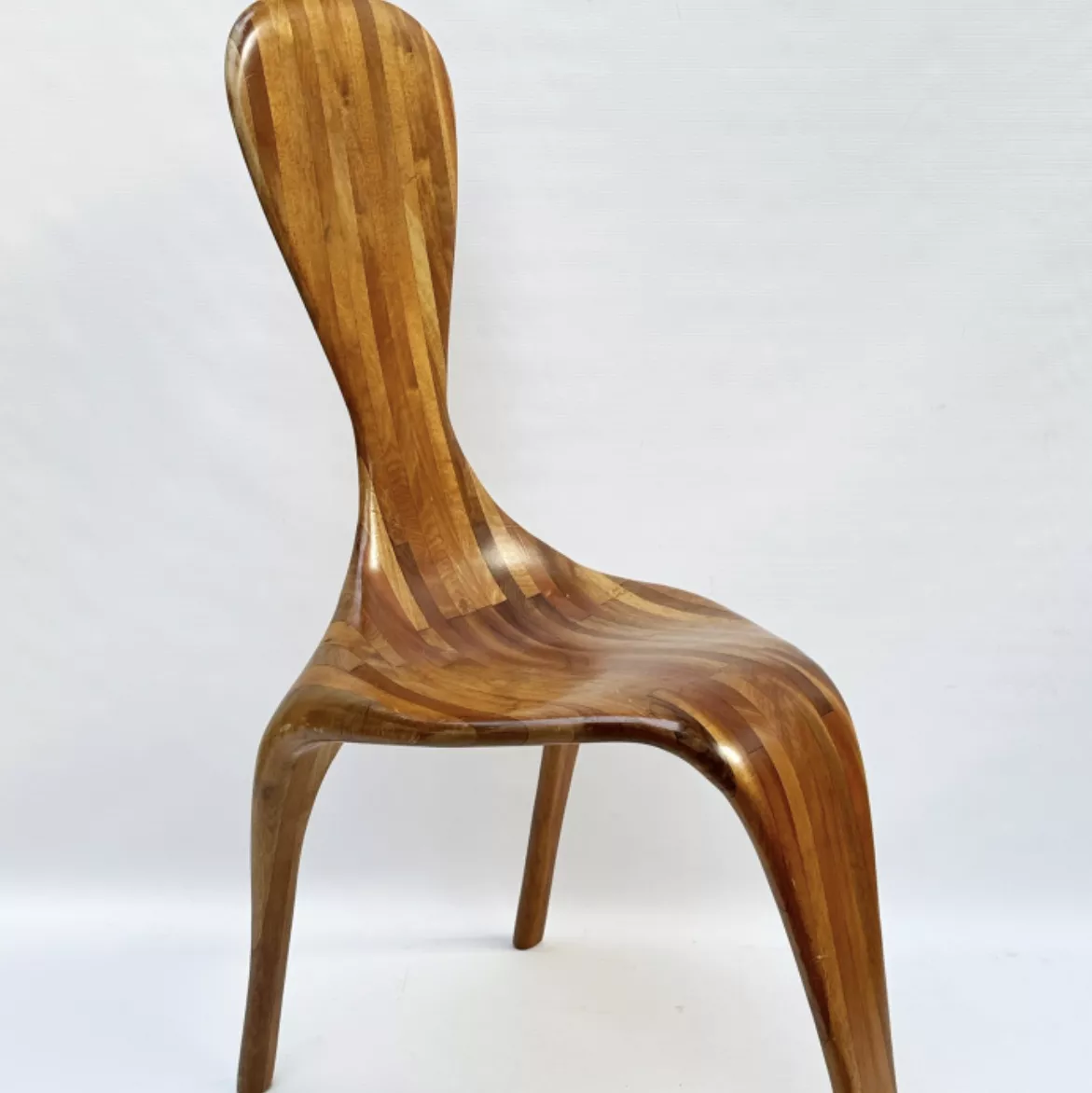
Focus on Lucien Burquier's wooden pelican
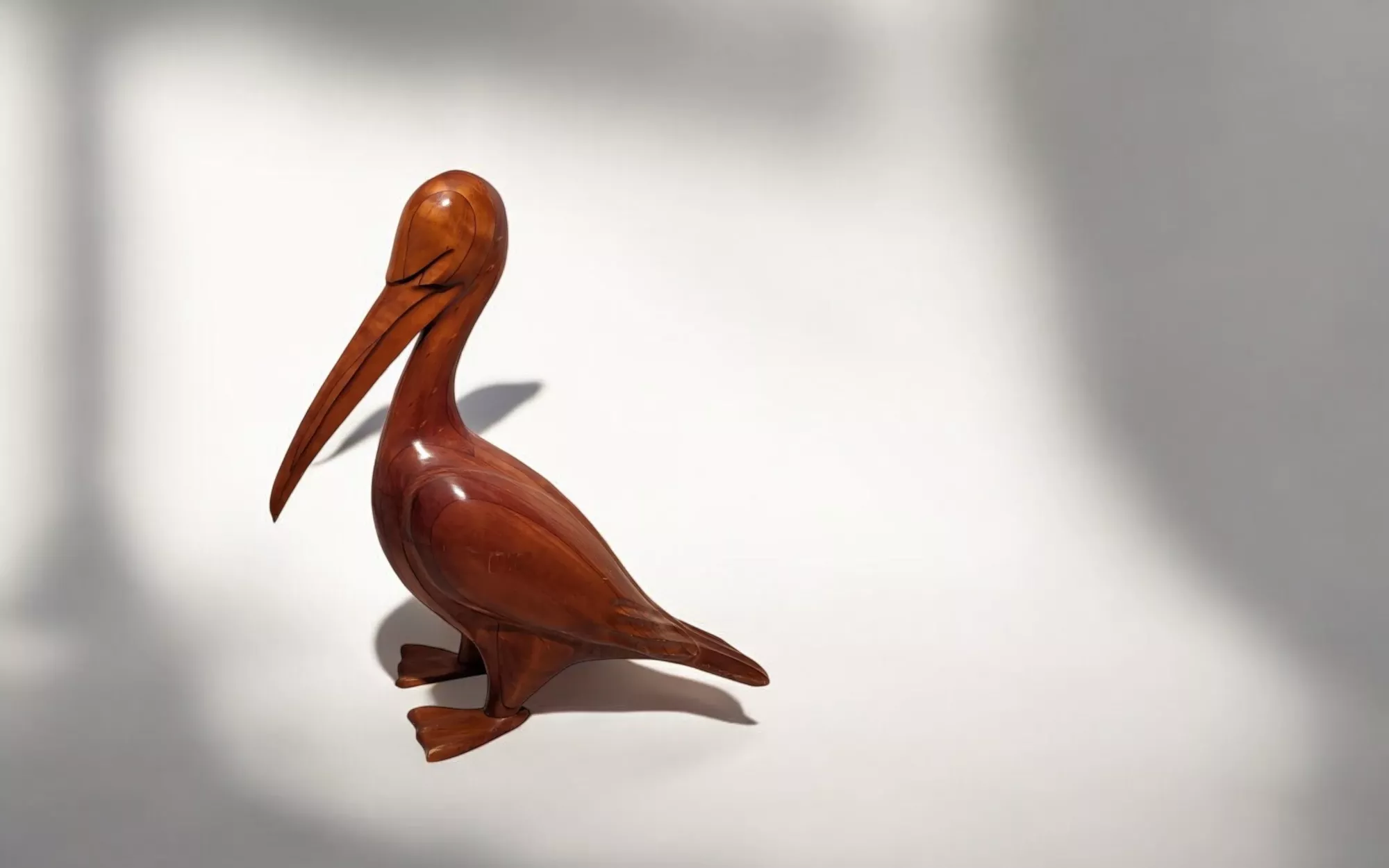
Lucien Burquier's sculpture seen here testifies to his mastery of textures and his ability to infuse palpable emotion into the warmth of wood.
At first glance, this figure, standing in a welcoming posture, seems deeply in harmony with the space around it. However, beyond this serene appearance, Burquier succeeds in capturing a moment of human connection.
The body, though stylized, is imbued with a vitality that manifests itself in the figure's open posture.
True to his style, Burquier chooses organic lines, avoiding any overload of detail. The shapes are soft and the contours rounded, giving this figure an impression of natural elegance.
This economy of means is not a choice for ease, but rather a quest for authenticity: the figure is not limited to representing a human body, it transcends mere materiality to evoke a warm presence.
The material, in this case probably wood, reinforces this impression of life. Burquier plays with the nuances and texture of the material to create plays of light and shadow, suggesting her subject's inner world, a universe of shared feelings.
This rich, tactile surface encourages the observer to linger, to explore the subtleties that emerge from this apparent simplicity.
The delicately carved face expresses a touching interiority. Unlike other artists who might have sought a more explicit expression, Burquier leaves his character in a kind of abstraction, where one can read introspection as much as empathy.
This choice lends the sculpture a universality, with each viewer projecting his or her own emotions onto it.
Thus, this work perfectly embodies Lucien Burquier's approach, which, far from excess, achieves a rare depth by focusing on the essence of form and human connection.
It illustrates his talent for transforming a familiar scene into a timeless reflection, where simplicity becomes synonymous with warmth and humanity.
The legacy of Lucien Burquier
The success of Lucien Burquier's sculptures was evident from his very first exhibitions. His works, characterized by rich textures and organic forms, quickly attracted the attention of a discerning public.
Over the years, Burquier perfected his approach while remaining true to his warm, expressive aesthetic.
Each new piece bears witness to this quest for authenticity, without ever straying from his trademark technique. His sculptures, both robust and light, captivate with their elegance and mastery of volume.
His work follows in the artistic vein of other equally renowned sculptors, such as Armand Petersen, Gaston Le Bourgeois or Charlotte Perriand.
Lucien Burquier is, however, an even more versatile artist, who does not limit himself solely to the creation of art sculptures.
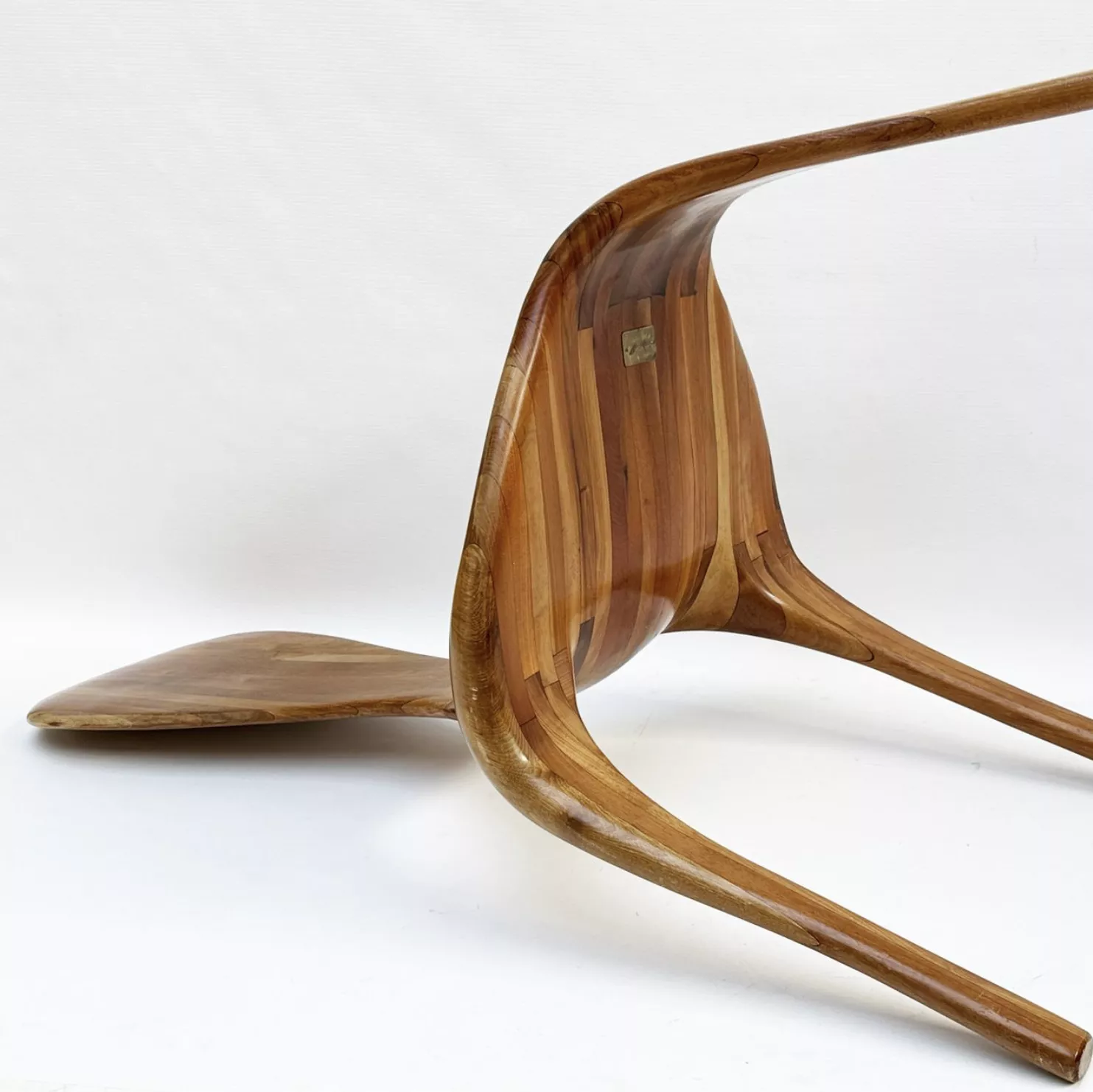
Some of his works are also designed with a utilitarian vocation. This is the case for numerous creations, including lighting fixtures and furniture: in particular, he produced carved wooden chairs, combining comfort and aesthetics.
Today, Burquier is recognized as one of the most important contemporary sculptors of his time. His works are particularly prized by collectors, and although few are put up for auction, they fetch high prices when they appear on the market.
His unique style, combined with great finesse of execution, ensures Lucien Burquier a place of choice in the world of modern art.
Recognizing Lucien Burquier's signature
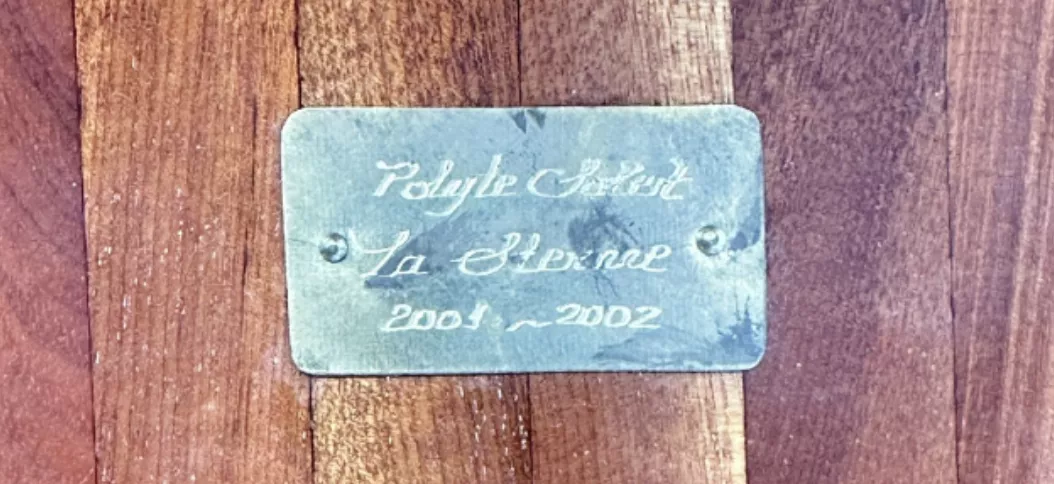
Lucien Burquier doesn't always sign his works. If you think you own one, it's best to have it appraised.
Expertise your property
If you own a work by Lucien Burquier, don't hesitate to request a free appraisal by filling in our online form.
A member of our team of experts and certified auctioneers will contact you to provide an estimate of the market value of your work.
If you are considering selling your work, our specialists will also guide you through the various alternatives available to obtain the best possible price, taking into account market trends and the specific features of each work.
Estimate in less than 24h
Discover in the same theme

Value and quotation of works, ceramics by Roger Capron
Post-war designer Roger Capron leaves behind a singular body of work that is still very valuable. Estimate in less than 24h.
Learn more >

Rating and value of works, drawings, sculptures by Auguste T...
Auguste Trémont was a twentieth-century animal sculptor who produced mainly bronzes, but also marbles and drawings listed at auction.
Learn more >

Rating and value of paintings by Hippolyte Petitjean
Hippolyte Petitjean is a twentieth-century pointillist painter who produced numerous works of high value.
Learn more >
Works from the same period sold at auction

Estimated 15.000 - 20.000 €
Charlotte PERRIAND (1903-1999) - Suite of 6 "berger" stools.

Estimated Between €2,000 and €4,000
Edouard Marcel SANDOZ (1881-1971) curly stingray, bronze print

Estimated 1.000 - 2.000
Georges Lucien GUYOT (1885-1972), Black bear walking, Charcoal on paper

Estimated 1.500 - 3.000
Lucien BURQUIER (1943) known as POLYTE SOLET Suite of six chairs, circa 2001

Estimated 2.000 - 3.000
Pierre CHAPO (1927-1987) Pair of chairs, circa 1975, known as S34A in elm.

Secure site, anonymity preserved

Auctioneer approved by the State

Free and certified estimates
Frequently asked questions
-
Who is Lucien Burquier, and what is his artistic style?Lucien Burquier, known as Polyte Solet, is a French sculptor born in 1943 in Vienne, recognized as a major figure in contemporary art. His style is characterized by organic forms inspired by nature, a pursuit of fluidity and harmony between solid and void, and a preference for wood as his primary material. He favors formal simplicity and avoids excessive ornamentation, creating works imbued with great sensitivity and expressiveness.
-
What is the price range for Lucien Burquier's works on the market?The prices of Lucien Burquier’s sculptures and furniture currently range from €200 to €1,500. Three-dimensional sculptures generally sell for between €200 and €800, while furniture (particularly carved wooden chairs) fetches prices ranging from €300 to €1,500. This variation depends on the technique, size, and provenance of the work.
-
How can you authenticate a work by Lucien Burquier?Lucien Burquier does not always sign his works, which makes authentication essential. We recommend that you request a free appraisal from Auctie's by filling out our online form. A state-certified expert or auctioneer will examine your artwork and provide you with an accurate estimate within 48 hours, with no obligation.
-
Is this a good time to sell a work by Lucien Burquier?Yes, now is a good time to sell. Lucien Burquier’s sculptures are currently highly sought after by collectors around the world, and prices reach high levels whenever his works appear on the market. His unique style and exquisite craftsmanship ensure steady demand, particularly for his carved wooden pieces.
-
How does the appraisal and sale of a work of art take place at Auctie's?The appraisal is completely free and non-binding: fill out our online form, and an expert will contact you for an initial evaluation of your artwork. If you’re interested in selling, our auctioneers will guide you through the entire process—from advising you on the best sales strategy to the auction itself—taking market trends into account to secure the best possible price.
