



Rating and value of works, drawings, paintings by Louis Icart

Key takeaways
- Louis Icart (1888–1950), a French Art Deco painter, has works valued between €10 and €77,750, depending on the technique and the artist’s reputation.
- His paintings command the highest valuations, reaching up to €77,750, while his watercolors range from €72 to €19,000.
- His style blends Rococo and Art Deco with Baroque ornamentation and pastel color palettes, influenced by Watteau and Fragonard.
If you own a work by or after the artist Louis Icart, and would like to know its value, our state-approved experts and auctioneers will offer you their appraisal services. Our specialists will carry out a free appraisal of your work, and provide you with a precise estimate of its current market value. Thereafter, if you wish to sell your work, we will guide you towards the best possible arrangement to obtain the optimum price.
Rating and value of the artist Louis Icart
A part of the art deco movement, Louis Icart is a French painter, engraver and sculptor. A prolific artist, he is now relatively well quoted on the art market, with his works selling for the least prestigious at €10, soaring exponentially to €77 749, a substantial gap but one that speaks volumes about the value that can be attributed to the artist's works. In 2022, a painting entitled Sur le banc, depicting a seated woman with an umbrella sold for €6 500.
Order of value from a simple work to the most prestigious
Technique used | Result |
|---|---|
Sculpture - volume | From 10 to 1 990€ |
Drawing - watercolor | From 72 to 19 000€ |
Estamp - multiple | From 10 to 27 340€ |
Painting | From 80 to 77 750€ |
Estimate in less than 24h
The artist's style and technique
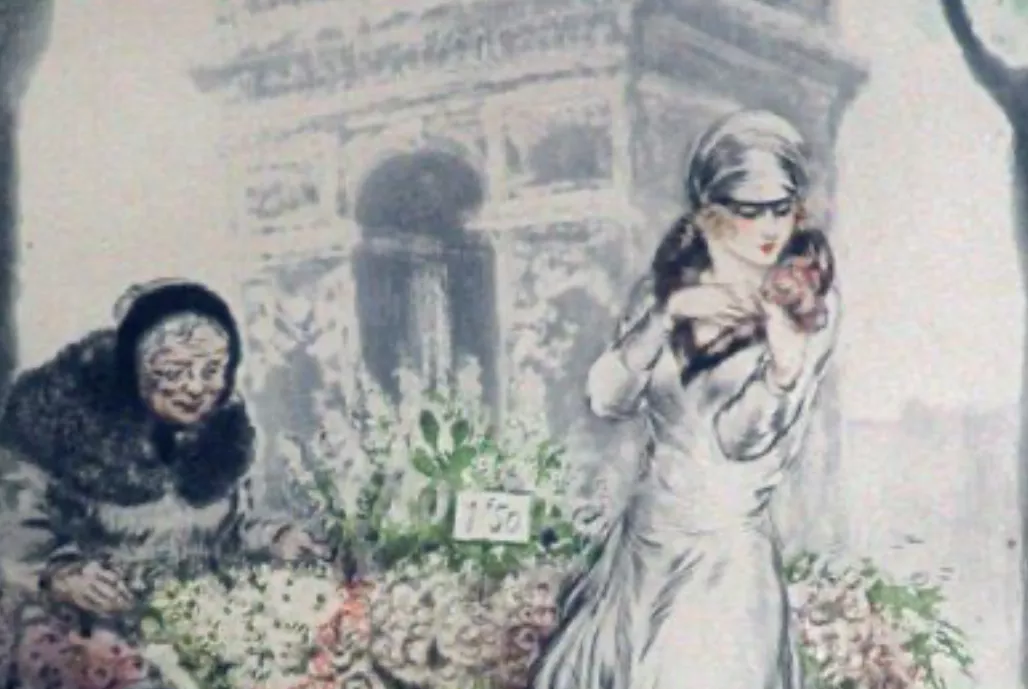
Inspired by the great painters who marked the Rococo movement in France, such as Fragonard, Watteau and Boucher, Louis Icart (1888-1950) placed particular emphasis on the ornamentation of his works, giving them a Baroque bent. His work is often considered fickle, antinomian or even provocative. However, he was able to disregard the characteristics of the frivolous painters of the 18th century and develop his own style. He combines rococo with art deco, defined by Cartesian geometry, colors that oscillate between pastel and virulent hues, giving rise to a luminous, dynamic and meticulous art.
.
Louis Icart's life
Discovering his nephew's passion and talent for drawing, Louis Icart's aunt encouraged him to move from his native Toulouse to Paris. She was particularly renowned as a milliner during the Belle Époque, running the Maison Valmont. He thus immersed himself in the world of haute couture illustration. The periodical " La Critique Théâtrale " hired him to illustrate its pages, and he also put his talent to work for the haute couture houses, drawing for their catalogs. While he had previously taken up engraving, he was encouraged to exhibit some of his work at the Salon des Humoristes, where his portraits of glamorous, erotic women enthralled the public.
Young, energetic and unconditionally imaginative, Louis Icart captured the Parisian art world of the 1920s and 1930s, which experienced a telluric tremor under the weight of Cocteau, Josephine Baker, Poiret and Erté, to name but a few. From Watteau's art, Icart retains lush interiors, animated expressions, the importance of form even more than substance, and female characters often drawn from mythology. Icart was also influenced by the work of the Venetian painter Veronese in Baroque decoration. Ultimately, he learned from the Impressionists and readily considered himself an " impressionist painter ", paying homage to those who cradled his childhood such as Degas and Monet.
Louis Icart's watercolors remain his rarest works, devoting himself essentially to oil painting and favoring watercolors for sketches. Paradoxically, however, it is in this field that his potential is most tangible. Icart's watercolors are fragments of dreams, and he notably illustrates with this medium the imaginary world of Baudelaire's poems, in this case, Les fleurs du mal.
Louis Icart's imprint on his period
At the age of twenty-four, Louis Icart had the privilege of seeing his work exhibited in an exhibition dedicated to him in Paris, then a year later in Brussels. Louis Icart exhibited at the Galerie Simonson in Paris from 1920 onwards, before moving to the United States, where he presented works in a typically Art Deco style at the Galerie Belmaison in New York. The prints he exhibited enjoyed brief success in North America until 1932. His repertoire includes over five hundred engravings, as well as collaborations with various artists to illustrate books with explicitly erotic images. In 1940, sensitive to the plight of many of his fellow creatures, he began a series of engravings he called " l'exode ". Despite his success over the previous two decades, Louis Icart fell into oblivion and was ousted from the art scene. Nevertheless, some of his paintings were discovered in the 1970s, hidden in the attic of an art school, and restored his reputation. Today, his work is once again arousing great interest.
Recognizing the artist's signature
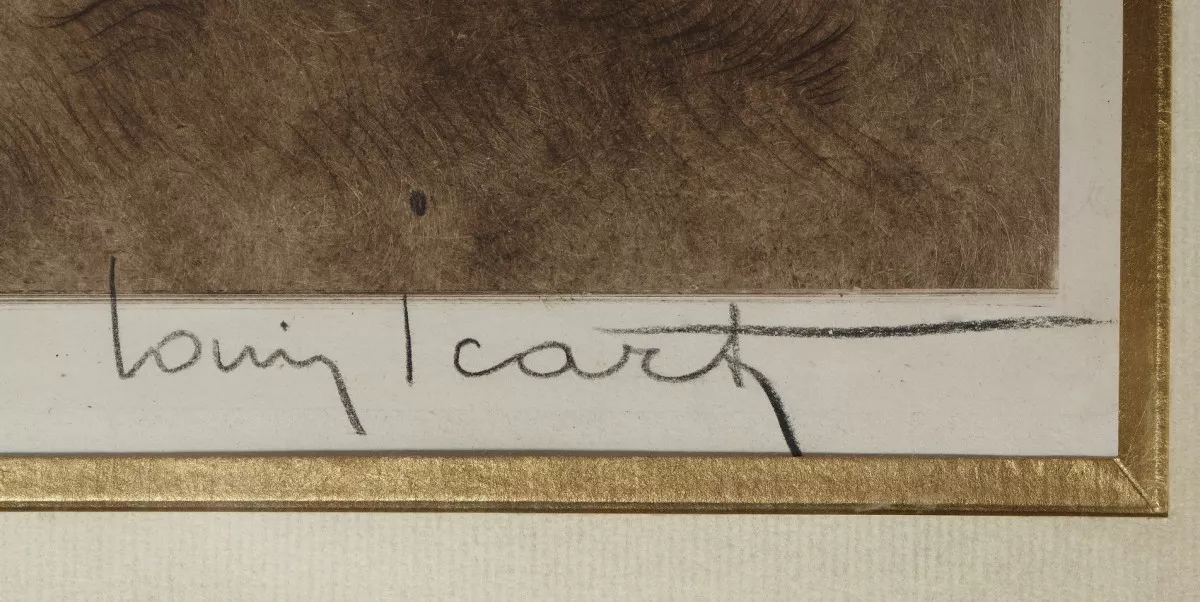
Louis Icart signs his works with his full name in cursive, graphic script with a lively, assertive pencil stroke.
Knowing the value of a work
If you happen to own a Louis Icart work, request a free appraisal without delay via our form on our website. A member of our team of experts and chartered auctioneers will contact you promptly to provide you with an estimate of the value of your work, as well as any relevant information about it. If you are considering selling your work of art, our specialists will also work with you to provide you with alternatives for selling it at the best possible price.
Estimate in less than 24h
Discover in the same theme

Value and quotation of works, paintings by Eugène Leroy
Eugène Leroy, a 20th-century painter, produced a singular body of work appreciated and quoted on the auction market. Estimated in less than 24h.
Learn more >

Rating and value of works, drawings, paintings by Bernard Bu...
Bernard Buffet is a 20th-century painter whose drawings and paintings are highly prized and sought-after on the auction market.
Learn more >

Rating and value of bronzes, sculptures and drawings by Anne...
Anne-Marie Profillet mainly produced animal sculptures, which today have a fairly high auction value.
Learn more >
Works from the same period sold at auction

Estimated 15.000 - 20.000 €
Jacques MAJORELLE (1886-1962) - Fishermen embarking, Abidjan, Ivory Coast - Oil on canvas.

Estimated 10.000 - 15.000 €
Ebridge Ayer BURBANK(1858-1949), Young African-American boy, Oil on panel.

Estimated 3.000 - 5.000 €
Henri EPSTEIN (1892-1944), Place du sud de la France, Oil on canvas.

Estimated 4.000 - 6.000 €
GASTON CHAISSAC (1910-1964) Composition 1947, Gouache and Indian ink on paper.

Secure site, anonymity preserved

Auctioneer approved by the State

Free and certified estimates
Frequently asked questions
-
Who is Louis Icart, and what is his historical context?Louis Icart (1888–1950) was a French painter, printmaker, and sculptor associated with the Art Deco movement. Active in Paris during the 1920s and 1930s, he fused French Rococo aesthetics (inspired by Watteau and Fragonard) with the geometry of Art Deco, creating a luminous and meticulous style. Although he enjoyed great success in Europe and North America before 1932, he fell into obscurity until his rediscovery in the 1970s, at which point his work once again sparked keen interest.
-
What types of works did Louis Icart create, and what are their market values?Louis Icart created paintings, drawings, prints, sculptures, and watercolors. Market values vary considerably: sculptures are valued between €10 and €1,990, watercolors between €72 and €19,000, prints between €10 and €27,340, and paintings between €80 and €77,750. Paradoxically, his watercolors remain his rarest works and offer the most tangible potential on the current market.
-
How can you authenticate a work by Louis Icart?To authenticate a work by Louis Icart and determine its exact value, request a free, no-obligation appraisal from Auctie's using our online form. A state-certified expert or auctioneer will contact you promptly to examine the work and provide you with a detailed appraisal, along with relevant information regarding its authentication and provenance.
-
How can you recognize Louis Icart's signature?Louis Icart signs his works with his full name in cursive and graphic script, with a lively and confident stroke of the pencil. This distinctive signature serves as an important authentication element for identifying the artist’s original works.
-
Why is now the right time to sell a work by Louis Icart?Now is an excellent time to sell a work by Louis Icart, as interest in him on the art market has gained new momentum since his rediscovery in the 1970s. The value of his works remains well established and continues to rise, particularly for high-quality watercolors and paintings. Auctie's guides you from the appraisal to the auction to help you achieve the best possible price.
