



Rating and value of works, drawings, paintings by Keith Haring

Key takeaways
- Keith Haring's paintings fetch millions of euros at auction; one acrylic painting sold for 5.1 million euros at Sotheby's in 2017.
- The value of his works varies considerably depending on the medium: prints range from €5 to €830,000, drawings from €50 to €4 million, and sculptures from €10 to €2.9 million.
- A pioneer of contemporary art who died in 1990, Haring developed an iconic style featuring colorful, fluid figures inspired by graffiti, primitive art, and popular culture.
American painter and visual artist, Keith Haring is considered one of the pioneers of contemporary art.
If you own a work by or based on the artist Keith Haring and would like to know its value, our state-approved experts and auctioneers will guide you.
Our specialists will carry out a free appraisal of your work, and provide you with a precise estimate of its value on the current market.
Then, if you wish to sell your work, we will direct you to the best possible arrangement to obtain the optimum price.
Artist's rating and value
Considered one of the leaders of contemporary art, Keith Haring exhibited extensively during his lifetime. As a result, he already enjoys immense notoriety and a presence on the art market.
Today, his value continues to rise, with the artist establishing himself as a sure bet on the auction market. A work signed by Keith Haring can fetch millions of euros at auction.
An acrylic, for example, fetched €5,102,720 at Sotheby's in 2017.
Order of value from the most basic to the most prestigious
Technique used | Result |
|---|---|
Upholstery | From €135 to €7,000 |
Photography | From €90 to €24,390 |
Ceramics | From €100 to €32 480€ |
Estamp | From €5 to €830,000 |
Sculpture - volume | From €10 to €2,908,950 |
Drawing | From 50 to €4,009,530 |
Painting | From €100 to €5,102,720 |
Estimate in less than 24h
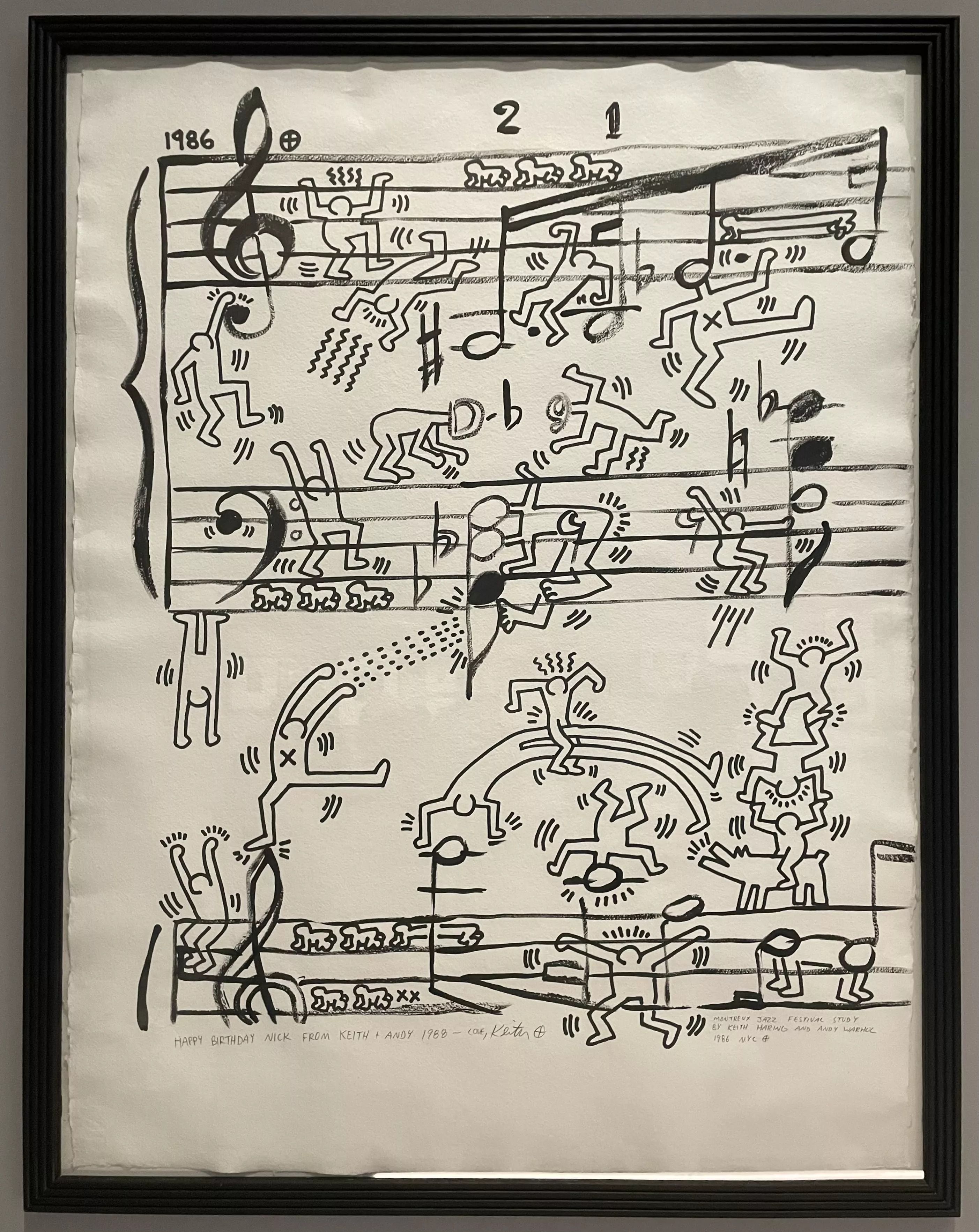
Keith Haring's style and technique
Keith Haring develops an instantly recognizable style, marked by clean lines, simple shapes and bright colors.
His works, often created on urban surfaces such as the walls of the New York subway, are in the tradition of street art movements, but quickly transcend this framework to enter the galleries.
Influenced by Pop Art and graffiti, Haring uses thick outlines to delineate his figures, creating dynamic compositions where stylized characters, animals and symbols meet.
One of the essential characteristics of his technique is the absence of depth or traditional perspective. His figures are flat, their movements suggested by simple lines and graphic flashes that surround the bodies, as if to represent energy or emotion.
His fluid lines recall the aesthetics of cartoons or pictograms, giving his work an immediate accessibility.
The artist also draws on primitive art, in particular the geometric patterns found in the geoglyphs of the Nazca desert.
These influences, which he fuses with popular culture, enable him to create a universal visual language, in which the themes of life, death, love and sexuality are addressed iconographically.
His technique enabled him to explore all types of media, from murals to sculptures to clothing.
Haring, by using accessible materials such as acrylic paint and choosing public media, sought to democratize art.
His use of bright colors, often applied in flat tints, reflects a resolutely modern optimism, despite the sometimes serious themes he tackles, such as the fight against AIDS or social inequality.
Keith Haring as seen by Christian Schmitt
Keith Haring, his life, his work
Keith Allen Haring was born in 1958 in Pensylvania. He was brought up in a strict, disciplined family. At the age of 18, he began taking advertising design classes in Pittsburg.
This training didn't suit him, and he preferred to devote himself entirely to producing drawings. He soon felt the need to move to New York, where he enrolled at the School of Visual Art.
He met and socialized with other East Village artists, including Jean-Michel Basquiat and Andy Warhol. They all exhibited in this part of New York, especially at the Mudd Club and Club 57, where the radiant baby was born.
He would produce drawings all his life, but would explore all possible media, and in New York produced above all a great deal of graffiti on buildings or public places in the city.
Haring stood out for his little round-rimmed figures, often very colorful and detoured in black. Like Pierre Soulages, he draws his inspiration from much older, even primitive works of art to produce his drawings and imagine his figures.
The geoglyphs of the Nazca desert in southern Peru were to exert a major influence on his work, and the stylistic proximity is easy to guess.
In 1982, his first solo exhibition took place at the Tony Shafrazi gallery. It was a great success, enabling him to take part in the Whitney Museum Biennial and the Sao Paulo Biennial.
He also exhibits in Venice and Paris, alongside artists such as Robert Combas. At the same time, Haring continues his graffiti frescoes, the most famous being on the Berlin Wall and inside the Necker Hospital.
He is commissioned to design the label for Château mouton de Rothschild, vintage 1988 ; and also carries out work for churches, notably a triptych gilded in white gold, which will be divided between Paris and New York, part of which can be seen in the church of Saint Eustache.
Keith Haring died in 1990 after battling HIV and setting up a foundation to advance research and support sufferers.
Focus on Radiant Baby, Keith Haring, 1982
This simple yet striking work by Keith Haring brilliantly embodies the spirit of his commitment to social causes. The Radiant Baby, the composition's central figure, radiates a childlike energy, evoking innocence and vitality.
The confidently drawn black lines define a stylized silhouette, while the surrounding rays of light create a sense of movement, like an explosion of joy. Each stroke seems to vibrate with a life of its own, suggesting a breath of enthusiasm that transcends the canvas.
The colored background, often filled with bright hues, acts as a dynamic frame, accentuating the contrast between the child and the environment. This explosion of color recalls popular culture, integrating the viewer into a playful and engaging universe.
Haring, through this powerful symbol, not only celebrates childhood; he also highlights crucial issues such as the fight against AIDS and social inequality. The Radiant Baby thus becomes a cry from the heart, an invitation to hope and solidarity.
This pictorial gesture, typical of the artist, reveals a liberation of form, while conveying a universal message. Haring manages to transform a simple figure into an emblem of resistance and light, a reminder that art can be both accessible and deeply meaningful.
In conclusion, this work by Keith Haring testifies to his unwavering commitment to free expression and humanity. It captures the raw energy of youth and embodies a vision of the world where art and social commitment meet, creating a work vibrant with hope and solidarity.
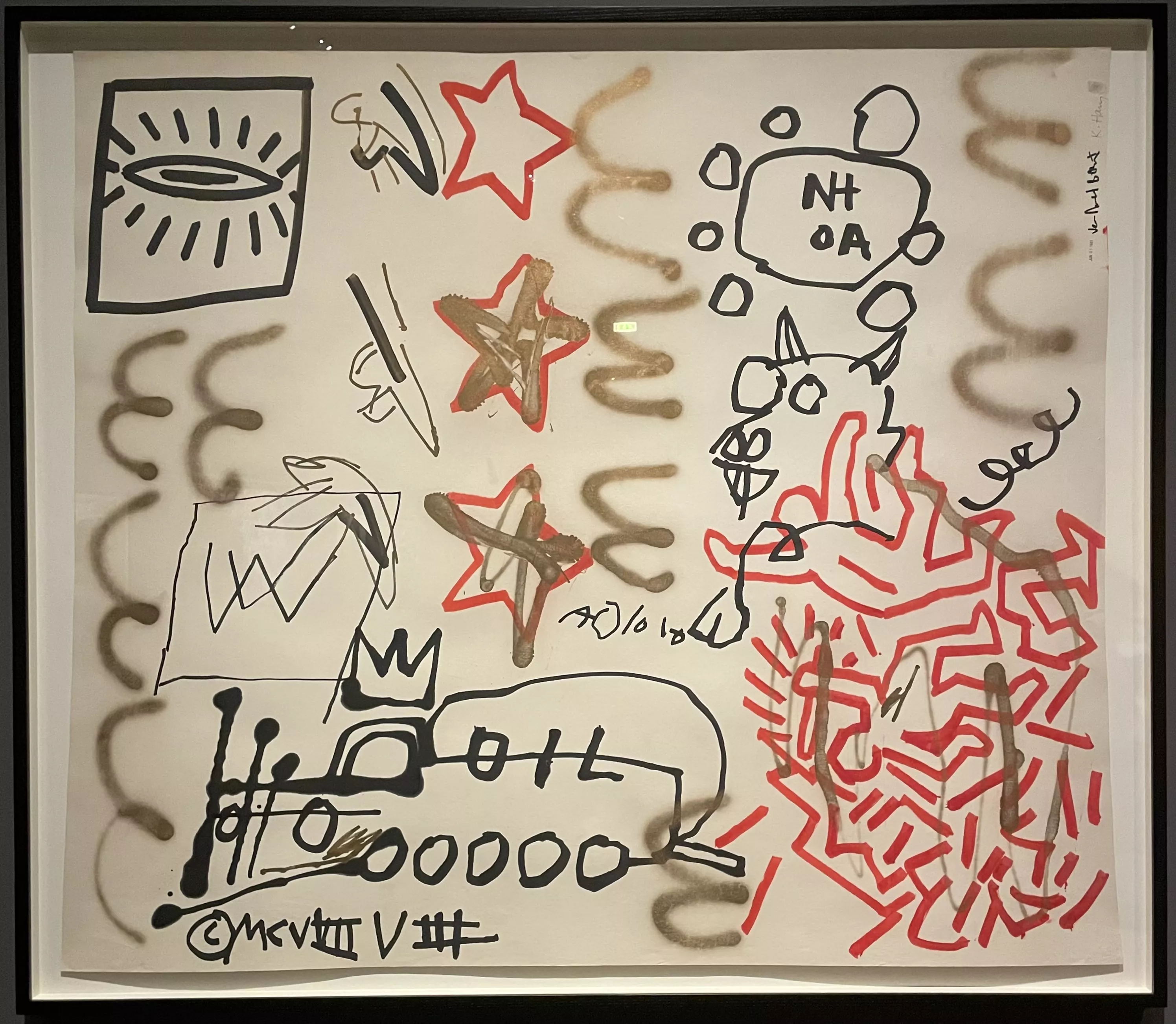
Posterity and legacy of Keith Haring
Keith Haring's works are known the world over and are a true symbol of contemporary art.
His colorful men and his radiant baby are no longer confined to the walls of New York, they are reused in the fashion industry, accessories, and even interior design.
The graphic simplicity of his characters, surrounded by vibrant lines, is now recognized and identifiable at first glance.
Haring not only left his mark on art through his style, but also through his commitment to humanitarian causes. An activist against racism, homophobia and apartheid, he used his art to raise awareness.
The Keith Haring Foundation, created shortly before his death, continues his work today by supporting research into AIDS, a disease he personally fought against. This commitment makes Haring not only an artist, but also a true activist.
A regular collaborator of Jean-Michel Basquiat, Keith Haring built bridges between art and the social struggles of his time.
His unique style, now anchored in global visual culture, continues to inspire new generations of artists, and his works, present in the world's greatest museums, bear witness to his lasting impact on contemporary art.
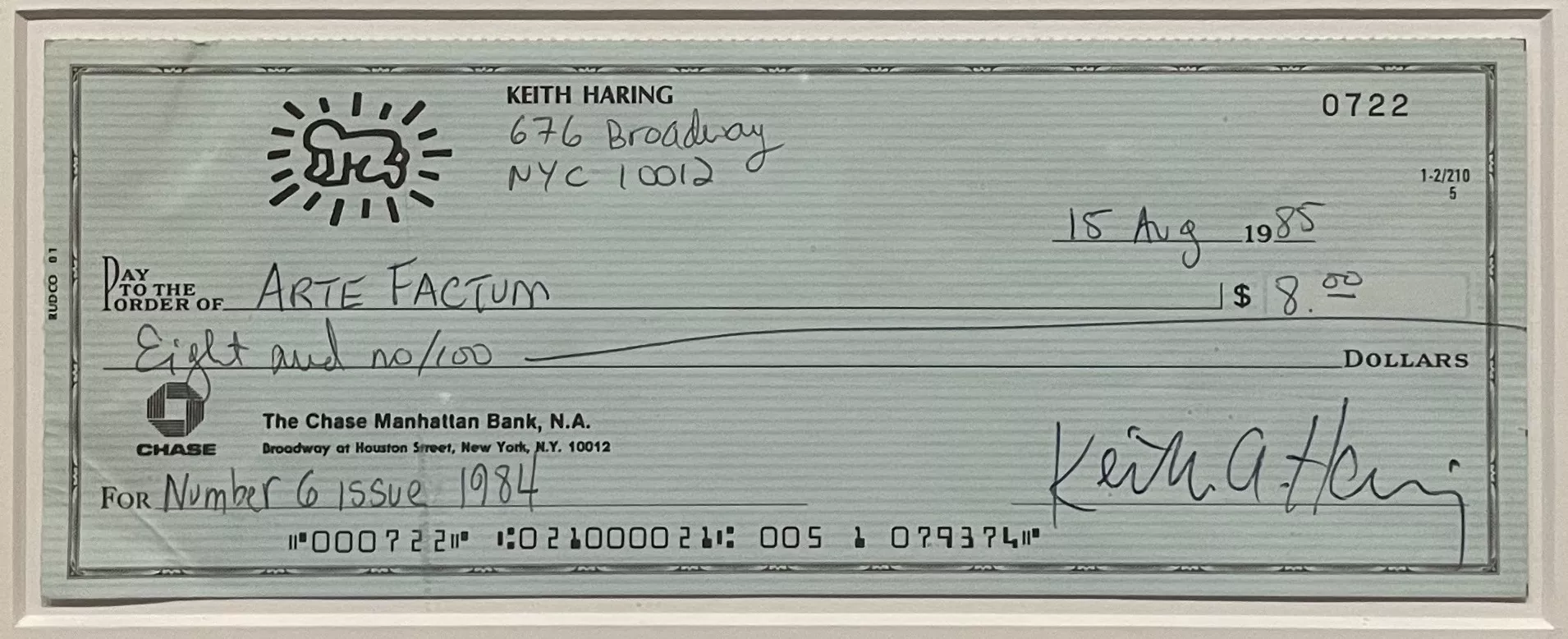
His signature
Although there are variations, here's a first example of his signature :
Our team remains at your disposal to identify your works.
Expertise your property
If you own a Keith Haring work, don't hesitate to request a free appraisal by filling in our online form.
A member of our team of experts and chartered auctioneers will contact you to provide an estimate of the market value of your work.
If you are considering selling your work, our specialists will also guide you through the various alternatives available to obtain the best possible price, taking into account market trends and the specific features of each work.
Estimate in less than 24h
Other works from the same period sold at auction

Estimated 15 000 - 20 000 €
Jean HENNINGER (1916-1994) Hunting scene.

Estimated 600 € - 800 €
Louis TOFFOLI (1907-1999), The maternity of flowers. Tapestry.

Estimated 30 € - 50 €
In the spirit of Keith HARING (1958-1990), Pregnant woman and "radiant baby".

Estimated 2.000 - 4.000 €
PABLO PICASSO (1881-1973) ATELIER MADOURA " Profil de femme n° 67 " Round plate.

Estimated 4.000 - 6.000 €
GASTON CHAISSAC (1910-1964) Composition 1947, Gouache and Indian ink on paper.

Estimated 6.000 - 8.000 €
Maurice MARINOT (1882-1960), Quadrangular bottle in black and white glass, made in 1934.
Discover in the same theme

Rating and value of works, sculptures and vases by Maurice M...
Maurice Marinot is a twentieth-century glass artist and draughtsman who produced a number of successful vases for the auction market.
Learn more >

Rating and value of watercolors, drawings and paintings by L...
Le Pho is a 20th-century French-Vietnamese artist who produced drawings, watercolors and oil on canvas that are listed at auction.
Learn more >

Rating and value of paintings by Michel Moreno
Michel Moreno is a French contemporary artist who has produced works of considerable value at auction.
Learn more >

Secure site, anonymity preserved

Auctioneer approved by the State

Free and certified estimates
Frequently asked questions
-
Who is Keith Haring, and what is his artistic background?Keith Haring (1958–1990) was an American painter and visual artist considered one of the pioneers of contemporary art. A native of Pennsylvania, he studied in New York at the School of Visual Arts, where he rubbed shoulders with Jean-Michel Basquiat and Andy Warhol. His instantly recognizable style, characterized by clean lines, simple shapes, and bright colors, draws on the traditions of Pop Art and urban graffiti, while transcending these movements to find its way into prestigious galleries around the world.
-
What are the price ranges for Keith Haring's works based on the medium used?The prices of Keith Haring’s works vary considerably depending on the medium used. Tapestries range from €135 to €7,000, photographs from €90 to €24,390, ceramics from €100 to €32,480, prints from €5 to €830,000, sculptures from €10 to €2,908,950, drawings from €50 to €4,009,530, and paintings from €100 to €5,102,720. These ranges reflect the importance of rarity, provenance, and condition.
-
How do you authenticate a work by Keith Haring?To authenticate a work by Keith Haring, we recommend that you request a free appraisal from Auctie's. Our team of experts and state-certified auctioneers will examine your artwork and provide you with a reliable appraisal. This no-obligation appraisal is completed within 48 hours of your online request.
-
Is this the right time to sell a Keith Haring artwork?Yes, this is an excellent time to sell a work by Keith Haring. The artist has established himself as a sure bet on the auction market, with prices that continue to rise. International demand for his works remains very strong, and his pieces continue to fetch high prices from collectors around the world.
-
How does the appraisal process work at Auctie's?Appraisals at Auctie's are free and non-binding. Simply fill out an online form with information and photos of your item. A certified expert or auctioneer will contact you to examine your item and provide you with an accurate estimate of its market value within 48 hours. If you’re considering selling, our specialists will then guide you through the best options to get the best price.
