



Rating and value of works, drawings, paintings by Gustave Cariot

Key takeaways
- Works by Gustave Cariot (1872–1950), a French Post-Impressionist painter, sell for between €100 and €96,610, depending on the medium and quality.
- Oil-on-canvas paintings represent the main market segment, with prices ranging from €100 to €96,610, while watercolor drawings range from €400 to €5,500.
- In 2015, the painting "Prairie" (1903) exceeded its initial estimate of €23,000–€32,000, selling for €96,610, reflecting his rising popularity among French collectors.
If you own a work by or after the artist Gustave Cariot, and would like to know its value, our state-approved experts and auctioneers will offer you their appraisal services.
Our specialists will carry out a free appraisal of your work, and provide you with a precise estimate of its value on the current market.
Then, if you wish to sell your work, we will direct you to the best possible arrangement to obtain the optimum price.
Rating and value of the artist Gustave Cariot
Considered one of the most versatile contemporary artists of the 20th century, Gustave Cariot leaves behind an artistic identity of his own. This legacy consists mainly of oils on canvas.
At present, the prices of his works are rising at the auctioneers' gavels, his stock is on the rise. His canvases and other works are particularly prized, especially by French buyers, and the price at which they sell on the art market ranges from €100 to €96,610, a considerable delta but one that speaks volumes about the value that can be attributed to Gustave Cariot's works.
In 2015, a polychrome composition entitled Prarie, and dating from 1903 sold for €96,610, while it was estimated at between €23,000 and €32,000.
Order of value from a simple work to the most prestigious
Technique used | Result |
|---|---|
Drawing - watercolor | From 400 to 5 500€ |
Oil on canvas | From 100 to 96 610€ |
Estimate in less than 24h
Artist's style and technique
Gustave Cariot (1872 - 1950), was a French painter of landscapes and urban scenes. Initially influenced by Pointillism, Cariot adopted it, then quickly detached himself from it to develop a more personal technique, based on fine, luminous brushstrokes.
His postimpressionist approach favors natural light and atmosphere, rather than strict chromatic systematization. He devoted himself mainly to rural landscapes (champagne, millstones, wheat fields) and Parisian panoramas (Pont-Neuf, Paris rooftops, banks of the Seine).
He produced thematic series such as " Le Poème des saisons ", scenes of the Rhineland or Perros Guirec that reflect a sensitive study of seasonal variations and local atmospheres.
Cariot uses thin layers, with a delicate, fluid, impasto-free touch (a light palette, dominated by golden, blue and green tones). His rendering of light, often grazing, accentuates the chromatic vibrancy, giving an effect of diffused glow and visual serenity.
The pictorial construction is concentrated on small to medium formats. Cariot pays careful attention to successive planes, depth of field and perspective lines, resulting in a rigorous composition akin to photographic framing.
He uses serial composition to show the variety of the same motif according to season, weather or time of day. His approach is methodical and quasi-scientific. Despite his references to Post-Impressionism, Cariot retains a realistic grounding, without drifting into abstraction. His work combines on-the-spot observation with a refined aesthetic sensibility.
His Parisian cityscapes anticipate a form of on-the-spot painting, with a subtle treatment of the modern city.
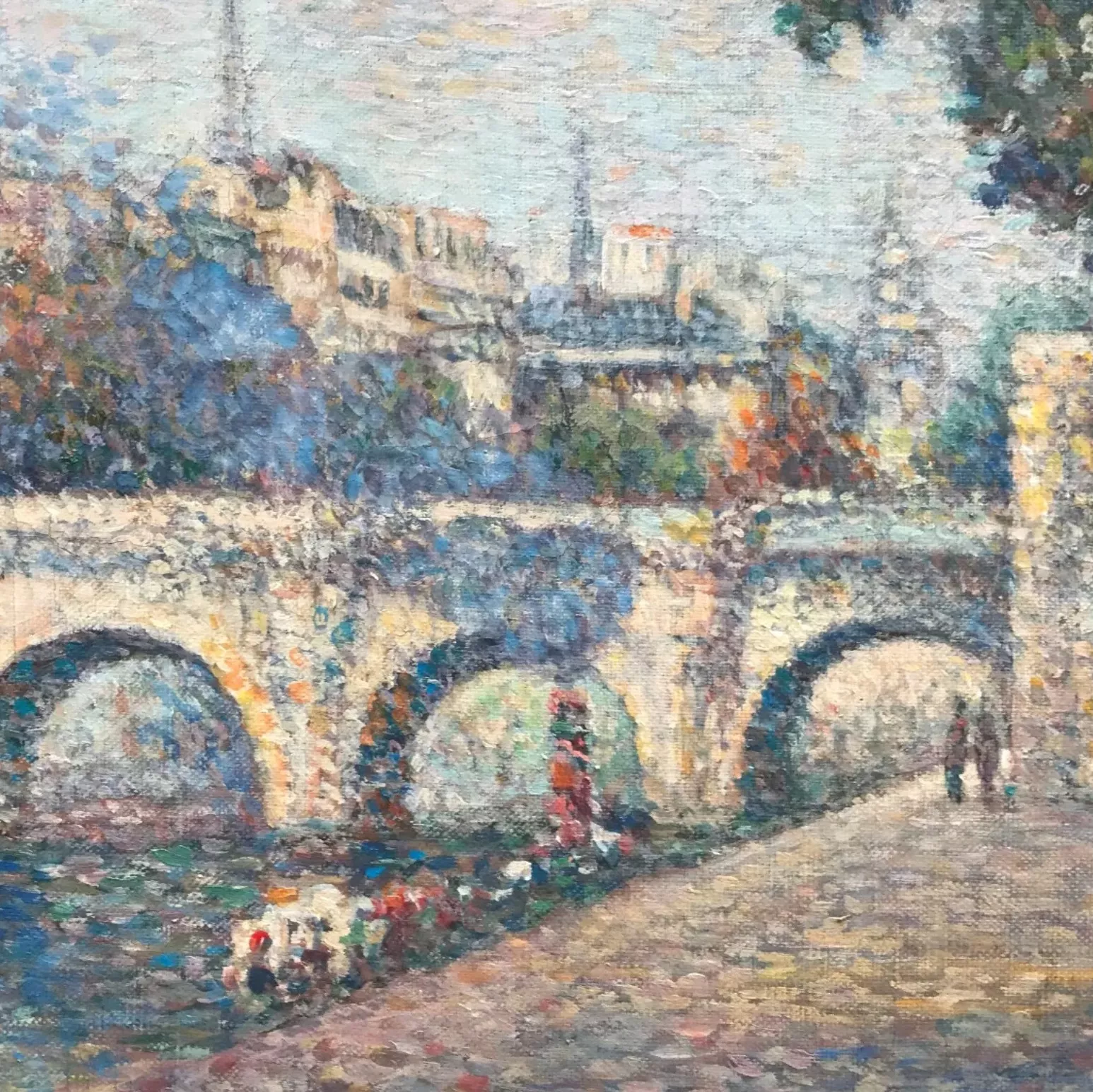
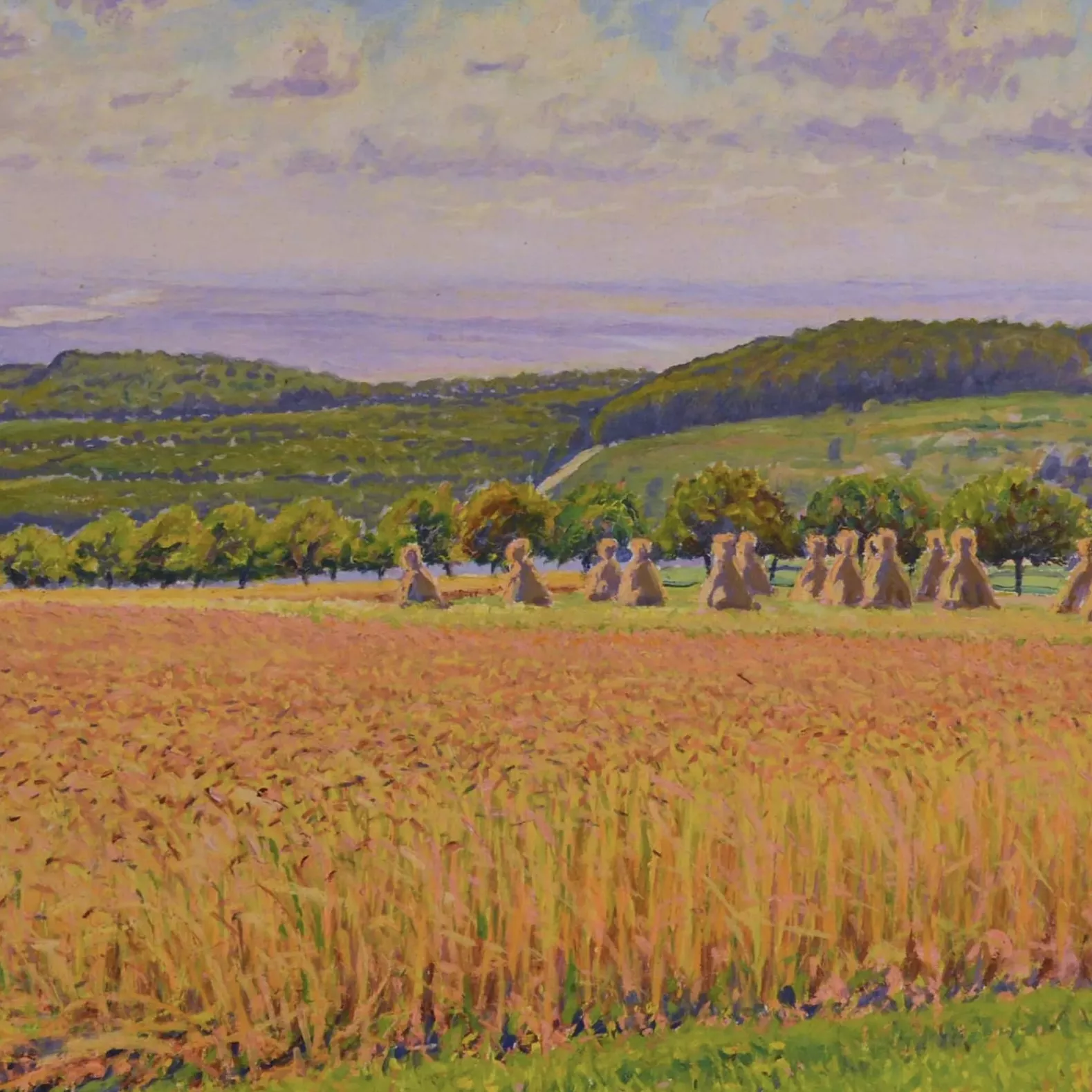
Gustave Cariot, his life, his work
Gustave Camille Gaston Cariot was born in 1872 in the Marais district of Paris. He was the son of a luggage manufacturer seeking to perpetuate the family trade. From an early age, he displayed a certain artistic talent, spending his time drawing urban and rural views around Paris.
As a self-taught artist, he rejected academic constraints to develop a personal style inspired by pointillism (Seurat, Signac) and then nuanced postimpressionism. He mainly painted rural landscapes (Champagne, Brittany, Rhineland) and Parisian urban views (Pont-Neuf, rooftops, riverbanks), exploring thematic series on seasons and places.
From 1903 onwards, the artist exhibited at the Salons des Indépendants, the Société Nationale des Beaux-Arts and the Salon d'Automne or d'Hiver.
His work met with increasing success over the years, with several paintings selling at auction for high sums. Although he was influenced by Pointillism, he eschewed its systematic treatment in favor of a play of luminous, atmospheric touches, with a clear, naturalistic palette that takes account of low-angled light.
His technique lies at the crossroads of realism, impressionism and post-impressionism (Louis Hayet, Émile Boggio), without falling into either abstraction or strict naturalism.
He died on March 8, 1950 in Paris, and leaves the image of a discreet but prolific painter, whose work traversed the artistic movements of the early twentieth century.
Today, his work is enjoying a revival of interest among amateurs and experts e, French landscape painting, enjoying constant success at auction.
Focus on Floréal, Gustave Cariot, circa 1902
Floréal is an oil on canvas signed " G. Cariot " lower right, measuring 60 x 81 cm, depicting a spring landscape, depicting a blossoming tree in the center, wide open onto a meadow.
The palette is bright and dominated by fresh greens, floral whites and light blues, conveying the spirit of vegetal renewal. He also added short strokes and a quasi-pointillist structure, playing on the internal vibrancy and reverberation of light.
Although originally interested in pointillism, he moved away from it to adopt a nuanced postimpressionism, favoring tonal and atmospheric rendering. He uses light, juxtaposed stains, without strict chromatic separation : difracted light, soft palette and suggested movement.
The spatial construction is meticulous and the successive planes are well articulated : the tree is captured so that it is highlighted by its blossom. The painting is part of the series Le Poème des saisons, dedicated to the celebration of natural cycles, with a sense of poetic observation.
The blossoming tree, symbol of spring, becomes an allegory of renewal, where the artist privileges visual emotion over precise topography. This painting bears witness to a synthesis between an impressionist approach and a time-seasonal realism. This work reflects Cariot's obsession with changing light.
If we analyze the metrics, this work would be worth 496% more today than its initial estimate when it was sold in 2014. Its meticulous execution, significance and provenance make it an iconic piece and highly sought-after by collectors.
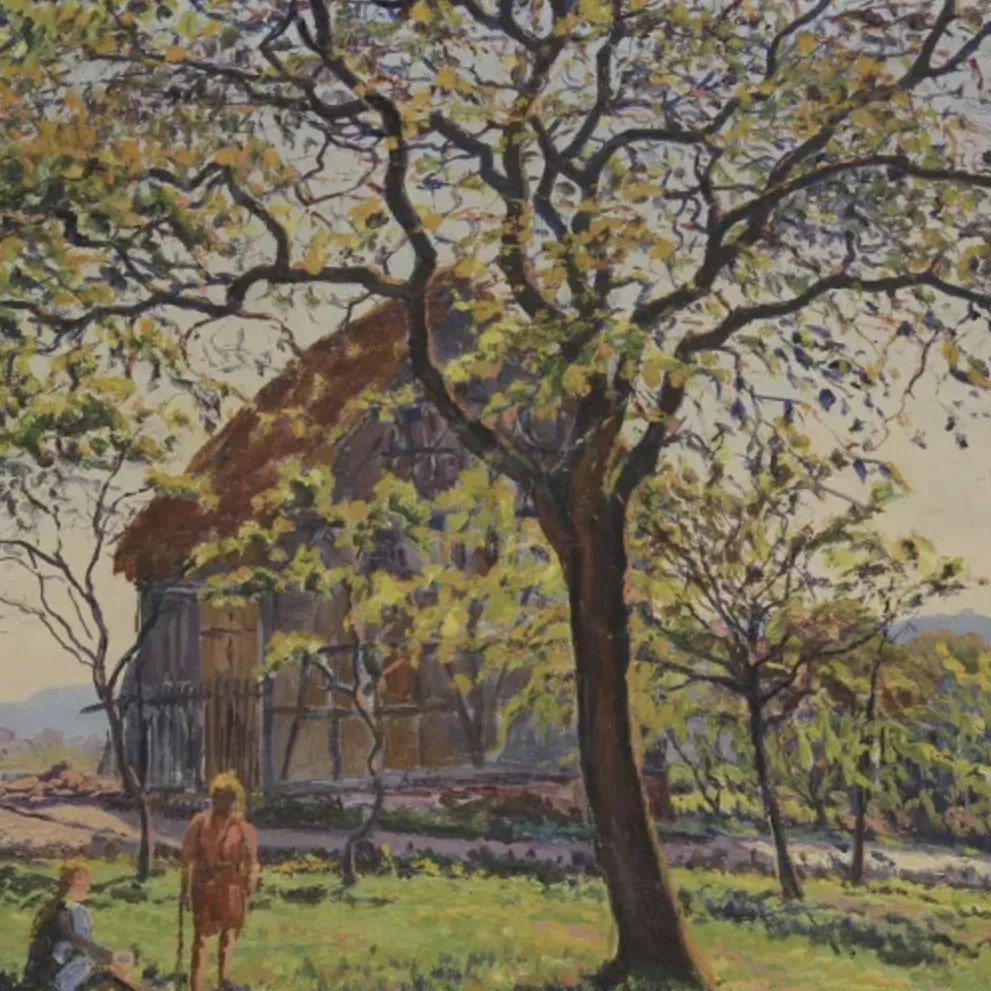
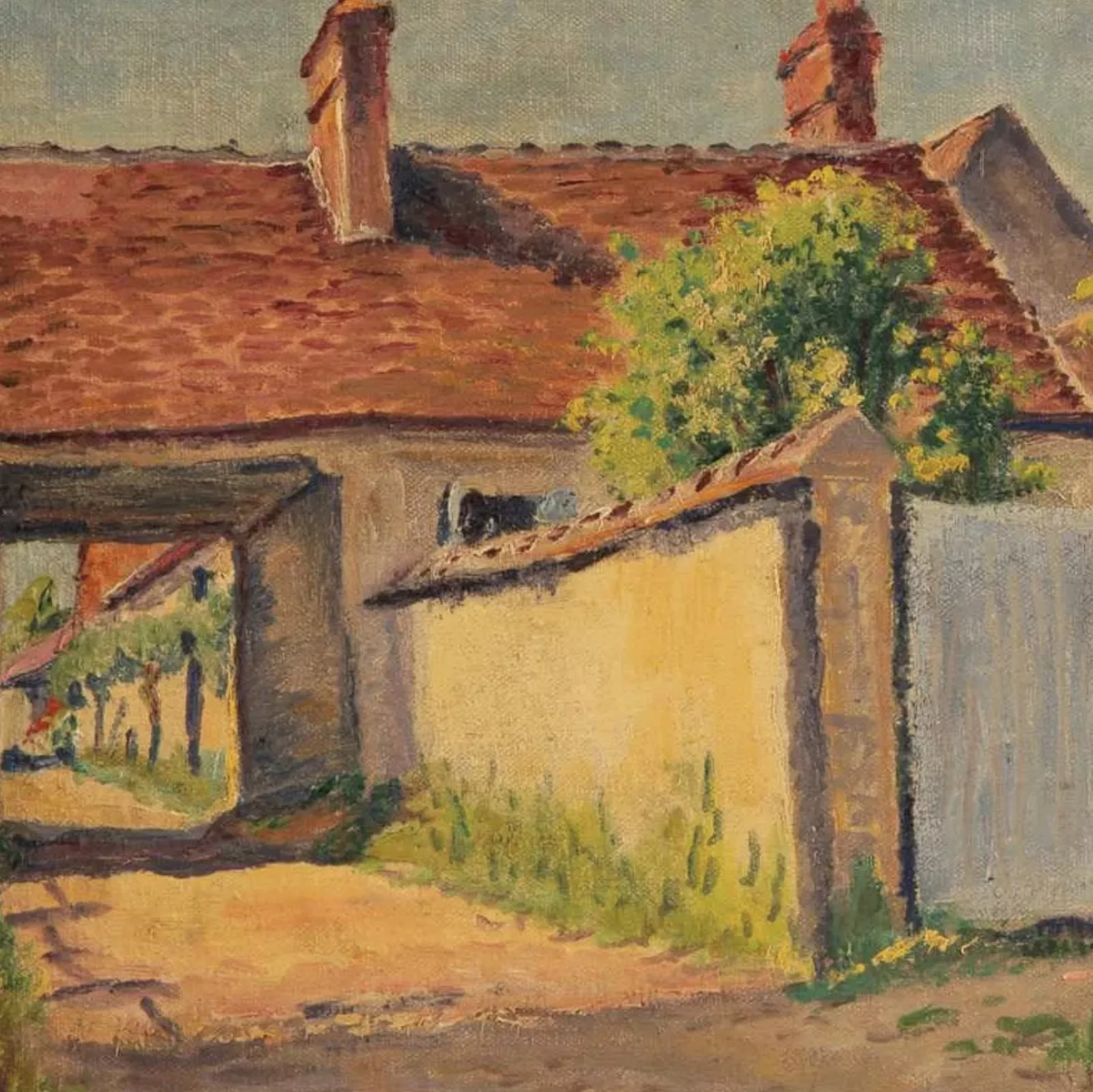
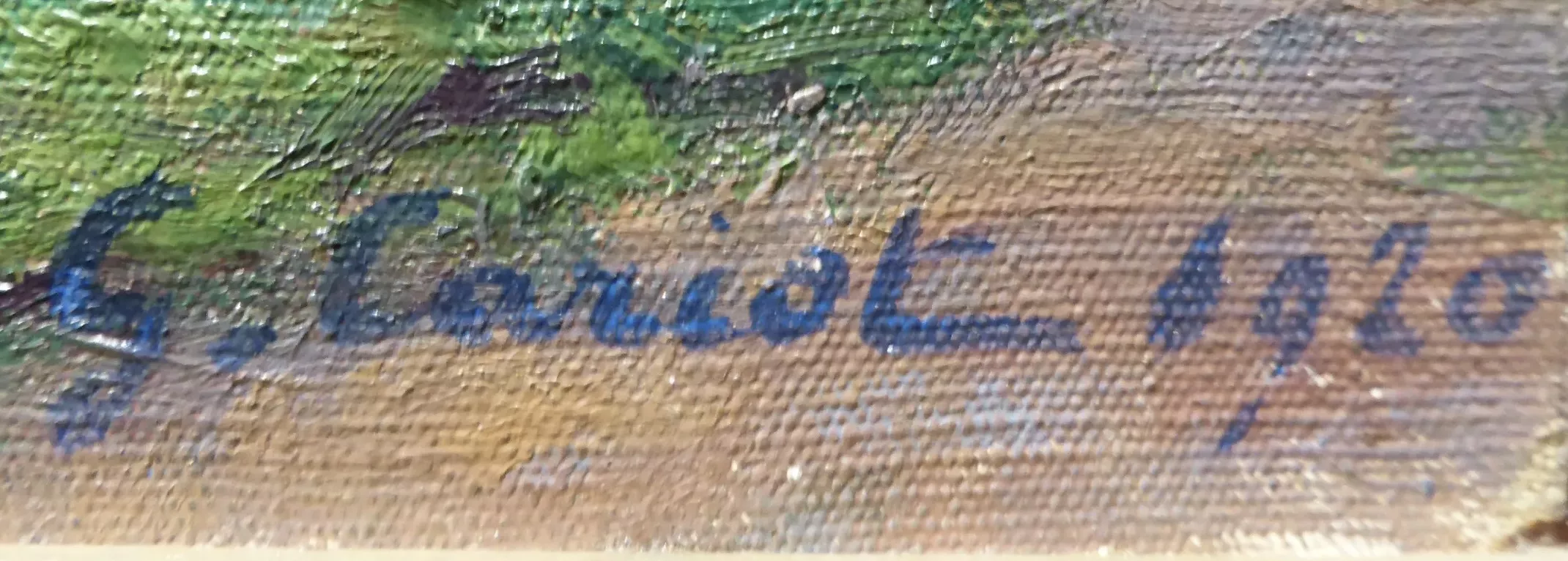
Recognizing the artist's signature
Cariot very often signs his works, mostly at the bottom of the painting, in a color that contrasts with the background. Here's an example.
Knowing the value of a work
If you happen to own a work by Gustave Cariot, request a free appraisal without further delay via our form on our website.
A member of our team will contact you promptly with an estimate of the value of your work, not forgetting to send you ad hoc information about it.
If you are considering selling your work, you will also be accompanied by our specialists in order to benefit from alternatives for selling it at the best possible price.
Estimate in less than 24h
Discover in the same theme

Gustave Miklos's paintings, drawings and sculptures rated an...
Gustave Miklos is a twentieth-century Art Deco artist whose works are highly valued at auction.
Learn more >

Rating and value of sculptures, ceramics and bronzes by Arma...
Armand Petersen is a twentieth-century animal sculptor whose works are highly regarded and valued at auction. Estimate.
Learn more >

Rating and value of sculptures, drawings and paintings by Ka...
Katarzyna Kobro is a Polish artist, a pioneer of Constructivism, who produced many works that are highly regarded today.
Learn more >
Similar works sold at auction

Estimated 2500 - 5000 €
Henri EPSTEIN (1892-1944), View of the village through the trees, Oil on canvas

Estimated 4.000 - 6.000 €
EUGÈNE LEROY (1910-2000), Maison dans un sous bois, oil on canvas mounted on panel.

Estimated 3.000 - 5.000 €
Henri EPSTEIN (1892-1944), Place du sud de la France, Oil on canvas.

Secure site, anonymity preserved

Auctioneer approved by the State

Free and certified estimates
Frequently asked questions
-
Who is Gustave Cariot, and what is his artistic background?Gustave Cariot (1872–1950) was a self-taught French painter who specialized in rural and urban landscapes. Initially influenced by Pointillism, he developed a personal Post-Impressionist style based on fine, luminous brushstrokes, emphasizing atmosphere and natural light. His main subjects included landscapes of Champagne, Brittany, and Paris, which he explored in thematic series such as “The Poem of the Seasons.”
-
What is the price range for works by Gustave Cariot?Prices for works by Gustave Cariot vary considerably depending on the medium and quality. Drawings and watercolors range from €400 to €5,500, while oil paintings on canvas range from €100 to €96,610. The artist’s market value is currently on the rise, with growing interest among collectors.
-
How can you authenticate a work by Gustave Cariot?To authenticate a work by Gustave Cariot, we recommend that you request a free, no-obligation appraisal using our online form. Our state-certified auctioneers and experts will examine your artwork and provide you with an accurate estimate within 48 hours, along with all relevant information regarding its authenticity and value.
-
Is this the right time to sell a work by Gustave Cariot?Yes, now is a good time to sell a work by Gustave Cariot. His market value is currently on the rise at auction, and his paintings are enjoying a growing resurgence of interest among collectors and experts in French landscape painting. The market for his works remains dynamic and in high demand, particularly among French buyers.
-
How does the process of selling a work of art at Auctie's work?The process begins with a request for a free, no-obligation estimate from our experts. After appraising your artwork, our specialists will guide you toward the best sales option to achieve the highest possible price. As an auction house, Auctie’s will guide you through the entire process, from the initial appraisal to the successful sale of your artwork.
