



Rating and value of paintings by Louis Hayet

Key takeaways
- Louis Hayet (1864–1940), a French Post-Impressionist painter, practiced Pointillism before 1890, then adopted a freer, more tonal style inspired by Seurat and Signac.
- Signed works sell for between €35 for watercolor drawings and €171,450 for oil paintings, with prices trending upward since the 1980s and 1990s.
- Recognized as an original contributor to Neo-Impressionism, Hayet also developed chromatic innovations and a color palette that was revolutionary for its time.
If you own a work by artist Louis Hayet or based on his work and would like to know its value, our state-approved experts and auctioneers will guide you.
Our specialists will carry out a free appraisal of your work, and provide you with a precise estimate of its value on the current market.
Then, if you wish to sell your work, we will direct you to the best possible arrangement to obtain the optimum price.
Rating and value of the artist Louis Hayet
Considered one of France's leading post-impressionist painters, Louis Hayet enjoyed a certain notoriety on the market during his lifetime. After his death, his value fell slightly, before rising and stabilizing in recent years.
Mostly present on the French, American and Venezuelan markets, the artist has established himself as a rising star on the art market.
A work signed by him can fetch around a hundred thousand euros at auction. His oil on canvas Au café,dating from 1887/88, went for €171,450 in 2017, while it was estimated at between €16,000 and €22,000.
Order of value from the most basic to the most prestigious
Technique used | Result |
|---|---|
Drawing - watercolor | From €35 to €33,200 |
Painting | From €200 to €171,450 |
Estimate in less than 24h
Style and technique of artist Louis Hayet
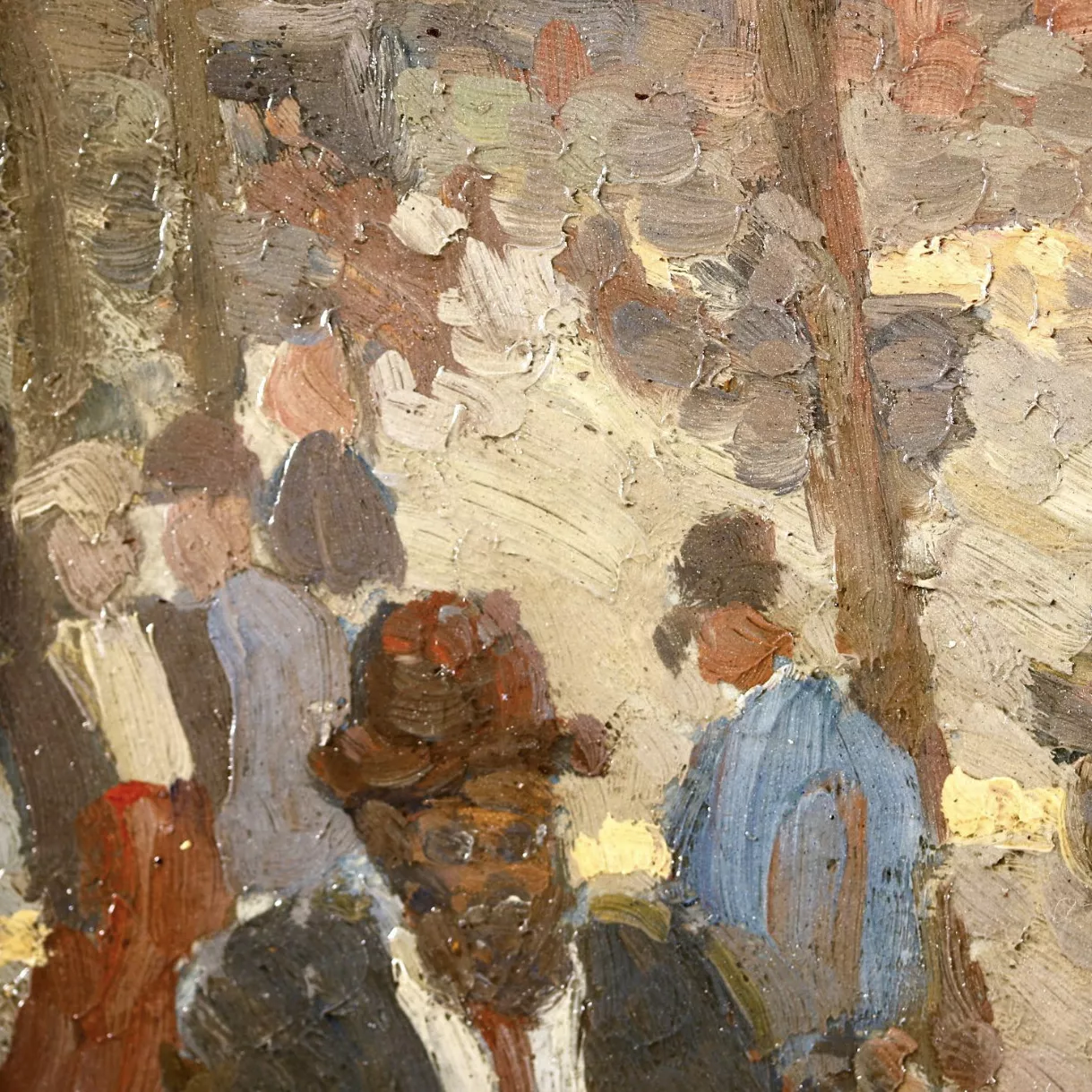
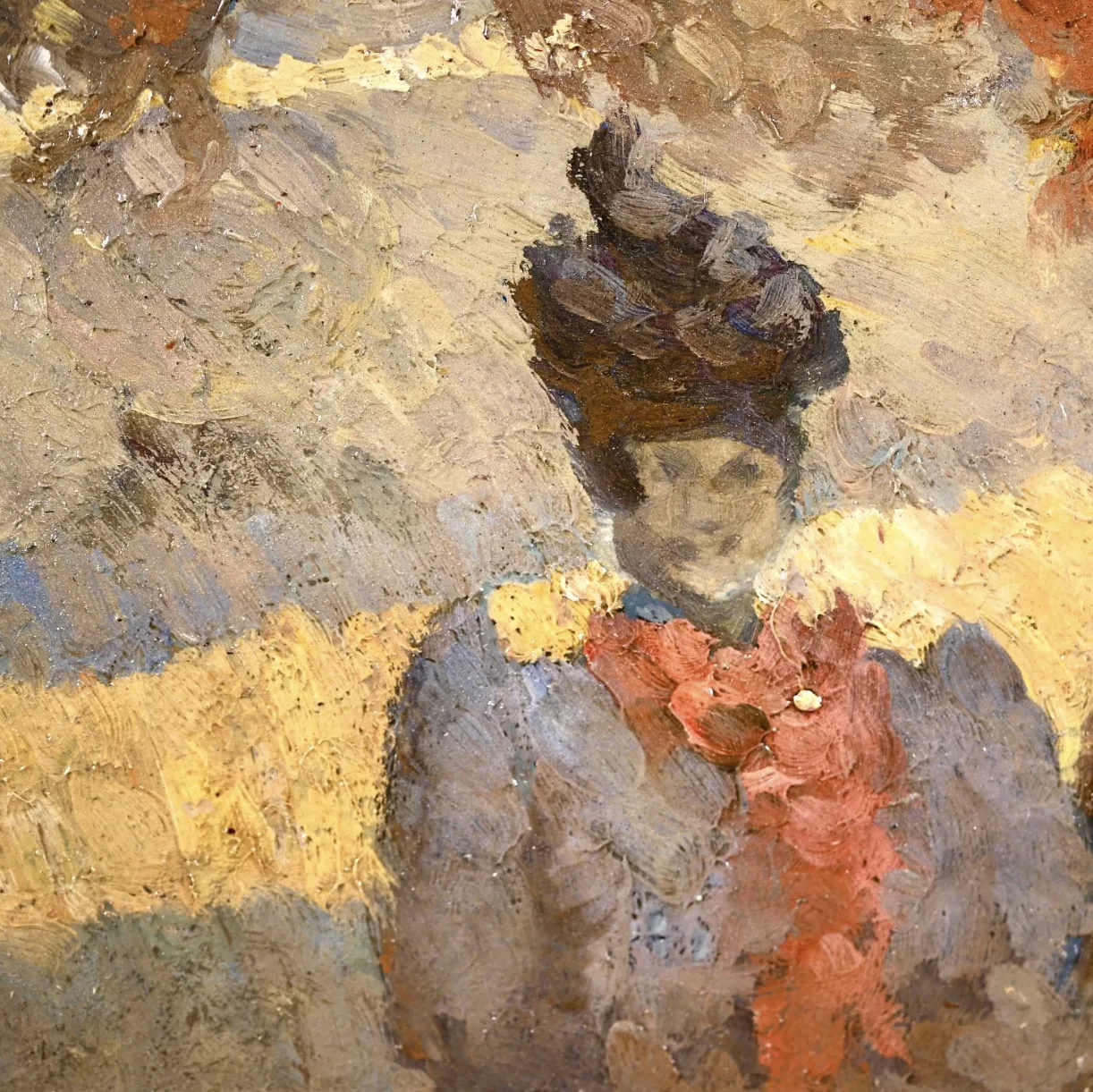
Louis Hayet (1864 - 1940) was a post-Impressionist artist active in the late 18th and early 19th centuries. He was a practitioner of neo-Impressionism but also of pointillism : that is, he applied small touches or dots of pure color, creating a vibration typical of the movement.
It was only after 1890 that he partially abandoned pointillism in order to move towards a more classical, tonal style, closer to Impressionism.
During his career, Hayet used specific pictorial techniques. Influenced by Seurat, Signac and Picasso, he played with the scientific application of color and Chevreul's theory of contrasts.
He works outdoors, emphasizing immediacy, light and atmospheric effects, bringing his work closer to Impressionism. The media he uses are varied, and all techniques are explored (oil on canvas or paper, watercolor and encaustic (hot wax)).
Louis Hayer's compositions are in search of a luminous and atmospheric rendering. Through the juxtaposition of colored touches, his landscapes such as Banks of the Oise at Dawn (1888) exude a tender, vibrant light.
The contrast is rhythmic and his palette (pink, orange, blue and green) brings morning skies and cityscapes to life. He infuses his compositions with a personal vision and a certain sense of innovation, modulating his canvases between rigor and freedom.
His pointillist style, which is based on scientific rules, remains nuanced by a fluid, airy personal touch.
In addition to painting, he publishes an innovative color chart and acts as a pigment researcher, also taking an interest in pictorial conservation.
The life of Louis Hayet
Louis Hayet (1864 - 1940) was a French artist born into a modest family in Pontoise. At a very young age, he accompanied his father, a house painter, on his travels around the provinces, which introduced him to drawing and painting.
Autodidact, he learned to draw by studying, in particular, Armand Cassagne's Traité d'aquarelle, and very early on developed a passion for color and atmospheric effects.
In the 1880s, he met Camille Pissarro and his son Lucien in Pontoise, and soon afterwards Seurat and Signac, who were to exert a major influence on his work. He became close to Seurat, with whom he especially shared the division of tones.
His participation in the Neo-Impressionist movement was fairly brief, with highly personal pointillist works. He exhibited at the Salon des Indépendants from 1889, including at Place de la Concorde, and his work was praised by Félix Fénéon.
He turned away from Neo-Impressionism in 1890, gradually isolating himself and adopting a freer, more tonal style. During this period, he made a modest living from small decorative jobs and the sale of his works. He continued to paint urban landscapes and suburban scenes, mostly in small format.
He also carried out a scientific side activity, manufacturing pigments, developing a color chart and taking an interest in their conservation.
Louis Hayer died in Corneilles-en-Parisis in December 1940. His work remained unknown for a long time, until it was rediscovered by art historians in the 1980s and 1990s. He is now recognized as an original contributor to Neo-Impressionism alongside Seurat and Signac.
Focus on Bouquet de fleurs, Louis Hayet, 1896
Louis Hayet painted this picture during his Pointillist period (1895 - 1897), when he was most influenced by Seurat and Signac.
He used small, juxtaposed dabs of color (divisionism), without prior mixing on the palette, to produce an optical vibration. His chromatic palette includes light, acidic tones, yellows, soft greens, touches of coral red and a muted neutral background to make the flowers stand out.
The bouquet is centralized in a simple vase, framed by an empty space that accentuates the floral presence, and creates an asymmetrical balance accentuated by the arrangement of the stems.
Diffuse light is suggested by the superimposition of light and dark dots, creating both subtle shadows but also soft reflections on the vase.
This still life also has symbolism and interpretation for the artist, as it celebrates ephemeral nature, and sets possible references to notions of fragility and renewal linked to fin-de-siècle symbolism.
This work therefore illustrates Hayet's pointillist phase, which he would abandon shortly afterwards in favor of freer brushstrokes and more intimate subjects.
Although less recognized than his contemporaries, Hayet remains a discreet link in the neo-Impressionist movement, and his Bouquet de fleurs testifies to his role in the colorist experimentation of the period.
Louis Hayet's imprint on his period
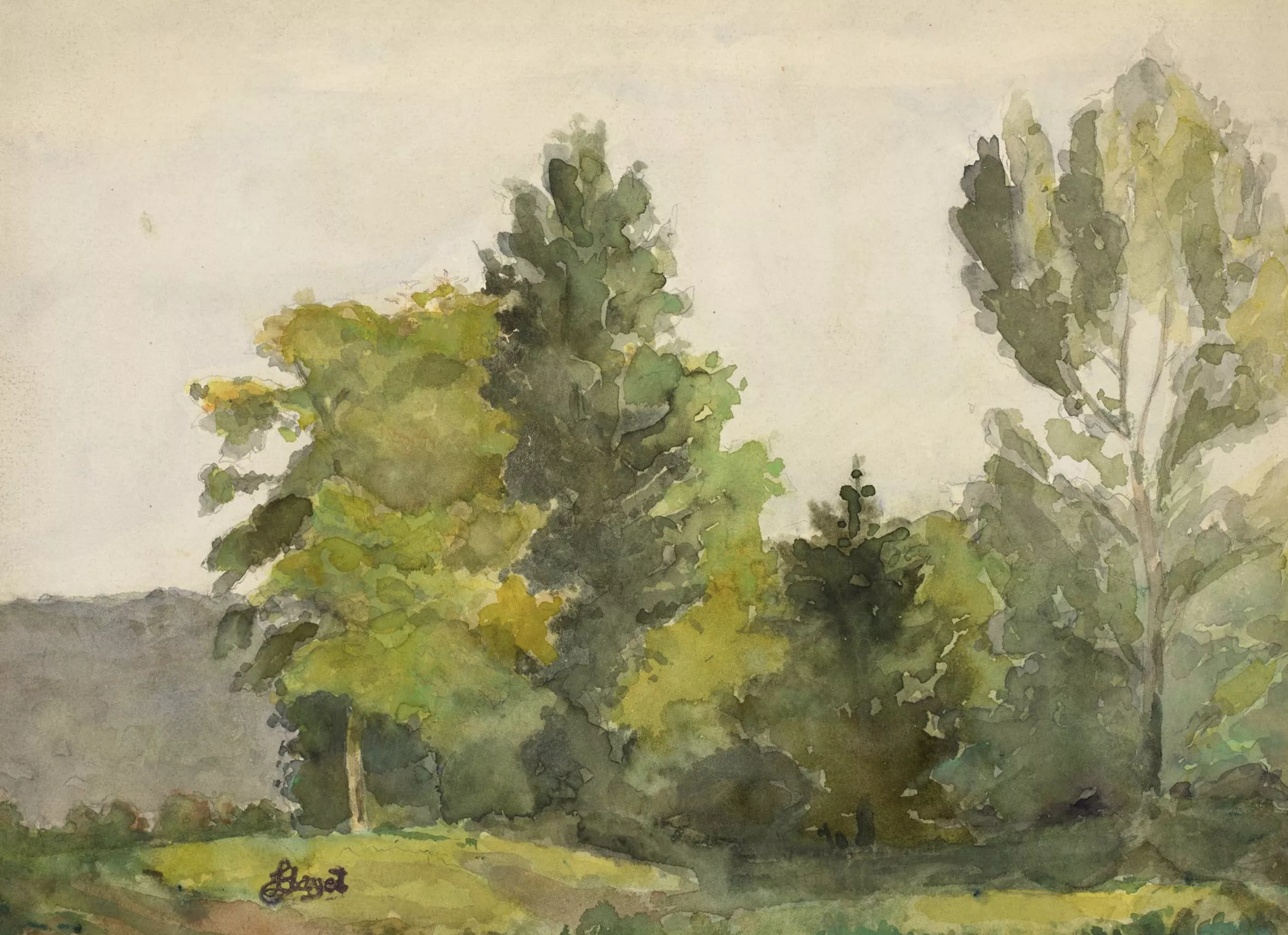
Louis Hayet contributed, albeit briefly, to postimpressionism (1895 - 1897), and his pontillist phase enriched the movement with great color research and a keen sense of light.
He bridged the gap between traditional Impressionism and Divisionist experiments, mediating between Seurat and the freer Postimpressionists.
He contributed to a certain chromatic innovation, since his tonal interplay (superimposition of bright, contrasting strokes), inspired some of his peers to rethink optical blending.
He produced works that were literally " illustrated " since, alongside his canvases, his chromophotographs and posters disseminated these techniques beyond the restricted circle of art salons.
Although he held no official classes, his practice and advice were heeded and listened to within Parisian circles. After his Pointillist period, his return to a freer style demonstrated the versatility of this fin-de-siècle generation, fostering the transition to Fauvism.
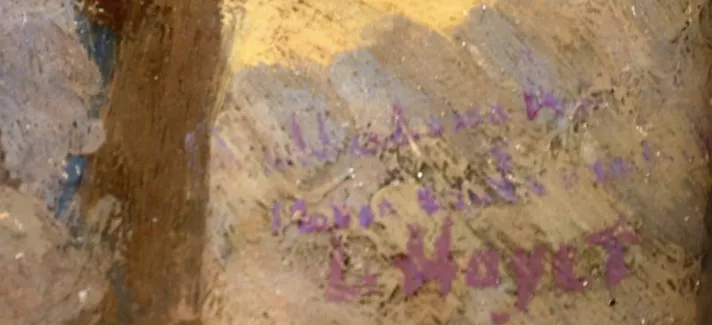
His signature
Not all of Louis Hayet's works are signed.
Although there are variants, here's a first example of his signature:
Expertise your property
If you own a Louis Hayet work, feel free to request a free appraisal by filling in our online form.
A member of our team of experts and certified auctioneers will contact you to provide an estimate of the market value of your work.
If you are considering selling your work, our specialists will also guide you through the various alternatives available to obtain the best possible price, taking into account market trends and the specific features of each work.
Estimate in less than 24h
D'autres tableaux impressionnistes vendus aux enchères

Estimated 6.000 - 8.000
Mikhail Markianovich GUERMACHEFF (1867 - 1930) House under the snow, oil on canvas

Estimated 2.000 - 4.000
Jean DUFY (1888-1964) Vase of anemones, Watercolor

Estimated 600 € - 800 €
Henri ZUBER (1844-1909), Bridge at Artemare. Oil on canvas.
Discover in the same theme

Rating and value of sculptures, paintings and drawings by Je...
Jean-Baptiste Carpeaux is a 19th-century painter and sculptor who produced many works that are highly valued at auction.
Learn more >

Rating and value of paintings by Victoria Fantin-Latour
Victoria Fantin-Latour was a 19th-century artist who mainly produced still lifes of flowers, which are highly prized at auction.
Learn more >

Rating and value of paintings and drawings by Gustave Moreau
Gustave Moreau was a French Symbolist painter with a unique style, who produced many works of great value.
Learn more >

Secure site, anonymity preserved

Auctioneer approved by the State

Free and certified estimates
Frequently asked questions
-
Who is Louis Hayet, and what is his role in art history?Louis Hayet (1864–1940) was a French Post-Impressionist painter born in Pontoise, recognized as one of the original contributors to Neo-Impressionism alongside Seurat and Signac. Self-taught, he briefly practiced Pointillism (1895–1897) before adopting a freer, more tonal style. Although his rediscovery dates back to the 1980s and 1990s, he is now established as a rising star in the art market, with his work primarily traded in the French, American, and Venezuelan markets.
-
What is the price range for Louis Hayet's paintings at auction?Louis Hayet’s paintings sell for between €200 and €171,450, while his drawings and watercolors range from €35 to €33,200. A major oil on canvas such as “Au café” (1887–88) was sold for €171,450 in 2017, despite an initial estimate of between €16,000 and €22,000, illustrating the potential for these works to appreciate in value.
-
How can you authenticate a work by Louis Hayet?To authenticate a work by Louis Hayet, we recommend that you request a free appraisal from Auctie's by filling out our online form. A state-certified expert or auctioneer will examine your piece and provide you with an accurate estimate of its market value within 48 hours, with no obligation on your part.
-
Is this the right time to sell a work by Louis Hayet?Yes, now is a good time to sell a work by Louis Hayet. After a relative decline following his death, his market value has rebounded and stabilized in recent years, with growing recognition of him as a rising star in the art market. The rediscovery of his key role in Neo-Impressionism is supporting this positive trend.
-
How does the sale of a work of art work at Auctie's?At Auctie's, the process is simple: you request a free, no-obligation online estimate; an expert contacts you to examine the artwork; and then our specialists guide you toward the best sales strategy, taking market trends into account. We support you from the initial appraisal through to the final sale to ensure you get the best possible price.
