



Rating and value of paintings by Vaclav Spala

Key takeaways
- Václav Špála, a pioneer of 20th-century Czech modern art, sells his paintings for between €20 and €424,900, depending on the medium and quality.
- Oil-on-canvas works command the highest prices, ranging from €370 to €424,900, particularly those from his Fauvist period of the 1920s and 1930s.
- In 2024, “Rapids on the Orlace River” (1928) exceeded its estimate, selling for €424,900 against a projected range of €190,000 to €350,000.
If you own a work by or after the artist Václav Špála, and would like to know its value, our state-approved experts and auctioneers will offer you their appraisal services.
Our specialists will carry out a free appraisal of your work, and provide you with an accurate estimate of its value on the current market.
Then, if you'd like to sell your painting, we'll point you in the right direction to get the best possible price for it.
Rating and value of the artist Václav Špála
Considered one of the pioneers of Czech modern art, Václav Špála quickly made his mark on twentieth-century art. This legacy is made up of various creations, including Fauvist and Cubist compositions.
At present, the prices of his works are rising enormously at the auctioneers' gavel.
His landscapes are particularly prized and the price at which they sell on the art market ranges from €20 to €424,900, a considerable range but one that speaks volumes about the value that can be attributed to Václav Špála's paintings.
In 2024, a painting from the heart of the Fauvist period, dating from 1928, entitled Rapids on the orlace river, sold for €424,900 while it was estimated at between €190,000 and €350,000.
Order of value from a simple work to the most prestigious
Technique used | Result |
|---|---|
Estamp - multiple | From €20 to €3,300 |
Drawing - watercolor | From €50 to €22,700 |
Oil on canvas | From 370 to 424 900€ |
Estimate in less than 24h
Style and technique of artist Václav Špála
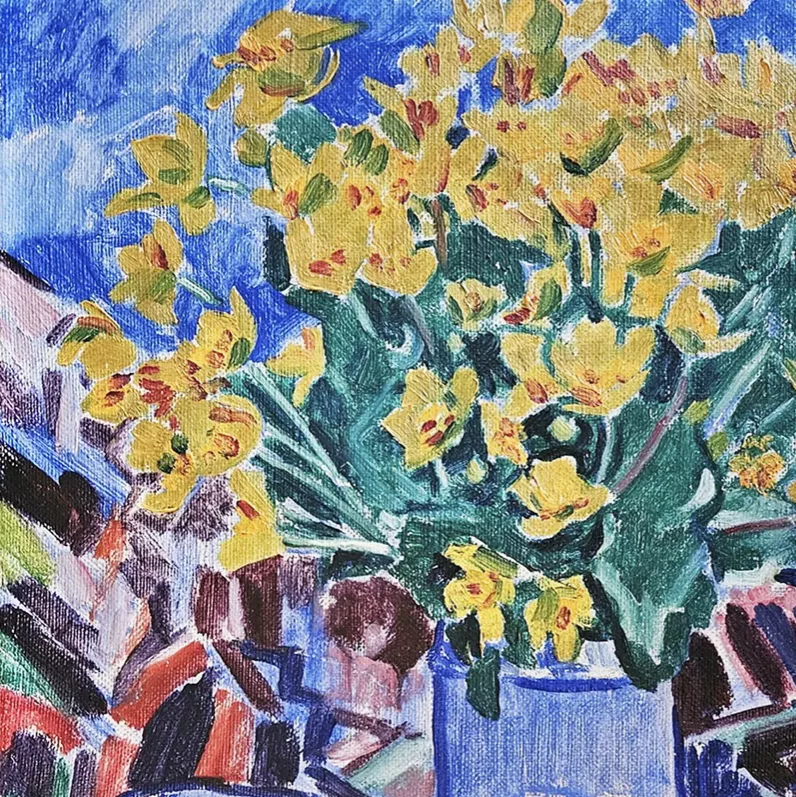
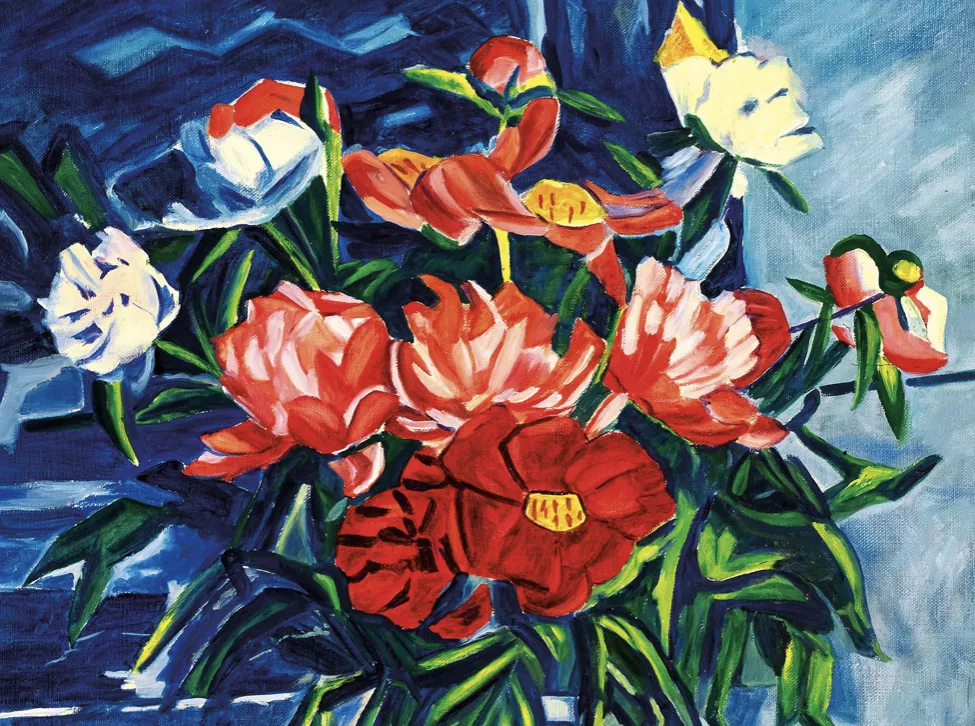
Václav Špála is distinguished by a bold style, marked by a bright chromatic palette and dynamic brushwork that evoke a constant quest for pictorial vitality.
Heavily influenced by Fauvism and Expressionism, Špála infuses his compositions with an interesting energy, where saturated colors dominate the canvas surface, lending his landscapes and still lifes a singular visual intensity.
His technique is based on vigorous flat tints of color, often applied in broad brushstrokes that seem to vibrate to the rhythm of the forms they describe.
This approach, far from any academic rigidity, is part of a search for balance between structure and spontaneity, where the simplification of volumes never sacrifices sensory richness.
Špála pays particular attention to light, which he manipulates to reinforce contrasts and accentuate the dynamism of his compositions.
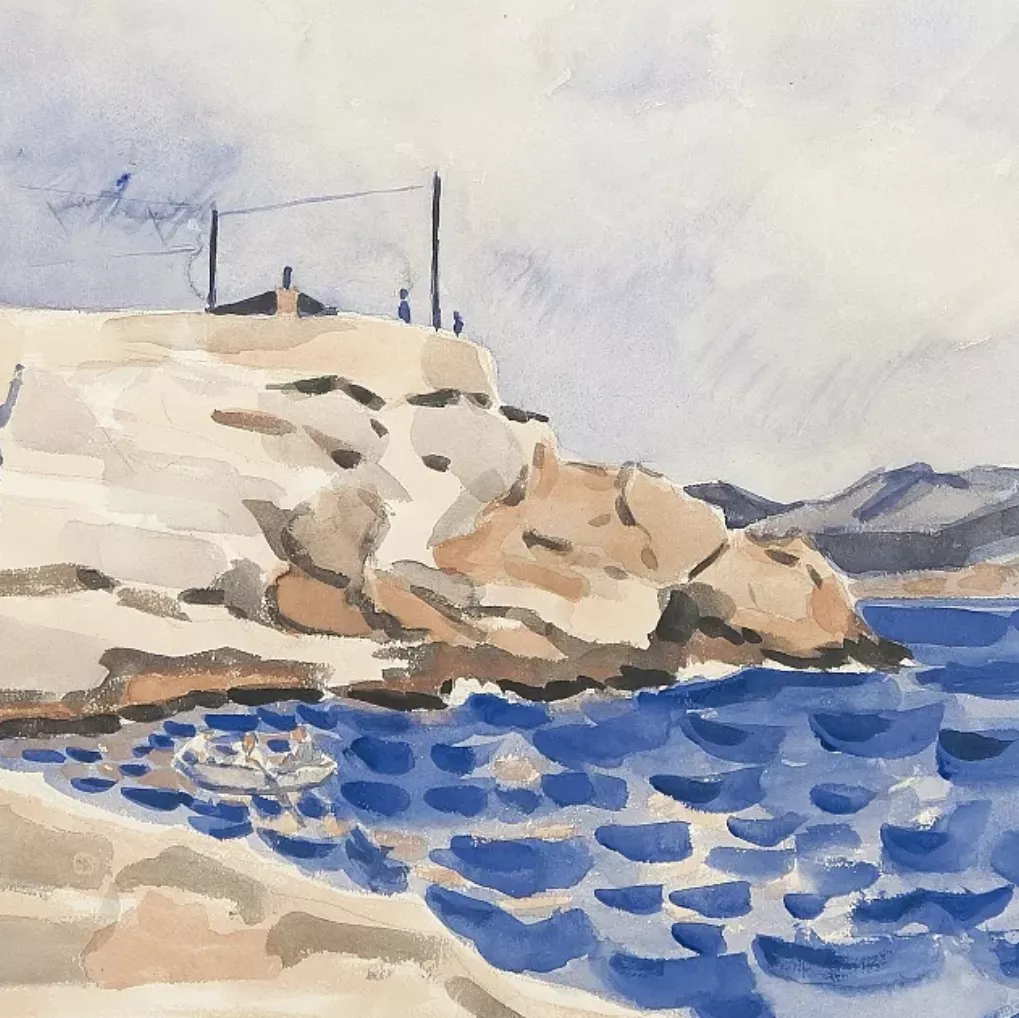
In his landscapes, particularly those inspired by the banks of the Otava and the Bohemian hills, he exploits deep blue and red tones, giving nature an almost unreal quality, transfigured by emotion.
His portraits, though fewer in number, testify to a similar mastery, where the expressiveness of human features is combined with an underlying abstraction of form, and in this sense joins artists such as Albert Marquet.
The influence of Cubism can be seen in the way Špála sometimes deconstructs space, juxtaposing colored planes that seem to oscillate between figuration and abstraction.
This tension between tradition and modernity characterizes a body of work that, while remaining faithful to its Czech roots, is fully in line with the innovative currents of early 20th-century European art.
With his unique combination of technical rigor and chromatic exuberance, Václav Špála managed to transcend convention, leaving an important mark on the history of modern art.
The life of Václav Špála
Václav Špála, born August 24, 1885 in Žlunice, Bohemia, established himself as one of the major figures of Czech modern art in the 20th century.
Trained at the Academy of Fine Arts in Prague, he quickly distinguished himself through his bold approach and his attraction to European avant-garde movements, notably Fauvism and Cubism.
Influenced by the artistic innovations of his contemporaries, such as André Derain, Maurice de Vlaminck and Georges Braque, he nevertheless developed a deeply personal aesthetic, rooted in the landscapes and traditions of his native land.
Despite beginnings marked by uneven recognition, Špála distinguished himself at international exhibitions, notably in Paris, where he was noted for his mastery of intense colors and his ability to transfigure reality.
The artist went through periods of rejection and critical rehabilitation, but remained faithful to his artistic vision, even in the face of the ideological pressures of the political regimes of his day.
He devoted much of his career to depicting nature and everyday life from a vibrant, exalted angle, transforming familiar scenes into visual celebrations of great power.
Špála died in Prague on May 13, 1946, leaving behind a body of work that, while embodying the modernist aspirations of his time, testifies to a deep attachment to Czech cultural identity.
Focus on Still Life with Fruit and Blue Jug, Václav Špála
Still Life with Fruit and Blue Jug, an iconic work by Václav Špála, perfectly illustrates the synthesis of tradition and modernity that characterizes his art.
The painting, dominated by a vibrant palette of blues, reds and yellows, is in keeping with the artist's colorist research, influenced by Fauvism and Expressionism.
Špála here moves away from classical realism in favor of an approach that sublimates forms and textures.
The fruit, arranged with apparent simplicity, become the bearers of an almost palpable vitality, while the blue jug at the center of the composition acts as a visual anchor.
Technically, the artist exploits the juxtaposition of pure colors, applied in broad, energetic strokes, creating a dynamism that transcends the quietude of the subject.
The contours, though assertive, do not partition the elements: they vibrate, accompanying the rhythm imposed by the interplay of hues and shadows. This work testifies to Špála's interest in chromatic experimentation and his ability to infuse emotional intensity into innocuous subjects.
On a conceptual level, "Still Life with Fruit and Blue Jug" doesn't just depict objects; it reflects a celebration of matter and light, transforming the mundane into a striking aesthetic experience.
Špála, true to her attachment to Czech and European traditions, here elevates the still life to the level of a veritable visual symphony, while inscribing her work in the modernist current of her time.
The legacy of Václav Špála
Václav Špála occupies an essential place in Czech modern art, leaving a lasting imprint on his era and future generations.
His work, marked by a bold use of color and an almost sculptural treatment of form, reflects a relentless quest to capture the light and energy that permeate the landscapes and intimate scenes he depicted.
Far from limiting himself to the influence of European avant-gardes, he infused his works with a singularity deeply rooted in Czech cultural identity, asserting a personal and modern vision.
Špála distinguished himself by his ability to combine harmony and vitality in his canvases. His landscapes, often bathed in intense blues or vibrant reds, reflect a fascination with natural rhythms, while his still lifes evoke a balance between abstraction and figuration.
This distinctive style, blending Cubist and Fauvist influences, quickly drew the attention of his contemporaries, making him a key player in Prague art circles and a respected figure on the international scene.
Špála's legacy lies in his ability to defy convention while remaining accessible, creating works that speak as much to the emotions as to the intellect.
His experiments with color and light paved the way for a freer, more expressive pictorial approach in Central Europe, making him a source of inspiration for many artists.
Today, his works continue to captivate, testifying to his pioneering role in the construction of a rooted and universal modernism.
The artist's auction price
Václav Špála occupies an increasingly assertive place in the art market, not least thanks to the intensity and singularity of his artistic approach.
His works, often marked by a vibrant palette and dynamic compositions, resonate particularly well with collectors, both local and international.
At auction, his canvases depicting landscapes or still lifes, particularly those from his mature period, attract sustained attention. The deep reds and intense blues that characterize his most iconic creations give them a visual force that translates into remarkable results at public sales.
Špála's works from the 1920s and 1930s, renowned for their chromatic richness and technical mastery, are among the most sought-after.
In 2024, one of his iconic canvases far exceeded estimates, confirming the growing interest in this artist beyond Czech borders. This success reflects not only the intrinsic quality of his paintings, but also Špála's influence on European modernism.
Even his preparatory drawings, evidence of rigorous artistic research, find their way into discerning collections, proof that every facet of his work continues to captivate.
Špála's constantly evolving quotation underlines the importance of his legacy in the context of modern art.
His works, with their expressive intensity, still resonate, consolidating his position as a key figure of modernism, and affirming his lasting imprint on the contemporary art market.
Recognizing the artist's signature
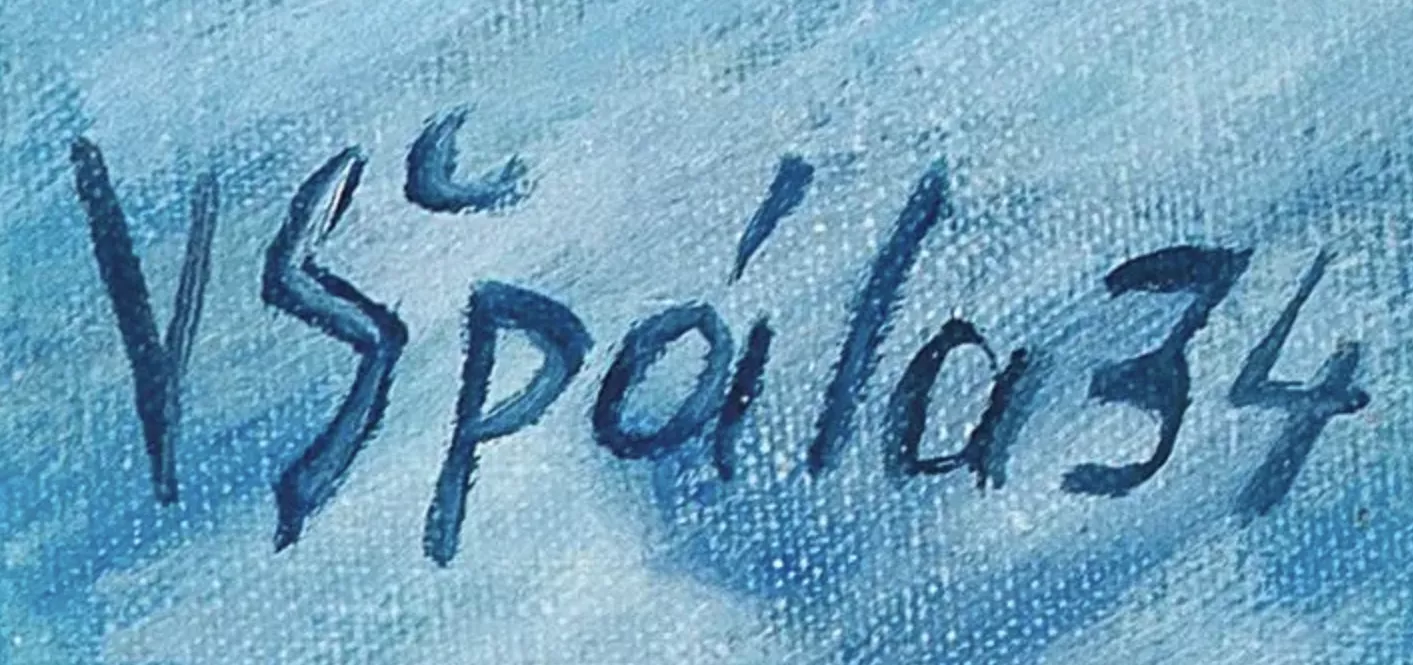
Václav Špála's works are often signed, his signature may vary from year to year. It can also be found on manuscripts. However, he was and is much copied, which is why it's important to have your work appraised.
Knowing the value of a work
If you happen to own a work by or after Václav Špála, don't hesitate to request a free valuation using our form on our website.
A member of our team of experts and certified auctioneers will contact you promptly to provide you with an estimate of the market value of your work, as well as any relevant information about it.
If you're thinking of selling your work, our specialists will also help you find alternatives to sell it at the best possible price, taking into account market trends.
Estimate in less than 24h
Discover in the same theme

An Art Deco icon: Camille Fauré
Vases by the artist Camille Fauré are sought after worldwide. Camille Fauré in Limoges shines on the art market. Expertise and value in 24h
Learn more >

Rating and value of works, sculptures, compressions by César
César is a twentieth-century visual artist famous for his compressions, works that are highly prized at auction. Estimated in 24h.
Learn more >

Rating and value of paintings by Helene Funke
Helene Funke is an artist who produced works in the course of the 20th century that are highly rated and valued at auction.
Learn more >
D'autres natures mortes vendues aux enchères

Estimated 15.000 - 20.000
Anthony II CLAESZ (1616-1642), Still life of flowers, oil on canvas

Estimated 8.000 - 12.000
Guillaume FOUACE (1837 - 1895), Still life with lobster, oil on canvas

Estimated 8.000 - 15.000
Maurice de VLAMINCK (1876-1958), Still life with jugs and leeks, oil on canvas

Estimated 4.000 - 6.000
Guillaume FOUACE (1837-1895), Still life with Roquefort cheese, Oil on canvas

Estimated 12.000 - 15.000
Paul AIZPIRI (1919-2016), Still life of flowers, Oil on canvas

Estimated 800 - 1.500
Pascal DAGNAN-BOUVERET (Paris 1852-1929 Quincey) Still life with apple and books, Oil on cardboard

Secure site, anonymity preserved

Auctioneer approved by the State

Free and certified estimates
Frequently asked questions
-
Who is Václav Špála, and what is his significance in modern art?Václav Špála (1885–1946) is considered one of the pioneers of modern Czech art. Trained at the Academy of Fine Arts in Prague, he established himself as a major figure of the 20th century by developing a personal style influenced by Fauvism and Cubism, featuring a vibrant color palette and a constant pursuit of pictorial vitality. His work, rooted in Czech traditions yet part of European modernist movements, continues to influence collectors worldwide.
-
What are the values and prices of Václav Špála's paintings at auction?The prices of Václav Špála’s works vary considerably depending on the medium and the period: multiple prints sell for between €20 and €3,300, watercolor drawings between €50 and €22,700, and oil paintings on canvas between €370 and €424,900. In 2024, a major painting from his Fauvist period (1928) sold for €424,900, confirming an upward trend for his mature works, particularly his landscapes and still lifes.
-
How do I have a work by Václav Špála authenticated?To authenticate a work by Václav Špála, we recommend that you request a free, no-obligation appraisal using the form on our website. An expert or certified auctioneer from our team will contact you promptly to examine your artwork and provide you with an accurate estimate, along with the necessary information. This step is particularly important because the artist’s work has been widely copied.
-
Is this a good time to sell a work by Václav Špála?Yes, now is a good time to sell a work by Václav Špála. The artist’s market value is constantly evolving, with growing interest from both local and international collectors. Prices for his paintings are rising steadily at auction, and his works from the 1920s and 1930s are attracting sustained attention, reflecting a growing recognition of his importance in European modernism.
-
How does the free appraisal of a work of art work at Auctie's?Appraisals at Auctie's are completely free and non-binding. Simply fill out a form on our website, and a member of our team of experts and licensed auctioneers will contact you shortly. We’ll provide you with a precise estimate of your artwork’s market value, along with relevant information about it. If you’d like to sell, we’ll guide you toward the best options to get the highest price.
